Showing posts with label mentions. Show all posts

Thursday, May 21, 2026

Kristen and Alia Skawkat talk 'The Wrong Girls' with Highsnobiety

Excerpt from the interview:

“ I’ve been sent plays before,” Shawkat says, “and I’ve just never responded strongly enough to them because it does take more of an uprooting than film or TV. But I really believe that characters come to you for a reason. And I feel like, in some weird mirrored way, I’m going through a similar thing as Mae. So I was just like, I have to work through this.”

This is where I get confused. Mae is, to put it mildly, a loser. For most of the play, she’s jobless, single, completely aimless, and too disassociated to even look her dad’s illness in the eye. Meanwhile, Shawkat’s Search Party has been called the “near-perfect,” “razor sharp” portrait of her generation. She’s coming off a successful collaboration with her friend Hailey Benton Gates in Atropia, which won the Sundance Grand Jury Prize in 2025, and she’s just wrapped production on a new stoner comedy, The Wrong Girls, playing opposite Kristen Stewart. She has a child and a vibrant art practice outside of her acting career. Mae’s stagnancy feels like the diametric opposite of her life, so full of motion and surprise. I tell Shawkat that I can’t square the comparison.

“ I mean, that’s what’s so funny,” she says. “It’s not what it looks like. There are so many people who I look at and go, ’Oh wow, they seem to have it all together. They have a family and they’re working and they’re an artist and in good shape and all these things.’ But life is never that easy, you know?”

For years after Arrested Development, Shawkat was caught in a churn of false starts, auditions that left her with the sense that she was “too weird” or “too ethnic.” Her father is Iraqi, not exactly the Hollywood default in post-9/11 America, and as the industry changed, she was pinballed by its whims, one minute cast aside, the next tokenized in a parade of “diverse voices.” Meanwhile, her former co-star and close friend Michael Cera was booking major roles in Superbad, Juno, and Scott Pilgrim vs. the World. She was stuck. It’s disorienting to be pulled in so many different directions by people who don’t actually know you.

“I think overall I’m incredibly lucky,” she says. “I’m really grateful, but I’ll always relate to that thing of feeling like you’re never as in step with the things you want to be doing in your life. You’re always a step behind. You’re trying to communicate something, but it’s not coming across, or your connections are never deep enough, or you’re not having good enough sex, or you’re hanging out with your best friends and then you leave feeling empty and you’re like, ’What happened?’ Life is just that mix.”

“And if it’s not, then good for you,” she adds. “But I’m a highly sensitive person and somewhat neurotic.”

We both laugh. I tell her my dad used to call me a “HSP.”

“ Wow, there’s a name for everything,” she says.

Shawkat has always been drawn to subversive women. As Mae, she fantasizes onstage about being tied up by a handsome cowboy every moment she gets to herself — and even some that she, awkwardly, doesn’t. In one particularly memorable scene, Mae is wrapped in the sheets of her sister’s childhood bed, feverishly masturbating, when her father bumbles in. It’s the first time in many years of covering theater that I’ve seen a woman masturbate onstage. 

“ Women’s sexuality is the biggest threat, I think, to society,” Shawkat says. “That’s why it’s always been controlled.”

She’s queer, and even as a teenager, she was delivering performances that pushed against the Hollywood mainstream. Consider the cult classic Whip It, a campy coming-of-age flick centered on roller derby, in which she played opposite Elliot Page. The movie was a gay awakening for so many people in my generation, even if the gay parts were mostly subtext. And this August, Shawkat is back at it with The Wrong Girls, the aforementioned stoner comedy written and directed by Dylan Myer (the prolific screenwriter and director who happens to be married to Kristen Stewart).

“Years ago, post-COVID but right before I had my son, Dylan and I met for a coffee,” Shawkat tells me. “She sent me the script, which she had written like eight years before or something. But no one was ready 

In the teaser for the movie, which dropped in April, Shawkat is standing at a cutting board crushing cereal and gummy bears on top of three slices of bread. “What’re you making, dude?” Stewart asks, rolling a joint. 

Shawkat tells me that Stewart really had been smoking a joint the afternoon they got together to film the teaser in New York. She’d been worried about getting a contact high before her show that night. 

The two play a pair of best friends loosely based on Meyer and her producing partner, Maggie McLean, in a cast rounded out by a list of comedy royalty: Seth Rogen, LaKeith Stanfield, Kumail Nanjiani, Zack Fox, and Tony Hale. The movie follows Shawkat and Stewart’s characters as they take an experimental new drug that endows them with the power of telepathy, setting off a psychedelic romp.

“Alia is an acrobat and, like, a genius,” Stewart says of working together. “When an actor just runs absolute heart circles around you… I dunno if I’ve ever been wrapped in that flavor of warmth on a movie. Making The Wrong Girls was like making a cartoon where everything big and scary or small and boring was fodder for our jokes and our inner world.”

“That girl has been going places since she was a baby,” Stewart adds of Shawkat. “Everyone just needs to keep the fuck up. She is kinda scary in how impressive she is. It’s very hot.”

For Shawkat, the experience was just as transcendent. “It was so fun to play someone so dumb,” she says. “Not to be hyperbolic, but it’s one of the best shoots I’ve ever done.”

Source

Sunday, May 17, 2026

Tara Swennen talks styling Kristen for Cannes 2026 with Vogue Magazine


Since attending her first Cannes Film Festival back in 2012, actor and director Kristen Stewart has become one of the event’s main red carpet fixtures. There is a heightened sense of glamour and extravagance that comes with attending the event, and over the years, she and stylist Tara Swennen have leaned into the challenge by delivering many, many memorable looks—from silvery Chanel couture (the year she famously removed her Louboutins!), to pink tweed skirt suits. “I love Cannes because it’s a world stage—it draws more attention than a lot of other festivals or red carpets,” Swennen tells Vogue. “Besides the Oscars—where I do think there’s a little bit of restraint—Cannes really nurtures a mixture of glamour, art, and beauty. People really take the opportunity to go big.”

This year, then, Stewart and Swennen were ready to deliver yet another winning Cannes wardrobe, one to match Stewart’s buzzy new project. In town to promote the Quentin Dupieux film Full Phil, in which she stars alongside Woody Harrelson and Emma Mackey, Stewart brought two striking, high-spirited outfits to the Cannes carpet this weekend.

And as an enduring face for Chanel, it’s no surprise that they were both courtesy of the French label. “There is a beautiful relationship between Kristen, Chanel, and Matthieu Blazy, because she activates his pieces in a different way,” says Swennen. “He’s really loosened Chanel up. When you look at his clothes, the tweeds are a little lighter, the tailoring is slouchier, and the silhouettes feel a little less rigid and lived-in. That is very much the arena that Kristen likes to live in.”

For the film’s photo call this weekend, Stewart first venture onto the Cannes Croisette saw her sporting a sheer gray “tweed” top and skirt from Chanel’s spring 2026 couture collection. “It was a lightweight take on a classic tweed. It had these frayed edges and jeweled buttons—we loved the delicacy of it, and the tension of the sheerness,” says Swennen. Though the look appeared totally-transparent, turns out, it was all an optical illusion. “It actually had these little boy shorts underneath, and a tiny, delicate camisole, so it looked more revealing than it was,” says Swennen.

Later in the evening, Stewart slipped into a more evening-ready option—a red and black knit Chanel gown from Blazy’s fall 2026 collection. “I loved the color. We just threw it on, it fit perfectly,” says Swennen. “It had these delicate crochet leaves. It felt very Chanel—but very modern and cool.”

Stewart also opted to forgo her signature makeup look. “I love that she went a little bit different in her glam as well,” Swennen says. “You don’t normally see a red lip on her, and it worked really well with her new pixie cut.” They finished off the graphic ensemble with Chanel’s High Jewelry pieces, including an itty-bitty red timepiece.

Punctuating both her daytime and nighttime looks? A signature Stewart touch: comfy sneakers by both Nike and Converse, directly plucked from the star’s own wardrobe. “We wanted to have a youthful and effortless vibe, but also have it be grounded in real movement, rather than polished perfection,” says Swennen. “It had a sophistication, but also was a bit rebellious.”

Such a footwear choice was an intriguing one, given Cannes still holds a strict dress code that discourages flat shoes, as well as sheer and voluminous designs. For Swennen, the (somewhat archaic) Cannes dressing rules are something to consider—but both she and Stewart clearly love pushing the envelope. “If it’s not trashy and people remain polished, I think [the rules are] malleable,” says Swennen. “Now, there are plenty of people circumventing the dress code—whether it be heels or transparency. It’s nice that there’s a loosening up of it. People should feel free to go and enjoy themselves and promote their art—and be authentic to themselves.”

Having worked with Stewart since she was 14, Swennen says such an attitude is precisely why the duo continue love working together. They both see red carpet dressing as an opportunity for self-expression and individuality. “It’s the ultimate collaboration, because she’s never afraid to try new things, which is great because I love a good challenge,” says Swennen. “For me, it really is always about embodying your authentic self wherever you go. She looks her best when the clothes feel instinctive to her. She never wants to feel over-rehearsed. The one thing I’ve learned about this woman is she is always going to be effortlessly cool.”

While the star’s whirlwind Cannes trip is already coming to a close (she’s back to filming her next project), Swennen says you will be seeing Stewart on a red carpet again very soon—this is not the end of their stellar France run, by any means. In late June, Stewart will be acting as the president for the Biarritz Nouvelles Vagues Festival in France. “We had virtual fittings for that while she was in Cannes,” says Swennen, hinting that “French Cruise” will be the sartorial vibe. This summer, Stewart will also be promoting her wife Dylan Meyer’s new film, The Wrong Girls, and she’s also working on a new TV show. The Stewart-Swennen partnership stays serving, all summer long.

Source


Tuesday, May 12, 2026

Woody Harrelson talks about Kristen and 'Full Phil' with Deadline


Extract from the full interview

Not many American actors make the transition from TV to movies, but even fewer cross over from Hollywood to Europe. Four years ago, while still a bankable name in commercial studio franchises, Woody Harrelson swanned effortlessly into the international arthouse, playing the Marxist captain of a doomed cruise liner in Swedish auteur Ruben Östlund’s second Palme d’Or winner Triangle of Sadness. This year Harrelson returns to Cannes in Full Phil, the latest by Quentin Dupieux, France’s wizard of odd, acting with Kristen Stewart in a film the director describes as “Emily in Paris in hell.”

DEADLINE: How did you get involved with Quentin Dupieux?

WOODY HARRELSON: There’s a lady who works with me, Ilya [Bronchtein]. She was my assistant, and then she became a producer. Within two weeks of starting producing, she was telling me, “You have to watch this guy’s movies.” I finally watched his [2023] film Yannick and I was like, “Oh my god, this guy is amazing.” Then I watched The Second Act [2024] and I’m like, “Holy sh*t.” Because you never know. The first one, well, maybe that’s just luck. But not when you see another one that’s also brilliant. I was super interested. And she says, “Why don’t I arrange a meeting?”

Well, I wasn’t planning on going to Paris, but we arranged a meeting with Quentin and Hugo [Sélignac], his producer, and it was great. I said, “What are you doing next?” and Quentin says, “Oh, I’m doing this movie, Full Phil. I’m trying to get Jim Carrey, but he hasn’t read it, and I can’t get him to read it.” I’m like, “I know Jim! I’ll get Jim to …” And then I feel a kick under the table and it’s Ilya. [Laughs.] She’d already read the script, and it was in her mind that she wanted me to be able to do it. Luckily, after that meeting, he was like, “Well, I think Woody might be good for this too.” And that’s how it all went down.

DEADLINE: How long did it all take?

HARRELSON: Oh, from that meeting to the end of shooting? I think all took place within two months. Maybe two and a half. I mean, it was amazing. He’s like no one else. He writes it, he directs it, he shoots it, he edits it. So, if you have a question, you got every department right there. It was amazing, because he shoots so fast. The first day, I think we did maybe nine pages, just me and Kristen in a hotel room, and then we came back the next day and did another eight or nine pages. You’ve got to be on your game with him, because he’s ready to go.

DEADLINE: What can you reveal about the plot of the film?

HARRELSON: Well, I can tell you that it’s a father and daughter who are in a very often combative situation. They decide to take a trip to Paris to try to get the relationship on a better footing, and things don’t go to plan, necessarily. I don’t think I should say too much.

DEADLINE: Did you know Kristen before?

HARRELSON: Oh, yeah. I met Kristen when she first started out and there was this project that I did, which we wanted her to do and she agreed to do it, but then she ended up dropping out of it. But I’d heard about her from Sean Penn, who was saying, “This girl’s really got it.” And of course, that’s proven true. She was fantastic in this [Full Phil]. I haven’t seen it yet, but I hear it’s very good, so I’m excited to see it.

DEADLINE: What kind of performance is it from you?

HARRELSON: Well, it’s kind of theatrical, in the sense that Quentin doesn’t do a lot of different sets, so it’s very much like doing a play. It’s the two of us going back and forth. And even when we do go to another place, we go to a restaurant, you know what I mean? But it’s got his signature sense of humor, and also his intensity. It’s pretty cool.

DEADLINE: People thought you’d be coming to Cannes with Ruben Östlund’s new film, The Entertainment System Is Down. Did that reunion happen in the end? Because you said you were going to be in that film — whether he wanted you to be in it or not.

HARRELSON: Oh, I was determined to be in it. [Laughs.] But no, it didn’t work out, because the part I wanted to play, he ended up cutting that part out. I mean, he’s got so many people in that film, because it’s about an airplane full of people. So, yeah, I get it. It wasn’t important to the story, but it would’ve been a fun part.

DEADLINE: Does Östlund have a similar personality to Dupieux?

HARRELSON: They’re much different people. I look at Quentin as more like a Fellini. I don’t know why, but that’s how I imagine Fellini would be. He’s a big personality. Ruben is also super fun, an interesting guy, but they don’t seem similar to me. They seem very different.

DEADLINE: Why did you want to do Triangle of Sadness?

HARRELSON: I saw The Square and Force Majeure, and I was like, “Oh, man.” But what was funny was that my agent, Jeremy [Plager], was the one that wanted me to watch them. I think I watched The Square first. And you know how Ruben has such a unique vision, and how he’ll frame a scene, and the camera will stay on it for too long? And so, I watched the first 10 minutes and I turned it off. I’m like, “Jeremy, are you out of your mind?” And he says, “Watch the rest of the film.” So, I watched the rest of it and then I saw what he saw: “Oh my god, this guy is a real unique talent. He’s brilliant.”

DEADLINE: Full Phil is in the Official Selection at Cannes. How many times have you been there?

HARRELSON: I don’t know. Half a dozen, maybe? But the greatest experience was, for sure, with Triangle of Sadness. I mean, it was incredible. The reaction of the audience to that film, I couldn’t believe it. I thought it would be good, but I didn’t know it would be like that. At the time I was doing a hundred days of no drinking. I remember going afterward to the party on the beach, and I met literally the greatest sommelier in Europe. This guy! He could guess the region, the year and all that, with just his sense of smell. It was a big night already, and he says, “I’ve got a special bottle for you.” I was like, “Oh, I’m on my 98th day of no drinking.” [Laughs.] Oh, my f*cking god! I realized later, that was so stupid — I should have taken a mulligan. But I wouldn’t do it. I didn’t drink that night.

DEADLINE: Are you planning a renaissance in European cinema?

HARRELSON: I’m really interested in doing European films, particularly French. I’ve got to meet a few great French directors. You’re not necessarily going to get paid [big money] in Europe, but you’ve got to overlook that. The Europeans make great movies. They do. They make great movies here in America but, per capita, I’d say they’ve made more great movies over there.

Source 

Saturday, December 13, 2025

Author of 'The Chronology of Water' Lidia Yuknavitch talks about Kristen adapting her memoir to film


Not everyone can say they’ve seen their life story reflected back to them onscreen—and even fewer people can claim the experience of having said story adapted by an internationally famous actor. But that’s precisely what’s happened to author Lidia Yuknavitch, whose 2011 memoir The Chronology of Water formed the basis for Kristen Stewart’s celebrated directorial debut of the same name.

The film—which stars Imogen Poots as Yuknavitch and chronicles the author’s myriad experiences with sexual abuse, addiction, and competitive swimming, to say nothing of her profound coming-of-age as an artist—is out this week. Ahead of its release, Vogue spoke to Yuknavitch about giving Stewart room to create her own interpretation of the book, shifting gears between writing and painting, the kinship she feels with Stewart and Poots, and (spoiler!) why she still hasn’t seen the film.

Vogue: What does it feel like to see your book adapted into a film?

Lidia Yuknavitch: It’s pretty mind-blowing. I don’t really think of it the way that maybe other people do; I think Kristen made her own autonomous, rebel-yell art and my book was sort of a launching pad, or a kind of artistic inspiration, but what she made is all hers. It’s her art, and I could not be happier for her. I’m over the moon.

What was it like collaborating with Kristen?

Well, I wasn’t collaborating all that much. At the very beginning, she asked me a bunch of questions about people’s reactions or emotional intensities, and I would answer them, and she’d be like, “Cool,” and then I wouldn’t hear from her for a while. [Laughs.] I’d get another set of questions, and I’d answer them, and she’d be like, “Got it.” I think the collaboration was more of the heart and of a kind of sensibility that we share as unapologetic mammals who have something in their hearts and something in their guts and bodies that they have to find a form for. Maybe our deepest, most intimate collaboration just happens because we’re two women artists who found each other in the world, and if we don’t help each other, nobody else will.

What was your experience of seeing the film for the first time like?

You might not like this answer, but I actually haven’t seen it yet! It’s literally killing me that I have not seen it, so hopefully I’m not going to die. I’ve read interviews with Kristen and reviews and things like that, and people I know and love have seen it and eagerly sent me their impressions; plus, I kind of get her vibe, so I feel like I’ve seen it even though I haven’t. It’s still killing me, though, so the day I see it, everyone check on me and make sure I’m still alive.

Had you ever thought about who might play you in a movie prior to this experience?

Not really, because I’m an introvert. I’m wired non-neurotypically, so I don’t think about things like that, but when I see clips or images of Imogen, all the hairs on my body stand up; not because we can look like each other or anything like that, but just because I can see that she has an extraordinary ability to inhabit emotional intensity and a whole range. I can already tell that about her, and I suspect she’s an extraordinary person and clearly an extraordinary actress. I mean, she’s not playing me; she’s stepping into a story that, yeah, sure, it’s my version, because this stuff happened to me personally, but all women step into these stories. Our stories aren’t all the same, but the parts we’re supposed to keep clean and pretty and quiet have stuff underneath them, and she was willing to step into that. I don’t think about who would play me in a movie, but what I do think is, you know, Holy fuck, there’s a woman who is willing to step into the underneath-story and play it out.

What does work look like for you these days?

Well, I haven’t been writing for over a year because I have some personal life stuff going on, but hundreds of paintings are coming out of me, so I’m very curious about that. I’m having to talk to them and ask them what they’re about. Although last week, for the first time in a while, some novel stuff started coming out of me, so apparently I have the very, very beginnings of a novel going, and once they start coming, there’s nothing I can do about it.

Source

Jim Belushi talks 'The Chronology of Water' and mentions Kristen with Variety


When Jim Belushi was playing Ken Kesey — a literary giant gone to seed — in “The Chronology of Water,” he’d hear Kristen Stewart calling out from behind the camera with one consistent note.

“Drunker!” she’d yell.

And Belushi, who is nothing short of a revelation in Stewart’s feature directing debut, would adjust his register, finding the sadness drowning in a sea of booze and revealing the struggling family man hiding behind the prankster persona.

Stewart, whom Belushi describes as having “the mind of a writer, the heart of an actress, and the soul of a director,” created space for him to improvise, to breathe, to live inside Kesey’s skin.

Thank *** you didn't do some of my lesser known stuff because I couldn't remember.

“I studied Ken Kesey for three months,” Belushi says. “But I don’t do imitations. I can’t. My brother John was brilliant at it. I just try to get the essence.”

That essence, it turns out, is grief.

Belushi is one of two surviving members of a family of seven. The death of his brother — celebrated comedian John Belushi — of a drug overdose at 33 left a crater that took decades to navigate. When Stewart’s script — a meditation on survival and connection after unthinkable loss — landed on his desk, Belushi found himself in familiar territory. The story’s central line, “Nobody is big enough to hold what happens to us,” became his North Star.

“I forgave all my ex-wives,” he says, “because what happened to that character and Ken and what happened to me is so deeply sad and troubling that you resent people for not understanding.”

Belushi plays Kesey with a devastating tenderness, channeling personal grief into a performance so raw it feels less like acting and more like exorcism. Stewart created space for him to improvise, to breathe, to live inside Kesey’s skin.

“For me, there was no acting required,” Belushi says. “I just never felt more present and so connected.”

There’s a central paradox to Belushi’s career: He’s worked with Michael Mann, David Lynch, Woody Allen and Oliver Stone — yet somehow remains perpetually underestimated, even dismissed. He’s the guy from “According to Jim.” John’s little brother. The jokester who lands the punchline but never gets the chance to break your heart.

Until now.

Belushi not only gives one of the richest performances of his career in “The Chronology of Water,” but also steals scenes as a kindhearted small-time manager in Craig Brewer’s “Song Sung Blue,” which hits theaters on Christmas Day. What emerges in both roles is something Belushi has been chasing his entire career — what he calls “the magic.”

It’s that moment onstage or on camera when preparation dissolves into pure presence, when the audience connects with something ineffable in his performance. The irony isn’t lost on him that it took a 35-year-old first-time director to unlock what Hollywood’s been missing.

“I don’t know if they’re boxing me in as much as they just don’t understand me because I am kind of all over the place,” he reflects. “I’ve done some independent films where people went, ‘Oh my God, I didn’t realize you could do that.’”

But he’s done it all along. From his film debut in Mann’s “Thief” to “Salvador” with Stone to his delightfully unhinged work in Lynch’s “Twin Peaks,” Belushi has been delivering complexity in plain sight.

If “Chronology” is steeped in sorrow, “Song Sung Blue” gives Belushi a different emotional register — one tinged with gentleness and the hard-won peace of a man who’s survived the whiplash of showbiz cycles.

Now, finally, people are looking. And what they’re finding is an actor who never stopped believing in the craft, who studies for three months even for small parts, who understands that talent doesn’t diminish with age — it deepens.

“There’s this moment when you’re performing and you connect with the audience,” Belushi says. “It’s magic inside your body. And all I do is chase the magic.”

He’s reflective now, but not sentimental. He speaks openly about regret, and about the time it takes to heal.

“I wish my recovery time was a little quicker,” he admits. “You either fall apart or you find a way through it.”

His relationship with grief — his own and the pain others share with him — is almost pastoral. He says he still dreams of his brother frequently. “I have dreams once in a while where he and I are acting at Second City,” he shares. “We were on stage together, and he was so funny that I cracked up, eating the scene in front of everybody. I got so mad at him, because that’s the worst thing you can do, is break character, right? But he was just so funny, and he goes, ‘Ah, come on, kid!’ He was sweet to me. So, I still get little visits.”

Belushi says people have approached him for years, quietly confiding, I lost my brother too.

“They want to know what to do,” he says softly. “And I went, OK, I see. I see now. Some of my purpose is to help guide others.”

Source

Wednesday, December 10, 2025

Imogen Poots talks working with Kristen for 'The Chronology of Water' with The Associated Press


Imogen Poots has been thinking about a Sam Shepard quote: “People here have become the people they’re pretending to be.”

Those 10 words, from a poem in his “Motel Chronicles” collection, are kind of about her character in “Hedda,” the quietly courageous Thea. But they’re also kind of about everything. After 20 years of acting in movies, television and on the stage, Poots is having a clarifying moment. And Shepard’s words somehow get to the heart of it all: the disorienting paradox of attempting to work as an artist in a big industry like Hollywood and preserving your soul in the process.

“I was always clear about what I wanted to do professionally, if only I could get there, in independent cinema and theater,” Poots told The Associated Press in a recent interview. “But only in the last two years, something’s clicked.”

The 36-year-old English actor has always managed to elegantly navigate her way through the distracting noise of franchises and fame and find the types of interesting filmmakers, stories and projects she’d always dreamed of, working with the likes of Peter Bogdanovich, Terrence Malick, Philip Seymour Hoffman and Imelda Staunton along the way.

But this year has been particularly special with three films that she’s enormously proud to be part of: sharing the screen with the great Nina Hoss in Nia DaCosta’s fiery“Hedda” (streaming on Prime Video), delving into the throes of an affair, with Brett Goldstein, in the romantic drama “All of You” (streaming on Apple TV) and giving herself over to what may just be remembered as a defining performance in Kristen Stewart’s directorial debut, “The Chronology of Water” (in theaters in Los Angeles and New York, nationwide on Jan. 9).

“You can make these films that simply don’t find their home, or don’t find the right home. And that can be quite devastating,” Poots said. “I feel really lucky that each of these projects found the place that understood what they had in their hands.”

Being in Kristen Stewart’s gaze

While all three films had independent spirits, it’s “The Chronology of Water” that was the biggest unknown — a daring and provocative adaptation of Lidia Yuknavitch’s memoir about escaping an abusive home, dashed dreams of competitive swimming and losing herself in sex, drugs and alcohol before finding her voice through writing.

“This person’s life is so rich with inconsistencies and successes and sabotage. She’s kind of like the weather,” Poots said. “It’s a very present film, despite the fact it’s about memory and reframing that. It really is about being completely present, sometimes too present, like egregiously present in proximity to someone’s life and someone’s body.”

The intensity of it required total trust in Stewart, an artist she’d only admired from a few degrees away until they decided to dive into the deep end together. Work didn’t stop at wrap, she said. It was always spilling out over texts and calls and videos. And it all just felt right, a creative collaboration like she’d never experienced before.

“The two of us only know how to do it this way, which is to completely hurl yourself into it,” Poots said. “The stakes were so high for one another. We didn’t want to let the other one down.”

Someone said something recently to Stewart that she found very illuminating: They never bring the baggage of knowing that Poots has been in other movies when watching her in something. It’s like they’re always meeting her anew.

“It’s because she’s not like an ‘actress,’” Stewart said. “She’s like giving you her life, and it’s full and it’s so generous … you never really know where it’s going to go because she’s, she’s not planning it. She’s genuinely trust falling.”

If there had been any hesitation, Stewart said, there’s no way it would have worked. On screen, Poots just feels alive. And that’s exactly what Stewart needed: a person who knows how to live life, unselfconsciously.

Poots finds it a little embarrassing, even pointless, to talk about the craft of acting. She winces when she hears words like “brave” tossed around about her performance. Is it, she wonders?

“It’s my body, it’s my voice. That does feel very exposing,” Poots said. “But at the same time, what are you going to do? Like, you have this one life. And one day, if I make it that far, I’ll be an old woman and I’ll be like, ‘It’s good that you did something that mattered to you.’”

At the film’s world premiere at Cannes earlier this year, both Stewart and Poots sat there shaking — vibrating for one another, wanting the other to soar.

“We really did something,” Poots said. “We did it together with every cell in our body.”

Staying authentic and finding her people

Acting in the film business is hard for all its myriad contradictions, and projects like “Chronology” and “Hedda” and “All of You” don’t come along every day. It demands a patience and self-awareness to understand what’s right for you and what’s not.

“It’s creative and it’s arbitrary in the one sense, and other ways it’s very, very specific and precise,” Poots said. “You’re fighting against this unknowable, very sort of shiftable force, which is trend. And you’re trying to stay authentic in the face of that.”

She thinks of someone like her friend Jesse Eisenberg appearing in a Superman film, and Stewart, who climbed out of “Twilight” and built a brilliant body of work despite that, and how good you have to be to go back to working with auteurs.

In the beginning of her career, she was happy to take the work where she could, to try new things, to throw paint at the wall, so to speak, and figure out what felt right and what didn’t. And she looks back on jobs that might not have been the best fit with empathy. It’s important to learn what you’re not happy doing, as well.

“It doesn’t matter if everyone around you is like, ‘But it should be fun,’ like, ‘Go to the party!’” she said. “You don’t have to do that, I don’t think. You don’t have to be that uncomfortable. You can find people where you’re on the same page.”

Now she has a resolve that only comes with experience.

“There are such amazing actors working today and such incredible directors. It’s very easy to just to sort of give in and be like, well, everyone else is doing that, so I guess I should. So you have to keep putting the gold into the other pot,” Poots said. “There’s too much potential not to be making original work. Underestimating audiences is a huge thing. They’re so much smarter and more imaginative than the system knows what to do with.”

Next up is a reunion with her “Green Room” director Jeremy Saulnier for a new film with Chase Sui Wonders and Cory Michael Smith. It felt like coming home, she said.

“I don’t know what the alternative is,” she said. “The alternative is to do something where it’s like, oh, they lit you and you look like a supermodel and you didn’t eat for 10 weeks and you made a picture that’s kind of innocuous but people will watch occasionally. That sounds like I’d rather do something else for a living.”

Source

Monday, December 1, 2025

Jim Belushi talks about working with Kristen on 'The Chronology of Water' with Indiewire


Source: rich_alfonso 

On December 4, the IndieWire Honors Winter 2025 ceremony will celebrate the creators and stars responsible for crafting some of the year’s best films. Curated and selected by IndieWire’s editorial team, IndieWire Honors is a celebration of the filmmakers, artisans, and performers behind films well worth toasting. In the days leading up to the Los Angeles event, IndieWire is showcasing their work with new interviews and tributes from their peers.

Ahead, Jim Belushi tells IndieWire about the many qualities that set our Maverick Award winner, “The Chronology of Water” writer/director Kristen Stewart, apart from the crowd.

As told to Anne Thompson. The following has been edited and condensed for clarity.

I got a call from my agent. They said, “We want to send the script over. You have an offer to play Ken Kesey, and Kristen Stewart wrote it and directed it.”

“I don’t need to read it. Just tell her, ‘yes.'” I read it, and was quite intimidated by the complexity and the beauty of this woman’s story. And then I read the book [by Lidia Yuknavitch]. Wow. There’s a whole category of Academy Awards for screenplay adaptation that I hope someone pays attention to, because [Kristen] did an unbelievable adaptation of this book.

I always approach working with women as, “This girl is my sister, and I love my sister.” All my life, I’ve always known how to be loving to my sister, to make her feel strong and good. All those traits that my sister taught me, I take on with other actresses or producers. There’s a connection and a love that goes way deeper than that of a male/female relationship. I look at Kristen as my younger sister. And within five minutes of talking to her: “This girl is way older than she is.”

She has the mind of a writer and the heart of an actor, but she has the soul of a director. She knew every breath between every line of dialogue. She felt it, she wrote it, she saw it. She’s a true auteur, and I don’t know how she did it, but she got my best performance in years out of me. When she looked me in the eye, she looked right through my pupils and right into me. She stared at me with such love and respect and full knowledge of who I was and what I was doing in those scenes that I just dropped and flew with her.

When I got on the set, I went to the producer and said, “She wrote this. How locked in is she to the words?” The producer said, “She’s pretty locked in.” Because I studied this character for three months. I saw everything that Ken Kesey said, in lectures, in interviews, and he was quite an amazing man, quite articulate. And he had a huge sense of humanity, but there were some gems of things that he’d said.

The first scene, when I meet all the students, I did the first take, the second take, I said, “I might add a little thing right here.” And she just looked at me, and I did it. And once I did it, her eyes opened up, and [she] gave me a little wave, like, “Go ahead, go ahead.” I started ripping out all kinds of dialogue that came out of Ken Kesey’s mouth. And she was: “Oh my god, I got chills, Jim.” She made me feel so knowledgeable about my character, and I just flew with it.

It took her eight years to get this movie made: talk about fearless pursuit. She did not give up on his film, and she did it within a low budget, and she worked hours and hours and hours. This girl did not stop. I couldn’t even pretend to be tired after watching her all day. It’s like, “I can’t be tired. I got to go for coffee. She’s still working. I’m not tired. ‘You want to go home?’ ‘No, I’ll stay for another shot. Come on. Let’s do another shot.'”

The main line for me in the movie has actually changed me since I’ve shot it: “No one is big enough to hold what happens to us.” I have forgiven everybody who didn’t understand me in my life because of that line. Of course. Why did I expect people to understand, to be able to hold the terror or the struggles that I’ve had? Nobody’s big enough to hold that … For the lead character [Lidia, played by Imogen Poots], it’s in her hands to write it. “Maybe someone will be able to hold what happened to you.” Kristen was able to hold what happened to me in my life, and understand it in order to bring it out in my performance, and for that, I feel like I was in the presence of a shaman.

She was a shaman. That’s how much humanity she carried for this girl in this movie. I don’t know where she got this experience in her life to have such depth. I don’t believe in reincarnation, but she must have reincarnated six or seven times, because she shocked me with how smart, articulate, and knowledgeable she is. I love her.

When Kristen walked on a set, you could feel around her for a good six to eight feet, this presence, this power. If she stopped and started talking to you, it was like you were in this dome of something special. She has this quiet plane, and she weaves between fragility and fierce introspection with every glance and gesture that she makes. She would just stare and watch me, and she made me feel so good about everything I did.

The material itself is so complicated an exploration of grief, the acting out of unresolved grief and trauma. Death is a complicated subject to film, to act. She understood it. Finally, you see someone who gets the depth of death. How does this 35-year-old girl carry solid knowledge of deep concepts, and capture it in that film in such a creative way? I worked with Michael Mann, Oliver Stone, Woody Allen, David Lynch, Roman Polanski. I’ve worked with some great directors. I’ve had that honor, and she is right in that line. She’s going to be a very special director one day, if not this day.

I have a standing offer with her that whenever she needs her car washed, I will be there with a bucket, brush, soap, and water. I will do anything for this girl. I’d work with my little sister any day. She’s a fearless artist, fearless in her pursuit of authenticity, and she is unafraid to challenge the boundaries of storytelling. That’s the example in this film. I hope she gets all the recognition that she deserves.

Source

Friday, January 24, 2025

Kristen and Ben Schneider from Lord Huron talk about the 'Who Laughs Last' song and music video

Kristen Stewart makes her recorded music debut with “Who Laughs Last?” a new collaboration with the L.A.-based band, Lord Huron. 

Stewart drives the song with a spoken-word monologue delivered across several verses, her noir-ish tale of a long, searching, late-night drive floating over a propulsive groove. Stewart’s vocals are interrupted only when Lord Huron frontman Ben Schneider jumps in to deliver the wailing chorus, “I’m gonna leave that city far behind and get a long, long way from there/I’ve got a burning feeling deep inside of me and don’t know where to put it.” 

“I’ve always loved the band and immediately sparked to the manic drift of the song and to the mood,” said Stewart, who also stars in the “Who Laughs Last?” music video, directed by Tony Wilson. “I love when a song is something you can kind of seep into and imagine. Ben is the nicest, I was so into reading his words…there’s nothing like making new friends through projects like these that just crop up. Lucky stuff.”

Schneider said he hadn’t known Stewart before reaching out to her about a collaboration, but was a big fan of her work, especially with filmmaker Olivier Assayas (like Clouds of Sils Maria and Personal Shopper). While Schneider was working on “Who Laughs Last?” he kept hearing Stewart’s voice and thought, “What the hell, I’ll reach out and see.”

He continued: “She said she was interested so we met up and hit it off talking about books, movies and music. She immediately got what I was going for and had great ideas to boot. She’s just a great person and so creative and open. She added a lot to the video concept as well. It was the kind of collaboration you dream of, honestly.”

“Who Laughs Last?” marks Lord Huron’s first new song in two years, following “Ace Up My Sleeve,” which appeared in the 2023 film, The Starling Girl. The band’s most recent album, Long Lost, arrived in 2022. 

Lord Huron haven’t announced a follow-up to Long Lost yet, but they are set to spend much of this summer on a North American tour. The trek kicks off July 18 in Indianapolis, Indiana and wraps Nov. 2 at the Kia Forum in Los Angeles. Throughout the tour, they’ll receive support from Feist, Waxahatchee, Kevin Morby, Indigo De Souza, S.G. Goodman, and Lee Fields on select dates. 

Tickets go on sale Jan. 31 at 10 a.m. local time, while an artist presale is set for Jan. 28 at 1 p.m. local time. Full info is available on Lord Huron’s website. 

Source

Saturday, December 21, 2024

The editor of 'Sacramento' Max Goldblatt mentions Kristen with Below the Line

Max: Those are the victories as an editor, when you get away with something that an audience would never suspect. I love that stuff.

Aminah: It’s the best. In my last film, I did that by taking a character calling out someone's name, but I'd actually taken the audio from ten scenes earlier, and I put it in, out of shot, and it motivated the character's response so much more. And no one's the wiser.

Max: Right. On the film Sacramento, what I found fascinating about Kristen Stewart is that she is a very impulsive performer, really in the moment and really trying things. She’s giving you a lot of options to work with, and she knows this. I’d seen her performances over the years, but to be suddenly given this gift of her raw footage—how do you construct a Kristen Stewart performance? She might read a line a certain way and it's cool and it works. But then you really like the way she does a line at the end of the scene and, to get that emotional through line, the two don’t necessarily work together.

She's an incredible performer and part of that is her skill and the other part of it is the job of a good editor really honing it in a way that makes most sense for the story. I was really impressed by what she gave us. And I think there's trust there as an actor. They're trusting that the director and editor are gonna put the finished film together in a way that makes them look great.

Aminah: Across your various roles, what would you say is your happiest memory in the world of filmmaking?

Max: I’ll pick a recent one—when we premiered Sacramento at the Tribeca Film Festival. I’d had other films premiere at Tribeca, but with this one, there was a different energy. It was premiering in one of the larger theaters, and there was a red carpet. The screening was sold out, and it's a comedy. We had never shown it to more than two dozen people. So you're sitting there in the theater, the lights go down, and you're wondering if this sold-out audience is going to like this thing that you worked so hard on, or if they’re going to hate it. So, the movie starts. You’re anticipating those first couple laughs, or what you hope is a laugh. And they started rolling in. The house was on fire. They were such a great audience. There were some moments that were shocking or extremely funny, and I got so excited waiting for these moments to hit in this big auditorium.

There’s nothing like that, especially these days when you don’t know if a film is even going to play in theatres or go straight to streaming, or be lost in the shuffle. We’d just been picked up for theatrical distribution the day before. So, to be able to sit in the theater and say, not only is this so amazing, we're in a sold-out theater with people and they're loving the movie, and this is not the only time this will happen—it was just exhilarating for me.

Source

Steven Yeun mentions Kristen and 'Love Me' with GQ Korea


GQ How and why did you get involved in 'LOVE ME'?

Steven Yeun: It’s been so long since I got the script, so I don’t remember exactly. I just remember my manager sending me the script and telling me that Kristen Stewart was going to be in it. I have always admired Kristen Stewart and loved her work. I thought she was so great at expressing herself as an artist. The fact that she was involved was a big factor in my decision, but when I read the script, I also loved how honest and bold and earnest it felt. Ultimately, I thought it was a really lovely film. I also respected the fact that it felt like a piece of work that was confident in itself. So I knew I had to do it.

Source

Friday, October 25, 2024

Audio: 'Twilight' costar Anna Kendrick mentions Kristen with the Call Her Daddy podcast


"There were like, it just keeps getting bigger. So, so it was alwats in a headband or pulled back like really tight and, you know, in my like ratty little costume, kike, you know, five inches shorter than Kristen going like, I don't even get what the point is. Meanwhile, she's so stunning in real, like you;re like, oh my God. I'm staring into the eyes of like a Siberian husky.

 She's so gorgeous. I mean, she's gorgeous on screen, but like in person, have you met her in person?"

"No."

"There's a quality, let me tell you."

"Really?"

"Oh my God, it's breathtaking. And she's obviously very beautiful. And sometimes you meet certain people and you're like, what? How dare you? Why are you doing this to me? Oh my God."

Listen to the podcast here for Apple Podcasts or here on Spotify.


Thursday, October 24, 2024

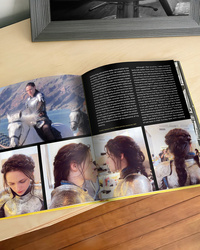
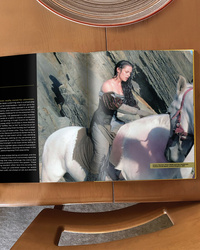
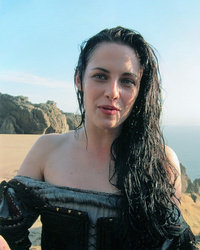
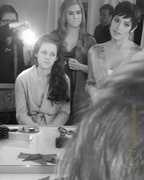
Hair designer, Bonnie Clevering, features Kristen in her book 'Continuity'


IMG_1813.jpegIMG_1810.jpegIMG_1809.jpegIMG_1808.jpegIMG_1811.jpeg
61139B2B-74AB-4FCB-9EBB-82A90A9A474F.jpegE13BA20F-312C-40FA-8781-66DD27D0867D.jpg7403D40C-90F5-4A4A-9F6C-63732647B5CA.jpg8BF3BF99-BE4C-491F-AF41-A7188ACDC8C6.jpeg
GmrcfCla0AATIRU.jpgGmrcfs4boAARq-d.jpgGmrchMtbEAA12HV.jpgGmrchtrWsAAejxk.jpg
IMG_9640.JPGB56783DC-405D-46DA-B946-8C6F65521E4A.jpegIMG_9637.JPG2CB3246E-A5C3-450C-ACF8-196DE092D13F.jpeg

Click on photos for full view.

“Kristen’s presence brought a renewed sense of energy to my work, turning even the most daunting hair tasks rewarding. When I work with younger actresses, I tend to take on a more nurturing, motherly role, and Kristen was no exception. She continued to request me as her hair designer for the remaining “Twilight” films and “Snow White and the Huntsman.” While filming “Snow White and the Huntsman,” we often went out to eat, and on days when we wrapped early, heading back to my London apartment for taco night became our new go-to. It was a privilege to watch Kristen grow, mature, and gain confidence in not only herself but her acting abilities over the years. I’ll never forget one of the rainiest days in the countryside while we were filming “Eclipse.” After wrapping, fans were waiting outside while waving to her and Robert in the hopes of an interaction. Without hesitation, Kristen and Rob asked the driver to stop the car, got out in the rain, and took the time to meet everyone. Witnessing Kristen's growth firsthand, both on and off those sets, always left a lasting impression that left me feeling inspired by her.”

Bonnie Clevering on working with Kristen Stewart, as seen and heard exclusively in ”Continuity by Bonnie Clevering". 

You can read more details on the book here.

Source 

Friday, October 18, 2024

'Charlie's Angels' costar Naomi Scott mentions Kristen with THR

Based on Finn’s scripted vision of a pop star with short bleached blonde hair, Scott willingly chopped off her long dark hair for the role [role in the movie 'Smile 2']. From there, Scott, Finn and hair department head Angie Johnson took inspiration from a variety of looks, including ones served by Tilda Swinton and a former Charlie’s Angels (2019) co-star of Scott’s. 

The head of the hair department, Angie Johnson, said that Kristen Stewart was an inspiration for Skye’s hair. Is it bizarre to reference someone you’ve worked with in the past?

No, because she’s still an icon. Even though she’s a friend, she’s still Kristen Stewart, and so she’s still someone that you reference. It was actually a particular look where we referenced her. I sent her a picture of me and her next to [each other], and it was Skye’s slicked-back look at the gala. [Kristen] had a specific look on a red carpet that I loved, and I was like, “Oh my gosh, this is great.” So we rolled with that [for Skye’s gala look], and I think it worked really well.

Source