Listen to the podcast on Apple Podcasts or Spotify.

Showing posts with label Imogen Poots. Show all posts
Showing posts with label Imogen Poots. Show all posts
Tuesday, February 17, 2026


Saturday, February 14, 2026

Friday, January 30, 2026
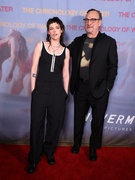
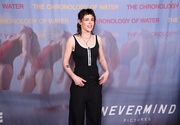
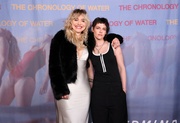
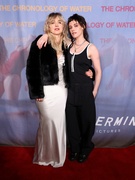
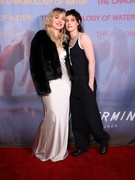
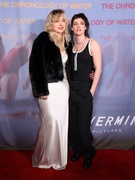
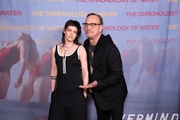
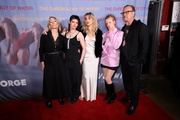
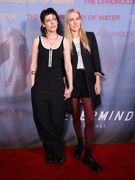
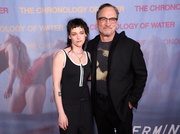
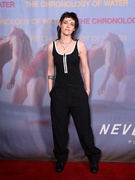
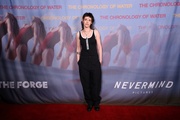
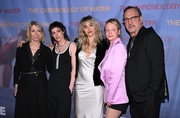
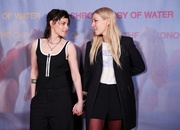
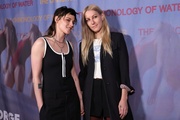
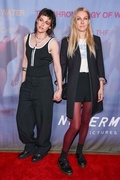
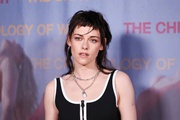
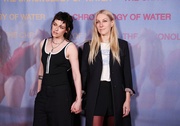
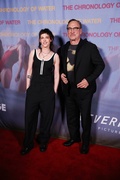
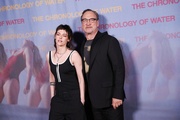
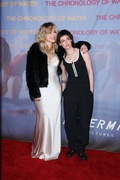
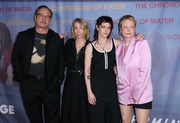
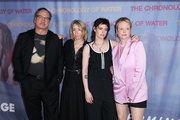
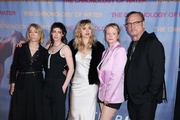
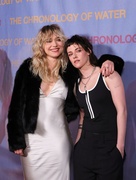
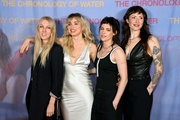
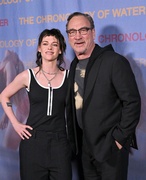
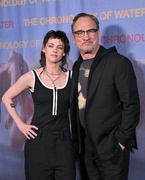
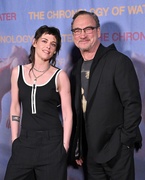
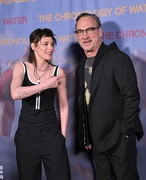
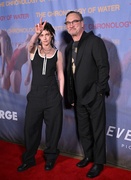
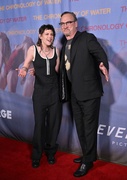
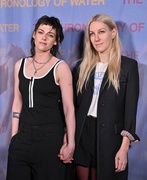
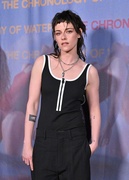
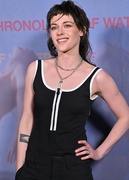
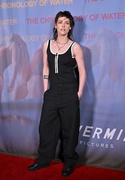
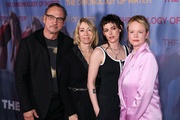
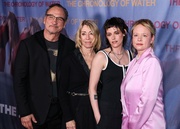
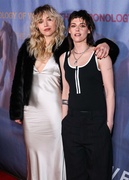
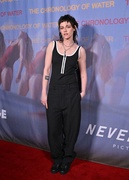
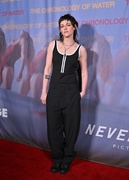
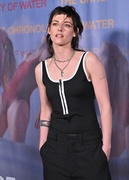
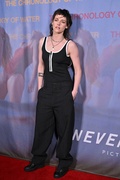
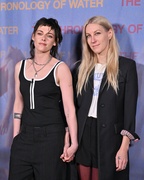
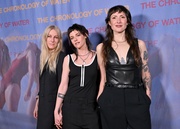
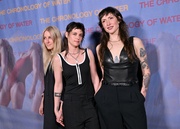
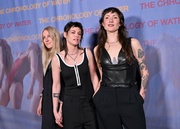
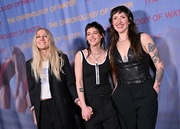
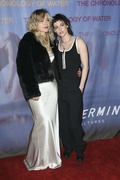
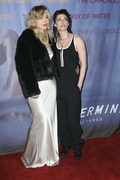
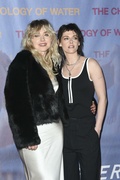
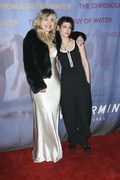
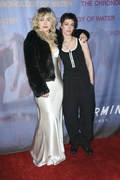
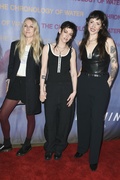
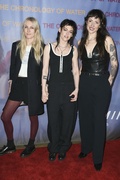
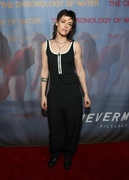
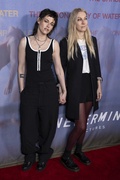
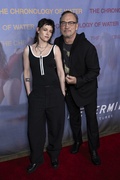
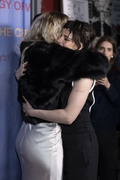
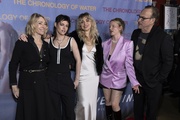
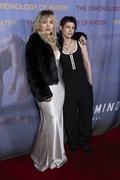
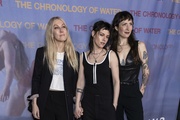
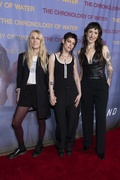
Kristen and Imogen Poots talk to The Guardian for 'The Chronology of Water'

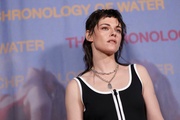
The movie is to be eaten alive and re-metabolised and shat out differently, from everyone’s perspective,” says Kristen Stewart, bracingly. The actor’s directorial debut, The Chronology of Water, has been doing the rounds at film festivals, and when we meet in London the reviews are coming in. Stewart knows that this impressionistic, arthouse collage of a film – adapted from an experimental memoir about a woman’s pain and loss, the elusive nature of memory and the reclamation of desire – is not going to be for everyone. “My favourite Letterboxd review is: ‘The Chronology of what the fuck did I just watch?’” But it matters to her that people respond to it. “Whether it’s your least favourite movie or your most favourite, it’s not lying, it’s genuine. And I’m so fucking proud of that.”
Stewart is sitting next to the film’s star, a slightly more sanguine Imogen Poots. Watching Stewart talk, her leg bouncing, her vocabulary ferocious, feels a bit like being sandblasted. It is invigorating and strangely galvanising, but you don’t go into a conversation with her half asleep. The same can be said for the film itself. “Language is a metaphor for experience,” writes the author Lidia Yuknavitch, at the beginning of the book on which it is based. “It’s as arbitrary as this mass of chaotic images we call memory.”
Stewart first read the book in 2018, while on the set of the movie JT LeRoy. She saw the visual potential in this mass of chaotic images and quickly decided it would be her first feature-length film as director. “Forty pages in, I was so rallied and so viciously adamant that nobody else could make the movie but me,” she says. “It was so physical. So vital. Such a permeating secret. There’s an unearthing quality to the way that [Yuknavitch] talked about trespass, and how your desires are carved into your body. As a woman, we have these seeping birthplaces that are our orifices, and it’s where we hold our power, but it’s also where we’re taken advantage of.” At this point, less than two minutes in, it’s fair to say that it isn’t quite turning out to be your run-of-the-mill movie-star promotional chat. “We’re all so muzzled,” Stewart says. “And it just felt like the muzzle was off. That’s the fun part. It’s got a loud mouth. A big, wide-open mouth.” So she sent Yuknavitch an email.
“A wildly exciting email,” the author says, from her home in Portland, Oregon. “She was explaining to me why I could never let this book be a regular biopic movie, and how I had to let her make a piece of art out of it. The language she used went under my skin immediately, because it wasn’t regular-person language.” Yuknavitch, obsessed with films since she was five, was, of course, familiar with Stewart’s work. “I even wrote a novel with her in mind, a while ago. She was younger. She had just punched through the Twilight experiences, and she was moving toward independent art films, and I pictured her in my brain when I wrote this novel.” It is called Dora: A Headcase. It sounds like a spooky connection, if she believes in that kind of thing? Artists, Yuknavitch replies, have a tendency to find each other. “They run across each other’s work, and these threads or streams we don’t entirely understand touch each other. And I think that’s what happened.”
It was not an easy film to finance. Poots and Stewart, both big readers, get into a meaty discussion about how confessional literature is taken seriously when men write it, and “belittled, constantly”, Stewart says, when it comes from women. “There are so many examples within modern literature of men laying it all bare, but as soon as you do something overtly personal as a woman, it’s less serious,” Stewart continues. “We’ve just been fully X-ed out of modernism in the canon. It’s like we don’t exist in it whatsoever. And it’s such a fucking crock of shit. You have to be Virginia Woolf to be considered a good writer.” Reese’s Book Club, this is not.
Did they come up against those attitudes when making the film? “Yes, because I think when people read it, it was reduced to how to sell it,” says Stewart. “OK, well, what’s it about, incest and rape? Fun!” It was not an easy pitch, she admits. “It’s about the gouging out of desire, and the reframing of that, and how empowered that is. In a slug line, it’s a really tough sell.” It took eight years of development before they finally got to work, mostly on location in Latvia. In the meantime, Stewart continued to act, and directed smaller projects: a couple of short films and a music video, for the band Boygenius. Chronology ticked away in the background, sometimes unpromisingly, until eventually it somehow came together. Even Stewart’s longtime producer, Charles Gillibert (On the Road, Personal Shopper), had told her that he couldn’t finish the script. “And he’s not the only one. He really encouraged me not to make this movie,” she smiles. “I was like: we’re gonna cease being friends if you keep saying this to me.”
Poots plays the adult Lidia with bodily gusto. The film is a collection of fluids and fragments. Poots read Stewart’s screenplay, and then the book, and then sent Stewart “a really pretentious email, which she lapped up”, she teases. Was she nervous about taking on a role that is so stark and exposing? It pulses with sex and drugs and violence. Bleeding and sobbing and grief wash over it. “Any actress I know would have wanted to play this part,” says Poots. In fact, she explains, casting her as the lead meant that the film was harder to make. “If Kristen had hired a massive movie star, then it would have made getting the money a hell of a lot easier,” she says.
Poots is a best-kept-secret kind of actor, and her performance here is immense, but I ask Stewart why she felt so loyal to her. “She’s my favourite actor, and everyone else sucked,” she shrugs. “There was literally no one else, and she’s been a fave of mine for ever.”
“And we have the same teeth,” says Poots, showing them off.
Stewart flashes hers in unison. “Because we have the same teeth, I thought: this is my girl. Bucktooth!”
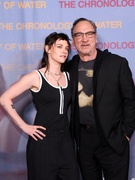
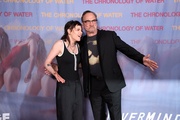
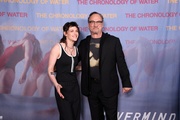
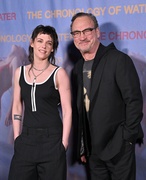
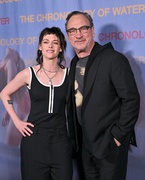
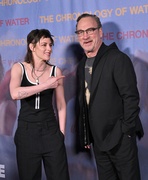
The film also stars Kim Gordon, Thora Birch and Jim Belushi, who plays the late One Flew Over the Cuckoo’s Nest author Ken Kesey. It is a merry band of misfits. “What’s really cool, and you wouldn’t have been aware of it, is that these people, who have all been at the centre of these incredibly creative community movements, wanted in on what you were doing,” says Poots to Stewart.
Did she pull in any favours to get them involved? “Nobody did me any favours, trust me,” Stewart says, gravely. “In fact, we got fucked. In the face. Over and over.” She pauses. “Like a real woman!” she jokes. To be honest, she says, Belushi came on board after a couple of other actors dropped out. “I don’t think it was an easy yes. But the feeling of him supporting you, a nice pat on the back from Jim Belushi, could make you cry. He’s kind of a radical, and he’s a hippy, and he was perfect to play this part.”
As the film deals in memories, it rejects any sort of conventional narrative structure. Men come in and out of Lidia’s life, which meant that actors would come on set briefly and leave again, “sort of like a conveyor belt”, says Poots.
“Or chapters,” suggests Stewart.
“These insanely brilliant, talented actors,” says Poots.
“And they serviced you,” grins Stewart. “It was fucking incredible to watch male actors come in and have it not be about them. I would be like: sorry, but we’re actually not gonna shoot you. We’re just gonna shoot her. But talk to her. You’re here, kind of, but this is about her.”
Poots cackles. I’m guessing this is not a typical experience? “Mmmm,” says Poots. “For so many reasons.” Both say they plan to make “a lot more movies” together.
A few weeks later, Birch video calls from her home in Los Angeles, her dog lounging happily in the background. “You cannot enter a conversation with Kristen Stewart without coming locked, loaded and ready to go,” she laughs. “It’s intimidating!” Birch plays Lidia’s older sister, Claudia, in a brief but mighty role. In one of the film’s earliest scenes, she holds a sobbing, grief-racked Poots in the bath, following the death of Lidia’s stillborn baby girl. “Imogen is just a knock-down, one-two-punch, hazelnut-popping actress out of the Brit academy if I ever saw it,” Birch says, brilliantly.
Birch and Stewart had met at an event where they did some “mutual fangirling”. A few months later, Stewart called and said she was making a movie. Birch signed on straight away, and then she read the script. “I’m not going to lie, it was a little bit of a daunting process,” she says. “But I just trusted her already.” Partly, she thinks, that’s because they have some shared experiences. Both became famous as children. Stewart was 12 when she starred in Panic Room, while Birch’s run of 1990s and early 2000s films – from Hocus Pocus to Now and Then to Ghost World – defined adolescence for a whole generation of girls.
“Maybe I related to her because we’re both performers who started out very, very young, and so we had a common language. I say she’s my spirit animal. She does a lot of things that I do, but just way better,” Birch says. She had followed Stewart’s career from afar. “Different times, different generations, but the way she handled [getting famous young], I was just like: dude, that’s with aplomb. You knocked it out of the park, because you held on to your individuality and your point of view, which can really be difficult to hold on to.” She waves a hand. “But let’s not get too far into that.”
In its boldness and experimental form, The Chronology of Water may well be a surprise to those more familiar with Stewart, the movie star, who might not expect a film like this from her. “I sort of did,” counters Birch. “This is a very Kristen Stewart movie.”
She is glad, she says, that this is the story Stewart chose to tell. “She will hate me for saying it, but I’m sorry, this is emblematic of a female experience that not a lot of people are ready, willing or even able to dissect and talk about.” The movie covers some “heavy shit”, Birch says. “We’re talking about period blood and stillborns and familial sexual abuse. Nobody wants to talk about this stuff, and yet she presents it in such a way that it marries fantasy and poeticism, and but also the human experience. It’s a punk rock arthouse movie that is like a non-psychedelic ayahuasca trip.”
It makes sense, then, that Birch had no idea how it would turn out. She just had to have faith in what they were doing. “And then when I saw it, I was like: oh, that’s what she’s doing. One reviewer said: homegirl can direct. And coming from LA, I was like: yeah, that’s it. Homegirl can direct. She knows what’s up.”
The Chronology of Water is released in UK cinemas on 6 February
Saturday, January 24, 2026
Wednesday, January 14, 2026
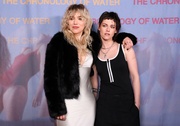
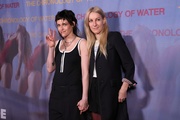
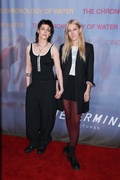
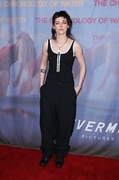
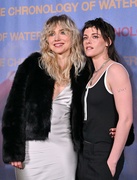
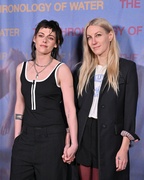
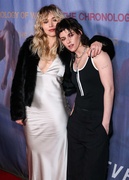
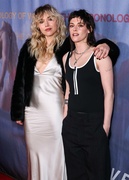
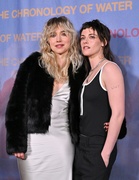
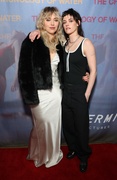
Kristen and Imogen Poots interview with Deadline for 'The Chronology of Water'

Seldom does a movie linger in your bones long after you’ve watched it. And Kristen Stewart’s directorial debut, The Chronology of Water, was built to pull your psyche deep down underneath the ocean waves.
Based on the memoir of the same name by Lidia Yuknavitch, the visceral film, shot in a neurological, fragmented, dream-like structure, follows Lidia (Imogen Poots) as she seeks escape from an abusive childhood through competitive swimming in the 1980s. After falling down the rabbit hole of addiction, toxic relationships, and self-sabotage to mask the pain of her upbringing, Lidia tries to buoy herself to safety by trying to uncover her voice and find healing through the act of writing. To create this unique cinematic experience, Stewart and Poots endured rigorous trial-and-error shoots, tough training days in clandestine New York pool houses. They also built a seemingly long-lasting friendship in the process. “Working with an actor like that, there’s nothing [she can’t do],” Stewart told Deadline about guiding Poots through the most challenging scenes for the film. “I touched the fucking sky with her. You cannot get higher than that.” Stewart has explained the film as being designed as a reflective experience for the audience that unflinchingly shows the subconscious ways memory lives within the human body.
Below, Stewart and Poots talk to Deadline about hiding hernias, falling in love with raw, compelling stories and learning to succumb to the ebbs and flows of vulnerability.
DEADLINE: Imogen, you read this incredibly rich, dense and emotionally harrowing script. What’s the first thing going through your head?
IMOGEN POOTS: Several to a million thoughts. When I got the script, I knew Kristen had adapted it and would be directing it. That makes a huge difference because you’re opening the page of something you want to love. And so often in this business, you want to love something and for whatever reason, it just doesn’t come through. The execution or the idea can be good, or the concept is interesting, but it doesn’t come together. And for this, I was completely enthralled. I read it quite slowly because I wanted to take it all in. I was so excited that Kristen was going to make a film. It’s different these days. There’s so many actors, directors and the artistic community is very vast. It’s hard to grab hold of someone and turn them around to you and be like, “Hi, I think you’re brilliant. Do you want to make something together?” That’s why I was excited to read this: I think Kristen’s one of the rare people working now who are really doing something very different, not in a showy way, but only in the [hyper specific] way she knows how to. This script is an extension of that. The character in the story is so brilliant. I love romantic comedies and animated movies, but most of the time I want to see the movies and relate to what is up there on screen.
[Relating to people] doesn’t happen as much anymore because people are looking like they’re made of AI, and we don’t have mature actresses in leading roles in the way we should. So many people are left out of relating to what’s on the screen in front of them. I really related to this character, and I felt like a lot of women were going to because of her inconsistencies, because of her hopes, and dreams, and fantasies and the way she sabotages the good stuff, and how your own life’s work is to take responsibility for someone else’s problem that they have caused. It’s such a horrendous, but sort of fascinating story to tell.
DEADLINE: Kristen, what compelled you to take on this book adaptation for your first movie as its writer and director?
KRISTEN STEWART: The book, I felt, is an internal landscape, and it has little pockets, corners, and tiny corridors that this woman feels like she can talk to herself and no one else. It kind of felt like it was scrawled across the interior of her epidermis, then turned inside out. It just didn’t feel like a book that was for other people. There was something about how it felt too hot to touch, like so dangerous that if you reveal certain aspects of your experience, how you’ve responded to stimulus in the world that we all live in, despite the details of your household or your upbringing. There was something, a little skirt lifting and secret talking about it, that I was just so proud of this woman’s ability to do it. And I felt like she did it to get other people to do it, to find community and companionship, and to be able to design and write your own self into being.
The story just felt like a scattering of experiences that was somehow so succinct in its mission, rather than holding the reader’s hand to make it more palatable and easier for them to understand where you’re coming from. You have to have a lot of patience when you read the book and to watch the movie. But it’s not because it’s a slog, it’s because you need to give yourself time. Frankly, I think we keep making the same fucking movie over and over. And by doing that, it’s just taking everyone’s opportunity to think for themselves away on a daily basis, and we don’t even really know it. Then you see something that hangs a lantern on the fact that we’ve all been inoculated with just being entertained [and nothing more].
POOTS: We’re being inoculated by the patriarchy.
STEWART: So, when I read this book, I thought, “Gosh, this is such a diving board.” And ultimately, the movie really does reflect the screenplay, except maybe for large chunks cut out. It was very dense, like you said earlier, because we just overshot the hell out of it. But the coolest part is that you can feel that all these memories, everything’s in retrospect, there’s no present tense in the movie. All of this feels either cut off or elaborated on in a magical thinking way; nothing feels objective. Therefore, I just thought everyone could put themselves in this film because I could put myself in it.
DEADLINE: Imogen, what was the physical training like for this?
POOTS: There was a lot of swim training because I wanted to learn the form and the strokes, obviously, for portraying it on camera accurately, but also, I wanted to get into Lidia’s mind. I also read Swimming Studies by Leanne Shapton, which is a wonderful swimmer’s memoir full of beguiling facts about what it’s like to live your life as a swimmer and how there’s this rapacious, bottomless appetite that comes with swimming. And Lidia, as a person, has that in so many ways in relation to her life. I also met all these amazing people who were like child champions, and I love doing that. It’s really cool as an adult to learn new things because we stop doing that when we’re teenagers [laughs]. We just kind of go, “Well, I’ve learned everything I need to know, I guess.” But it’s not the fucking truth at all.
Weight training was very important to me. I wanted to feel strong in my body, and sometimes your body can be a stranger to you. One of the coolest things you can do is understand how to be in your own body, which is easier said than done. When you’re moving through the world in a way where lots of different types of people are trying to translate your body into a language they can better digest, it has bad effects on you. So, I think understanding what your body is capable of is cool. That training was helpful for playing the part because, in a way, her strength is juxtaposed against the fragility of a person like her. And then after the fact, I found it weird having this body now that I wasn’t playing Lidia anymore. So, that’s when it hit me how important it was to have had a different type of physicality to play the part.
STEWART: I need to add that Imogen got two hernias while training for this and didn’t tell me about it and just held her guts in and bared down and told me after we finished shooting. There was a line in the book that moved the ever-living hell out of me, but it just didn’t end up in the movie because her body took the place of this line of dialogue. But there’s a point where she’s standing off with her dad in a sort of not literal way and a sort of atmospheric, emotional, transient in terms of time. And she goes, “I was stronger than I’d ever been in my entire life.”
STEWART: And Imogen was probably stronger than she’d ever been in her entire life when she made this movie.
POOTS: It’s tough in this day and age to consider [the way you look at] yourself in a good way. And Kristen made me feel beautiful. That’s a huge feat for someone to do for someone else, and for a woman to do that for another woman, an actress to do that for another actress. It’s such a cool symptom of the film because the body really matters.
DEADLINE: Speaking of the body, there are so many close-ups on intimate body scenes and stylized choices that make the film feel like a retro home video. What were your inspirations?
STEWART: Well, I was really obsessed with accomplishing a first-person perspective that didn’t feel hokey, especially in the beginning. There are really embodied angles. There are things that Lidia is looking at that normal filmmaking would not frame or design because it just doesn’t tell enough, because you need to feel stuck in certain positions at the beginning of the movie, because it’s supposed to make you feel this oppression that matches this physical cage experience that this young kid is having. I thought about the sound of the house, with this internal rhythm that holds the viewer and tells you she did get out. And the whole thing is the climb. It’s like you realize that the movie has this engine of: get the fuck out of that house.
Then, when she leaves the house, she can’t get out of it. It follows her, like this haunted experience and memory. Those flickers or flashes were used to show intrusive thoughts or moments of wonder. It’s sometimes less straightforward, too, to show time folding in on itself and displacing awareness, because certain memories, wishes, or projections into the future can sometimes take up more space than the current moment you’re living in. That’s such a personal experience that we don’t share with other people. As Lidia gets older, the movie takes on a more concerted composition, and sometimes we step back from the body to look at her because she’s somebody who’s defined those terms. Therefore, they speak for themselves, so it doesn’t feel voyeuristic. I never wanted to feel a third body in the room. The only time we really feel it is when we slam into this really objective wide shot while she is touching herself against the door frame, and it just felt like all of a sudden it was so hard-earned. The times when we decided to just all of a sudden cut to Imogen head-to-toe against an entire atmospheric background are so fucking shocking. And she’s such an animal that she just blows your fucking hair back. So, we needed to be confined and contained and let her break out of that emotional prison.
By the end of the movie, it’s very chill, kind of boring in a beautiful way. Everything is really standard. I had a lot of faith and trust in odd angles, and this was the funnest thing I have ever done in my entire life, being able to design these weird experiences, for example, of having sex with a person instead of watching two people fucking, which is something I never need to see again. You get to see something like that from the inside out, from the inside of someone’s body – disgustingly [laughs].
POOTS: [I’ll add to that about close-ups]. I think intimacy, on and off camera, is something we are trying to understand, especially when the formative experience of intimacy has been kind of rebranded by someone else. Kristen has said this a few times that Lidia’s backstory, being what it was with her father and with child abuse, is this person’s story. There’s also a different version of that story, which is what we were talking about earlier: how does moving through the world affect your experience as a woman in your body? Many people have been like, “You’re so open.” But I’m also quite protective and steely, and, of course, like everyone else, I have moments of vulnerability. And so, attempting to get close to what that is on camera is also vulnerable. But the safety of working with people who are not only very talented at what they do, and of course, they’re going to take care of you, there’s just something at play where everything’s worth it. And I think some projects aren’t worth being that exposed for, and this one just had to be this way. If we’re going to tell this story, that’s exactly what we’re there to do. And so, I think that’s always challenging, but at the same time, that’s exactly why I wanted to do it. And it was one of those experiences where the film gave me a gift back, and I think everyone involved felt that way. And so, there’s just a kind of, in terms of what’s challenging to me as an actress, I mean, I want that.
STEWART: You really understood the assignment in a way that is, like, the mutual recognition after so many years of screaming into an echo chamber and auditioning honestly 500 girls and everyone who’s ever made a movie and never made a movie. And I’ve known everyone, I’ve met all these fucking women. And then all of a sudden this person comes along as a friend, as a fellow. And I know you to be steely and not reserved. In fact, Imogen has to be reserved because there’s just so much in there. There’s a preservation thing that you do as an actor sometimes, because if something’s not good enough, then you can’t break down those walls. It’s just not worth it. But I look back on this, and I go, I can’t believe what you put yourself through for us, for me, for yourself, for us together. And because of that, we have a totally different relationship.
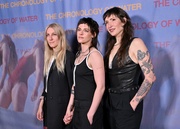
What you did during that little month and a half, I can’t believe it. There’s one scene for me that I still wonder to this day how it was possible, which I think makes the film. There was a deck for one particular sequence. There’s a love scene between three women that I didn’t know would work. It relates to certain elemental nature aspects, and it insinuates or implies that we are organic material, and it’s a very sort of impressionistic and pretty and potentially sterile because there’s no fucking in it. But to achieve this, Imogen had to, for several hours, make the scene with me, trying to make this [makeshift] photography book of intimacy, and then all of a sudden the whole movie and her whole life fell on top of her. And instead of making a sterile kind of collage of sexy suds and waves, it became about Lidia, and it became about Imogen. It became about intimacy itself, about being a woman, and about holding that space. And it became a scene. And that’s an actor who’s not playing scenes. She’s living the entire life of it. And to find that, I mean, honestly, I don’t know if that would’ve been successful to just cut out of that without some kind of segue back into reality. Working with an actor like that, there is nothing. I touched the fucking sky with her. You cannot get higher than that.
POOTS: I’m going to cry. It’s interesting because, at moments, the character, through her own volition, creates this space because of the life she’s had. She’s an incredibly lonely person. It’s interesting to play someone who is that lonely, even though she has this kind of relationship with her sister. She’s deeply lonely. And it’s funny, on the other hand, it’s like moving through the world; if I hadn’t met Kristen, I don’t know what that looks like. I don’t know. You can really miss that. You can potentially miss a very crucial moment where someone is just pushing you further into what you’re already on the scent of. And it’s those people, whether it’s someone who takes you seriously when you’re younger to do something or whatever, but there are almost transcendent moments in terms of a creative life, because otherwise you might just miss it. And that’s OK too, but it’s cool to know that this was meant to be, or at least I believe it was.
STEWART: It’s so rare. It comes along just a couple of times in a lifetime, if you’re fucking lucky.
DEADLINE: What would you both like people to take away from this moving story that you two have created?
POOTS: Let’s make more films like the movies that we all miss and adore. Let’s keep making great films, finding the right people to work with and getting them financed. There’s a line from Kim Gordon in her book Girl in a Band, which is like, “People will pay a lot of money to watch other people believe in themselves.” And she’s talking about that in terms of being a musician, but it’s interesting to think about that in a sense of people paying money to hear what women have to say or people paying money to watch a character go through so much.
I do think the movie is uplifting, and it’s uplifting because it’s not straightforward. And I don’t think it’s this kind of Hollywood pat, truncated statement buzzword thing. It’s raw, messy and badass. It’s epic and mundane. And it’s something you can actually move through and push through the membrane, but it might just look different from what you’ve been sold. And that’s absolutely fine because that’s what it’s like to live a life. It’s really reassuring to see people living their lives, and it’s often the interstitial stuff that matters.
STEWART: Someone texted me last night that was like, “Thanks for getting me to think again.” It was nice to hear Immy go through that because, just to put it plainly, it’s about daring to think for yourself. So that we can actually believe in ourselves and not in other people’s ideas of who the fuck we should be.
Sunday, January 11, 2026
















Saturday, January 10, 2026















































































































































































































































































































































Subscribe to:
Posts (Atom)