Click on pic for full view.
Home
- Home
- Team Kristen
- Affiliates
- Wins and Nominations for 'Spencer'
- Cannes Film Festival 2018
- American Ultra
- Anesthesia
- Billy Lynn's Long Halftime Walk
- Cafe Society
- Camp X-Ray
- Certain Women
- Chanel
- Charlie's Angels
- The Chronology of Water
- Crimes of the Future
- Clouds of Sils Maria
- Come Swim
- Equals
- Happiest Season
- JT Leroy
- Lizzie
- Love Lies Bleeding
- Love Me
- Personal Shopper
- Seberg
- Spencer
- Still Alice
- Underwater
- Scheduled Appearances in 2026
Friday, January 31, 2020
Thursday, January 30, 2020
Benedict Andrews talks 'Seberg' and mentions Kristen with the Australian
For Benedict Andrews, Kristen Stewart has some distinctive qualities as an actress: “As a performer, she works from somewhere quite raw. She will kind of throw herself at takes and she’ll often pull herself up if she feels she’s out of tune. She’ll break a take, swearing and cussing like a sailor. She has an incredible truth barometer.”
When he first met her in a Los Angeles restaurant to discuss the screenplay for his new movie, Seberg, she was all business: “There was no small talk. We jumped straight into unpacking the script, talking about (the character), and in that first session it was as if we had already rolled up our sleeves and started to work together, and we never looked back.”
Andrews, an Australian filmmaker based in Iceland who has a long history in theatre and opera, is increasingly turning his energies to film.
At first glance Seberg, his second feature, is a biopic, a portrait of the American actress forever remembered from her role in Jean-Luc Godard’s 1960 Breathless: cropped blonde hair, New York Herald Tribune T-shirt and an insouciant act of betrayal.
Andrews’s portrait of Jean Seberg, from a screenplay by Joe Shrapnel and Anna Waterhouse, explores some of the ups and downs of her career and private life in Hollywood and Europe, but focuses on the actress at a particular moment in time.
In the 1960s a politically aware Seberg began donating money to civil rights causes, including supporting the Black Panthers. She came to the attention of the FBI, which put her under surveillance and used media contacts to spread stories about her that were intended to destroy her reputation.
This tension, says Andrews, forms the centre of Seberg: “the tragedy of watching a luminous life be damaged and destroyed by FBI harassment, and the truth of her life turned into a lie”.
The film is in some senses a double portrait: it’s an exploration of the figure of fictional FBI agent Jack Solomon (Jack O’Connell), a zealous young operative who initially throws himself into the task of covert observation with complete conviction.
To bring out the obsessive, voyeuristic nature of this process, Andrews made a film that saw him “interweaving the story of the watcher and the watched”.
He is quick to acknowledge that a film about filmmaking also heightens some of the movie’s themes: “Surveillance has been a big topic in my theatre work and I think an interest in voyeurism comes with the job. After all, in theatre and in filmmaking I spend my time watching people reveal the most private aspects of their lives and their beings and then invite other people, the audience, to come and do the same.”
It’s an activity that Jack, the FBI agent, is also involved in, “using the same machinery as cinema, cameras and microphones, to look into the minutiae of somebody’s life. I was very interested in those parallels between filmmaking and surveillance, and the idea of truth in both of them.
“Jean is trying to find truth as an actress,” he says, “to mine her most private memories, dreams and emotions, and all the things that are usually kept hidden. She has to reveal them for her work. And she’s also trying to find an authenticity in her politics and her romantic life.”
This part of her world included a relationship with Black Panther, Hakim Jamal (Anthony Mackie).
“Jack thinks he’s after truth,” Andrews says. “He believes at the beginning of the film in the American dream and he believes in his role as an agent, that he’s fighting the good fight. Then he realises he’s involved in the corruption of it and the weaponisation of truth to destroy political enemies.”
Yet the act of surveillance, Andrews adds, the collection of the minutiae of another person’s life, also allows Jack an insight into that life, and an emotional connection to it, particularly as he witnesses Seberg in free fall. At the same time, making a film about a cinematic subject has its risks.
“There’s a real danger when actors play actors,” Andrews says. “You can end up with a mask. Admittedly Jean isn’t as famous as a James Dean or a Marilyn Monroe, but even so, an actor can feel burdened or haunted” representing someone with a film legacy.
Seberg embraces the many faces of Jean, re-creating scenes from her films, showing her at fashion shoots, press conferences, interviews and film sets, as well as in her most private, solitary and fragile moments — and as a woman under observation.
Andrews never thought Stewart was in any danger of falling into that trap. “She really cared deeply about Jean and her story,” he says, “but she never became protective and she was never playing an idea, she was always trying to find the person from the inside out.
“This was important for me and it was something that I had a hunch she would be able to do because of this kind of volatility she has an actress.”
During the production of Seberg, Andrews says, the events of the film had some disturbing contemporary resonances. The often clumsy analog tools of surveillance of the 60s have been transformed into familiar, ubiquitous, everyday objects that accompany us everywhere and record us without our knowledge or consent.
“There’s this mass culture of surveillance and the movie is a warning about the dangers and abuses of that,” he says.
At the same time, Seberg has an elegance to it, even though it’s made with what Andrews describes as “a scrappy indie budget, way below a period movie that’s shot on film in LA should be”.
He puts much of this down to cinematographer Rachel Morrison and costume designer Michael Wilkinson, who worked alongside production designer Jahmin Assa.
The Australian-born Wilkinson, who was nominated for an Oscar for American Hustle, has an eclectic slate of superhero, fantasy and indie movies to his name and has worked with Stewart before on one of the Twilight movies.
For Seberg, Andrews says the designer’s challenge was to invoke the distinctive worlds of Hollywood, the FBI and the Black Panthers, “and I think his work is just astounding”.
And Morrison, he says, was particularly impressive in the way she approached the handheld camera work in the second half of the film, during scenes that convey Seberg’s vulnerability and despair.
“She’s smart,” he says, “very sensitive, and she had a great team working with her. We were both very happy to be shooting on film and we wanted to shoot a movie with a very contemporary sensibility in terms of the storytelling yet at the same time leaning into those paranoia thrillers of the 70s. We drew on those, we used similar lenses to the ones Gordon Willis used on (films such as The Parallax View and Klute), but we never wanted to make a nostalgic film.”
He is rather pleased, nevertheless, by one aspect of Seberg that could almost qualify as nostalgia.
In researching the Black Panther movement he found a 1968 documentary short by French filmmaker Agnes Varda to be an invaluable resource. He had thought some of the footage from Black Panthers might make it into Seberg but the rights proved too complicated to acquire.
Instead, he found other film shot on one of the days Varda was shooting a Panthers event. So, instead of footage by her, there’s a fleeting glimpse of Varda. “I’m extremely proud she’s in the movie,” he says.
Source
Saturday, January 25, 2020
Friday, January 24, 2020
Kristen's talks 'Underwater' and more with the Herald Sun (Australia)
Two decades into her career and nearing a decade since shooting her final scene in The Twilight Saga, Kristen Stewart is taking control.
At 29, the actor knows who she is, what she wants to do, and she’s determined to get out there and do it.
“Those words strike a serious chord,” says Stewart.
“I definitely don’t want to sort through ‘maybes’ any more – I have to say that is something I have grown out of, but used to covet.
“I used to enjoy the fact that filmmaking was such a strange alchemy, you could never really control it, therefore if there was something appealing in a movie that didn’t seem as sturdy of a bet as maybe some others with a more reliable director or whatever, then I would still go for it.
“Now I’m really feeling the idea that, you know, as female filmmakers in this business right now, I only want to spend my time – which feels precious – on movies that I really stand with.”
Whether it’s last year’s popcorn action flick Charlie’s Angels or her upcoming art house biopic Seberg – about the actor Jean Seberg who was targeted by the FBI in the 1960s, opening January 30 – Stewart says she just wants to be able to look back at the “library of s--- you did in your life” and know that “I spent my time doing it for a good reason”.
“My instinct has always been something I’ve had no fear in following. But now that I’m trying to control things a little bit more it is an interesting balance of following instincts, but then knowing how to protect yourself as an artist and make sure to set yourself up for success.”
But just because she wants to stand with her work, doesn’t mean it all has to be serious, issues-based drama.
While the success part didn’t really pan out at the box office with Charlie’s Angels, Stewart loved the fact writer-director Elizabeth Banks saw her inner goofball and set it loose.
And her new action movie Underwater was all for the thrills: “Human beings scratching into places that they don’t belong and uncovering a wrath,” says Stewart.
“I thought that was a cool baseline of a thriller. I love a scary movie, I love watching people try and not die.”
On the flip side, being the person pretending to try and not die isn’t always a good time. “Literally I look back and I’m like, why did I do that?” she admits with a laugh.
Where Charlie’s Angels was brash and colourful, Underwater is tense and claustrophobic.
The thriller drops us at the deepest point of the ocean as a drilling and research rig springs a leak and all hell breaks loose. With communications shut off, Stewart’s Norah and a small band of survivors (including French star Vincent Cassel and comedic actor TJ Miller) attempt to cross the ocean floor to another station … but something is out there with them.
If Underwater is the underwater Alien, Stewart is the Ripley of the piece, doubling down on her action heroine credentials.
While she was drawn to the idea of doing a project less “in its own head” and more “just propelling yourself forward”, the Underwater shoot was as much a test of survival for her as it was for her character.
“It was really freeing to do Charlie’s Angels, but it was absolutely in no way freeing to do this movie,” she says.
For starters, given her fear of water, even taking a quick run into the waves “always seems like a daring act,” she says.
And this wasn’t so much a drip, as a constant drenching.
“It was so claustrophobic, really uncomfortable and wet and drippy and cold and just awful. It was f---ed up. In every way that it looks uncomfortable in the movie, it was.”
But, Stewart adds, “it was cool to test your limits. The water aspect was appealing ’cos I was like, ‘Man, if I can do that I will be really proud of myself’.”
And much like the impact Underwater aims to have on an audience, fear is the entire point.
“I never want to make a movie unless it scares me, unless there’s something about the story or the character that strikes a chord that is similar to terror,” Stewart says.
“Then moving towards that to figure out how to either get through it, or just understand why it exists, is usually why I want to make a movie.”
While she’s too young to have been directly influenced by Sigourney Weaver’s Ripley, she had her own action icons growing up – “women that made it seem like it was possible,” she says.
At the top of that list?
“F---ing Angie” – Angelina Jolie.
“It’s because she also was such an incredible actress,” Stewart explains. “As a really little kid I was like, wow the same girl from Girl, Interrupted – she’s amazing in that movie and then she’s such a powerhouse in Tomb Raider and Wanted. I definitely grew up thinking, ‘Wow, I would like to do that’.”
Source
Thursday, January 23, 2020
Kristen and Benedict Andrews's talk to The Age (Australia) about 'Seberg'
Most people remember Jean Seberg as the ’60s gamine with a daringly short pixie crop selling the Herald Tribune in Breathless, Jean-Luc Godard’s game-changing 1960 film about a gangster’s affair with a naive American tourist. That was pretty much all Kristen Stewart knew about her, she admits, before she was sent the script for Seberg. It was then that she learned that Seberg was an activist – most prominently, a supporter of the Black Panthers – who was pursued, persecuted and her career demolished in covert operations by the FBI.
“Figuring out what her actual story was, I was baffled by the fact it wasn’t more commonly known,” Stewart says. “But I don’t think my view of her was reductive, because I wasn’t surprised by the way she led her life. You can tell when she’s in films that her eyes are open. She’s not a performative actor; she’s instinctive and very present.” The film begins in 1968, with the actress setting out for Los Angeles to audition for Paint Your Wagon. Paris, where Seberg lived with her second husband Romain Gary, had erupted into revolution. In the US, the civil rights movement was increasingly militant. Of course someone like Seberg, infused by the spirit of the times, would nail her political colours to the mast.
Benedict Andrews, the Australian director, says that he thought of Stewart for the role as soon as he read Joe Shrapnel and Anna Waterhouse’s script. “From that moment, I could not imagine making the movie without her.” There were parallels in their biographies – both had starring roles while still in their teens, both were vilified in the US and found a new freedom in the European cinema – that were interesting without being crucial. Whoever played Jean had to “look like one of the icons of 20th century cinema” but that in itself wasn’t so difficult. “A model can get that great haircut, all of that.” The crucial thing was less tangible.
“Jean had a kind of radical openness, a kind of luminous quality and I didn’t want someone trying to impersonate that,” Andrews says. Impersonation can work in a biopic, he says, but he wasn’t after that. “I was after a kind of raw truth. I think Jean possessed that and Kristen possesses that; in different ways, they have an essence that you can’t pin down.” He wanted Stewart to embody Seberg while remaining herself. “That’s what I think great film actors do. They’re both those things, or it’s just an impersonation. And she does both. She is Jean and Kristen simultaneously.”
The fact that Seberg was having an affair with a Black Power leader, here called Hakim Jamal (Anthony Mackie) was especially incendiary. FBI agents staked out her house, bugged her bed and the phone, called at all hours. The central relationship in Seberg, however, is between Seberg and her unseen pursuer Jack (Jack O’Connell), a recent agency recruit who is assigned to watch her and becomes obsessed with her. She knows he is there, but nobody believes her; she is driven to the point of paranoia by this gaslighting as much as the surveillance itself.
Andrews, whose august career has been mostly in theatre, says this dual perspective is something only cinema could deliver. “I can’t do that in the theatre. And I love how that works on an emotional level, that parallel connection with the two of them. That is uniquely cinematic.” In a sense, he says, the whole film is about the relationship between the camera and its subject. “Jack is shooting Jean with a camera; we’re shooting Kristen with a camera. The techniques of surveillance are the same techniques as cinema. We see it used to create beautiful iconographic images like her as Jean and we also see it used as a device of lies.”
The film has had mixed reviews, both in Cannes and since it opened in Europe – the Telegraph’s “snappy, absorbing watch” is Indiewire’s “mess from start to finish” – but critics were unanimously impressed by Stewart’s committed performance. Jean/Kristen as Seberg is jittery, vulnerable, intelligent, well-intentioned and impulsive; as one review put it, she plays with fire, including blazes of her own making. “I think she had a sort of voracious hunger for experience, but I think more than that she was at her very core a humanitarian,” says Stewart. “There were interviews from people who grew up with her in Nebraska where they remember her consistently fighting for the underdog. So I think her activism started very, very early.”
Whether actors should become poster people for political causes remains a vexed question, debated most vigorously around Oscar time when stars get their two minutes on the podium. Some believe that with fame comes the responsibility to speak out; others think actors should just stick to acting. Stewart doesn’t think actors are obliged to take up any cause. “As soon as you start feeling imposed upon, if you feel people are pulling things out of you, it’s contrived. Nobody’s entitled to your opinion.” These days, she is comfortable with staying quiet if she has nothing specific to say. “I feel like it’s very clear where I stand. I think it would be really shocking to hear I was a staunch Republican. That would be like a super shocker.”
People can also elect to be entertainers, she says. “You don’t have to be someone who represents your ideas. There is an escapism that is gorgeous and you can be part of that, for sure.” On the other hand, she says, anyone who identifies as an artist is intrinsically political. “There is no way for your art not to reflect the way you view the world you live in. People who are compulsively artistic wear their politics naturally. Without even knowing they are making statements, they are doing it inadvertently. If you’re not living in fear of your career failing and willing to engage in the world around you, that’s political in itself.”
Seberg is in cinemas from January 30 in Australia.
Source
Labels:
Benedict Andrews,
mentions,
print interview,
Seberg
Wednesday, January 22, 2020
Mary Steenburgen, Dan Levy, Alison Brie, Audrey Plaza and Victor Garber and more join the cast of 'Happiest Season"
![]() |
| Pic: ET Canada |
As Clea DuVall's Happiest Season — the gay rom-com starring Kristen Stewart and Mackenzie Davis — heads into production in Pittsburgh, the movie has rounded out its supporting cast.
Mary Steenburgen, Victor Garber and Schitt's Creek creator and star Dan Levy are joining the TriStar and Entertainment One project, along with GLOW star Alison Brie and Aubrey Plaza.
Happiest Season follows a woman (Stewart) whose plan to propose to her girlfriend (Davis) while at her family’s annual holiday party is upended when she discovers her partner hasn’t yet come out to her conservative parents (Steenburgen and Garber).
Actress-turned-director DuVall will be making her studio directing debut on the feature, which she co-wrote with Mary Holland.
Holland will also appear in the movie, along with Ana Gasteyer (The Goldbergs), Burl Moseley (Crazy Ex-Girlfriend), Sarayu Blue (Blockers) and Jake McDorman (What We Do in the Shadows).
The project will be produced by Temple Hill's Marty Bowen and Isaac Klausner. Jonathan McCoy and Wyck Godfrey will executive produce.
TriStar will release the film worldwide, with the exception of the United Kingdom and Canada, which will be handled by eOne.
The movie will hit theaters Nov. 20.
Source
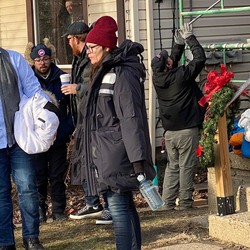
Fan video and photos of Kristen filming 'Happiest Season' in Pittsburgh - 21 January 2020
This is day one of filming and our first full view of Kristen as 'Abby'.
Actor Dan Levy (Schitt's Creek) is pictured with Kristen and is part of the cast. Alison Brie (Glow) has also been spotted on set and is part of the cast.
Labels:
BTS,
Dan Levy,
fan photo,
Happiest Season,
Production,
video
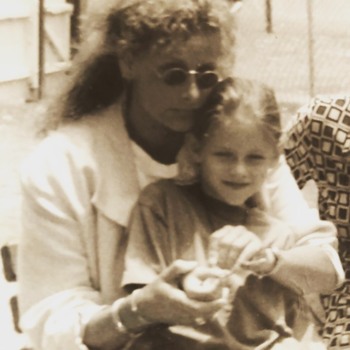
New/old photo of Kristen and her mom. Shared by Jules Stewart.
Labels:
Family,
Jules Stewart,
Personal,
Photo
Subscribe to:
Posts (Atom)