Home
- Home
- Team Kristen
- Affiliates
- Wins and Nominations for 'Spencer'
- Cannes Film Festival 2018
- American Ultra
- Anesthesia
- Billy Lynn's Long Halftime Walk
- Cafe Society
- Camp X-Ray
- Certain Women
- Chanel
- Charlie's Angels
- The Chronology of Water
- Crimes of the Future
- Clouds of Sils Maria
- Come Swim
- Equals
- Happiest Season
- JT Leroy
- Lizzie
- Love Lies Bleeding
- Love Me
- Personal Shopper
- Seberg
- Spencer
- Still Alice
- Underwater
- Scheduled Appearances in 2026
Showing posts with label Benedict Andrews. Show all posts
Thursday, September 17, 2020
Benedict Andrews talks about 'Seberg' and mentions Kristen with Film Rezensionen (Germany)
Google translated.
What interested or inspired you in the story of Jean Seberg?
I became interested in this period in her life when her success as an actress, her political engagement and her love life intersected. Jean was a very idealistic person who tried to voice a good cause, which ultimately got her into the crosshairs of a big FBI wiretap. This action ultimately broke her up, her private life was severely disrupted, everything was approved by the state. In a way, that was a fascinating discovery for me and a very complex subject.
Many celebrities these days use their popularity to express their political opinions or support movements. Would someone like Jean Seberg be treated differently today than they were in the 60s?
To be honest, I don't know because my film is about a very specific example within a very specific context. Of course, today social media and the internet allow many celebrities to express their opinion on political issues, but in Seberg's case we also have a very special socio-political framework. Because African American political movements within the mainstream media as well as a racist FBI were perceived as a threat, it became a target. That had less to do with the nature of her political engagement, which, in contrast to that of Jane Fonda, for example, was by no means so public. Jean's engagement was mostly of a private nature and was reflected in her donations for the Malcom X Foundation or the Black Panthers.
What I find so terrifying about their story is how surveillance is directed against a person and changes them, brings them to the brink, and all for purely political reasons. Added to this is how this institution used the private life of the intercepted person as a weapon against them, discredited them and spread “fake news” about them. In our world we live with the reality of a war of information, whether it is true or false. Jean Seberg is, if you will, one of the first victims of this war.
Regarding Una and Ray, you once said that you are interested in characters whose experiences make them strangers to themselves. How could this apply to the characters in Against All Enemies ?
If you look at a character like Jean Seberg in my film, you could say that his experience is similar to that of Jack O'Connell's character. Both have to go through fire and in Jean's case it results in the destruction of what she sees as truth and reality. This is the consequence of surveillance and the lies that are being spread about them. She is caught in a spiral that is associated with high personal losses.
This experience gives her a changed perception of the world, which one can sense in the last moments of the film. Then she is no longer that somewhat naive, very impulsive woman that we met at the beginning of the film. Characters like Blanche DuBois from Tennessee Williams' Endstation Sehnsucht or King Lear, but also characters like Una and Ray have to go through this painful experience in order to then arrive at a different understanding of their world. This process is very complex and not exactly easy to define.
In parallel with Jean's story, Jack O'Donnell's character goes through a similar development. He changes from a man who believes in democratic values and the moral integrity of the FBI to someone who, by seeing what happens to Jean, sees how corrupt this system is. Because his truth, his world, has also changed, he ultimately becomes a whistleblower, a person who has completely emancipated himself from his character at the beginning of the film.
The scene in which Kristen Stewart and Anthony Mackie's characters rehearse a dialogue from a script is very beautiful, well played and staged. Can you tell us something about the creation of this scene or others that you are particularly proud of?
In this scene we wanted to show Jean's life as an actress on the one hand, but also to shed light on her affair with Hakim. Hakim gets a glimpse of their world, but within this game of conversation they are rehearsing, he also gets an idea of who she is and can be. I like the way Anthony Mackie plays in that scene and the location, which was incredibly beautiful. The scene they both play, i.e. the one in the fictional screenplay in the film, comes very close to a scene in Seberg's film Westwärts the wind draws very close, but we changed and adjusted the dialogue for the film a bit.
In general, there is a lot that I'm proud of in this film. This includes the subtlety of Jack O'Connell's play and the very courageous portrayal of Jean Seberg by Kristen Stewart. A very exciting and dramatic scene that I really like is the children's birthday party. On the one hand it is a happy, almost idyllic occasion with the many children, the beautiful weather and the barbecue, but then you know that Zazie Beetz, who plays Hakim's wife in the film, knows about the affair and is now confronting Jean with it . She insults her as a tourist who is only superficially interested in black people's concerns for reasons of prestige. In addition to the performance in the scene, I like how the complexity of the relationships between the characters is shown here.
Another example of a scene that I like is the picture of Jean in the swimming pool, when the process of her mental decline from reporting and surveillance is well underway. On a visual level, I find this sequence beautiful and very complex.
I also find the scene with Jack O'Donnell and Vince Vaughn's characters interesting, when they both have dinner with their families and Vaughn's character suddenly has a very loud argument with his daughter.
This scene roughly shows the Republican-Conservative nightmare (laughs). Vince's character is someone who is fighting something like war with his son and daughter when he talks about his son joining a commune. At the same time, this war is also the one he is fighting in his work: to make the USA a white, conservative, very masculine dominated country. This is a character who tries to maintain control, but who keeps losing control.
In addition, the scene is interesting because here the FBI is no longer perceived as just a machine or an institution, but as a viewer you get an insight into the private life of the investigators.
It was important to me that every scene refers to the relationship between Jean and Jack. So when Vince's character annoys at the end of the scene and asks who she looks like while looking at his daughter and her short hairstyle, the film comes back to this relationship between Jack and Jean.
Can you tell us a bit about your collaboration with cinematographer Rachel Morrison?
One of the most important decisions we made about the look of the film was that we wanted to use real film cameras, not digital ones. Even if we had to make do with a limited budget, we wanted to make a film that was formally similar to the films of the 60s, but also to those conspiracy thrillers of the early 70s, especially the works of Alan J. Pakula ( Klute , Witness a Conspiracy , The Untouchables ) . In general, we had to find a visual language for surveillance, but also for Jeans collapse.
In addition, we sat down with our production designer Jahmin Assa very early on to find suitable locations that should be provocative and expressive. Since we didn't have the money to show a detailed picture of the time, we instead focused on the inner drama of the characters and how the locations and the camera could express it.
Rachel helped a lot with this, because she can shoot extremely beautiful and powerful hand-held camera shots, which you can see in this film but also in her earlier work such as Ryan Coogler's Next Stop: Fruitvale Station . Especially in the later course of the film, the change from initially still static recordings to these restless but very sensitive handheld camera recordings illustrates the process and decay that Jean is going through. The viewer is, I think, able to better understand what Jean is going through.
Thank you for the nice conversation.
Source
Labels:
Benedict Andrews,
mentions,
print interview,
Seberg
Friday, February 28, 2020
Friday, February 21, 2020
Benedict Andrews talks 'Seberg' and Kristen with Screenrant
Jean Seberg is a legendary actor who American audiences and younger generations might not be as familiar with as they should be. Do you feel a certain responsibility to point out to viewers why she was so important, why she was persecuted, why she deserves to be remembered and championed?
I don't think it's even generational. I think it's part of her story that people know her as an icon from Breathless, but then her career never catapulted. She was very famous when she was cast as Saint Joan and had this immediate moment of fame, but there's a shadow over her legacy, and it may well be to do with the events that the movie portrays. I feel an enormous responsibility to shine a light on this part of her life, the injustice that happened to her. But more than that, I feel it's the responsibility of a filmmaker, whether the character is living or fictional, to find and enter into the emotional truth of that character. The film looks through a very specific window into her life, but in that, we're trying to kind of leave a trail of clues. The Jack O'Connell character, he has the same questions as some of the audience: "Who is Jean Seberg?" By him drilling into her life, we're able to start pulling threads and leave trails for people to follow about her past. We don't try to tell the whole story. That would be a whole other thing.
That would be a miniseries.
Every character in the movie, and Jean herself, there would be multiple miniseries, because their lives are so complex and fraught and loaded. But we deliberately narrowed to these couple of years at the end of the 60s. But at the end, we leave trails for people to follow, like the burning in Saint Joan, when she was burned on that set, and all these little clues. But each aspect of her life is so extraordinary. We barely touch on her marriage to Romain Gary, which is a fascinating story in itself. I feel it's an invitation for people to get closer to her. We wanted to get closer to her in the period the movie covers, and to show the FBI's campaign against her, both from her side, as someone going under and being driven mad by that experience, but also from the other side, with Jack watching her. But yes, there's an enormous responsibility to her legacy, and to not allow her story to disappear. Politically and culturally, it's a hugely important story that seems to chime with the current moment that we're living in.
For sure. Just watching the movie, it's so telling how the FBI's campaign against her and the Black Panthers was all about reducing her to a hysterical woman, and them to a bunch of angry black guys who want to overthrow the entire government. Kind of how equality becomes conflated with supremacy, and how it's weirdly inverted now, with white nationalists who feel disenfranchised because they believe white supremacy is being threatened. It's wild. Those false equivalencies. And they were successful with Jean, because she's so comparatively obscure today.
And also successful because of the destruction of those relationships. The destruction of her political relationships, as well as personal ones. I mean, what happened to Jean was just the tip of the iceberg. As the Anthony Mackie character says, she's caught in the crossfire of white America's war on black America. There's not really an equivalence in terms of the war on those activists. We hint at it; for instance, when you see the school destroyed, it's devastating, and a direct consequence of this kind of warfare that Vince Vaughn's character represents. A secret, dirty war. In Jean's case, she's giving financial support and she's holding fundraisers. She's not even necessarily giving a huge public voice. There were other activists, like Jane Fonda and Marlon Brando, who were a lot more in the public eye for their actions, but even for that, and for crossing those boundaries, the machinery of the state surveillance is turned against her. There's a real loss of those productive relationships between Hollywood and the black activists. People who genuinely believe in changing their country and a woman who was horrified by injustice in her country and trying to find a way to change that. And to see her sense of truth destroyed, and her private life destroyed. But, of course, those legacies still continue in a really positive way, too.
Yes. I think you see it a bit in the "shut up and sing" mentality that pops up on Twitter all the time. Like when Joaquin Phoenix won his Oscar and gave an important speech about what he believed in and got mocked online. I mean, that's obviously nowhere near on the scale of what was done to Jean, but maybe it's a vestige of that relationship... But one thing that's really uplifting is the all-star cast that you assembled for what I imagine is not a hugely-budget movie.
It is not. (Laughs) Which, also, you know, is one of the achievements of the whole team. It's an extremely elegant movie. She was an elegant woman, but the movie also crosses these different worlds and we needed to create and do justice, on a period level, to all of those worlds. I wanted each of those worlds to have their own photographic beauty and so on. On our budget, that was a real challenge, but an accomplishment I'm really proud of. But you asked about the cast?
Ah, we can circle back to them, we've got time. I've talked to people who've done period films before and they've all sighed and gone, "It's not easy." Any anachronism sticks out like a sore thumb. It takes a lot of work to make sure every car is period-appropriate, every prop, every costume... And her costumes are amazing.
Yeah, Michael Wilkinson (Justice League) did an incredible job.
That scene where she tells Anthony Mackie that she's pregnant, and she's wearing that yellow and black outfit, it's just gorgeous.
He's a genius, Michael. And he works beautifully with actors. I've been particularly impressed with those clothes in American Hustle. What he gets away with with all of them, but you can just see the trust of the actors, in particular the actresses in that movie. With both elegance and sophistication, but also the way the clothes talk. We couldn't afford to go outside that much. Another movie set in the late 1960s was being shot at the same time, with something like, 11 or 12 times the budget. Margaret Qualley is in both, though! (Laughs) I remember, I was coming home at 3:00 AM or something, after a late shoot, and I got stopped at the traffic lights on the corner of Hollywood Boulevard. We'd been recycling our couple of period cars, and we got stopped for, like, eight minutes while Tarantino's period cars went by.
Oh my gosh, a convoy!
There's his budget versus our budget! But still, I'm incredibly proud that we got such a true and non-cliche sense of period across all of those different worlds. The movie, in a way, is also about that intersectionality of worlds. Jean is a boundary-crosser. From the first minutes of the movie, she goes from the Left Bank of Paris, where she lives with Romain Gary as the darling of La Nouvelle Vague, and then she crosses to 1968 LAX, meets the Panthers, goes to her exquisite glass house in the Hollywood Hills. Going crazy by herself, chucking ice cubes into the pool, she decides to drive down to Compton. And that's all within the first ten minutes of the movie, we cross those worlds. And Jack's first day at work, and suburban L.A., in the belly of the beast in the FBI building. Jean's a boundary-crosses, moving across all of those different worlds. So the story becomes about a woman who is testing these boundaries and crossing these borders, and the movie had to do that, had to move between all of these different worlds and kind of contrast them and get them right, but it also becomes about these borders being crossed, and the way the FBI are interested in someone who is violating that. And they are on this border, too. There's a beautiful scene, early on, when Jack's in the van, and in an homage to The Conversation, the camera drifts out through the car and onto two women doing their makeup. It's a metaphor for cinema, since he's sitting there, looking at these two people through a screen with his camera there. That delicious kick of voyeurism is similar to what the audience is getting. That's one of the things that appealed to me on a cinematic level. This woman, who lives her life in public as an actress... And I've spent my life working with incredible actors in the theater, and their job is to kind of go into their private – all the stuff we usually keep hidden, that we're not meant to show other people – the actor's job is to dig into that and use their memories, their emotions, expose their raw nerves in front of the audience or the camera. That's their craft, their product, and their soul. It's their truth.
It's so complex, because with the FBI enforcing the understood segregation. And Jean tries to cross those lines and then Zazie's character, Dorothy, calls her a "tourist."
It's at a moment where everything's starting to change. That change is up in the air, and as Zazie's character says, the revolution needs movie stars. That tension is there, and it could flip either way. And in fairness, the FBI have leaked evidence of Jean and Hakim's private life, so Dorothy's just found out that her husband's having an affair. But she hasn't found out because she's seen him coming home late or anything; she's found out because the FBI leaked the tape. Then it flips to the other side, where Jean has become a tourist. All the contradictions become exposed and get weaponized. What really interested me, and this touches on all of it... As an actress, having private space, the FBI turns the same cinema equipment against her. Cinema should be the pursuit of truth, an exposure of the living fabric of life and the world and human relations and political relations, and the cinema is our tool par excellence to kinda look into our living substance and reflect on that, and the actor's job is to put that truth in front of an audience. The FBI used those same tools, cameras and microphones and study of he minutia of a life, to destroy her, to destroy her political relationships, and to destroy the very notion of truth. And to take the things they find and weaponize them against her. She was on the boundary between cinema and surveillance. It's a really fascinating study now that we live in a surveillance culture, a reminder of how terrifying that machine of state surveillance is. We see it in its infancy in the movie. Now it's grown up into the mass cultural surveillance we live in.
Yup, not that they even need surveillance anymore; they can just make stuff up and call the truth "Fake News." I mean, not to get political or anything.
The movie touches on that, it's another way it's prophetic.
Right, it's not Hakim's baby.
When Vince's character... He's like a kind of sick author, or writer/director of that side of the film within the film. He's taking that evidence he's collected, and you see that moment where he's listening to them and distorting it, knowing the damage it will do, and being very cavalier about it. The same with his boss, like he's signing off for the studio.
Bringing it back to this cast you've assembled. Again, not a huge budget movie. But is that the power of Jean's story? I imagine a lot of these actors worked for less than their standard rates...
Yeah, and I think it was also a testament to the script. I think there's many ways to tell her story. And I think, once people got to know her, I know this was certainly the case with Kristen, she felt such an incredible empathy and understanding, and really wanted to do Jean's life justice. But I think when people read the script, they were pulled in by the sheer ride of the writing, the way these two worlds, and the surveillance thriller of it, intersect with this study of that portrait of Jean. And also, I think people just had an understanding that this was a story that needed to be told, and that it's a powder keg in terms of how 1968 speaks to 2019 or 2020. I think there was a sense of that, that people could feel.
Kristen Stewart is so talented. I know it, you know it, everyone knows it, and her performance in Seberg is incredible.
She's phenomenal. She puts herself on the line. It's tricky for an actress to play another actress. She didn't want to do an impersonation. It can very easily end up like that. There's such a burden in playing someone else, copying someone else. We very deliberately copied Jean, 100%, in the scene of her Otto Preminger audition, and the moment of the final scene from Breathless. Then, in a way, we could find of put that aside and go, okay, now we can find it from the inside out and find the living, raw, vulnerable character and go into that. That's what Kristen and I were concentrated on doing. What is this situation this person is in? What does she believe in? What is she fighting for? How is she trying to keep her head above water? She gives a very elegant, very brave, very intelligent, very raw performance that echoes with Jean. I think they both have a raw impulsive quality, and they both have a tremendous life force. That's one of the reasons I was so interested in Kristen for the role. And a very tricky thing for it, too, is she's not just playing an actress, but a style icon. I hoped to have someone who was a style icon in her own right, so they're not faking the funk on that. They get that and can do it their own way. I think that also helped. I love watching the movie, and you can oscillate between, "Yes, that's Jean Seberg, and yes, that's Kristen Stewart."
Source
Labels:
Benedict Andrews,
mentions,
print interview,
Seberg
Thursday, February 20, 2020
Thursday, January 30, 2020
Benedict Andrews talks 'Seberg' and mentions Kristen with the Australian
For Benedict Andrews, Kristen Stewart has some distinctive qualities as an actress: “As a performer, she works from somewhere quite raw. She will kind of throw herself at takes and she’ll often pull herself up if she feels she’s out of tune. She’ll break a take, swearing and cussing like a sailor. She has an incredible truth barometer.”
When he first met her in a Los Angeles restaurant to discuss the screenplay for his new movie, Seberg, she was all business: “There was no small talk. We jumped straight into unpacking the script, talking about (the character), and in that first session it was as if we had already rolled up our sleeves and started to work together, and we never looked back.”
Andrews, an Australian filmmaker based in Iceland who has a long history in theatre and opera, is increasingly turning his energies to film.
At first glance Seberg, his second feature, is a biopic, a portrait of the American actress forever remembered from her role in Jean-Luc Godard’s 1960 Breathless: cropped blonde hair, New York Herald Tribune T-shirt and an insouciant act of betrayal.
Andrews’s portrait of Jean Seberg, from a screenplay by Joe Shrapnel and Anna Waterhouse, explores some of the ups and downs of her career and private life in Hollywood and Europe, but focuses on the actress at a particular moment in time.
In the 1960s a politically aware Seberg began donating money to civil rights causes, including supporting the Black Panthers. She came to the attention of the FBI, which put her under surveillance and used media contacts to spread stories about her that were intended to destroy her reputation.
This tension, says Andrews, forms the centre of Seberg: “the tragedy of watching a luminous life be damaged and destroyed by FBI harassment, and the truth of her life turned into a lie”.
The film is in some senses a double portrait: it’s an exploration of the figure of fictional FBI agent Jack Solomon (Jack O’Connell), a zealous young operative who initially throws himself into the task of covert observation with complete conviction.
To bring out the obsessive, voyeuristic nature of this process, Andrews made a film that saw him “interweaving the story of the watcher and the watched”.
He is quick to acknowledge that a film about filmmaking also heightens some of the movie’s themes: “Surveillance has been a big topic in my theatre work and I think an interest in voyeurism comes with the job. After all, in theatre and in filmmaking I spend my time watching people reveal the most private aspects of their lives and their beings and then invite other people, the audience, to come and do the same.”
It’s an activity that Jack, the FBI agent, is also involved in, “using the same machinery as cinema, cameras and microphones, to look into the minutiae of somebody’s life. I was very interested in those parallels between filmmaking and surveillance, and the idea of truth in both of them.
“Jean is trying to find truth as an actress,” he says, “to mine her most private memories, dreams and emotions, and all the things that are usually kept hidden. She has to reveal them for her work. And she’s also trying to find an authenticity in her politics and her romantic life.”
This part of her world included a relationship with Black Panther, Hakim Jamal (Anthony Mackie).
“Jack thinks he’s after truth,” Andrews says. “He believes at the beginning of the film in the American dream and he believes in his role as an agent, that he’s fighting the good fight. Then he realises he’s involved in the corruption of it and the weaponisation of truth to destroy political enemies.”
Yet the act of surveillance, Andrews adds, the collection of the minutiae of another person’s life, also allows Jack an insight into that life, and an emotional connection to it, particularly as he witnesses Seberg in free fall. At the same time, making a film about a cinematic subject has its risks.
“There’s a real danger when actors play actors,” Andrews says. “You can end up with a mask. Admittedly Jean isn’t as famous as a James Dean or a Marilyn Monroe, but even so, an actor can feel burdened or haunted” representing someone with a film legacy.
Seberg embraces the many faces of Jean, re-creating scenes from her films, showing her at fashion shoots, press conferences, interviews and film sets, as well as in her most private, solitary and fragile moments — and as a woman under observation.
Andrews never thought Stewart was in any danger of falling into that trap. “She really cared deeply about Jean and her story,” he says, “but she never became protective and she was never playing an idea, she was always trying to find the person from the inside out.
“This was important for me and it was something that I had a hunch she would be able to do because of this kind of volatility she has an actress.”
During the production of Seberg, Andrews says, the events of the film had some disturbing contemporary resonances. The often clumsy analog tools of surveillance of the 60s have been transformed into familiar, ubiquitous, everyday objects that accompany us everywhere and record us without our knowledge or consent.
“There’s this mass culture of surveillance and the movie is a warning about the dangers and abuses of that,” he says.
At the same time, Seberg has an elegance to it, even though it’s made with what Andrews describes as “a scrappy indie budget, way below a period movie that’s shot on film in LA should be”.
He puts much of this down to cinematographer Rachel Morrison and costume designer Michael Wilkinson, who worked alongside production designer Jahmin Assa.
The Australian-born Wilkinson, who was nominated for an Oscar for American Hustle, has an eclectic slate of superhero, fantasy and indie movies to his name and has worked with Stewart before on one of the Twilight movies.
For Seberg, Andrews says the designer’s challenge was to invoke the distinctive worlds of Hollywood, the FBI and the Black Panthers, “and I think his work is just astounding”.
And Morrison, he says, was particularly impressive in the way she approached the handheld camera work in the second half of the film, during scenes that convey Seberg’s vulnerability and despair.
“She’s smart,” he says, “very sensitive, and she had a great team working with her. We were both very happy to be shooting on film and we wanted to shoot a movie with a very contemporary sensibility in terms of the storytelling yet at the same time leaning into those paranoia thrillers of the 70s. We drew on those, we used similar lenses to the ones Gordon Willis used on (films such as The Parallax View and Klute), but we never wanted to make a nostalgic film.”
He is rather pleased, nevertheless, by one aspect of Seberg that could almost qualify as nostalgia.
In researching the Black Panther movement he found a 1968 documentary short by French filmmaker Agnes Varda to be an invaluable resource. He had thought some of the footage from Black Panthers might make it into Seberg but the rights proved too complicated to acquire.
Instead, he found other film shot on one of the days Varda was shooting a Panthers event. So, instead of footage by her, there’s a fleeting glimpse of Varda. “I’m extremely proud she’s in the movie,” he says.
Source
Thursday, January 23, 2020
Kristen and Benedict Andrews's talk to The Age (Australia) about 'Seberg'
Most people remember Jean Seberg as the ’60s gamine with a daringly short pixie crop selling the Herald Tribune in Breathless, Jean-Luc Godard’s game-changing 1960 film about a gangster’s affair with a naive American tourist. That was pretty much all Kristen Stewart knew about her, she admits, before she was sent the script for Seberg. It was then that she learned that Seberg was an activist – most prominently, a supporter of the Black Panthers – who was pursued, persecuted and her career demolished in covert operations by the FBI.
“Figuring out what her actual story was, I was baffled by the fact it wasn’t more commonly known,” Stewart says. “But I don’t think my view of her was reductive, because I wasn’t surprised by the way she led her life. You can tell when she’s in films that her eyes are open. She’s not a performative actor; she’s instinctive and very present.” The film begins in 1968, with the actress setting out for Los Angeles to audition for Paint Your Wagon. Paris, where Seberg lived with her second husband Romain Gary, had erupted into revolution. In the US, the civil rights movement was increasingly militant. Of course someone like Seberg, infused by the spirit of the times, would nail her political colours to the mast.
Benedict Andrews, the Australian director, says that he thought of Stewart for the role as soon as he read Joe Shrapnel and Anna Waterhouse’s script. “From that moment, I could not imagine making the movie without her.” There were parallels in their biographies – both had starring roles while still in their teens, both were vilified in the US and found a new freedom in the European cinema – that were interesting without being crucial. Whoever played Jean had to “look like one of the icons of 20th century cinema” but that in itself wasn’t so difficult. “A model can get that great haircut, all of that.” The crucial thing was less tangible.
“Jean had a kind of radical openness, a kind of luminous quality and I didn’t want someone trying to impersonate that,” Andrews says. Impersonation can work in a biopic, he says, but he wasn’t after that. “I was after a kind of raw truth. I think Jean possessed that and Kristen possesses that; in different ways, they have an essence that you can’t pin down.” He wanted Stewart to embody Seberg while remaining herself. “That’s what I think great film actors do. They’re both those things, or it’s just an impersonation. And she does both. She is Jean and Kristen simultaneously.”
The fact that Seberg was having an affair with a Black Power leader, here called Hakim Jamal (Anthony Mackie) was especially incendiary. FBI agents staked out her house, bugged her bed and the phone, called at all hours. The central relationship in Seberg, however, is between Seberg and her unseen pursuer Jack (Jack O’Connell), a recent agency recruit who is assigned to watch her and becomes obsessed with her. She knows he is there, but nobody believes her; she is driven to the point of paranoia by this gaslighting as much as the surveillance itself.
Andrews, whose august career has been mostly in theatre, says this dual perspective is something only cinema could deliver. “I can’t do that in the theatre. And I love how that works on an emotional level, that parallel connection with the two of them. That is uniquely cinematic.” In a sense, he says, the whole film is about the relationship between the camera and its subject. “Jack is shooting Jean with a camera; we’re shooting Kristen with a camera. The techniques of surveillance are the same techniques as cinema. We see it used to create beautiful iconographic images like her as Jean and we also see it used as a device of lies.”
The film has had mixed reviews, both in Cannes and since it opened in Europe – the Telegraph’s “snappy, absorbing watch” is Indiewire’s “mess from start to finish” – but critics were unanimously impressed by Stewart’s committed performance. Jean/Kristen as Seberg is jittery, vulnerable, intelligent, well-intentioned and impulsive; as one review put it, she plays with fire, including blazes of her own making. “I think she had a sort of voracious hunger for experience, but I think more than that she was at her very core a humanitarian,” says Stewart. “There were interviews from people who grew up with her in Nebraska where they remember her consistently fighting for the underdog. So I think her activism started very, very early.”
Whether actors should become poster people for political causes remains a vexed question, debated most vigorously around Oscar time when stars get their two minutes on the podium. Some believe that with fame comes the responsibility to speak out; others think actors should just stick to acting. Stewart doesn’t think actors are obliged to take up any cause. “As soon as you start feeling imposed upon, if you feel people are pulling things out of you, it’s contrived. Nobody’s entitled to your opinion.” These days, she is comfortable with staying quiet if she has nothing specific to say. “I feel like it’s very clear where I stand. I think it would be really shocking to hear I was a staunch Republican. That would be like a super shocker.”
People can also elect to be entertainers, she says. “You don’t have to be someone who represents your ideas. There is an escapism that is gorgeous and you can be part of that, for sure.” On the other hand, she says, anyone who identifies as an artist is intrinsically political. “There is no way for your art not to reflect the way you view the world you live in. People who are compulsively artistic wear their politics naturally. Without even knowing they are making statements, they are doing it inadvertently. If you’re not living in fear of your career failing and willing to engage in the world around you, that’s political in itself.”
Seberg is in cinemas from January 30 in Australia.
Source
Labels:
Benedict Andrews,
mentions,
print interview,
Seberg
Friday, January 17, 2020
Friday, January 10, 2020
Director Benedict Andrews talks 'Seberg' and mentions Kristen
Outtake Magazine
This is of course based on a true story. Did you have any knowledge of that history before they came to you with the screenplay?
Andrews: No, I didn’t.
Have you found it to be known at all?
It’s certainly not well-known. In my experience, people will know and adore Jean Seberg from Jean-Luc Godard’s Breathless and some people will know of her other films, but they tend not to know her history. That said, there are some people interested in American politics and that period who will know a lot about it. There is a lot of material, once you start to dig. But I think there is a reason why this wasn’t known, and it’s because those in power so effectively destroyed her and destroyed her truth. There’s been rumours in some of her biographies of there being attempts to tell this part of her story before, and of the FBI leaning in to stop these stories being told. I don’t think that’s the climate we live in; I think there’s now permission to talk about this era of Hoover’s FBI because enough time has passed.
The interesting thing is that, as that time has passed, the story becomes more about now. The writers wrote this script ten years ago and there were several attempts to get it made. When I came on board along with a new bunch of producers, then it happened fairly quickly. But I also think there’s a ‘film gods’ thing happening, in that now feels like exactly the right time to tell her story. And Kristen is the only actress I can think of to play her, which I think is something people are also really responding to: what Kristen stands for, where she’s at as an actress, the transformation she’s going through, and all of that. The similarities are spooky. What I’m saying is that I believe some movies get made when they need to be made.
Didn’t it first screen on the 40th anniversary of her death?
Yes it was, while we were in Venice.
Was that intentional?
It was a coincidence. I mean, we were shooting 50 years later, events from 1968-69, and so I was aware that the Los Angeles we were in was 50 years later and all of that… but it’s all the million coincidences that led that to happen… And it doesn’t look like it – it looks like a very lavish, very elegant film – but it’s made on an indie budget.
That might be surprising to some, because that limited budget doesn’t translate visually.
I don’t tend to say this, but it was a motherfucker to make. And to get that money, and to cross all those different worlds that the movie crosses with such authenticity… and we shot on film! And the costumes also look so authentic. So to get the kind of elegance and value that her life needed was difficult because we couldn’t go outside much. You know, Tarantino was shooting Once Upon A Time In Hollywood at the same time for 11 times the budget [$8 million versus $90 million], and he recreates the entirety of Sunset Boulevard! We can’t go out there but in a way – again with the film gods – the movie is about privacy and private space, so there’s a kind of special feeling that the movie gets by not being able to go outside. She leans out the window in New York and there’s the city, but we don’t have any establishing shots of New York.
It’s claustrophobic in that sense.
Yeah, and also true to her experience, right? Kristen said that to me the other day like, “I don’t even know which city I’m in.” The actress is moving from place to place, and often only seeing the inside of a hotel room because they can’t go outside so easily. So that had become true to her experience… I don’t know how we got on to that! But anyway, it was a fight to get the movie made and all those things then come to it being released at Venice Film Festival. I literally only knew it was on that exact anniversary because I was plugging back into the movie ahead of promoting it in Venice, and I was looking back through an old notebook and saw I’d drawn a cross with her birth and death day. Isn’t that crazy?
Eerie, that’s for sure. You’ve mentioned Kristen Stewart‘s many parallels with the subject. Were you picturing her when reading the script or did that come later?
No, it did come later. I don’t know why. Maybe it’s the difficulty of casting an actress to play an actress… She came into the conversation relatively late, but from the moment we sat down with each other to talk about it and feel each other out, literally from the first word, we were already making the movie. And now I look back and think, there is no version of this movie without her. Even if you had a wonderful actress, technically brilliant, who could have been given the haircut and look like her, that movie is still just a movie. She [Kristen] taps into some other rhythm and frisson between her and Jean, where there’s a level of truth and understanding that only she could bring to it. It’s a chemical reaction.
And do you think that’s because there are so many ways in which she is a modern equivalent of Jean? They are both vocal activists, they’re both young actresses who started off assigned to a certain persona which they then wanted to move away from…
It’s all of that. They’re also wildly different: Jean was a Protestant girl from the Midwest and Kristen grew up in the valley. But you have this ridiculous amount of parallels that you’ve touched on, plus being thrust into the public eye at a very tender age, being unfairly treated by domestic press, both of them unfairly savaged. And Kristen is the only American actress to have won the Cesar award while Jean Seberg became known as a French actress, so they had parallels in European cinema, while keeping star status in the States. Kristen certainly understands this idea of living in a glass house, and as a director it’s a gift for her to have an innate knowledge of that.
And another thing is for her to play such a style icon; there’s maybe a couple of people in the world who are on Kristen’s level, who are avant-garde or experimental while also working with Chanel and major fashion houses. And Jean… we don’t portray Jean wearing denim jackets, looking like Jane Fonda or looking like a hippie. She’s still dressed in Chanel, that Left Bank culture and forward-thinking couture. All of that was groundwork and in the end, she’s just a fucking good actress, and a hungry actress, and a singular actress. And she has a similar thing to Jean in that she didn’t go to drama school in London – no disrespect to those who did – but neither of them had that protection of technique. Kristen of course has incredible technique that she learned being directed by David Fincher at age 11 and coming up on all those film sets but, like Jean, it’s a raw and instinctive kind of technique.
She certainly gave something spectacular. You’ve spoken of media treatment and living in a glass house – and in many ways, the period you focus on marks the beginning of the surveillance state as we know it. What commentary is the film making in today’s socio-political climate?
We get very close to both sides of a surveillance operation during this great shift in American history. It’s like you were watching the Big Bang of it, the beginning of the modern state and modern culture. Now, we all carry those surveillance mechanisms around and we are completely complicit in our loss of privacy… The film is a warning or reminder of what happens when this machinery is turned against a dissident or activist, by a very reactionary, conservative and racist government machinery. Today, that’s not a fairytale or something out of a quaint past; it’s the daily reality of governments that use racism to split and gain voters as part of their warfare against truth. And we watch Jean caught in the crossfire of that war waged by White America on Black America. That manufacture of fake news, not the journalists’ version of fake news, but by the state who are manipulating truth and weaponizing lies. That’s still what’s going on. And with Jean in that conference standing up to the lies, and Jack Solomon (Jack O’Connell)’s gesture of coming to her and becoming a whistleblower, those both present as non-didactic, non-dogmatic instances of people valuing truth. That’s really urgent for the culture we live in now. It’s incredible the parallels between a burning 1968 and a tumultuous 2019.
Electric Ghost Magazine UK
Electric Ghost Magazine: We’re speaking at the BFI London Film Festival, where Seberg just had its UK premiere. What is your relationship to the city and the festival?
Benedict Andrews: London is a second home to me. Film4 funded my first feature Una and at that time I was living in Smithfield Market. I’ve also done work at the Young Vic [Andrews worked on productions of Cat on a Hot Tin Roof and A Streetcar Named Desire for the Waterloo theatre]. We showed Una at the BFI festival in 2016 and I came to find that there’s a real density to the festival, similar to Melbourne in my home country. It’s a really smart cross-section of movies that you have to plot your way around. It’s a kind of injection into the complex cultural life of the city and its strong, critical filmmaking culture, opening a door to what is out there. It recognises the diversity in today’s cinema and feeds that.
Una was your first feature film after years of directing theatre. Can you talk me through the jump from one medium to the other?
With Una, I was adapting the play Blackbird by David Harrower, so I still had a foot in the theatre. It is a complex study of sexual abuse, and also of a nihilistic relationship. It’s about two people trapped with each other, moving through a series of spaces and cutting out the rest of the world in their little bubble. Our grammar for shooting was very rigid, the camera never came off the tracks. This allowed us to concentrate on the performances and the dialogue in a way that is very similar to the theatre.
You mentioned there about your directorial grammar. On Seberg, you certainly seem to have added to your vocabulary — it’s got a much more explicitly cinematic feel to it. What changed from one film to the next?
I worked with Rachel Morrison [cinematographer: Mudbound, Black Panther] for Seberg and she is a wonderful handheld shooter with this sensitive, intuitive way of working. There are still plenty of steadicam shots, but we had these moments where I wanted to let the camera fall off the track, so to speak, and move more through the world. It’s a story about worlds overlapping and we wanted to use the camera to put across this feeling of crossing to either side of the wall. I am now starting to want to move more and more into that way of entering worlds, so I think this is the direction I will keep developing in on my next film.
Jean Seberg’s story is a complex one, and well-known by cinema buffs. What is it that drew you to the material?
I’ve been making theatre all over the world — in Australia, Berlin, London — and it’s such a privileged space to drill down into the human condition where I have worked with many very talented actors. I developed my muscles there and, with Seberg, I was interested in those questions of voyeurism and the opportunity to study actors’ vulnerability and bravery — how they show their scars to the world. This movie reflects that and depicts the trauma of seeing your private space destroyed in the spotlight. There’s an element of performance to all the characters, whether it’s Jack [O’Connell] as the secret agent playing at being a superhero, or the activism Jean becomes a part of. It plays into my core philosophy that all the world’s a stage.
So, you’re familiar with acting and the processes and traumas that come with it, but were you familiar with Jean’s story before taking on the project?
I wasn’t familiar with Jean really, I knew a lot more about the Black Panthers. The film is not entirely about them, but it does look at her relationship with Hakim Jamal [Black Panther activist, played by Anthony Mackie]. Off the back of making Una, I was introduced to the team at Automatik — this exciting indie production house making interesting films like Teen Spirit (2018) and Destroyer (2018) — and they sent me a stack of stuff. I wanted to be part of this powerhouse making brave creative choices and the script for Seberg was the first to truly grab me. It was so many things — not just a light shone on this period of history, but it also had the pulse of a thriller and dug deep on her life as an actress, which really spoke to me.
Let’s talk about Kristen Stewart. How did you come to cast her in this role? How did you find working with one of today’s most in-demand performers?
It took a while to land on Kristen, but once we did it was like “Holy fuck, how could it have been anyone else!?” After travelling the world to festivals with her to promote the movie I have increasingly come to see that there is no other version of this movie with another actress. It’s just one of those rare things; her symbiosis with the role and where she meets Jean in the middle can only come from the understanding she has for this kind of life. She’s a contemporary style icon who is incapable of faking it and I think she and Jean are the same in that regard. From the moment I met her in a restaurant in LA there was no small talk for four solid hours.
The version of Jean you portray onscreen is of course not a carbon-copy of the actress herself. It feels more like an interpretation on the part of Kristen. So how did you conceive of the character ‘Jean’ and her relationship to the real Seberg?
We decided quickly we were not interested in doing an impression of Jean, so we workshopped the script together quite a bit to shift things around and I would feed Kristen a lot of stuff to read, too, but she found plenty of things herself beyond the obvious material. Many of Jean’s lovers wrote these fictionalised works about her which gave this great, metaphysical impression of what others thought of her. There are only two moments in the film where we recreated things exactly based on archive footage, one of them being a clip we recreated from Saint Joan (1957), but otherwise it’s entirely interpretive. The performance had to be living, not robotic, to truly capture Jean. If you listen to old footage of her, she speaks with this affected mid-Atlantic accent that we didn’t use, but sometimes you’ve got to bend the truth to actually get to the truth.
At Electric Ghost Magazine, we talk about cinema as a guide to life. What should people take away from your film, and from the life of the real Jean Seberg?
I can’t remember the exact quote, but there’s an interview somewhere where she says something like, “Between a career and the adventure of life, I choose the adventure of life.” There was just something in how Jean was wired where she was incredibly open and stood up for what she believed in that I think is very valuable. In terms of our movie, we are depicting a woman who goes through fire and comes out radically transformed. Both she and Jack’s character are people who want to find the hard-won truth and change in the act of doing so. Our world is treading on the brink and so I think, now more than ever, the grace of truth is a very urgent thing.
Hot Corn
“She’s been making movies with Kelly Reichardt, with Olivier Assayas, very interesting choices. But then she also does Charlie’s Angels, and I know she’s proud of doing this and Charlie’s Angels at the same time, she’s proud of that movie,” Andrews said of his lead star’s eclectic range of career choices – which he feels is similar to Seberg’s.
“Jean did similar things, big marquee films at the same time she did smaller films. She also straddled both those worlds, and I feel very blessed to have had Kristen play Jean at this moment where she’s really transforming, bearing the fruit of these choices she’s been making over the last decade, and you can really see that in Seberg, it’s a brave, confident performance.”
He’s not wrong. It’s a wonderful performance by Stewart, and didn’t require a huge amount of physical transformation, like we saw with Renée Zellweger in another biopic of a star from a similar era, in Judy. Andrews admitted this was a purposeful decision.
What’s better than one Kristen Stewart? Two Kristen Stewarts!
“We’re not trying for a Judy Garland-esque transformation, she’s becoming Jean, so she has to change her voice and change her body to do that, and lose some Kristen mannerisms, but at the same time I always wanted you to see Kristen in the role, to see Kristen in Jean, to have their life forces meet,” he explained.
She’s not the only star signed up to this project, as supporting roles couldn’t have landed in more capable hands. Jack O’Connell, Vince Vaughn, Anthony Mackie and Zazie Beetz – the latter two illuminating the screen during the scenes featuring Seberg’s involvement with the Black Panthers, and how she sought to use her influence in the public eye to help support their cause. This whole side of the actresses’s life is one that was entirely new to Andrews, despite the fact he was such a big fan of her work.
“It was entirely new to me,” he said. “I knew her from Breathless and I carried her around in my imagination. This is the lapse Catholic in me maybe, but they become Saints in our imagination, and she was always flickering there. That’s what an incredible and original performance does. There’s something about what she did in that film which helped to invent what modern acting is, which is so luminous and so raw. But I didn’t know of her involvement with the Civil Rights Movement.”
The other side of this narrative is the how the aforementioned support led to the FBI feeling anxious about her potential impact, Seberg became a threat – she was powerful, and she had a platform. For Andrews the FBI’s investigation into her personal life has a certain resonance with modern society.
“There’s a lot of things that make the movie feel very urgent now. We live in a culture of mass surveillance, and in this we see the DNA formed of that. In a quite complex way, it’s a movie about truth, and we’re watching somebody’s truth destroyed, and the machinery of surveillance used to destroy someone’s truth and to spread misinformation and lies about them, to weaponise lies. There’s this ballistics of misinformation flying everywhere, and in Jean we see the human cost of that,” he said.
On the subject of pertinence, and bringing this story into a contemporary climate, we touch upon issues that wouldn’t seem out of place in the current #MeToo movement, and while this contributing themes could make up an entire film of its own right, in this it merely adds an interesting layer to an already complex tale – as we hear of how Seberg was treated by filmmaker Otto Preminger, when they collaborated on Saint Joan – the debut for the young actress.
Many people are unaware of Seberg’s involvement with the Civil Rights Movement.
“Jean was absolutely mistreated by Preminger,” Andrews said. “He picked someone with raw talent, but no experience so he could mould them and that was a brutal relationship and he had her under contract. At the same time, she did do good and interesting work with him after Saint Joan, but she wasn’t protected. Nobody stood up for her when this happened, and she could’ve been a very big star, there either there was no place for her activism in her work or in Hollywood, and/or, she was not the type to have exploited that the way others did. I’m not saying Jane Fonda did that, but she had a very strong media personality which she used to protest the Vietnam War, whereas Jean did not do that.”
Seberg represents another accomplished turn from Andrews, who is known primarily for his work on stage. Where Una was criticised for being a little too play-like in its small cast, and mostly single setting, this second film marks a more ambitious endeavour, and displays his talents for storytelling, far removed from a stage production. But, like he said to us at the end of our enjoyable conversation, he wouldn’t exactly be the first to make the move from stage to screen.
“I’ve always wanted to make movies,” he smiled. “Ingmar Bergman directed both, he directed at the National Theatre in Stockholm while making great movies, doing both at the same time. Visconti did Opera, Pasolini wrote plays, Fassbinder came from theatre as well. They’re my role models, to be able to straddle both of those roles.”
Labels:
Benedict Andrews,
mentions,
print interview,
Seberg
Thursday, December 12, 2019
'Seberg' hairstylist Sarah Stamp talks about doing Jean Seberg's pixie cut for Kristen
French New Wave star Jean Seberg might be best known for her role in Breathless, the 1960 film directed by Jean-Luc Godard. Granted, many remember her for her blond pixie cut, but Seberg was so much more. She pioneered the actor-activist role, publicly supporting the civil rights movement long before Alyssa Milano, Jane Fonda and Susan Sarandon used their celebrity status as a platform for human rights.
Seberg, the Amazon Studios film will be released in theaters on Friday, Dec. 13. Directed by Benedict Andrews, the film follows Seberg (Kristen Stewart) in the late 1960s in Los Angeles as she befriends the Black Panther Party and becomes a donor to their cause. Despite her efforts to share her privilege to help fund her politics, many still see her as the girl with the pixie cut.
"Her haircut made her the epitome of New Wave chic, but what is less know is her involvement with civil rights and her support of the Black Panther Party," Andrews tells The Hollywood Reporter. "Our film shines a light on a darker period of her life at the end of the 1960s and early 1970s, when she was persecuted by the FBI for her politics."
The film details Seberg's rocky affair with African American civil rights activist Allen Donaldson, known as Hakim Jamal (Anthony Mackie), and how the FBI used slut-shaming tactics to tarnish her public image. From cartoon posters mocking Seberg, which were posted across Hollywood, to a media smear campaign, the FBI's tactics purportedly led to her psychological breakdown and eventual suicide in 1979 at age 40.
"She was fiercely against injustice and wanted to use her privilege to fight for civil rights," said Andrews. "She was a force for change who was unfairly and tragically targeted by her own government. The fact that she was silenced and persecuted for her activism is an American tragedy."
Sarah Stamp, the film's hairstylist, first worked with Stewart in her Los Feliz home in July 2018. "Kristen is a great cook. We had dinner, then I turned her into Jean Seberg," recalls Stamp. "It wasn't a huge prepping movie — just run and go. I just cut it all off and colored it but with a lot of discussion beforehand."
They sifted through hundreds of photos of Seberg, from shoots and stills to editorials. "Kristen loved that drabby blond look," said Stamp. "She always wants things to look messy, like a mistake, so I made it choppy. I just went into it, cut it all off. Then Kristen looked up and said, 'I love it; it's perfect.'"
Hair-coloring has drastically changed over the past 50 years, so Stewart's hair was heavily highlighted with a variety of buttery blondes, rather than bleached with harsh peroxides. "We made it more yellow on purpose, because it made more sense from the time period," said Stamp.
Even though hairspray was the highest-selling beauty product in the 1960s, Stamp didn't use it. She relied on Kevin Murphy's Night Rider molding paste. "Kristen isn't a big product junkie; she thinks putting coconut oil in her hair is enough," said Stamp. "Product isn't a big thing to me either, if the cut and style is there, you know?"
Could the pixie cut be the quintessential political haircut for women, with the 2020 election around the corner? Stamp thinks the film could bring the pixie cut back. "Everything is getting shorter, for sure," she said. "That recent beach-wave look has disappeared. We're going to bobs, and, after that, the looks will be shorter. I think that's what women are feeling right now, that hair isn't defining. It doesn't make us who we are."
When the film premiered at the 76th annual Venice Film Festival in August, Stewart explained at the press conference how the film resonates today: "People are asking, 'Why is it an important story right now?' But it is because it is.To sacrifice for something you really love, for other people, is a memorable and courageous thing to see."
"Jean Seberg was a compassionate humanitarian in a time when people didn't want to stomach that," she said. "We should definitely know her for more than just the short haircut and the movies."
Source
Labels:
Benedict Andrews,
BTS,
Hair,
interview,
Sarah Stamp,
Seberg
Wednesday, December 11, 2019
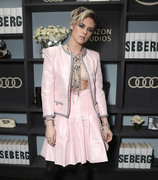
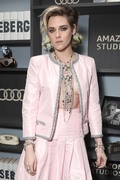
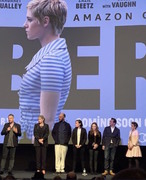
Kristen attends the 'Seberg' screening in LA - 10 December 2019
After Party
Click on photos for full view.
Combination of shorter videos below.
Source 1 2 3 4 5 6 7 8 9 10 11 12 13 14 15 16 17 18 19 HQ AdoringKS
Labels:
appearances,
Benedict Andrews,
event,
fan photo,
fan videos,
Los Angeles,
Photo,
screening,
Seberg,
video
Saturday, October 5, 2019
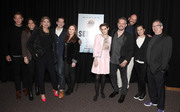
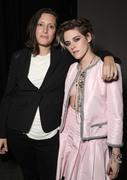
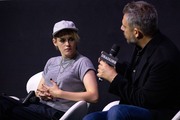
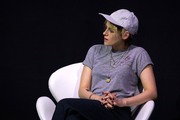
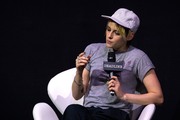
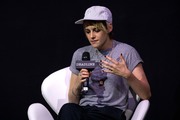
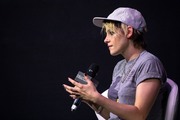
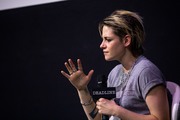
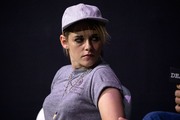
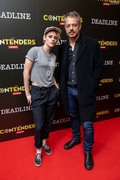
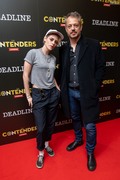
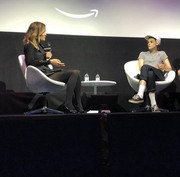
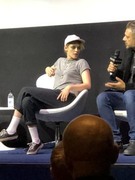
Kristen and Benedict Andrews at the Deadline Contenders in London for 'Seberg' - 5 October 2019
Click on portraits for HQ.
HQ
Media Photos
Click on pics for full view.
Deadline Seberg, directed by Benedict Andrews stars Stewart as Breathless actress Jean Seberg who was a target of the FBI due to her political and romantic affiliations with civil rights activist Hakim Jamal (Anthony Mackie). Jack O’Connell and Zazie Beetz also star.
Andrews always had that image of Seberg in his head from Breathless, “wiping her thumb across her lips”, but it wasn’t until he read Joe Shrapnel and Anna Waterhouse’s script that he learned about this “shadowed and buried period of her life.” The pic for the filmmaker “felt like a story that speaks urgently to us now, the idea of privacy and government overreach.” Andrews pointed to Jack O’Connell’s FBI agent who is undergoing a crisis of consciousness. “He’s involved in the dirty water that he can’t believe in anymore”, reminiscent for the director of the whistle blower in the Ukraine President Donald Trump scandal which has the House of Representatives beginning an impeachment inquiry. “It’s like 1968 was speaking to 2019,” said Andrews.
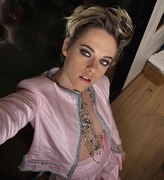
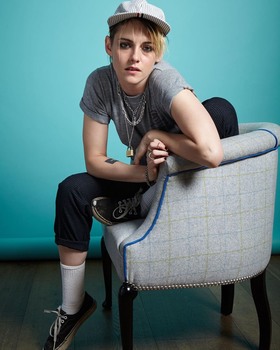
Stewart gave praise to DP Rachel Morrison and costume designer Michael Wilkinson for getting her into character as the two sides of Seberg: the extroverted public face and private.
“Jean had such a strong image based on things she had going on, and to peel that back and see underneath the headlines and beat the shit out of that image…Rachel knew how to get under my skin and present her image,” said Stewart. Seberg opens on Dec. 13.
Source 1 2 3 4 5 6 HQ AdoringKS YT Korita05
Labels:
appearances,
Benedict Andrews,
event,
london,
Promo,
Seberg
Subscribe to:
Posts (Atom)