Friday, September 18, 2020

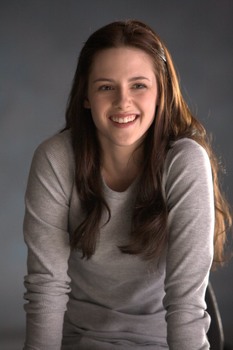
Kristen's interview for 'Seberg' with Abendzeitung (Germany)


Google translated.

Ms. Stewart, did you know the tragic fate of Jean Seberg?

I actually only knew her as the "Herald Tribune" newspaper girl in Jean-Luc Godard's "Breathless" and as the icon of the Nouvelle Vague. In preparation I watched other films and interviews with her. She radiates an incredible energy on the screen, a fascinating innocence and is incredibly present - different every time. A progressive and strong woman who fell into the clutches of the FBI in 1968 for supporting the Black Panther civil rights movement and for having a liaison with black activist Hakim Jamal. These people ruined her career, invaded her privacy, sniffed around the apartment, tapped phones and installed bugs, harassed her like an animal. The background shocked me.

What do you like about this character?

Jean cannot be pigeonholed, always surprises. She is an icon, smart and modest, not an intellectual, but an emotional person who, however, fights for his convictions, is committed to humanity. She always wanted everything, right now. At the time, she was also a pioneer in terms of equality, which scared some back then. Women with their desire for freedom and independence seemed dangerous, as they shook the male power structures. I also liked her honesty, that she didn't prudish hiding behind false shame, but lived out a very modern morality with her affairs and followed her instinct. But, and we shouldn't forget, she paid a heavy price, was lonely and self-destructive.

Should artists even take a political stance?

There is no compulsion to do this. Everyone has to decide for themselves. But in my opinion, as an artist, you should position yourself politically and say what's going on instead of just spreading mild statements. For me personally, it's not enough to just shine in the studio. I need a relationship with the audience and that includes showing my colors. At the airport, Jean took the opportunity to show her solidarity and raised her fist in a group of black activists: the trigger for the extermination campaign against them. I found it impressive how she rushes into the matter, lets her instincts decide and shows no fear. She was hungry for change, didn't want to wait any longer. However, if you are committed, you have to be aware that you can ruin your career. In any case, I won't let anyone keep my mouth shut.

Stars serve as role models. Are you feeling under pressure to always do the right thing?

One rattles loudly, the other softly. But everyone should be aware of their influence. We are in the limelight and we have some responsibility.

Instead of the sensational press like back then, social media are now setting the pace. Does this make the situation worse?

I am not active in any forums, do not use social media. But you can't avoid them, but you shouldn't react hectically to any false information, because you would be busy around the clock. I avoid getting upset about gossip and putting every stupid remark on the gold scales. I'm not going to let this kind of criticism scare me. We shouldn't overestimate social media or just pay attention to what others think of us.

The surveillance methods right into the private sphere, the targeted defamation. Was that just typical for the time?

The stink and stink of the 50s still lingered over the country, despite all the demonstrations against racial segregation or the Vietnam War. Of course, everything these FBI guys did was illegal: sheer violence, totally insane and inhuman torture that nobody deserved. Jean was deliberately psychologically destabilized until her charisma died out. As an optimist, I hope that this will not happen again. But who knows whether every wrong word we use will not be registered somewhere and whether a secret service has been targeting us for a long time. The necessary ability to compromise, a hinge for the functioning of society, falls by the wayside. We live in a very polarized world.

Where it says "Make America great again". A false promise, right?

The idea of ​​the "American dream" still haunts many minds: the rise from dishwasher to millionaire. Total nonsense. But it keeps people happy, clouds reason. The gap between rich and poor is widening. This equal opportunity message is a ridiculous lie. Unfortunately, she still raises false hopes and sedates.

The "Twilight" madness was your big career opportunity. How do you think about that in retrospect?

The madness is not over yet. Even today fans are running after me, wanting photos and autographs. I am more relaxed about the hype. I used to operate the PR machinery and answer questions when I didn't have an answer just to meet expectations. It all seems far away to me, totally crazy. Still, I think back to it with one laughing and one crying eye. It feels like opening a book from the old days.

Source

Kristen's interview for 'Seberg' with Salzburger Nachrichten (Austria)


Google translated.

Playing a historical figure, of whom there are many recordings, is always a challenge. Did you find parallels to her?

Kristen Stewart: She had this resilience, this vivacity - if I were to try to step outside of myself and look at the differences between the two of us, I wouldn't have that vivacity as naturally as she did. From the tone of voice, energetically - I think about it in similar categories to music. It has all of these flashing high notes and just because it has that very solid bass line makes them beautiful. Back then, as an actress, you had to meet certain expectations, even more than perhaps today, something feminine, a slight touch, a constant cheerfulness, that "America's Sweetheart" thing. It was very natural and familiar to her, she's always been the most popular girl in school, if you know what I mean.

Even so, she did not hesitate to take a risk for a political cause.

Yes, you can feel it in every one of her interviews - she always sided with the underdog. The people and also the film projects to which she was drawn, even if they are commercial Hollywood productions, she is always in the middle with integrity. To show that was our goal. I didn't want to present a precise image of her, there isn't much material in which she doesn't act or do public relations. How it was behind closed doors I had to figure out myself.

What was particularly difficult? 

It was really hard being her. To go through the gradual dissolution of this person is very sad. We had to make the film very quickly, it is an independent film with a small budget, there were no long pauses in which I could question everything, but it was very important to me that the film should sound as painful and bad as it is it reads in her biography. There are a couple of clips of her that show her withdrawing, beginning to fade, and that's such a big contrast to the radiance she was in her youth - that's the saddest thing ever. I got to know and love her through her work, as close as I could get to her.

Jean Seberg was not always taken seriously as an actress, also because she made "less relevant films", as the film says. You have experienced something like this again and again since the "Twilight" films. How do you deal with that? 

I don't draw a strict line between the things that are more for me and the commercial films. I'm lucky enough to be offered films like this one because I want to stay relevant, as Jean says in the film, but also films like "Charlie's Angels" that are supposed to be fun for the world. Of course, not everything goes down well. But when I allow strangers to influence my opinion about myself, it's always tricky. It's uncomfortable when you feel totally misunderstood. But without wanting to appear arrogant: If people don't like me, then they're not my friends, and luckily I have others. I can't worry about everyone's liking me.

Source

Kristen talks 'Seberg' and more - with Berliner-Zeitung (Germany)


Google translated.

Ms. Stewart, how well did you know the cult figure Jean Seberg?

I only knew her picture and the film "Breathless". But when you know what this woman went through, one wonders why her story isn't much better known. That I never heard of it seems completely crazy to me today. As a child she campaigned for the oppressed. She fought for her ideals, even if it was dangerous for her.

Seberg campaigned for the Black Panther movement. That displeased the FBI, which from then on shadowed her and ruined her with a smear campaign.

Jean Seberg has always cared more about others than herself and campaigned for the underdogs. It is all the more tragic that her life was practically destroyed by others. I got to know and love her through this film. And it broke my heart to see what happened to her: As a young woman, she had this dazzling radiance, this limitless energy. Life has robbed her of this radiance, and you could see the sadness in her.

Did you find some kind of soul mate in Seberg?

I would say that. She had an honesty and humanity that I admire.

Seberg felt like he was being monitored all the time. Has that become a normal thought for us in the digital age?

There is no comparison: the information about them was illegally collected and falsified. She was bullied, portrayed as insane, so tortured that she miscarried. The FBI even released photos of the dead baby. Seberg never started a rebellion or overthrew a government - she only campaigned for more humanity.

Do you think that actors should be politically active in principle?

I am convinced that it is not possible as an artist to remain apolitical. Art will always reflect one's own attitude. It ends at the point where you censor yourself so as not to offend. From that moment on you only have entertainment. Nothing against good entertainment - sometimes you don't need anything else. But true artists always express their political views. Your work is a statement.

You are not active on social media. Have you given up controlling your image?

I don't use social media myself, but I can't protect myself from it. Should I hide from every smartphone? It would be hopeless if I tried to control what people think of me. The many social media posts tear you into many small pieces. But the big picture is missing. We're all stuck in the circus, unfortunately. The solution for me is to stop worrying about how I will affect others, but only to act authentically, entirely from within myself.

How do you look back on the media madness of the "Twilight" era?

The madness is not over. There are still mad people who follow me for photos. But I've changed and I can deal with the madness more calmly. I used to think I had to find an answer to every question, and I often said strange things. Now I don't comment on every bullshit anymore. I realized that I can shut up sometimes.

But are you politically active?

Sure, I also communicate my opinion publicly. With every breath I take, I position myself politically. If I suddenly supported Republicans, everyone would be shocked.

How do you feel about Trump and the political climate in the USA?

We Americans all have this collective illusion that we call the American dream: We believe we can do anything we set out to do. Of course that's bullshit. This system only leads to the rich getting richer and the poor getting poorer. It's so sick that the government is reinforcing this lousy lie. I don't understand why the public still doesn't wake up and see what's being done to them.

Weren't you the perfect example of the American Dream? The 18-year-old who became world famous overnight - and who also fell in love with her film prince ...

Exactly, I was only 18, had no reference points and was completely taken by surprise by the success. Suddenly I was in the center of a hurricane - and everyone around me went insane. Nothing could have prepared me for it.

You seem more confident today. Do you feel like you are in control of your life?

Yes. I can trust my instincts and only work with people who allow me this freedom. The roles are also getting better and better as the voices of women in the industry are increasingly heard.

How do you deal with criticism now?

I no longer allow my self-esteem to be determined by people who have nothing constructive to contribute themselves. I can't please everyone anyway. And at the risk of it sounding insanely arrogant: I don't care about criticism. If someone doesn't like me, they're not my friend. I have great friends so I prefer to put my energy into them.

A friend has been missing since 2019: Karl Lagerfeld. What did you particularly like about him?

Karl was a fantastic storyteller. He saw people for who they really are. His fashion was never a superficial appearance, but rather helped women become a better version of themselves. I have often wondered why he was considered arrogant. Perhaps he has kept an external distance so that one cannot look inside him.

Do you know what he loved about you?

We were united by our conscientiousness. For me it is still an honor to represent Chanel because the house doesn't hire anyone who doesn't suit them. Those who represent Chanel are loved by Chanel. Working with them is always authentic, never a superficial show.

Source

Kristen talks 'Seberg' and more with Tages-Anzeiger (Switzerland)


Google translated.

A collective pause in front of the door: Kristen Stewart appears, slips into the salon, sits down at a small table, a crack in the door remains open. Beauty specialists are starting to work on their hair and lips. Then I am asked to come back in. I start the tape recorder and Stewart asks if she can pour me a glass of water. "Thank you!" - "You're welcome!" She bobs her crossed leg, a kind of metronome that won't rest for the next 15 minutes.

You have already been to Switzerland to film - in 2014 for "The Clouds of Sils Maria" . What do you remember?

Well, we were shooting in the mountains, I felt very isolated. My impressions were therefore primarily nature and Juliette Binoche, so very strong impressions. (laughs) We were “in the middle of nowhere”, but it was fantastic.

It is said that you wanted to go shopping at the time, but you were told that it was not possible.

Uh, I don't know what you mean ... wait a minute! That's because all your shops in Switzerland are closed on Sundays, right? Well, that leads to certain frustrations among Americans.

You are the only American actress to date to win a French César for “The Clouds” . What does that mean to you?

I am honored by the award, but I couldn't say that my knowledge of European cinema is particularly great. I am fascinated by the philosophy behind these films, the cultural aspects, and I am attracted by this certain complacency in Europe, where one can and wants to assert oneself detached from the entertainment and film industry constraints.

In contrast to more commercial films like “Twilight”?

Yeah, although I think if you use commercial films for your own benefit, it's some of the coolest shit you can do. However, my personal favorites are American independent films.

Speaking of which: Before you became a star with “Twilight”, you played alongside Eddie Redmayne, who was also unknown at the time, in the road movie “The Yellow Handkerchief”, produced by Swiss Arthur Cohn. How important was the film to your career?

Oh, I haven't thought about that in a long time. There was a time when I was making one film after the other, small pebble-like works that also featured Robert De Niro or Sean Penn and which, with a little luck, ran at the Sundance Festival. When I think of “The Yellow Handkerchief”, it's a time when I haven't had to answer any questions about the trajectory of my career. I just made films and saw what happened. I'm still trying to do that today.

But today you are a star. And, like Jean Seberg back then, you rarely mince your words. How do you protect yourself from being hunted?

Jean Seberg was attacked in a very special way, which was unusual at the time. For comparison: The way we watch each other nowadays I sometimes find glaring, but I've never seen a car chase like the one Seberg endured by the FBI - it was abusive and illegal. I myself am not afraid of being as lost as Seberg at the end of her life. On the other hand, I'm afraid that you can run to ruin much faster today than back in the sixties.

Is that why you are not present on social media?

Let's put it this way: I'm happy that I can share my life with others by making films. It is a big playground to express myself and I reveal the most intimate details of my existence there. I don't need Twitter or Facebook, but I understand that this is important for other people to communicate with.

Would you rather live in your sixties if you could?

No. It is a privilege to live in a modern age and to communicate with modern means. For example, it is possible to look through all kinds of lies and name them as such. Jean Seberg did not have these options, because everything happened in hiding back then. There was a deceptive calm, which ultimately led to her freaking out, leaving her country and never coming back.

Would you never leave your country?

No, I don't want to be an ex-patriot. I still believe we have a chance in the US.

Jean Seberg also believed in a chance. What do you have in common with her?

She was so tangible in everything she did. That made it easy to empathize with her. It was more difficult that I hardly had any sources available, there are almost no private video recordings. So I didn't know how she would enter a room when she was completely casual. In that sense, the film is an imaginary idea of ​​what it might have felt like to be Jean Seberg. There is no way of really knowing them.

Can you describe how you got Seberg's liveliness in the film?

Well, it's always a mix of fear and adrenaline that drives me in roles like this. If I'm supposed to impersonate someone like Seberg, I first think it's definitely not me. And in contrast to her, I have a rather deep voice.

Then director Benedict Andrews advised me to speak an octave higher. That helped me. In addition, I admire Seberg for her generous, uncompromising manner.

What does this have to do with your role?

I prefer to think twice before I say anything. Jean Seberg was the exact opposite. She was so incredibly open. But when I finally get on set, I have to push all those thoughts away to get into the role. If it works, if I can combine things that are both familiar and completely alien to me, then at first it is scary. But then it feels great.

Source

Thursday, September 17, 2020

Benedict Andrews talks about 'Seberg' and mentions Kristen with Film Rezensionen (Germany)


Google translated.

What interested or inspired you in the story of Jean Seberg?

I became interested in this period in her life when her success as an actress, her political engagement and her love life intersected. Jean was a very idealistic person who tried to voice a good cause, which ultimately got her into the crosshairs of a big FBI wiretap. This action ultimately broke her up, her private life was severely disrupted, everything was approved by the state. In a way, that was a fascinating discovery for me and a very complex subject.

Many celebrities these days use their popularity to express their political opinions or support movements. Would someone like Jean Seberg be treated differently today than they were in the 60s?

To be honest, I don't know because my film is about a very specific example within a very specific context. Of course, today social media and the internet allow many celebrities to express their opinion on political issues, but in Seberg's case we also have a very special socio-political framework. Because African American political movements within the mainstream media as well as a racist FBI were perceived as a threat, it became a target. That had less to do with the nature of her political engagement, which, in contrast to that of Jane Fonda, for example, was by no means so public. Jean's engagement was mostly of a private nature and was reflected in her donations for the Malcom X Foundation or the Black Panthers.

What I find so terrifying about their story is how surveillance is directed against a person and changes them, brings them to the brink, and all for purely political reasons. Added to this is how this institution used the private life of the intercepted person as a weapon against them, discredited them and spread “fake news” about them. In our world we live with the reality of a war of information, whether it is true or false. Jean Seberg is, if you will, one of the first victims of this war.

Regarding Una and Ray, you once said that you are interested in characters whose experiences make them strangers to themselves. How could this apply to the characters in Against All Enemies ?
If you look at a character like Jean Seberg in my film, you could say that his experience is similar to that of Jack O'Connell's character. Both have to go through fire and in Jean's case it results in the destruction of what she sees as truth and reality. This is the consequence of surveillance and the lies that are being spread about them. She is caught in a spiral that is associated with high personal losses.

This experience gives her a changed perception of the world, which one can sense in the last moments of the film. Then she is no longer that somewhat naive, very impulsive woman that we met at the beginning of the film. Characters like Blanche DuBois from Tennessee Williams' Endstation Sehnsucht  or King Lear, but also characters like Una and Ray have to go through this painful experience in order to then arrive at a different understanding of their world. This process is very complex and not exactly easy to define.

In parallel with Jean's story, Jack O'Donnell's character goes through a similar development. He changes from a man who believes in democratic values ​​and the moral integrity of the FBI to someone who, by seeing what happens to Jean, sees how corrupt this system is. Because his truth, his world, has also changed, he ultimately becomes a whistleblower, a person who has completely emancipated himself from his character at the beginning of the film.

The scene in which Kristen Stewart and Anthony Mackie's characters rehearse a dialogue from a script is very beautiful, well played and staged. Can you tell us something about the creation of this scene or others that you are particularly proud of?
In this scene we wanted to show Jean's life as an actress on the one hand, but also to shed light on her affair with Hakim. Hakim gets a glimpse of their world, but within this game of conversation they are rehearsing, he also gets an idea of ​​who she is and can be. I like the way Anthony Mackie plays in that scene and the location, which was incredibly beautiful. The scene they both play, i.e. the one in the fictional screenplay in the film, comes very close to a scene in Seberg's film Westwärts the wind draws very close, but we changed and adjusted the dialogue for the film a bit.

In general, there is a lot that I'm proud of in this film. This includes the subtlety of Jack O'Connell's play and the very courageous portrayal of Jean Seberg by Kristen Stewart. A very exciting and dramatic scene that I really like is the children's birthday party. On the one hand it is a happy, almost idyllic occasion with the many children, the beautiful weather and the barbecue, but then you know that Zazie Beetz, who plays Hakim's wife in the film, knows about the affair and is now confronting Jean with it . She insults her as a tourist who is only superficially interested in black people's concerns for reasons of prestige. In addition to the performance in the scene, I like how the complexity of the relationships between the characters is shown here.

Another example of a scene that I like is the picture of Jean in the swimming pool, when the process of her mental decline from reporting and surveillance is well underway. On a visual level, I find this sequence beautiful and very complex.

I also find the scene with Jack O'Donnell and Vince Vaughn's characters interesting, when they both have dinner with their families and Vaughn's character suddenly has a very loud argument with his daughter.
This scene roughly shows the Republican-Conservative nightmare (laughs). Vince's character is someone who is fighting something like war with his son and daughter when he talks about his son joining a commune. At the same time, this war is also the one he is fighting in his work: to make the USA a white, conservative, very masculine dominated country. This is a character who tries to maintain control, but who keeps losing control.

In addition, the scene is interesting because here the FBI is no longer perceived as just a machine or an institution, but as a viewer you get an insight into the private life of the investigators.

It was important to me that every scene refers to the relationship between Jean and Jack. So when Vince's character annoys at the end of the scene and asks who she looks like while looking at his daughter and her short hairstyle, the film comes back to this relationship between Jack and Jean.

Can you tell us a bit about your collaboration with cinematographer Rachel Morrison?
One of the most important decisions we made about the look of the film was that we wanted to use real film cameras, not digital ones. Even if we had to make do with a limited budget, we wanted to make a film that was formally similar to the films of the 60s, but also to those conspiracy thrillers of the early 70s, especially the works of Alan J. Pakula ( Klute , Witness a Conspiracy , The Untouchables ) . In general, we had to find a visual language for surveillance, but also for Jeans collapse.

In addition, we sat down with our production designer Jahmin Assa very early on to find suitable locations that should be provocative and expressive. Since we didn't have the money to show a detailed picture of the time, we instead focused on the inner drama of the characters and how the locations and the camera could express it.

Rachel helped a lot with this, because she can shoot extremely beautiful and powerful hand-held camera shots, which you can see in this film but also in her earlier work such as Ryan Coogler's Next Stop: Fruitvale Station . Especially in the later course of the film, the change from initially still static recordings to these restless but very sensitive handheld camera recordings illustrates the process and decay that Jean is going through. The viewer is, I think, able to better understand what Jean is going through.

Thank you for the nice conversation.

Source

Photo of Kristen and friends in LA - 16 September 2020


Gif by TKS

Source

Video: Kristen's interview for 'Seberg' with Fred Carpet (Germany)