Showing posts with label Clouds of Sils Maria. Show all posts

Wednesday, October 25, 2017

Kristen will be in the documentary "Aware, Anywhere - Olivier Assayas"


Kristen will be appearing in a documentary about director, Olivier Assayas.

"Personal Shopper" behind the scenes footage can be seen in the trailer.

For more details on the documentary check it out at IMDB.

We will update the post when there is news on how to watch it.

Thanks for the heads up radassfvck

Monday, March 6, 2017

Olivier Assayas talks 'Personal Shopper' and mentions Kristen with Roger Ebert.com


At last night’s Toronto premiere of “Personal Shopper,” you said that the picture is as much Kristen’s film as it is your film.

There are some movies, even great movies, that have a lead role that you could imagine being inhabited by another actor without it affecting the core or the fabric of the film. In the case of “Personal Shopper,” whatever this film is about is defined by the way Kristen appropriates it. “Clouds of Sils Maria” is a movie about the interaction between two characters, so it’s defined by the dynamic that is created between two specific actresses. As a filmmaker, you have to somehow frame that dynamic, and you have to channel it. Here, Kristen’s on her own, so it’s not so much about channeling. It’s about being in sync, about being completely aware of her instincts, and being able to adapt to the way she is appropriating the material. She is the one person who is there within the shot, and she’s determining her own pacing as well as the way that the emotions build up within her.

Was the story fully formed to an extent prior to filming, or did you find the narrative during production?

I was finding it as I was going along. Usually the one question you get asked when you make movies is, “What were you trying to say? Why did you make this film?” Usually I don’t have an answer because I have no idea. Yet I often have some kind of premise that I stay faithful to throughout the process of making a film. In this case, I wanted to make a movie that had to do with the tension between the world we live in—our jobs and the material world—and the world of our imagination, the world of our dreams and fantasies. We live in such a materialistic world, and because of that, we think that the important part of our lives is the material world. But in reality, we experience life to a stronger extent in our imaginations, even though we can hardly verbalize or represent what it is that we envision. Movies can help capture that experience. I was not sure how I would get there, but I knew more or less where I planned to get.

I’ve never seen ghostly apparitions visualized in quite the way they are here. You get a sense that we are seeing a mental projection of what is going on in Maureen’s mind.

I was not sure how to do it. It was my first experience working with CGI, which is not my world at all, so I kind of had to feel my way into that. My visual reference was the spiritualist photography of the late 19th century and early 20th century. Mediums were commissioning photos of whatever they imagined was happening during seances. According to the transcripts of seances, mediums did experience visions, and through the superimposition of photographed images, they found a way of representing what they imagined they had seen. I thought that was a good model for the spirit images in this film.

I was especially struck by the shot of an apparition moving stealthily behind Stewart in the garden.

That shot was totally essential. I rarely have a notion of how I am going to shoot a specific scene when I am writing it, but in this case, I knew exactly what I wanted it to look like. We ended up building the entire house and garden according to my needs for that specific shot.

The sound design greatly enhances the film’s psychological study of its protagonist, bringing us closer to her sensory experience.

Oftentimes in genre filmmaking, you make a ghost film and it’s covered with music, particularly electronic music conveying a sense of menace. I knew I would never use that because it would obviously reduce the film to its genre elements, which are there, but they are merely one aspect of the film, and certainly not the most important aspect. Since I was not going to use music, noises were going to be even more crucial. What I realized during postproduction is that when you take away music, the tiny, more nuanced sounds are the scariest. You shouldn’t make them too precise or too loud. On the contrary, the eeriness is heightened when you hear small things that give you a hint of what’s potentially going on. You end up feeling like Maureen in that sense.

The scene where Maureen changes into her boss’ clothes has a rather beautiful quality to it, in part because of the Marlene Dietrich song, which is heard in its entirety.

Yes, twice! I think all filmmakers are always a bit shy when they are dealing with nude scenes and with how an actress is going to react to them. There is always some kind of voyeuristic dimension to those scenes, whether you want it there or not, and that is not what my movies are about. My movies are hopefully about reality, about giving as much flesh and blood to a specific situation. Kristen understands that entirely. I would’ve understood if she had told me, “This is weird ground. I don’t feel comfortable.” I would’ve respected it. But throughout the process of making this film with Kristen, I knew from the first day onward that she wasn’t going to be shy and that she was going to go all the way. Even when I was like, ‘Are you sure you know where we’re heading?’, she would take the leap.

In regards to the scene where she takes off her clothes and puts on her boss’s dress, she was always going to do it. I was a bit scared that the scene would be too long, but Kristen is such a dancer. She has such an incredible sense of body language that makes her movement in a scene fascinating. I thought I was going to cut the scene, use a few bits and pieces and patch them together. Eventually I realized that if I keep it in real time, it’s actually beautiful. She has a way of occupying space that is unlike any other actress. If you give her something like this where she has a million practical things to do, she’s going to absorb them and she’s going to make something astonishing out of it. The beauty of that shot—which is extremely long—is really a tribute to her skills.

With the inclusion of music, the scene is like a dance, in a way.

Absolutely. To me, music is a process of trial and error. I had no idea if I was going to use music at all—to be honest, I did not think I would. I thought music might spoil the scene, and then just for the sake of trying, I sampled various tracks which totally did not work. All of a sudden, I bumped into this Marlene Dietrich song, “Das Hobellied,” which I had wanted to use in the film back when I was writing it. I had no idea where I would use it, and it suddenly made complete sense for this scene. It gave the moment its meaning, and through the collision between images and music, you can’t even imagine the scene without that song.

On several occasions, the film utilizes fade-outs instead of cutting to black.

I’m attracted to fades because of their musical quality. It gives the audience a sense that they are moving to another chapter. It provides them, and the story, with breathing space. I like to have that kind of chapter-based structure visible in my writing.

Just how difficult was it to direct in-camera text messages rather than simply animate them?

It drove me nuts. After every single screening of the film, I changed the text messages. The audience reacted to such subtle details that cutting five or ten frames would completely change everything. We ended up redoing and fine-tuning a lot of the text messages. Though we shot everything live, I changed some of the wording, I cut some things out and I injected new ideas. I’m very happy with the result because it confirmed my belief that the fascination regarding texting could translate to the screen. I was not sure it would work, and I got what I wanted. But it was a very, very difficult process. What also made postproduction a nightmare was the many special effects shots. There are a lot of them, though you can’t really tell in the final cut. We initially had to rush the film in time for the Cannes deadline, but we eventually nailed it.

Though technology has arguably infantilized our communication skills to a degree, you’ve spoken of how there’s a poetry to texting.

I think it creates a very intense relationship with words, it’s really as basic as that. The words are very charged. They are not charged in the same way when you are Skyping, and certainly not as charged when you are e-mailing. Writing an e-mail is more like writing a letter, whereas the concision of text messaging is brutal. It forces you to go straight to the point. The time it takes you to type every word and punctuation mark, as well as the time it takes you to send your message and the time you must wait for an answer, is very complex and extremely fascinating. It has an intensity that is very specific to that form of communication.

The texting really pays off when the messages start to pile up in suspenseful fashion.

That moment came out of the writing, and it plays pretty much as it was written in the screenplay. The problem, of course, was getting it right, and I was never happy with the pacing. In the end, there is one shot of the phone screen that had to be slowed down, and there’s a vibration that comes from the slowness which adds to the intensity.

I find the reports of booing at Cannes annoying, especially when they are aimed at a film because of its ambiguity, such as Terrence Malick’s “The Tree of Life,” John Sayles’ “Limbo” or this film. What you, Malick and Sayles understand is that a sense of closure often must be sacrificed in order for a story to resonate.

Oh yes, totally. Cannes is very hysteric. I’ve been going to Cannes for a long time and it’s the one festival where there are those tensions. They can be extremely positive, they can be negative and they can be mixed, but it’s alive. You make movies to make audiences react. Part of you wants your movies to be a huge success and connect with everybody, but when I make a movie like this one, I know that I’m taking risks. The thing is, I grew up in a world where people were grateful when artists took chances and tried difficult things. Risks were respected, but now it’s the opposite. You are resented for taking them. “Why don’t you make a conventional story? Why do you feel you’re allowed to tell this story in such an unexpected way?” It’s so strange to get those reactions, because risks are so much a part of what Cannes is about. In the end, we got a great reaction and a prize, so I’m not really allowed to complain.

I have a confession to make. I attended the Cannes premiere of “Boarding Gate” in 2007, and embarrassed myself by laughing loudly at Michael Madsen’s performance, particularly his delivery of the word “vortex.”

You are always allowed to laugh at my movies! Maybe I have too much of a tongue-in-cheek sense of humor, so sometimes people just don’t get it. But yeah, you are allowed to laugh.
People seemed scared to laugh out loud during the Toronto screening of “Personal Shopper,” though I did hear some suppressed chuckles.

This is a lot of humor in this film as well. When I was shooting the Victor Hugo scene, I was just having fun. I also hoped the scene where Nora von Waldstätten, who plays Maureen’s boss, discusses her gorilla foundation would come off as comedic.

Has this experience made you want to have a third collaboration with Kristen?

Yeah anytime—tomorrow! My experiences with many great actors leave me feeling that we haven’t exactly gone all the way, but we’ve covered a lot of ground. Actors are excited by the opportunity to do something they haven’t done or that you haven’t done before, because there’s always a risk of repeating yourself. I think I could make another movie with Kristen that would be completely different, and I hope I will have the opportunity. I’ve always loved and admired her, and I thought she would be perfect for the part in “Clouds of Sils Maria.” But when we were shooting the film, it felt like she had unlimited potential. I was left with the feeling that there was potential to go much further in our collaboration and try many other things. “Clouds of Sils Maria” was more about the dynamic between the three actresses. I knew that if Kristen was on her own and had a fully fleshed character to create, she could go to some pretty exciting places. That’s what drove us.

I think that Chloë Grace Moretz has a great amount of potential that was utilized marvelously in “Sils Maria,” yet is often frustratingly squandered in Hollywood.

I’m happy you mentioned her because Kristen is the one that got all the recognition. I think that Chloë is brilliant. She’s so young—she was 17 when we were shooting—and has such a witty sense of humor. I was so happy that she wanted to be a part of the film. The one thing that scared me was how young she was. We had a Skype meeting and I liked her very much and thought she was perfect for the part. Then I looked her up on IMDb and saw her birthdate. I went, “Oh my god!” At that point, I decided that I couldn’t make the film without meeting her in person, because over Skype, I thought I was speaking with someone who was in her early 20s. She was 16 at the time, so we had a meeting here in Toronto.

You need to have an actor who is totally on the same page. It has to be funny but it shouldn’t be a farce. She’s playing someone who is also playing a role, and I think part of the fun is having her really believable in all of the layers of the character. That’s what makes it complex, and I think she got it. She had such a clear understanding of the potential of the part and what she could do with it. I was extremely grateful for her performance.

Critics have often compared the film’s satire of Hollywood and aging with “All About Eve.”

If that film served as influence, it was subconsciously. It’s a movie I love, of course. I saw it when I was a teenager, so it’s kind of a distant memory. The movies that stood as more straightforward influences were very obviously Ingmar Bergman’s “Persona,” as well as Rainer Werner Fassbinder’s “The Bitter Tears of Petra von Kant,” which inspired the play within the film. Those were conscious inspirations.

“Clouds of Sils Maria” must’ve reflected some of Juliette Binoche’s frustrations with the industry as well. I still don’t know why a director would hire one of the world’s greatest living actresses for “Godzilla” just so that she can get promptly fried.

[Laughs] For each of the actresses, “Clouds of Sils Maria” kind of echoed their own world, their own questions, their own issues with modern filmmaking. We had a lot of fun making it.

Source

Friday, October 7, 2016

Olivier Assayas talks 'Personal Shopper' and mentions Kristen with Mubi


NOTEBOOK: Do you believe in ghosts?

OLIVIER ASSAYAS: Do I believe in ghosts? Yes, I do. Of course I do! We all do. It's just a matter of not being fooled by the world, you know? I don't believe in actual, you know, things, creatures or whatever, substances that float around us. But I think we all live with our ghosts. It's something we can all relate to, because "ghost" means our relationship to our memories, our relationship to our own subconscious. It means the belief that there's more to it in the world or in life than just the [knocks on table] material world. We all share that, you know?

NOTEBOOK: I find this film very risky, and it's one of the things I admire about it. Part of what I see as its risk is that it really feels like two movies jammed together. You have a film that could easily have been a stand alone film about a young woman in Paris who is a personal shopper and has an identity crisis—a bit like Clouds of Sils Maria—and blends identities. That could have been a whole movie, ninety minutes. And then you could have a whole other movie about a psychic who is traumatized by the death of her brother and is increasingly haunted by the loss through her story. Did you always conceive of this film as a whole?

ASSAYAS: First: I believe in collage. I really do. Obviously, I've always been convinced that not taking risks in filmmaking is extremely boring. You know? Movies are exciting because they are dangerous, in a certain way. They are exciting if you are trying new things, things that have not been done before. Which means also confronting things that were never meant to be together, you know? Like using a Chinese movie star in an indie French film. It's something that's really been part of my work, always.

I would have asked the question the other way around, in the sense that it's more the story of a psychic who lives in a world which involved personal shopping. To me the real story is obviously about someone...not so much trying to reconnect with her lost brother, it's more about someone who lost a half of herself. And who realizes gradually that what she has lost is not exactly her brother but that half of herself she has to gain back. She gets involved in this murder subplot, in a certain way, but this become a catalyst. The same way that, in a movie that in many ways has been an inspiration, Blow Up, by Antonioni, where you also have this guy who is in the fashion industry and who discovers something about himself by being involved unwillingly in a crime story. To me, the narrative comes to life by confrontation of the two elements. I don't think I would have made a movie about a personal shopper's day to day life in Paris.

NOTEBOOK: It's interesting that you describe your film as a collage, because I feel like there is often an impulse in your work towards desiring to make pure genre films: Boarding Gate, Carlos, demonlover, and Personal Shopper. But it's like the film world can't help itself but pull more things in and complicate.

ASSAYAS: Yes, because I'm just so jealous of the physical relationship that genre filmmaking has with its audience. I think it's so important. I think it's as important to connect with the physicality of the viewer as to connect with his emotions or his mind. Eventually, it's possibly more important. I'm fascinated in many ways by genre, even if [laughs] I'm the opposite of a genre filmmaker—but again as a viewer I love genre, and as a filmmaker I know there is something really exciting within genre that somehow can add a level to whatever I'm trying to do.

NOTEBOOK: What do you mean by the "physical" response?

ASSAYAS: You react with your body to violence, to fear, to anxieties. It's something that echoes within your whole body.

NOTEBOOK: Certainly your film gives those pleasures. For me, there are two scenes during which I feel a "yes and no" version of what you're talking about. One is the marvelous tracking shots through the hotel following a spirit you cannot see, opening the doors. And the other is the sort of mirror version of that shot, following Ingo out of the hotel as he's being attacked by armed thugs. There, you keep the camera far away and right as the action starts happening [claps] you fade to black. It's almost a complete denial of the pleasure of this "action scene." How do you decide when and how to engage this physical response?

ASSAYAS: I think that what you're describing and what we're discussing is how movies are in touch with the expectation of the audience. In which they play into the expectation or they deceive them. I think you have to play on both levels. Part of making a film, part of making a film exciting for an audience, involves playing those games. It involves showing when they don't expect you to show, and hiding when they expect you to show. It creates some kind of instability that somehow keeps the audience awake. To me, a lot of movies leave the audience in some kind of "off" vision. You're just there and sit back. But I like movies that involve some kind of interaction.

NOTEBOOK: Speaking of showing or not showing, I was surprised how much of the supernatural you decided to reveal in Personal Shopper. An intense amount, in fact. Were you always imagining such visible hauntings?

ASSAYAS: No, I was kind of dragged into it, I think [laughs]. I had no idea. When I was writing, obviously the scene where the ghost actually appears is present; it's there. But I had no idea how much of it I would show; I had no idea how long it would be; I don't know how much would be actually that clear. And gradually I got interested. I got interested in the issue through the medium of spiritualist photography. In the late 19th century, the psychic mediums used photography to represent whatever they thought they saw. It looks kind of naive but also kind of eerie, when you look at those images. I thought that, yeah, well, maybe if I use that texture, I'll be at least in touch with something that is our own subconscious view of what ghosts look like. I realized gradually that this was part of the story.

-----

NOTEBOOK: Let's talk about Kristen Stewart, who was so amazing in Clouds of Sils Maria. Was Personal Shopper written specifically for her?

ASSAYAS: I'm not sure I was completely aware of it, but yes [laughs]. Looking back on it, totally. I think I would not have written this character if I had not been influenced by working with Kristen. Maureen is, in some kind of subterranean way, a continuation of her character in Sils Maria. But when I was writing I denied it. Or I was in denial! But then I started discussing it with her and the second I started discussing it with her I realized it had been her all the way.

-----

NOTEBOOK: I love the profound loneliness of Maureen. Thinking back through the film, I realized just how few characters there are besides her. It's very much a character piece: her alone in a city.

ASSAYAS: Loneliness is pretty much what the film is about, in many ways.

NOTEBOOK: It's interesting you bring up the 19th century spirituality because I feel like the two sides of the film, the personal shopping side and the psychic-ghost side are the hyper-modern and early modernity. In this light, I wanted to ask you about the audacious texting sequence between Maureen and another entity. It's a marvelously conceptual sequence that is at once creepy and a bit ridiculous in such a pleasurable way, using that technology to chart through space.

ASSAYAS: It's become such a part of our lives, you know? It's fascinating as a medium, because when you text the words are so charged. You are very careful with your wording, with your punctuation, with your timing of what you have to say. It's a very strong means of communication. To me, the question mark was that it was exciting in some kind of experimental way to see if this could translate on the screen. If what we feel when we're texting or "sexting"—if it translates. Ultimately, I think it does. It was incredibly complicated to get it right. Once you get into it—

NOTEBOOK: —it's pure logistics.

ASSAYAS: It's pure logistics. It's all timing nuances, the timing how long it takes to answer, how long it takes for a message to come back. And, of course, I like the idea of the two parallel narratives: to have on one side the very documentary reconstruction of the London trip; and on the completely invisible level this conversation with "something," someone that's not there. I like the idea of communicating with something that's invisible, that's mysterious, that's not completely elucidated, you know? We never know who actually, where that person is...

Which ultimately connects, somehow, with the spiritualism, in the sense that the birth of spiritualism, the origins, in the mid-19th century has to do with all the incredible inventions that were happening at the same time. And which gave a sense of making possible things that had always seemed part of the magical world. To see something that's far; to hear someone who's not there. It gave some kind of legitimacy to the whole idea of communicating with ghosts. The spiritualism is very close to the technical avant-garde movement of the time.

NOTEBOOK: Spiritualism was tied to the advent of photography and capturing a trace of something you didn't think was there.

ASSAYAS: All of a sudden all those incredible doors were being opened.

NOTEBOOK: Personal Shopper was shot on 35 mm film. How much do you see a quality of photochemical film being to capture something in front of the camera?

ASSAYAS: Possibly. To me, it's never been an option to shoot it digitally. Yeah...I had not thought about it from that angle, but I am convinced you are right. I think it has to do with the photochemical. There is something that's more physical or mysterious on 35 mm. I'm in love with the medium, you know, with the textures, but I think also for that reason you mention, it could well be for that reason.

NOTEBOOK: Can you talk a bit about the look of the film? I loved the color palette, it's incredibly distinctive, almost a bruised palette, deep, macerated purples—purple as the sun is setting.

ASSAYAS: I'm very pragmatic in terms of the look of a film. It kind of happened. I had no preconceived idea. And I hate even having these conversations with the cameraman, because I think that it limits the palette. I discover the texture of the film as I make it. The same way as when I write, I have no idea how I will shoot that stuff. I remember when I was writing Clouds of Sils Maria, I was writing those long dialog scenes and I kind of freaked out—how am I going to get away with this stuff? I'm pretty open to the way things come to you on the set. I start shooting the first day, the second day, and gradually I kind of understand what's the style of the film. I start from there and it grows. You have to be extremely respectful of the inner-logic of movies. They kind of happen to you: you put them into motion, but they also bring things back on their own. In this film, the only way I can answer your question about the color palette is that we spent a lot of time getting this right. I'm not sure why or how; there's no rationale to it. But it was pretty complicated to get the look of this film right.

NOTEBOOK: You said this film is very much about loneliness. I think back to Maggie Cheung being in your film Irma Vep and how much that movie was about the isolation she as actress felt on a foreign film set. Was that repeated with this American, Kristen Stewart, among this French crew?

ASSAYAS: It's a very different world. One is a comedy, the other is...not so much [laughs]. It's true I've been attracted to this...theme, of the loneliness of a foreign woman in Paris. I've done that in three movies. But it's not so much being foreign, it's characters who are cut off from their roots, who are like blank pages. They react more strongly to an environment, they gradually decipher it. Characters who are involved in a world they don't completely understand, and they grow to understand it through the film. Part of the narrative is expanding their understanding, trying to find their own balance in a hostile world. [laughs] Ultimately, I think that's something anybody can relate to, in a strange way.

NOTEBOOK: I hate to be the kind of person to ask for clarity in any film, but I'm really curious about Personal Shopper's epilogue. The film could have ended, potentially, with the apparition in the house at the end. And the length you go with this epilogue, it's a bit like the trip to London: it's not over after one or two scenes, you really want to build the process of Maureen traveling to Oman at the film's end.

ASSAYAS: I think I wanted [laughing] some kind of happy ending! I would not have been happy to leave it with her missing the apparition of her brother. Because all of a sudden you don't expect it any more, it's not going to happen—and still it happens, but she's not seeing it, because she's lost faith. I wanted her to rebuild some kind of faith, so that somehow she can reconnect not so much with her brother, as with herself. I like the idea that we think she missed the one opportunity she had, and ultimately faith gives her this new opportunity.

NOTEBOOK: And the impulse in that excursion to Oman, as well as the one to London, to follow these paths with almost a documentary process...

ASSAYAS: It's the conflict. I wanted the trip, it gave me the opportunity to do something that you can go through being in some kind of "off" position, right? You go through the motions, the cross the border, you show your passport, you go though the metal detector, you sit on the train. Something you can do completely mechanically that's completely like sleepwalking, the same way we sleepwalk when we travel, and at the same time being involved in something that's really intense in terms of your imagination, your fantasies. They interact, in a way, that to me was exciting, was exciting to shoot, was exciting to conceive—but was horribly complicated to find the right balance.

NOTEBOOK: In Clouds of Sils Maria, the story is about actors, and in Personal Shopper we see a shift from a film about artistic process to one that is also about identity, very much, and desires for identity—but moved into a commercial, consumer sphere. This really changes the tone of that conflict in the film. In Sils Maria, it's an artistic conflict of identity, and here that element is stripped out.

ASSAYAS: Yes. I think that once I finish a film, I have the sense that I went as far as I could in that direction, so I have to try something else. But I'm extremely dependent on my mood, and in the sense Sils Maria is a movie that I built layer after layer. It took me a while not so much to write it as but to kind of finalize the concept, make sense of what I wanted to say, and it came to me little by little, by layers, and at different stages. Whereas Personal Shopper, I really started from a blank page. It's a movie that I didn't want to go back to some notes I had taken on this and that, years ago.

The film happened when I was supposed to shoot a film in the U.S. which was a genre movie, burglary, and the film was shutdown something like 24-hours before shooting, which is horrible. I had spent months working, researching, preparing, etc., and I went back to Paris and said, "okay, what's the next step? Maybe it's the opportunity to start from scratch." What would happen if is instead of relying on something that matured, what would happen if I would just write something where I would just follow my instincts? The process of writing Personal Shopper has been a little bit like the process of dreaming. It has a logic that is more the logic of dreams, which is something I've always been looking for in movies. I like the idea of movies happening within a very physical and material world, but also have some kind of subconscious logic, some kind of mysterious logic. This was the opportunity to go back to something like that.

NOTEBOOK: "Go back" in the sense that you've worked like this before?

ASSAYAS: I feel I've done that in a couple of my earlier films.

NOTEBOOK: Was it refreshing to put all that aside and work more freely?

ASSAYAS: It's both refreshing and disturbing. Because it's very intimate, you know, we talk of it lightly because it's part of the process of creation, so we can put very simple words on it. But ultimately being in touch with your own subconscious, things come out that can be weird, that you don't expect, that can eventually scare you. You were asking if I believed in ghosts, and I want to say again yes I do, but maybe I'm also scared of them. Being so close to something that's mysterious, that haunts you—if you're not a genre filmmaker. I'm not in the business of making movies that just thrill the audience. If I'm dealing with ghosts it comes from a place where I have to be scared of them.

NOTEBOOK: The film, as I said earlier, feels very risky, and I think part of that risk is vulnerability. It's a very vulnerable film.

ASSAYAS: Yes. That's basically what I was trying to say. But you have to put yourself in that position.

NOTEBOOK: Finally, were you thinking of any specific films while making Personal Shopper?

ASSAYAS: Not really. But again, you know, I had finished writing and I went to see Blow Up at the French Cinémathèque, and I realized, [laughing] "my god." Obviously it's not the same story, but all of a sudden I understood a layer of Blow Up that had not occurred to me before. It's really interesting the way you project things on movies. The way, at different moments in your life, you see different things.

Source

Tuesday, August 9, 2016

BamCinematek presents a Kristen retrospective in September


BamCinematek presents a retrospective on Kristen in September (Brooklyn, NYC).

Bad Reputation: Spotlight on Kristen Stewart

Already a show business veteran before the age of 30, Kristen Stewart has emerged as one of the most fascinating, risk-taking actresses of her generation. In a career that continues to surprise, she’s been a child star, anchored a blockbuster franchise, and, most recently, dedicated herself to a host of adventurous, auteur-driven projects (this year alone sees her starring in films by Olivier Assayas, Kelly Reichardt, and Woody Allen). Her combination of quiet intensity, innate intelligence, and fierce commitment to craft makes for a uniquely compelling screen presence.


1. Panic Room

Directed by David Fincher | 2002 With Jodie Foster, Forest Whitaker, Dwight Yoakam, Jared Leto.

“Panic Room is scary enough to do for downtown living what Jaws did for beaches.” —A.V. Club

Stewart’s breakthrough role was opposite Jodie Foster in David Fincher’s typically stylish, cat-and-mouse thriller. They’re a mother and daughter who move into a New York brownstone with one unusual feature: a steel-doored panic room that comes in handy when they’re targeted in a terrifying home invasion. The relentlessly roving camerawork and sleek, noir look heighten the sense of claustrophobic dread.

Screening: 23 and 26 September.

Get tickets here.


2. Twilight

Directed by Catherine Hardwicke | 2008 With Kristen Stewart, Robert Pattinson, Billy Burke, Peter Facinelli

“The calling card isn’t blood and fangs, but the exquisite, shimmering quiver of unconsummated first love. By that measure, the movie gives really good swoon.” —The Village Voice

The first installment in the franchise that made the actress a household name stars Stewart as Bella Swan, the new girl in school who is drawn into a will-they-won’t-they romance with a seductive vampire (Pattinson). Suffused with a gothic moodiness and swooning romanticism, Twilight is a true rarity: a character-driven blockbuster with a focus on female desire.

Screening: 23 and 27 September.

Get tickets here.


3. Adventureland

Directed by Greg Mottola | 2009 With Jesse Eisenberg, Kristen Stewart, Ryan Reynolds, Martin Starr

“Here, Kristen Stewart is an actress ready to do important things.” —Roger Ebert

This heartfelt coming-of-age comedy perfectly captures the wilderness years of young adulthood: the crappy jobs, first loves, and life-changing summers. It’s 1987, and recent college grad James (Eisenberg) sees his dreams of traveling abroad for the summer crumble when he’s forced to take a job at a dilapidated amusement park. One consolation: his smart, cool coworker Em, who’s lent real emotional depth by Stewart.

Screening: 24 and 25 September.

Get tickets here.


4. The Runaways

Directed by Floria Sigismondi | 2010 With Dakota Fanning, Kristen Stewart, Michael Shannon

“Stewart, watchful and unassuming, gives the movie its spine and soul.” —A. O. Scott, The New York Times

Stewart brings a fierce, punkish intensity to the role of rock icon Joan Jett in this down and dirty showbiz saga about the rise and fall of proto-riot grrrl group The Runaways. Director Floria Sigismondi convincingly recreates the glammy, sex- and drug-fuelled energy of the 1970s rock scene, while Michael Shannon is a blast as the band’s sleazy Svengali.

Screening: 24 and 27 September.

Get tickets here


5. Clouds of Sils Maria

Directed by Olivier Assayas | 2014 With Juliette Binoche, Kristen Stewart, Chloë Grace Moretz

“The movie's true center, the meteorological phenomenon that makes it so pleasurable to watch, is the half-prickly, half-affectionate interplay between Binoche and Stewart.” —The Village Voice

Stewart became the first American actress to win a César Award for her performance in this gripping backstage drama. She plays the personal—perhaps too personal—assistant to a famous actress (Binoche) undergoing a crisis as she comes to terms with the fact that she has aged out of the ingénue roles that made her a star. The scintillating interplay between Binoche and Stewart keeps the psychosexual tension simmering.

Screening: 25 September.

Get tickets here.

Source

Tuesday, June 28, 2016

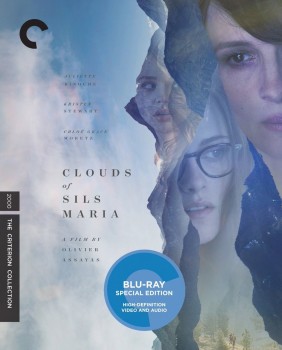
Video: Kristen's interview from the 'Clouds of Sils Maria' Criterion Blu-Ray


LQ YT (of the first clip)


Find out more details on how to order a copy of 'Clouds of Sils Maria' on Blu-Ray here.

Thanks to @queennn94 for the twitter videos.

Source

Monday, May 16, 2016

Juliette Binoche talks about Kristen with Vanity Fair


In recent years, Binoche has grown into that mentor role, guiding her co-star Kristen Stewart in their critically acclaimed Olivier Assayas collaboration, Clouds of Sils Maria, which earned Stewart a César.

“I was so proud of her, I have to say, when she got the César,” said Binoche. Since the win, Stewart has signed on to two additional French films, both with Assayas. And Binoche, as someone who has worked in both the American and French film industries, has a theory why Stewart and France have developed a mutual affection for each other in recent years. 

“Kristen is a young actress, and it’s very touching [for the French] to see somebody who doesn’t need to be here, because it’s not about money, it’s not about fame, it’s about exploring different ways of expressing yourself,” the actress explained. “It is touching to us because there is a tradition here in France of making movies as an art form [rather than a business]. Final cut is given to the director, it is in the law here in France. A producer cannot have a final cut. It is in the law.”

“There is a protection of the arts here that is very strong,” Binoche continued. “I think Kristen understood that very quickly. She has the intelligence. She is quick. She has this need, this curiosity of exploring, and I think as you see young actresses, young French actresses wanting to go to America, I think more and more there are American actresses who want to be in more European films as well. So I think the exchange is really opening up.“

Monday, April 4, 2016

Thursday, February 25, 2016

Julianne Moore mentions Kristen in Der Bund (Switzerland)


Kristen & Julianne Moore at an Oscars after-party in 2010

And who are your favourites in the acting categories? [For the Oscars this year]

Julianne Moore: Ha ha I will certainly not tell you. All are great. And there are a few more, not nominated, which should also be there. I am thinking of Kristen Stewart in 'Clouds of Sils Maria' and Idris Elba in 'Beasts of no Nation'.

Source/Translation:@Caroba81

Sunday, February 21, 2016

Kristen wins best supporting actress for 'Clouds of Sils Maria' w/ the International Cinephine Society Awards


SUPPORTING ACTRESS
Kristen Stewart – Clouds of Sils Maria

PLUS

ORIGINAL SCREENPLAY
Clouds of Sils Maria – Olivier Assayas

PICTURE
01. Carol
02. The Assassin
03. Mad Max: Fury Road
04. Clouds of Sils Maria
05. 45 Years
06. Li’l Quinquin
07. Inside Out
08. The Duke of Burgundy
09. A Pigeon Sat on a Branch Reflecting on Existence
10. Arabian Nights
11. Tangerine

Source

Tuesday, January 12, 2016

Kristen wins best supporting actress for 'Clouds of Sils Maria' w/ the Alliance of Women Film Journalists EDA Awards


2015 EDA Award Winners

With sincerest appreciation for all the great work that’s been done in film DURING 2015, the Alliance of Women Film Journalists is pleased to announce the winners of the 2015 EDA Awards.

Best Actress in a Supporting Role

Kristen Stewart in CLOUDS OF SILS MARIA

Friday, January 8, 2016

Kristen's new interview with Vanity Fair


Kristen Stewart has what she calls “dropped on my ass” syndrome. Returning to Los Angeles just before Christmas after a “a long week of work,” she’s still recovering from a shoot with Olivier Assayas—not Clouds of Sils Maria, the film for which she won France’s César Award and is a best-supporting-actress Oscar hopeful, but Personal Shopper, a new film that Stewart calls a “thoughtful, really meditative ghost story.”

And, not for nothing, maybe the hardest movie she’s ever made. “I genuinely felt closer to death on a movie than I’ve ever felt,” Stewart says. “It’s like 16-hour days, six days a week, running my fucking ass around Paris. Literally nonstop running.” And the film, now in post-production, isn’t easy on the mind, either. “[Assayas] sort of gave me this opportunity for a short period of time to contemplate infinity in a really disarming and scary way, that’s like little questions that you ignore when you lay your head down on your pillow at night. Like, ‘I'm alone, who am I?’ All those things, they plague her.”

In short, don’t expect Clouds of Sils Maria to be the last time Stewart gets a lot of attention for a film she made with Olivier Assayas. Though she’s been acting since she was a child, and pals with the likes of Julianne Moore since she was 12, Stewart may have never had a breakthrough year quite like 2015, in which she won accolades for Sils Maria that seemed to finally shake any sense of surprise that the girl from Twilight was really, really talented. Stewart’s overwhelmed acceptance speech at the César Awards was repeated in a way at this week’s New York Film Critics Circle Awards, where she ended with a quick, nervous-seeming, but charming “bye!”—suggesting that the dazzle of this kind of recognition hasn’t quite worn off.

Nor has the dazzle of Juliette Binoche, her Sils Maria co-star with whom she formed a bond while Assayas kept his distance on the set. “As emotionally engaged as he is, trying to get thoughts or impressions is like pulling teeth,” Stewart says of the director. “All the intimacy happened between the two of us when we would talk about our interactions with Olivier fondly and with this sort of admiration and actual love.”

Stewart calls Binoche a “serious force to be reckoned with,” and someone she admires even while recognizing their utterly different styles. “I’m so impressionable and sensitive and touchy and she’s locked and loaded and ready to go at all times,” Stewart says. “Whereas I think that’s different upbringing when it comes to how we approach our work: she’s a fucking trained, crafted, experienced vet, and I’m a little bit less that. I’m much more accidental.”

And their work would often imitate the film, in which Stewart play the personal assistant to Binoche’s actress character, and often helps her rehearse lines for an upcoming play. “She would always try and run lines and I would run away from her on set,” Stewart admits. “I'd be like I can’t. I don’t want to say those things yet. . . . I hate rehearsing. It feels strange.”

Real life also creeps into the margins of Sils Maria with the introduction of a character played by Chloë Grace Moretz, a rising American starlet who’s currently acting in a large franchise—not unlike Twilight or Moretz’s own upcoming blockbuster The 5th Wave. Large franchises weren’t often a stepping stone for up-and-coming actresses until Stewart and Twilight hit so big, and she’s aware of the trend she’s started. “It’s weird having done this overtly successful franchise-type thing, and then have a bunch of young girls hop on similar vehicles and be like, ‘Hey, how’s that going for you?’ [They’re] really interesting, talented girls, and that’s why they were hired for these jobs, because they were really cool in that moment and they didn’t know what to expect and they jumped on. Basically, I’m just waiting for those things to be over. I’m definitely interested in what Chloë does in between and on her big projects.”

As for Stewart, her next big project—once she recovers from the near-death experience of Personal Shopper, at least—could well be one she directs herself. “Oh yeah, I’m gunning,” Stewart says when asked if she’d like to direct her own work. “I really want that now.” She’s willing to wait for the time and material to be right, but she’s got the skills ready for when the moment comes. “I think that I’d be pretty good at getting people on the same plane and on the sort of train,” she says. “Yeah. I can’t fucking wait.”

Source/Via

Tuesday, January 5, 2016

Red carpet interviews at the New York Film Critics Circle Awards (People, NY1)


Short red carpet interview with Extra TV at NYFCC - 4 January


Kristen's interview with AOL at the NYFCC Awards - 4 January


In the French drama 'Clouds of Sils Maria,' Kristen Stewart is the loyal, tenacious assistant of an aging actress grappling with career issues. The New York Film Critics Circle named Stewart best supporting actress -- a huge deal -- and she won the Cesar award as well. Also a massive deal.

Think of everything you've heard about Stewart, and cast it aside. In person, she's friendly, thoughtful and acutely intelligent. And she takes the whole madness of the awards circuit with a few grains of salt.

"It is a trip. It's a wonderfully unexpected icing on a cake to a positive situation. We shot this movie a long time ago. It's a foreign film. It's a little quiet. It's not extreme," she says. "This was really shocking because it's two women sitting in a room, rehearsing lines, and talking to each other about the work that they do and where they are in their lives."

But congratulations, Kristen! You earned it! "Thank you, dude!" she responds with a grin. Should the acting thing stop panning out, she could learn a lesson or three from 'Sils.'

"I'd be a great assistant. I would be really good at that I think. I could really take care of an actress. Especially if I liked her. I'd make sure she was handled," says Stewart.

Much has been written about the dearth of meaty roles for women, especially for women of a certain age -- and the expectation of eternal youth. Carrie Fisher said she was asked to lose weight before shooting "Star Wars," and another very established actress recently was offered the part of a girlfriend who spends most of the film in a coma. She turned it down.

"I'm so one-in-a-million lucky. I'm presented with spectacular material. I've never been bored. It is hard for me to speak to that, but if you look around, you can answer that," says Stewart. "I've never been screwed by that. If there aren't any roles for me, at any age, wherever I'm at, and I don't feel that stimulation, I will find it elsewhere. I'm not driven by being in the spotlight."

Source

Monday, January 4, 2016

Kristen will attend the Film Society of Lincoln Center's luncheon on Tuesday 5 January in NYC


Tuesday will bring another barrage of events [....] and the Film Society of Lincoln Center's annual luncheon at Scarpetta, which will be attended by Stewart, Coogler, Miller, McCarthy, Nemes, Haynes, Nagy, Lachman, Vachon, Where to Invade Next director Michael Moore, Heart of a Dog director Laurie Anderson, Meru co-director Jimmy Chin, Son of Saul lead actor Geza Rohrig, Sicario director Denis Villeneuve, Amy director Asif Kapadia, Room director Lenny Abrahamson and The Martian's director Ridley Scott, lead actor Matt Damon and screenwriter Drew Goddard, among others.

Source: Scott Feinberg at THR /Via

Sunday, January 3, 2016

Kristen at the Q&A for the 'Clouds of Sils Maria' screenings in NYC - 3 January 2016


HQ

imagebam.com imagebam.com imagebam.com imagebam.com imagebam.com imagebam.com imagebam.com imagebam.com

imagebam.com imagebam.com imagebam.com imagebam.com imagebam.com imagebam.com imagebam.com imagebam.com imagebam.com imagebam.com imagebam.com imagebam.com imagebam.com imagebam.com imagebam.com imagebam.com imagebam.com imagebam.com imagebam.com imagebam.com imagebam.com imagebam.com imagebam.com imagebam.com imagebam.com imagebam.com imagebam.com imagebam.com imagebam.com imagebam.com imagebam.com imagebam.com imagebam.com imagebam.com imagebam.com imagebam.com imagebam.com imagebam.com imagebam.com imagebam.com imagebam.com imagebam.com imagebam.com imagebam.com imagebam.com imagebam.com imagebam.com imagebam.com imagebam.com imagebam.com imagebam.com imagebam.com imagebam.com imagebam.com imagebam.com imagebam.com imagebam.com imagebam.com imagebam.com imagebam.com imagebam.com imagebam.com imagebam.com imagebam.com imagebam.com imagebam.com imagebam.com imagebam.com imagebam.com imagebam.com imagebam.com imagebam.com imagebam.com imagebam.com imagebam.com imagebam.com imagebam.com imagebam.com imagebam.com imagebam.com imagebam.com imagebam.com imagebam.com imagebam.com imagebam.com imagebam.com imagebam.com

HQ - Introducing the second screening

imagebam.com imagebam.com imagebam.com imagebam.com imagebam.com imagebam.com imagebam.com imagebam.com imagebam.com imagebam.com imagebam.com imagebam.com imagebam.com imagebam.com imagebam.com imagebam.com imagebam.com

MQ

 imagebam.com imagebam.com imagebam.com imagebam.com imagebam.com imagebam.com imagebam.com imagebam.com imagebam.com imagebam.com imagebam.com imagebam.com imagebam.com imagebam.com imagebam.com imagebam.com


Fan Photos

imagebam.com imagebam.com imagebam.com imagebam.com imagebam.com imagebam.com imagebam.com imagebam.com imagebam.com imagebam.com imagebam.com imagebam.com imagebam.com imagebam.com imagebam.com imagebam.com imagebam.com imagebam.com imagebam.com imagebam.com imagebam.com imagebam.com imagebam.com
imagebam.com imagebam.com imagebam.com imagebam.com imagebam.com imagebam.com imagebam.com imagebam.com
imagebam.com imagebam.com imagebam.com imagebam.com imagebam.com imagebam.com imagebam.com
imagebam.com imagebam.com imagebam.com imagebam.com
imagebam.com imagebam.com imagebam.com imagebam.com imagebam.com imagebam.com imagebam.com imagebam.com imagebam.com imagebam.com

HQ Fan Photos

imagebam.com imagebam.com imagebam.com imagebam.com imagebam.com imagebam.com imagebam.com imagebam.com imagebam.com imagebam.com imagebam.com imagebam.com imagebam.com imagebam.com imagebam.com imagebam.com imagebam.com imagebam.com imagebam.com imagebam.com imagebam.com imagebam.com imagebam.com imagebam.com imagebam.com imagebam.com imagebam.com imagebam.com imagebam.com imagebam.com imagebam.com imagebam.com imagebam.com imagebam.com

Introducing the 2nd screening of 'Clouds of Sils Maria' 

imagebam.com

Fan Photos - after the screening

imagebam.com imagebam.com

Click on all pics for full view.

Fan Videos


Introduction to the screening (below)


Full Video of the Q&A


Another view - Full Video of the Q&A


Introducing the 2nd 'Clouds of Sils Maria' screening 


Sources (Fan Pics/Videos) 1 2 3 4 5 6 7 8 9 10 11 12 13 14 15 16 17 18 19 20 21 22 23 24 25 26 27 28 29
HQ/MQ Photocall 1 2 HQ Fan Pics 1 Full Video 1 2