Home
- Home
- Team Kristen
- Affiliates
- Wins and Nominations for 'Spencer'
- Cannes Film Festival 2018
- American Ultra
- Anesthesia
- Billy Lynn's Long Halftime Walk
- Cafe Society
- Camp X-Ray
- Certain Women
- Chanel
- Charlie's Angels
- The Chronology of Water
- Crimes of the Future
- Clouds of Sils Maria
- Come Swim
- Equals
- Happiest Season
- JT Leroy
- Lizzie
- Love Lies Bleeding
- Love Me
- Personal Shopper
- Seberg
- Spencer
- Still Alice
- Underwater
- Scheduled Appearances in 2026
Showing posts with label lily gladstone. Show all posts
Saturday, February 18, 2017
Lily Gladstone talks 'Certain Women' and mentions Kristen with The Guardian
And how has it been to have the support of an even wider community – all these rave reviews? “It has, at times, been a bit overwhelming,” she admits. And was she ever thrown off track by acting alongside such a constellation of stars? “I was daunted after seeing the cast list and before auditioning. But my mantra for the rancher became: don’t think about it – one of the lines in the story.” And besides, she and Kristen Stewart (with whom she is mainly acting) clicked: “Kristen has an incredibly sharp, artistic mind, catches every micro-expression, understands how to drive a scene, gave me everything I needed. And we bonded over our admiration of Kelly.” When pressed to say what makes Reichardt special, she adds: “She gives her actors freedom and her world space. And she is good to be with – the best thing you can say about a person. She has a wonderful, dry, not overreaching sense of humour.” She volunteers that she also formed a bond with Michelle Williams because they both come from Montana and were even, she reveals with satisfaction, born in the same hospital.
She then tells the story of how Reichardt first went out to Montana and drove around until she saw a ranch she liked and knocked on its door. Lynn, the ranch owner, was resistant to the idea of a film at first. She said she did not want to exploit the beauty of her landscape for Hollywood. “But Kelly spends five minutes with somebody’s dog and…” Gladstone laughs – does not need to finish her sentence. Lynn and Reichardt quickly became friends but Lynn remained “hesitant”, especially about “having some actress she didn’t know working with her horses”. Gladstone had been around horses before but had no rancher experience – everything she learned was from Lynn. She says: “Lynn and I became close. She has no children and was born in 1953 – the same year as my own parents.”
When people praise the film for its “lived-in” quality, Gladstone believes they are reflecting her experience: “I lived on that ranch for two weeks. I got into the lull of daily chores – you have nothing but silence and rhythm. A lot of the character I found there.” To look the part, she even helped herself to Lynn’s boots and overalls with their ripped linings. And Lynn’s doubts were – slowly – put to rest. The horses came first, the film had to fit around them: “Reichardt is such an animal lover and would not let the horses go 15 minutes off their feed schedule.” Gladstone got to know the lead horse, Remington, by riding it every day: “I’m not as assertive as some lifetime cowboys but I figured it out.” It is charming to watch her offering Stewart’s Beth a lift on horseback to the diner and back – especially in a film where so much conversation happens in cars.
But what I kept wondering, as I watched the film, was this: how aware was Gladstone of what her face was expressing at every turn? “When I was little,” she laughs, “my father used to tell me he could see when I was lying because I’d get a twinkle in my eye. But I rarely make a meticulous choice in placing a gesture. I’m more fuelled by what is in the gut. One of the most intriguing things I talked about with Kristen is: how self-aware do you allow your characters to be? Sometimes, your audiences have an insight into the character that the character doesn’t.” The most important decision was about the “level of crush” her character had on Beth. “I told Kristen: ‘I’m not going to let Jamie be all that self-aware’ because, after all, who is?”
Gladstone was herself coming to terms, during filming, with the end of a relationship. How much did the pain of that personal experience feed her performance? “It was a lesson in learning how to let go and walk away – not easy, but important wisdom. My relationship helped – although I’ve also often been in Beth’s position in my life.” And she briefly considers the difficulty of having a person besotted with you: “Beth’s hand is forced when Jamie shows up with that horse, there is nowhere she can go!”
Read Lily's full interview with the Guardian at the source.
Monday, November 7, 2016
Lily Gladstone talks 'Certain Women' and mentions Kristen in an interview with PopCulture Daily
Do you feel like that’s something your character shares with Kristen?
I think so. I feel like Kristen’s character is driven by her schedule and her circumstance. And also, what seems like being the only female lawyer at her new law firm – from the way she’s being treated, like the new kid. In the original story that’s very much pointed to, that’s she’s the new girl in an office full of guys and is kind of misplaced by that.
I think how tired she is and how brushed aside she feels and the way she conveys it to the rancher. The rancher has nothing but compassion for that. She can’t really express it that much, but she gets it – not to fit along in a group and to be working so hard constantly.
Can you describe the relationship you had with Kristen on and off set?
Kristen’s really an open person and so am I. We kind of just got to the heart of getting to know each other over shared experiences. We talked about music and art. We just hung out and got to know each other as people, but we really didn’t have that much time together. When she left set, we were both so stoked that we had gotten to work together. She said it first, she was like, “It’s so cool to work with you.” The feeling was totally mutual. As a person, we had a really good time. She’s really chill and we had a lot of time to talk about and understand different things.
On screen, because the rancher spends so much time alone, Beth and every tiny little gesture she makes is just so new and so intriguing. It’s hard to see someone clearly or hear what they’re saying, but that’s one thing about the rancher, she doesn’t seem to hang on to so much. Bringing the horse is kind of a big thing. Ha!
For me, what I was finding, it changes when you’re watching it as the actor because we had different takes and interpretations on set, and then you see what Kelly edits together. But what it reminded me of was a lot of the relationships that I see in my own family, where one person is working really hard at a desk job that’s soul tiring and the other one is doing physical labor that’s exhausting but you’re not dealing with micro aggression from your employers. The way that a relationship or a friendship or a support system goes from that dynamic – it’s something I thought the rancher would be familiar with.
My mother is a teacher and works in early childhood development, but also with multi-cultural curriculum, which is sometimes difficult for her because some students don’t think it’s that important. She’s got the tiring and intellectual job and my dad has always worked in the shipyards. He’s so strong and funny and accepting of everything she vents about at the end of the day.
For me, I’ve never seen that solely as a male/female thing. It’s a pretty typical balance that works. I think there’s something about the rancher who just likes to sit and listen to somebody. It makes her feel valuable. I think there’s absolute admiration for Beth beyond the physical attraction that emerges – an intrigue that she has with this person. She feels valuable being able to show her where to eat and that she doesn’t have to worry about anything. I think that’s what drove the horse, she thought she needed to connect with something present. It was a sharing of herself too.
Read Lily's full interview about 'Certain Women' and more at the source.
Wednesday, October 26, 2016
Thursday, October 20, 2016
'Certain Women' is nominated for 'Best Feature' at the Gotham Awards
— IFP (@ifpfilm) October 20, 2016
Lily Gladstone is also nominated for 'Best Breakthrough Actor'.
Congratulations to all!
The award ceremony will be on 28 November in New York.
Labels:
Awards,
Certain Women,
lily gladstone,
Nominations
Tuesday, October 18, 2016
Lily Gladstone talks 'Certain Women' and Kristen with The FilmStage
The Film Stage: It’s a standard aspect of preparation to look up previous interviews with the subject. You don’t have many, and only found some sort of Squarespace site.
Lily Gladstone: Yeah. [Laughs] That was the website I started for myself about three years ago and marginally maintain. I have press on there from earlier this year, from Sundance, but the rest of this year is kind of realizing that Twitter is a more effective means of getting that stuff out.
I have to wonder if you’ve developed ways of talking about acting, especially with those who aren’t themselves actors.
You know, I’m pretty, pretty… I absorb a lot from a first read of a piece. My process is fairly organic. The only thing I really kept from my training and really, really love to implement is always starting with the physicality of a character; that’s usually my “in” into it. I definitely do have a very clear read, especially after seeing the film twice. You get a much deeper sense, and you see choices, maybe, that you made, or little micro-expressions or thoughts. Even if it’s just a color of an emotion that you’re sitting in. People don’t always have totally articulated, clear thoughts about themselves, anyway. [Laughs] During the performance, I’m obviously not going through that. After watching the edit a couple of times and seeing the takes that Kelly chose, it surfaced some choices that were definitely in there when I was performing and looking for who this woman is. There’s always a sense. You have a deep intuition if something’s working or not, and seeing it when all of the pieces are put together, and seeing your choices live on screen.
I can see where my preparation and my process is really effective, because sometimes it’s not. Some characters are really, really evasive for a really long time, and because this was such a big deal for me walking into it, I told myself, initially, “Don’t over prepare.” That tends to be a mistake I made when I was a younger actor. First big role in a school play, for example. [Laughs] There’s being prepared and then there’s being so over prepared that you’re in your head chronically, and this wasn’t a piece at all that you could do living in your head. The camera notices it; Kelly notices it. That was maybe one choice that I made on the front end. I bought my character’s shoes — what I guessed to be her shoes. I sunk into her physicality for a few days before I was able to submit my first audition, which was lucky; you don’t always get that luxury. Everybody on this project is fine with people really diving into it, and Kelly really appreciated it.
So I built a physical life for the character before I started making any deep, internal choices, and the trick is, once you do, you have to forget them, because we don’t sit around and think about all of the things that define us and who we are every second of every day — especially not in a film like Kelly Reichardt’s. A lot of films do strive for that kind of constant catharsis and hyper self-awareness where the character shares their exact agenda. [Laughs] But Kelly’s… I wanted to allow my character what the original literature informs. Even on the onset, I didn’t want to read it. I knew that Maile’s stories had inspired the screenplay. I read Kelly’s treatment of Maile’s work before I read Maile’s work, and I chose not to read Maile’s work until I was told to. Kelly basically shoved it into my hands on set and told me to read it, which was great. I remember the first time I read it, I was so excited because a lot of the choices I made… just from Kelly’s treatment and, also, the things I knew about characters like the rancher that I know from being a Montanan, because a lot of us know the silent types. But there’s a very specific Montana feel to this project that I’m sure lends itself well to my performance and my understanding of the character.
But a lot of the choices that I made from Kelly’s adaptation were pretty spot-on and exposed in Maile’s work, but because it’s an internal story told from the rancher’s perspective, in Maile’s adaptation, it was a young boy named Chet rather than my character, which became a female for this film. It’s such an internal sort of narrative that there’s a lot of subtext within that story that you don’t hear on film, and it doesn’t make it to dialogue in the film — but it was there, and it supported a lot of the things that Kelly noticed and that resonated with her. So I wanted to try to match my end of the character with what worked with my training and process. I’m personally more of a fan of biomechanics. So there’s all of that boring stuff. [Laughs] But, ultimately, I decided that I wanted to try to match my process with this character with the way I perceived Kelly’s films and Maile’s writings, because, when I read Travis, B., I went and got her other works.
She’s such an immersive writer and so good at writing at something and letting the audience fill in the other shades themselves; she points you directly at the thing without spelling it out. So I tried to adopt that with the rancher. Maybe the first time I can say I was successful in that. I did develop an incredibly deep like, and one reason I feel successful is because Kelly’s such a wonderful director. I would make a more transparent choice, and she’d confirm the impulse but then push it down a little bit farther. She has a really remarkable way of helping you pick out little inauthenticities that you were aware of but you’re not even sure how to work out of your performance at all. I mean, she does it in the edit, but definitely in the frame and on set, too.
What might she say, regarding inauthenticity, to pinpoint?
[Laughs] You know, there was really only once, and it wasn’t even an inauthenticity. It would’ve felt inauthentic if that were the only take I’d given her and that was the only thing she had to cut to in the room, because that would’ve been out-of-pace with the rest of the story. The thing that helped me the most is that she kept it so much in scope for me. Like, there was one instance where I made a pretty strong choice, because it’s a pretty small film with a lot of minimal shots where big choices aren’t being made in the moment, but are kind of churning under the surface. So there was once where I made a strong choice, and she was sitting behind camera with me in the front of the truck. We did one take, and then she just reached out and touched my arm and said, “That’s really good, and that’s definitely what you’re feeling, but where we’re at in the story, it’s going to be too much too soon. You’ll get this moment, but you don’t get it quite yet.” “Oh! Okay! Great.” So that was basically it.
She’s also just funny and kind of a smart ass. [Laughs] Which she needs to be. We developed pretty quickly our director-actor language, and usually it just kind of would be in-the-air gestures — like tweaking knobs, taking a shade down a little bit or bringing it up — but most of the time she would be like, “All right, we got it. Let’s move on.” So, like any process, Kelly and I took a couple of day to settle into each other and find the language, but it was pretty effortless once we both saw that we were kind of coming from the same place with the character. She was happy with the footage that we were picking up as we were going. Basically, her style is very much… she’ll affirm it or just throw something completely different at you. I felt super-incredibly validated when there was one take where she asked for “this perspective” and I gave it to her and said, “No, that’s not it.” I got the first take, she got the second take, and she said, “All right. You were right, Lily.” She gave me the first take. That was fun.
I think that’s what the greats do. You can’t be a totally commandeering creative unless you have to be. Some shots, you just have to give your director the shot that they want. But, as far as choices with character and everything, she was very, very respectful, and she expects that. She wants you to come in with a strong idea to try out, and then she’ll tweak it or just completely say no if she doesn’t like it. She’s a very smart director. She’s very driven. She knows what she wants, but, when she doesn’t, she is completely collaborative and just trusts the piece. There are a lot of things that we found through that collaboration.
There’s such a sense between you and Kristen Stewart’s character when you’re not around. The absence is felt, which makes the interactions so much more understandable — that experience of thinking about someone who you like and then seeing them, getting this fulfillment just from that. Did you make a point of staying separate while on set so as to create the feeling?
No. Kristen and I, when we shot together, we hung out together as much as we could. It’s really busy, and this was my first time being a lead in a film, so I wasn’t used to so many set hours. But when we had time to hang out, we did. We played pool. We just chilled and talked about art. It’s funny: she had a good friend with her from Ireland, and she was awesome and we just nerded-out about Beckett for a while. God, I’d love to see Kristen jump into that someday. I think she would have so much fun doing a piece like Beckett. It’s kind of her sensibility: she’s really hyperactive in her mind, and she stays in a scene remarkably well. Anyway, that’s how Kristen and I bonded — just hanging out when we could. But we were on set together for a couple of weeks. A lot of the time we spent together was in between takes, just kind of playing sugar-packet football and running lines and commiserating over all the stuff that you do when you’re getting to know somebody.
But going back to the whole idea of separation and everything. [Laughs] Those segments are so incredibly rich, like you said, because you feel somebody’s presence almost more in their absence, like you said, when you have feelings for them. It’s the air that allows the flames to stoke. So while we were filming all that stuff, I actually hadn’t even met Kristen yet. Just the way the schedule worked out, all the stuff we shot on the ranch was before she even got there, and the space in between that was just me. They shot that before Kristen even got to set. I was definitely pulling from pining for somebody I’d had a romance with just the summer before. [Laughs] That’s what started it. There were a lot of little things that we’re all familiar with, but I hadn’t really experienced being in that situation where you respect the boundary somebody else draws, even though it sucks — basically, being told “no.”
Also, getting to know somebody in their absence, almost. So I’d had a romance earlier in the year that I definitely hadn’t worked out of my system, that I was definitely still processing as we were filming, and it only really came up a couple of times because it was a very different romance and connection than the rancher and Beth have, so I didn’t want to fully draw from my own experience — but I definitely know what you mean, missing them in their absence. It wouldn’t have come through without Kelly’s edit. [Laughs] A lot of those moments, Kelly would say, “This is a day where you just saw Beth last night and it’s gone well, and you’re thinking about her.” So it changes the pace at which you move and do your work. But my favorite one that I think really shows it is when the rancher is washing the dishes particularly — it’s just that anticipation, and it’s Kelly’s words. She said, “Anything can happen!” [Laughs] Long story short, all that stuff was shot before I met Kristen, we hung out as much as we could, and she’s great.
Looking at some previous film work, I notice that you often play Native Americans. What’s interesting is that, here, there isn’t much indication of the character’s background.
Right! Right.
You just kind of are this person.
Thank God. [Laughs]
It’s funny you say that, because Native-American representation can be pretty limited. You seem to feel relief at not being cast on the basis of appearance and being pigeonholed.
Right. The role was just such an incredibly revolutionary role for a Native-American actor to get, period. I am mixed. I grew up on the Blackfeet reservation. That’s why I feel like I understood the character so well, in a lot of ways, especially when I read Maile’s work, which talks about family history and boarding schools and marginalization in the education system. That spoke to me so much, because the work that I have done with my career before, and in between getting roles, are social justice theater and a lot of advocacy — workshops with youth and such. But I’ve been in that position a lot, anyways. I work with a theater company called Living Voices on occasion, but it was pretty much what I did through all of my twenties: traveling through rural communities, talking about shared oppressions and historical trauma. The piece I did dealt with Native-American boarding schools and military veterans, and talked about PTSD from two different perspectives.
So I was in my own life. I’ve been in Beth’s position far more often where I’m coming into a small town where I’m a stranger, and, a lot of times, you’ll get the people who are on the margins or the periphery, the ones who sit quietly in the back that are very… what you’re doing speaks to them, but they’ve removed themselves and are shy about it. But I’ve had instances in my own life where audience members or people that are in the class will come up afterwards and just kind of linger and follow you to your car and want to just keep having conversation. [Laughs] Something in my performance or the show spoke to them so much and they just need to know a little more about it. It’s the same way that all of us get crushes on our teachers. [Laughs] It feels a lot like love, but it’s also learning something tremendous when it touches your own family’s origins with marginalization and sheds light on some of your own feelings of inadequacy. It gives you permission to maybe be angry about it, but also go, “Oh, maybe that’s why things happened the way they did. Maybe it wasn’t my fault.” That’s huge for people.
I’ve been on the other end of that a lot as a teacher and a performer, so when I got this script I was just really excited to play her. In Maile’s story, Chet’s ethnicity being mixed Crow and Scottish definitely plays with the dynamic of he and Beth in that story, and it definitely informed a lot of my choices — my dialect, the people in my own life that I’d based my character’s physicality on. But it wasn’t any kind of statement Kelly was trying to make. Having a role where a Native-American character just exists as a complex, nuanced person doesn’t happen that often. It’s kind of cool that that aspect isn’t… this isn’t a piece that’s just going to pique the curiosity of people who want to know more about Indian culture, and I’m really thankful for that. It’s going to speak to a lot of people on a lot of different levels, but there’s a beautiful representation in independent film that I haven’t really seen before in this way. A lot of audiences are going to watch this piece and completely miss that my character’s Native American — which is my reality. Most of my life, people don’t know that until I share it. Other Natives see it. [Laughs]
Kelly said it in talkbacks before at festivals: they were looking for the right actress for this role, and because the character’s Native American in Maile’s treatment, of course that was the first path in the screenplay, but Kelly wasn’t led to ethnicity. It had to be the right performer and the right person. So I would say that my previous “pigeonholing,” even though all of the projects that I’ve worked on have been really remarkable as well, they definitely play to audiences that have a piqued interest in Native American communities, and this one hasn’t caught on, really, with that whole vein. There hasn’t been that noise made about my role in this… yet. [Laughs] The movie’s not out yet. So I really like that. It’s not something that’s worked its way into any kind of marketing, which has been present for every other project where I’ve played an ethnically specific character.
So it’s exciting; it’s new. It’s kind of what you hoped for when you’re an actor and your culture is not really represented in mainstream film and media. I’m really thankful that Kelly cast me and kept true to that part of the story, because I get really annoyed when there’s westerns and they don’t have complex Native-American characters that just exist in the world, and Kelly’s done that. From what I can see, it’s the first time things have happened. And she’s done that with a native character in a lead role; she wasn’t championing or anything. Kelly’s just quietly revolutionary, whether she likes it or not.
Source
Sunday, October 16, 2016
Thursday, October 6, 2016
Lily Gladstone and Kelly Riechardt mention Kristen with The Knockturnal
Congratulations on the film. You deliver such a powerful and nuanced performance. Can you speak a little bit about how you got involved and what attracted you to it?
Lily Gladstone: Yes, nobody says no to Kelly Reichardt when she comes knocking. I was in the rancher situation a little bit when I got asked to audition. I was house sitting for a ranch. I’m shoveling snow and chopping wood and stuff like that and then went into town and checked my email and had this audition notice. It came through a lot of circles that I already had established in casting, specifically, I’m an ethnically specific actor. It doesn’t play as much in the film, but it’s definitely in there and it got my foot in the door, but Native American casting director, Rene Haynes, she’s known for that and she knows me well and Mark Bennett called her, she called me and then Kelly has told me since then that … When I read the script I just didn’t think of it as an audition, I said, “I’m going to start preparing for this role,” because I didn’t know anybody else who could play it. I just loved it so much immediately. Picked my jaw up off the floor that I was even auditioning for this piece and went and got a Carhart jacket, got my flannels, which is in the final scene, my audition clothes are basically what I’m wearing. Especially, that pink flannel. That was what I got cast in and that’s what is in that last scene. Yes. Kelly said I was the first tape that she saw after being really nervous she wasn’t going to find who she needed for the role easily anyways and producers pulled me out of the pile and showed it to her first and that was it.
Most of your scenes are with Kristen Stewart. Can you speak about collaborating with her?
LG: Yes, Kristen’s wonderful. Working with her, she’s one of the most generous, present people so it comes though in the scene work. I do this too and she definitely does, but she loves the work and she loves digesting everything in a scene so much and she will just do it over and over again for the love of it. Even when it’s not her coverage, she’s so invested and so there and working with her was just like every other experience I’ve had working with people who are just so talented and just genuinely good people. It was fun.
The scene where your character drives four hours to talk to Kristen’s character is a heartbreaking scene to watch. Can you speak about playing that out?
LG: I got two takes. There were several times during filming where I was bringing a lot to a scene but Kelly would stop me and say, “You do get that moment but you don’t get it yet.” She’d pull me back from choices I would be making earlier in the time line. Then before we shot it she just said, “All right, this is it, this is where you let it go but don’t do it too much.” That’s the only direction we got. We got it in two takes, she used the first one. It was there. I mean, we’d shot everything right before it in the time line. It was there.
Can you speak about what attracted you to these three women?
Kelly Reichardt: Maile Meloy’s story is really what pulled me in. All the women are complex and they’re really set in their environments. A lot of the scenes took place outside and had small life processes, and those are things that I’m drawn to, and so those things were appealing.
I thought Laura Dern was so fun to watch. Can you speak about directing her?
KR: Yeah. Laura’s really fun to watch. She’s really a good comedic actress and then can take it to another place really quickly. She’s super super precise and you can tell she’s been on film sets all her life because she’s really aware of how the camera’s working and how the frame’s working and even how the cut’s going to work, I think. She’s a filmmaker, really, and so it was super exciting working with her.
I thought it was quite a stunning performance from Lily as well. Can you speak about discovering her a little bit? Obviously she’s been around, done some work before, but bringing her to this project.
KR: Yeah. She has been in other films, but she felt like a gift from the film gods. She sent us a tape and she had done the scene herself. It was just a huge relief. I found her around the same time I found the location, and the actual rancher of the location we used reminded me in some ways of Lily, and so it all kind of really worked together.
Lastly, Kristen, can you tell me how it was collaborating with her and what you admire about her?
KR: She’s so game. When I met her, she’s a leg shaking, fast talking, really wound up person, and then the camera turns on and she gets super mellow and slow, and she lays back and really responds to things. She’s a really good listener when she’s in a scene and she’s completely willing to let a scene be someone else’s. I thought she was an incredibly generous actor and really super nuanced. She blew me away sometimes.
Source
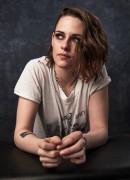
Saturday, October 1, 2016
Lily Gladstone talks about 'Certain Women' and mentions Kristen (w/ Missoula News + The Missoulian)
Missoula News
What was it like acting opposite Kristen Stewart?
LG: I didn't see Kristen's current body of work until I started working with her. It was great to get to know her as an actress, in between takes. But she saves it all up—and I agree with her method—because she knows when you make the discovery during the scene that's when the camera should capture it. She's a remarkably generous actress in that she stays with you emotionally even when it isn't her coverage, when the camera isn't on her.
Missoulian
Reichardt adapted "Certain Women" from "Both Ways is the Only Way I Want It," a collection of stories by Helena native Maile Meloy. It's a triptych, with the first two sections devoted to characters played by Williams and Dern. All were shot in the Livingston area.
Stewart and Gladstone's piece closes the triptych. When she first saw the script, she kept paging through looking for the name of her character. Since she doesn't arrive until 50 pages in, Gladstone began to assume she was getting cast as a gas station attendant with five seconds of screen time.
When she did find her character, she realized it's the piece the film has been building toward.
She read Meloy's original story, "Travis B.," and decided to keep some of the original male character's traits. Chet is a rancher who rides broken horses despite having polio. She envisioned her rancher as someone who "won't be a fragile person because of an illness," someone with a limp and a wild streak.
She also hung onto a line in Meloy's story, that Chet "got afraid of himself that winter; he sensed something dangerous that would break free if he kept so much alone."
Reichardt changed Chet's gender, but Gladstone kept some shades of the attraction to Stewart's character, building off that line as a subtext - perhaps her character identifies more as a male but doesn't know it yet.
"I didn't want to answer any clear questions for my characters even," Gladstone said. She "shaped them into an amorphous, more abstract emotion but was trying not to let the thoughts be present too much."
Like their characters, Gladstone and Stewart got to know each other on the set.
She said Stewart is a student of film, and they passed time between takes talking movies.
"If I were to cast her into a Missoula archetype, she would be someone who would be going to every out-of-town DIY show at the VFW and the Palace. She'd be playing pool at the Union," she said.
Labels:
Certain Women,
lily gladstone,
mentions
Friday, February 5, 2016
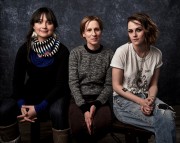
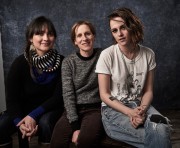
Variety Portraits at Sundance for 'Certain Women' in UHQ
Labels:
Certain Women,
Kelly Reichardt,
lily gladstone,
portraits,
Sundance,
UHQ
Sunday, December 27, 2015
Co-star Lily Gladstone talks about 'Certain Women' & mentions Kristen
It was temporary, though – a set built for the independent film "Certain Women," in which Gladstone was acting opposite Kristen Stewart, who's taken a turn toward art-house fare in the years since "Twilight" made her famous.
Gladstone was selected for the part of Jamie, a reclusive young woman who falls into the orbit of Stewart, a recent law school graduate undergoing a crisis of her own. In addition to Stewart, the leads are an acclaimed group: Laura Dern and Michelle Williams, forming a Robert Altman-like ensemble drama of everyday adults quietly consumed with crises.
Director Kelly Reichardt's film will premiere at the Sundance Film Festival next month. It's the first Montana feature tapped as an official Sundance selection since Travis Wilkerson's "Who Killed Cock Robin?" in 2005 and Alex and Andrew Smith's "The Slaughter Rule" in 2002, according to the Montana Film Office.
***
Reichardt developed the screenplay from short stories by Helena native Maile Meloy.
Gladstone said it's an ensemble-drama, three-act structure, with four leads who don't necessarily interact with one another.
Dern plays an attorney named Laura Wells, whose client is unsatisfied with a workers' compensation settlement and takes a handful of people hostage at the courthouse, a situation Laura must help diffuse.
Williams, a native of Kalispell, plays Gina Lewis, a woman whose marriage is falling apart. She and her husband become involved with an elderly man who has a stockpile of sandstone on his property.
Stewart and Gladstone's story comprises the third act. Jamie lives and works alone as a ranch hand, caring for someone else's animals.
Gladstone said she's a young woman "in the throes of her first existential crisis." She's "very highly strung, somebody who wants to prove that she's invincible but gets broken pretty frequently because of it."
She meets Beth, a recent law school grad who's teaching an adult education class in town, despite the long commute it requires.
"To Jamie she seems like this lawyer, this myth of a person, someone you meet and immediately put on a pedestal," Gladstone said.
They soon find they have more in common than they realize.
"It feels like one of those points in all of our lives where we're searching for something, and something comes and feels exactly like what we needed," she said.
Gladstone said Stewart is level-headed and a hard worker, and Reichardt is an actor's director – she gives the performers the first take and offers advice about scaling back or burying an emotion.
"She said at one point, 'You get one moment in this story. And it's not this one,' " Gladstone said.
The movie was shot mostly in the Livingston area on 16-millimeter film with the help of a grant from the Montana Film Office.
Source
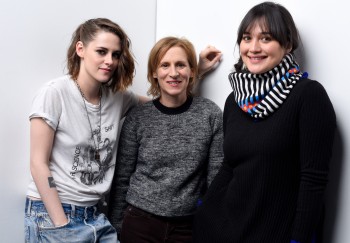
Labels:
Certain Women,
lily gladstone,
mentions
Subscribe to:
Posts (Atom)