On Spirit Day - the world’s largest and most visible LGBTQ anti-bullying campaign - millions of people around the world will wear purple or go purple online in a unified stand against bullying and to show support for LGBTQ youth. Purple symbolizes ‘spirit’ on the rainbow flag. Each year, Spirit Day draws the participation of celebrities, corporations, media outlets, sports leagues, schools, faith institutions, national landmarks, and individuals.
Several studios, networks, and streaming services are also confirmed to take part in the world’s largest and most visible LGBTQ anti-bullying campaign:
Sony Pictures has confirmed participation from their upcoming LGBTQ-inclusive films THE CRAFT: LEGACY and HAPPIEST SEASON.
This year Spirit Day will take place on 15 October.
For more details and on how to support the cause go to their site here.
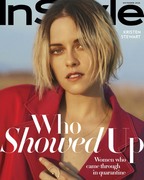
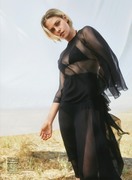
In an interview with her Happiest Season director, Clea DuVall, actress Kristen Stewart discusses queer representation, artistic freedom, and how she’s found her own path forward.
CLEA DUVALL: I feel like I'm seeing a family member I haven't seen in a long time. I'm like, "Look at your hair. You look so healthy."
KRISTEN STEWART: I love that we're doing it this way too. This is my third Zoom call ever.
CD: I would have been Zooming you all the time, but I just assume that everyone hates Zoom at this point.
KS: I like it. This is cool because the story won't be like, "We went to a local café in her neighborhood and ordered a drink. There's a tension. Does she want to be here?" [laughs]
CD: Was it something I said? [laughs] You turned 30 in quarantine. How did it feel to have a big birthday at that time?
KS: I woke up that day [April 9] and was like, "You need to get your ass in gear." I was drinking too much in the beginning [of the pandemic], so I stopped drinking and smoking. I'm embarrassed because it sounds really cliché, but, whatever, it's true.
CD: How have you been spending your time in quarantine?
KS: I've been writing Chronology [an adaptation of the book The Chronology of Water, by Lidia Yuknavitch, which Stewart is also directing] for a long time. That's done. And I have three other projects I've been thinking about for a while but never touched. For the first time, they've all taken a massive jump forward.
CD: What is a typical day like for you now?
KS: I walk my dogs and take walks with people. I feel horrible about the state of the world, so I'm donating money — but I'm not marching, and I'm feeling weird about it. I'm a frustrated optimist. I'm always thinking, "It can't be as bad as this."
CD: We made Happiest Season before the pandemic. Mary [Holland] and I wrote this story because I wanted something that represented an experience I haven't seen, which was something close to my own. [The film is about a woman named Harper, played by Mackenzie Davis, who has yet to come out to her family but brings her girlfriend, Abby, played by Stewart, home for Christmas.] What did you think when you read the script?
KS: It deals with very poignant things that, for me, are extremely affecting and triggering — even though now the word "triggering" triggers me more than anything in the whole world. [laughs] But the movie is so funny and cute, and I loved the couple. They're both people I really felt protective of in different ways, because I've been on both sides of that dynamic where someone is having a hard time acknowledging who they are and the other person is more self-accepting. I [personally] came into the more complex aspects of myself a little bit later. I never felt an immense shame, but I also don't feel far away from that story, so I must have it in a latent sense.
CD: Yeah.
KS: I don't want to aggrandize my own pain, because I know that others' pain has been so great. Living in this world, being a queer person, there are things that hurt constantly. Anyway, I read the script, and I couldn't believe a studio was doing it.
CD: Was it your own experiences that drew you to it?
KS: Yeah. The first time I ever dated a girl, I was immediately being asked if I was a lesbian. And it's like, "God, I'm 21 years old." I felt like maybe there were things that have hurt people I've been with. Not because I felt ashamed of being openly gay but because I didn't like giving myself to the public, in a way. It felt like such thievery. This was a period of time when I was sort of cagey. Even in my previous relationships, which were straight, we did everything we could to not be photographed doing things — things that would become not ours. So I think the added pressure of representing a group of people, of representing queerness, wasn't something I understood then. Only now can I see it. Retrospectively, I can tell you I have experience with this story. But back then I would have been like, "No, I'm fine. My parents are fine with it. Everything's fine." That's bullshit. It's been hard. It's been weird. It's that way for everyone.
CD: And as a 21-year-old, you had people writing articles about you, chasing you around, and trying to get to the bottom of what you are when you hadn't even fully gotten to the bottom of it yet. I can imagine that would make you put up every wall you could.
KS: Yeah. And it affects family and other people. Then they have their own experience that they bring to the table.
CD: Does anything stand out as something you really enjoyed in making the movie? Other than working with me, obviously. [laughs]
KS: I could not have had a better partner in this than Mackenzie. This couple needed to be two people you really liked and found aspirational. So we had to make sure of that — even though it is a movie about somebody who is coming to terms with being themselves. We had a responsibility to not be dinky. It's like, "No, we know what we're doing, and it's OK. And now please, everyone else get comfortable with it."
CD: Being a queer person, playing a gay character, do you feel like there's almost an expectation for you to be a spokesperson for the community?
KS: I did more when I was younger, when I was being hounded about labeling myself. I had no reticence about displaying who I was. I was going out every day knowing I'd be photographed while I was being affectionate with my girlfriend, but I didn't want to talk about it. I did feel an enormous pressure, but it wasn't put on me by the [LGBTQ+] community. People were seeing those pictures and reading these articles and going, "Oh, well, I need to be shown." I was a kid, and I felt personally affronted. Now I relish it. I love the idea that anything I do with ease rubs off on somebody who is struggling. That shit's dope! When I see a little kid clearly feeling themselves in a way that they wouldn't have when I grew up, it makes me skip.
CD: This is an election year. How politically active are you? You talked earlier about making donations and the complicated relationship with how to be engaged. People really need to vote.
KS: People need to vote.
CD: How much do you read the news?
KS: I read the news every day, but I don't fixate on it. I have some friends who won't stop, and it's all they talk about. I'm not saying I don't want to confront these things. But in terms of how involved I am, I've never been the face of anything. I don't even have a public Instagram. I really do like to support people who are already doing it and have been for years.
CD: Has it been a conscious choice for you to stay off social media?
KS: It's just not natural to me. It's never been a question. I've never been like, "Should I do it?" It's literally just been like, "No, my god." [laughs]
CD: As someone who became a star so young, do you feel like you've grown into yourself?
KS: Right now we're having a conversation that's really nice, because I'm not thinking about the fact that I'm talking to a million people. But when I was younger, I just couldn't get away from that as an idea. I was just so bogged down by it all that I couldn't even present an honest version of myself. That frustrated me because I kept getting in my own way. Now that I am older, I'm not as scared of fucking up.
CD: I can imagine the pressure of carrying a huge franchise like [Twilight] when you're so young must have been extremely intense.
KS: I was a kid. I definitely was never like, "OK, I've got this franchise on my back." If anything, that is an outsider's perspective, which is one that I can share with you only now. Then, I had no idea.
CD: What about as an actor?
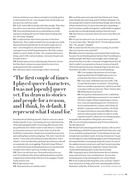
KS: I'm a pretty confessional artist. I definitely enjoy my work being as personal as I can make it. The first couple of times I played queer characters, I was not [openly] queer yet. I'm drawn to stories and people for a reason, and I think, by default, I represent what I stand for. I do think it's important that we step into different roles and into other people's shoes in order to really expand ourselves, albeit not ever taking up space for people who should be telling their own stories.
CD: Are you already prepping to play Princess Diana [in the film Spencer]?
KS: We don't start shooting until mid-January. The accent is intimidating as all hell because people know that voice, and it's so, so distinct and particular. I'm working on it now and already have my dialect coach. In terms of research, I've gotten through two and a half biographies, and I'm finishing all the material before I actually go make the movie. It's one of the saddest stories to exist ever, and I don't want to just play Diana — I want to know her implicitly. I haven't been this excited about playing a part, by the way, in so long.
CD: I'm going to pivot a little bit because this is a fashion mag, and you know I am a clotheshorse. Do you miss dressing up for work and doing the red-carpet thing?
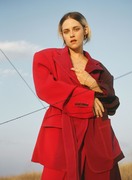
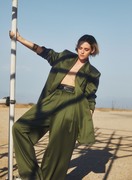
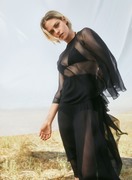
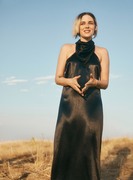
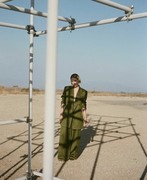
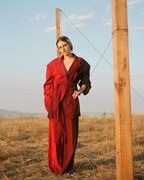
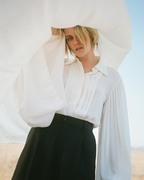
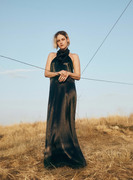
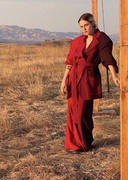
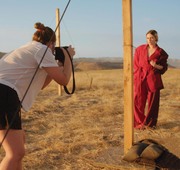
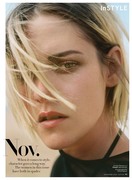
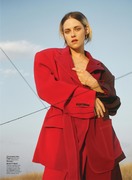
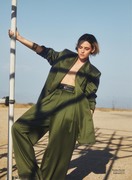
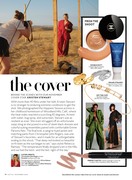
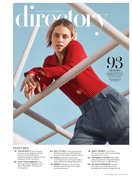
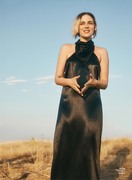
KS: It was really fun shooting this cover, actually. I hadn't seen my team in so long, and it was a photographer [Olivia Malone] I really like. It did remind me of how much I love that. I think it's easy to confuse certain things that I have an aversion to, which is like, "Oh, she doesn't love getting her picture taken all the time." It's like, "Yeah, not constantly." But I love making art with my friends. That definitely fuels me in a different way. It's fun. But in terms of getting dressed up and going out, the pressure of that can be just dumb. I get nervous before going out, not because I'm scared but because it's just like, "Oh god, what else can be a thing?"
CD: Getting ready for red carpets feels so high-stakes — there's always a ticking clock and so many people around. Do you have any go-tos right now in your closet?
KS: Usually, I'm a really uniform-based person. For certain weeks, I was getting dressed every morning as if I had somewhere to go. It made me feel better. There was a period of time when I only wanted to wear shit that was matching. I have a leopard-print suit thing that is really fun to wear around the house. So, we wore suits and sets. And then these silky, robe-y things. My dad used to wear a robe around the house, and it was very floofy. I am small, so if I wear a puffy robe, it just looks so lame. The reason I didn't like robes is that I felt silly and dinky, and I don't like feeling silly and dinky.
CD: I know this about you.
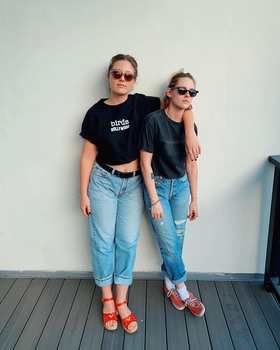
KS: Basically, I've been stepping outside of wearing jeans and T-shirts. Within the confines of my own home, of course.
CD: You are a face of Chanel, so I presume you have a lot of Chanel pieces in your closet.
KS: I do, indeed. I have all my Chanel shit together. Sometimes I just walk by it. My little black jacket is sitting there. I have a couple of bags that are really classic. But then I have so many things that a more daring, cooler person would wear. Maybe if I have kids, they'll be like, "Why aren't you wearing this incredible thing?" Maybe someone will step in and utilize my wardrobe.
CD: So, we made a Christmas movie, as you know. Do you have any idea what you're doing for the holidays this year?
KS: I usually go home and hang out with my family. On Christmas morning I go eat Thai food because I live right next to Thai Town, and it's the only place that's open, and it's incredible. Early-morning Thai food is really fun before everything gets going. You're like, "Today's going to be a shit show. It's going to be really annoying." I love my family, and I love Christmas, but obviously it's a lot. So, I've created that little tradition for myself. This year I don't think I'm actually going to be able to be home. I'm going to be in Europe prepping Spencer.
CD: Since the title of our movie is Happiest Season, who or what makes you happiest now?
KS: I really do wake up happy. I feel so blessed. I love my friends and my family. I'm a happy motherfucker.
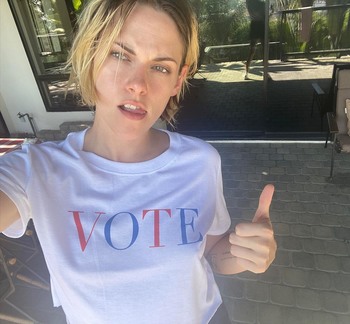
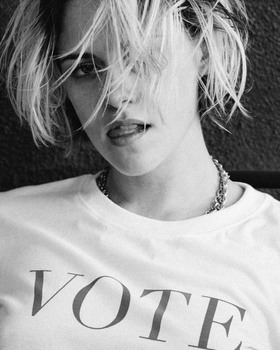
“For anyone that might need to let out a little aggression today... it is national register to VOTE day.
I never do this but for anyone who has not registered to vote please take this opportunity to feel HEARD. And not hopeless. I am voting because I WANT to believe in our country. Because I believe in climate change. I believe in systemic racism. I believe in freedom of speech and the right to assemble. I believe in gun control. I believe that women have a right to make choices about their own bodies. I believe people have the right to live and love and identify however they feel in their hearts without fear. I believe that people care about each other. So try and have a lovely Tuesday and vote for your fucking lives.” - Kristen Stewart
Mr. Wilkinson, how did you go about helping Kristen Stewart transform into Nouvelle Vague star and It Girl Jean Seberg?
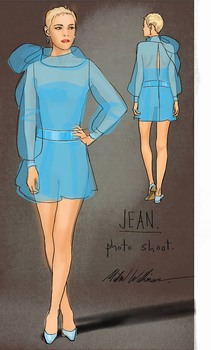
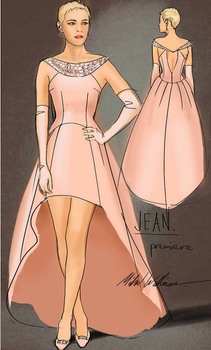
Kristen and I were deeply moved by Jean Seberg's story. You can study human strengths and weaknesses on her, for us she was the intense discovery of a psychologically highly complex person. For me, designing costumes for people who are full of contradictions and small flaws is especially grateful. Kristen works harder than almost any other actress I've met and she is very intuitive at work. We had long discussions about what which costume should express, it was a great collaboration. It quickly became clear that Kristen had no ego problems when it came to the costumes. For both of us, it was primarily about finding clothes that fit the scene and are not just “fashion-conscious”.
Then where did you get the inspiration for the final designs?
Jean and Kristen were my inspiration for the costume design. I was fascinated by the parallels between these two women. Both are icons, both are uncompromising and completely modern. You have great self-confidence. I wanted to incorporate that into the film and express that strength with the costumes.
How would you describe the style of the two?
Kristen and Jean have a very modern style that doesn't seem effortless or ornate. You feel comfortable in very expensive designer clothes as well as in the simplest casual look. You never get the impression that a dress overwhelms or covers the person. The individual personality always shines through. I think that has a lot to do with the energy created by the contrasts: the short hair goes with feminine couture as well as a surprising personal touch, such as wearing casual clothes whose cut is based on men's fashion. Both women have a personal strength that makes the clothes they wear seductive.
Have you studied a lot of historical material beforehand?
I saw all of Jean Seberg's films so that I could “get to know” them. I wanted to understand their on-screen magic. Then I did extensive research on the period from 1968 to 1970 in which our film was set. I studied all the clothes Jean actually wore at the time, looked at her personal photos, film photos from the studios, paparazzi and fashion photos as well as magazine articles. Some of the costumes in the film are directly inspired by these images. To get the right clothes for those private moments about which there were no photo documents, I had to put myself in Jean's head and imagine what she would have chosen for them. When it comes to jeans style, most people think of the pictures of you as a world-famous it girl, i.e. the time when when she was "discovered" by Otto Preminger and played "Saint Joan" in 1957 and then appeared in Godard's "Breathless" in 1960. Back then, she sported this light, modern and idiosyncratic wardrobe: a few staples that got a personal touch with her rasped pixie haircut, which she paired with a flawless white shirt, capri pants, ballet shoes and the famous striped Breton T-shirt combined.
A look that doesn't even appear in the film ...
In the film, Jean's celebrity is almost over and her film career is starting to stagnate, she is no longer the carefree ingenious trendsetter, she has gotten older and also more insecure. I've talked about their classic casual style in a few scenes, but we mostly see them differently. We see her in her house, vulnerable and relaxed in sheer, delicate underwear and silk dressing gowns. We see her at her public appearances when she wears designer labels like armor in which she can face the world. The style of this time is very plastic and strong - Jean Seberg wore dresses from all the big houses from Yves Saint Laurent, Courrèges, Chloé to Givenchy.
Do you have a favorite outfit?
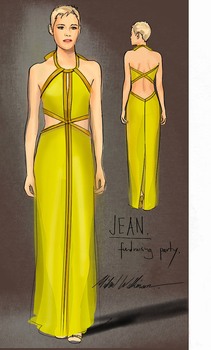
I wanted Kristen to get the glow from Jean, her indestructible spirit, that light she was giving off from within - so in some scenes I put her in bold yellow, pure blue, red and white, or chartreuse green. But I also wanted to get the paranoia across. So in some scenes she wears colors that make her pale. Director Benedict Andrews said he would like to show her as pale as a fragile orchid. After her miscarriage, she had the darkest moment of her life from which she never fully recovered, so I let her wear black. But one of my favorite costumes is the red leather jacket that I chose to reflect her passion for life and her impetuous esprit.
How did you actually start with costume design?
As a teenager, I made some money dressing up at operas, ballet, and theaters. This world “behind the scenes” captured me and I discovered my “tribe” there, people who tick just like me. That's when I knew I wanted to work through the costumes in this rich world of storytelling. I studied costume design and learned everything from pattern making to art and film history, costume making and illustration. After graduating, I started designing for small theater companies. Then came bigger orders and at some point finally the first small independent films. I moved to America and worked there for 15 years before returning to London five years ago.
And what was the most difficult project you have worked on so far?
"Aladdin" (editor's note: Disney's live film 2019) was incredibly ambitious. The task consisted of dazzling the senses with a wealth of colors and creating a world of its own that still seemed so grounded and authentic that the audience could emotionally follow. Another big challenge was “American Hustle” because it was such an organic way of filming. Director David O. Russell kept us busy with new developments in the story. It was very exciting to work so raw and energetic.
Many of your designs appear very flamboyant and impress with their remarkable feel, which is also transferred to the canvas.
I love it when a film inspires me, so I try to inspire audiences with my work too. For "Jean Seberg" I went over with director Andrews what each costume was supposed to express, discussed it all again with Kristen, and then I withdrew and designed every single detail. Because the colors, cuts and textures were so specific, I had most of the costumes made directly by a great team of tailors in Los Angeles. I looked for the fabrics and trimmings at vintage fabric collectors and in special fabric shops in Los Angeles. I sourced a few of the costumes and all of the accessories from my favorite costumes distributors on the West and East Coasts and from vintage dealers around the world.
Sometimes this is reminiscent of the costumes of classic old Hollywood. Do you have a favorite era that keeps inspiring you?
I have a very eclectic style, I love Elizabethan textiles, 3D printing, mid-century furniture, Japanese cinema of the fifties and the music of the 18th century. There is good - and bad - design in every era. But my main inspirations are colors. I draw joy and strength from those who surround me every day.