
Showing posts with label Jacqueline Durran. Show all posts
Showing posts with label Jacqueline Durran. Show all posts
Wednesday, January 26, 2022


Friday, January 21, 2022
Wednesday, December 22, 2021
'Spencer' feature in Variety - with interviews and more

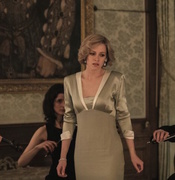
Digital Scans
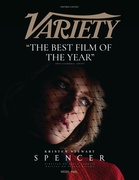
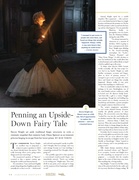
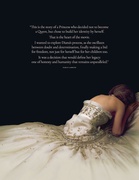
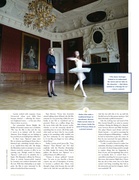
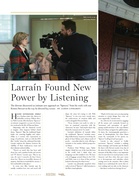
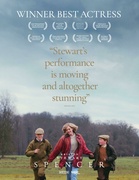
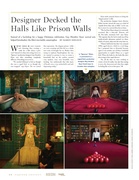
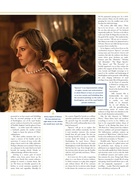
Click on each image for full view.
You can view each page at the source via each title:
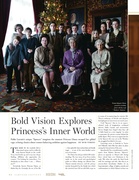
Bold Vision Explores Princess’s Inner World
The door to the roadside fish-and-chips stand opens, and in walks the most famous blonde in the world. Every head looks up and every jaw drops. Smiling, diffident, she approaches the counter: “I’m looking for somewhere. I’ve absolutely no idea where I am. … Where am I?”
Everybody knows Princess Diana, or thinks they do. Certainly, the arc of her life — first splendid, then melancholy and finally tragic — is one of the most familiar narratives of our time.
Yet Diana has always eluded full understanding. The true story of our lives resides inside us, in the moral and psychological paths we follow during our allotted time. Diana’s natural reticence, and the privacy strictly demanded by the family into which she married, have left us with little to go on in terms of reconstructing her interior life. There’s testimony of friends and skeptics, brief glimpses in interviews; not much more.
Until “Spencer,” that is. In an unprecedented work of imagination, acclaimed director Pablo Larraín and screenwriter Steven Knight have forged what they call “a fable based on a true tragedy,” in order to anatomize the private woman behind the public figure. They want us to appreciate her as the Spencer she was, not as the Windsor she struggled but failed to become.
Garnering raves at festivals in Venice and Telluride, their film has taken its place among the best pictures of the year.
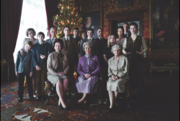
Spearheaded by a transformative performance from Kristen Stewart, “Spencer” places us squarely at Diana’s side during three critical days over Christmas in the early ’90s when she made the final break with her marriage and title. But this is no you-are-there docudrama. Rather, it’s an impressionistic collage of sights, sounds and confrontations in which Diana’s in-laws are presented as no less remote and forbidding than the ancestral paintings on the walls of Sandringham, one of the royal family’s private residences located in the countryside of Norfolk, England. And the ghost of Anne Boleyn — an earlier royal wife undone by a husband’s passion for another woman — begins to haunt the princess of Wales’ waking hours.
The film’s earliest moments alert us to expect a mixture of the familiar and the mysterious. A convoy of army trucks rolls along a forest road in the chilly midwinter. Perhaps a Bosnian rescue mission? Close-up on a pheasant in the road, dead on its back beneath the passing wheels. Clearly, no collateral damage will deter this exercise.
Arriving at a manor, pairs of armed soldiers carry heavy green boxes up the ornate steps. Surely they contain ordnance, perhaps to counter a terrorist threat. But no: The boxes are formally opened in the kitchen to reveal enormous quantities of meats, fruits and vegetables, (literally) fit for a queen. Staged by Larraín as a military operation performed with wartime gravity, the spectacle begs the inevitable question: Who in the world could possibly deserve this kind of treatment?
The in-laws offer little solace. “There has to be two of you … the real one and the one they take pictures of,” her husband impatiently spells out. “You have to be able to make your body do things that you hate, for the good of the country.” Her mother-in-law is more succinct: “All you are is currency.” But Diana is not ready to be plastered onto a £10 note. Not yet; not while she has two sons to protect from a similar fate.
In its elegance, and its keen focus on the machinations of power, “Spencer” can stand among many past best picture winners and nominees that take the audience into throne rooms where great decisions are made. Intimate epics like “Elizabeth,” “Nicholas and Alexandra,” “The King’s Speech,” “The Queen” and “The Favourite” are lavishly appointed, even as they critique the politics that support all that luxury. In that vein, Larraín and Knight encourage us to marvel at the corridors and landscaping of Sandringham and its grounds, while offering the most stinging indictment of royal privilege of any major film of this generation. As the future of monarchy is debated in coming years, “Spencer” will likely be found at the forefront of the conversation.
Still, Larraín’s film is fundamentally the story of one who never aspired to royalty, nor took kindly to its demands. So, its real affinities lie with the groundbreaking, award-winning stories of women who endeavor to forge their own identities in the face of male domination and prejudice.
Like the title character in “Mildred Pierce,” Diana labors hard and sacrifices everything in service to her children, not least in the suspenseful outdoor climax of “Spencer” at the Boxing Day shoot. As in “All About Eve,” Diana yearns for a balance between ambition and personal happiness. Her hallucinatory confusion conjures up memories of “Black Swan,” while her heartbreak at the insidiousness of class differences would not be out of place in “Parasite.”
Parallels aside, “Spencer” is truly one of a kind, the product of a gifted auteur and his production team. Among its accomplishments is an original Jonny Greenwood score that pulls equally from Tudor chansons and electronic music, as if to echo the clash of traditional manners and modern mores that animates the story. Young Lady Diana Spencer, yearning for a simple life of caring and giving, found herself thrust into a role she was poignantly unprepared — and unwilling — to play. That is her tragedy, told here with delicacy and power. ✤
Larraín Found New Power by Listening
Having distinguished himself as a fearless artist who thrives in unfamiliar territory, Chilean director Pablo Larraín offers his latest, “Spencer,” an intimate, imaginative account of a formative weekend in the life of Princess Diana.
Dispensing with the historical record to imagine what happens behind closed doors, “Spencer” flips the traditional biopic inside out, restoring fragility and vulnerability to a woman who represented an image of perfection. And, as with his 2016 film “Jackie” about the celebrated first lady, Larraín explores the distance between the visibility of these media-savvy icons and their ultimate unknowability.
“There’s so much that has been said about her, and countless books and movies and TV shows,” Larraín says. “But in my case, the more I research, the less I know about her. There’s an incredible element of mystery. And that is wonderful for cinema. I feel comfortable in that place."
In every new film, Larraín says he usually considers how tone and mood will shape the story he’s trying to tell. With “Spencer,” it was even more crucial, since the undercurrent of emotions shifts and evolves alongside Princess Diana.
“Every decision was made in order to have an emotional connection with the characters,” he says. “And maybe that’s why this is the warmest movie I’ve made.”
Larraín’s definition of warmth defies the traditional: “Spencer” includes unsettling hallucinatory sequences involving the ghost of Anne Boleyn and a dinner made of pearls — surrealist risks he took, offering a rejoinder to the insular, tabloid perspective on Diana.
Producer Paul Webster says, “Quite simply, I think he’s one of the best directors in the world. And I think what was intriguing was this outsider’s view. We have a lot of baggage around Diana in the U.K., and Pablo came to it clean of that and just looked at that story for what it was.”
Larraín was pleasantly surprised when early reviews of “Spencer” called attention to the film’s visual splendor.
“Maybe it’s because once you stop paying attention to certain things, they come out more organically,” Larraín notes.
As a director, he is interested in engaging all the senses, and constantly focused on “movement and perception of speed,” paying careful attention to the ways Kristen Stewart’s Diana navigates her gilded prison. At times, the cinematography generates a sense of claustrophobia, but when Diana roams the countryside in her sports car, “Spencer” is all speed and open space.
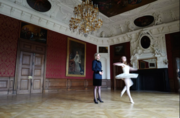
Larraín is also attuned to bodily movement. “Spencer” includes a striking dance montage, and Larraín says he filmed the dance with Stewart nearly every day of the shoot for this centerpiece scene. “In the structure of the film, it has a very important role, because there’s so much pressure on the character and then when that part comes in, it decompresses and unleashes what’s coming next in the narrative. But it [also] helped us to understand the movie that we were making and our take on the character — that dance worked as a therapy for us.”
Says Stewart, “Every time [Larraín] started talking about [Diana], she felt like someone he was protecting within his own family. It just felt so considered and so personal. There are a million things that the movie deals with, like invasive media, whether or not the monarchy should be something that we revere. All of that aside, what made me know that he was actually going to do something really truthful was just how intimately he was approaching it. It was like you forgot we were talking about Diana.”
Earlier Larraín period pieces like “Tony Manero,” “Post Mortem” and “No” deal explicitly with the Pinochet dictatorship in Chile; despite his remove from British politics, the director sees “Spencer” as a political drama of a different sort.
“Cinema is always political,” Larraín says. “As soon as you describe a human context, any sort of description of society, it becomes a political idea. Diana went through a huge crisis because she was told what to do. And she was told where to be. And she was told who to be, up until she decided not to be that person anymore. And that’s obviously a political statement.”
Like the evolving tone and mood of the film, Larraín himself is an artist in constant evolution. During the filming of a climactic scene between Stewart and Sally Hawkins, who plays Diana’s royal dresser and best friend, Larraín — so used to exercising his vision in all aspects of filmmaking — realized he had no instruction to give the actors. At first, he was concerned, but upon reflection realized he was exercising a new skill.
“I wish I would’ve learned it earlier, but sometimes directing is understanding when to be quiet. It’s about being sensitive enough to capture things that are happening in front of you, and [recognizing] that you’re not necessarily there to control them. I controlled everything for two years to get to that scene, that moment. Right then, I knew that my job in that scene was to let them connect and bring everything they had to the interaction and just let it happen. And it was wonderful.”
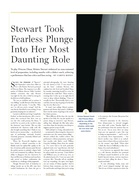
Stewart Took Fearless Plunge Into Her Most Daunting Role
Since the premiere of “Spencer” this September, critics have fallen in love with Kristen Stewart’s portrayal of Princess Diana. The response is an affirmation of Chilean director Pablo Larraín’s absolute conviction that only Stewart was right for the role; a belief so strong he decided not to hold auditions.
“He was so confident and so serious, it was chilling,” recalls Stewart of the first time she spoke with Larraín. “I was like, ‘Who am I to tell you you’re wrong?’ And the way that he described it was exciting. It was genuinely jumping into an unknown.”
Larraín recalls Stewart being “completely fearless” on that introductory call, a conversation that convinced him there was no one else who could portray his Diana. “I needed her as much as she needed to play the character,” says Larraín. “She not only understood the character really well, she also brought something that I think is very hard to see in cinema today — an old-school type of performing: extremely focused, extremely generous, extremely defined and very grounded.”
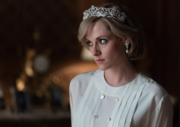
Where the 31-year-old Angeleno may have lacked a cultural connection to the British royal, her sphinx-like quality in the face of extreme public interest made Stewart the perfect person to embody a figure both loved and scrutinized by millions. Stewart’s ability to disappear into her characters, be they real-life icons or fictitious soul-searchers, only served as further confirmation she would rise to a challenge of this magnitude.
Kristen Stewart found that Princess Diana could be very different depending on the situation, which made her true inner self seem elusive.
Though Stewart’s lack of hesitation in taking Larraín up on his offer may have exuded fearlessness, the closer she got to principal photography, the more daunting the role started to feel. “I was scared, to say the least,” confesses Stewart, who explains how she lived and breathed Diana for months, immersing herself in every bit of material she could find. “There wasn’t a morning that I woke up or [a night that I] went to sleep without thinking, ‘I have to actually do that.’ Theoretically, that’s a very cool idea, but one day it’s going to be the first day. It’s a lot. She’s a lot.”
It wasn’t just nailing Diana’s posture, gestures and diction that posed a challenge: there was the matter of getting to the root of her elusive persona.
“She’s different all the time; the way she speaks to her kids, the way she speaks to a person doing an interview,” says Stewart, adding that, although the film takes place over three days, the intention was always to suggest a greater scope of a life.
Self-confessed to being rehearsal-averse — accustomed to discovering her character’s motivation once the camera starts rolling — Stewart realized she couldn’t achieve this performance without preparation, and spent four months with dialect coach William Conacher building Diana from the outside in. “I’ve never had to do such particular physical work, ever,” says Stewart, who had to let go of her own self-consciousness and let others inside her process. “I had Pablo’s and William’s eyes, as well as my own, on the physical parts of it. I was very open with everyone, like, ‘Honestly, tell me anything. Let’s try everything. I’m open. Let’s figure out our version of Diana together.’ And in between those moments, you have to just live and breathe and forget that you’re trying to be someone else, because this person has to feel alive.”
Stewart’s immersion in the character, from idiosyncrasies to internal struggle, was what sold co-star Timothy Spall on her performance from the moment they set foot on set. “As an actor, there are many ways you can approach a part. One way is doing an impersonation — and it can be an extremely clever impersonation — but there’s another way, which is an embodiment, where it fuses with you and you don’t see the creases,” says Spall. “That’s what I think she does so brilliantly in this: It’s a fusion. It’s a total embodiment.”
It is, however, an approach that comes at a toll. Stewart describes her portrayal of Diana’s mental breakdown as the most loaded, layered, intense, extreme experience she’s ever had, calling the shoot a “three-month mad dash.”
“It was exhausting, lonely, scary and cold. I never stopped running,” she says. “But it’s one of those experiences where the more tired I got, the more encouraged I was. I was so enlivened by the pummeling I was receiving and being able to be like, ‘Yeah, watch this. I’m going to get back up stronger every day.’ The hardest part [about making this film] was the best part of it, because I felt so alive as that character that I just really wanted to fight for her.”
While the film underscores the seclusion of Diana, making the audience feel like they are privy to something secret, that level of intimacy, says Stewart, is a testament to the intense collaboration between Larraín, director of photography Claire Mathon and herself. “Every single day I would be shocked at [Claire’s] intuitive anticipation of what I would do next, because I didn’t even know what I was going to do next. We really did find a synchronicity just because we were so close to each other. We were breathing the same air,” she says. The results speak for themselves: “I felt like the camera was completely inside me, which never happens,” says Stewart. “It’s so rare to work with people just letting you actually be the best you can be.”
For Stewart, the experience was singular and transformative, setting new parameters for the kind of actor she wants to be. “From a personal perspective, [this film] just raised the bar,” she says. “Take the results out of it completely, that is the way that I want to spend my time, just trying to jump higher.”
That the efforts of her labor are being met with critical acclaim comes as no surprise, least of all to those who watched her become Diana. “This is sophisticated character acting at its most seamless,” says Spall. “As she revealed herself, I thought, this is a moment where people are going, ‘Oh, my God, I knew she was good, but I didn’t know she was that good.’” ✤
This is sophisticated character acting at its most seamless. As she revealed herself, I thought, this is a moment where people are going, ‘Oh, my God, I knew she was good, but I didn’t know she was that good.’”— Timothy Spall
DP Mathon Built Trust With Star to Capture Intimate Nuances
On the set of “Spencer,” cinematographer Claire Mathon stood closer to Kristen Stewart than she ever had to an actor on a film set.
It was the only place for the cinematographer to be. Director Pablo Larraín wanted Stewart tightly framed so the audience would feel the same claustrophobia and dread as his version of Princess Diana.
Positioned so close to Stewart at her most vulnerable moments, the French cinematographer also fashioned a kind of safe space to capture Stewart’s enigmatic performance as a doomed princess in a dark fairy tale.
“That was something we managed to find, the two of us, me and Kristen together,” says Mathon. “It was a lot about confidence and establishing trust in each other, but there was also the matter of complicity.”
Mathon followed the actor with short focal length lenses to ramp up the feelings of intimacy on the one hand, and entrapment and fear on the other. She also referenced the frenetic jazz-inspired soundtrack in terms of pacing to mirror Diana’s anxiety.
With the director of photography so close, Stewart had the sensation the camera was recording every nuance of her work, and that this version of Diana would be wholly captured on the 16 mm film the filmmakers chose for the project. For Mathon, this was the entire point. Even though she wanted Stewart and Larraín to feel they could work as freely as possible, she knew the only way to shoot this upside-down fable was to stay with Stewart at all times.
And Stewart loved Mathon’s methods.
“[Mathon] is somebody who opens herself to experience and that’s a remarkable quality for a DP to have,” says Stewart. “There was nothing [Mathon and Larraín] did not see. [The film] was entirely from my character’s perspective.” ✤
To screenwriter Steven Knight, an excellent way to jump-start a script is to pose a question to which one doesn’t already know the answer. “Not really knowing where you’re going makes things much more interesting.”
The unanswered question of “Spencer” occurred to him a quarter century ago, during the world’s most famous funeral.
He remembers, “I saw and heard English people doing things that English people don’t normally do, or don’t ever do — which is sob and wail and express grief, openly, in public. And I thought, this is so strange, and even more strange because as I was watching, I was getting emotional! So, I thought, what is going on?”
One possible approach to that question, a conventional womb-to-tomb biopic, was immediately rejected. “You’re not writing it, it’s writing you,” Knight says. “You can’t dwell at any point, you’ve just got to bang out the sequences from beginning to middle to end.”
Instead, Knight opted for a candid snapshot, “like a paparazzi — take a picture over a very limited period of days, in a single location, and just put the pressure on. Put the lid of the pressure cooker on and turn the heat up, and see what happens.” For one particular illustrious family, no get-together was ever hotter than the Christmas holidays during the early 1990s.
“I’m always interested in characters at a moment of decision, which is going to have consequences for their lives,” Knight says, alluding to his award-contending screenplays for “Locke,” “Eastern Promises” and “Dirty Pretty Things.” A wife’s decision to leave her husband, he felt, would allow him to detail stresses and conflicts likely to impel a bird in a gilded cage to fly away.
To shape what director Pablo Larraín would eventually call “the best script I’ve ever had in my hands,” Knight set aside familiar newspaper accounts and biographies in favor of primary sources. “I managed to get access to people who were there, and found out things that actually happened. Always, reality is way more bizarre than anything we could invent.”
There is considerable reality in the film’s settings, to be sure. Sandringham, one of the royal family’s private residences, really is located near the Spencer family home, “and that’s like a gift to a writer,” Knight says grinning. Though the real building has been turned over to charity, on-screen it’s boarded-up and desolate, a potent metaphor for a simpler existence that’s forever lost.
The script’s imaginative speculation on real events admitted fantasy elements, notably the ghostly presence of Anne Boleyn. The screenwriter notes that Boleyn “worked her way into the royal family with an absolute intention. She was anything but innocent … whereas Diana, I think, was innocent. When she entered that household, she had a desire to change things, but also an awareness of the long tradition of fairy tales. And every fairy tale is a horror story as well.”
Certainly, there’s constant menace in the air as Larraín glides up and down the empty corridors. We are never allowed to forget that the monarchy, in Knight’s words, “is as durable as Stonehenge.” Diana “wanted to make it human, and it was probably never going to work.”
Still, classic fantasy narratives always provide emotional release, and “Spencer” is no exception. Larraín and Knight leave us with something as unexpected as it is poignant — a reminder that the complex figure at the center of their story was, more than anything else, a loving mother.
Says Knight, “I want it to feel like a fairy story of the princess locked in the castle, and it’s very scary. But there’s a happy ending.” ✤
Inventive Tonal Shifts Led to Hypnotic Flow
Editor Sebastián Sepúlveda put the audience inside the story.
Editor Sebastián Sepúlveda had to strike a delicate balance with “Spencer” — without calling attention to tonal shifts, he discreetly weaves together elements of psychological terror and a ghostly haunting into the film’s dramatic depiction of a three-day visit Princess Diana (Kristen Stewart) makes to Sandringham, one of the royal family’s country estates.
“I tried to make a hypnotical flow,” says Sepúlveda, who previously collaborated with director Pablo Larraín on his limited series “Lisey’s Story” and the 2016 film “Jackie.”
Editing the film as it was being shot proved to be a successful strategy for capturing exactly what director Pablo Larraín envisioned with his reimagining.
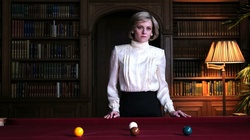
In the opening sequence of cars arriving at Sandringham, Sepúlveda’s cutting was largely dictated by the precise selection of shots filmed by Larraín and cinematographer Claire Mathon. But once inside the claustrophobic royal milieu of the sprawling mansion, Larraín tended to alternate between normal and wide-angle lens shots, leaving Sepúlveda with a stark choice. For a key scene in which Diana and Prince Charles (Jack Farthing) argue bitterly while standing at opposite ends of a snooker table, Sepúlveda decided to only show the two separately, in wide-angle medium shots.
“If I had a change of lens, you might lose the flow,” Sepúlveda explains. “I stay only with those medium shots, because that way you’re inside the tale and you start to feel things.”
Sepúlveda edited the film as it was being shot, giving Larraín a rough cut of the scenes every day. Working together, they completed their first edit of the movie eight days after principal photography wrapped.
“Pablo is not the shy guy who sits at your side during the editing and doesn’t say anything,” says Sepúlveda of their collaboration. “He knows what he wants, and he knows how to get it.” ✤
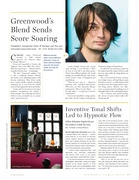
Greenwood’s Blend Sends Score Soaring
Composer’s unexpected union of baroque and free jazz reinvented monarchal music.
Composer Jonny Greenwood invented a fresh musical approach for Princess Diana in Larraín’s “Spencer.”
Greenwood responded to Larraín with “disparate ideas, some sillier than others.” What they agreed upon — classical chamber ensemble meets free jazz — is surprising.
“The idea,” Greenwood explains, “was to take a traditional baroque orchestra and mutate it by substituting players with free-jazz performers. Films about royalty have a sound, usually a pastiche of classical composers. So, it was about the colorful chaos of Diana against the staid royal family.”
Larraín and Greenwood never met, given pandemic circumstances, but enjoyed a lively exchange: “He sends long voice letters, which is a nice, personable way to communicate,” says Greenwood.
Larraín thought Greenwood’s concept “quite shocking, a very bold idea. I didn’t see how he was able to mix those genres. They’re from different galaxies. He started sending me beautiful Baroque-style music, which created a sense of strangeness and unsettledness.
“Then the jazz came in — played by musicians with controlled improvisation. When there are other characters, Baroque predominates. When it's just Diana — or her with others — we play jazz to suit her mental stress.”
Greenwood assembled a string quartet, jazz band, and the London Contemporary Orchestra’s strings and harpsichord.
He asked the jazz musicians to improvise the classical material, noting, “It’s fun to push into true chaos while the string players are firmly in 1750.”
One of Greenwood’s favorite moments was writing “a piece of formal dinner music that had to unravel ... a really delicious brief to be given, just a few images and the script.” His string quartet dissolves into dissonance, accompanying the horrifying scene of distraught Diana at the royal family’s dinner.
“For a character that needed freedom, [the element of jazz] worked really well,” Larraín says. ✤
Designer Decked the Halls Like Prison Walls
Instead of a backdrop for a happy Christmas celebration, Guy Hendrix Dyas’ surreal sets helped foreshadow the film’s inevitable catastrophes.
What could be more romantic and charming than creating a castle for a film about a princess? Instead of a fairy-tale setting, however, “Spencer” production designer Guy Hendrix Dyas was after something completely different. Something not so sweet.
“We needed [Diana] to feel as though she was a caged bird, or as though she was trapped,” says Dyas. “So, we coined this expression, ‘the elegant prison,’ while we were scouting and this led to a whole new train of thought for us. Rather than trying to replicate Sandringham, the way we wanted to present it was to create a household that on the surface seemed very opulent, very, very beautiful, very inviting, but underneath that thin layer of facade was a very melancholic and sad, depressing reality.”
Dyas made unusual choices to bring the “elegant prison” to life.
The production designer knew director Pablo Larraín viewed the story as a kind of “upside-down fairy tale or fable,” so he was free to move in a surreal direction at times.
“The bed that Diana sleeps in is extremely oversized, like a fairy-tale ‘Princess and the Pea’-style, enormous bed,” says Dyas. “The tapestry that the bed is made up of has medieval-style pheasants painted on them, which, of course, plays into the story later on.
“Diana’s bathroom has that very unusual 1930s caged shower, which is a real thing, but I proposed that to [Larraín] because again it was another one of those wonderful opportunities to exploit Diana as a caged bird. When she looks in, she looks like she’s showering in that caged shower.
“So, all the time we were working to create a level of reality, but also fine-tuning to serve the characters and what they might be feeling like to be in that space.” ✤
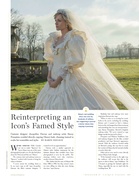
Reinterpreting an Icon’s Famed Style
Costume designer Jacqueline Durran and makeup artist Stacey Panepinto avoided directly copying Diana’s look, choosing instead to evoke her ensembles and styles.
When director Pablo Larraín set out to make “Spencer,” he knew Diana was one of the most photographed people ever. He also had ideas about the Princess and his own “Diana.”
The costume, hair and makeup teams on “Spencer” worked with Larraín to bring his vision to fruition.
“I never meant the wedding dress to be an exact copy at all,” says Jacqueline Durran, the film’s costume designer. “I wanted it to be an approximation.”
Durran took a similar approach to Diana’s other fashion statements for the intimate dinners that wouldn’t have been photographed or seen by the public. The stunning clothes were also restrictive, another element Diana hated.
“The clothes had the aura of Diana’s life from 1988 to 1992, but they weren’t exact; we were riffing on what she wore during that time,” says Durran.
Similarly, hair and makeup were more inspiration than precise copy.
“When it came to re-creating her iconic looks in the movie, including the wedding, Kristen and I wanted to find a balance between the real images from those moments and something that was our interpretation,” says Stacey Panepinto, Stewart’s longtime makeup artist. “We never wanted to copy things exactly but just nod to them.”
Panepinto and Wakana Yoshihara, hair and makeup designer for the film, avoided prosthetics and kept Stewart’s appearance natural. With the audience focused solely on Stewart’s acting, she was free to create her version of Diana that fit Larraín’s darkly evocative fairy tale.
Other pieces were used to more directly mirror Diana’s look, though.
“If the hairstyle is done in the right way, the audience will accept that this is the queen or this is Diana,” says Yoshihara. “So I focused on getting the hairstyle right for Diana, especially the one we used with the wedding dress.” ✤
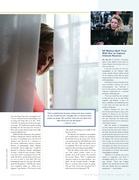
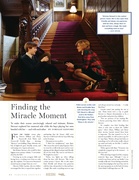
To make their scenes convincingly relaxed and intimate, Kristen Stewart explored her maternal side while the boys playing her sons bonded with her — and with each other.
For the young actors playing Princes William and Harry — 12-year-old Jack Nielen and 10-year-old Freddie Spry — shooting “Spencer” was thrilling. Huge elaborate set; lots of high-tech gear; friendly actors; and welcoming crew. A great adventure.
But Kristen Stewart, who would be their biggest scene partner, admits, “I was intimidated by the kids.”
Growing up as the youngest child, and having been a working actor from an early age, she explains, “I’ve just never functioned around anyone younger than me, ever.”
Director Pablo Larraín, who is a father, encouraged the three to spend time together, anticipating that the former child actor Stewart would bond with the boys following in her footsteps.
His instincts were perfect.
“I liked her straightaway,” says Spry. “She was so fun and we played games. Once we went for a walk in the snow and we were playing and she slipped and got mud literally all over her body. She was so cool about it. We laughed so much.”
Nielen, too, lights up when talking about his time with Stewart: “She is the coolest person I know. She is also super kind, friendly and always very generous with her time, always there to chat and have a laugh. She made everything seem so easy and always treated me seriously — I really liked that.”
Larraín wasn’t just putting the trio at ease. Those hours were a way to guide Stewart to Diana’s determination to be a good mother and protect her children.
“You see pictures of her looking like a lioness protecting those kids,” observes Stewart.
So complete was their bonding that when it came time to shoot the “soldier game,” where Diana, William and Harry share secrets, Larraín turned them loose to improvise. “He just wanted it to be as natural as possible, so told us just to go for it,” says Spry. “Kristen always had jokes or something cool to tell us that totally relaxed my mind and made me feel like I could be Harry in the scene.”
“[Kristen Stewart] is the coolest person I know. She is also super kind, friendly and always very generous with her time, always there to chat and have a laugh. She made everything seem so easy”— Jack Nielen
Nielen concurs: “Everyone was completely wrapped up in the moment — it felt very real.”
When shooting wrapped and the company scattered, Spry says, “although I was so excited to go home and see my family, I was actually really sad. I loved driving around the country lanes singing at the top of my voice in the open-top sports car on the back of a lorry. I don’t think I will forget that ever.” ✤
Digital Scans Gossipgyal
Tuesday, November 30, 2021
Kristen wins Best Actress for 'Spencer' at the Satellite Awards

Nominations:
Best Actress - Kristen Stewart (Wins)
Motion Picture, Drama - Spencer
Original Score - Jonny Greenwood
Art Direction: Production Design - Guy Hendrix Dyas & Yesim Zolan
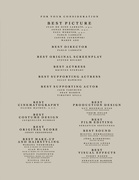
Costume Design - Jacqueline Durran
LOS ANGELES – A spectacular and diverse collection of motion pictures including “The Power of the Dog,” “Belfast,” “Licorice Pizza,” and “tick, tick … Boom!” are among the top nominees for the 26th Annual Satellite™ Awards selected by the International Press Academy.
The IPA’s other notable recognitions include critically acclaimed creator Lin-Manuel Miranda for the Auteur Award, Val Kilmer for the Humanitarian Award, Halle Berry for Best First Feature as director for “Bruised,” and innovative visual effects supervisor Joan Collins Carey as the first female recipient of the association’s prestigious Tesla Award.
The Best Actress – Drama category this year is marked by outstanding competition. Kristen Stewart “Spencer”, Penelope Cruz “Parallel Mothers”, Nicole Kidman “Being the Ricardos”, and Lady Gaga “House of Gucci”. In the Best Actress – Comedy or Musical category, Melissa Barrera “In the Heights” and Renate Reinsve “The Worst Person in the World” are among the nominees.
Best Actor – Drama nominees include Will Smith “King Richard”, Joaquin Phoenix “C’mon, C’mon”, and Benedict Cumberbatch ”The Power of the Dog”. Nominees for Best Actor in a Comedy or Musical are Peter Dinklage “Cyrano”, Andrew Garfield “tick, tick … Boom!”, and Anthony Ramos “In The Heights”.
In the TV categories, “Big Sky,” “Nine Perfect Strangers,” and “Succession” are among the multiple category drama nominees, while “The Kominsky Method,” “Only Murders in the Building,” and “Ted Lasso” are among the multiple category comedy nominees.
The International Press Academy selects SATELLITE™ AWARDS nominees from domestic and international submissions for 36 categories: 23 Motion Picture and 13 Television. Nominations are derived from advance screenings at film festivals worldwide (i.e. BAFTA, Cannes, Sundance, Telluride, TIFF), as well as consideration screeners sent to individual journalists and/or sanctioned links as available by the deadline.
The Satellite™ Awards winners will be presented with their awards on April 2 2022 in Los Angeles, along with the Mary Pickford Special Achievement Award recipient.
Tuesday, November 16, 2021
Thursday, November 11, 2021
Jacqueline Durran's talks 'Spencer' costumes and mentions Kristen with Tatler

Jacqueline Durran is more than experienced with bringing a period to life via the medium of costume—she won an Oscar for Little Women last year. Her latest project, Spencer, is a fashion lover's dream—from the attention to detail that went into recreating memorable outfits the Princess Diana wore, to the refreshed take on these looks so they weren’t simply a copy. We spoke with the costume designer to learn more about the process.
What was the starting point of your collaboration with Pablo Larrain and how did it go through the whole project?
Pablo and I met in London and I brought boards of pictures of Diana that I had selected from the period 1988-92. I tried to show the different styles and colours that she was using in that period so I could get an idea of what Pablo was looking for in his interpretation. I used his feedback from that meeting as the starting point for the clothes that I prepared for the first fitting with Kristen Stewart.
Can you tell us about the process of working on this film? How did you choose all the Chanel pieces?
I have worked with Chanel on movies over the last 15 years and have always really enjoyed the process and of course the wonderful opportunity to use beautiful things! I looked back through pictures of Diana for images of her wearing Chanel. Most that I found were later than 1992, but there was one significant Chanel outfit that she wore when visiting Paris in 1988—the red coat that she wore on arrival in Paris. This became the red coat worn in the Christmas church scene. The blue cardigan/jacket fit very well with the style that she was wearing in our period, so I felt that it would fit in seamlessly. The Chanel costume jewellery we used was also perfect for our date, and for Diana’s style.
Which one was the most iconic according to you?
The most iconic has to be the Haute Couture dress. We had the asked if we could try some ’80s evening dresses from the Archive—mainly with the idea of using them for incidental scenes and for a scene where Diana was trying on different dresses changing her mind about what to wear.
There was also the main scene of Christmas evening where we needed an amazing dress. I had asked if there was a light coloured dress with a mermaid shape (volume at the hem), as I was already thinking of how it would look with a coat over the top, but significantly I thought that it should have sleeves.
So, all these amazing dresses arrived in London for Kristen’s first fitting. It was quite overwhelming, as most of them were dark, but amongst them was the original version of the beige dress. It was beautiful on the hanger, but once Kristen put it on, we all knew it had to have a big role in the movie!
But it didn’t end there… The dress was an original dress designed by Karl in the 1980s and was too precious to be worn repeatedly, for all the days needed for shooting including exterior night shoots—there was too great a danger of damage.
For a moment we thought we wouldn’t be able to use it, but incredibly, Chanel offered to remake the dress in the Couture workrooms—an exact replica, which meant recreating the embroidery and beading of the original. The skill of the artisans working at Chanel is incredible, and when the dress arrived it was a perfect copy. None of the beauty had been lost—we were thrilled beyond words.
How important is the costume for an actor to get into character?
I think that costume is always important for an actor creating a character, but sometimes more than others, and I think this was the kind of job where it was important for Kristen and Pablo to recognise the character from the outside and to see our interpretation of Diana come to life.
How did Kristen Stewart respond to the Chanel looks?
Kristen really loved the Chanel looks—she could see how the archive styles really fitted into the story we were telling.
Why was Chanel so important to tell this story?
Spencer was a small film, but we wanted to establish a world that in many ways was the dream world of a princess. The luxury that Chanel represents was very much part of the story we were telling—we wanted the audience to understand the privilege of the world that Princess Diana was part of, and the Chanel brand was a great way of communicating that.
What was the most memorable moment on set with Kristen in one of the CHANEL looks?
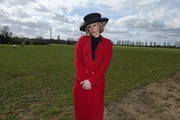
For me, although the haute couture dress is the most iconic, the red coat was the first costume we found that really created Diana for our movie. In our second fitting with Kristen in London, we put together the original red coat from the Chanel archive and the hat made for the movie by a London milliner, and suddenly there we had found the look.
It was not an exact replication of one of Diana’s Sandringham looks, but it was directly inspired and made up from different elements that worked on Kristen. This was the method throughout—we wanted to capture the spirit of Princess Diana’s style, but not slavishly copy, and the red coat was our starting point!
How would you describe Kristen’s performance as Diana?
I absolutely love Kristen's performance as Diana—it is mesmerising. I think that it is a work of art, and she technically nailed the essentials—the accent and certain movements that we recognise as Diana’s, but her performance is so much more than an impression.
For me, she has created a fully rounded character that allows us to examine an idea of Diana. The film is a proposition—what if this was Diana’s reality? Kristen has brought this to life in an amazing performance.
Friday, November 5, 2021
Kristen and Jacqueline Durran talk costumes for 'Spencer' with Vogue Magazine
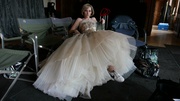
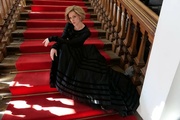
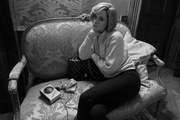
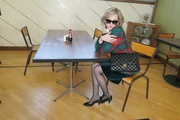
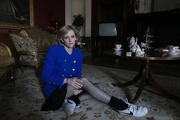
BTS via Suzie Riemer
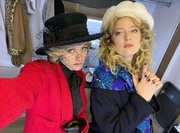
Click on images for full view.
Everyone knows Princess Diana—or they think they do. The royal, who would have turned 60 this year, remains a subject of fascination among the public and artists. After capturing Jacqueline Kennedy Onassis’s private struggles following her husband’s assassination in 2016’s Jackie, director Pablo Larraín turned his attention to Diana’s story. His new film, Spencer, offers a fictionalized account of the princess, played by Kristen Stewart, at a turning point during the queen’s annual Christmas holiday at Sandringham House in Norfolk, England. The pivotal three days from Christmas Eve to Boxing Day magnify the many problems within Diana’s personal life. Under surveillance by the Windsors’ retinue of courtiers, trapped in failing marriage, and told to keep up appearances while struggling with an eating disorder, she’s far removed from fairy tales.
Larraín frames his film as a fable, exploring the dark side of the monarchy without eschewing the fantasy and beauty that keeps the system going. Diana’s life may be falling apart, but she looks the part of a princess and is surrounded by luxury. That contrast is part of what makes the film powerful. Creating the wardrobe of the allegorical Windsor meant Larraín, costume designer Jacqueline Durran, and Stewart had to be on the same page. Thankfully, they had some help from a fashion giant: Chanel. “Every step of the way, it was a total collaboration,” shared Stewart via email. “We were all in this together: me, Pablo, Jacqueline, and Chanel. It was so intimate.”
Chanel opened its archives to the production, loaning and re-creating vintage pieces for Stewart to wear onscreen. This level of access allowed Durran to heighten the luxurious mood that Larraín and production designer Guy Hendrix Dyas created. “In terms of style and glamour, the collaboration gave the movie something we wouldn’t have had otherwise,” she says. “The Chanel pieces added to that aura Diana had as a princess, so it was an incredible match in that sense.”
There are thousands of photographs and articles about Diana to draw from, but the wealth of information was a double-edged sword. “In the beginning, it was an intimidating situation because there were just so many images of her,” says Durran, who focused her attention on photos shot between 1988 and 1992. “What I wanted to find was the logic behind her choices and the key pieces you see her wear during that period. Certain elements repeat—color blocking, gold buttons, contrasting lapels, polo-neck sweaters, and high-waist, slightly cropped jeans with flat pumps.” Figuring out Diana’s staples was crucial. “I had to establish a contrast between the formal and restrictive clothes she wears during her official life and the way she dresses when she can be herself,” says Durran. “To tell this story, you had to see a real difference between those clothes.”
To that end Durran used a series of archival gems to achieve both types of Diana’s looks. Stewart wears a striking red tweed coat from the fall 1988 Patrimoine ready-to-wear collection as Diana is mobbed by paparazzi, black velvet dresses from the fall 1983 and 1988 collections, and a slew of vintage accessories. A few modern pieces sneak in too; in one scene, Stewart sports the skirt from look 46 from Virginie Viard’s spring 2020 haute couture collection.
Chanel had a special place in Diana’s wardrobe. A fan of its classic suits and quilted bags, she wore her collection off-duty and while performing her role as Princess of Wales. Stewart found Diana’s outfit selections evocative. “In certain photographs of [Diana], she looks as though someone else dressed her,” she says. “Even if the outfit is beautiful, she seems like a prisoner in it. While doing my research, I noticed that whenever Diana was wearing Chanel, she seemed like herself. When she looked powerful, quite often she was wearing Chanel.” Stewart incorporated the observation into her performance. “When you watch the movie, all the Chanel looks are used when Diana needs help,” she explains. “If the scene was difficult or she felt threatened, we put her in a Chanel suit to give her a bit of a support system. Even if she wasn’t feeling good on the inside, she stood tall and shined during those moments.”
Stewart has some experience wearing Chanel. A brand ambassador since 2013, she’s known for her distinctive take on the brand’s signatures. Though her style is worlds away from Diana’s, she felt the Chanel archival pieces were essential to the story. “If I didn’t have a relationship with Chanel, we would have begged the house to play with their clothes; if we weren’t allowed to, we would have probably mimicked them,” says Stewart. “The character needed them. They’re such a part of her. There is a delicacy and a vulnerability [to the clothes] that makes them even more beautiful. She’s so raw and honest that when she puts them on, you can feel she loves them.”
Unfortunately, many of Diana’s best Chanel moments came after her exit from the royal family, and Spencer’s story plays out during a period where courtiers controlled her wardrobe. “There were all these restrictions to consider,” says Durran. “She wore more Chanel later in life than during the late ’80s and early ’90s.” The royal dress code, which contains rules about everything from hem lengths to nail-polish colors, couldn’t be ignored. Still, when Durran happened upon the film’s pièce de résistance, a strapless gown from Chanel’s spring 1988 haute couture collection, she wasn’t about to change it. “Initially, I was worried we’d have to add sleeves and hide her arms because of the protocols,” she says. “When I had the fitting with Kristen and Paolo in London, she put it on and it was just so great, the perfect look for an extremely glamorous princess. We hadn’t even planned to use it for such a large chunk of the movie, but it was just too good to pass up.”
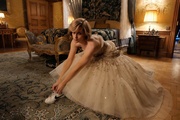
Adorned with pleated tulle ruffles, an appliqué satin belt, and a delicate frieze composed of fabric florets, the gown was appropriately opulent. Still, after more than 30 years in the archives, the original was far too fragile to function as a costume. “It was too precious—you couldn’t even take it outside,” says Durran. “Thankfully, Chanel came back to us and said they could completely replicate the piece.” It took 1,034 hours—700 devoted solely to the intricate embroidery—to duplicate the couture look. With five seamstresses in Chanel’s atelier working nonstop, they were able to turn the project around in just under a month. “We’re indebted to them,” says Durran. “They had almost no time and were able to recreate every detail. In the end, the only difference was that the new version fit Kristen even better than the first.”
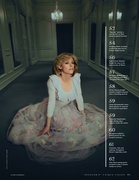
Though it wasn’t the only piece recreated for the film, the couture gown features prominently in the final cut and its poster, which shows Diana crumpled on the ground, her body shrouded in layers of tulle. For Stewart, the couture reflected Diana’s privileged yet unhappy existence. “It’s heartbreaking how gorgeous it was,” she says of the look. “We went through the archives thinking, What is the dress? [And] it was so undeniably the right one. To see someone on the bathroom floor in such a dress is truly heartbreaking. You can’t imagine someone being unwell in a dress [that is] so spectacularly beautiful, unique, and one of a kind. I have such nostalgia for it. Usually, I don’t have an emotional reaction to my movie posters, but every time I see Spencer’s, it makes me want to cry.”
For Durran, helping to facilitate such powerful responses from Stewart was the costume design’s primary role. “My work is supporting her as an actress,” she says. “Watching the final movie was overwhelming because the only thing I wanted was for my work to give Kristen all she needed to achieve her performance. I believed in her so much, and she’s mesmerizing as Diana.”
Sunday, October 31, 2021
Jacqueline Durran talks 'Spencer' and mentions Kristen with The Times (UK)
Click on images for full view.
In one memorable scene in the film Spencer, Kristen Stewart, playing Diana, Princess of Wales, rages against protocol and wears a bright red Chanel coat and black netted hat to church — a look that had been reserved for Boxing Day. The choice rings alarm bells throughout the household, where her wardrobe would have been tightly managed by her personal team, and is read as rebellion. “No one is above tradition,” warns the draconian equerry Major Alistair Gregory (a fictional character played by Timothy Spall).
The film, directed by Pablo Larraín, takes place over an imagined Christmas holiday weekend in 1991, as Diana comes to terms with Charles’s infidelity, as well as the pressures of what it means to be a royal, and it is a masterclass in how our wardrobes define our sense of self — as well as how important the optics are for figures in the limelight.
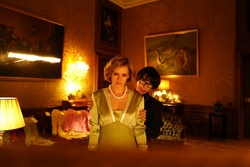
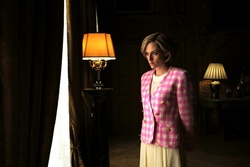
Stewart is a highly believable Diana, but it is her clothes — which segue from a bold tartan trophy jacket through a demure chartreuse evening gown and a dazzling Chanel strapless evening dress to her “liberation” outfit of blazer and high-rise jeans — that set the scene and give her portrayal a halo-like aura. While the rest of the royal household are dressed in the muted greens, greys and blues of country tweeds and corduroys, Diana stands out like a symbolic firework.
The wardrobe for Spencer is the work of the costume designer Jacqueline Durran, 55, whose credits include Anna Karenina and Little Women, for which she won Academy awards. In preparation she took an almost forensic deep dive into a particular period of Diana’s life, from 1988 to 1992. “In making the film I was never under the impression that this was a documentary in any shape or form. It was about making a believable Diana,” says Durran, who pored over thousands of images of the late princess from archival picture sources, books and magazines during her research. “I tried to get a feeling of what she was wearing and why she dressed in that style at the time.”
The early Nineties was a key moment in Princess Diana’s life. “It was a period of transition, and it seemed her choices got bolder and bolder to the point of being almost confrontational,” Durran says. “Diana’s clothing was like an armour and she appeared like a great, confident woman. She wore a lot of British designers including Bruce Oldfield and Murray Arbeid, as well as Catherine Walker, who was instrumental in defining her image at the time. Beyond 1992 Diana seemed to become much more herself in her style choices.”
The focused timeline also allowed Larraín and Durran to draw a line under the depiction of Diana in The Crown, with which there are certain to be comparisons. However, Larraín’s tense emotional drama, as well as Stewart’s formidable portrayal, puts Spencer in a different league from the romanticised myth-making in The Crown. The choice of outfits helped to guide the scene-setting, and Larraín photographed the fittings with Stewart to help craft the film. “It was Jackie [Larraín’s 2016 film about Jackie Kennedy] that made me so interested in the project. It’s a close look at a style icon, how an iconic look is built and what that means to everyone over time,” Durran says.
Because of the Covid restrictions the designer had limited time with Stewart, who flew to the UK for a lengthy fitting that involved trying on looks that had been made for her (from archival images), archive pieces from Chanel (that would be remade in its Paris atelier) and a cross-section of vintage pieces. “Kristen really knows about style and how to wear clothes, and she can look at something and intuit a way of wearing it,” says Durran of the 31-year-old actress. “There’s a scene with Diana dancing down the hallway in an evening dress and Kristen embodies that moment, walks so brilliantly in the midst of the downward spiral of the day.”
The relationship between Princess Diana and her maid, Maggie (played by Sally Hawkins), is a study in friendship and love when Maggie reveals her devotion to Diana on a windy Norfolk beach and both fall about with laughter. Diana is wearing a Mondi baseball jacket (sourced from a vintage site) and jeans, and with that outfit you understand that she is readying herself to break free with her beloved boys from Charles.
Although Durran’s research was thorough, she did not feel the need to remain true to history. “I mix it up — some are true replicas, some hybrid and some made up. What was important was to have that feeling of Diana. Finding those items was a constant search, and Kristen is small. Original Eighties clothes are boxy, so we needed to find and design pieces with the right proportions for her,” she says. One Larraín favourite was a tailored coat and tricorn hat ensemble that Diana originally wore (albeit in red) on a visit to Britannia Royal Naval College, Dartmouth, in 1989. The look, with the rebellious pirate hat, was adapted in primrose yellow for a feverish reverie scene.
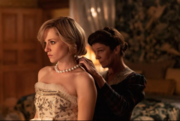
As a viewer you are put wincingly close to the characters over this claustrophobic weekend at Sandringham. At one point the camera zooms in on Stewart’s neck, which is almost being strangled by a huge pearl necklace — a Christmas gift from her husband.
The magic of Durran’s costume design is her ability to build an aura through fashion. Durran, who was fascinated by London designers and street style as a teenager, studied philosophy before learning her craft at Angels Costumes in London. She then got her big break with the award-winning costume designer Lindy Hemming.
Durran remembers the furore surrounding Diana in the Eighties and Nineties. Musing on why the younger generation are so besotted with the princess’s style today, she says: “When I was growing up Diana was not fashionable — royal family fashion was a parallel universe. It’s fascinating that her style is now so fashionable and how the process of reappropriation has changed that over time.’’
With such strong performances, breathtaking cinematography and a peach of a wardrobe to boot, there’s a lot to look forward to in Spencer.
Saturday, October 9, 2021
Pablo Larrain mentions Kristen + Jacqueline Durran and Steve Knight talk 'Spencer' at the Deadline Contender panel in London - 9 October 2021

Spencer was never going to be a traditional biopic, Contenders Film: London heard, as writer Steven Knight and costume designer Jacqueline Durran took to the stage and director Pablo Larraín joined virtually from Chile. “I had a strong belief we didn’t want to do a biopic,” said Knight. “The cleanest way to get into a person is to put them in a pressure cooker… we’ve all been with family we don’t want to be with at Christmas.”
Larraín praised star Kristen Stewart, saying, “We all think we know a lot about Diana… But as a person, she was mysterious and Kristen can do that very well. I thought she was going to be a different version that would take us to another angle of Diana’s character. She did very beautiful work.”
Spencer was never going to be a traditional biopic, Contenders Film: London heard, as writer Steven Knight and costume designer Jacqueline Durran took to the stage and director Pablo Larraín joined virtually from Chile. “I had a strong belief we didn’t want to do a biopic,” said Knight. “The cleanest way to get into a person is to put them in a pressure cooker… we’ve all been with family we don’t want to be with at Christmas.”
Larraín praised star Kristen Stewart, saying, “We all think we know a lot about Diana… But as a person, she was mysterious and Kristen can do that very well. I thought she was going to be a different version that would take us to another angle of Diana’s character. She did very beautiful work.”
Jacqueline Durran said that representing Diana’s fashion choices was “quite a task” and that “it was a forensic operation to work out what themes we would find in her style.”
Larrain’s reimagining of a Royal Christmas at Sandringham journeys into the mind of a lonely and disturbed Princess Diana as she navigates the “house rules” during the breakdown of her marriage to Prince Charles. Written by Steven Knight (Locke), the story follows the strict regimen of the princess’s wardrobe, endless formal family meals and a dramatic pheasant shoot, punctuated by Diana’s anxiety attacks and imaginings of ill-fated queens past. Jack Farthing, Sally Hawkins, Timothy Spall and Sean Harris also star.
Source: Deadline
Thursday, October 7, 2021
Costume designer, Jacqueline Durran, talks 'Spencer' and Kristen with EW + New Stills and BTS image

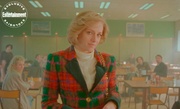
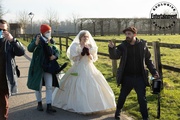
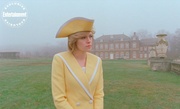
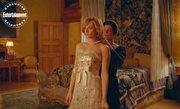
Click on images for full view.
You might not know costume designer Jacqueline Durran by name, but if you've seen a movie in the last 20 years, you probably know her work. The iconic green Atonement dress? That was her. The WWI trench coats in 1917 and man-who-came-in-from-the-cold greys of Tinker Tailor Soldier Spy? Also her; Pride and Prejudice, too.
But the two-time Oscar winner — for 2012's Anna Karenina and 2019's Little Women — faced an entirely new challenge with Pablo Larrain's feverish arthouse biopic Spencer (in theaters Nov. 3): how to represent a real-life icon without losing the movie's surreal sense of mystery — or the essence of the American actress portraying her. EW spoke to Durran about sourcing vintage Chanel, granting Stewart's wildest pirate-sailor dreams, and other to-Di-for looks from the film.
Diana's style is so distinctive, and so documented. What kind of directives did Pablo give you from the beginning?
Well, there was the overall idea of the movie, where we're investigating the idea of a princess who appears to have the perfect life but in fact doesn't. And then there was the way in which he wanted to create that story within a very designed space — he wanted our costume choices to all be very intentional, and then he also wanted to use strong colors. So there's an endless amount of research.
It's a fact that everyone mentions, but [Diana] absolutely was the most photographed person I've ever come across. I mean, if you go onto any search engine, there are thousands and thousands of pictures. And so it was a matter, really, of picking out the direction from within this huge range of options. And we also narrowed it down by having a time frame, which ran somewhere between 1988 and 1992.
There were certain outfits that I recognized, and then other ones where I wasn't sure if they were replications of looks that had existed or if they were more like interpretations.
There's one costume which is as much a replication as we could make, which is the red polo-neck and the dogtooth skirt that she wears the second costume into the movie. There's also the bomber, the blouson jacket that she wears at the end. I couldn't believe that I'd actually found one identical to the one she wore, [by a brand called] Mondi. I mean, it's the same! So that was sort of amazing.
The idea was that we were never slavishly replicating all of Diana's looks, but we were definitely riffing on the idea of them. So we were quite consciously not trying to do the closest version we could in every instance. But in some places we used things that were exactly her style and then other places we drifted off. We bought a retro pair of jeans, and the sweaters weren't made by us, obviously. But a lot of the pieces were made.
Is there a Diana scarcity now when you go shopping for vintage, because of shows like The Crown and their influence, and the general revival of interest in those styles?
It's a bit harder because it's more fashionable and more people are interested in buying it. But then again, if people are interested in buying it, then dealers have more of it and you just have to pay more for it. [Laughs]
But most of Diana's wardrobe was made for her, so we should touch on the question of Chanel. Her main Chanel period was later in her life, but there was her visit to Paris, which I think was in 1988, a [famous] red coat, which we then had replicated for Kristen by Chanel.
There are so many looks in this movie; more than you would think for a film that takes place essentially over just three days. What was the process of that like?
Pretty early on was we had an enormous fitting. It was with Kristen, Pablo, and myself, and we just went through the whole movie and kind of allocated ideas and looked at each costume.I knew that for instance, there is the montage of clothes that she needs for Christmas that's laid out, not all of which she ends up wearing.
And then there's the montage scenes where they cut away to her at different moments, which also isn't part of the kind of linear costume story. So those were clothes that I continued to look for right through shooting.
The interesting thing to me was just the mix of late '80s into early '90s with the sort of strictures of the royal family — which is so timeless on the one hand, but also a little stuck in maybe like, the '50s, '60s, and a lot less organic to her.
That's exactly what we hoped would happen because in theory, all of those clothes that you see her when she's got her kind of official linear story is all stuff that's been prepared for her, that's just part of the formality of the situation. So that's great that you got that from watching.
And how did you guys make Kristen look so tall? Because Diana had a good five or six inches on her.
It was a lot to do with how she was shot, I think. But we were just conscious in the fitting — if tweaking something, raising a waistline, moving a bust, changing the proportion of the clothes slightly, if that elongated her, then we would do that. We didn't make huge changes to anything particularly in order to achieve it. But we avoided things that kind of highlighted the fact that she was shorter than Diana.
Were there looks that Kristen particularly loved or hated?
She absolutely loved the Mondi jacket, the bomber. But you know, I can't speak highly enough of her. She is the most fantastic actress to work with because she is completely dedicated to throwing herself into the creation of the image that you're searching for. And she's totally willing to try anything, but at the same time, she gives great notes on what she thinks works and what doesn't work. And she's got such great style. Unbelievable! It's so different to Princess Diana's, but that kind of shows how great her talent is.
Did you ever feel, as sort of the resident Brit — you have a Chilean director and an American actress who didn't really grow up with Diana — like you were speaking for the record, or for England, when it came to accuracy?
At the beginning, I was quite obsessed. There was a thing in the '80s in Britain, I don't know if you've heard of it, called Sloane Rangers. [Diana] was the archetypal Sloane Ranger, so I was talking to them a lot about that, but in the end that wasn't really the movie we were making. We were making Pablo and Kristen's movie. So I didn't feel the weight of the resident Brit too hard.
Let's talk about the wedding gown. It's not actually so much like the famous real-life dress, really, that giant poof.
The wedding gown! It didn't feature in the main movie, it's [only] in the montage. And we just didn't have the money to make a Diana wedding gown for something that wasn't even part of the main story. So we just adapted a wedding dress to be an approximation of it.
I'm under no illusion that there were differences between Diana's dress and the dress that we made. But it was a kind of the spirit of the dress, rather than an exact replica. If you are not making The Crown, and if you are making artistic decisions on what you can and can't achieve, I think you just have to do those things sometimes.
What about the yellow sailor look? That has to be a favorite.
That was based roughly on something Diana wore. She went to review the Navy, I think, in Portsmouth. Pablo and Kristen loved the idea of her wearing a pirate hat, so we made the pirate hat and we made it in yellow and it was a sort of floating costume because we weren't really sure where it was going to fit, but it had to go in somewhere. And then I think it found its place. [Laughs]
There's a gown she wears to a formal family dinner early on with a pearl choker that Charles has given her as gift, and the whole look seems in a way like golden handcuffs — it's technically gorgeous, but she hates it.
It was classic, I think, and quite simple. It was just an instinctive choice. That one was one we made. And the pearls, yeah, exactly that! They were beautiful and oppressive at the same time.
Just like her life.
Yes. [Laughs]
Source: EW
Subscribe to:
Posts (Atom)