Friday, September 14, 2018

Chloe Sevigny talks about 'Lizzie' with The Advocate and mentions Kristen


“I think she did it. Yes, I do. I think she snapped,” Sevigny tells The Advocate. Borden was charged with the 1892 murders of her father and stepmother, but was acquitted because the male jury couldn’t believe that a woman of her social standing was capable of such savagery.

Since Lizzie premiered at Sundance early this year, much has been made of the scene in which Sevigny’s Lizzie and Bridget undress, stripping away the sartorial constrictions of 19th-century New England to commit the murders. Prior to bludgeoning her stepmother, Abby (Fiona Shaw), Lizzie unbuttons her dress, drops her corset, and steps out of it completely nude in order to preserve her garments. Director and horror wunderkind Craig William Macneill (The Boy) shrewdly juxtaposes the undressing scene with an earlier moment in the film in which Bridget gingerly, lovingly fastens the buttons on Lizzie’s cuff in a prelude to their eventually consummating a physical relationship.

While the scene in which Sevigny’s denuded Lizzie repeatedly brings the ax down on her stepmother has already been written about at length, it’s no less shocking for the viewer to experience that visceral release with her.

“[The murder scene] was kind of my idea ,” Sevigny says. “I feel like the audience deserved that and Lizzie deserved that. I wanted her to strip off those social restrictions — a.k.a. the corset — and then just get carnal. She was just adrenaline. Did she even think that she was actually going to do it? Once she started, she couldn’t stop.”

But, at least as rendered in Sevigny’s version, Lizzie’s crimes are not without cause. Unmarried and often sickly (she is said to have suffered from epileptic seizures), Lizzie lives with her parents and her sister Emma (Kim Dickens) under the draconian rules of her father, Andrew (Jamey Sheridan). He allegedly eschewed paying for lighting although he had the money to do so, and in this version, he repeatedly sexually abuses Bridget, while his wife — aware of his predations — awaits his return to their bed. Meanwhile, Lizzie is subjected to violent altercations with her smarmy Uncle John (Denis O’Hare), who seeks Andrew’s fortune at the expense of the Borden sisters’ financial safety net. And all the while, she’s continually threatened with being sent to an asylum for the transgression of being a woman who refuses to adhere to the rules set forth by men.

The film was written and in production well before the reckoning around sexual abuse that played out last fall, so while the #MeToo element of Lizzie was inherently inscribed in the work, Sevigny says that the discussion about abuse caused her to view some of the movie’s themes in a different light than when it was initially conceived.

“It is so much more real,” Sevigny says of the sexual abuse in the film. “Not that I didn’t believe it was a real thing to talk about then, but now it’s just what she represents as this American outlaw that questions the status quo and the tyrants and the oppressors and the patriarchy.”

“This is a movie about smashing the patriarchy!” is how she pitched the film to Stewart, Sevigny says.

As much as Lizzie is about taking down the patriarchy, it’s also about female solidarity. And Sevigny, working with an independent film budget, luring A-lister Stewart to the project was more than a coup.

“I had to try and seduce her,” Sevigny laughs. “I got her number, and I was sending her text messages about the story and what it meant to me and why I thought she would be good for the part.” 

Following a meeting in a Los Angeles café, Stewart came on board. "There was a mutual admiration, and she was like, I just want to help you,” Sevigny says, adding that she's done the same for some of her friends looking to get projects off of the ground.

Borden has been a subject of cultural fascination since the murders were committed. The story has inspired the popular children’s rhyme, a Broadway musical number, a ballet, a short story, and a recent television series starring Christina Ricci, to name a few iterations. Sevigny admits to becoming fascinated with Borden and the crimes once she really began to dig into the subject.

“I think that it’s still unsolved and people can project all of their own ideas on it and explore it. Any true crime, especially unsolved crime, people want to play the investigator,” she says of the ongoing interest. “Even I did when I started doing research — going to the house, reading different books, reading newspaper articles and court transcripts."

“I’m going to find the real truth to the Lizzie Borden story!’” was her initial reaction to discovering the clues, she says. “Nobody’s ever going to know the real truth," she concedes.

What did captivate Sevigny and the writer Kass was the idea that among the transcripts, newspaper articles, and think pieces of the era, there was little information about what went on behind the walls of the Borden household. And so the pair landed on the idea — the real Borden is rumored to have had an affair with actress Nance O’Neil — that Borden not only had an accomplice in Bridget but that the women were in love.

“There’s no way Bridget could not have been in cahoots,” Sevigny says. The actress and Kass made that determination after a visit to the Borden house. “There’s no way they couldn’t have done this together. And there’s no way Lizzie couldn’t have been aware. There are two hours between each murder and they were both right outside. We ran with that. Of all the other things we read, all of the hypotheses and theories, it was the actual space that led us to our story.”

Beyond writing Bridget as an accomplice for Lizzie to explain the logistics of the murders, Sevigny and Kass landed on giving the infamous spinster a love story to help drive the action of the film.

“I had a lot of empathy toward her. She had a rich inner life and she didn’t have a lot of outlets,” Sevigny says of Lizzie, who's depicted as being an avid reader and a patron of the arts.

“I felt like a lot of the world outside of Fall River was changing, but in that Calvinist community she was really smart. She had a lot to say and no one to say it to,” Sevigny adds. “That’s where we wanted to build the relationship with Bridget for her — that Bridget was finally an outlet. It felt like she deserved that love and an escape from her horrid existence.”

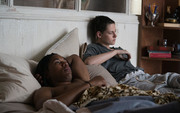
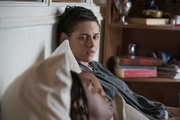
Amid the emotional abuse Lizzie endures from her father and the midnight visits he makes to Bridget’s room to rape her, the women find solace in each other. It begins with a bit of pedagogy as Lizzie helps Bridget to read and write but graduates to furtive glances and brushing each other’s hands as they pass notes in the stairwell, and eventually to a sexual release.

In her essay, "Lethal Lesbians: The Cinematic Inscription of Murderous Desire," film historian B. Ruby Rich writes of films that play into the murderous lesbian trope, like the aforementioned Peter Jackson’s Heavenly Creatures and Nancy Meckler’s Sister My Sister (a film that Sevigny says she loves and sent to Stewart to watch in preparation for the role), in which incestuous maids murder their employer and her daughter. In these movies, murder is the ultimate consummation of the relationship. While the depiction of the murders in Lizzie is the denouement of the film, Sevigny says she wanted Lizzie and Bridget to have a sexual consummation as well.

“We wanted to give that to them. The movie is so restrained and so buttoned-up. And you see them in passing, these moments of almost touching and those kinds of period romance clichés. But they also work and they are also titillating to me,” Sevigny says. “I think the way that we did the sex scene — we’re not naked. We’re still confined by these garments. We need each other.”

Source

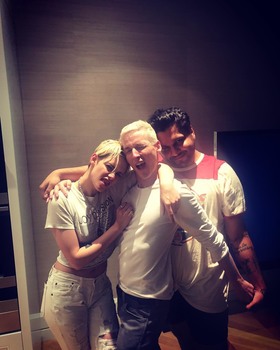
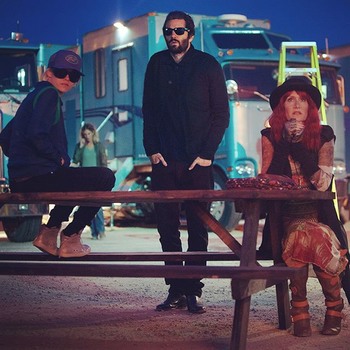
Photo of Kristen, 'JT Leroy' director Justin Kelly and CJ in Toronto - 14 September 2018


imagebam.com

Click on pic for full view.
Source

'Lizzie' Clip - "I Want us to Try"


Video: Interview with Variety for 'Lizzie' + Kristen talks 'Charlie's Angels'


'Lizzie' costume designer, Natalie O'Brien, talks about the movie and mentions Kristen with Fashionista


Producer and actress Chloë Sevigny spent nearly a decade bringing the latest dramatization of Lizzie Borden's alleged 1892 ax murders of her father and stepmother to the big screen. Her vision for "Lizzie," written by friend Bryce Kass, explores the lead-up to the still-unsolved grisly murders, and the famous trial of the accused murderer, played by Sevigny, from a feminist and "smash-the-patriarchy" point of view.

As a decision-maker in front of and behind the camera, she was fully invested; she even spent a night in the Fall River, Mass. murder house (now a museum and a bed and breakfast, which can't not be haunted, honestly). That meant everything in the film, including the costumes, required meticulous dedication to authenticity. Because of the salaciousness and brutality of the hatchet murders — and the fact that the Bordens were prominent members of the community — the case was like the O.J. Simpson trial of the day. So, the costume department had copious old photos, sketches and documentation surrounding the proceedings to analyze.

Costume designer Natalie O'Brien, who also outfitted Elizabeth Olsen as a spot-on influencer in "Ingrid Goes West," carefully studied "Parallel Lives: A Social History of Lizzie A. Borden and Her Fall River," by Michael Martins and Dennis A. Binette — a comprehensive "bible" about Borden.

"It has the kind of details like, 'and Lizzie Borden wore a blue cord skirt when the murders happened,'" O'Brien explains over the phone from Los Angeles.

For roughly the first half of the movie, Lizzie also wears a pansy pin on her collar (pictured above), which O'Brien notes is visible on a number of images of the accused killer. Behind the scenes, the costume designer and Sevigny brainstormed a possible backstory and decided that the pin must have been a gift from Lizzie's father and the most expensive piece of jewelry she owned.

As a producer, veteran actress and style icon, Sevigny gave regular input regarding her costumes and O'Brien welcomed the collaboration. "It's beautiful to speak with your actors, and be like, 'How do you see it? How do you envision it?'" says the costume designer. "[Sevigny] was a huge part of telling the story."

The lead also had one significant, and daunting, ask: to wear all original vintage. "Like 1890s authentic vintage," specifies O'Brien, "and that's very difficult to maintain — and even to obtain — so we were definitely like little warriors hunting for every kind of piece." Lizzie had many costume changes, including a late 19th-century blue ruffle-front, mutton-sleeve and pleat-detailed dress for when she first meets new maid, dramatized love interest and possible future accomplice Bridget (Kristen Stewart).

"That was falling apart," says O'Brien. "Everyday we would have to French seam it back together because it's hot days in Savannah [where they filmed] and there's wear and tear on everything." In the beginning of the movie, Lizzie attends the theater in an elaborate and pristine vintage olive green evening dress (below), which garners compliments from her stepmother and catty theater-goer.

The look was also intentionally covered-up to communicate Lizzie's reported aloof and guarded nature in an era when women liked to reveal a teensy flash of collar bone or décolletage (ooh, racy). "That was something [people] would say about Lizzie Borden: 'ugh, what's her deal? Why is she so closed up?' We don't know," adds O'Brien, who sourced from "everywhere," including costume rental houses, Ebay, Etsy and private collectors.

One particular private collector proved eager to lend: Sevigny, herself, who had amassed an archive of pieces from the 19th century. O'Brien initially was skeptical, as the decade when the murders occurred was a very specific time in fashion history, when unwieldy and not-so-functional "big bell mutton sleeves" were the thing. "That was a very strange era and it only lasted so long because it was so strangely extravagant," O'Brien says. But she was pleasantly surprised after looking through Sevigny's collection, which included a black polka-dot dress with the most beautiful pleats and lace piping, which Lizzie puts on post-murders to greet the police.

"She had some really beautiful items that actually really fit in the era," O'Brien continues. "I was like, 'Wow, she's really been doing her homework for awhile.'" However, Lizzie's blue corded skirt and printed blouse murder outfit had to be custom-built, due to the need for multiples — because blood.

O'Brien's team also custom-built Bridget's maid uniforms and working-class wardrobe of dark sweaters and practical jackets paired with muted full skirts, which provided a socio-economic contrast via color palette and condition. "When she first comes in, you can see her ankles, and that was a big no-no," she explains. "That shows that Bridget didn't have anything tailored and it was more of a hand-me-down." Eagle-eyed viewers may also notice a rip on her jacket shoulder.

O'Brien even went a bit method with making sure all of Bridget's costumes literally fit into the suitcase she brings to the Borden house. Although she wasn't able to squeeze in one extra maid's costume. "I said, 'OK, maybe she made it or bought it [after she arrived], so I'll let that one one slide,'" O'Brien laughs.

One may also notice — especially in a few key disrobing scenes — the lack of buttons and fuss when it comes to Bridget's clothing as compared to Lizzie's complicated tiny buttons up the back. Back then, women of a certain class needed help from servants to get dressed, thus also allowing for an intimate moment between the two. "Bridget wouldn't have that help," O'Brien explains. "So anything she wore, it had to be something that she did herself."

In the late 1800s, women were still expected to wear corsets, which meant the actual actresses all needed help from the costume department to get dressed. "I would personally deliver Fiona Shaw's corset in the morning because she is a bundle of joy," O'Brien says, about the actress playing Lizzie's stepmother (and the deliciously enigmatic Carolyn Martens on "Killing Eve" — seriously, all your favorite TV people are in this movie, too.) For the sake of authenticity, putting on the period costumes was a whole process: "It goes bloomers, shoes and then the corset because they can't lean over and put their shoes on," O'Brien explains.

Unsurprisingly, Sevigny also fully committed to the presumably tortuous corset situation to help immerse herself into character. "In the morning, she would come up and be like, 'Can I have my corset?'" O'Brien says. "I'm like, 'You don't have a scene for another four hours.'" Also unsurprisingly, Stewart, who's a fan of slouchy denim, casual caps and distressed t-shirts in her off-hours, wasn't as excited to don the restricting foundation garment. O'Brien would sympathetically loosen the actress's corsets when they weren't shooting.

"Sometimes, she would wear her jeans under her dresses," says O'Brien, about Stewart sneaking in her preferred uniform during close-up shots. "I'd pass her and be like, 'What are you doing?! Noooo, this doesn't look authentic.' She's like, 'I know, I'm sorry.'"

O'Brien gave her a pass. "There's even funny on-set pictures that paparazzi caught of her wearing her corset and her hat and then she's got her jeans and her Converse or Vans on the bottom." It was a different type of authenticity than the one O'Brien was focused on, but authenticity nonetheless.


Source

Thursday, September 13, 2018

Video: Kristen and Chloe Sevigny's interview with We Live Entertainment for 'Lizzie'


Kristen Stewart and Chloë Sevigny talk Lizzie and how film festivals helped to shape their careers. from We Live Entertainment on Vimeo.

Transcript:

Scott Menzel: First, I wanted to say that I love the movie. You two light up the screen together. You’re incredible. Both of you. Chloe, I know this movie has been a long time coming for you. There’s a lot of backstory about it. What did it feel like to finally get it made?

Chloe Sevigny: It was shocking. I couldn’t believe every day that we were even on set, and I had so much enthusiasm, so grateful to everybody there that gave me their energy. It was super low budget. It was a real battle, and I felt like people were really excited to be there. From every crew member, I could feel the passion, drive, that we all had, and it was a good vibe on set. So that was really great to have that kind of support and encouragement.

Scott Menzel: Awesome. Kristen, what was your initial thoughts when you got the script and read it?

Kristen Stewart: I really liked it. I did it. Initially, I was really stoked to work with her in any capacity. The fact that she had been developing this for so long, and that she came at me with enthusiasm, immediately I was like, “Okay well it must be for a reason.” ‘Cause I admire her greatly and always have. So I read the script and thought that it was really up my alley. Really small and quaint, but only in a way that makes you wanna look closer at something ’cause it’s not easy to see, and it’s quiet the way that these women needed to function back then was very quietly, and so it was cool to hear … It was almost like the movie was like a whisper. Like a quiet conversation that you were now allowed to be privy to, and then when it explodes, in the end, it’s really disenchanting and terrifying. And so yeah, I was totally down.

Scott Menzel: I think you two are just so incredible in this movie I can’t say it enough.

Chloe Sevigny: She’s always incredible.

Scott Menzel: Kristen is amazing.

Kristen Stewart: I would have done anything. I didn’t even have to read the script.

Scott Menzel: Personal Shopper. Adventureland. Chloe, you’re great too. Come on. you started in Kids, and you’ve made your way up, and you’ve done so many different independent films, and you’ve just been incredible. Both of you.

Kristen Stewart: She is just awesome.

Scott Menzel: This movie premiered on Sundance. Kristen, I was sad that you weren’t there this year, but I know you had other stuff going on. How do you feel that film festivals have impacted your career and helped shape them?

Chloe Sevigny: Well for me definitely coming out of the independent world the film festivals give those films a platform to find audiences, and distribution, and press, and excitement around them, and having not worked in the studio system you rely on that, that’s all you have, and it’s really important because there are such small budgets for marketing, and everything else. So I think there’s also a stamp of approval that certain festivals can give a movie, and that generates excitement for them too. Just also being at festivals, and being in the film community, and running into other filmmakers, and producers, and actors, and just feeling that comradely that you’re in it together is like … I love being in festivals.

Kristen Stewart: Knowing that there is that esoteric side is also fun. Being like even if the whole world isn’t going to buy this, we see something in this and we’re gonna celebrate each other now, and take the time to acknowledge that there is a culture that exists that isn’t necessarily the masses.

Scott Menzel: Well thank you very much. It was good seeing you again.

Chloe Sevigny: Thank you.

Chloe Sevigny talks 'Lizzie' and mentions Kristen with Nylon


What was it like pulling double duty for Lizzie, since you both produced and starred in it?
There were a lot of ups and downs. It’s been many years in the making and has been very emotional. There have been different versions of the movie, and you have to learn to roll with it. But I think [I learned a lot about the] business aspect of things, because that's something I've always kind of shied away from. So this was a real eye-opener. I've been working as an actress for 20-something years, and you know [about the business side to] a certain extent, but it’s just making a movie and hearing all the horror stories. But when you are [doing both for a movie], it’s obviously much more daunting and emotional. We got the movie made in the end though. I think the highlight of my producing duties was convincing Kristen Stewart [to get] on board.

What exactly was it about her that made you know she had to play Bridget?
I just could tell. I've met her a few times at some parties and just the way we communicated… I just always admired her as an actress, of course—her performances are incredible, and she looks incredible. But as a person, I also like what she represents to popular culture, and how she navigates the world and the choices she makes. It’s more about all of that than just her name or that I wanted to hang out with her.

I also hadn't seen her do something so contained. She's kind of like a wild thing and very emotional in her acting, and I thought it would be interesting to watch her do something where she wasn't allowed to behave in that kind of way. Where she had to keep it all in, but there is always so much going on in her mind. If you talk to her for five seconds, she’s just so bright, and she's always just questioning everything. Even without any dialogue, I knew there would be a ton of stuff going on there.

Her character definitely also had to deal with some serious patriarchal repression and sexual abuse but was in a position where she couldn’t really say anything. Did the current cultural climate at all have anything to do with the writing of her character?
Oddly, I feel like things have changed so much in the past year. We started shooting right after the election, and ever since, there's been a whole cultural shift. Which, obviously, we’re all excited about—like, finally. It now feels like the film is more relevant, and if it can contribute to that conversation, that's all I would hope for. [I hope] people would recognize this character as more like American outlaw who fights against the patriarchy, symbolically. We don't condone violence, but I just think that what Lizzie represents is even more meaningful now. Even fighting for Bridget who's the faceless, nameless [Irish] immigrant.

Why do you think the Lizzie Borden story still resonates so deeply in pop culture?
I think true crime is endlessly fascinating for people. And it’s still unsolved, technically. She was never convicted, so I think people like to play detective and think, I'm going to figure it out. Even I did. I know when [writer Bryce Kass] and I started working on the project, we were like, “We're going to figure out who really killed them.” Of course, we didn't. But with every book that comes out, her legend grows and the data [mounts]. And she's become this icon for outcasts. I just think that people are fascinated by her and by the period. [Like living in the] turn of the century and living in the circumstances of that time. As you were saying, they were oppressed and repressed, and when they started fighting back against that... I mean, I believe we are still [fighting against that] as second-class citizens, but I think that's slowly changing.

Obviously, Lizzie’s been mythologized in a way that almost borders on caricature sometimes. Like, there are never really any nuances in terms of the narratives created around her, just that she was a crazed woman who snapped. How did you make sure to avoid that with this production? 
I think we wanted to really focus on her home life. Like, what it must have been like for her prior to the murders. [Bryce and I] both fell in love with Lizzie, and we are really empathetic toward her, so we wanted to show that side of her.

Then there's the turn. Obviously, you are seeing her through Bridget's eyes and also it’s a love story. I think a lot of people who fall in love, you see another side of [your partner, a change], a different aspect. In this case, of course, it’s pretty severe. But then you also find yourself asking, Do I even know who you are? Who are you? I think that's a common theme.

Lizzie and Bridget are in love, and she thinks Bridget is going to be free and happy. That this love is going to change everything for her, and I think that those expectations are dangerous.

On that note, the fact that this is a queer love story that takes place at the turn of the century is pretty incredible. What went into the research of this? How much of it is based on your findings?
There have been some books that have touched upon [Bridget and Lizzie’s relationship]. Lizzie was also famously with this actress, Nance O'Neil. But the film, I think, is about how women find strength in one another. I think we were interested in displaying that as well.

Were there any surprising things you stumbled upon during the making of the project though? 
I mean, truth is stranger than fiction. There are a lot of little details which we included in earlier versions of our movie, but it’s easy to get bogged down by them. In the end, we decided to not include as many as those. So I think some of the Lizzie fanatics might be disappointed that there are details left out, but I hope they go along for the ride and enjoy the nuances we bring to the story.

Source

Chloe Sevigny talks 'Lizzie' and Kristen with the LA Daily News


Chloë Sevigny wanted her Lizzie Borden to be an empathetic version of the historical figure she plays in the new film “Lizzie,” which is all well and good, but then Lizzie Borden did take an ax and give her mother 40 whacks, or so we’ve all been told, so … empathy?

“I want people to like her and root for her,” Sevigny says during an interview at the Four Seasons Los Angeles at Beverly Hills about the film in which she co-stars with Kristen Stewart. “And then when she does it you’re just like, ‘Whaaat?’

“You really like this woman and she does this horrendous thing,” she says. “I think even though you know what’s going to happen, the way that we show it and tell it, it’s still really satisfying, at least I hope so.”

Sevigny is clearly a fan of Borden, who, we should note for the record, was acquitted of the 1892 ax-whackings of her mother and father, no matter what that infamous rhyme might have led you to believe. It comes through in the way she talks about Borden, and also in the stubborn passion she displayed in fighting for nearly a decade to bring “Lizzie” to the screen.

For Halloween one year a friend dressed up as Borden, which put the story of Lizzie and her ax back in mind, Sevigny says. A year later on a trip to Massachusetts with her then-boyfriend they decided to add the murder house in Falls River, Massachusetts to their itinerary of creepy New England tourist spots.

“I’ve always been into the Salem witch trials and all of that kind of oppressive New England culture, so I was like, ‘Let’s go to Salem, pay our respects, and go to see the House of the Seven Gables, and why don’t we go by Lizzie Borden’s?’” Sevigny says. “Found out that it was now a bed and breakfast, and I was like, ‘We gotta go!’”

Before bed at the Borden house they took a tour that builds up the spooky nature of where you are staying, she says, which drew her closer and closer into the story of this woman.

“In their telling of this year I was just falling for this character, this person, this woman,” Sevigny says. “I was feeling so much empathy for her and learning more about her and her circumstances, all the different rumors, and just falling, falling, falling for her.”

Their night in the bed and breakfast was restless and a little bit spooky, she says. The boyfriend felt like someone was touching him. She says she heard a weird howling. When she got home to New York City she started reading more about Borden.

“I was just like, ‘I think I want to play this person,’” says Sevigny, whose résumé includes an Oscar nomination for best supporting actress for “Boys Don’t Cry,” a long list of acclaimed indie film parts, and co-starring roles in such TV series as HBO’s “Big Love” and Netflix’s “Bloodline.” “I wasn’t necessarily getting opportunities in features, the kinds that I wanted. I was like, ‘Maybe I should just try and develop it.’”

She took screenwriter Bryce Kass, a friend and former roommate, back to the Borden B&B, and together they talked about what kind of story to tell, eventually settling on the idea of Lizzie as a woman trapped by the circumstances of her time – as an unmarried woman, her father controlled nearly every aspect of her life – who sought freedom in a manner most extreme.

“Part of what’s so captivating is the legend, and how people have built on the legend and added to it,” Sevigny says. “How she now kind of represents this feminist American outlaw who was rallying against the status quo and the patriarchy.

“She’s kind of an icon for outcasts and misfits, and those are my people,” she says.

The screenplay also incorporates the long-held historical rumor that Borden had been in a romantic relationship with the family’s housemaid, Bridget Sullivan, the character played by Stewart, and might have been motivated to kill her parents in order to inherit their money and start anew elsewhere with Bridget.

“She’s in her fantasy world, and I think that made the love story more complex and interesting to me,” Sevigny says.

The project was initially bought by HBO which saw it as a miniseries, but once there it stalled in limbo for years. Eventually Sevigny managed to get a team together to buy it back, and then worked to find a new way to get the film made.

Kristen Stewart was the first person that Sevigny, a producer of the film, and Kass considered for Bridget and she quickly signed onto the film directed by Craig William Macneill.

“She’s very real,” Sevigny says of Stewart. “I’m constantly in awe of the way her brain works, so bright and so inventive, and just so many ideas. I was like, ‘No wonder you’re a (bleepin’) movie star!’ I have always been shy and afraid to voice my opinion. Maybe I could learn a thing or two from this girl and be more vocal.”

Sevigny may be shy on set but she’s bold in her willingness to take chances, which is clear in the fearlessness with which both she and Stewart play their parts in the violent scenes we all know will come before the credits roll. Without giving everything away suffice to say there’s a naked vulnerability to these scenes, one that Sevigny says served the message of the movie.

“I feel like it’s a female empowerment movie in a way, and to see her doing this, to see her as a woman, I thought it served the story,” she says. “And I think it’s kind of punk for lack of a better word. It makes sense that she strips herself of these social constraints and just goes animalistic.”

Source
Wednesday, September 12, 2018

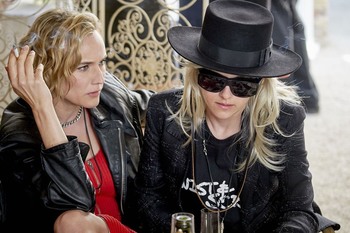
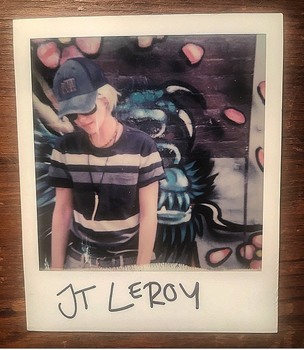
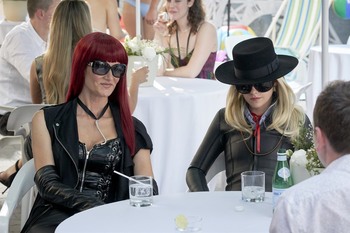
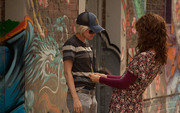
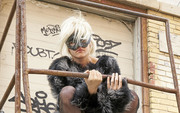
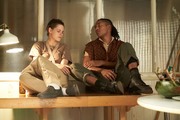
'JT Leroy' Stills


   imagebam.com imagebam.com
imagebam.com imagebam.com imagebam.com imagebam.com imagebam.com
imagebam.com imagebam.com imagebam.com imagebam.com imagebam.com  

HQ

imagebam.com imagebam.com imagebam.com imagebam.com imagebam.com imagebam.com imagebam.com imagebam.com imagebam.com imagebam.com imagebam.com imagebam.com imagebam.com imagebam.com imagebam.com imagebam.com imagebam.com imagebam.com imagebam.com imagebam.com imagebam.com imagebam.com imagebam.com imagebam.com imagebam.com

BTS 

imagebam.com

Click on images for full view.

Source 1 2 3 4 5 6 7 8 9 10 11 12 13 14 15 16 17

HQ KStewartBR