Showing posts with label Peter Sattler. Show all posts

Wednesday, May 11, 2016

'Personal Shopper' set visit details by The Guardian - incls set interviews with Olivier Assayas and Charles Gillibert


The set visit in Prague happened in December 2015.

On a bracingly cold December morning, a cottage complete with miniature lawn and garden trellis stands inside a studio on the outskirts of Prague. Inside, Kristen Stewart is running through a scene from the supernatural thriller Personal Shopper. Overseeing it is Olivier Assayas, the writer-director responsible for coaxing from the 26-year-old a revelatory performance in Clouds of Sils Maria. In that film, she was Val, the straight-shooting, unsentimental assistant to an insecure star played by Juliette Binoche. Stewart’s work for Assayas made her the first American woman to win a César award, France’s equivalent of an Oscar. And word has just reached Prague that the New York Film Critics Circle have also awarded Stewart a prize. “It’s a real possibility now that she could get an Oscar nomination,” says Charles Gillibert, the producer of both Clouds and Personal Shopper, as we mill around on set. (She didn’t.)

I make a mental note to congratulate Stewart when we sit down later for a chat. However, there are bad tidings from the line producer, Sylvie Barthet. The last few days have been unexpectedly tough on Stewart, and her agent has asked that she be allowed to concentrate solely on her performance. Still, you never know: people change their minds, opportunities arise. I’ll see what happens. I am given a pair of headphones and a seat in front of a monitor to watch the scene being shot.

This is a pivotal moment in Stewart’s career. After taking two years off following the end of the Twilight franchise, she returned with a slate of movies that signalled her intention to bury Bella for ever. In Camp X-Ray, she played a guard at Guantánamo Bay; one scene, in which a prisoner covers her in excrement, proved that she was willing to get her hands dirty, along with everything else. Then Clouds of Sils Maria stripped Stewart of her protective layers. Films with Woody Allen (Café Society) and Ang Lee (Billy Lynn’s Long Halftime Walk) have followed. It’s a busy time. A breaking dawn, you might say.

In Assayas’s latest picture, which he describes as a companion piece of sorts to Clouds, Stewart plays Maureen, personal shopper to the stars. She and her twin brother, Lewis, who are both mediums, have made a pact: whichever of them dies first will establish contact with the other from beyond the grave. When Lewis dies, Maureen goes to his home to wait for a sign. In the scene being shot this morning, she and Lewis’s girlfriend, played by Sigrid Bouaziz, are discussing séances. After the fourth take, Assayas calls out: “Pretty good.” After the fifth: “A dernier.” In each one, Stewart brings her trademark minimalist intensity: the angular features, the tight mouth and piercing gaze contain infinite and mysterious tensions. Her antennae seem to never stop twitching.

Between takes, Bouaziz, also 26, quizzes her co-star about a word that crops up in one of her lines: tacky. “It can mean, like, cheesy,” Stewart explains. “I knew the word,” Bouaziz tells me later, killing time between set-ups. “But I love to ask Kristen because she tells me how young people speak in English.”

Art is the ultimate achievement, says Olivier Assayas's meta-drama with Juliette Binoche as an ageing star, Kristen Stewart her PA and Chloë Grace Moretz the younger model – and it's nearly brilliant enough to convince us

Bouaziz is hauled away to inspect some furniture that will be used in the next scene. Her character is a carpenter, and the props manager has produced three chairs for her and Assayas to choose from. To the casual observer, it resembles an unusually dreary version of Goldilocks. “This one is too complicated,” the director decides, rocking on the heels of his navy blue Golas. He moves on. “This one is not the right shape.” A pause. “And this one is … ” Just right? Almost. “Remove the fabric,” he says thoughtfully. “It’s 80% there.”

“There are studios in Hollywood asking Olivier to make films,” Gillibert tells me over coffee. “He can do whatever he wants. He’s making European cinema.” He sees a parallel between Assayas and Stewart. “Like Olivier, Kristen challenges herself. I’ve seen on Personal Shopper how Olivier has had to adapt himself because of what she is doing with her character. He told me: ‘She’s challenging the scenes! I thought she was going to do this, but she’s doing that.’ With Kristen there is nothing unimportant. Everything is made significant by what she does.”

When the crew breaks for lunch, I plonk myself next to Assayas as he works his way through soup and salad in the catering tent. He has shaggy silver hair and eyebrows like black tyre tracks. Stewart is sitting a few benches away, perusing texts and larking around with a friend. “She is a genius,” says the 61-year-old director. “She has an instinctive understanding of cinema and an extraordinary precision in her knowledge of the frame. She is never boring – she knows how to make any shot riveting.”

It wasn’t his intention to make two consecutive films with Stewart. But when a planned US production collapsed at the last moment, he bashed out Personal Shopper. “I wrote this movie really fast and it has ended up as a sort of continuation of our first film together. Clouds opened doors for me. Things I couldn’t touch before I was able to do: mixing realistic and genre elements, dealing with the invisible.” In both films, Stewart plays a woman on the fringes of wealth and celebrity. “A personal shopper is the most alienated job you can find,” he explains. “You’re dealing in surfaces, but it’s not even for yourself. Maureen is doing a job she doesn’t like, and the film is about her trying to come to terms with her own identity. She’s darker than Val. And the film is darker. Clouds can be seen as comedy. This can’t.”

Stewart is outside the tent, woolly hat pulled low over her ears, cigarette in mouth. When it’s time for her to make her way back at last, someone barks into a walkie-talkie: “Kristen is travelling.” I stroll with Assayas back to the cottage. It’s different directing Stewart this time, he says. “Everything was filtered through Juliette before. I was not pushing Kristen to her limits. It was all about transporting her to a different area so she could do things she hadn’t tried before. Now it’s more about pushing that as far as we can.”

The afternoon is going to be taken up with shooting a flashback featuring Maureen and Lewis, who is played by the Norwegian actor Anders Danielsen Lie. There has been no news from Stewart’s agent, so I decide to call Peter Sattler, the writer-director of Camp X-Ray, to get some idea of why she is so elusive. “Kristen likes to live in the moment on set and to preserve that lightning-in-a-bottle feeling of a scene,” he explains. “She responds to what’s happening right there, so it never sounds like she’s just reading lines. I would stop a scene when she wasn’t expecting it, to get her flustered. Or I’d purposefully criticise a take to rile her up. She’d be like, ‘Are you fucking with me?’ She was boots-in all the way. I said to her, ‘We’re making a tiny, tiny movie and you’re one of the biggest stars on the planet. Are you gonna be a diva?’ She said, ‘No, I’m down with it. I’m there.’ And she was. People would come to the set and go, ‘Where’s Kristen?’ She’d just be there, in costume, hanging out with the crew. This is the face of Chanel for Chrissakes!”

The shoot has moved to the cottage interior and there is nowhere for me to stand without getting in everyone’s way. I can spend another hour or two staring at a monitor. Or I can watch the back of Stewart’s head through a crack in the garden fence. It’s getting dark. I trudge through the mud to the cabin where the production office is based. I nudge the door open and ask Barthet if I can get a car to the airport now.

She looks a little surprised, but nips out to see if there is a driver available to take me. I sit down at the desk of one of her colleagues. I spot a note attached to an A3 envelope. It reads: “Dear Kristen, I would like to kindly ask you if you could sign these photographs.”

I suddenly feel very depressed. This is a small, prestigious European production directed by a highly-prized auteur and destined for the competition at Cannes. It couldn’t be much further from Twilight. And yet everyone is still clamouring for a piece of Kristen Stewart. I include myself in this, along with the unnamed person chasing her autograph.

Still, it would be wrong to say that I’ve had a wasted journey. When my driver picked me up from the airport the night before, he gave me a Personal Shopper goodie bag, which contained a half-bottle of white wine. I couldn’t find a corkscrew in my hotel room so I tried using a pencil. All this did was break the pencil and reduce the cork to crumbs. So I called reception to ask for a corkscrew. After the room service guy opened the bottle, I tipped him a 200 Czech koruna note, which is just over £5, because I didn’t have any coins.

So essentially I destroyed a pencil and purchased a small bottle of wine. When it came to Kristen Stewart, however, I never graduated beyond the status of window shopper.

Source

Saturday, February 28, 2015

New interview from the 'Camp X-Ray' NYC premiere (6 October 2014)



Kristen, Peter Sattler and Peyman's interviews start from 6:20 minutes until 18:00mins.

Peter and Peyman both mention Kristen.

Friday, October 24, 2014

Peter Sattler talks about Kristen with Miami New Times


I've always thought Kristen Stewart as a terrific actress. You reached out to her for this role, right?

We did. We took a Hail Mary, and one of my executive producers was able to get it to her agent and amazingly, she wanted to be a part of the film. The reason I got kinda of obsessed with Kristen, once I allowed myself to imagine that she could potentially be interested in doing it, is because she has the perfect mixture of a very tough exterior but then soft, kinda chewy inside. You see that she's got an edge to her. She's a feisty girl, but you can see how, yeah, she would be a soldier. She could hold her own with these other people in her squad, but at the end of the day, you can feel, seeping out of that, kind of this residual emotion, and that very vulnerable side of her seeps through the cracks, and to me that's the perfect mixture that the character of Private Cole really needed.

I totally saw that. She really comes across as a hard person while slowly melting toward a truly sympathetic human being at the end.

Yeah, yeah. It's about stripping away those layers and the things that kind of make her character uncomfortable. It's like a character that's not comfortable in their own skin, which is why it's so satisfying for her to put on this "costume" of a soldier because she can just kinda pretend to be this soldier and not really get into that hurt and vulnerable part of herself. That's really what the movie, towards the end, is about. It's about opening up, and that takes courage. As we say in the tagline, "Connection takes courage."

I think sometimes she gets a bad rap. I've totally believed her as an actress.

Yeah, it's an interesting phenomenon, the phenomenon of Kristen Stewart, not just as a person or as an actress. It's a very unusual thing, and I've never really understood it. Like, I remember before the movie came out, a lot of people were like really shocked that she was gonna play a character in a film like this. I never understood it because she's been doing these really interesting films for her whole career. I think the problem is that there is a small percentage of people out there who only know her from Twilight. That's one series of films in an otherwise rather large body of work that has pretty interesting dynamics. It has The Runaways to comedy, like Adventureland, so it's interesting. You know what the great thing is though, now? It's really cool that the conversation around her is changing and everyone's really starting to talk about her in a much different light, and I feel really honored to have been a part of this kind of new wave of Kristen Stewart's career.

Read Peter's full interview with Miami New Times.

Camp X-Ray opens exclusively in South Florida at the Coral Gables Art Cinema today (October 24). There will be a red carpet premiere with director Peter Sattler at 7 p.m. who will introduce the film and entertain a Q&A after the screening, which begins at 8 p.m. There will also be drink and food. Visit gablescinema.com.

Source Via

Saturday, October 18, 2014

Peter Sattler mentions Kristen in 'Camp X-Ray' (3 interviews)



How does someone who’s lesser known in Hollywood go about establishing themselves in an industry predicated on name and prestige?

It’s a huge challenge. That’s why I got out of film school. If you look at my IMDB page, I worked every job under the sun. I was a grip, I was a key grip, I was a PA, I was a graphic designer in the art department. I did everything because I love films, but it takes a while for a writer to mature and to write something that is powerful and grown-up. So for the last ten or twelve years, I was doing mostly re-writes for the studios. So I got a little toe-hole in some of that. Really, the film happened for two very important reasons. One is that a very good friend of mine, David Gordon Green, an amazing filmmaker who I’ve known since school, really championed me in getting this made. The other was that the script really resonated with Kristen. And once Kristen comes in, all of a sudden we’re in. Once Kristen says, “I believe in this guy. He’s a first-time director, but I believe in his vision” then everyone else rallies around and we start to work within a budget.

Where did the idea for her character come from?

I realized one story that hasn’t been told about Gitmo is about the poor soldiers who have to clean up the mess. You know? Like, these grunts on the ground who actually have to deal with the decisions that are being made in Washington. I felt such sympathy for them, given what they go through and how impossible the mission the army has given them down there is.

Why did you choose to make your first movie a war film?

It’s not that I wanted to make a war movie, so much as I wanted to make a movie about something that mattered. In the movie, when someone asks Kristen’s character why she came down there, why she joined the army, she responds with, “I wanted to do something important.” I feel the same way. That’s why I want to make movies and make art. I love popcorn movies and all, but if I’m going to put my heart and soul into a project, it has to be something that matters.

You set up this very claustrophobic environment, accentuated all the more by the acting and the music. What were some of the struggles you faced with staging and making each shot interesting within the confines of such a small space?

You put your finger right on the nose of it. Directorially, you have a film where half of it takes place between two characters who, for the most part, can’t move; there’s very little blocking that can be done, and on top of it, all their interactions take place between a four or five inch window in the same room over and over again. So you’re right, the challenge is how you make that interesting and convey the monotony of that situation without boring your audience. Me and my cinematographer James Laxton talked very carefully beforehand about how each scene evolves because we wanted to make something austere that’s not too flashy. One specific point I can talk about is when the camera breaks the wall and goes inside someone’s cell. You may not notice while you’re watching, but subconsciously all of a sudden you’re inside [one of the detainee’s] cells on the other side of the glass. That occurs when we start to feel more sympathy for him. Towards the end, we do this thing where we swing the camera totally around and now it’s Kristen’s character who feels trapped behind the door. It was not an easy thing to do, but everyone involved in the movie were interested in taking challenges.

What was it like working with Kristen?

Kristen’s amazing. The first thing to know about her is how down-to-earth, passionate, and intelligent she is. The way she approached the character was so thorough, and because she’s so creative, she’ll invent moments for you. It’s so helpful. She’s also very different from Peyman [Moaadi]; you have to direct both in very different ways. Peyman is very used to long rehearsals, and that’s because he’s a writer and director himself and comes to it with the eyes of an author wanting to get every shot right. For Kristen, it’s much more about capturing the raw emotion. It was very interesting working with both of them and all three of us had a very enjoyable collaboration.

Read the full interview at the source: Bullett Media

-----------

I’m really excited for this film, since we get to see a new side to Kristen Stewart.

It’s a really remarkable role for her and I’m excited for people to see this side of her. You know, everyone knows her from these fun…movies that she’s done, but she’s really a remarkable actress capable of an incredible amount of subtlety and nuance, which is really what this role thrives on. So, I’m excited to be a part of this transitioning and redefining of what people expect from her.

I read that you read and directed this film. What was the inspiration for the film?

Peter Sattler: You know, I’d always been interested in Guantanamo Bay, but it started when I’d seen a documentary and started to see what it was like now. And I saw now that, basically, these detainees and soldiers are just walking around. They’re stuck there and they just kind of start to talk to each other. Just seeing that kind of dramatic setup, with these two people stuck in a room together, being at the tip of both of these sharp and political forces aiming at each other, but at the end of the day, they’re just these two everyday people–they’re just these two poor schmucks stuck down there–that strange dramatic relationship fascinated me and that was the impetus for the whole film…The whole thing came to me in a flash.

[I thought] “What a perfect little film.” It’s character-based, it’s a very small, contained and personal way to touch on a much larger subject that is fraught with such intellectual and political minefields, but to me, this was just the perfect way to address it and to brush across it without making the movie all about Guantanamo and all about one political message. That’s not what the movie is about. It’s about people.

I also read that you’d changed the main character from male to female. What was the impetus for that decision?

Peter Sattler: You know, that was very early on when I was thinking about the film. I was thinking about [it focusing on] two guys and…actually writing it more, I was struck by first, in my research, that a lot of women are down there. There are a lot of women guards down there, so that inspired some of the reality behind it because also…in a film, you want to have as much conflict between characters as possible.

[Having a male character and female character] made these characters so different, especially given the very complicated relationship that a Muslim needs to have with a woman and the various taboos that exist in there. It’s so fascinating, and on top of that, being a woman in the army. That’s intense. I mean, it’s a very honorable and great thing, but there are pressures. There are sexual pressures, there sexism, there’s all these things that all factor in to affect that relationship and, at the end of the day, put so much pressure on these characters[.]

How was it directing the cast, especially Stewart? How was it to see the actors embody your characters?

It was really amazing and really remarkable because the movie lives and dies by these two characters[.] I had a vision in my head and on the page of what they were, and at the end of the day, it’s all about seeing those characters come to life. And the remarkable thing is that Kristen and Peyman aren’t just actors, but they’re remarkable artists in their own right. They love to create their own art. Peyman has written and directed numerous Iranian films and Kristen writes and plays music and all these things, so as a director, it’s great.

I can tell these actors what to do all day long, sure, but it’s so much better when you have someone to collaborate with and they give you ideas. All you have to do as a director is filter that and channel that energy and say, “I love your ideas, and of those five ideas, this is the one that’s right for the movie.” They can just throw them at me and I can be the filter them and suggest and help channel and help steer that energy. It’s so much easier when someone’s coming at you with this force and throwing things at you instead of having to try and get it off its feet…With some scenes and some actors, is to just make it feel real and to just have something on screen.

When you have actors like Kristen and Peyman, [just] based on cold reads from them, it’s amazing because they’re inventing stuff. They’re doing things on screen. They’re filling every moment with nuances and idiosyncrasies. Then it’s easier, because as a director, all we need to talk about now is how do we shape and choose and decide the exact path this film is going to take.

What do you hope audiences take away from “Camp X-Ray”?

You know…there’s a feeling that I love in art and movies that…we all as humans–and this sounds cheesy–are connected. There’s this shared bond and there’s this communal experience that we all have. That’s what the film is all about. There are these two people and everyone’s telling them that they’re enemies and they’re set up in this position to be enemies, but they find a way to look at each other not as cardboard cutouts of a soldier or of a quote-unquote terrorist, but as human beings. To me, that’s one of the most powerful emotions on the earth. I love when movies make me feel connected to everyone else, especially in the modern age. We’re all so isolated and we’re inundated with quick black-and-white answers. So, when you can feel that connection to another human being, it’s the most powerful thing in the world.

Read Peter's full interview at the source: Shockya

------

There’s a great line in the film where Sgt. Cole says that “I wanted to do something with my life,” which is how she ended up in Guantanamo since she came from a small town. Coming from Indiana, was that your way into writing that character?

Absolutely. With a film like this one, it’s a very intimate film about very deep personal things and as a writer, you have to write from a place that you know. So there are pieces of me in Kristen’s character, there’s a lot of me in Peyman’s character and people I know are mixed into that. But you’re right, I came from a small town and I remember very consciously having the feeling when I was in the middle of high school this desire to do something important with my life. I didn’t want to just get a regular job and get married and have some kids. I don’t know how to describe it, but I know other people have the same feelings and they just verbalize it in different ways, so that’s something I wanted to put in there because I enjoyed illustrating the irony of that.

This girl really wants to do something important and she goes out and takes this big adventure, joins the army to get out of her comfort zone and is proud of the big step that she’s taking to leave her small town roots and maybe go see the world, then she ends up in a place where the purpose is very muddled. I really love that irony because that’s a very universal thing that everyone encounters in life. We all kind of look towards the future and look outside of ourselves and say “You know what, if I just get to go do that, then that will make me happy and that will be it,” but when Kristen’s character basically gets what she asks for, she realizes it wasn’t the way she imagined it.

It’s something I’ve always been very conscious of. I also like the unspoken idea of, [which is] very subtly dropped in the movie, that these detainees wanted to do something important as well. They wanted to fight for a cause and you can argue to say that cause is extremely flawed and that’s not what the movie’s about, but there is a commonality between soldiers on both sides of war.

I’ve heard at one point, you were talking to Peyman about his character and he actually changed your mind about a certain trait of his. Would your ideas about what you were making as you were filming?

Anytime you make a piece of art that is as large an undertaking of so many different moving pieces and so many other collaborators having their fingerprints on it, a film evolves and it grows. It’s like raising a child. You can guide it in the right direction, but there’s a point where it will just take on its own life. You can say that’s a bad thing that you lose control, but I think it’s a great thing because you discover things along the way. That happened a lot with Peyman and Kristen in terms of really shaping and molding these characters through rehearsal and then through filming because they’re amazing actors, but Peyman and Kristen are also very interesting and intelligent human beings and you’d be a fool not to let them have a say in what these characters are going to be.

So I thrived on those discussions when Kristen or Peyman would come up and try to argue with me that something should be different. It was great because ultimately, as the director you’re just the gatekeeper. If Kristen can come up or Peyman can come up and say “Hey, I just thought about something, I think we should do this,” then it’s like “Hey, let’s take it to trial and I’ll hear it out” and run the pros and cons of everything that I know about the film, then if it wins, I’m like “Great, you won, we get to add this new thing to the movie.”

[..]

But to go back to your question about Kristen’s character was going through, I think as an artist you want to do one big piece of work that will live beyond your years. After I made the movie, I realized some girl in Kansas may watch this movie 10 years from now and it’s going to move her. That’s all I ever wanted out of film because I adore it as an art form, as a piece of entertainment, as everything — I just wanted to add to that conversation. I wanted to make a film that I could drop into the bucket of all these amazing other films in as much as I remember when I was younger and you first see some film and it changes your life. I wanted to hopefully create something that would have that experience on someone else.

Read the full interview at the source: Moveablefest

Via @KstewAngel


Friday, October 17, 2014

Peter Sattler talks to Indiewire about 'Camp X-Ray' & talks about Kristen


Peter Sattler didn't know much about Guantanamo Bay before he started writing his directorial debut, "Camp X-Ray." Like most Americans, he had the stark facts: torture, dubiously tried detainees, and a big political quagmire. But what interested him more than ideology was the humanity of the place."I wanted to capture the emotional zeitgeist of Guantanamo Bay," Sattler said. "What does it feel like to be down there?" After conducting intense research and making contact with ex-guards, Sattler found a discrepancy between the reality of the detention camp and its overblown media image. "We have this image of Guantanamo Bay as this very heightened, intense place, with barbed wire and torture," he explained. "But when I looked at what's actually going on there, it's very mundane! Yes, it's punctuated by these moments of violence and insanity, but a lot of it is this very banal stuff."

Did he still want to make the movie? Absolutely. "I'm drawn to very small stories inside of big situations," said Sattler. "I love films that have a very relatable, very everyday quality, but are wrapped up in an extraordinary shell." "Camp-X-Ray" was clearly borne of this sentiment; the film is predicated on a thick layer of dramatic tension, but the most compelling scenes are the subtle windows into what constitutes "normalcy" at Guantanamo. "As an ex-soldier who'd been stationed down there once told me," Sattler said, "you have 90% boredom, 10% insanity. How do you convey that monotony without boring an audience?"

For Sattler, the answer was to distill the political tension into two diametrically opposed characters. "Soldiers aren't supposed to talk to detainees," he said. "I felt like the detainees must want to talk to the soldiers. How crazy would it be to have someone ignore you for an entire day? So, as a writer and a dramatist, I was so curious as to what these two people's conversations would be like." To heighten the dichotomy, Sattler wrote the detainee (Peyman Moaadi) as gregarious and emotionally erratic, while the soldier (Kristen Stewart) is tightly-wound and difficult to read. He also created an age gap in order to explore universal themes like the pursuit of a meaningful life. "I was really fascinated by the ages of these soldiers down there. They're so young! So I started thinking about the film in terms of a 'quarter life crisis' film. What would it be like for a young girl? You're worried you're never gonna do anything that matters with your life. So I transposed that onto this girl. And this desire to go find herself in the army." Ultimately, this theme is the nexus of the soldier-detainee relationship. "I think everyone craves purpose in life. Whether you're a militant terrorist or a soldier, humans crave purpose. That's what drives us."

The character's interactions evolve from a lurid game of cat-and-mouse to meaningful attempts at connection, and Sattler chronicles them with an understated emphasis on emotion as opposed to diatribe. "What's on the page doesn't matter. What matters is what you're capturing on the camera," Sattler said.

While filming, Sattler encouraged the cast to rewrite their own lines in order to enhance authenticity. "Ultimately, it has to work for the actors," he said. "In saying it, and in reading it, Peyman or Kristen understood what that beat was about. And they understood it so well that they could experience it on their face. We cut a lot of monologues because we realized we didn't even need the rest of the line. A lot of it is learning that you can do so much with so little." But prioritizing subtletly didn't have to come at the cost of confronting some of Guantanamo's harshest realities. The film tackles suicide, various methods of torture, and heavy existential themes to boot. "You can't just be cavalier about it," said Sattler. "You're shooting some really intense stuff and you have to create an environment that fosters that intensity from your actors."

It's every first-time indie director's dream to write a hot-button script, cast a famous actor with an established fan base in the lead role, direct the film yourself, and premiere it at Sundance. This was Sattler's reality.

"When you're just starting out, you have no currency," he said. "The only currency you can really create in Hollywood is a hot script." But even an absorbing script about a hot-button issue like Guantanamo isn't guaranteed to secure financing. What it did do, however, was attract Kristen Stewart.

"Kristen read it, and she loved it," Sattler said. "It's just as simple as that. She told me she hadn't done a movie for two years. And when she sat down she said, 'You know, I was waiting for something to grab me." 

"Having Kristen attached helped everything," Sattler said. It was not only the vote of confidence the film needed to get financed, but it also attracted other seasoned cast members to the project, such as Peyman Moaadi and John Carroll Lynch. "You can call someone and say, 'I'm making an indie film about Gitmo,' and they'll say, 'And?' But if you call and say, 'I'm making an independent film. It's about Guantanamo Bay. It stars Kristen Stewart,' they're like, 'Oh, really!'"

Sattler can't sing Kristen's praises highly enough: "She took a real leap of faith jumping into this role. It's a very challenging role for anyone to master." "Camp X-Ray" also bolstered Kristen's career by helping to diversify her public image. "Based on the reviews she's been getting, people have been really surprised that she pulled off this nuanced and internalized role," said Sattler.

"I'm extremely proud that people are starting to look at her in a different way. There's been this great renaissance in the way people think about Kristen. And that's all to her credit, because she made a very conscious choice to make some bold, aggressive moves in the movies she was doing. I'm super excited to be the first film in this new chapter of Kristen Stewart."

Source

Peter Sattler talks about 'Camp X-Ray' and Kristen (Stage Buddy)


Clouds of Sils Maria just screened at the New York Film Festival and it was great, have you seen that yet?

No, I still haven’t seen it cause Kristen won’t show me all these movies she’s been doing. I’ve also been busy, so I’ll just have to bug her to send me a copy.

You need to see it! And I’m only bringing it up because other than Adventureland and Into the Wild, everyone pretty much just associates Kristen with Twilight.

What about The Runaways, man? Don’t forget Runaways! That movie is amazing! That’s the one that I saw and I was like “whoa, this girl can act!”, cause she’s also in Panic Room and has small parts in some cool movies but when I saw Runaways I thought “she’s for real!”. I saw it years ago, but from that point on I was like “Twilight is just an aberration, this girl is cool, there’s something about her that’s really rad!”

In The Runaways though she’s really explosive, while in Camp X-Ray you have her hide inside this shell of sorts…

One of the things that Kristen’s really great at is, she has this great toughness to her but she’s also very vulnerable, and it’s that mixture of things that made me think I couldn’t not have her in the movie, because it’s perfect for this soldier that she’s playing. She has to have this tough facade because she’s a soldier, she’s surrounded by these aggressive dudes all the time so she has to keep this thick skin, but underneath it all there has to be this wound, this vulnerable child. Kristen can express that in a perfect way. She’s also an amazing actress when she doesn’t have lines, she can do so much without saying a single word. In this film she barely has any lines and all the emotion comes from her face and it’s so powerful and raw. When you catch Kristen and she’s really feeling a moment and you capture that on film it is the most magical thing on earth. It is like capturing lightning in a bottle!

I don’t know much about the army to be honest, but I found it interesting that the film is basically about a young woman who doesn’t know what to do with her life, so she decides to hide in the army, it gives her the perfect place where she doesn’t have to “be”...

That’s exactly right! I was talking about this with Kristen the other day, I think of Camp X-Ray as a quarter life crisis movie, when you’re at that stage in life when you’re getting out of college and go from being a child into becoming an adult. Many people look at the grown up world and realize things aren’t black and white, so people need to find some dogma to believe in, something to cling to, so you’re exactly right, I think this character is trying to escape herself and literally put on this soldier costume. She’s uncomfortable in her own skin so she tries another skin on. Of course in the end she realizes she needs to open up her inside and actually deal with what she’s feeling.

The film is also about globalization in a way, cause we have these two characters from opposite sides of the world, who meet by chance. How did you come up with the idea of putting these two people together?

For me the model was always movies like The Defiant Ones or Hell in the Pacific, because I love situations in which you have these two antagonistic characters that because of the environments they’re in, have to find a way to work together. The film started when I did some research and realized that these soldiers and detainees are just stuck there and they coexist in this world. Having the model of the films I mentioned, I thought this would be a perfect way to tell the story of these characters. These camps must be so weird, these people are different culturally, they’re pitted against each other, everyone is being told they should hate each other, but somehow they’re all stuck here. Both of the characters in my film are utterly lonely for some reason and so, they find this unlikely connection which saves both of them.

You also highlight how boring life in the army can be…

I’m obsessed with institutional mundanities. I also love the small idiosyncrasies of life and things like that, first of all because doing the research I realized this was real, a soldier actually told me I’d captured the 90% boredom, 10% insanity of being in the army. But we also have this image of Guantanamo Bay as being this action packed world, but in reality it’s probably just a lot of boredom and waiting around. To me this was both fascinating and relatable because in many ways this was just a crappy job, and that’s something we can all relate to, even if you haven’t been in the army.

Your use of space in the film is fascinating, would you say your career in art direction had anything to do with this?

I was a graphic designer yeah, I’ve done every below the line job in movies, from PA, to grip...but I love film because it’s a mixture of every artform under the sun. I love graphic arts and I was doing art for movies for years and it’s definitely always influenced my eye. I adore Stanley Kubrick, he’s like my god, there’s always this balance in his work which was useful to me because my film is set in an institution and the walls need to reflect this rigidity. To do this we used handheld outside and then locked up, tight, graphically balanced shots inside just to convey the strictness of the space. Also the exploration of that space was really important, and we did some conscious things to reflect that, for example we always kept the axis on the same place, she’s always looking one way, he’s always looking the other way...we also needed for this space to feel familiar. I like movies where I understand the space where I’m in, the geography is important to me. When you walk in a room you can determine the size instantly, but in a movie sometimes you don’t know. Some action movies drive me crazy because I don’t understand what’s happening, it messes with my mind, I’m anal about that stuff. So in my movie I wanted for people to have a sense of this space, which I did by having Kristen’s character push a book cart through the whole set.

Speaking of love, it’s interesting that you didn’t feel the need to create a platonic romantic relationship between the two characters in your film.

This movie isn’t about romantic love, I wanted it to be something deeper. And in movies once two characters have sex, the conflict’s gone, and I always think the courting was so much cooler and exciting. In a movie essentially you’re stirring together a recipe for emotion, one of my favorite recipes is bittersweet. I don’t trust happiness to some degree, if you give something a sweet happy ending it doesn’t resonate with the real world.

But there is a lot of chemistry between Kristen and Peyman! Since you shot the movie in 21 days, how did you have time to develop this chemistry?

We had a couple weeks of rehearsal which was good, but mostly those two had an instant chemistry. Since they’re both such good actors and they’re so intelligent about film in general, not just as actors, but like filmmakers, we talked about the characters and we would hang out a lot. We built a circle of trust at the beginning. I wanted to create a cool crew where everyone trusted each other and would make the actors feel comfortable when they were doing their emotional scenes.

Going back to the military for a second, since you pretty much went through every single possible job within the hierarchy of filmmaking, I was wondering if you saw any parallels between that and the army structure?

Oh my god, yeah! That’s why I’m fascinated with both of these worlds. Trying to do anything in this world takes military precision, all the army is trying to do is make something happen. Armies aren’t about killing people, they’re about achieving goals. If your goal is to occupy a hill, they come up with a plan. And film is the same, that’s why so many assistant directors come out of the military. Our AD and one of our associate producers were in the military. Also, you’re all going on this journey together, trying to slay this beast...and yeah, with this ranking, I think when you set out to make your first film it’s interesting to have experienced what it’s like to be in all those other jobs. You learn things and when you’re in the director chair, you know how to to command this people. It’s like being a conductor too, if you know how to play everyone’s instrument, they’ll all sound better.

Full interview at the source.

Via

Peter Sattler, Payman Maadi & Lane Garrison talk about Kristen in 'Camp X-Ray'


Peter Sattler

I recently saw Kristen at one of the New York Film Festival screenings of “Clouds of Sils Maria.” Have you had a chance to see it?

PETER SATTLER: She’s great I haven’t seen Clouds yet but I’m excited to see it. She’s been doing a lot of great work and I’m honored for “Camp X-Ray” to be one of the first movies out of the gate to show this new side of her. It’s not really new because she’s been doing edgy work like this, but it’s cool for people’s perception of her to start to change a little bit.

The first thing I thought of when I saw your film was that it was like the beginning of “Zero Dark Thirty,” and we haven’t seen films like that in awhile. Where did the idea come from for this movie?

SATTLER: We have this sequence in the beginning that’s like five-minutes of “Zero Dark Thirty” and then we totally change and it evolves into a very opposite type of film, a smaller intimate character study. I’ve always been interested in Guantanimo Bay because it always seemed like such an absurd situation, such a weird thing that exists down there. I can’t believe no one’s doing anything about it. I was watching some documentaries, did some research and realized that the detainees and guards are just stuck in this room together. Nowadays it’s not gory and gross, it’s more boring and white wall and there’s just cinderblocks and institutional rules. I had the idea to do a two-hander, kind of in the vein of “The Defiant Ones” or “Hell in the Pacific” about these two people on opposite sides of a war who have to find a way together because they’re stuck in this situation. They have to find a way to co-exist.

It’s tough subject matter. How much research did you put into it?

SATTLER: Lots and lots and lots of it. While I was writing the script, which took a good deal of time, I just consumed every memoir, watched every documentary, read every article I could find to really understand the details of what life was like down there, but the even bigger challenge was to wrap your head around what does it feel like to be down there? What’s life like there, for both soldiers and detainees? They’re both going through a terrible experience. That was a greater challenge because that’s something you have to intuit from reading between the lines.

The film rests on Kristen Stewart because that’s who Americans mostly know. How did the casting come about and how did you get her to be your lead?

SATTLER: Kristen hadn’t done a movie in two years and we were fortunate enough to get it to her. She had been in a film that a good friend of mine, our executive producer David Gordon Green, had done before and so honestly she told me that she really responded to the script, she knew this girl and really wanted to take that risk and bring this character to life. Peyman Moaadi, I had not seen “The Separation” before. My casting director said, “You have to look at Peyman, this guy’s amazing.” He is, he was, and continues to be a remarkable actor, but also a really wonderful human being, as is Kristen. It was a great mixture and a great opportunity for us to have two amazing actors to work with, and their hearts are totally in the right place to make a movie like this. There’s no ego involved, everyone was just really committed to this crazy piece of art we wanted to make.

Although Kristen is more recognized for her high profiled studio films and Peter more recently for ‘A Separation,’ what did you do to get them to be seen in a different light?

SATTLER: I think with Kristen and Peyman they’re such talented actors that it was never about trying to pull anything out of them, it was more about filtering what they were throwing at me. They brings so much to the table as an actor that all I had to do was shape the performance. They’d say, “What about this?” “No, that’s not right for this scene, try this instead.” Peyman and Kristen are very different actors. Peyman has a very studious approach, he’s a writer and film director himself so he can approach these scenes in an authorial way and knows what it means for the larger story arc, whereas Kristen is more about living a true and honest moment. With her it’s mostly about trying to find ways to make the scenes feel fresh and not stale. She works best when she’s flying by the seat of her pants. It’s hard because in film you have to repeat scenes over and over again and do different takes. Kristen’s always had this side of her, like in “Runaways” or “Panic Room” or “Welcome to the Rileys.” She’s always been there, but has spent a lot of time doing popcorn movies which are great, but she has a broader reach of desires. As an actress she loves stretching herself, showing people sides of herself that she hasn’t explored.

Were their any liberties taken as far as the treatment of these individuals?

SATTLER: We worked religiously to try to get every moment as accurate as possible to the best of our ability with the detainees. We knew if we got something wrong someone would see it and they’d hold our feet to the fire on it, so we were very meticulous about getting all these details right. I talked to a couple of guards afterwards and lawyers who have been out to GITMO and they’ve all complimented us on capturing things. There’s a lot of challenges in trying to make a movie this small, you’re trying to create something out of the void, but those can be overcome with just raw will power. We also have some very intense emotional scenes in this film, and it’s a challenge to write them and to direct them, to edit them. It’s so important that the audience feel that emotion and it come across as real and genuine. If it feels false, one wrong edit, one wrong line and the whole interchange can seem false. There’s some really tense emotional scenes to pull off towards the end but you have to ’cause that’s where the real heart and soul of the movie lives.

What’s a good reason to go see “Camp X-Ray”?

SATTLER: I think people should go see “Camp X-Ray” because it’s gonna show you a side of Guantanimo Bay that you’ve never seen before. I think it’s gonna be a very eye-opening look at what it’s really like down there, but it’s also the element of, “Wanna know what life at GITMO is like? Check this out.” More importantly, this is a film with a very human message. It’s not a feel-good film, you can’t really do that in Guantanimo Bay, but it’s about how two people in the worst situation on Earth can still find a reason to make a connection. When two strangers can make a connection that is more than just superficial there’s something really magical in that. That’s what it’s all about. It’s a very tender film.

Source BlackFilm

Payman Maadi

Mehdi Zokaei: Tell us about your new film. 

Payman Maadi: This film is about Guantanamo Bay prison in Cuba, where they hold terrorists. I play the character of Ali, that for 8 years I am innocent and for 8 years I am there.  The guards watch us very closely to make sure that the prisoners don’t kill themselves. Kristen Stewart plays the guard who watches my character in the film. The relationship between my character and the guard speaks to humanity, not about race, religion, rank, nothing like that.

MZ: Did you know Kristen Stewart before working with her on this project? Had you met before?

PM: I knew that Kristen Stewart played in the Twilight films and is a very successful actress, but I heard that recently she wanted to steer away from those kinds of roles and take on more serious ones.
Our story began a few months ago when Peter Sattler sent me a script while I was in Iran. Because I am someone who is currently writing my own scripts, in this respect of reading scripts I am very critical. I really liked this one.

One day, he came on Skype, as I had known talked to him before. We had a lengthy discussion about the script and after an hour and he said that Kristen wanted to speak to me. Kristen and I spoke a few days later and she said that she didn’t sleep well the night before as she watched A Separation, because the film deeply affected her. She liked the film and my performance, and we continued talking.
The following week, I came to America, where I went to Peter Sattler’s house and met with Kristen along with Lane Garrison, who played in Prison Break.

MZ: What did you talk about there?

PM: Kristen said she knew a lot about me, including that I performed in a play written by the late Samuel Beckett. The more I spoke with her, I realized that she has a lot of knowledge about theater and books, and I appreciated that.

We talked about the characters in Camp X-Ray and we would talk every day, over lunches and dinners.

MZ: What do you think of Camp X-Ray director and writer Peter Sattler? And how was his film received at festivals?

PM: I knew Peter Sattler from before, a really great human. Behind any big project, a great man is standing. Peter Sattler is this kind of man. Like Asghar Farhadi, a great director, a great man, who was behind A Separation.

I am very to be in the first film by Peter Sattler. This film was at the Sundance Film Festival and they gave him a lot of great feedback for it. Critics gave great reviews for it, and now it will be going to festivals in France, England, Abu Dabi and others.

In this film, I don’t play an Iranian, I play ‘Ali’. I was glad to see that not one Iranian is imprisoned in Guantanamo.

MZ: What do you expect from Iranian audiences in regards to this film? 

PM: Because this film not political and more of a human story, I expect that Iranians will come see the film as critics gave us praise for the film. I would like to see Iranians come and support this film by watching it.

Source Javanan

Lane Garrison

What is it that sets Peter Sattler apart as a filmmaker? Why do you believe he’s going to have a long career?

Lane Garrison: “Well, working with directors and, especially as an actor, you want somebody that has a clear-cut vision. I mean, nowadays because of the editing process and everything else, you’ll get guys who are just technical directors, who will shoot 30 different ways just because they’re just going to let somebody choose the scene. Whereas Peter, even if you had an idea, Peter would really think about it before he’d give you his answer and usually it was, ‘No. I see it as this,’ which is great.

Kristen and I wold come to Peter like, ‘What if this?’ and he would give us the time of day and he’d be like, ‘No, I think it’s more like this.’ It’s almost like you’re going into war to begin with. You want to follow the general who’s got the vision, and he definitely has that. It’s his storytelling and I just see him doing great film after great film. In fact, I’ve been bugging him, saying, ‘Hurry up with your next one because I want to be in it!’”

This was a very emotional project so how did you deal with that on the set?

Lane Garrison: “We were dealing with some intense material and obviously there was dark and powerful stuff going on, so Kristen and I, because of that, in between takes we built a driving range at the prison. We’d play basketball. She’s a phenomenal athlete. I’m a big athlete. We would be joking in between takes just to lighten the mood because where we were shooting and what the subject matter was.

I loved working with her. She is a true professional and she is incredible in this movie. This is the best thing she’s done. It’s her best performance yet and it’s going to put her in another league.”

At the end of the day when the shoot was over, was it easy for you to fall asleep?

Lane Garrison: “You know what? It wasn’t with this one. I mean, I took a lot of memories with me, and a lot from the past too, and I’ve really lived in this guy’s shoes. Luckily it was only just under a month we shot this film, which is incredible. So luckily I didn’t have to live in that world for too long. But, yeah, I definitely took this guy home with me.

It’s funny. Kristen used to joke with me and when I’d come to set and in between takes, she’d just say, ‘You’re a little too good at this. You’re taking this a little too far.’ I had to walk away from it, from playing Randy when we were done. I really believe that people are going to respond to this film and respond to all the actors in it and the storytelling. I’m glad that I went to that dark place and I’m glad that I emotionally got there and lived in that world, so I think it definitely helped.”

You were talking about Kristen’s performance and there’s one scene in particular that was very powerful between the two of you. How difficult was that to film?

Lane Garrison: “It’s always an interesting thing because you’re filming something that’s so intimate, yet there’s 100 people watching. It would be one thing if it was like this passionate love scene but this was kind of aggressive, violent, and uncomfortable, and I think it helped us having everybody there because we wanted it to feel uncomfortable. Now, I will say that in between each take I was definitely running to the craft service cart and popping breath mints like there’s no tomorrow. [Laughing] Just to make sure Kristen’s like, ‘Oh my god, you have perfect breath!’ It was kind of funny in that sense.

But working with Kristen, she’s a young actress who is a movie star. She’s going to go so far because how trusting she is and how willing she is to go through whatever level we need to go to to get the performance. And we just went all in. It’s not in the film, but on the first take I told her to hit me as hard as she could. I said, ‘Do not hold back.’ We’ve earned that trust and she did it. I got so angry that I punched through the wall. I punched straight through the wall and went insane. I thought that for sure that would be in the movie. Everybody was clapping and going nuts and it really helped set the tone for that scene. It didn’t make the film because Peter felt like he wouldn’t have been redeemable after that, after going to that level. I was shocked by it, Kristen was shocked by it, but I understood when I saw the film. But having that happen on the first take helped us get to that intensity. It’s actually my favorite scene in the movie.”

Source showbizjunkies

Via @KstewAngel


Wednesday, October 15, 2014

Peter Sattler talks about casting Kristen in ' Camp X-Ray'


How did you end up casting Kristen as the lead?

It worked out for me.  I was asked what my ultimate dream cast was, as I didn't really have anyone in mind while I wrote it.  I assumed it would be micro-budget so I didn't expect the star to be the biggest star in the universe!  I chose Kristen as my dream casting choice, and thankfully once asked she agreed.  I think she's phenomenal and I was obsessed by her performance in The Runaways.  She is a very open actress and so dedicated to creating a real and honest moment in her scene.  She wants her character to be authentic and it was a dream to have her in this role.

Read Peter's full interview at the source: London Film Girl

 Via

Peter Sattler talks about 'Camp X-Ray' and Kristen with The Film Stage


Getting to the casting, Peyman Moaadi is such a fantastic actor in Asghar Farhadi’s film. Were you privy to A Separation and About Elly before?

I hadn’t seen either of them until our casting director suggested Peyman. I watched A Separation and I was blown away. I’ve just become obsessed with Asghar Farhadi’s work. He’s so good. Peyman is so amazing in that role. It’s actually funny because when I saw A Separation, he’s so stern and so buttoned-down and so taciturn in that film, I thought this is completely wrong. Ali needs to be loud and boisterous. Kristen’s character is the one that’s quiet and buttoned-down, but my casting director said, “Just call him. Do a video chat with him. You’ve got to meet this guy.” So I did a video chat with him in Iran and he instantly jumped on and was like, “Hey sir! How are you doing?” He’s so full of life. It spoke to his range as an actor that he could play a character so different from his own persona. Honestly, after that first call I had with him, I couldn’t get Peyman out of my mind and then when I put Peyman and Kristen on a video chat together the chemistry was instant. We were just talking with him and Kristen had since watched A Separation and we talked about him. During the video chat we were talking with him and then at the end, I remember Kristen and I just looked at eachother and she was like, “We have to give him the role.” I was like, “Yeah. We do.” We gave him the job right on the spot. We were like, “Peyman, no one else can play this role.”

Yeah, he’s great. When Kristen came on board is that what got more financing in place or was it there beforehand?

There was some in place, but I’m not even sure that would’ve been enough to get the movie going. You know, having Kristen on board helps in a lot of different ways. Not just in terms of financing, but really in terms of how people take the film seriously. If you sent a script out to an actor like Peyman Moaadi and there’s nobody in it and you’ve never heard of the director, no one is really going to take it seriously. No one is going to return your phone calls. Similarly, we were so lucky to get someone like John Carroll Lynch in this film. Just having an actor with the gravity and weight that Kristen does, it’s a vote of confidence. When you’re a first-time director, you need someone to say, “Hey, I believe in this guy and you should too.” David Gordon Green did that as an EP and Kristen when we met and said we want to do this movie together, she gave that vote of confidence as well. Even if they love the script, they’re just like who is this guy? I hope he’s not an asshole.

The film definitely has political elements to it, but I don’t think that’s really its main thrust, rather showing this relationship between two people. How did you carefully strike that balance?

It’s a real tightrope you have to walk there. I think the way that we approached it, the general mantra we had, was just to be honest, to shine a stark light on things that we saw as true and poignant without trying to make any judgement about it. We were conscious to make the film try not to manipulate the audience. I repeated that to everyone in every situation. I remember when we were working on the music with Jess [Stroup], our composer, I was like, “That cue feels like we’re manipulating too much. It feels a little too like we’re trying to make you sad about that.” So that kind of worked throughout the film as a way to be observational and austere and present an unvarnished look at the film. That goes into the cinematography. I didn’t want to do a bunch of flashy director tricks. I just wanted to, as much as possible, have it unfold in a very real, realistic manner. The second you start getting into politics you just go down a rabbit hole then half your audience is going to stop listening because you’re not saying what they want to hear. For me it was more important to try and avoid those pitfalls and instead focus on a more human story, and along the way show people a few things about Guantanamo Bay and don’t give them the answer, but at least have themselves ask the question again.

Can you discuss your experience at Sundance and acquisition, perhaps what you felt going in?

Yes, Sundance was a whirlwind, as anyone that’s been there knows. It’s a circus, man. It’s crazy. That was the first time I’d been to Sundance, ever, attending or with a film or anything. So to go there with Kristen and all the media hoopla surrounding her and all the press we were doing, it was wild. At the same time it was very interesting to me because we literally just finished the film. I did a quality check on the DCP like two weeks before Sundance happened so it still so raw and still just a part of me. It was a very weird emotional time. There’s also kind of a release. Once it’s done and you get it out there and you start to talk to people that have seen it and you read a review or talk to someone and they understand exactly what you were trying to do, it’s a really satisfying thing. It’s like, “Oh, thank God.” I had a very clear vision of what I wanted the movie to be then it just becomes a question of the execution and when you execute that, do people get it? A ton of people have and that’s just super satisfying to me.

So yeah, I was there and IFC picked it up and they’ve been awesome. We’ve got a nice little release coming out here and we did a ton of crazy press with Kristen and we’re doing a bunch right now with her. It’s been nice and it’s a real challenge too. It’s a film about Guantanamo Bay. That’s an interesting marketing challenge. How do you get people to look at something they’ve spent the last 12 years of their life ignoring? Which is part of the approach I wanted to take. Not to be this over-the-top political film but make it about people. Whether or not you share my opinions about Gitmo, or whatever your opinion about Gitmo is, you can relate to people. You can relate to any human being if you get to know them well enough. That’s really the whole point of the film.

Some filmmakers when they premiere their movie they wash their hands and don’t ever want to see it again. Have you been watching it?

I’ve seen it numerous times but I don’t like watching it any more, not because I don’t like it. I really love the film. It sounds weird, but I think sometimes that’s a hard thing for an artist to say because you have to be critical of your own work but you have to believe in it. It’s a weird split mind. The real problem with making a movie, especially making one as fast as we did, is that it’s so easy to loose objectivity. I’ve seen the movie a million times so what I want is to not watch it for a year and then watch it again and have that experience the first time I had that idea. It’s hard. When you’re behind the curtain like that you don’t get that clean and clear vision like an audience does. Also our editing was so intense. I was in the room every day every hour with Geraud [Brisson], my editor so I saw it all a billion times. So actually I’ve been saving up since I haven’t watched it in awhile. I think the next one I’m going to watch is going to be in Abu Dhabi. We’re going to the Abu Dhabi Film Festival and I’m really excited to see how the film plays to a Middle Eastern audience. That’s a really unique viewing experience that I’m quite looking forward to.

Read Peter's full interview where he talks a bit more about his career and filmmaking at the source: The Film Stage

Saturday, October 11, 2014

Audio: Peter Sattler talks about 'Camp X-Ray' and mentions Kristen + sound clips from the movie


Listen to the interview here. 

There are some new sound clips from the movie in the audio that include scenes with Kristen.

Transcript:

(SOUNDBITE OF FILM, "CAMP X-RAY")

PEYMAN MOAADI: (As Ali Amir) You don't like to talk? Always is like that. Why? I don't know why you guys - you don't like to talk with us. You and us - we are both stuck here. It is boring for both of us.

KRISTEN STEWART: (As Amy Cole) You and me got nothing to say to each other.

This is the first feature film from the writer and director Peter Sattler. He joins us from New York. Thanks so much for being with us.

PETER SATTLER: Thank you for having me.

I have to begin with an industry question. What is the pitch meeting like when you walk in and say, OK, I've got a great idea - Guantanamo?

SATTLER: Well, that's the thing you know, this is an independent film. It's the type of movie that honestly, no studio would really want to make, you know? Because I think on the surface people always think, you know, how do you get someone to go see a movie about Guantanamo Bay. There's just - there's a risk there. There's a challenge there. But that's part of the reason when we approached the film was to really try and make it accessible in a way and make the film about people instead of politics.

What kind of preparation did you go through to get a script together, create a storyline?

SATTLER: Yeah, it just really took a lot of research, you know? One big asset we had was WikiLeaks leaked the standard operating procedure for Guantanamo Bay, which is basically just an instruction manual on how to run the place. Which is hugely helpful because it gives you all those details - timetables, paperwork, all these great things. But I think the bigger challenge - to try and capture that spiritual zeitgeist of what does it feel like down there? 'Cause that's really what the movie's about. It's about the impact of life down there and what this place does and how it changes these people, both the detainees and soldiers.

Why do we never learn why Ali - detainee 471 so beautifully portrayed by Peyman Moaadi - why do we never learn why he's in there?

SATTLER: First off because you know, this movie - the idea is really to put yourself in the shoes of Kristen's character and she would never know.

Is that true, she would never know?

SATTLER: No. How would she? You know, these soldiers and detainees, they don't know anything. Like, they get no information. All they know is - he's locked in here, here's the history of how he's acted in here, I can tell you whether or not he's been violent or not while he's been down here.

But they wouldn't know their history. All they know is what these guys would tell them and try and tell them. But I think from a larger point of view, it was important to me to say that it doesn't really matter. And part of that reason is, I really wanted to make sure that the film remained very a-political. So for instance, if in the movie we said that he's guilty, he did this, well, then you'd be like, oh yeah - he should be down there. But if I said he's innocent, then the movie would be making this statement like, oh, it's a tragedy that he's down here, this is so wrong.

But when you decline to make politics part of it, that is making a political statement, too.

SATTLER: Well, everything is political. You know, everything in the world is political and especially the second you say the word Guantanamo Bay, politics just pops into it. Even by not saying it, you're right - that is a political statement, but I think what I was trying to do is avoid partisanship. You know, everyone looks at Guantanamo Bay and they're not trying to figure out, what do we do about it? They're trying to figure out who's right and who's wrong. Everyone's trying to pick a side in this thing and I didn't want to pick a side. I wanted to say, look, both sides are wrong. Both sides are good guys and bad guys. You know, the U.S. is right and wrong. A lot of these detainees are right and wrong.

So that was kind of my - that's why, the reason I'm saying it's - it's not a-political, it's bipartisan. Let's say that.

You almost have to turn away from the screen to watch the force-feeding scene.

SATTLER: Yeah. Yeah and that's something that, you know, in trying to do this film, you want to be honest and you have to show some things that are just a reality of life down there. And I knew we had to include some reference to the force-feeding.

(SOUNDBITE OF FILM, "CAMP X-RAY")

STEWART: (As Amy Cole) Well, that makes this day five. Y'all know what's coming next. You want to call it off?

UNIDENTIFIED ACTOR: (Foreign language spoken).

STEWART: (As Amy Cole) Take that as a no.

SATTLER: It's such a quandary. It's such this irony, you know? You have to violently make someone live. I know it's been coming up in the news a lot with the court case about releasing the videos and everything. And again, it's just one of those just absurd Kafka-esque situations where you don't know what the right answer is. It's this violent thing but also it's like, what, are you going to let him die? You going to hurt him to make him live? There's no good answer and I was just fascinated by just the strange conflicting feelings that come up when you have a scene like that.

There's some pretty intense moments of conversation between Cole and Ali the detainee. And I wonder, since at another point in the film, she has cautioned, your interactions with the detainees are going to be seen on camera, wouldn't they avoid that?

SATTLER: Well, yes but at the same time, there's an interesting thing. You know, they do kind of chat down there. And the research that I did, it's like, yeah these people talk because they're just stuck down there. I think it's just the inherent nature of humanity. We have these two characters that are just lonely and inside of this very cold, uncaring institution. You know, we show Kristen's character start to feel isolated from some of her squad mates as well. And just the idea of like, you know, these are two characters that don't belong where they are. They don't feel like they have anyone to talk to. So you know, it's like any port in a storm so they reach out to each other.

Yeah. Peter Sattler, he is the writer and director of the new movie "Camp X-Ray" with Kristen Stewart and Peyman Moaadi. Thanks very much for speaking with us.

SATTLER: Thank you for having me.


Tuesday, October 7, 2014

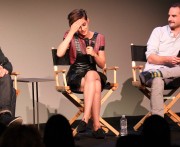
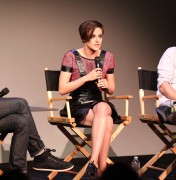
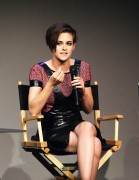
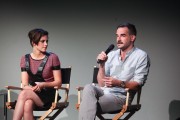
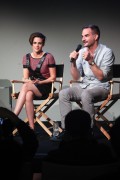
Master Post: Kristen at the Apple Store for 'Camp X-Ray' in NY - 7 October 2014


HQ

Inside the Apple Store

imagebam.com imagebam.com imagebam.com imagebam.com imagebam.com imagebam.com imagebam.com imagebam.com imagebam.com imagebam.com imagebam.com imagebam.com imagebam.com imagebam.com imagebam.com imagebam.com imagebam.com imagebam.com imagebam.com imagebam.com imagebam.com
imagebam.com imagebam.com imagebam.com imagebam.com imagebam.com imagebam.com imagebam.com imagebam.com imagebam.com imagebam.com imagebam.com imagebam.com imagebam.com imagebam.com imagebam.com imagebam.com imagebam.com imagebam.com imagebam.com imagebam.com imagebam.com imagebam.com imagebam.com imagebam.com imagebam.com imagebam.com imagebam.com imagebam.com imagebam.com imagebam.com imagebam.com imagebam.com imagebam.com imagebam.com imagebam.com imagebam.com imagebam.com imagebam.com imagebam.com imagebam.com imagebam.com imagebam.com imagebam.com imagebam.com imagebam.com imagebam.com imagebam.com imagebam.com imagebam.com imagebam.com imagebam.com imagebam.com imagebam.com imagebam.com imagebam.com imagebam.com imagebam.com imagebam.com imagebam.com imagebam.com imagebam.com imagebam.com imagebam.com imagebam.com imagebam.com imagebam.com imagebam.com imagebam.com imagebam.com imagebam.com imagebam.com imagebam.com imagebam.com imagebam.com imagebam.com imagebam.com imagebam.com imagebam.com imagebam.com imagebam.com imagebam.com imagebam.com imagebam.com imagebam.com imagebam.com imagebam.com imagebam.com imagebam.com imagebam.com imagebam.com imagebam.com imagebam.com imagebam.com imagebam.com imagebam.com imagebam.com imagebam.com imagebam.com imagebam.com imagebam.com imagebam.com imagebam.com imagebam.com imagebam.com imagebam.com imagebam.com imagebam.com imagebam.com imagebam.com imagebam.com imagebam.com imagebam.com imagebam.com imagebam.com imagebam.com imagebam.com imagebam.com imagebam.com imagebam.com imagebam.com imagebam.com imagebam.com imagebam.com imagebam.com imagebam.com imagebam.com imagebam.com imagebam.com imagebam.com imagebam.com imagebam.com imagebam.com imagebam.com imagebam.com imagebam.com imagebam.com imagebam.com imagebam.com imagebam.com imagebam.com imagebam.com imagebam.com imagebam.com imagebam.com imagebam.com imagebam.com imagebam.com imagebam.com imagebam.com imagebam.com imagebam.com imagebam.com imagebam.com imagebam.com imagebam.com imagebam.com imagebam.com imagebam.com imagebam.com imagebam.com imagebam.com imagebam.com imagebam.com imagebam.com imagebam.com imagebam.com imagebam.com imagebam.com imagebam.com imagebam.com imagebam.com imagebam.com imagebam.com imagebam.com imagebam.com imagebam.com imagebam.com imagebam.com imagebam.com imagebam.com imagebam.com imagebam.com imagebam.com imagebam.com imagebam.com imagebam.com imagebam.com imagebam.com imagebam.com imagebam.com imagebam.com imagebam.com imagebam.com imagebam.com imagebam.com imagebam.com imagebam.com imagebam.com imagebam.com imagebam.com imagebam.com imagebam.com imagebam.com imagebam.com imagebam.com imagebam.com imagebam.com imagebam.com imagebam.com imagebam.com imagebam.com imagebam.com

 imagebam.com imagebam.com imagebam.com imagebam.com imagebam.com imagebam.com imagebam.com imagebam.com imagebam.com imagebam.com imagebam.com imagebam.com imagebam.com imagebam.com imagebam.com imagebam.com imagebam.com imagebam.com imagebam.com imagebam.com imagebam.com imagebam.com imagebam.com imagebam.com imagebam.com imagebam.com imagebam.com imagebam.com imagebam.com imagebam.com imagebam.com imagebam.com imagebam.com imagebam.com imagebam.com imagebam.com imagebam.com imagebam.com imagebam.com imagebam.com imagebam.com imagebam.com imagebam.com imagebam.com imagebam.com imagebam.com imagebam.com imagebam.com imagebam.com imagebam.com imagebam.com imagebam.com imagebam.com imagebam.com imagebam.com imagebam.com imagebam.com imagebam.com imagebam.com

For more pics go to here (400+) KSF Gallery

Fan Photos

imagebam.com imagebam.com imagebam.com imagebam.com imagebam.com imagebam.com imagebam.com imagebam.com imagebam.com imagebam.com imagebam.com imagebam.com imagebam.com imagebam.com imagebam.com imagebam.com imagebam.com imagebam.com imagebam.com

HQ Fan Photos

imagebam.com imagebam.com imagebam.com imagebam.com imagebam.com imagebam.com imagebam.com imagebam.com imagebam.com imagebam.com imagebam.com imagebam.com imagebam.com imagebam.com imagebam.com imagebam.com imagebam.com imagebam.com imagebam.com

For more fan pics (200+), please click this gallery at the source.
(Please credit the fan @Shadowed_Gates if used.)

HQ

Outside the Apple Store

imagebam.com imagebam.com imagebam.com imagebam.com imagebam.com imagebam.com imagebam.com imagebam.com imagebam.com imagebam.com imagebam.com imagebam.com imagebam.com imagebam.com imagebam.com imagebam.com imagebam.com imagebam.com imagebam.com imagebam.com imagebam.com imagebam.com imagebam.com imagebam.com imagebam.com imagebam.com imagebam.com imagebam.com imagebam.com imagebam.com imagebam.com imagebam.com imagebam.com imagebam.com imagebam.com imagebam.com imagebam.com imagebam.com imagebam.com imagebam.com imagebam.com imagebam.com imagebam.com imagebam.com imagebam.com imagebam.com imagebam.com imagebam.com imagebam.com imagebam.com imagebam.com imagebam.com imagebam.com imagebam.com imagebam.com imagebam.com imagebam.com imagebam.com imagebam.com imagebam.com imagebam.com imagebam.com imagebam.com imagebam.com imagebam.com imagebam.com imagebam.com imagebam.com imagebam.com imagebam.com imagebam.com imagebam.com imagebam.com imagebam.com imagebam.com imagebam.com imagebam.com imagebam.com imagebam.com imagebam.com imagebam.com imagebam.com

imagebam.com imagebam.com imagebam.com imagebam.com imagebam.com imagebam.com imagebam.com imagebam.com imagebam.com imagebam.com imagebam.com imagebam.com imagebam.com imagebam.com imagebam.com imagebam.com imagebam.com imagebam.com imagebam.com imagebam.com

Click on all pics for larger view.

Fan Video

Video of Kristen arriving at the Apple Store (outside). Watch it here.


KSF100714NYC by LJMD

Leaving the Apple Store


Source 1 2 3 Via/4 5 6 7 8 9 10 11 12
HQ 1 2 3
Video 1 2