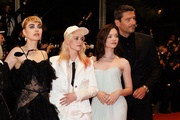
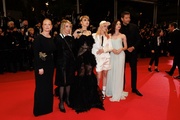
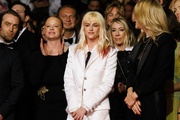
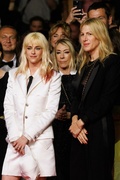
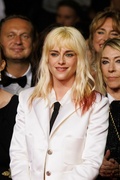
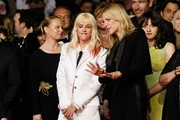
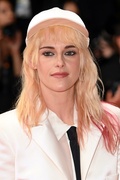
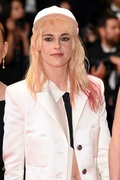
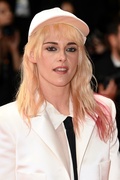
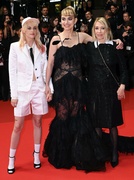
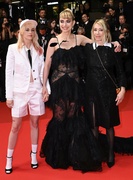
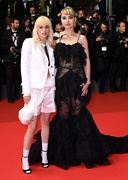
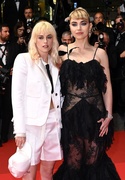
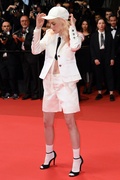
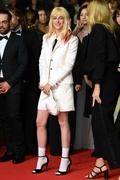
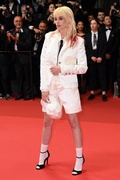
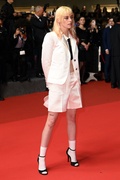
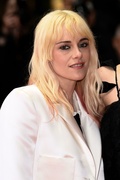
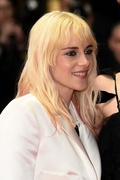
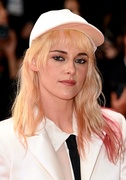
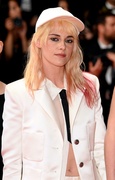
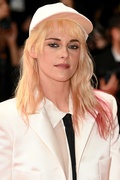
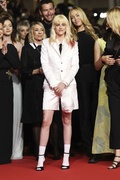
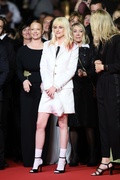
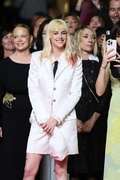
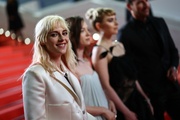
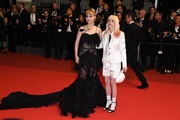
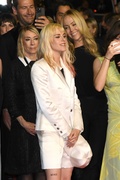
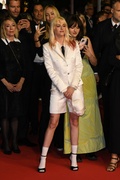
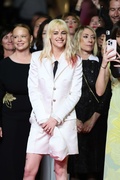
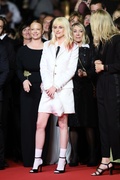
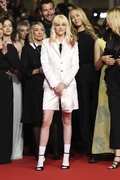
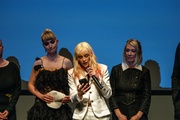
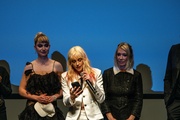
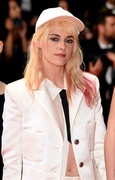
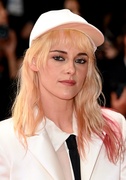
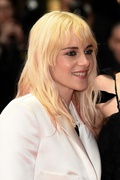
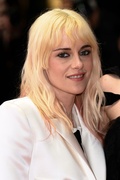
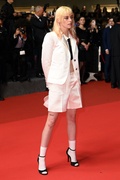
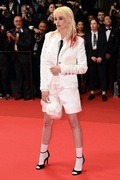
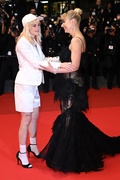
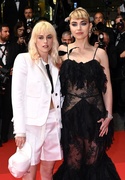
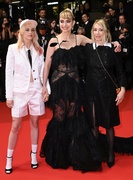
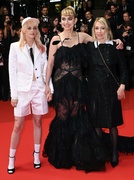
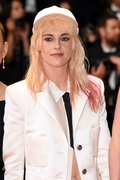
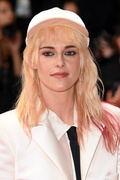
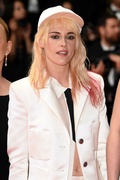
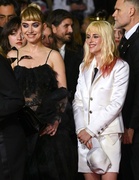
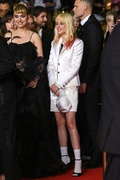
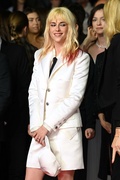
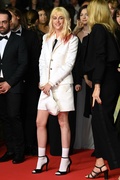
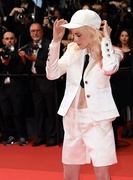
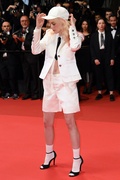
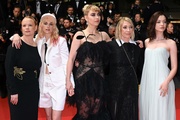
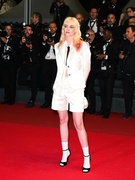
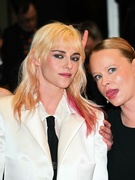
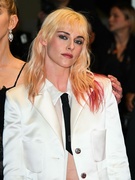
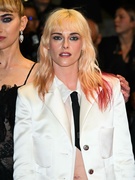
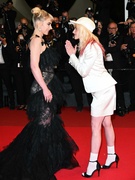
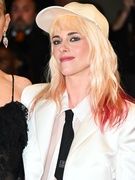
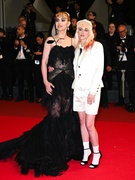
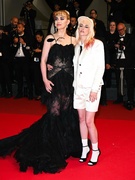
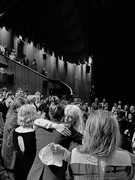
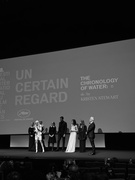
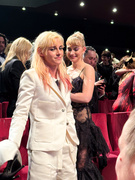
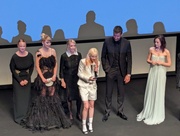
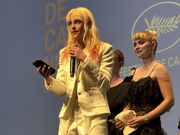
Sunday, May 25, 2025

Reviews: 'The Chronology of Water' at the Cannes Film Festival 2025


Click on the link for each source for the full review.

Indiewire

When famous actors decide to try their hand at filmmaking, the results can be — and often are — unremarkable by design. Timid and safe with a network TV aesthetic that screams “I’m a lot more afraid behind the camera than I am in front of it.” Not so of Kristen Stewart’s “The Chronology of Water.” Not in the slightest. Some movies are shot. This one was directed. 

There isn’t a single millisecond of this movie that doesn’t bristle with the raw energy of an artist who’s found the permission she needed to put her whole being into every frame, messy and shattered as that might be. 

The Film Stage

“Flowing” is perhaps the word that best describes Chronology of Water, but not in a vacuously metaphorical way. Kristen Stewart has instead managed to translate the flow of words through that of images and sound, to show a filmmaking fluid and strong-willed like a river that becomes more forceful with obstacles in its way. Dynamism and movement is what defines cinema as an art, too, and while this may be a truism, it takes both mastery and discipline to make form fit content so perfectly, on such an elemental level.

Le Bleu du Miroir (in French)

For her directorial debut, selected for Un Certain Regard , Kristen Stewart enters through the front door, with the aplomb of artists who proclaim their convictions and assume their perspective, their voice. With The Chronology of Water , she signs a powerful first film, a visceral representation of female experiences and the power of writing in the long process of healing after the sound and the fury.

Les InRocks (in French):

Kristen Stewart's directorial debut, "The Chronology of Water," is a crashing wave. Stunningly beautiful and radically powerful.

It grabs you like a wave, puts your head under water, releases it, catches you, etc. It's a great film.

Roger Ebert:

Eight years in the making, Stewart’s truly miraculous “The Chronology of Water” adapts Lidia Yuknavitch’s 2011 memoir of the same name into a ferocious, full-throated cri de cœur without sacrificing so much as a molecule of the source material’s bracing physicality and emotional force. Not taking on the lead role herself but imbuing every frame of this film with the tensile strength we’ve come to admire in her as an actor, Stewart instead directs Imogen Poots to the greatest performance of her career. 

Deadline

The film she has made is simultaneously raw and intricately constructed, as precise and potentially perilous as a Jenga skyscraper. So much visual and aural artifice could easily collapse in on itself, but it holds steady. On so many levels, it is to be admired. Stewart has successfully found a form to match the spiky, visceral quality of Yuknavitch’s prose, as evidenced by readings within the film, and its primary subject: trauma. 

Hollywood Authentic

Stewart has described her film presented to Cannes as a ‘first draft’ and in that regard it could use some corralling; but equally, like Lidia, it shows fierce potential. As Kesey notes, ‘you can write, girl’.

Geek Vibes Nation

The boldness and braveness of Stewart as a director and writer are apparent from the start. She decided to film on grainy 16mm and, together with co-writer Andy Mingo (Romance, The Iconographer), she turned the film’s source material, the abuse memoir by Lidia Yuknavitch, into a striking script worth being adapted.

Stewart takes you on a rollercoaster of different tones, emotions and kaleidoscopic colours in the most remarkable way. 

Loud and Clear

Kristen Stewart’s directorial debut is a living, breathing piece of art. It’s a masterful translation of an impossibly difficult life that, while deeply dark, never gives up on the possibility of finding the light.  

The Hollywood Reporter

There’s a beguiling dichotomy in Kristen Stewart’s accomplished first feature as writer-director — between the dreamlike haze and fragmentation of memory and the raw wound of trauma so vivid it will always be with you. 

Screenrant

For her feature directorial debut, Kristen Stewart returned to Cannes for the seventh time to show us what she’s made of behind the camera. And show us she did. The Chronology of Water is a boisterous spectacle of the female experience directed with pure love and sincerity.

The Upcoming

...there’s no denying Stewart’s sincerity or her clear-eyed commitment to the material. The Chronology of Water may lack the smooth current of a conventional narrative, but it beats with conviction. It’s a bold, promising debut that suggests Stewart is more than willing to dive into the deep end.

Rolling Stone

If this is the first of many filmmaking endeavors from Stewart, however, we welcome everything that is to come. She’s proven that she’s not afraid to draw blood. And that, in the end, she understands the art of making images flow together in a way that feels just south of transcendent. 

Variety

Okay, now Kristen Stewart is just showing off.

The Oscar nominated “Spencer” star steps behind the camera, writing and directing “The Chronology of Water,” [...] A portrait of pain, rebirth and reclamation, the film’s heartbeat comes from Stewart’s skillful and natural filmmaking. 

Decider

Kristen Stewart’s The Chronology of Water rebukes the “vanity project” label often foisted on first time actors-turned-directors with its harsh, disorienting cuts, yielding an immensely uncomfortable movie. Elliptical in structure, but precise in its telling, Stewart’s masterful debut begins with brief, impressionistic flashes of blood from a sudden miscarriage running down the shower drain, alongside the agonizing wails of its protagonist: Yuknavitch, as played by English actress Imogen Poots. 

The Playlist

It is a powerhouse performance [Imogen Poots] that roots a film that merits it, and signals Stewart as just as interesting a directorial voice as she is a performer.

Vogue Magazine

The Chronology of Water takes its haunting title from American author Lidia Yuknavitch’s 2011 memoir. And yet, few films feel as deeply personal as this debut by Kristen Stewart, who emerges here as a natural filmmaker.

Screendaily

As a director, Stewart has a keen eye for the immediacy of everyday life. And as The Chronology Of Water reaches its hopeful conclusion, the director produces some of her finest sequences, including one in which Yuknavitch’s father returns to her orbit, proving to be a much different man than in her youth. 

Timeout

Kristen Stewart reveals a deft directorial hand and a distinct, languid, echoing style in her vividly made, emotionally visceral exploration of the life and times of American novelist Lidia Yuknavitch. 

The Guardian

But for all that, and some callow indie indulgences, this is an earnest and heartfelt piece of work, and Stewart has guided strong, intelligent performances.

The Observer

The strongest parts of The Chronology of Water are those character reveals—especially the quieter ones, when a wrung-out Yuknavitch, after a punishing gauntlet of sex, drugs, and alcohol, slowly finds the path to redemption by writing her way out of personal oblivion. That’s when Stewart’s dogged devotion to the source material shines though in a way that signals a major filmmaking talent.

Vanity Fair

For her feature directorial debut, the actor Kristen Stewart has chosen to adapt a tough, lyrical memoir about a woman trying to out-swim a traumatic childhood and addiction. In The Chronology of Water, the writer Lidia Yuknavitch details the sexual abuse she experienced at the hands of her father and its long aftermath, from a scuttled competitive swimming career to new purpose found, years later, in writing. It’s a difficult piece, but Stewart has shown in her acting work that she’s a fan of daunting tasks.



Tuesday, May 20, 2025

Video: Kristen and Imogen Poot's four favorites with Letterboxd at the Cannes Film Festival


Video: Kristen and Imogen Poots interview with Time at the Cannes Film Festival for 'The Chronology of Water'


Kristen on the cover of Les Inrocks (France) Cannes Film Festival Issue


GrUi8BlbUAAidn9.jpg

Click on cover for full view.

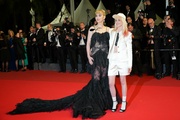
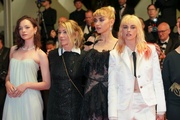
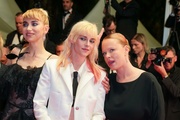
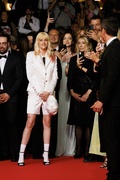
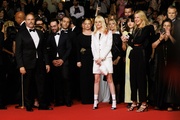
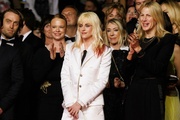
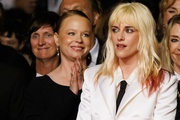
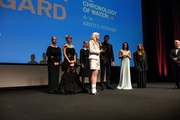
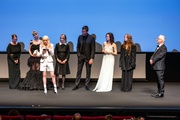
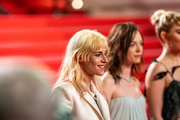
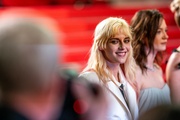
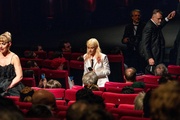
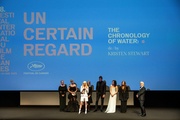
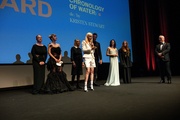
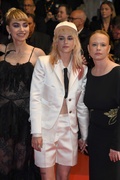
Kristen Stewart returns to the Cannes Film Festival this year as a director to present her first feature film, “The Chronology of Water.”

At the Cannes Film Festival, Kristen Stewart presented her directorial debut, the adaptation of Lidia Yuknavitch's memoir, The Chronology of Water , in the Un Certain Regard category ( read our review here ). We spoke with the new filmmaker about feminism, violence, and beauty.

During the presentation of the film, you emphasized the impact that The Chronology of Water will have on our bodies.

Having a female body is a political act, a radical act. It takes real energy to keep getting back up. It might sound dramatic, but it's the truth. It's okay to rely on hyperbole here. The only reason we don't is because no one wants to hear it. It would be disgusting. But we can make it fun. The film deals with a very difficult subject, and our goal was to give ourselves an electric shock and laugh hysterically. The last time I saw the film, there was deathly silence in the theater. And I was like, "But wait, this is funny!"

There are so many things about this film that I find funny and exciting. I was a little worried people wouldn't understand... The goal was to listen to our feelings, our impressions, and let them guide us into unknown territories. When I watch Imogen Poots ejaculate against her childhood bedroom door, I could fly. I can't believe we did that.

How did you discover this text by Lidia Yuknavitch?

I read it when I was 25, maybe 26. I already had a long career behind me. People were asking me questions. I had platforms to speak. But I was starting to feel like I hadn't said much, that I hadn't been very honest, even though I am honest, sometimes excessively so. There are topics that seem steeped in shame, that you're not supposed to articulate.

There's this scene in the film where Lidia Yuknavitch (Imogen Poots) reads from her book on stage in public. She can barely speak. Her voice comes out in writing. She can't externalize it. It's a very internal thing. She says it started to piss her off that she had a hole. Suddenly, she realizes she's saying it in front of an audience. She catches herself, swallows her anger. If you say things too brutally, people don't listen. The idea was to make it beautiful. Some violent things can be beautiful.

The fault line between pain and pleasure is blatant. It's okay that bad things have happened to you. You have to recategorize them, reclaim them through words. It's de-stigmatizing. Everyone has had disgusting sexual experiences—even if you haven't been abused in that way, even if you haven't had an experience of violence, as a woman, as a queer person, rape is endless, it happens daily. It creeps into the images we consume, into media conversations, into our oppressive patriarchal society. I say that and people say, oh, more feminist bullshit! It feels good to find a way to get up, set your hair on fire, take all your clothes off, come really hard in public, and say, “Look, this is actually cool!” For my first film, I thought that's what I had to do.

You use a lot of cut-ups; the editing of your film is very fragmented. Is this something that comes from the book by Lidia Yuknavitch that you're adapting, or something you came up with yourself?

The book is an experience of broken pieces being reassembled. It's an incredible emotional mosaic. It's funny because that's what movies do. Movies can be like dreams; they're the only format that does that. Making a film from this book was very satisfying because it's one of my favorite texts. It's an active work, which made me understand that it's okay to explore yourself, to explore others, and to do it loudly. It's healthy. It's stifling to live in a woman's body and have your inner voice constantly told to shut up. I know how it feels. We all have physical memories that come up every day like flashes.

When you read what people say about the book, it's often diminished. What happened to her? Oh, she was sexually abused by her father and found an outlet through swimming and literature. That's not what it's about. It's about what happens to all of us and how we categorize that pain. How we can reframe it, relabel it through the words we say to ourselves and others in order to transform that pain into pleasure. All our desires are completely bastilled from a very young age. Women don't decide what they like. It's imposed on us. So you have to understand why these mechanisms are there and reclaim them. Otherwise, you're screwed.

The Chronology Of Water  by Kristen Stewart with Imogen Poots, Thora Birch, James Belushi – Un Certain Regard – with the support of Chanel

Source

Video: Allocine interview at the Cannes Film Festival


Source

Monday, May 19, 2025

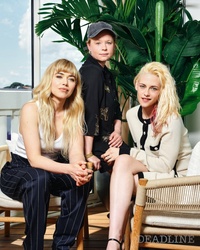
Video: Kristen, Thora Birch and Imogen Poots in the Deadline studio at the Cannes Film Festival for 'The Chronology of Water'


Kristen Stewart thinks it’s time we got real. “We get prescribed stories just shoved into our faces, down our throats,” she said during a panel at the Deadline’s Cannes Film Festival studio.

Stewart was talking specifically about narratives around the female experience as portrayed in her directorial debut The Chronology of Water, which premiered at Cannes in Un Certain Regard this week.

The Chronology of Water was adapted by Stewart and Andy Mingo from Lidia Yuknavitch’s memoir of the same name. Lidia (Imogen Poots) experiences horrific trauma and abuse, first beginning in her childhood home, while her older sister Claudia (Thora Birch) is forced to leave home “to save her own life” and escape their abusive father (Michael Epp).

Stewart said she was determined to show Lidia’s journey in all its rawness and to present Lidia’s story in a way that is rooted in truth. “The reason that I wanted to make this was to screw with form, because it’s not about what happened to Lidia Yuknavitch, it’s what happens to us all and how we can internalize that violence. I know it sounds dramatic, but it’s true. It’s incredibly violent to be a woman.”

She took aim at accepted norms within female representation on screen: “The imagery that we consume, the conversations that are not allowed, the fact that we can’t tell people when we’re bleeding, like it’s gross or something.”

Poots recalled coming to the role of Lidia after receiving an email from Stewart out of the blue. The two had only known each other peripherally and had never met. The email was just one line, Stewart revealed. It said simply, “Dude, do you want to make this movie with me?”

Poots was immediately gripped by the script. “You just don’t read things like that,” she said. “Or if you do read scripts like that, they’re not getting made. And so it was just this living, breathing document. It was just such a miracle that we ended up making this film. It’s extraordinary.”

But, as Birch pointed out, the fact that it took eight years for Stewart to get the film made is “absurd” and that telling these kinds of stories in a real way “should be normal.”

Stewart has hope for the future of female narratives, however. “We broke the seal,” she said. “Hopefully we can start flooding, gushing into view.”

Source

Sunday, May 18, 2025

Video: Interview with Konbini at the Cannes Film Festival for 'The Chronology of Water'


Source

Interview with Vanity Fair France for 'The Chronology of Water' at the Cannes Film Festival


IMG_6799.jpegIMG_6800.jpeg

Click on photos for full view.

Vanity Fair. How did you experience the premiere screening and the standing ovation?

Kristen Stewart . It's funny to say this, but I've had several standing ovations in my life. Whenever the camera pans to the actors, I always think, "Oh my God, go to the director! I didn't have much to do with this." I have a hard time owning that space, and I always have a lot of respect for the director. This time, I did the opposite, redirecting the focus to my actress, Imogen Poots . She brought her whole being into our film. The plot could be summed up on the surface of her skin. I could literally cry thinking about her.

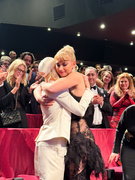
You were the first person to hug Thierry Frémaux…

I jumped on him (laughs). At the same time, he was standing right there, it was a bit of an invitation. The enthusiasm of the Americans may or may not hit the mark, but I think the moment was right for it.

The Chronology of Water was originally an autobiography by Lidia Yuknavitch. Why do you recommend discovering her work?

Read her short stories. The words this woman wrote in her youth are reassuring, but also strikingly violent. Her fiction, especially the more bizarre and recent ones, are full of intuition, as if she knew things we didn't. She helped so many people find their own voice, but she also lifted the veil on taboo subjects that are omnipresent in our lives. You read her novels and it's as if they were written on tissue paper that has been bitten, spat on, drenched in blood and tears, but where the words still shine through. She is a great artist.

What was the first image that came to mind when you read the book?

There are two quotes that stood out to me: "I became water" and "Can you hold life and death in the same sentence?" Neither of them is in the film, because it already expresses these ideas through the images and a kind of cumulative experience. But visually, I would say a motif of water full of foam. I needed Imogen Poots to play the character because she has these blue eyes, this voluptuous body, this openness. But she's also a shark: she's very focused and incredibly intelligent. You can't hire an actor to play a writer unless they have a literary mind somewhere. The first time I read the book, I was in the shower with the character, bleeding. I wanted that blood to have pebbles and stick to the tiles so there would be absolutely no doubt about its origin.

There was already this water motif in your short film Come Swim . Where did this obsession come from?

It's a complete coincidence. I hadn't read The Chronology of Water when I made Come Swim . The short film is about the idea of ​​accepting that you're floating, letting yourself go, not fighting tooth and nail to keep your head above water. Personally, I hate water, I don't like swimming, I even wear Doc Martens on the beach. I probably need to swim and let myself go a little more. Maybe that's why I was drawn to this theme.

Lidia Yuknavitch gave a Ted Talk about the beauty of being an outsider. Do you think you're an outsider in Hollywood , or do you like outsiders?

I've always liked outsiders. It often feels like only certain people are allowed to take up space. That idea is violently patriarchal. My film loves men as much as women. It's a feminist feature, but it also celebrates the beauty of our relationships. And the importance of being seen by the right person. Even if your dad is an asshole, you want him to tell you he's proud of you. You have to learn to look at yourself, to be honest with yourself. It's a little scary; it's like having a target on your forehead. But it's necessary, or we risk denying our own lives and ceasing to exist.

Source 1 2

Kristen's interview with Trois Couleurs France for 'The Chronology of Water'

Google translated

What was the first image that came to you while preparing  The Chronology of Water  ?

A blood clot, coagulated blood, impossible to mistake for anything else. This blood doesn't come from a wound. It comes from an orifice, an orifice that we're constantly made to feel shouldn't exist or that we can't look at it, talk about it, hear about it, get anything from it that isn't stolen. I had written down a lot of ideas, jotted down lines and lines, not all of which necessarily make it into the film. The images sort of took over the writing. But the first thing I wrote on a piece of paper was: "I have become water." And also: "Can we hold life and death in the same sentence?"

Your film talks about trauma that doesn't go away, but also about how we can convert it into art, into writing. What interests you about this subject?

There are secrets we keep that destroy us. When I say "we," I mean women, who hoard, constantly deny themselves, and tell themselves to keep quiet. Certain texts, certain encounters, certain works help us find our voice and encourage us to finally listen to ourselves. This is precisely what  Lidia Yuknavitch's The Chronology of Water does  , in a radical, compelling way. This book is very popular; it has a veritable cult following. It is adored because people perceive it as a help. It is a lifeboat.

Your character, loosely based on Lidia's autobiographical text  [published in 2014 in France under the title La Mécanique des fluides]  is a complex novelist, driven by a desire for life but also for death. What do you understand about her?

She's a voracious character. I see her as a bottomless pit, full of many things. She has developed a desire for violence that doesn't entirely belong to her. Our desires aren't always developed by us alone, you know... They're imposed on us by external hazards, which we can't control. Having a woman's body in our world, being subjected to the representations of our own body, being subjected to the conversations that take place without us, and about us, leads us to integrate violence, even when we don't identify with it. I feel like I'm writing you a poem  [laughs.]  We have to engage with these issues, and that's what Lidia does. Her early  short stories [ Caverns  in 1990 and  Her Other Mouths  in 1997, editor's note]  are so violent, so striking, so beautifully porous… They suck you in and allow you to project yourself into every crevice, every unspeakable experience, even if you can't identify with every detail. I felt like this woman was screaming something I had internalized for a long time. I wanted to join in this kind of rebellious scream… And I'm certainly not alone in this. I'm convinced that if I feel this way, it's because many other people do.

We get the feeling that you wanted to destroy the usual codes of the biopic, by imposing a collage of images that sometimes border on the experimental and abstract. Why?

Yes, the film isn't so much about Lidia's life. It's about us, collectively. I didn't want a plot, but rather a mix of experiences gathered by someone trying to reclaim an identity and their body. The only way to honor the book was to allow the film to have a life of its own. The film is made of stitched, ephemeral memories. It feels like a dream I don't completely control. I didn't try to be faithful to the book, but even so, I think it's a faithful adaptation. The form had to be as revolutionary as the book. And mind you, I'm not calling the film "revolutionary"... I'm not self-proclaiming. I wanted everyone to be able to invest themselves, to project themselves, because that's the only reason we watch films: to feel experiences that are foreign to us, that are beyond us.

You use a lot of images of sewing, scarification, scars.

My character gets injured because she wants to imprint her pain on the outside. Like Lidia, the film had to have scars, which can be read like body Braille. And the reading can be different for everyone. I don't want to impose the story at all. I just want people to feel it, to feel encouraged to listen to themselves, to look at themselves, and to bleed in public.

It took you years to write and then produce this film. Why do you think that is?

Because no one wants to listen to women, to their stories. It doesn't sell. Because it's a "difficult subject." But if I never gave up on this project, it's because I wanted to show people that it can be liberating, even funny, to talk about these painful subjects. It's fun, to reveal secrets. It's funny, I wonder if I should say that about the film, but yes, the film is also about how funny it is, isn't it, to celebrate yourself, to watch yourself come? It's enjoyable to watch fluids gushing out, without being embarrassed, and to feel that the reappropriation of this shame can be transformed into an astonishing, noisy song that we can sing together. And that's a film.

Source


Kristen talks to Premiere France for 'The Chronology of Water' at the Cannes Film Festival


Google translated.

When did you first want to adapt Lidia Yuknavitch's The Chronology of Water , the book in which she recounted how she managed to escape a toxic family environment ravaged by violence through literature  ?

Kristen Stewart: Before I'd even finished reading it! Page after page, this story had hit me and brought out of the closet a mind-boggling number of corpses that I myself had locked away. But this rush, born of this intimate experience as a reader, was obviously the opposite of what was needed to adapt this book to the screen, constructed like a kaleidoscope or a puzzle whose full meaning must be grasped until the final piece is placed in place.

How did you proceed then?

I took my time. It took me several years to write my version of each page of this book. While obviously as I grew up, as I matured, my relationship with this work changed. That's why this long time, although not always my fault, served the project. My final version of this script contained at least 5 different films. And then I chose... not to choose! Because I was certain that it would be the only way to find my own film. In this respect, I can say that the making of The Chronology of Water resembled free jazz. During the shooting as well as the editing. Moreover, for at least a year, during the post-production phase, I thought I had messed everything up. I even went through a kind of mourning that I had difficulty releasing because I was so angry with myself for not having lived up to it. And then suddenly, the film appeared to me. I had succeeded in building my kaleidoscope. Among the fifteen possible films from my rushes, I managed to make one. Which resembles what I felt as a reader. The journey was long and trying, but I have never felt so alive.

Your film stands out for its incredible sensory power, your work on textures, colors, the grain of different skins... Was your director of photography Corey C. Waters present very early on in the writing to create this universe?

I would have loved to! Because since that shoot, Corey C. Waters has become like a blood brother to me. But what happened at that position tells the emotional roller coaster that this whole adventure was for me. I had indeed done all the preparation with another cinematographer, but I sensed that something wasn't right. So, one weekend, very late in the day, I decided to change everything and call on Corey. I was aware of the madness of this gesture. It's like jumping off a cliff without knowing how to swim and without a life jacket. Corey is even younger than me and not very experienced. We were two babies. But he immediately connected with the images I had in mind and transcended them. He immediately became an essential part of this project. Even if he was actually one of the last to join.

It was obvious from the start that you would not play the central role?

Yes, because I would have been absolutely incapable of managing everything.

And what made you want to entrust it to Imogen Poots?

Because I hadn't seen her bad on screen. But also because beyond her talent, I knew that the audience would naturally become attached to her and therefore follow her character, including all the bad decisions she makes. Imogen spontaneously arouses an empathy that is essential to the balance of my film. And I think that she, like me, have reached a stage in our lives where we were able to take hold of this story. Like a second beginning for us who started very young on screen. We were taught for a long time to hide certain things to attract attention, to find work, to "succeed"... With The Chronology of Water, I have the feeling that we are in exactly the opposite logic. And each in our place, her in front of the camera, me behind it, we revealed new things about ourselves.

Source

Video: Kristen's interview with Les in Rocks for 'The Chronology of Water' at the Cannes Film Festival


Source

Kristen talks 'The Chronology of Water' at the Cannes Film Festival with Indiewire


Anne Thompson: What made you so clear that you should turn this material into your first feature? You went for it.

Kristen Stewart: It’s not a movie about the things that actually happened to Lidia. It’s about the things that happened to all of us, and then how to take those things into your body. [They] might not be equivalent or exactly like the experience and abuse specifically that she had. Her plight might not be everyone’s, but it’s similar. There’s thievery and violence in the fucking female experience right now, with the imagery that’s thrust at us and the conversations that are had outside of our bodies and what they do to our inner voices, when we go: “I don’t think you should do that. Don’t say it, keep it a secret. Don’t tell anyone you’re in pain. Don’t tell anyone that that wasn’t OK with you. Keep it to yourself. Oh, don’t vouch for yourself. Don’t fight for that. Oh, don’t speak too loud; they won’t hear you.” Measure, measure, measure. Shame, shame, shame. And so it was not possible to pull back, because the whole movie is about getting that feeling out. I’ve never felt like a provocateur. I never was trying to push buttons.

It doesn’t feel like that. It feels like you’re expressing yourself in every fiber of your being.

It is the truth. There was never a point where I ever questioned it, because there was no way that I was alone in this. The book is such a lifeboat. It’s like a flotation device. It’s such a good place to start. It’s very meta to make a movie about how hard it is to say something that’s exactly what I was experiencing.

Over your career, you’ve taken control of your choices. You’ve often taken the indie route.

Absolutely. This was not without help. I needed to have a couple of public temper tantrums in order to get the right people to listen. I have this stunning collaborator in Charles Gillibert, who [produced] “On the Road,” “Personal Shopper,” and “Clouds of Sils Maria.” He understands that [women] need help and we need a fucking leg up. It took a long time to get this made. Yeah. It took forever.

What hurdles did you face?

The book is not about the things that happened to her, but about how she processes those things, and about how art can save you. And there was no way to sell the movie as an idea. It was impossible to say to people that I wanted to make a DMT trip experience, a life flashing before your eyes, in the way that your memory feels neurological and physical to you. It’s different from the book. It’s a faithful adaptation, but it is not the same experience. There was no way for me to tell people that I needed to go make so many puzzle pieces that I could come home and find authentic, emotional connective tissue, because you cannot plan for things like this. You can’t plan for the ephemeral. You have to go catch it. You have to go create an environment in which things can sprawl and people can explore and learn things. And so therefore, the movie had to have a life in order for it to have its own memory. It couldn’t be exacting, controlled. My hands and my fingerprints are all over it, but I’m not strangling the movie, because the movie had such volition, it had such its own life, that it was telling me what it wanted every day.

Was the movie finished when you brought it to Cannes? Would you go back to the editing room?

The picture is pretty final, it’s color-corrected. I’m not going to cut it, OK? It deserves space. It’s not like the normal success story that has a three-act structure in the terms that we’re used to. Audience are trained, everybody is, because you could not be, to have a certain capacity and a certain expectation for a rhythm and a time code: “I’m supposed to get this now. I want it. Where is it?” Quite often in the movie, there’s so many false wins and starts and hard crashes. And there’s an undulation that resembles a female orgasm that steps away from this 1-2-3, punch of the climax and a sigh of relief in the last five minutes, and the movie’s over. You think you’re there, you think you’re there, you’re not sure. Then you kill it, then you pull back, and then you’re: “Why am I still here?” And it’s frustrating at times, probably. Three-quarters of the way through, you might think to yourself, “Where are we going?” It is intentional.

Imogen Poots anchors it.

She’s the reason why you can get away with all the rest of it, because you never want to stop hanging out with her. Unless we had somebody who really kept you on a line, we were dead in the water.

How did you know she was the right one?

She’s a walking motif. Look at her eyes. Visually, I was taken aback when her face filled my Zoom screen in which we did a pseudo audition, aah, I started getting this feeling: “Oh, my God, the movie might exist.” Because without Lidia — her body is our movie.

You do not shy away from all the orifices and aspects of a woman’s body, and you show a lot of blood.

The second shot of the film is intentional. Fifty percent of the population is not going to wonder where that blood came from. It didn’t come from a wound. It’s textured and chunky, and it’s being sucked down a drain. She also comes into her hand so hard that it’s dripping from her fingers, and she smells it before getting her mind blown by the sheer capability of her own body. And then the hymen breaking, all of the times that she was aching and itching and bleeding. How often have you ached or itched or bled in public and just been: “No, you never, that’s an alone experience, no matter what.” It’s isolating. I hate walking around not telling people what’s going on with me.

It happens to everyone. Women will respond to this. It’s all about the physical.

Yes — the movie takes place on the surface of this woman’s skin. We would arrange rocks on the sand in the same configuration as my favorite pattern of moles on her stomach, just to make sure that we related her to organic material, to imply that she grew here. She did not choose the things that happened to her. We are gouged out. Our desires are given to us. We experience things that we don’t choose, and then they define us for the rest of our lives. [It’s] a book about revering words, and the life-saving significance and importance of words. I also wanted to stay outside of any word, inside the unnamed wet, because we don’t have to take credit for all the shit that comes out of us, but we can turn it into something that is pleasure and pain at once and have that be something that you can decide whether or not it hurts or it feels good.

It must have felt good for you. You’re a director now.

Oh man, it felt so good. I’m dying.

You’re going to do it again.

I can’t wait.

Have you got things in the hopper? Now they’ll give it to you easily.

Yeah, several. It’s going to be a lot easier this time. I’ve always said that as long as I can make another movie after my first one, that I don’t need to be precious or clever about it at all. It just needs to feel pure. I’ve earned the right to try one more time. I never want to make the same movie twice. So whatever comes out next is going to not be anything like this. I can’t fucking wait.

Jim Belushi is brilliant as Lidia’s writing mentor, Ken Kesey.

He brought pages to our pages. He’s a movie star: He did so much research. He was the person that we needed to come pat us on the back and remind us that it’s okay to want approval from a male figurehead, it’s not weird, and it’s not anti-feminist. You’re not a bad feminist if you want someone like Jim Belushi to pat you on the back and tell you that you’re a good girl.

Why did you shoot in 16 millimeter?

Because I didn’t want to record this. I wanted to take pictures so I could slice them up, and I wanted it to feel like a dream, and I needed it to flash before your eyes. And there’s just too much information in a digital image. You can’t put yourself into it, and it also doesn’t speak to time in the way that the movie needs to. The movie needs to fracture. You can’t fracture a recorded image. There’s no break. You get all the information. [The movie] is a completely and utterly inundating experience. But for us, we only have 24 pictures every second, and sometimes less because we’ve pulled them out. And so we really fuck with the experience of literal time, and we put it back into the body, and we can span four decades fluidly, because we shot on film. And also, it does something to people on set. You realize your camera has a heartbeat, you can hear it when the camera starts running — whir — everyone stands at attention. It infuses an immediacy and a sort of honor.


Saturday, May 17, 2025

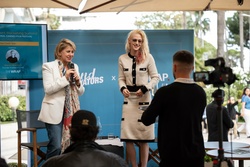
Video: Kristen at The Wrap live conversation at the Cannes Film Festival for 'The Chronology of Water'


GrLSNudWcAA1WjP.jpgGrLSKzNWwAAoKQa.jpgGrLSIYzWMAADfvx.jpgGrLSMVVXwAEhYEn.jpg


IMG_6801.JPGIMG_6793.jpeg

Click on photos for full view.

Full Conversation


Source 1 2 3 4 5 6


Video: Kristen's interview for 'The Chronology of Water' with Telerama France at the Cannes Film Festival


Source

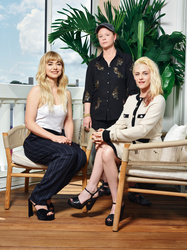
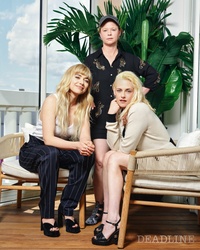
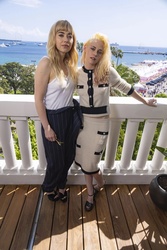
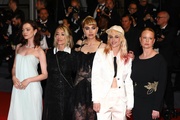
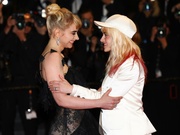
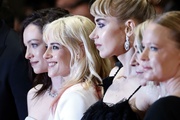
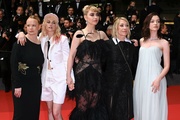
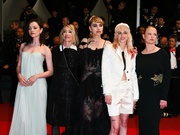
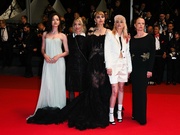
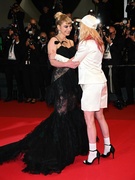
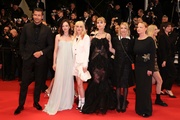
Portraits of Kristen and Imogen Poots with the cast of 'The Chronology of Water' at the Cannes Film Festival

Deadline

B0058075.jpg

GrO1PIRWEAAVa2X.jpgGrO1PIEWUAA79km.jpgGrO1PIBXMAADWSh.jpg

Associated Press (AP)
ME1234GF_o.jpgME1234GH_o.jpgME1234GJ_o.jpgME1234GC_o.jpgME12348W_o.jpg

Vogue / Chanel

ME1233KV_o.jpgME1233L3_o.jpg

Telerama

IMG_6900.JPGIMG_6899.JPG

Liberation

IMG_6904.JPG

Click on portraits for full view.

Source 1 2 3 4 5 6 HQ thanks Korita05

Video: Kristen talks 'The Chronology of Water' and more at the Cannes Film Festival with Brut


Kristen's interview with Numero for 'The Chronology of Water'

Google translated

Interview with Kristen Stewart

Issue: The Chronology of Water is your first feature film as a director. It feels like it's a long-standing endeavor for you.

Kristen Stewart : I've wanted to cross over—one way or another—ever since I started making movies . So, since I was nine. I'm 35 now. I really thought I'd become a director when I was younger, but I guess it just wasn't the right time. You have to wait for the triggers. Even if the desire is there, it doesn't materialize immediately. If the machine is ready to go, you still have to find the key.

Was Lidia Yuknavitch's autobiographical novel the trigger?

Not all books can be turned into films. This one swept me away. I immediately wanted to make it a collective experience.

The story is very difficult: it's about a woman abused by her father who becomes a writer. The film evokes trauma on one hand and creativity on the other.

Some things can live inside the body, joyfully, fully. Others need to be evacuated. What Lidia Yuknavitch 's text tells me made me feel like it needed to be shouted from the rooftops, so that the skeletons we all have in our closets would start to come out. Of course, what happens to this woman is quite extreme. But the abuse, the things that are stolen from us, the feeling of suffocation, the hiding of what we are going through, all of this is so palpable for almost everyone... 50% of the population is affected!

Was it your goal to represent trauma?

At the very beginning of the film, we see blood flowing. Almost clumped, it sticks. We understand that it can only come from one place: not a wound, but an orifice. This blood comes from far away inside this woman's body. So, I show it. I wanted my film to be like a crackle in the wind, a scream that becomes hysterical laughter. The way this woman organizes the events of her life is not haphazard or fractured. What she goes through is brought together with such a great emotional connection that the story becomes almost a living organism. We feel the tissues connecting together. The only possible way to make cinema out of it was to bring together very different talents. I had to listen to myself a lot. Say no, constantly. Say yes, but to the right people.

Your film is primarily made up of fragments. Did you shoot a lot, even if you didn't include everything in the final cut?

I shouldn't say this, because the producers might never want to make something like this again, but the only way to get to the end was to shoot a lot and then cut half of it. The film had a life of its own, its own memory.

A feminist and radical vision

Even though the story isn't yours, The Chronology of Water feels very personal. How did you find the right distance?

I wanted to see things on screen that would move me. Thinking about this, I hesitate to use certain words because I'm afraid it might become a sensationalist headline. And that tires me a little...

Not my type.

You never know. But I'm at the point where I let it happen. Go ahead, take what you want! In The Chronology of Water , we see a female ejaculation. The heroine's hand is completely covered. She says to herself: "I didn't know a girl's body could do that. " This dialogue made me feel very good. Usually, women are forced to hide. We are asked not to tell anyone that we are in pain, not to tell anyone that we are pregnant for several weeks, to keep things to ourselves. A woman is supposed to live with all of this. It is not healthy to keep the experience of pain inside. We must release it to better understand it and reformulate it.

Is this one of the important themes of the film?

My film is about birth, death, and rebirth, but it simply addresses the issue of living in the open. This may sound like a cliché: I think women are capable of absorbing a lot. We create life from what we put into our bodies, while many of the things we let into our bodies kill us. If we don't get rid of that deadly part and let the good live, it doesn't work. For me, The Chronology of Water was the perfect opportunity to address this subject.

You just mentioned the female ejaculation scene, a subject related to pleasure, only to immediately shift your focus to the question of pain. Why?

One of the film's themes is reclaiming pain and transforming it into pleasure. Certain things are imposed on us since childhood, even if we don't experience scenarios as terrible as the one experienced by the film's heroine. This can be a male experience, of course. But the world we live in, the images it produces, all of this prevents young women from feeling ownership of their intimate space. Life emerges and imposes itself on us.

How does this transformation take place?

As we get older, the desire for strange things takes over us. We wonder why. Then we realize it's related to what everyone wants to take from us. Pleasure is then linked to pain. There's a crack. Before we can safely release it, we go through a state of extreme vulnerability, we're open to dangerous things. The creative process is about not letting the things that hurt linger inside us. We redefine them through words and actions.

Cinema as a tool for emancipation

Do you advocate emancipation through art, like your heroine who starts writing?

Whatever our history, we can change it. It's vital to remember that. We can also look at it from a different perspective. We can use our shame. The feeling of shame is inherent to the female experience. That shame and pain can even be quite arousing. There's something sexy about it, it's our animal nature to indulge what hurts us. It's linked to the architecture of our bodies; we're open. It's not an opinion, it's a fucking fact. The Chronology of Water is a film of two faces: it hurts, it feels good; it's funny, it's sad. When you get that far into the pain, when you're completely free of it, when you're done sobbing, there's nothing left to do but laugh.

“I felt like I wasn't the right actress for the role.” Kristen Stewart.

How did you develop your vision as a filmmaker?

I wanted to depict things that would make me laugh. The film is a bit harsh, but it's also a thrill ride. It's a lot of fun to see this heroine fall and get back up again and again. I wanted to create frustration in the audience. Normally, we're used to characters who win; we want to follow winners. But what does winning mean? In the film, Lidia talks to an audience about her trauma when she wrote a short story. She seems to have won something, but right after, she relapses. That's how it is.

How did you approach this point in your film?

The film I wanted couldn't give us too many rational explanations about this woman. In the end, she arrives somewhere, but her journey has been messy. She thought she'd win, lost, and died. Now she manages to float. Besides, to continue the maritime metaphor, this film was a shipwreck. We kept hitting walls. I really thought several times that we'd messed everything up. Then I understood that each loss, each mistake, was exactly what we needed.

Why did you choose not to star in The Chronology of Water  ?

I would love to star in a film I'm directing. It should happen very soon.

Good news!

That's nice of you to say. But this time, I felt like I wasn't the right actress for the role. Yet, I had a connection with this girl. I spent my days watching someone else play her, making it a rule not to tell her what I would do in her place. God knows, at times, I thought, "You do it like this. Ah, that's funny, because I..." I forced myself to stop talking! I forbade myself from peeing in Imogen's pool, basically (laughs).

Imogen Poots is flamboyant and striking. She takes a lot of risks.
Imogen is truly a brilliant actress who embraced the role. We're so different. She had the perfect body because she's powerful, like a mermaid. Plus, she reads a lot. When we started talking about the original book, I realized she's a literary type. She could be a teacher. She's one of the craziest girls I've ever met. She's intelligent, open, fearless, with lots of cracks to open, as gentle as a forest animal.

Why was she better suited for the role of Lidia?

If I had been in her shoes in the film, I would have danced in the middle of the fire non-stop, as if it were my comfort zone. When you see her, you wish she would stop touching the flames, it doesn't suit her. Imogen transports you with her charisma. When I first met her, I thought to myself: "Fuck, I'll follow you to hell." Plus, she has blue eyes. And I have green eyes. Her gaze goes better with water, a central element of the film. This answer makes no sense, have fun with it (laughs).

As an actress, you've worked with great filmmakers like Kelly Reichardt ( Certain Women ) and Olivier Assayas ( Sils Maria , Personal Shopper ). Did that help you mature your vision as a director?

Olivia Assayas was very important. When we shot Personal Shopper with Olivier, the way he extracted elements from our lives was fascinating. I had never seen anything like it. He taught me that you can say a lot with an image, without having to explain. If you need to, it's because you're not working well. He also raised the question of dreams. For him, cinema is the simplest and most direct way we've found to externalize our dreams. A film is like the collages we make of our life experiences when we go to bed. I don't know if you're a fan of lucid dreaming, but it can be close. When I was shooting The Chronology of Water , I spent a lot of time editing the film in my head at night. It was unproductive and pointless, yet the images imposed themselves on me.

What references did you draw on for The Chronology of Water  ?

Only male films, I realize. Thank you, John Cassavetes , for really seeing your wife ( actress Gena Rowlands ). Thank you, Taxi Driver . Our film has a very present voice-over, but it doesn't guide the narrative. It's there, holding our hand. Thank you, Martin Scorsese , for making me understand that this was possible. It just so happens that my heroine is a woman. Our voices have an echo, we're not just telling our little story that no one listens to. Confessional women's literature is as important as the rest and I'm inspired by it.

Why do you think female directors are not always listened to?

Women have been destroyed by a modernist idea of ​​art, which would have it that personal stories cannot be heard, as if we absolutely had to detach ourselves from our bodies to analyze the world and comment on it with the authority of professors. We have to put everything back in the body. Fuck the form. When I say that, it's not lightly. I think women have to come back in force to penetrate the form, pull off a heist, and remix everything. This is true in literature and cinema. If we don't do that, we'll stay at the castle gate forever, damn it! When I see men's films, I tell myself that I want to do that too! But I want to do it my way. Let's look inside ourselves.

Her future projects

What are your plans for the coming months?

I'm in the movie The Wrong Girls , which I also produced. Dylan Meyer ( Kristen Stewart's wife since April 25th ) directed and wrote it. It's a stoner comedy with Alia Shawkat , who is kind of a genius! The movie is positive about lack of ambition, about female friendship, with these two girls who are still growing up at 35 in a world that doesn't really welcome them with open arms.

How did filming with Alia Shawkat go?

Alia taught me so much, especially since it was my first comedy—by far, the scariest and most difficult work I've ever done. It was a hell of a trip working with Dylan and Alia in Los Angeles. For me, this is one of my most important projects. We're here at Cannes, we're talking about serious films, but this comedy is about deep things. The central idea is that you have to be chill and not become jerks or bitches. That's so important (laughs).

Source

Kristen's interview with Vulture for 'The Chronology of Water'

Kristen Stewart threw what she describes as a “temper tantrum” to make her directorial debut, The Chronology of Water. She worked on it for eight years, refusing to let it die even as she gained and lost financing and actors and department heads, threatening not to act again until she was able to finish it. She dragged it bloodily over the finish line just in time for last night’s premiere at the Cannes Film Festival. After a standing ovation, she told the audience she’d finished the movie “five minutes before” the screening.

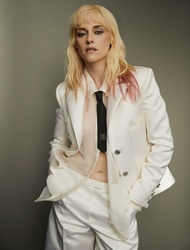
The result is a guttural yell, raw and poetic, and a real showcase for Imogen Poots as Lidia Yuknavitch, whose memoir of the same name Stewart adapted for the screen. Chronology is messy, structurally and visually and viscerally, playing with time and space and memory and oozing with bodily fluids — tears, spit, sweat, come, pee, blood, vomit. It’s a film about pain and pleasure, abuse and addiction, love and sex, and how women are forced to abandon themselves. I caught up with Stewart, clad in Chanel with a new shock of pink running through her blonde hair, on a rooftop overlooking Cannes to talk about how badly it hurt to make the film, getting the rights to Fiona Apple’s songs, creating her own cinematic language, Poots’s “big tit energy,” and the new, Chronology-inspired tattoos she got just before she arrived in France.

Tell me about the pink hair.

It’s a bloody motif. I wanted to bring a little bit of the movie into my body.

I was moved by the film and in particular the use of Fiona Apple’s “For Her” at the end. You wrote her a letter?

Oh, yeah. I wrote her a letter, and she wrote me one back.

What did you say? Why that song?

Where the fuck is my phone? I’ll paraphrase. She has a really similar place in my life to Lidia. There are just certain voices that help you find yours. That is a really concise way of putting it — your taste is formed by the people that come before you. Your impulses are encouraged or stifled by all of the things you consume. And I’ve really consumed and metabolized all of those albums. [Laughs.] That particular album, you can tell she made it in private. It sounds like a secret. She’s banging on pots and pans. There’s a sort of Richter release. And a kind of like, mama thing. You just go, “Fuck, thank you so much.” I think I said, “What’s yours is mine now.” Like, “I know that these are your songs, but they’re fucking mine. They belong to me, they really belong to this movie, and can we please show that?” I said, “I hope you understand the space you take up in the female collective unconscious.” I feel like I know her! I feel like we’re friends, even though we’ve never met. I think I wrote a pretty fucking good letter. I was desperate to get the songs. And it wasn’t even flattery. I was like, “Dude, I revere you.”

You guys do need to meet. So last night you said at the premiere that you were working on the movie five minutes up until its premiere. Was that a slight exaggeration?

Not at all. I’m not even done. This is so funny. People think we were tweaking it. No, we were making the movie! We edited the movie over nine months. I did take one break to be in a movie called The Wrong Girls with Alia Shawkat, that Dylan [Meyer], my girlfriend directed — well, she’s my wife now.

Congrats, by the way. That’s really cool.

Yeah, it’s sick. This movie is about iteration. It’s not about the things that happened to this person. Or even really about Lidia Yuknavitch. Even though she is the ultimate kickstarter — which is a word I used in Fiona’s letter, aptly. It’s just about how the things that happen to us live in our bodies and how we excavate, recreate, reframe things in order to survive. And also to define ourselves. To have a bit of fucking volition in terms of desire and the things that we want. Because the things that we want are so gouged out of us at an early age. The things that happen to girls — we’re not making those choices. Living in this world as a woman is violating. It’s about the reframe. Especially now that reality is breaking so hardcore under our current administration. I’m like, “What’s real? Oh, it’s malleable? Okay, cool. I’m gonna take a page out of that big fuck’s book and make my truth my truth.

You’re breaking reality.

Yeah. The reason we had to go make a bunch of puzzle pieces is because the movie had to have a whole life, a whole memory. I didn’t want to regurgitate the book. I needed to be able to create very precise images, but they had to be ephemeral. And so we couldn’t be as precise in the planning. Also my plan got completely commandeered. And my ship wrecked. We were floating in tatters down the Mackenzie River, trying to pick up the pieces of a really tumultuous shoot.

What happened?

Oh my god. Dude. It’s crazy. We would need so much time.

What are the bullet points? Did you lose financing?

Ten times. Cast. Department heads. Crazy, crazy act of god weather. I had written it for over eight years.

And you were writing and rewriting that whole time?

Absolutely. At some point, I’ve adapted every single page of the book. It needed to live every single bit of it in order to distill it. And then also, it needed to change. I think my fingerprints are all over the movie but I don’t strangle it. It’s Imogen’s movie. We shot the ever-living shit out of it so we could come home and intuit, based on sense memory, things that are connected. All of the flashes in the movie where you go, “Oh, this feels like that” — she makes a certain expression that reminds you of another expression. Basically I needed to give the movie a life in order for me to slice it up and make something that felt more like a DMT trip, like a repossession of the body through words. Versus: “Then her dad abused her. And then drugs abused her. Then the world abused her.” No, no, no. This is about what’s real, what happened. We all remember things differently. Taking that power into your hands is something that I’ve learned to do as I get older. It’s a movie about salvation through art, but it’s also about the inner voice. The sneaky inner voice and the secrets that we keep. Fuck that.

Especially right now. It’s scary to talk about this right now because our country is falling apart. If I’m putting a target on my pussy and you want to try and come and grab it, you give it your best fucking shot. That’s the only way. I do feel like I’m putting a target on my back doing stuff like this.

Tell me about Imogen’s “Big Tit Energy,” which you mentioned yesterday at your talk. What does that mean to you?

Imogen Poots! She doesn’t have big boobs. But I kept thinking she did. We were talking about costumes and how to age her. She plays 17 to 40 and it works. It’s crazy. She just has so much fucking integrity. We were talking about clothes and stuff and I was like, “We have to be careful with the bathing suit, she has…” And they were like, “Kristen, you have the same exact bra size.” And I was like, “What?!” [Laughs.] But she just seems…she’s such a gorgeous, open, lush, alive mammal. She’s so mammalian. A forest animal slash killer whale. So I think she must have these big tits. My brain, like, made her grow bigger boobs than she has.

Did you tell her that on set?

When we were doing costumes and stuff. I was like, “I thought you had big boobs, dude!” And she was like, [affects British accent] “No!” And that was the whole conversation. But now in retrospect I’m like, that’s so funny.

You said to the festival that this was the “biggest wound” of your career. Why?

It hurt so fucking bad. Because it was almost impossible. It was absolutely my inexperience that allowed me to pull this over the finish line. The amount of dropouts, acts of god — the movie was terrorized. It was really treated like a woman. It was really pissed upon. I really thought the movie was dying every day that I was making it. It was a really interesting ego check because I was convinced that I ruined it, that sure, we could string something together and I have to go show everyone. But that was just me trying to ingratiate myself with newness, which is really hard to do when you’ve planned something for eight years. And when I got out of the wreckage and into the safe harbor of the edit, I started opening all of these presents I didn’t know were given to me. I planted all of these seeds in these people and they bloomed like a motherfucker. I got home and I was like, “I have too much! I don’t know where to slice this!”

And then by the end, it took so long to edit the movie and then I made Dylan’s movie, and we got out of that and people were like, “Can we please submit to Cannes?” And I was like, “Can you please get away from me…” There’s no more violent question than, “How’s it going?” [Laughs.] “Did you get any work done?” I didn’t want to hang out with people I hadn’t seen in awhile. I ceased to exist. I could not handle talking about it. But it was really fun getting into the final touches. It should have been a six-to-nine week process. But we did it in two and a half weeks. I need to go home and finesse it.

Get this. My reference, what I cut to my low-res scans — they don’t exist. They were done in Poland by different interns every day. There is a genuinely irretrievable, ephemeral, low-res version of the movie. I don’t want to screen a low-res version, I want a high-res. But this kaleidoscopic rainbow that fell off the truck because these kids were experimenting with my footage— that’s what I fell in love with. It was diffused with a foggy glass. And all of a sudden, when I stepped into color, it was like I was looking at Instagram. It felt like a ‘90s movie, covered in a gritty texture. It felt like a movie I might like, but it was really masculine. And it didn’t feel like a dream, it didn’t feel pink enough. I was like, “Oh no!” I was crying. I was so sick, dude. I can’t believe I’m standing right now. I know that sounds self-aggrandizing.

You don’t.

I thought the movie was dying all the time.  And then finally in the nick of time…I was so ready to come here with a movie that I thought was not what I wanted it to be. But the movie is itself. The movie speaks for itself. It’s totally out of my body and having its own relationship with the world. And I’m so proud of it. I need to give it a new outfit or two. Brush its hair. But the movie is the movie and it’s kind of cool to show it in its adolescence. I think it’s punk as fuck to come to Cannes without being done. We threw it under a closed fucking door. I can’t believe we got here.

On the festival site, you mentioned this idea of a feminine grammar of cinema that’s yet to be written. It reminded me a lot of how Celine Sciamma talks about reinventing a feminine language for film. Can you tell me about finding that language, trusting that voice?

There’s granular and then big-picture. When I go microscopic, it’s the texture of the blood that sticks to the grout before it goes down the drain. There’s no question about where that blood comes from. It’s not from a cut. It’s from a hole. It was really hard to convince people that this movie was going to be fun to watch. Because it’s frustrating. It’s not the three-act success story that, as audiences, we’ve been trained to want. It’s like, “Aren’t we supposed to be happy now? Jesus Christ, you’ve dragged me through hell.” It’s like a female orgasm. It’s like, “Almost, almost, almost. Stick with me, stick with me, stick with me!” I don’t think the movie is long. It’s two hours and eight minutes, with a killer credit sequence that you have to see til the last frame to finish the movie. But it’s a serious fucking movie. We deserve to take up space. I didn’t need to make an hour and a half digestible experience so it would be less difficult for the consumer. It’s cool that at one point you go, “Are we still doing this? Why?” I have “Why” tattooed right here [points to her upper arm].

Did you get it just now?

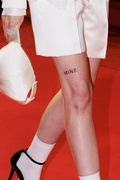
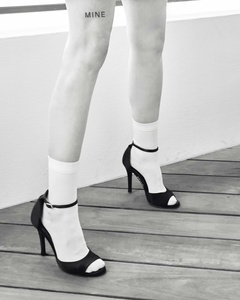
Yes, the day before I got on the plane. I was running ragged, we had just finished the movie, and I was like, “No matter what, top priority, find a woman who can give us three tattoos today!” The crew is going to get this one. [She points to a tattoo that says “MINE” on her thigh.] 

What does that mean?

The coolest song in the movie is when she comes on her hand, smells it, wipes it on her fucking bicep, and goes, “I didn’t know a girl body could do that. Shoot come.” And then this song comes on and it goes, “Mine, mine, mine, mine.” And it’s just fucking mine.

Source

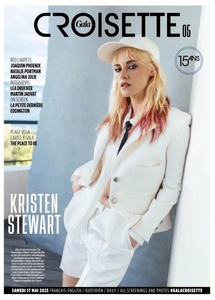
Kristen on the cover of the daily Gala France Croisette magazine


IMG_6745.jpeg

Click on cover for full view.

Source

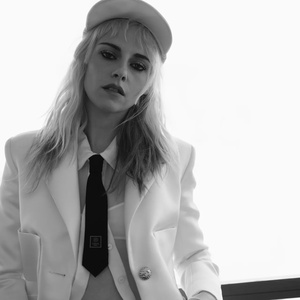
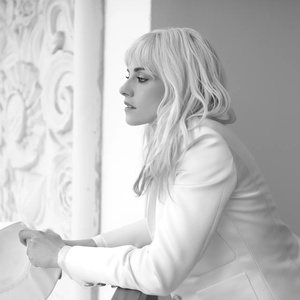
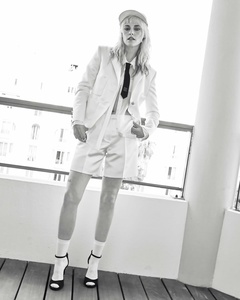
Portraits: Kristen for Harper's Bazaar France at the Cannes Film Festival


IMG_6748.JPGIMG_6749.JPGIMG_6750.JPGIMG_6752.JPGIMG_6751.JPG

Click on images for full view.

Source