Showing posts with label scans. Show all posts

Wednesday, December 31, 2025

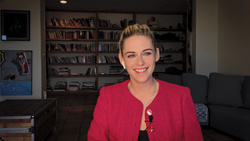
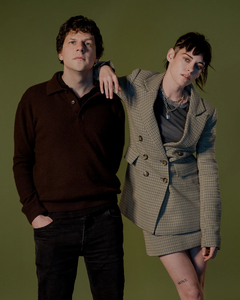
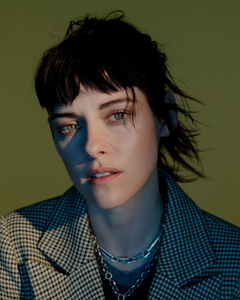
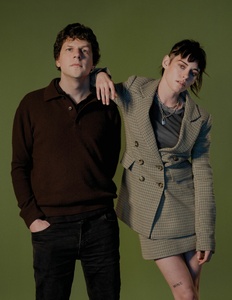
Video: Kristen and Jesse Eisenberg for Variety's Directors on Directors


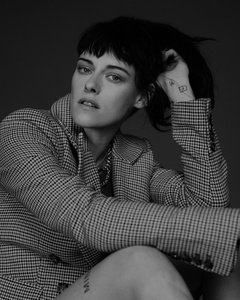
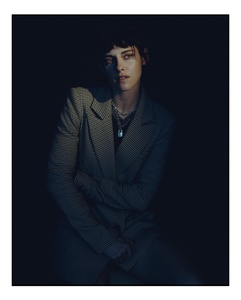
Jesse-Eisenberg_Kristen-Stewart-Variety-Directors-on-Directors.pngKristen-Stewart-Variety-Directors-on-Directors.png

Outtakes

IMG_3181.JPGIMG_3180.JPG

Scans

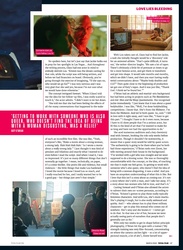
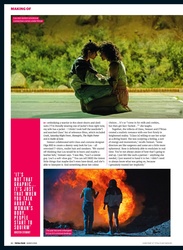
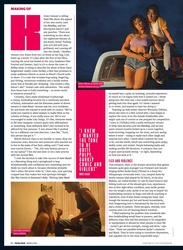
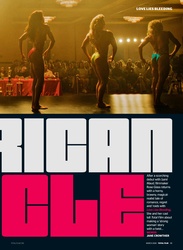
G9frh60XgAAkapo.jpgG9fraswWAAACF1t.jpgG9frbTVXQAAhtu-.jpgG9frhJ8WEAAysHv.jpg

Click on images for a full view.

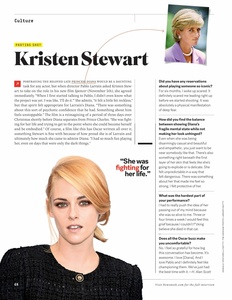
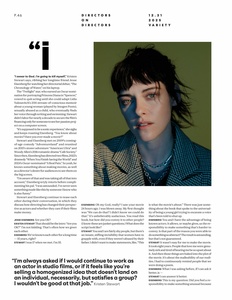
As featured in the print version of Variety December 2025. 

Transcript / Excerpt of the scans above:

“I swear to God. I’m going to kill myself,” Kristen Stewart says, ribbing her longtime friend Jesse Eisenberg for watching her directorial debut, “The Chronology of Water,” on his laptop.  

The “Twilight” star, who earned an Oscar nomination for portraying Princess Diana in “Spencer,” vowed to quit acting until she could adapt Lidia Yuknavitch’s 2011 stream-of-conscious memoir about a young woman (played by Imogen Poots), sexually abused as a child, who eventually finds her voice through writing and swimming. Stewart didn’t labor for nearly a decade to secure the film’s financing only for someone to see her passion project on a computer screen.  

“It’s supposed to be a sonic experience,” she sighs and keeps roasting Eisenberg. “You know about movies? Have you ever made a movie?” 

Stewart and Eisenberg met on 2009’s coming-of-age comedy “Adventureland” and reunited on 2015’s stoner adventure “American Ultra” and Woody Allen’s 2016 romantic drama “Cafe Society.” Since then, Eisenberg has directed two films, 2022’s dramedy “When You Finish Saving the World” and 2024’s Oscar-nominated “A Real Pain.” So yeah, he knows something about making movies, as well as a director’s desire for audiences to see them on the big screen. 

“I’m aware of that and was taking all of that into account,” Eisenberg wryly retorts before complimenting his pal. “I was astounded. I’ve never seen something made like this by someone I know who is also funny.” 

Stewart and Eisenberg continue to tease each other during their conversation, in which they discuss how directing has changed their perspective as actors and whether they care if their films make money.  

Jesse Eisenberg: Are you OK? 

Kristen Stewart: That should be the intro: “Are you OK?” I’m not kidding. That’s often how we greet each other. 

Eisenberg: We’ve known each other for a long time — 15 years, right? 

Stewart: I was 17 when we met. I’m 35. 

Eisenberg: Oh my God, really? I saw your movie 24 hours ago. I was blown away. My first thought was “We can do that? I didn’t know we could do that.” It’s unbelievably audacious. You read this book, but how did you convey it to other people? (I know these are junket questions.) What does the script look like?  

Stewart: You and I are fairly shy people, but there’s an innate, stifling invisibility that women have to grapple with, even if they weren’t abused by their father. I didn’t want to make statements, like, “This is what the movie’s about.” There was just something about the book that spoke to the universality of being a young girl trying to excavate a voice that’s been told to shut up.  

Eisenberg: You and I have the advantage of being known actors. It allows, or maybe gives, us the responsibility to make something that’s harder to convey. Is that part of the reason you were able to do something so abstract? The result is astounding, but that’s not guaranteed.  

Stewart: It wasn’t easy for me to make the movie. It took eight years. People that love me were genuinely sick and tired of hearing me be so upset about it. And then those things are baked into the plot of the movie. It’s about the malleability of our realities. I had to continuously remind people that we were doing a poem. 

Eisenberg: What I was asking before, if I can ask it better, is — 

Stewart: I can answer it better. 

Eisenberg: This is my question: Did you feel a responsibility to make something unusual because you’re a well-known actor, or is this just entirely your taste? 

Stewart: This is entirely my taste. I could never make something straightforward. I like associative, open-ended things that say something very particular but invite people to disagree.  

Eisenberg: How did your taste develop? 

Stewart: I don’t like being told what to do. I don’t want to tell people what to do. 

Eisenberg: I read something you said, which I thought was funny and reminded me of myself. Somebody asked you, “Do you think of being an actor in a movie differently now?” You’re like, “Of course. I’ll go to the director and say, ‘I’ll do whatever you want me to do.’”  

Stewart: I’ll never question anything again. I’m like, “Anything you want.” The idea of being like, “You should cast this person.” I’m like, “Excuse me? You don’t know anything.” 

Eisenberg: Isn’t that fascinating? A lot of people in our position go the other way. They feel even more like they need control because they have an experience where they were controlling everything. The story I always tell about you — because I’ve been asked about you for 18 years — is when we were doing “Adventureland,” there was a dramatic scene at night, and you were like, “Cut. I’m lying.” You were 17, and I was shocked. I felt like I was watching a master. Would you have done that now? 

Stewart: I get mad at people now for cutting, because I’m like, “I know you questioned yourself, but that moment of question was gold.” I want to try and not do that. [As an actor] I don’t want to be misinterpreted. When a director is like, “It seemed like you were feeling it.” I always say, “I don’t care if it looks good; I want to do it again.” I’m selfish. I want to taste it.  

Eisenberg: “I want the catharsis.” One of the other stories I tell from “Adventureland” was a quick scene. I had my first panic attack on set; I was self-aware in the worst way, and I shut down. After the tape, I was mortified. Greg [Mottola, the director] goes, “I didn’t notice, but I’m so sorry you felt that way.” He said, “I don’t understand how actors aren’t having panic attacks all the time. You’re in front of strangers, and you have to be vulnerable.” For years, I remember thinking, “It’s a sweet thing he said, but he’s pitying actors too much. We’re lucky. We have an easy job. We memorize lines.”  

Now I have respect for the job in a way I never did personally. Because I was so self-critical, I couldn’t have a good feeling about it. It seemed like, “You’re overpaying me.” Then Julianne Moore was in my movie, and after her first scene, I turned to my producer and was like, “Can we pay her more?” Did you have that feeling with Imogen? I’ve done three movies with her. But not in the same way I’ve done three movies with you. How did you choose her?  

Stewart: You’re one of the reasons. I was like, “I’m sure we would be close because you guys are friends.” She did an audition. She sent a tape and I was like, “Oh my God.” There’s something  about her being 35 and me being 35. We should have been friends since we were younger. We just never met. Then we did, and it was the perfect time to go, “We need to shove everything we’ve never said to each other into this movie.” 

Eisenberg: Do you feel you could have this style and use it going forward? 

Stewart: I’m always asked if I would continue to work as an actor in studio films, or if feels like you’re selling a homogenized idea that doesn’t land on an individual, necessarily, but satisfies a group? I wouldn’t be good at that job.  

Eisenberg What do you mean? To direct a more commercial thing? 

Stewart: More and more, commercial means standard and digestible. I want to be allowed to make movies that allow for time to figure out a structure and mission statement. The next movie I want to make utilizes different formats. Not because it’s nerdy film stuff, but because it’s more interesting to make movies about how you see something instead of what you see. 

Eisenberg: Your movie is coming out soon. Do you think or care about it making money?  

Stewart: It would be great if it did because then maybe it wouldn’t be as difficult to make my next movie. But at the same time, the next movie I want to make functions outside of the business structure we’re used to. People love to hear that. 

Eisenberg: “This doesn’t even exist in your structure.”  

Stewart: Well, it doesn’t. You need to find new terms for all of this because, I’m sorry, but the language and structure are oppressive.  

Eisenberg: There’s no English on this set. It doesn’t apply to what we’re doing. 

Stewart: Actually, the title of the movie is in Spanish. I’m not going to tell you what it is. 

Eisenberg: I wouldn’t understand it. 

Stewart: Yeah, you’re just a dummy. 

Eisenberg: So you care insofar as it helps you make the next one. You care insofar as it pays the people back who paid for it. But you’re not caring about what other people might think about it? People ask me too. I guess I don’t care about it being a successful business thing. My mind doesn’t go there, or I can’t conceive of it. 

Stewart: For sure. I love the movie. I birthed it. I probably would have made this movie if I was never an actor. I didn’t feel like I was graduating into like, “Now I want to check that box.” I think this thing needs to exist. 

Eisenberg: We’re directing everything, but we’re also desperate actors. So all I’ll say is this: I can learn Spanish for your next project. 

Stewart: You need to put yourself on tape. 

Source 1 2 3


Thursday, October 2, 2025

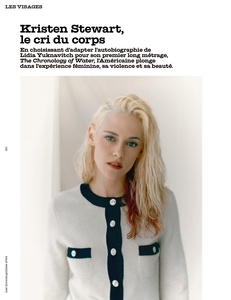
Kristen's interview in Numero Magazine (Issue 256, France)


G2FaMVYXIAAAxzi.jpgG2FaMVWWAAAoQJ7.jpgG2FaMVSWoAA9V1k.jpgG2FaMVXWIAA3fhv.jpg

Click on images for full view.

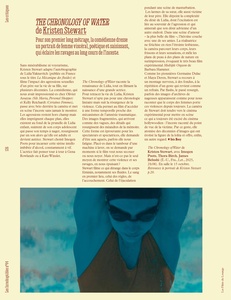
The Chronology of Water, a film directed by Kristen Stewart presented in Cannes.

At 35, Twilight star Kristen Stewart has long since shed her good-girl image. The reason for her presence at the 2025 Cannes Film Festival was to present her directorial debut.

Inspired by Lidia Yuknavitch’s autobiographical novel of the same name, The Chronology of Water follows a heroine, played by English actress Imogen Poots, as she tries to recover from the trauma of sexual abuse. This free-spirited film about a wounded woman maps both impressionistic moments and the course of the protagonist’s life thanks to virtuosic editing.

Before its release on October 15th, 2025, the 35-year-old filmmaker met us at the Palais des Festivals in a full Chanel look, embodying effortless chic without compromising her free spirit and intensity. Our sharp, at times far-fetched, conversation revolved around the process of creation.

Interview with actress and director Kristen Stewart

Numéro: The Chronology of Water is your first feature film as a director. It feels very personal…

Kristen Stewart: As soon as I started acting, I knew I wanted to step behind the camera one way or another. So, since I was 9. I’m 35 now. I really thought I’d direct sooner, but I guess it just wasn’t the right time. You have to wait for the trigger. Even if the desire is there, it doesn’t materialize immediately. Even if the machine is ready to run, you still have to find the right key.

Was Lidia Yuknavitch’s autobiographical novel the trigger?

Not every book can become a movie. But this one swept me away. I immediately wanted to turn it into a collective experience.

The story is quite harsh… A woman is abused by her father, and eventually becomes a writer. The film tackles both trauma and creation…

Some things live inside the body in a joyful, full way. Others need to be expelled. What Lidia Yuknavitch’s text conveys gave me the feeling that it had to be shouted from the rooftops, so that the skeletons we all have in our closets might finally start coming out. Of course, what happens to this woman is quite extreme. But abuse, things that are taken from us, the feeling of suffocation and hiding what we endures – all that feels deeply relatable for almost anyone. Fifty percent of the population is concerned!

Was portraying trauma you main goal?

At the very beginning of the film, we see blood flowing. Thick, almost clotted, it sticks. You immediately sense it could only come from only one place. Not a wound, but an orifice. This blood comes from deep within this woman’s body. So I’m showing it. I wanted the film to feel like crackling wind, like a scream turning into hysterical laughter. The way this woman arranges the events of her life is anything but random or erratic. What she goes through is held together with such a powerful emotional thread that the narrative almost becomes a living organism. You can feel the organic tissues connecting. The only way to translate this on screen was to bring together a very diverse range of talents. I had to listen to myself a lot. Say no, constantly. Say yes, but only to the right people.

Your film is first and foremost made up of fragments. Did you shoot a lot, even if it meant not using everything in the final cut?

I probably shouldn’t say this – producers might never want to work this way again – but the only way to get through it was to shoot a lot and then cut half of it. The film had its own life, its own memory.

A feminist and radical vision

Although the plot isn’t based on your own story, The Chronology of Water feels deeply personal. How did you find the right distance?

I wanted to see on screen the type of things that move me. When I think about it, I’m trying not to use certain words because I worry they’ll end up as clickbait headlines. And honestly, I’m a bit tired of it…

That’s not my style.

You never know. But I’m at the point now where I just flow with it. Fine, take whatever you want! In The Chronology of Water, there’s a scene of female ejaculation. The main character’s hand is completely covered. She says to herself: “I didn’t know a girl’s body could do that.” That line brought me so much joy. Women are usually forced to hide. We’re told not to say anything when we’re in pain, not to tell anyone we’re pregnant until weeks in, to keep everything to ourselves. A woman is expected to carry all of that. But it’s not healthy to internalize the experience of pain. You have to release it in order to better understand it, and then rephrase it.

Is that one of the central themes of the film?

My film is about birth, death, and rebirth too. But above all, it’s about the act of living out in the open. This might sound cliché, but I think women are capable of taking in so much. We can give life to what we allow into our bodies, even though so many of the things we let in also harm us. If we don’t expel that deadly part to make room for what is vital, it doesn’t work. For me, The Chronology of Water was the perfect opportunity to explore that idea.

You just mentioned the scene of female ejaculation, a topic linked to pleasure, then immediately shifted to the theme of pain. Why is that?

One of the themes of the film is reclaiming pain and turning it into pleasure. Some things are imposed on us from childhood, even if we haven’t lived through the kind of trauma the heroine has. It can apply to men too, of course. But the world we live in and the images it produces, it makes it almost impossible for young women to feel ownership over their intimate space. Life comes at us and imposes itself on us.

How does that transformation happen?

As we grow older, we start to crave strange things. And we ask ourselves why. Then, we realize it’s tied to everything others have tried to take from us. Pleasure becomes linked to pain. There’s a crack. Before we can safely free ourselves from it, we go through a phase of extreme vulnerability, we become open to dangerous things. The creative process is about not letting harmful things fester inside us. We reshape them through words and actions.

Cinema as a tool for emancipation

Are you advocating for emancipation through art, like your protagonist when she starts to write?

No matter what our story is, we can change it. That’s something vital to remember. We can also revisit it with a new perspective. We can use our shame. Shame is an inherent part of the female experience. That shame, and that pain, can even become something quite thrilling. There’s something sexy about it. It’s in our nature to surrender to what hurts us. It’s part of our body’s architecture, we’re open. That’s not an opinion, it’s a fucking fact. The Chronology of Water is a two-faced film – it hurts and it heals, it is funny and sad. When you go that far into pain and truly let it go, when you’re done sobbing, there’s nothing left to do but laugh.

How did your vision as a filmmaker take shape?

I wanted to stage things that made me laugh. The film is intense, but also kind of a thrill ride. It’s really fun to watch this character fall and get back up over and over. I wanted to create a sense of frustration in the audience. We’re so used to characters who win, we want to follow winners. But what does it mean to win? In the film, Lidia is speaking to an audience about her trauma after writing a short story. It looks like she’s gained something. But right after, she crashes again. That’s how it goes.

How did you address that issue in your film?

The film I wanted to make couldn’t offer too many rational explanations about this woman. By the end, she gets somewhere, but her path is messy. She thought she had won, lost, and died. Now, she manages to float. To stick with the nautical metaphor, this film was a shipwreck. We kept slamming into walls. I honestly believed, more than once, that I had screwed everything up. Then, I realized that every loss, every mistake, was exactly what we needed.

Why did you choose not to play in The Chronology of Water?

I’d love to play in something I direct. It’s going to happen very soon.

That’s great!

That’s kind of you. But that time, I felt I wasn’t the right actor for this role. And yet, I felt a deep connection with this girl. I spent my days watching someone else bring her to life, while forcing myself not to tell her what I would have done if I was in her situation. God knows there were moments when I thought: “Oh, so that’s how you’re doing it? Funny, because I would’ve…” I had to stop myself from talking! Basically, I would forbid myself from peeing Imogen Poots’ pool (laughs).

Imogen Poots’s performance is dazzling and striking. She takes a lot of risks.

Imogen Poots truly is an incredible actress, who took full ownership of the role. We’re so different. She had the perfect body for it. She’s powerful, she looks like a mermaid, and she’s a big reader. When we started talking about the original book, I realized she’s very literary. She could be a teacher. She’s one of the wildest girls I’ve ever met. She’s smart, fearless, open, full of cracks ready to burst open, and at the same time, as gentle as a forest creature.

Why was she a better fit to play Lidia?

If I’d played her part, I would’ve been dancing nonstop in the fire, like it was my comfort zone. But when you see her, you kind of wish she’d stop touching the flames. It doesn’t suit her well. Imogen carries us with her charisma. The first time I met her, I thought: “Shit, I’d follow you straight into hell.” Also, she has blue eyes. Mine are green. Her gaze fits better with the water, which is such a central element in the film. That answer makes no sense, have fun with it (laughs).

As an actress, you worked with major filmmakers like Kelly Reichardt (Certain Women) and Olivier Assayas (Clouds of Sils Maria, Personal Shopper). Did these experiences help shape your approach as a director?

Olivier Assayas was very important to me. When we shot Personal Shopper together, I was fascinated by the way he would pull elements from real life. I’d never seen anything like it. He taught me that you can say so much with an image, without explaining it. If you have to explain it, it means that you’re not doing it right. He also raised the question of dreams. For him, cinema is the most simple and direct way we’ve found to externalise our dreams. A film is like a collage of our lived experiences, what our brains do when we go to sleep. I don’t know if you’re into lucid dreaming, but it can feel like that. While filming The Chronology of Water, I spent a lot of nights editing the movie in my head. It was unproductive and pointless, but the images wouldn’t stop coming up.

What were you inspirations for The Chronology of Water?

All the films directed by men, I must say. Thank you, John Cassavetes, for truly seeing your wife (actress Gena Rowlands, ed.). Thank you, Taxi Driver. Our film has a strong voice-over, but it doesn’t drive the story. It’s just there, holding our hand. Thank you, Martin Scorsese, for showing me that was possible. My protagonist happens to be a woman. Our voices resonate, we’re not just cooking in the background when no one listens. Confessional literature written by women is just as important as anything else and it’s one of my many inspirations.

According to you, why female creators still struggle to be heard?

Women have been destroyed by a modernist conception of art, telling them that personal stories don’t count, that we must detach from our bodies in order to analyse the world and speak with the authority of professors. But we have to bring it all back into the body. Fuck form. And I don’t say that lightly. I think women need to come back strong and crack the form wide open, then bust the whole thing up and remix it. It goes for literature and cinema. If we don’t do that, we’ll stay locked outside the castle forever, fuck! When I see films made by men, I’m telling myself that I want to do the same! But I want to do it my way. So, let’s look inward.

Her upcoming projects

What are your plans for the next few months?

I will be in The Wrong Girls, a film I also produced. Dylan Meyer (Kristen Stewart’s wife since April 25th, 2025, ed.) wrote it and directed it. It’s a stoner comedy with Alia Shawkat, who’s kind of a genius! The film adresses the lack of ambition in positive terms, female friendship, and features two women who are still growing up at 35 in a world that isn’t exactly welcoming them.

What was it like on set with Alia Shawkat?

Alia taught me so much, especially since it was my first comedy. It was by far the scariest and hardest thing I’ve ever done. Working with Dylan and Alia in Los Angeles was a real trip. For me, this is one of my most important projects. We’re here in Cannes, talking about serious films, but this comedy tackles real, deep stuff too. At its core, it’s about staying chill and not turning into assholes. And that matters a lot. (Laughs)

Scans thanks to AdoringKS

Kristen in Les Inrockuptibles Magazine (France, October 2025)


ME16GARX_o.jpgME16GARY_o.jpgME16GARZ_o.jpg

Click on image for a readable view.

Google translated

Author of the important essays “The Female Gaze” and “The Culture of Incest,” Iris Brey met Kristen Stewart on the occasion of the theatrical release of “Chronology of Water.” A dialogue about traumatic memory, the development of the right language to evoke rape and incest, and the reappropriation of one’s desires.

Iris Brey – When I saw your film, I was shaken. It was as if the concepts I've been working on for several years—the female gaze and incest culture—were appearing on the big screen. Thinking back to the filmic form of your work, I thought it might be similar to how traumatic memory operates: a fragmented resurgence of a memory, anchored in impressions rather than a linear narrative. I was wondering if this was something you and your editor had in mind?

Kristen Stewart – The whole film is about iterations, because every time you remember something, it changes a little bit. Then, when you put it into words, it changes even more, it becomes even more subjective: no two people remember a memory the same way. Audiences, especially where I come from [the United States, editor's note] , absolutely want to know what's going on at every moment. I wanted the film, as a whole, to be like that: to start off quite chaotic, because the heroine's memories were too hot to approach, too raw to process, not yet written down. You don't always know why you feel so bad, and there's a kind of DMT trip—not that I've ever tried that—but you know, like what happens before you die, when your whole life flashes before your eyes. Those were the things she was trying to grasp in the darkness of her pain and trauma. Besides, I need to find new words to stop repeating “pain and trauma” when I talk about the film.

In terms of editing, the script had been written with great precision. Yet, there was no way of knowing if the images we were going to capture would be the best, the ones that grab you by the guts and correspond to the experience that the actress Imogen Poots was having. Because I think a real, exact regurgitation of the book wouldn't have worked. The book itself is a series of prosaic images, reflections, commentaries, sometimes direct narration, because it addresses the readers. The author, Lidia Yuknavitch, often addresses us, she addresses herself. But the film had to begin with immersion, and as it found itself, it had to become calmer, with a more direct voiceover. She becomes able to teach others, able to articulate what she had difficulty putting in order at the beginning. So, the beginning was like a prologue that doesn't really exist: the book has an introduction, and then it goes into a very fragmented experience. But it was necessary to introduce the central metaphors, as well as a particular sound and visual language, so that the audience felt held by something – because they were going to be thrown into the blender of a life – and then, at the end of the film, reach a state of contentment and clearer thinking.

So, the script is precise. The film reflects the script, but some images changed, because it was a long research process, I was looking for resonances. Like: she made the same expression here as elsewhere, it sounded the same as in this other scene… Oh, this image looks like another one… Look, this house has water damage in one corner, so we're not going to film through the window, but rather that corner. There were metaphors embedded everywhere in our environment. And the reason I wanted to adapt this book into a film was not only to recreate the experience of reading, but to enlighten us, to remind us that our memories are malleable and that they constitute us. They are the material from which we build ourselves. For me, the most important line in the book is: “What happens to us is true, but writing is a whole other body.” Your experience is yours, it's like clay.

IB – Watching your film, I thought of other pioneers, other experimental filmmakers, Germaine Dulac , Maya Deren, and Barbara Hammer. All these women were bisexual or lesbian, and I thought, as a lesbian too, that sometimes, when we try to tell something outside of patriarchal narratives, we have to reinvent our cinematic language and our codes to find how to tell these stories that have never been heard. Did you feel the need to go towards something more experimental to tell this story of incest?

KS – Yes. Every interview I do begins with: “What's happening to him is very hard. Tell us why you wanted to make a film about incest and rape.” Can you imagine how difficult it is to answer that question? I was lucky enough to make a film about someone else, but we're not encouraged to listen to ourselves anyway. I don't want to generalize, I find it sterile to say “no one listens to us,” but the reality is that I couldn't make this film for eight years. I had to leave the United States to make it, and I have a warm welcome in France. But I guarantee you that won't be the case when I present this film at home. People keep telling me it's unsaleable. The feedback we got from people and places that are known for loving independent cinema, who support writers and artists, was: “We have no idea how to sell this, we’ve barely been able to watch it.” All men. Because it disgusts them, because they find it disturbing. They just don’t want to see it and watch it.

IB – Having analyzed the representation of incest in American cinema since the 1920s in The Culture of Incest , you are the first to give us the perspective of a female survivor and make us feel her experience over several decades. There was Lee Daniels ' film Precious  (adapted from Sapphire's novel Push ) before you, but your story is completely different, your directorial choices too, since you leave the incestuous acts off-screen. It's amazing what you've accomplished, and I know how difficult it must have been, because it's a story that no one wants to watch.

KS – I spent all my nights in my kitchen thinking about this film, dying inside, because I thought I was ruining it, because I wasn't given enough resources to make it. It was attacked from all sides, and I was thinking, "What's going to happen if I don't stamp my foot? I'll never be able to do it again, because I messed up, because I missed the opportunity." But in fact, it wasn't my fault; it was because I was told I didn't have the right to make this film. And it's not a question of ego. I was lucky enough to have this book in my hands and the immense luck of being able to make a film, which is already an almost unreal privilege. But what I was going through wasn't about me. I wasn't crying because people weren't going to like my film. I cried because I was afraid of dropping the most precious thing I had ever held in my hands. Today, I realize that this film could not be missed. Because certain images spoke for themselves. I actually think it's quite successful, damn, I love it anyway! And of course, we have to break the film form: narratives about the self have always been excluded from the literary canon. Autobiography is considered not to be great art.

IB – When it’s written by women.

KS – Exactly, only when they're women. Men's confessional writing is the law everywhere. But if a woman says, "This is my diary," she's told that it's not art, it's not literature, it shouldn't be considered canonical. It's a huge problem. One of my favorite writers is Kate Zambreno. Women write in fragments because we're slashed. Because we're lacerated, our writing echoes the treatment we receive, and refuses to fit into expected forms that would allow access to funding or entry into art history. I fully expected this film to be rejected. I didn't change my approach, because I thought, "If they hate it, it will underline its necessity even more." And finally, some people like it, which is great and I didn't expect that, because I'm a little surly, because that's what happens when you live in this world.

IB – Your lesbian sex scene reminded me of Barbara Hammer's film Multiple Orgasm . It's an experimental film where we see a woman masturbating with superimposed images of rock formations, stalactites in a cave, there's a real mix of textures and I thought you were paying homage to it with your scene.

KS – Oh wow! No, I've never seen it, but I understand. I think it's a real thing. I saw another film recently with intertwined legs, and then there were these eight-millimeter shots, a bit flashy, with a nostalgic atmosphere, rocks and water. So it can't just be her who has this idea, and me, and yet another one, it's not a coincidence. These images penetrate our unconscious.

IB – How did you work on this scene?

KS – It wasn't easy, because I wanted it to be openly explicit, without any sense of reserve. I wanted to film it from the character's internal point of view: reversed angles, like we really see each other when we're together. We had a whole visual brief just for that scene, with a special name. We affectionately called it “the girly fuck trip.” And I couldn't get what I wanted. Everything about this film was a struggle. I shot the nature elements after the shoot because we didn't have time. And no one, except me, understood how important it was, so those shots weren't included in the shooting schedule. My editor, Olivia Neergaard-Holm—who is one of the most talented people I've ever met—made this film with me, and we argued every day. And I was trying to make him understand what I wanted. This sort of Dante's Inferno of female bodies overlapping was cool, but it didn't go as far as what this lesbian sex scene implies: namely a form of organic development. When watching it, I didn't want people to think that lesbianism is just an alternative lifestyle that I've chosen. It's where I'm growing up.

And then, if we want to slip into this unspeakable wet dimension, there are very different ways for women to connect with each other. Sexual relations between women are not the same as between a man and a woman. And that's what makes the union between the bodies of two women such an incredible thing. And I know that firsthand! It's this experience that escapes words, of accessing another who resembles you, and this intermingling of bodies, which we never see in the cinema. In my scene, I didn't want us to know who we were looking at, since their bodies merged, like organic matter. They could have grown in the ocean, like algae.

For me, it's the most beautiful sequence in the film. When I watch it, I think: this isn't just a sex scene, it produces something else. And it led to the most fortunate discovery in the film, a total accident. We couldn't have planned the frames for this sequence. I didn't have a precise breakdown. My first assistant asked me how I wanted to shoot the scene. And I replied that we had to find them while shooting. Imogen was exhausted; we'd been shooting for three hours. She was vulnerable, drained. It's as if the scene had split her sternum in two. I turned to her and thought: oh, Imogen is feeling something. I hadn't planned to film the actresses' faces. I really wanted to leave their faces out of shot. And all of a sudden, she started shaking, shivering. I asked her: Are you okay? Do you want to, like, leave? And she said, No, it's weird. I just feel a little crazy. And I was like, Well, sure. That's what's happening. Yeah.

It all started coming out, and we just stood there very quietly watching her. And she goes from this kind of absurd burst of laughter, like she's laughing because she's being released, to all of a sudden, a woman hugs her. And this person who couldn't accept love finds herself embraced. And she broke down. It's like the whole movie just came out of her at that moment. It wasn't in the script. I didn't plan it. I didn't see it coming. It's because we did something for real that something happened.

IB – Speaking of desire, there's also this phrase we hear: "I want to come from somewhere else . " We never see that, victims of violence who recognize that their excitement can be rooted in the violence they suffered. For me, it's not incest that's taboo, but the representation of female desire in our film industry.

KS – Yeah, because if you think about it, we don't have a choice in how we design our desires; they were designed for us. As women, we shouldn't project ourselves, but just remain an open vessel. Things happen to us. And in this world, you don't have to have experienced rape or incest to have your desire ripped away from you in a way that you have no control over and that you don't enjoy. I mean, just… Fuck, pornography has just… destroyed everyone. And every time you're like, "Oh my God, why do I want this?" It's like, "Well, it's not your fault." And shame doesn't have to hurt. You can kind of reframe it and enjoy it. In fact, I'm going to create something around it soon. You should really enjoy it.

IB – I'm sure of it.

Scans thanks to Korita05

Wednesday, January 26, 2022

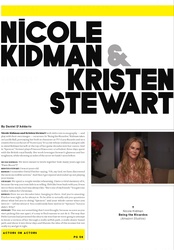
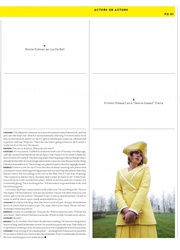
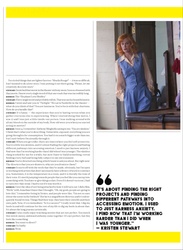
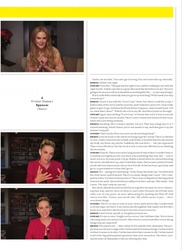
Vdeo: Kristen and Nicole Kidman's Variety 'Actors on Actors' interview


FJ-iUnSVQAEcQ1H.jpgFKBSfAYWYAQUAHr.jpg


FKYBpTnVEAA3-L9.jpgIMG_8324.jpg

Digital Scans

20220126_085011.jpg20220126_084414.jpg20220126_084723.jpgScans

20220126_084829.jpg

Click on all images for full view.

Nicole Kidman (“Being the Ricardos”) and Kristen Stewart (“Spencer”) sat down for a virtual chat for Variety’s Actors on Actors, presented by Amazon Studios. For more, click here.

Nicole Kidman and Kristen Stewart both delve into iconography — and play with their own images — on screen. In “Being the Ricardos,” Kidman takes on Lucille Ball, portraying her both in character as TV’s Lucy Ricardo and as a creative force on the set of “I Love Lucy.” It’s a role whose resilience and grit calls to mind Kidman herself, at the top of her game decades into her career. And in “Spencer,” Stewart plays Princess Diana over a turbulent three days spent with the British royal family. Her work leverages Stewart’s glamour and her toughness, while showing us sides of the actor we hadn’t seen before.

NICOLE KIDMAN: We were meant to work together how many years ago [on “Panic Room”]?

KRISTEN STEWART: I was 10 years old.

KIDMAN: I remember David Fincher saying, “Oh, my God, we have discovered the most incredible actress.” And then I got injured and ended up not playing your mama.

STEWART: We spent a couple weeks rehearsing. I have a vivid memory of it, because the way you treat kids is so telling. I felt like I was buds with you. It was two or three weeks, but I was always like, “She’s one of my friends.” You gave me walkie-talkies for Christmas.

KIDMAN: Here we are decades later, hanging in there. And you’re amazing; Fincher was right, as he always is. To be able to actually ask you questions about what led you to doing “Spencer,” and your whole career since you were 10 — tell me about it. You could easily have said no to “Spencer,” but you didn’t. Why?

STEWART: This was not something that I overthought, because as soon as you start picking this one apart, it’s easy to find reasons to not do it. The way that Pablo Larraín had presented the idea to me was that we were going to attempt to know a version of her through a really selfish path, a really desire-based path, and shove it into three days and liberate the idea of this woman but not really try and get it right.

And so, he was like, “You can’t get it wrong. You can’t mess this up, basically.”

KIDMAN: And he was right.

STEWART: I was like, “This guy has the right voice, and he’s talking to me with the right words. And he says this is a great idea and that he believes in me.” If you’re going to be an actor still, you should do something like this — or just stop doing it.

Was Lucille Ball somebody that you grew up watching? What made you step towards her?

KIDMAN: I knew Lucy and the “I Love Lucy” show, but when I read the script, I had no idea of her story and her journey, and I related to parts of it. I was really game to give it a go. And then the flood of fear, I suppose, came in and I went, “Oh no, what have I done?” Which I do a lot in my life, and then I push on through.

STEWART: I grew up watching “I Love Lucy,” so I know that voice. It was so surreal to hear it pop out of your mouth. There’s a less-rehearsed version of that voice, when she’s just being a human.

KIDMAN: Smoking. She’s a heavy smoker. I’m not. That was a huge key to it. I started smoking, which I know you’re not meant to say, and then gave it up the minute I stopped.

STEWART: That’s lucky. Were you nervous about being funny?

KIDMAN: I was nervous to the extent of trying to get her sound. There’s a rhythm to Lucy. I had to lean into the sounds, and slowly, it would wash into my mouth, my body, my brain, my psyche. Suddenly she was there — she just appeared. Then it was effortless, but the work it took to become effortless was climbing the mountain.

STEWART: Exactly. There was such a long period of time where I couldn’t hear it. I could do an English accent, but there was something that was, like — you’re never not you. At some point, I let go. Maybe a week before we started shooting the movie, she did show up, and I could fully relate. She became a kind of friend; you do the best impressions of your best friends. At the last hour, I got lucky and got it, or got whatever it was that I got to.

KIDMAN: Yes — giving over and saying, “Gosh, I hope she shows up.” I would watch her interviews, and I learned. There’s so many things that I went, “Oh, I completely relate. I’ve been in that position.” There was an alignment that happened between her and I; Aaron [Sorkin] would just sit there and say, “Mm-hmm.” And I went, “Oh, that’s why he cast me.”

But Javier [Bardem] and I would Zoom together because we were rehearsing that way, and we were no help to each other because we’d freak each other out. At one point, we were advocating for pushing the film off. And Aaron was like, “Listen, you can do this.” My whole career is just — don’t overthink things.

STEWART: There’s no way to look at your career path and be like, I understand a certain logic, but there is an emotional throughline that makes me feel like I know you, and that’s the best way to become close to an actor.

KIDMAN: I don’t know myself, so I’m glad you know me.

STEWART: It’s my version. I might not be correct, but I still have that. You’ve been choosing such cool movies forever. Has it been a concerted effort in not doing things that are expected?

KIDMAN: The experience — that’s what we live and die with, ultimately. The people that you choose to align with. I’m fascinated in human beings. I’m fascinated in what it means to be alive. I’m fascinated in what it means to die. I’m fascinated in all of the big philosophical questions that orbit around us. Therefore, I primarily seek out filmmakers that are delving into that.

I’ve circled things that are lighter fare too. “Moulin Rouge!” — it was so difficult, but I wanted to do a love story. I was putting it out there going, “Please, let me creatively do a love story.”

STEWART: I watched that movie in the theater with my mom. I was so obsessed with that movie. I knew every single word of that one track that was incredibly long.

KIDMAN: The “Elephant Love Medley.”

STEWART: Every single word and probably still do. That was such a beautiful movie.

KIDMAN: I went and saw you in “Twilight.” We sat in Nashville in the theater — what do you think of that? You are luminous. You’re born with that charisma. How do you handle that?

STEWART: It’s funny — the experience that you’re having versus what you gather everyone else is experiencing. When I started doing that movie, I was 17 and I was just a little inside-out person. I was walking around with all my blood on the outside of my body. How old were you when you started acting in movies?

KIDMAN: I was 14. I remember Anthony Minghella saying to me, “You are skinless.” I think that’s what you’re describing. Vulnerable, exposed, everything you are going through is for consumption. You had it on a much bigger scale than me, but I can’t believe I’m actually through it.

STEWART: When you get older, there are times where you feel self-protective. You’re a little less skinless, and it’s about finding the right projects and finding different pathways into accessing emotion. I used to just harness anxiety. I find now that I’m working harder than I did when I was younger. The skinless thing worked for me for a while, but now I have to build something, versus fielding every ball and being fully subject to my environment.

KIDMAN: You’ve directed one thing, which I want to ask you about. But right now: The directors that you are drawn to, why are you drawn to them?

STEWART: It starts off with the work that they’ve made, obviously, but I’m open to working with artists that don’t necessarily have a library of work to convince you. Sometimes, it is the temperature in a room, and it is literally the tone of their voice. It’s worth jumping towards people that you feel like you can tap into something with. You have to give things a shot. Even if it doesn’t turn out, I had to turn over that stone. I had to see if it was worth it.

KIDMAN: I love the idea of not being attached to how it will turn out. I did a film, “Birth,” with Jonathan Glazer that I thought, “Oh, my gosh, people are going to love this.” I remember being in Venice, and people were like, “I’m not so sure about the scene in the bathtub.” But he is a magnificent director, and it’s subsequently found its way. Things find their way; they have their own life and their own path. Now, it’s so immediate: “Is it a success?” I really resist that. I dig my heels in and will continue for the rest of my life to dig my heels in about that. It’s about the long journey artistically.

STEWART: I also really enjoy watching movies that are not perfect. You watch this weird, messy, awkward alchemy come together: It’s not perfect, but this feels like something.

KIDMAN: You want to direct?

STEWART: So badly.

KIDMAN: Wow.

STEWART: I’ve adapted a memoir by a novelist named Lidia Yuknavitch, and we just cast the lead role, which is monumentally relieving. I’ve been alone with this, in this vacuum, and it’s so nice to give something to someone, a friend and a partner, and say, “Help me.” She’s the one who’s going to have to do it, and it’s really hard, so I’m over the moon.

KIDMAN: You are so fearless. When do you start?

STEWART: It’s in process. I talked to someone with a lot of money two days ago, and she seemed excited about the prospect, but I want it to be small. I think the best version of it really is. The freezing water that I’m going to throw this girl into, I already feel terrible. It’s such a huge ask to invite someone onto this particular thing. I think you would love it. The writing is so physical and so fiercely, ragingly female.

KIDMAN: Is there a role for me? I love the idea of always moving into places that you haven’t been, and supporting people that are moving into places that they haven’t been. I’m not asking to be cast in the film, but it’s my way of saying, “The support is always there, because that’s what we have to do.” Otherwise, you end up in some rarefied-air place, which is not fun and not creative. It’s constantly going, “I’m a working actor. Tell me where to go and what to do, and I’m following you.”

I recently had that conversation with a director I’m working with. “You’re the leader; I’m the follower. You are my mother. I know I’m older than you, but you’ve got to be the parent.” Because I can’t come in and dominate. I want to come in and be there, open, ready and available for you.

STEWART: It’s the best feeling. I bet that there’s a bit of a jaw-droppy intimidation factor at times, and you have to go, “No, man, this is your show. Please tell me.” And that’s when you thrive.

KIDMAN: I waver in confidence. You just do. When someone says, “Follow me over here,” that’s when I feel most at home. Which is why I would never direct.

STEWART: Really?

KIDMAN: No. It’s terrible. I don’t have the decision-making. I’ve been working since I was so young, and I’m decades in now. I’m wired in a particular way. That’s why it’s so good you’re doing it now, because you won’t be completely wired in one area.

STEWART: Your wiring is very haphazard — nothing feels rehearsed or planned. It’s so easy to follow you, but it is also like whiplash. Don’t try and make decisions. We love watching you not make them.

Source: Variety Transcript Scans: Gossipgyal

Tuesday, December 14, 2021

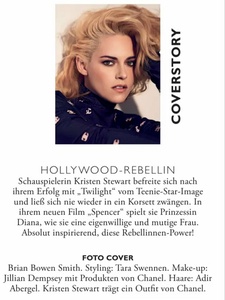
Kristen on the cover of Sade (Estonia) and Madame (Germany) Magazines


SADE Magazine (Estonia)

FGmDfRZVcAA3PUd.jpg

Preview (below)

IMG_4941.jpgIMG_4942.jpg

This magazine is published quarterly. This issue may be out in January (or later this month).

MADAME Magazine (Germany)

FGmDfRcUcAE-kzw.jpg

Scans

FGm4mrtXIAcSKHY.jpgFGm4m6fX0AIBAHY.jpg

BTS via Adir Abergel

FHGRfqjVgAIjXHr.jpgFHGRfqPUcAEo4E4.jpg

Click on the photo for full view.

This magazine is out on 27 January 2022.

Source 1 2 Madame Scans Gossipgyal

Friday, November 5, 2021

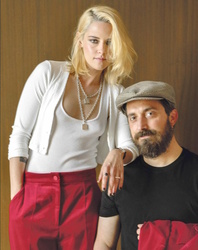
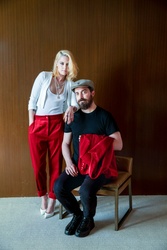
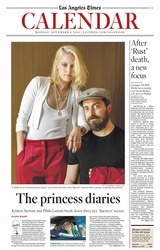
Kristen and Pablo Larrain talk 'Spencer' with the LA Times

FDsLW0oakAE-QDi 2.jpg


FDd1yEkX0AIg2C2.jpgFDdzt2uVUAA-30k.jpg
FEHLWYaXsAIcXIw.jpg

Outtakes

FGtCa-qVgAMj8i7.jpgFGtCa-rVcAEcZ9i.jpg
FGtCa-sUcAI6H1T.jpg

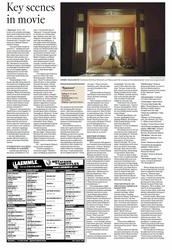
Scans

FDsLW0oakAE-QDi.jpgFDsLW0TUYAYnQc6.jpg

Click on portraits for full view.

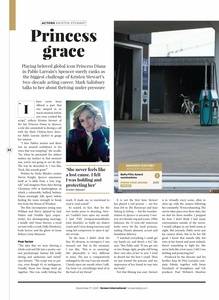
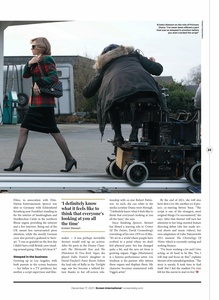
Sometimes at the end of a day shooting “Spencer,” Kristen Stewart felt wrung out and absolutely exhausted. Other days, the weight of playing Princess Diana coming to terms with husband Prince Charles rejecting her, and the royal family dismissing her, left her angry. Sometimes she felt all alone. And some days, it was a combo platter, and Stewart was an absolute mess.

It didn’t matter how Stewart was feeling, though, because at the end of nearly every one of the 37 days she spent shooting “Spencer,” director Pablo Larraín had a final task for her to do before she left the set. For 30 minutes or so, Larraín would choose a musical cue — it might be Miles Davis or Frank Sinatra or Lou Reed — and Stewart, having picked out one of Diana’s dresses from a costume rack — would respond to the music. She didn’t know the song in advance. And usually, at least at the beginning, all Stewart wanted to do was talk about the song. Larraín would have to remind her that the camera was rolling.

When “Spencer” was finished shooting, Larrain took all the footage from these sessions and turned it into a 3½-minute montage that’s seen toward the end of the film, a wordless sequence set to composer Jonny Greenwood’s “Crucifix” that sums up a defiant Diana’s need to escape.
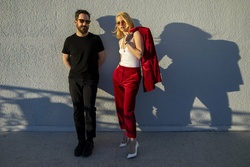
“You put these songs on and I’m f— swirling around in my conceived memories of what her life must have felt like, which was such a trip,” Stewart told Larraín on a recent October night. We’re up in the Hollywood Hills, Mt. Olympus to be precise, sitting on a patio overlooking a seemingly boundless blanket of Los Angeles lights, talking about our favorite scenes from Larraín’s sly, subversive and wholly subjective film.

“Responding to that music was like being alone in the bathroom singing songs and fantasizing about the guy that you want to hear your perspective and you imagine, ‘What if he had this vision of me here doing this?’ I just always fantasized about Diana, wondering, ‘What if there were cameras in there and Charles could see her exploring all these private moments?’”

“Spencer,” presented as a “fable from a true tragedy,” is filled with such private moments and also mystery. It was that ambiguity that interested Larraín in both Diana and the actress he cast to play her. Seated next to each other on an outdoor sofa, Stewart cupping a glass of red wine, Larraín scrolling through his phone to find playlists and photos, the two offered their spoiler-filled thoughts on some of the film’s indelible scenes.

Larraín says devising a shooting schedule is a “science.” On the first day of “Spencer,” it was all visuals, no words, an “embracing” day, Stewart says, like “settling into warm water.” The next day was different: A five-page scene with Diana arriving at the royal family’s chilly Sandringham country estate on Christmas Eve and being welcomed — perhaps processed is a better word — by Timothy Spall’s spectral Major Gregory, a military man tasked with making sure Diana doesn’t cause trouble. Larraín calls it an “arrival to an elegant prison.” Stewart is more blunt, calling it a “full-blown fight scene.”

“I’ve spent a lot of time in and out of the U.K. with British people,” Stewart says. “And I’ve always been a little bit slow on the uptake, because the quick, casual, disarming — what could be construed as catty — communication is just not my strong suit. I am a very stand-and-deliver, straight-up motherf—. But Diana was talented at it. It was embedded in her. She could turn passive-aggressive communication into an art form.”

That first meeting marks the beginning of a cat-and-mouse game that continues throughout “Spencer.” In her room, Diana finds a biography of Anne Boleyn, the wife Henry VIII beheaded. Soon, Diana begins seeing Boleyn’s ghost, listening to her advice at a crucial moment. “Anne Boleyn saved my life last night,” Diana tells a friend at the end of the film. Shortly afterward, we see Major Gregory return the Boleyn book to a shelf in the library.

So ... was Gregory Diana’s tutor or her tormentor?

“There’s a duality, so everyone’s right!” Stewart says. recalling an argument two guests in her home had the morning after the premiere. (She was eavesdropping.) One friend said Gregory was being helpful, leaving the book as a warning. The other friend found Gregory’s manner condemning and threatening.

Even Stewart and Larraín can’t agree about the character’s motivations — and Stewart finds this thrilling, as she loves a good debate. There’s an earlier scene in which Gregory tells Diana about a soldier who was spinning a tale about a wild horse that couldn’t be tamed and was hit by a bullet before he could finish the story. “I ask myself who do we soldiers die for?” Gregory says. “Then I remembered my oath. We all make an oath of loyalty to the crown.”

Larraín believes Gregory had Diana’s best interests in mind. Stewart is having none of it.

“He’s trying to connect to this girl and give her some advice and just say, ‘Hey, man, this is the structure, I believe in it. It’s not that hard once you give in.’ But it’s just so patronizing. Like, ‘Oh, did you just try and give voice to my life that you have never lived? Thank you for your very pretty metaphor. Thank you for likening me to a horse.’ I really hope my sarcasm in that scene comes across because I thought about that so, so much!”

Not everyone will appreciate Larraín’s unconventional approach. (“Good!” Stewart says when I bring this up.) But the scene in which Diana gathers her young sons, William and Harry, for an adorable, affecting Christmas Eve candlelight game of truth-telling figures to land with just about everyone, even those who don’t welcome a royal family story that’s spun into a Gothic nightmare. (References to Stanley Kubrick’s “The Shining” abound in “Spencer,” though Larraín says they were unintentional. “That movie is just in my bloodstream.”)

The family game-night scene was structured but not completely scripted, allowing Stewart and her co-stars (Jack Nielen plays Prince William; Freddie Spry is Prince Harry) the freedom to play and improvise. At one point, Harry asks William if he wants to be king. “I have no choice,” he answers. William then turns to Diana and inquires if she wants to be the queen. “I’ll be your mum. That’s my job.”

“None of that is scripted and I’m not saying that for kudos — even though, please rain them upon me,” Stewart says, laughing, “but because it’s very cool that everyone was so locked into the moment.”

Larraín pulls out his camera, showing a picture he took of them filming by candlelight. “It’s the only scene I shot with two cameras,” he says. Later in the film, there’s a scene in which Diana confides in her older son, William. Larraín reports that some people ask him why an adult would seek refuge in a 10-year-old child.

“I tell them I do it all the time,” Larraín says. “I have a 13-year-old daughter. There are boundaries, but she can be very helpful about a great many things!”

Stewart and Nielen, the 12-year-old English actor playing William, developed a relationship similar to the roles they played in “Spencer,” on-set confidantes who’d share secrets.

“He always loves to be the one person that really knew what was going on,” Stewart says. “And, by the way, he was not wrong. He was so perceptive, to the point where I was like, ‘Yo! Look away!’ Sometimes, he’d come up to me when I was down and ask, ‘Hey, are you OK?’ And I’d tell him, ‘Stop being so perceptive, little man!’

“It must be what it feels like to have a really beautiful relationship with your son, and you’re wanting to protect him from certain things that feel grown-up,” Stewart continues. “But at the same time, you want him to be your best friend, and you want to respect him and treat him like an adult because then he’ll act like an adult. Those are the types of kids that I really dig.”

Returning to that 3½-minute montage, which Larraín calls a “healing process for Diana,” and Stewart sees as a “by-the-skin-of-your-teeth resuscitation.” It arrives after Diana’s final encounter with Boleyn, in which the former queen of England urges her, “Go! Run!” Much of the sequence’s beauty and power comes from the fact that they shot it every day over the course of several weeks. “There was a different dress I wore every time we attempted the scene,” Stewart says.

Larraín opens his Spotify account and shares a 15-song playlist titled “Spencer dancing.” These are the songs he played as prompts for Stewart:

  • “Perfect Day,” Scala & Kolacny Brothers, the cover of the Lou Reed song by a Belgian women’s choir, heard in the “Spencer” teaser trailer
  • “All Apologies,” the Sinead O’Connor Nirvana cover
  • “Générique,” Miles Davis
  • “I’ve Got You Under My Skin,” Frank Sinatra, a song Stewart couldn’t keep a straight face through
  • “Once in a Lifetime,” Talking Heads
  • “Home,” LCD Soundsystem, per Stewart, the “best f— dance song of all time”
  • “Laika,” Camel Power Club
  • “Aria From ‘Goldberg Variations,’ BWV 988,” Johann Sebastian Bach, Gidon Kremer, Kremerata Baltica
  • “Mi Mujer,” Nicolas Jaar
  • “I Found a Reason,” Cat Power
  • “Aria,” Balanescu Quartet
  • “Concierto de Aranjuez: Adagio,” Miles Davis
  • “Le temps de l’amour,” Françoise Hardy
  • “Creep,” Scala & Kolacny Brothers
  • “We’ll Meet Again,” Vera Lynn, a song heard at the end of Kubrick’s “Dr. Strangelove”

“Every single time one of those songs started, I would want to unpack it and talk about it,” Stewart says. “Like, ‘Oh man, I love this song’ or share my memories, but I had to save those digressions for later with my friends because Pablo was telling me, ‘We’re rolling.’ So I had to be this girl going f— crazy in this castle. And I was always exhausted because it was the end of the day.”

Larraín smiles. More than 20 years ago, he was working in his native Chile with Italian cinematographer Giuseppe Lanci, who told him, “There’s nothing better than a tired actor.” Meaning, that’s when they’re more accessible and sometimes vulnerable because their defenses are down. “I’m always more interested in accidents,” Larraín says. “And if you look at that montage, it’s filled with beautiful accidents, I think.

“It’s the ghost of cinema,” he adds later on in the evening, looking out at the city lights. “You’re never really doing what you think you’re doing.”

Source Scans ksqmedia BTS