
Click on photos for full view.
Videos











Click on photos for full view.
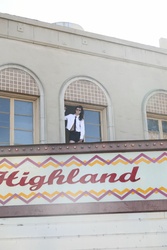
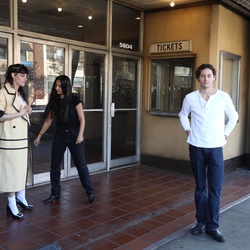
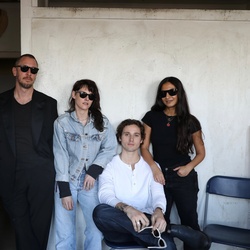
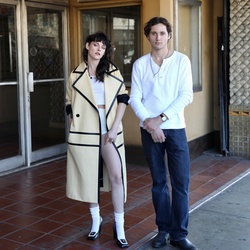
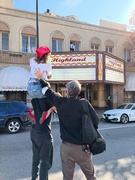
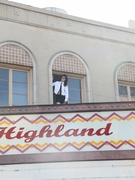
“Making films is a political act,” says actor-director Kristen Stewart. “You have to decide how you want to wield your presence and your voice.” These days she is making hers heard at Highland Theatre—the 1925 Highland Park movie palace and onetime vaudeville performance space, designed by noted architect Lewis Arthur Smith, whose resume also includes the Vista theater in Los Feliz, the El Portal in North Hollywood, and the Rialto in Pasadena, all from the mid-1920s. Stewart recently purchased the noble yet dilapidated building, which closed its doors and dimmed its marquee in 2024.
“I didn’t realize I was looking for a theater until this place came to my attention. Then it was like a gunshot went off and the race was on. I ran toward it with everything I had,” she recalls. “I’m fascinated by broken-down old theaters. I always want to see what mysteries they hold.”
Stewart’s vision for the Highland goes beyond a straightforward restoration. “It’s an opportunity to make a space to gather and scheme and dream together. This project is about creating a new school and restructuring our processes, finding a better way forward. We want to make it a family affair, something for the community. It's not just for pretentious Hollywood cinephiles,” she explains. “I see it as an antidote to all the corporate bullshit, a place that takes movie culture away from just buying and selling. I think there’s a huge desire and craving for what this kind of space can offer.”
The original bones of the theater, including an extraordinary mezzanine and stage, remain partially intact, but the resurrection of the space will require a herculean effort. Nevertheless, Stewart is determined to recapture the glamour of Hollywood’s Golden Age while positing a new kind of social cinema experience: “There are so many beautiful details that need to be restored. I think there’s a way to bring the building back to life in a way that embraces its history but also brings something new to the neighborhood and something new to the whole LA film community. That’s the point—new ideas.”
A native Angeleno, Stewart grew up in the San Fernando Valley and moved to LA’s Eastside when she was 20. “I absolutely f**king love this city,” she insists. “There’s a kind of unified dissonance because it’s not really a city as much as a cluster of neighborhoods, but there’s unity in that. I like the spaciousness. You can decide how you want to fill it.” Asked if she’d ever consider abandoning Tinseltown for the mean streets of New York City, the actor demurs. “LA gets a bad rap for being unserious, but there’s so much art and culture here. I find something a little heavy about the East Coast. When I come back to LA, I can breathe.”
Still, Stewart has no illusions about the problems facing Los Angeles and indeed most major cities in our country. She is indefatigable in her championing of the Downtown Women’s Center, an organization founded in 1978 that was the first in the U.S. to provide permanent supportive housing to homeless women—a mission it continues to pursue to this day, in addition to a health clinic that exclusively serves women in LA’s Skid Row community and a drop-in day center, where women can receive three daily meals and access to showers, restrooms, mail, laundry, and telephones. “LA is drowning in inadequacy in our response to homelessness. The city is at odds with itself,” Stewart laments. “There has to be a way to unearth a tender, empathetic approach to getting people off the streets. I wanted to align myself with an organization and people who’ve been doing this work for decades at a grass roots level. Amy [Turk, Chief Executive Officer of DWC] spends every waking hour helping these women. I’ll do anything for her.”
Reflecting on the future of the Highland Theatre, the film industry, and the city at large, Stewart remains optimistic yet emphatic: “The narrow path that’s been forged has to be broadened, not by tokenized diversity but by doing things really differently. We can’t keep making the same movie over and over again. And we can’t turn our backs on the people who are most in need.”


Click on image for full view.
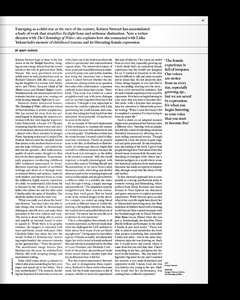
Kristen Stewart’s no stranger to the camera, but her daring directorial debut, The Chronology of Water, signals a bold and brilliant career shift.
When did you realize this was what you wanted to do, and that you weren’t meant to play it safe?
I realize this more every. Single. Day. Every time I break my teeth on a seemingly immovable object, I remind myself: Forge away from these systemic road blocks. Walk around them. Keep your teeth.
Finish the sentence: I want to be remembered as…
Nice.
What are you most excited about for 2026?
MORE. System breaking.


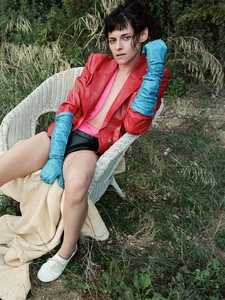
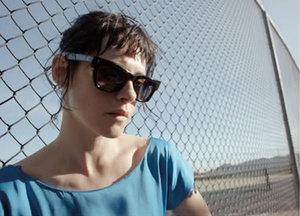























Click on images for full view.
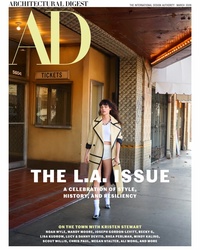
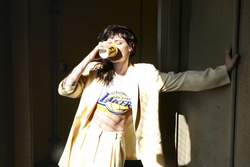
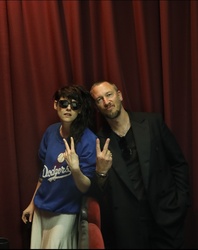
Our first guest is actress and director Kristen Stewart – shot for our three covers because one wasn’t enough. She talks over her recent directorial debut, Chronology of Water, which received acclaim at Cannes.
You can purchase the magazine here.
We will post the interview here once released.