Showing posts with label print interview. Show all posts

Thursday, September 3, 2026

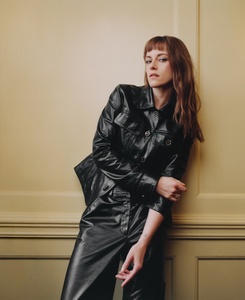
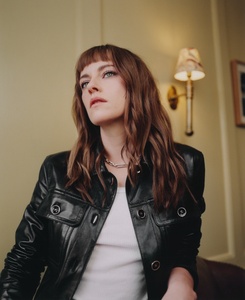
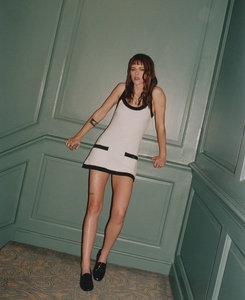
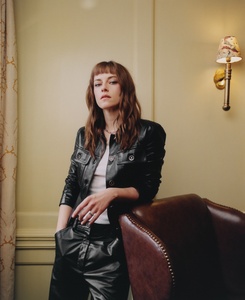
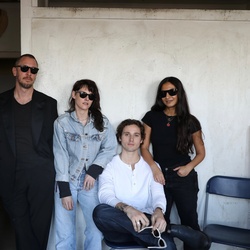
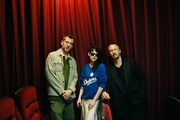
Kristen, producer Christina Vachon and director Brydie O'Connor talk 'Barbara Forever', and more, with Vulture

Experimental filmmaker Barbara Hammer made more than 90 movies over the course of her five-decade-plus career, most of them centering on lesbians — their bodies, their histories, their relationships, their sex lives. From the 1970s on, Hammer was celebrated for her explicit, avant-garde work about a population that had rarely, if ever, seen themselves represented onscreen. The results are sexy and funny, strange and gorgeous, personal and political, unconcerned with taboo or traditional structure. They’re nonlinear and free-associative, focusing on pleasure, on beauty, on authentic depictions of gay life, and often feature her own naked body — sometimes having sex with her partners (until she met her spouse, Florrie Burke, who didn’t like being on-camera). Later, Hammer filmed her body’s visible decline from a long battle with cancer, concluding with her death in 2019 at age 79. Yet despite how prolific she was, her career longevity, and all the critical acclaim she received, Hammer’s work is still relatively unknown beyond niche queer audiences.

Barbara Forever, a fantastic new documentary from director Brydie O’Connor (and produced by Christine Vachon’s Killer Films and Kristen Stewart), aims to introduce the filmmaker to a wider audience with help from Hammer herself. The film is narrated with Hammer’s voice — pulled from decades of audio diaries — and features interviews with Burke as well as footage from Hammer’s massive personal archive, including previously unreleased material. It traces Hammer’s evolution as an artist, from 1974’s Dyketactics, a four-minute short full of women frolicking and fucking in nature, to her first feature film, 1992’s Nitrate Kisses, a documentary about repressed lesbian histories that showcases real gay and lesbian couples having sex onscreen.

The documentary clarifies just how radical Hammer’s work was, and how it inspired many of the queer artists and filmmakers who came after her. Some of those artists have gone on to work with Vachon, who has produced movies like Go Fish, Hedwig and the Angry Inch, and all of Todd Haynes’s films. Another one of those filmmakers is Stewart, who said she wasn’t aware of Hammer until she was promoting her 2025 feature Chronology of Water and an interviewer mentioned that Stewart’s dreamy, erotic treatment of female bodies and natural landscapes mirrors Hammer’s distinctive style. And another, of course, is O’Connor, who has spent nearly ten years working with Hammer’s archive and has become so close with Burke that she officiated O’Connor’s wedding. The three of us talked about encountering Hammer’s work for the first time; how lesbian filmmakers are still fighting an uphill battle; why Harriet the Spy is a gay root; and Stewart’s upcoming lesbian-exploitation film, which she says is a “hats off” to Hammer and may be too wild for theaters.

What was your first encounter with Barbara’s work?

Christine Vachon: Well, my first encounter was really with Barbara herself. There was a time that predates both of your births, probably, where the New York independent-film world was very segregated. You either made very experimental movies or you made Hollywood narrative films, and then there was a thin sliver of people who made personal narrative movies. The very experimental movies tended to be almost aggressively anti-narrative, and they showed at places like Collective for Living Cinema. The last vestige of that is the Anthology Film Archives. For example, Todd Haynes’s infamous short film Superstar: The Karen Carpenter Story was rejected by the Collective for being “too entertaining.”

That was a direct quote?

Vachon: Yes. “This film is too entertaining for us.” So Barbara came along and she really was making work that was personal, experimental, and entertaining. She was one generation older than me, but we’d heard tell of her — obviously this was pre-internet. She showed up at Sundance with Nitrate Kisses in 1992. She kind of had an air of punk around her that felt wholly original. There was something about her that felt like, Okay, this is different. This isn’t just somebody proving that a movie can just be a bunch of scratched images onscreen, but somebody who has a personal story to tell, and who’s telling it in a very specifically original way. 

And then I’d see her at the New York Film Festival. When she was in New York, we’d end up at the same venues, usually celebrating Pride or New Fest or whatever was showing her work, which was usually showing mine.

Kristen Stewart: I was at Cannes in 2025, and somebody I was speaking to about The Chronology of Water was convinced and enthusiastic about my clear and distinct nod to the influence of Barbara’s movies and visuals. Some of the layering and the organic shapes and the flood of the female orgasm relating to the rocks and the beach — how we’ve always been here, and the corrosion that happens when you really fuck properly and come properly. I was like, “I don’t know her!” Multiple Orgasm was the first piece of work I saw after that.

Brydie O’Connor: I did my thesis on queer cinema, and I typed in “lesbian films by lesbian filmmakers,” and of course Barbara Hammer was at the top of the list. I reached out to her because I couldn’t see her films anywhere — it was 2016 and I was living in D.C. So I emailed her from my student email and asked, “Can I buy your DVDs?” And at first she gave me such a hard time. [Laughs] “If you’re really faculty instead of a student like you say you are, my films would be much more expensive for you.” So I said, “Barbara, I promise I’m a student, $30 for a short film is a lot for me!”

Vachon: You have to understand, for a long time, there were so few queer films of any kind available: narrative, nonnarrative, neo-narrative, you name it. We tended to try — me and other gay women — to see whatever we could.

Stewart: She’s made 90-some-odd movies, and they’re all so hard to get your hands on. It should be the most ubiquitous thing that this person spearheaded lesbian avant-garde in a way that was initially deemed contradictory. But it’s like, how can you tell a queer story in a straight line? What the fuck are you talking about? I need 50 layers, something that feels like an internal experience that is completely unaware of how it’s going to land on others. The authorship, the self-revealing, the exhibitionism, being so proud. Who the fuck did that before she did? She didn’t even have an example of that! She’s the source.

O’Connor: Learning about how she approached her practice — she was nearly 30 years old and decided to point her camera at things that were interesting to her. I thought to myself, I could try making my own work. And when I was making my first film in January of 2019, I wrote to her. I didn’t realize how sick she was at the time. I said, “Barbara, it’s me, I’m the girl who wrote her thesis on you, I’m sure one of 200. Just this year.” I asked if I could take her for coffee, get her advice, and she wrote back, “I’m at the very, very end of my life. Best of luck with everything in your career.” And she died two months later.

And when did you meet Florrie, Barbara’s spouse and the executor of her estate?

O’Connor: I reached out to Florrie just to share my condolences. When I moved to New York and was a PA on whatever I could get, I was also going up to Yale to visit Barbara’s formal archive. And I was reading, honestly, her love letters. So when I met Florrie, I said, “I’ve been reading your love letters.” We started spending a lot of time together from there. Florrie didn’t want to be documented. That was my burning question to Florrie. I said to her, “You were the love of her life, you were together for 31 years. And Barbara was the lesbian lover filmmaker.” She documented so many of her relationships — Double Strength, Superdyke Meets Madame X. I was like, “Where are you?".

How did the documentary itself come about after that?

O’Connor: When we first met for coffee, I asked Florrie if she’d be open to collaborating on a short film together. So I made a short film with her about their relationship, narrated by Florrie, and I released it in 2022. In that process I realized just how much material there was outside of Barbara’s more than 85 films — all of her outtakes, so many hard drives in her home and studio, nearly 40 hours of audio recordings. I was digitizing and finding all of this material, and I said to Florrie, “Would you be interested in talking about another iteration of a Barbara Hammer project, one in which she narrates her own feature?” She loved that. Florrie says sometimes she’d tell Barbara, “Okay, enough!” But I think that’s why they worked so well together. When I pitched it to her, she said, “That’s so Hammer.” She still calls her Hammer, even to this day. “You’ve gotta make it. Do whatever you want and show me when it’s done.”

Had she turned down other people who wanted to make a doc about Barbara?

O’Connor: She said she’d had some reach-out prior to me, but I think it was too soon and Barbara was very sick for a very long time. She said the reason she responded to me is because, in her words, I was very well researched and because I’d been going up to the archive. I think Barbara felt very invigorated by the new generation of queer artists and lesbian filmmakers, and Florrie was really excited about this idea of bridging that intergenerational conversation of queer cinema. When I reached out to Florrie, I was 23, and she just wanted to see what I would come up with.

When and why did you come on, Christine?

O’Connor: It was very early on. You were the first notch of support. I can’t credit you enough. This was my first feature, and it’s hard to sell the idea of making a film about a lesbian experimental filmmaker. You saying, “I believe in this film and I believe in you” was so huge.

Vachon: We really believed in the film and the storytelling. Killer Films doesn’t come on to that many documentaries. It makes me think about Todd Haynes’s Velvet Underground. He was faced with an issue: Almost everyone in the Velvet Underground was dead, and there was almost no existing footage of them. When we put out the call for footage, we thought, People will open up their attics and find things. Not really. But he set out to make a movie — and I know this isn’t about Todd, but there’s a correlation — that was, What is the Velvet Underground experience?”And when you see the film, you’re immersed in that.

What I felt Brydie did was say, “How can I tell a story about the creative experience that doesn’t just focus on an artist who made a great body of work, but just by the nature of that work, was not widely seen?” How do you make people understand this is something they should care about? At film festivals, you get the most interesting audience — they want to like the movie, and they’re also kind of like, What’s playing at 8? I never would have decided to see this, but thank God I saw that. So many people stepped out of the Barbara Forever screening at Sundance and said, “I don’t know that I would have decided to see this movie, but it was so moving, and it manages to step out of that narrow box of a specific film about a specific person at a specific time.”

Would you have come on to any doc about her?

Vachon: No! As I like to say, if we’re really lucky, we’ll make tens of dollars on this movie. [Laughs] We have to think about, as my partner, Pam Koffler, always says, our opportunity costs. If we’re working on that, we’re not working on something else. It wouldn’t have been any movie about Barbara. It was Brydie and Claire Edelman, who works with us at Killer, who brought it to our attention. The fact that they were both so young and it meant something to them, that was meaningful to me. This idea that a whole new generation is figuring out who she is and what she means to them, that’s the astonishing part.

I hadn’t actually seen anything by Barbara until Kristen mentioned Multiple Orgasms in the New York Times about a year and a half ago, which is embarrassing to admit because she is so completely in my wheelhouse.

Stewart: Oh, get out! Cool. Fuck yeah.

O’Connor: After Sundance and Berlin, we reached out to Kristen, saying, “We saw this in the New York Times.”

Vachon: We had a relationship with Kristen. We put her in one of her first films, The Safety of Objects, when she was 10 or 11 years old. I think she’s gotten a little tired of us saying we put her in her first film. [Laughs] And she’s in Still Alice as well. So we’ve kept in touch with her over the years. When Kristen said in the Times what she said about Multiple Orgasms, like 10 people texted it to me and 100 people texted Brydie. And then we were off to the races.

Stewart: These guys reached out and said, “Hey, would you want to just give us a hand, smack your fucking name on it and do some interviews and pictures?” It’s really hard to get movies like this visibility, in the same way that Barbara had a hard time getting visibility for her work late into her life.

What do you remember about The Safety of Objects, Kristen?

Stewart: Getting mic’d by a sound guy, and he was rubbing my sternum and saying “Wow, buddy, you got a strong chest!” And I was like, “Fuck!” [Laughs] But I worked with director Rose Troche, man. I’d been auditioning for two years, and I think that very day I said to my mom, “You know what? It’s not gonna happen. It’s all good. I don’t want to make you drive me around anymore, it’s getting embarrassing, fuck it.” But it was the day I got my first job. I was 9. And they were really cool gay women from Brooklyn. I was like, “Who are you people? I want to be you people.” I wouldn’t have kept acting if that movie didn’t happen.

So this is in many ways full circle. What does it feel like to be in the position of lending your name to something and knowing you’re going to create a whole different life for it?

Stewart: I would love it if we created a whole new life for it. But it’s reciprocal. It’s like, thank God I talked to this person at Cannes who let me know there was this whole emotional circuitry happening with my work and her. And the only reason is because she really connected to mine. We’re all in this huge ocean of each other. I get so much from bouncing off the right people. I don’t take it for granted. It’s sick.

You must get requests all the time about attaching your name or promoting something or being part of something. What goes into making that decision for you?

Stewart: To make really authentic work, you have to come from places in yourself that are kind of unsafe. I know what it takes to reach in and pull something so delicate out of the depths of yourself and put it into an environment that is the polar opposite of that. When I connect to something and its speaks to my insides, I go, Oh fuck, your heart’s out there walking around. We have to go help protect it.

I had two back-to-back meetings the other day. One with a really high-profile, good, cool director man. And that movie is a big deal. I bet everyone wants to do it. It’s very good, impeccably well written. I’d love to go see it in a movie theater. Then right after was a meeting with a young woman who’s made one movie and has a script that’s ludicrous. It’s so impossible and audacious because it doesn’t look like anything else. It requires a process that you’d have to be Christopher Nolan to support. It would take a really creative and really solid, large group of people kind of believing in magic and in redesign and repossession to make it happen. After the first meeting, I was like, “We should totally do this, this is a great movie!” And after the second one, I was like, “This is why we’re here, this is the mission!” This person needs help, even if it does seem like the path of much greater resistance. I would love to have anything to do with engendering new tonalities coming out of new mouths and voices and places in the body. Radical cinema is absolutely resurging and waiting in the wings. We’ve really just allowed ourselves to be diluted by sameness. Isn’t everyone fucking bored? I want to do shit I haven’t seen before.

In the Times, you were described as “embracing your status as a millennial queer icon.” How does that sit with you, hearing that?

Stewart: I am queer and I am here. [Laughs] I love my community. Like, a lot. When I step outside myself, it’s weird. Not weird. It’s pretty remarkable. It’s a warm place to be. Because it’s totally reflected back, and I feel that. I’m also fiercely protective. I’m so fucking mad at everyone right now. I know it’s not a productive emotion. But that’s not true. As women, we’re just told not to be angry. It’s a very productive emotion. I have a whole movie coming out of it. It’s bonkers, absolutely ludicrous, people are going to think I’m fucking out of my mind. But right now, we’re experiencing slippage, this full corrosion of any type of assurance or idea that we were kind of on an upward path toward being chill and okay and safe in this country being queer or trans or anything adjacent to the heteronormative sitch. Which I know now is a word that rubs people the wrong way, but I’m old, so I get to use it.

Brydie, how hard was it to get Barbara Forever funded?

O’Connor: It was an uphill battle. As one of my mentors said to me, “Brydie, you’re making a movie about a dead lesbian experimental filmmaker.” One question we were asked in nearly every single meeting was, and it was ultimately a reason we got so many passes: “Why now? What’s the relevance of Barbara Hammer now?” We’re still in that phase, pitching and finding ways to talk about the film, fundraising for awards and release. Just two weeks ago, I cold-emailed like 40 lesbians who work outside of film. And now I’m getting responses like, “Hi! I don’t know how you got my contact. This sounds like a great project. But I’m not going to fund it.” And I’m like, “Well, we’re coming to San Francisco, so you should go check it out in theaters!” Even if they’re not going to give us money, they might go see it.

Just any lesbian with any amount of money.

Vachon: [Laughs] You can’t build a financing plan on a bunch of lesbians who don’t work in the business. But you can, on a project like this, figure out a way to get to them and make them understand that this is something relevant.

Is it harder to make a gay film now than it was 10 or 15 years ago?

Vachon: There’s no question that the film-financing world is a lot more risk averse than it was. Does that mean that a really terrific script centered on gay or queer life won’t get made? I’m not even sure. Club Kid obviously was the sale out of Cannes. Does that say we’re in a good place? I haven’t seen the movie. I think we’re in a world of, as the French would say, “The more it changes, the more it stays the same.” We’re having the same discussion about getting queer films made now as we did in the ’90s.

That’s really surprising to hear, actually. How so?

Vachon: Well, in the ’90s, if you made a movie like Barbara Forever, the community was so starved for anything that they were gonna show up. It was very easy to be like, I’m gonna go find the community, because there are these four bars. They weren’t spread out over the internet. You just went to those bars and were like, Hey, here’s my flyer. And that bar migrated to your screening, they really did. Maybe you had a float at Pride. Now, of course, you have to locate people online in a way that’s a lot more challenging. Especially for someone my age.

A thread Barbara returns to a lot in her work, and in her autobiography, is this idea of lesbian history, and lesbian cultural history, specifically, being erased or suppressed, and her work acting as a corrective to that.

O’Connor: I kept asking myself when I was making this movie: What is it about Barbara and her practice that I really want to convey? I needed the movie to have a perspective rather than just being an overview of someone’s work. This idea of Barbara using experimental, lesbian avant-garde filmmaking as her method of alternative history-making, and as her way of conveying what it feels like and means to navigate the world as a lesbian — that was what was interesting to me. Creating records of experiences at the margins of mainstream culture.

When I started to understand my own sexuality, I was a teenager in Kansas in a very Catholic community, and I’d never met a gay person. I didn’t have a language for my queerness until I watched Orange Is the New Black. Archiving and history-making is an intellectual way to think about her, but it’s also really emotional. As a lesbian, if you don’t see all of these myriad lives, and pick pieces that resonate for you to create your own, you’re kind of winging it.

What were your Orange Is the New Blacks, Christine and Kristen?

Vachon: Harriet the Spy.

Stewart: One hundred percent. I never read it. I watched the movie.

Huge one for me too. Such a gay book. And I know Louise Fitzhugh was also gay.

Vachon: I met this woman years later by chance who’d been one of her best friends, Sandra Scarpettone, and they’d written a few picture books together. I’d read them when I was 13 or 14, and they always had some allusion, very careful — because it was published by big YA imprints — to somebody not being straight.

Stewart: Harriet the Spy, for sure. Titanic. I was just like, “Oh, both. Mega. Big time. Both.” Now and Then. Christina Ricci taping her tits in the beginning? And just being … am I allowed to say she’s hot? She was fucking 14. She is hot now, and at the time I was even younger. But I’m a Cheerleader. And ChloĆ« Sevigny was in If These Walls Could Talk 2, and she wore these Levi’s and looked like James Dean. And it was just like absurdity. Even now I’m like, Wow, that’s crazy.

Kristen, do you find yourself more drawn to making stories about queer people at this point in your career?

Stewart: Naturally, yes. I don’t want to blow my load and talk about stuff that doesn’t exist quite yet, but we’re pitching a show about the queer experience right now. Have you seen Teenage Sex and Death at Camp Miasma yet? It’s my favorite fucking movie. That pitch meeting in the movie in the car. It really fucking hits. I don’t just want to make movies that are changing things or struggling in the face of adversity. I want to wallow in our details. We’re not a minority. We’ve just let men design the story and the structure and the modes and the models, and even the way we form our relationships and family and measure our success and try to provide ourselves security. All of this is based on the fact that we’ve been literal possessions until five fucking seconds ago. And our movies feel like that, too.

The boring answer is: I want to make queer stories that are also full of joy! It’s not that. I want to make queer stories that are behind closed doors. Barbara really did sort of paint an internal kaleidoscopic experience of what it’s like to come alive while connecting to yourself because of being seen by another. Girls do that really well. That’s a magic, cinematic experience. So absolutely I wanna do a bunch of gay shit.

In the film, Barbara talks about the need to create and preserve queer history in real time — saving receipts, saving lists, saving photos. And she did that with her work. Do you feel that there’s still this need to create a sort of constant living record of gay life?

Stewart: I can’t hold onto my own ass. I cannot be laden. I hate people holding onto ticket stubs. I’m like, “Get it the fuck out!” I’m like, “I’ll remember!” But then you don’t. I guess my footage. Anything that I’ve ever shot. I have a freezer full of 150 reels of film. I want to keep playing with the work.

Vachon: I wonder if, in 30 years, somebody is going to make a movie about gay life in the mid 2020s. I really subscribe to this theory about New York, that every wave of young people who come to New York always gets told they just missed the good New York. I came back from college in the early ’80s, to the time everyone reveres the most right now. I lived in the East Village, and people were like, Yeah, you kinda blew it. Now it’s meh. People were living in squats, and the Tompkins Square riots, and all of that. But you never know until later what your era will be remembered for. I’ve been making movies for so long that I’ve seen some of my movies get forgotten about. And then suddenly, for whatever reason, 10 or 15 years later, they bubble up to the Zeitgeist again. Young people are talking about them. So I have an optimism that there’s a way now for things not to disappear.

Barbara talks about how she was losing grants because of the explicit content in her films, specifically the sex scenes. How did you decide how explicit to get with this documentary?

O’Connor: We have two very direct lovemaking scenes in the movie. We made a really specific choice with the first one; it’s a scene from Dyketactics and it’s over 60 seconds of a sex scene. In Dyketactics, it’s over the jingle, which is a little silly and upbeat and fun. We decided in Barbara Forever, especially since Florrie gave us the creative go-ahead, to make our version of that scene silent. So it’s a 60-second silent sex scene. One fear was that women coming to see it might be uncomfortable, like squirming next to a colleague, but I’ve actually had a handful of people being like, “It made me look at my own internal biases in terms of how I feel looking at lesbian sex or a nude woman’s body.”

Vachon: Especially right now, the movies that make people talk, those do well. The movies that are more controversial — all controversy means is discussion. I don’t think the movie says or does anything particularly controversial, except that it’s about an artist who loved putting her life and her sexuality on celluloid in a way that is bound to make people uncomfortable.

Barbara liked to talk about her films “converting” straight women. Do you think this might do it?

O’Connor: Letterboxd is definitely saying that’s happening. Unless you think you’re coming to a Barbra Streisand movie. Some people walked out at Sundance saying, “I didn’t know what Barbara this was about!”

Who do you see as her successors?

Vachon: Look, the first lesbian movie I made was Go Fish. Rose Troche and Guinevere Turner; I believe they were at the same Sundance as Nitrate Kisses, but you’d have to check that. [Editor’s note: It was two years later, in 1994.] I remember the experience of showing Go Fish to a mostly lesbian audience at the London Film Festival, which was not the case at Sundance. But at the London festival, the response was so explosive. It made me think, Wow, there is an audience that is desperate to see itself on screen. So without even saying who she influenced, it’s more, Who are all the filmmakers coming out of that tradition?

Looking back at Go Fish and up until now, how has lesbian cinema changed?

Vachon: I guess I don’t say “lesbian cinema.” I would say, great movies by so-and-so. All through the late ’90s and early aughts, I was called a lesbian producer. And for a long time, I was like, “Just call me producer!” And now I’m like, “I don’t care. Call me a lesbian producer.” [Laughs] But it becomes so difficult to parse out the stories: This one’s lesbian, this one’s queer, this one’s gay, this one’s LGBTQ+. I resist that a bit because I think it gets away from the point, which is that I love to tell stories about underrepresented communities.

O’Connor: I also think you like to make movies about people who live against the grain. Queerness is a way to do that.

How has spending all of this time with Barbara’s work changed you personally and as an artist?

O’Connor: It’s made me want to take creative risks and go for it. To be okay with trial and error, to pair things together in a flow I wasn’t sure was going to work.

Stewart: She’s done things I’ve tried so hard to do. I need to get an optical printerAn optical printer allows filmmakers to re-photograph their film; Hammer often used one to scratch or layer her footage.. You can’t touch your film now the way she touched it. I was even trying to organically incorporate that in our credits, at the end of Chronology, in some kind of physical, tactile way. I talked to five different companies, and they were like, “No one does that.” Everyone is so convinced that they can run it through a filter or program that they can get close and create “false artifacts.” False Artifacts is the name of a movie about people who are full of shit. I don’t know why you want to distance yourself from your medium. I don’t know why you don’t want to touch it. I want to fucking eat it!

And I think living your life every single day so faithfully sure that’s why you’re here. And not being pulled off your path by default expectations that have nothing to do with what you want and desire. And touch other people. That’s it. I’m constantly telling myself, if I’m in a superficial drama or wasting my time doing something not for the cause, it’s like, “What are you doing? Barbara Hammer, dude!”

What are you working on now?

Stewart: I’m getting ready — this is so crazy — to make a show called The Challenger for Amazon about Sally Ride, the first woman in space. It’s this gargantuan job and it’s crushing me and I can’t believe we’re doing it. I’m also writing two things I want to have done yesterday. One is pretty reliant on the seasons, and it’s very much an L.A. film. The other is an exploitation film. And it’s a pretty committed exploitation film. You might not be able to put it in a theater.

What’s that one?

Stewart: Do I tell you? It’s called Get Fucked. Or, in the non-explicit title, which we’ll need if we’re allowed to put it in a movie theater, which, I don’t know, but it’s I for an I. I want them both finished by the time the Amazon show is done in February. By that time I hope to be prepping one. I hope the screenplays will be done. They already exist, the people are real, they talk to me all the time. They want to live really badly. I’m a really impatient, impulsive motherfucker, so it’s kind of nice to have six months and be like, No, you sit and make sure it’s completely ready before you start breaking ground. But I think one might take four weeks to shoot and the other might take two years, because it’s a more meditative experience. I’ve already started shooting one of them myself.

This exploitation film is the one you’re channeling your anger toward?

Stewart: Yeah. It’s more about violence toward women. There’s a queer love story in the center of it, because I need the power to come from somewhere I can really feel and not just anger. It has to also come from feeling good. A good exploitation film has to come from revenge, but these girls are ethical and thoughtful and PC and really woke. So they’re going to do it the “right way.” I try to chill. I used to be way crazier when I was younger. Right now, I just can’t look at these men in charge and I can’t listen to them talk. The poison and vitriol is so contagious. If I could just pitch you the entire movie right now, you would totally understand it, but that’s not what this interview is about!

Well, it is in that we’re tracing Barbara’s influence up until now.

Stewart: It is true. When you see the movie, you’re gonna be like, Oh my God, you are literally full hats off to Barbara the entire time they were fucking. I want to make some serious, Barbara Hammer, self-celebratory cinema, within something quite fucking ugly.

Source

Sunday, June 28, 2026

Kristen talks to Vogue France at the Biarritz Film Festival


Google translated.

Long associated with a certain Hollywood image, Kristen Stewart has for several years chosen a path free from its constraints, guided by curiosity and the need to forge her own voice. A devoted actress of independent cinema, she has found in France a space of freedom that complements her taste for experimentation, as well as her evolution towards directing. In 2025, she unveiled her first feature film. Entitled * The Chronology of Water* , it is an adaptation of the eponymous memoir by American author Lidia Yuknavitch . A visceral, feverish, and incandescent work, it premiered at Cannes in the Un Certain Regard section, then at Deauville, where it received the Revelation Prize, and finally at Biarritz, where the fledgling Nouvelles Vagues film festival is celebrating its fourth edition this year.

Following her collaborations with Olivier Assayas ( Clouds of Sils Maria, Personal Shopper ) and Quentin Dupieux (whose new feature film, Full Phil , will soon be released in theaters), Kristen Stewart continues her special relationship with French cinema – a connection that notably led her to become the first American to win the CĆ©sar Award for Best Supporting Actress. A friend of Chanel , a major partner of the Biarritz Film Festival , she is currently dedicating her early summer days to highlighting the new voices of contemporary cinema. This provides an opportunity for a conversation about youth, its desires, and its artistic concerns.

You are chairing the jury of his Nouvelles Vagues festival. What does that mean to you?

First of all, I'm looking forward to getting to know this jury, because I helped put it together and I'm really proud of each and every one of its members. I think they're all artists who have something to say, and I'm eager to hear them. But to get back to your question, I believe that being president of any jury is almost a symbolic role. It's more about embodying the festival's intentions to the public. In a way, I'm its spokesperson.

Do you enjoy this role?

Yes, of course. Words matter enormously. Sometimes it takes time to find the right ones. Right now, I feel like they're carrying me, so I'm happy to share them.

This festival champions new voices in cinema.

Yes, and more specifically, those of filmmakers who refuse to conform to an industry that distances them from who they are. I think making dangerous films protects us, while making "safe" films puts us in danger. A film that takes no risks is a film that renounces itself. It only perpetuates the expectations of those who think only of profit. A film isn't made to please everyone. It should never seek consensus. It's precisely its rough edges that make it essential. As soon as you try to smooth them over, you lose what makes it alive. You should always be able to say to yourself: "I know it's a little crazy. I know it might make people angry. But I still think it's essential to say it." It's a matter of honesty. Living a lie is the best way to erase yourself, and then to self-destruct.

Hence, in your opinion, the importance of watching films together and comparing points of view?

In fact, there's something very vibrant about sitting in a darkened room… You're with your friends, but also with many strangers. Our emotions overlap, clash, deconstruct each other, and then reconstruct each other. You form an opinion, then completely question it after a discussion, because you think: “Ah, I hadn't seen things that way.”

For several years, you have maintained a special relationship with French cinema, notably through your collaborations with Olivier Assayas and Quentin Dupieux. What have you found in French cinema that you haven't found anywhere else?

Absolute independence. And true creative autonomy. I obviously can't speak for all French filmmakers, but I get the impression that here, they don't ask themselves: "What do people want to see?" But rather: "What do I want to do?" You see what I mean?

So, it is this freedom to start from one's own desire that seems essential to you?

Exactly. We need to create from the inside out, rather than asking ourselves, “What might people buy?” And in France, there's also public funding that supports this vision. A society is more balanced when everyone can express themselves. It's essential not to silence artists, filmmakers, writers, and thinkers. Every time I've worked on a studio film, big or small, we've been asked to change something simply because some guy in a suit didn't like a detail or thought the film would be more successful if my hair were longer, blonder… And I think to myself, “There you have it. That's fascism. That's 1984. ” And I refuse to be a part of it.

At the opening ceremony, Isabelle Huppert said that cinema was “the art of first times”.

I love this idea. It's given me a lot to think about. Because ultimately, we do things over and over again… but we have to manage to give the feeling of a first time. And I believe we can always recapture that feeling.

Do you remember the first film that made you feel that cinema could be totally free?

It happens to me all the time. It even happened during this festival.

Really? That's good to know.

Yes… but I can’t tell you which film it is.

I suspected as much… So we'll have to wait until the end of the festival to find out. And if you could relive it all for the first time, which would you choose?

My God… Maybe I should eat some ice cream. Right now. Because it's really very hot.

After all these years, are there still experiences you would like to have for the first time?

This just happened to me. I had two truly transcendent experiences in the last month. I was filming a movie with Panos Cosmatos called Flesh of the Gods , with Wagner Moura and EsmƩ Creed-Miles , who is also on the jury for the Nouvelles Vagues festival . The three of us act together. We started with the script, and then the shoot evolved into a completely organic creation, where our sensibilities intertwined. Together, we crafted a kind of magnificent nightmare.

What is the film about?

It's about self-discovery. It's a fantasy, a vampire film, a heartbreak story… all of that at once. It's profoundly sad because it confronts what it means to be alive: the sorrow it entails, but also the pleasure… and the close connection between the two. Then, suddenly, everything shifts toward a form of absolute transcendence. I've never felt so powerful. There's a scene near the end of the film that I might never have experienced if I hadn't been asked to play it. It's an incredible gift to be able to pretend to experience something… and then discover that this experience ultimately becomes real for you. You think to yourself, “Now I know.”

Perhaps this is the most precious thing that cinema can offer: transforming the imaginary into a real experience.

Absolutely. And then there was this other experience. At the end of filming, after that feeling of having completely pushed ourselves beyond our limits, the whole crew went to a rave in Cologne. I'm not really someone who goes clubbing… In Germany, it's a very particular culture. There are a lot of films about this European electronic scene, like Eden [by Mia Hansen-LĆøve , released in 2014, about the Parisian house community and the birth of French Touch], which I love, but I'd never really understood what it was all about. And there I was, surrounded by thirty-five or forty people who had become my best friends in three months, with this almost sacred feeling of love and connection… The music started, and I thought, “My God… I'm a raver. That's it, I finally understand.” At thirty-six, dancing with my team, in total abandon, right after feeling like I'd reached a huge milestone… it was extraordinary. It made me want to make films all my life.

That looks incredible.

Yes, it was absolutely crazy. I couldn't believe how beautiful it was. I don't think I've ever had so much fun in my entire life.

Speaking of abandonment, you also became a director. What do you think of the current state of cinema, particularly with the arrival of new voices and new perspectives behind the camera?

Everything is starting to crack. Those who hold the keys to the castle are mostly very wealthy white men, many of whom have never experienced anything worth passing on or anything that could truly teach others. So why should they be the ones to decide who deserves power, space, or opportunity? Why should they be the only ones making these choices? They are destroying the world. The system is crumbling. And that's precisely what's exciting because it means we now have the opportunity to build something new. And I have a feeling that this change is already happening, all around us.

Source

Friday, June 26, 2026

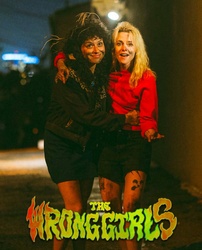
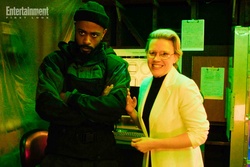
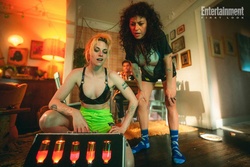
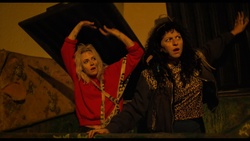
FIRST 'The Wrong Girls' Images


HLyjTdHbMAAJKNK.jpgIMG_4691.JPGIMG_4692.JPGIMG_4690.JPG
HLw1ob6XAAAbiMk.jpgHLw1ndAWEAAkAb5.jpgHLw1ocBWYAAvx3i.jpg

Click on images for full view.

Kristen Stewart and Alia Shawkat are about to go on a hell of a trip.

The Twilight and Arrested Development alums star in Neon's The Wrong Girls, a wild new stoner comedy from writer-director Dylan Meyer, and Entertainment Weekly has your psychedelic first look.

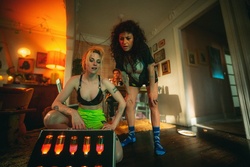
Meyer's feature debut follows Frankie (Stewart) and Molly (Shawkat), a pair of pot-loving best friends who get mixed up in a case of mistaken identity that throws their lives into chaos.

"Frankie and Molly are codependent boneheads who have spent the last 10 years blissfully in a fog of weed smoke, co-signing each others' bad choices and screening adulthood's increasingly insistent calls," Meyer tells EW. "Just as Molly's boyfriend asks her to move in with him, Frankie is mistakenly given a briefcase full of glowing vials of an experimental psychedelic."

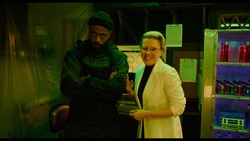
And that's when things get crazy. The drugs leave Frankie and Molly with lingering telepathy, with each other and their cats. Their possession of the valuable property soon makes them the target of uptight Danish villains in white suits, who don't just want their drugs back — they also now view the girls as disposable human test subjects. Wrong turns and stupidity ensue at every corner.

"It's a stoner girl comedy, and it's really f---ing stupid," Stewart previously teased. "I think you'll like it."

The star-studded cast also includes LaKeith Stanfield as NotMetalHeadDave, the for-hire action man who gives the girls the briefcase; Zack Fox as Molly's "wonderful," as Meyer describes him, boyfriend Josh; Tony Hale as a "douchey real estate developer"; Kate McKinnon as Dr. Olsen, the Danish scientist who created the drugs; Geena Davis as Dr. Olsen's partner in life and science, and Seth Rogen and Kumail Nanjiani as Frankie and Molly's judgmental talking cats.

"The Wrong Girls was born from my relationship with my best friend and producing partner Maggie McLean, the babe I couldn't do anything without," Meyer shares. "It's a love letter to wayward chaotic women and the essential platonic partnerships that prop them up. The Wrong Girls may feature giant squids, Danish hitmen, talking cats, and supernatural abilities, but the emotional story and stakes are pure memoir."

The Wrong Girls opens in theaters on Aug. 14.

Source 1 2 3

Thursday, May 21, 2026

Kristen and Alia Skawkat talk 'The Wrong Girls' with Highsnobiety

Excerpt from the interview:

“ I’ve been sent plays before,” Shawkat says, “and I’ve just never responded strongly enough to them because it does take more of an uprooting than film or TV. But I really believe that characters come to you for a reason. And I feel like, in some weird mirrored way, I’m going through a similar thing as Mae. So I was just like, I have to work through this.”

This is where I get confused. Mae is, to put it mildly, a loser. For most of the play, she’s jobless, single, completely aimless, and too disassociated to even look her dad’s illness in the eye. Meanwhile, Shawkat’s Search Party has been called the “near-perfect,” “razor sharp” portrait of her generation. She’s coming off a successful collaboration with her friend Hailey Benton Gates in Atropia, which won the Sundance Grand Jury Prize in 2025, and she’s just wrapped production on a new stoner comedy, The Wrong Girls, playing opposite Kristen Stewart. She has a child and a vibrant art practice outside of her acting career. Mae’s stagnancy feels like the diametric opposite of her life, so full of motion and surprise. I tell Shawkat that I can’t square the comparison.

“ I mean, that’s what’s so funny,” she says. “It’s not what it looks like. There are so many people who I look at and go, ’Oh wow, they seem to have it all together. They have a family and they’re working and they’re an artist and in good shape and all these things.’ But life is never that easy, you know?”

For years after Arrested Development, Shawkat was caught in a churn of false starts, auditions that left her with the sense that she was “too weird” or “too ethnic.” Her father is Iraqi, not exactly the Hollywood default in post-9/11 America, and as the industry changed, she was pinballed by its whims, one minute cast aside, the next tokenized in a parade of “diverse voices.” Meanwhile, her former co-star and close friend Michael Cera was booking major roles in Superbad, Juno, and Scott Pilgrim vs. the World. She was stuck. It’s disorienting to be pulled in so many different directions by people who don’t actually know you.

“I think overall I’m incredibly lucky,” she says. “I’m really grateful, but I’ll always relate to that thing of feeling like you’re never as in step with the things you want to be doing in your life. You’re always a step behind. You’re trying to communicate something, but it’s not coming across, or your connections are never deep enough, or you’re not having good enough sex, or you’re hanging out with your best friends and then you leave feeling empty and you’re like, ’What happened?’ Life is just that mix.”

“And if it’s not, then good for you,” she adds. “But I’m a highly sensitive person and somewhat neurotic.”

We both laugh. I tell her my dad used to call me a “HSP.”

“ Wow, there’s a name for everything,” she says.

Shawkat has always been drawn to subversive women. As Mae, she fantasizes onstage about being tied up by a handsome cowboy every moment she gets to herself — and even some that she, awkwardly, doesn’t. In one particularly memorable scene, Mae is wrapped in the sheets of her sister’s childhood bed, feverishly masturbating, when her father bumbles in. It’s the first time in many years of covering theater that I’ve seen a woman masturbate onstage. 

“ Women’s sexuality is the biggest threat, I think, to society,” Shawkat says. “That’s why it’s always been controlled.”

She’s queer, and even as a teenager, she was delivering performances that pushed against the Hollywood mainstream. Consider the cult classic Whip It, a campy coming-of-age flick centered on roller derby, in which she played opposite Elliot Page. The movie was a gay awakening for so many people in my generation, even if the gay parts were mostly subtext. And this August, Shawkat is back at it with The Wrong Girls, the aforementioned stoner comedy written and directed by Dylan Myer (the prolific screenwriter and director who happens to be married to Kristen Stewart).

“Years ago, post-COVID but right before I had my son, Dylan and I met for a coffee,” Shawkat tells me. “She sent me the script, which she had written like eight years before or something. But no one was ready 

In the teaser for the movie, which dropped in April, Shawkat is standing at a cutting board crushing cereal and gummy bears on top of three slices of bread. “What’re you making, dude?” Stewart asks, rolling a joint. 

Shawkat tells me that Stewart really had been smoking a joint the afternoon they got together to film the teaser in New York. She’d been worried about getting a contact high before her show that night. 

The two play a pair of best friends loosely based on Meyer and her producing partner, Maggie McLean, in a cast rounded out by a list of comedy royalty: Seth Rogen, LaKeith Stanfield, Kumail Nanjiani, Zack Fox, and Tony Hale. The movie follows Shawkat and Stewart’s characters as they take an experimental new drug that endows them with the power of telepathy, setting off a psychedelic romp.

“Alia is an acrobat and, like, a genius,” Stewart says of working together. “When an actor just runs absolute heart circles around you… I dunno if I’ve ever been wrapped in that flavor of warmth on a movie. Making The Wrong Girls was like making a cartoon where everything big and scary or small and boring was fodder for our jokes and our inner world.”

“That girl has been going places since she was a baby,” Stewart adds of Shawkat. “Everyone just needs to keep the fuck up. She is kinda scary in how impressive she is. It’s very hot.”

For Shawkat, the experience was just as transcendent. “It was so fun to play someone so dumb,” she says. “Not to be hyperbolic, but it’s one of the best shoots I’ve ever done.”

Source

Saturday, May 16, 2026

Kristen talks to Variety at the Cannes FIlm Festival about 'Full Phil' and more


Kristen Stewart was ready to sign on to Quentin Dupieux’s “Full Phil” before she even read the script.

The Oscar-nominated actor and director had long been a fan of the French filmmaker — known for his absurd and surreal style — and was curious about his DIY approach, often shooting projects quickly and on a microbudget.

“I love his movies. They just don’t look or feel like anyone else’s, and those are the types of directors that actors are so lucky to be able to follow,” Stewart tells Variety from an airport lounge in the Canary Islands — where she’s currently shooting Panos Cosmatos’ vampire thriller “Flesh of the Gods” — before heading to Cannes for the “Full Phil” premiere. “He holds the camera at all times. You are with him, connected completely. He knows how he’s going to edit it by the end of the day. If he’s missing a shot, he gets it. He’s beyond an auteur, he’s like a mastermind.”

Debuting in the Midnight Screenings section on Saturday night, the hour-and-20-minute “Full Phil” follows an American father-daughter duo — played by an on-form Woody Harrelson and Stewart — who take a trip to Paris in an attempt to reconnect. Their plans are quickly deterred by protests, a nosy hotel employee, an obsession with a ’50s horror movie and an endless stream of French cuisine, with each obstacle more ridiculous than the next.

“That’s the Quentin Dupieux special because he shoves a lot into that short period of time,” Stewart says. “His movies are kind of like sucker punches, but sweet ones.”

Below, Stewart speaks more about finally working with Harrelson, eating an obscene amount of food while filming, her disdain for the U.S. studio system and more.

You just started filming “Flesh of the Gods,” a vampire thriller co-starring Wagner Moura. How’s it going?

We’re in week one, so we’re just all hands on deck right now. We’re just like, fucking knee deep and having an incredible time. Panos is the shit. We’re just like, lost in his psychedelic dreamscape.

Tell me about how you first got involved in “Full Phil” and what drew you to the project.

I heard [about Dupieux’s process] and I was just like, “Oh my God, I’m dying to work with him.” And it’s kind of new for me. His wheelhouse is grounded and tender, but definitely surrealist and occasionally broad. Also I was like, totally in love with Woody and have been forever. As an actor, I just admire him so much and he’s such a nice guy. It’s a really sweet story, a father and daughter trying to reconnect and doing all the wrong things in order to achieve that but in such an absurd and kind of devastating, sardonic, fucked way. I was like, “Oh man, I really think that could be a great movie.” And I just wanted to work in Paris and I wanted to meet that director. I’m pretty obsessed with him.

What was it like working with Harrelson and playing his daughter? Was this your first time meeting him?

We’ve been trying to work together for years, and it just never lined up. I had a pretty out-of-the-blue hang when I was a teenager with him. We were talking about another film and he came and took me to a vegan spot in the valley and we had a really nice time. Like, we just became friends even when I was kind of a kiddo. When I heard he was doing this movie, I just — sometimes you don’t have connections with people, sometimes you can’t fathom like, “Oh, I could be your kid” — but with him, it was such an easy fit. And we drive each other kind of crazy in real [life], so it’s perfect. He reminds me of my dad in some ways. Sometimes I’m like, “OK, stop yelling at Woody” — I’ll realize I’m being like, “No! You don’t understand!”

You two are basically arguing the entire film. How much of that was in the script and how did you establish that father-daughter banter?

It all comes from Quentin. He has a young daughter, and I think he is looking into the future sort of petrified. I mean, he was gleefully encouraging me to be as bratty as I possibly could because I think he was just trying to create his worst dream. Also, Woody’s character Phil, he’s really just got blinders on. And it’s so sad and endearing to see somebody so desperate in reaching out for love, but doing it in all the wrong ways. He’s a total fucking narcissist, but then at the same time they still have this history that he wants to draw from. To have real, transparent conversations with your family, especially with your mother and father, it’s just tough. He needs to actually see her as a human being that is not of him. That’s the thing, some narcissistic fathers — I don’t even mean this as disparaging, but it’s an epidemic really — they love you in so far as they can kind of claim you. It’s like their pride is related to the fact that they’ve created you. And you’re like, no! I am me! I am not you.

You are also non-stop eating food throughout the film. Were you actually eating and how did you do that?

It was the hardest part of the entire job, because we also never stopped talking. I was running lines for weeks being like, “Oh cool, I can do this, this and this.” And then I was like, “I can’t get a word out of my fucking mouth, considering he wants me to never have it empty!” Logistically it was a struggle also working with renowned French chefs who really didn’t understand the filmmaking process and wanted it to taste really good. And I was like, “You guys are going to kill me! I need this to be like, cauliflower as fuck or I’ll die.” It’s honestly an incredibly grotesque and honestly hilarious and very real kind of metaphor. I mean, we’re walking around the streets of Paris eating donuts and they’re rioting and we’re like, “Where are we going for dinner?” So the food really mattered, and I walked uphill a lot and I just ate a lot. There was no way around it. We only did very long takes, so there was no spit-bucketing. There were no cutting points. Every once and a while, I would be like, “I have to [stop].” The bites were never big enough. He would literally come over to me and make a certain sort of piggy face and I would realize I wasn’t eating enough and be like, “Oh God, OK, I’ll do more on this one.”

You’ve talked a bit before about how difficult it is to make a film in the U.S. now and your desire to work more internationally. How did your experience on “Full Phil” underscore that feeling?

I’m just so sick of the rules and I’m so sick of the system. It is not designed for artists to express themselves. We’re just really under the thumb of different priorities that don’t align with real dream-making. And I don’t mean to wax poetically because I mean this so very literally, I just don’t think that it’s possible to create sort of radical, vital work under capitalistic parameters. Especially like, most of the people in charge are a bunch of bros that have come up under a bunch of other bros and those people don’t really identify with the type of things that I personally want to say, that the people I align with want to say.

You know, the three movies that go to Cannes and do well, they get bought by the studios that I somewhat admire that do well at distributing them and winning fucking Oscars. And that’s cool. But it’s like, totally not enough. And what, are we going to like, wait to be chosen like a fucking golden ticket? Like, “I got the golden ticket! I can make one fucking movie!” We need to make more work. There needs to be more work, more output, more connection and less fear and less fucking bureaucracy and also less making billionaires more fucking billionaires. It’s driving me insane. We spend so much money, we just like hemorrhage money making stuff in a system that honestly is not designed for us. Like we can’t shoot in L.A., it’s absolutely impossible and it’s where our fucking entire business was born. There’s no way to play the game anymore.

The studios aren’t really even in Cannes this year!

It’s OK, because guess what happens when things break or die? It’s good, I think. Especially because I’ve been working since I was 9, I see a horizon that doesn’t resemble anything that I’ve seen before. It’s so new because our industry is so utterly devastated. And so I think actually, there’s so much hope in that. We just have to grab it.

You were here last year with your directorial debut “The Chronology of Water.” How do you reflect on that moment now, especially the experience of trying to get distribution for the film?

Oh gosh, it’s been such a gauntlet, that one. I’ve just designed the record art for releasing our soundtrack, and so it’s truly now the last creative thing that I have to leave on the table for that movie and fully move on. The two next films that I want to make are very, very clear to me. I want to make one by the end of the year after I work on this Amazon show and then next year I’m going to be shooting in April this other thing that I have in mind. This is what I want to do and it’s completely changed my life realizing that particular project, really just pushing it all the way. And so I feel like I’ve lost so much fucking time. I’m like, it’s been one year and I’ve acted in three more movies. What?! I love every director I’ve worked for, I absolutely love my job, it’s why I love directing. But at the same time, I just can’t fucking do that anymore or I’m never going to make my [own movies].

Speaking to the whole how do you get stuff seen and share it with people who actually care, don’t hold me to anything … But my goal is to make something for really nothing with my friends before the end of the year and put it on fucking YouTube. And seriously, whatever money we make from that will be what I spend on my next one and there will be a trickle-down effect. I just don’t want to talk to these bros anymore. And by the way, I’d be lucky to have anything I worked on be distributed by like, A24 or Neon — people who, by the way, I am friends with. Like, these are my homies. It’s just that I don’t want to make… I love Hollywood, I love big movies, [but] I don’t think I’d be very good at making them. I want to make weird shit. And I’m fully OK doing that in a kind of insulated, bizarre way. But I don’t want to do the thing where I wait five years for someone to give me $1 million to make something. I’m going to make it fucking tomorrow. Because also like, what the fuck. I’ve been working for a long time — I’m just going to sit here doing the same thing over and over amassing wealth? No. It’s a ridiculous way to live your life.

I have to ask — at Cannes last year, Kim Gordon told us that there was a biopic series you two were working on together at some point. Is that still in the works?

She wrote a memoir that’s one of my faves, it’s called “Girl in a Band.” And I think that they were trying to think of some beautiful anthology approach to doing her life story but kind of in an episodic, elliptical way with different directors. But I think that changed and Kim’s working on conceiving the best approach. They were talking to me about it for a second, and I think that’s actually how I met Kim a few years ago. She came up to me at a Chanel afterparty thing once. She kind of floated over like the punk rock Joan Didion and said, “Hey, sorry I can’t really hear in here, but it’s really nice to see you.” Just like the warmest, coolest — she really feels like energetically godmom stuff. I mean, I would love to be a part of that project, but I’m not sure actually what they are doing with it. I do know someone’s taking care of it though, which I’m really looking forward to.

Source

Tuesday, May 12, 2026

Woody Harrelson talks about Kristen and 'Full Phil' with Deadline


Extract from the full interview

Not many American actors make the transition from TV to movies, but even fewer cross over from Hollywood to Europe. Four years ago, while still a bankable name in commercial studio franchises, Woody Harrelson swanned effortlessly into the international arthouse, playing the Marxist captain of a doomed cruise liner in Swedish auteur Ruben Ɩstlund’s second Palme d’Or winner Triangle of Sadness. This year Harrelson returns to Cannes in Full Phil, the latest by Quentin Dupieux, France’s wizard of odd, acting with Kristen Stewart in a film the director describes as “Emily in Paris in hell.”

DEADLINE: How did you get involved with Quentin Dupieux?

WOODY HARRELSON: There’s a lady who works with me, Ilya [Bronchtein]. She was my assistant, and then she became a producer. Within two weeks of starting producing, she was telling me, “You have to watch this guy’s movies.” I finally watched his [2023] film Yannick and I was like, “Oh my god, this guy is amazing.” Then I watched The Second Act [2024] and I’m like, “Holy sh*t.” Because you never know. The first one, well, maybe that’s just luck. But not when you see another one that’s also brilliant. I was super interested. And she says, “Why don’t I arrange a meeting?”

Well, I wasn’t planning on going to Paris, but we arranged a meeting with Quentin and Hugo [SĆ©lignac], his producer, and it was great. I said, “What are you doing next?” and Quentin says, “Oh, I’m doing this movie, Full Phil. I’m trying to get Jim Carrey, but he hasn’t read it, and I can’t get him to read it.” I’m like, “I know Jim! I’ll get Jim to …” And then I feel a kick under the table and it’s Ilya. [Laughs.] She’d already read the script, and it was in her mind that she wanted me to be able to do it. Luckily, after that meeting, he was like, “Well, I think Woody might be good for this too.” And that’s how it all went down.

DEADLINE: How long did it all take?

HARRELSON: Oh, from that meeting to the end of shooting? I think all took place within two months. Maybe two and a half. I mean, it was amazing. He’s like no one else. He writes it, he directs it, he shoots it, he edits it. So, if you have a question, you got every department right there. It was amazing, because he shoots so fast. The first day, I think we did maybe nine pages, just me and Kristen in a hotel room, and then we came back the next day and did another eight or nine pages. You’ve got to be on your game with him, because he’s ready to go.

DEADLINE: What can you reveal about the plot of the film?

HARRELSON: Well, I can tell you that it’s a father and daughter who are in a very often combative situation. They decide to take a trip to Paris to try to get the relationship on a better footing, and things don’t go to plan, necessarily. I don’t think I should say too much.

DEADLINE: Did you know Kristen before?

HARRELSON: Oh, yeah. I met Kristen when she first started out and there was this project that I did, which we wanted her to do and she agreed to do it, but then she ended up dropping out of it. But I’d heard about her from Sean Penn, who was saying, “This girl’s really got it.” And of course, that’s proven true. She was fantastic in this [Full Phil]. I haven’t seen it yet, but I hear it’s very good, so I’m excited to see it.

DEADLINE: What kind of performance is it from you?

HARRELSON: Well, it’s kind of theatrical, in the sense that Quentin doesn’t do a lot of different sets, so it’s very much like doing a play. It’s the two of us going back and forth. And even when we do go to another place, we go to a restaurant, you know what I mean? But it’s got his signature sense of humor, and also his intensity. It’s pretty cool.

DEADLINE: People thought you’d be coming to Cannes with Ruben Ɩstlund’s new film, The Entertainment System Is Down. Did that reunion happen in the end? Because you said you were going to be in that film — whether he wanted you to be in it or not.

HARRELSON: Oh, I was determined to be in it. [Laughs.] But no, it didn’t work out, because the part I wanted to play, he ended up cutting that part out. I mean, he’s got so many people in that film, because it’s about an airplane full of people. So, yeah, I get it. It wasn’t important to the story, but it would’ve been a fun part.

DEADLINE: Does Ɩstlund have a similar personality to Dupieux?

HARRELSON: They’re much different people. I look at Quentin as more like a Fellini. I don’t know why, but that’s how I imagine Fellini would be. He’s a big personality. Ruben is also super fun, an interesting guy, but they don’t seem similar to me. They seem very different.

DEADLINE: Why did you want to do Triangle of Sadness?

HARRELSON: I saw The Square and Force Majeure, and I was like, “Oh, man.” But what was funny was that my agent, Jeremy [Plager], was the one that wanted me to watch them. I think I watched The Square first. And you know how Ruben has such a unique vision, and how he’ll frame a scene, and the camera will stay on it for too long? And so, I watched the first 10 minutes and I turned it off. I’m like, “Jeremy, are you out of your mind?” And he says, “Watch the rest of the film.” So, I watched the rest of it and then I saw what he saw: “Oh my god, this guy is a real unique talent. He’s brilliant.”

DEADLINE: Full Phil is in the Official Selection at Cannes. How many times have you been there?

HARRELSON: I don’t know. Half a dozen, maybe? But the greatest experience was, for sure, with Triangle of Sadness. I mean, it was incredible. The reaction of the audience to that film, I couldn’t believe it. I thought it would be good, but I didn’t know it would be like that. At the time I was doing a hundred days of no drinking. I remember going afterward to the party on the beach, and I met literally the greatest sommelier in Europe. This guy! He could guess the region, the year and all that, with just his sense of smell. It was a big night already, and he says, “I’ve got a special bottle for you.” I was like, “Oh, I’m on my 98th day of no drinking.” [Laughs.] Oh, my f*cking god! I realized later, that was so stupid — I should have taken a mulligan. But I wouldn’t do it. I didn’t drink that night.

DEADLINE: Are you planning a renaissance in European cinema?

HARRELSON: I’m really interested in doing European films, particularly French. I’ve got to meet a few great French directors. You’re not necessarily going to get paid [big money] in Europe, but you’ve got to overlook that. The Europeans make great movies. They do. They make great movies here in America but, per capita, I’d say they’ve made more great movies over there.

Source 

Wednesday, February 4, 2026

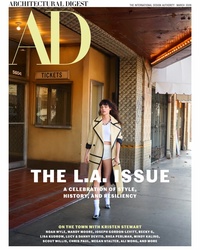
Kristen covers Architectural Digest - March 2026


With Kristen Stewart on the cover, and her commitment to reviving LA’s Highland Park Theatre, ou.jpgIMG_2937.JPGIMG_2935.JPGIMG_2938.JPGIMG_2936.JPG

BTS and Outtakes

IMG_2949.JPGIMG_2975.JPGIMG_2974.JPGIMG_2972.JPGIMG_2986.JPGIMG_2984.JPGIMG_2987.JPGIMG_2998.JPGIMG_2988.JPGIMG_2996.JPGIMG_2985.JPGIMG_2994.JPGIMG_2993.JPG

Click on photos for full view. 

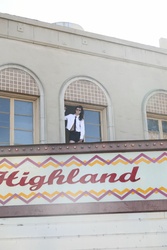
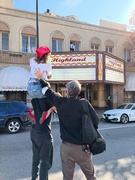
“Making films is a political act,” says actor-director Kristen Stewart. “You have to decide how you want to wield your presence and your voice.” These days she is making hers heard at Highland Theatre—the 1925 Highland Park movie palace and onetime vaudeville performance space, designed by noted architect Lewis Arthur Smith, whose resume also includes the Vista theater in Los Feliz, the El Portal in North Hollywood, and the Rialto in Pasadena, all from the mid-1920s. Stewart recently purchased the noble yet dilapidated building, which closed its doors and dimmed its marquee in 2024.

“I didn’t realize I was looking for a theater until this place came to my attention. Then it was like a gunshot went off and the race was on. I ran toward it with everything I had,” she recalls. “I’m fascinated by broken-down old theaters. I always want to see what mysteries they hold.”

Stewart’s vision for the Highland goes beyond a straightforward restoration. “It’s an opportunity to make a space to gather and scheme and dream together. This project is about creating a new school and restructuring our processes, finding a better way forward. We want to make it a family affair, something for the community. It's not just for pretentious Hollywood cinephiles,” she explains. “I see it as an antidote to all the corporate bullshit, a place that takes movie culture away from just buying and selling. I think there’s a huge desire and craving for what this kind of space can offer.”

The original bones of the theater, including an extraordinary mezzanine and stage, remain partially intact, but the resurrection of the space will require a herculean effort. Nevertheless, Stewart is determined to recapture the glamour of Hollywood’s Golden Age while positing a new kind of social cinema experience: “There are so many beautiful details that need to be restored. I think there’s a way to bring the building back to life in a way that embraces its history but also brings something new to the neighborhood and something new to the whole LA film community. That’s the point—new ideas.”

A native Angeleno, Stewart grew up in the San Fernando Valley and moved to LA’s Eastside when she was 20. “I absolutely f**king love this city,” she insists. “There’s a kind of unified dissonance because it’s not really a city as much as a cluster of neighborhoods, but there’s unity in that. I like the spaciousness. You can decide how you want to fill it.” Asked if she’d ever consider abandoning Tinseltown for the mean streets of New York City, the actor demurs. “LA gets a bad rap for being unserious, but there’s so much art and culture here. I find something a little heavy about the East Coast. When I come back to LA, I can breathe.”

Still, Stewart has no illusions about the problems facing Los Angeles and indeed most major cities in our country. She is indefatigable in her championing of the Downtown Women’s Center, an organization founded in 1978 that was the first in the U.S. to provide permanent supportive housing to homeless women—a mission it continues to pursue to this day, in addition to a health clinic that exclusively serves women in LA’s Skid Row community and a drop-in day center, where women can receive three daily meals and access to showers, restrooms, mail, laundry, and telephones. “LA is drowning in inadequacy in our response to homelessness. The city is at odds with itself,” Stewart laments. “There has to be a way to unearth a tender, empathetic approach to getting people off the streets. I wanted to align myself with an organization and people who’ve been doing this work for decades at a grass roots level. Amy [Turk, Chief Executive Officer of DWC] spends every waking hour helping these women. I’ll do anything for her.”

Reflecting on the future of the Highland Theatre, the film industry, and the city at large, Stewart remains optimistic yet emphatic: “The narrow path that’s been forged has to be broadened, not by tokenized diversity but by doing things really differently. We can’t keep making the same movie over and over again. And we can’t turn our backs on the people who are most in need.”

Source 1 2 3 4 

Friday, January 30, 2026

Kristen and Imogen Poots talk to The Guardian for 'The Chronology of Water'


The movie is to be eaten alive and re-metabolised and shat out differently, from everyone’s perspective,” says Kristen Stewart, bracingly. The actor’s directorial debut, The Chronology of Water, has been doing the rounds at film festivals, and when we meet in London the reviews are coming in. Stewart knows that this impressionistic, arthouse collage of a film – adapted from an experimental memoir about a woman’s pain and loss, the elusive nature of memory and the reclamation of desire – is not going to be for everyone. “My favourite Letterboxd review is: ‘The Chronology of what the fuck did I just watch?’” But it matters to her that people respond to it. “Whether it’s your least favourite movie or your most favourite, it’s not lying, it’s genuine. And I’m so fucking proud of that.”
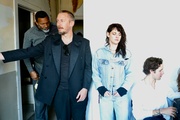
Stewart is sitting next to the film’s star, a slightly more sanguine Imogen Poots. Watching Stewart talk, her leg bouncing, her vocabulary ferocious, feels a bit like being sandblasted. It is invigorating and strangely galvanising, but you don’t go into a conversation with her half asleep. The same can be said for the film itself. “Language is a metaphor for experience,” writes the author Lidia Yuknavitch, at the beginning of the book on which it is based. “It’s as arbitrary as this mass of chaotic images we call memory.”

Stewart first read the book in 2018, while on the set of the movie JT LeRoy. She saw the visual potential in this mass of chaotic images and quickly decided it would be her first feature-length film as director. “Forty pages in, I was so rallied and so viciously adamant that nobody else could make the movie but me,” she says. “It was so physical. So vital. Such a permeating secret. There’s an unearthing quality to the way that [Yuknavitch] talked about trespass, and how your desires are carved into your body. As a woman, we have these seeping birthplaces that are our orifices, and it’s where we hold our power, but it’s also where we’re taken advantage of.” At this point, less than two minutes in, it’s fair to say that it isn’t quite turning out to be your run-of-the-mill movie-star promotional chat. “We’re all so muzzled,” Stewart says. “And it just felt like the muzzle was off. That’s the fun part. It’s got a loud mouth. A big, wide-open mouth.” So she sent Yuknavitch an email.

“A wildly exciting email,” the author says, from her home in Portland, Oregon. “She was explaining to me why I could never let this book be a regular biopic movie, and how I had to let her make a piece of art out of it. The language she used went under my skin immediately, because it wasn’t regular-person language.” Yuknavitch, obsessed with films since she was five, was, of course, familiar with Stewart’s work. “I even wrote a novel with her in mind, a while ago. She was younger. She had just punched through the Twilight experiences, and she was moving toward independent art films, and I pictured her in my brain when I wrote this novel.” It is called Dora: A Headcase. It sounds like a spooky connection, if she believes in that kind of thing? Artists, Yuknavitch replies, have a tendency to find each other. “They run across each other’s work, and these threads or streams we don’t entirely understand touch each other. And I think that’s what happened.”

It was not an easy film to finance. Poots and Stewart, both big readers, get into a meaty discussion about how confessional literature is taken seriously when men write it, and “belittled, constantly”, Stewart says, when it comes from women. “There are so many examples within modern literature of men laying it all bare, but as soon as you do something overtly personal as a woman, it’s less serious,” Stewart continues. “We’ve just been fully X-ed out of modernism in the canon. It’s like we don’t exist in it whatsoever. And it’s such a fucking crock of shit. You have to be Virginia Woolf to be considered a good writer.” Reese’s Book Club, this is not.

Did they come up against those attitudes when making the film? “Yes, because I think when people read it, it was reduced to how to sell it,” says Stewart. “OK, well, what’s it about, incest and rape? Fun!” It was not an easy pitch, she admits. “It’s about the gouging out of desire, and the reframing of that, and how empowered that is. In a slug line, it’s a really tough sell.” It took eight years of development before they finally got to work, mostly on location in Latvia. In the meantime, Stewart continued to act, and directed smaller projects: a couple of short films and a music video, for the band Boygenius. Chronology ticked away in the background, sometimes unpromisingly, until eventually it somehow came together. Even Stewart’s longtime producer, Charles Gillibert (On the Road, Personal Shopper), had told her that he couldn’t finish the script. “And he’s not the only one. He really encouraged me not to make this movie,” she smiles. “I was like: we’re gonna cease being friends if you keep saying this to me.”

Poots plays the adult Lidia with bodily gusto. The film is a collection of fluids and fragments. Poots read Stewart’s screenplay, and then the book, and then sent Stewart “a really pretentious email, which she lapped up”, she teases. Was she nervous about taking on a role that is so stark and exposing? It pulses with sex and drugs and violence. Bleeding and sobbing and grief wash over it. “Any actress I know would have wanted to play this part,” says Poots. In fact, she explains, casting her as the lead meant that the film was harder to make. “If Kristen had hired a massive movie star, then it would have made getting the money a hell of a lot easier,” she says.

Poots is a best-kept-secret kind of actor, and her performance here is immense, but I ask Stewart why she felt so loyal to her. “She’s my favourite actor, and everyone else sucked,” she shrugs. “There was literally no one else, and she’s been a fave of mine for ever.”

“And we have the same teeth,” says Poots, showing them off.

Stewart flashes hers in unison. “Because we have the same teeth, I thought: this is my girl. Bucktooth!”

The film also stars Kim Gordon, Thora Birch and Jim Belushi, who plays the late One Flew Over the Cuckoo’s Nest author Ken Kesey. It is a merry band of misfits. “What’s really cool, and you wouldn’t have been aware of it, is that these people, who have all been at the centre of these incredibly creative community movements, wanted in on what you were doing,” says Poots to Stewart.

Did she pull in any favours to get them involved? “Nobody did me any favours, trust me,” Stewart says, gravely. “In fact, we got fucked. In the face. Over and over.” She pauses. “Like a real woman!” she jokes. To be honest, she says, Belushi came on board after a couple of other actors dropped out. “I don’t think it was an easy yes. But the feeling of him supporting you, a nice pat on the back from Jim Belushi, could make you cry. He’s kind of a radical, and he’s a hippy, and he was perfect to play this part.”
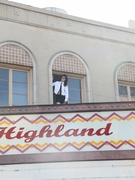
As the film deals in memories, it rejects any sort of conventional narrative structure. Men come in and out of Lidia’s life, which meant that actors would come on set briefly and leave again, “sort of like a conveyor belt”, says Poots.

“Or chapters,” suggests Stewart.

“These insanely brilliant, talented actors,” says Poots.

“And they serviced you,” grins Stewart. “It was fucking incredible to watch male actors come in and have it not be about them. I would be like: sorry, but we’re actually not gonna shoot you. We’re just gonna shoot her. But talk to her. You’re here, kind of, but this is about her.”

Poots cackles. I’m guessing this is not a typical experience? “Mmmm,” says Poots. “For so many reasons.” Both say they plan to make “a lot more movies” together.

A few weeks later, Birch video calls from her home in Los Angeles, her dog lounging happily in the background. “You cannot enter a conversation with Kristen Stewart without coming locked, loaded and ready to go,” she laughs. “It’s intimidating!” Birch plays Lidia’s older sister, Claudia, in a brief but mighty role. In one of the film’s earliest scenes, she holds a sobbing, grief-racked Poots in the bath, following the death of Lidia’s stillborn baby girl. “Imogen is just a knock-down, one-two-punch, hazelnut-popping actress out of the Brit academy if I ever saw it,” Birch says, brilliantly.

Birch and Stewart had met at an event where they did some “mutual fangirling”. A few months later, Stewart called and said she was making a movie. Birch signed on straight away, and then she read the script. “I’m not going to lie, it was a little bit of a daunting process,” she says. “But I just trusted her already.” Partly, she thinks, that’s because they have some shared experiences. Both became famous as children. Stewart was 12 when she starred in Panic Room, while Birch’s run of 1990s and early 2000s films – from Hocus Pocus to Now and Then to Ghost World – defined adolescence for a whole generation of girls.

“Maybe I related to her because we’re both performers who started out very, very young, and so we had a common language. I say she’s my spirit animal. She does a lot of things that I do, but just way better,” Birch says. She had followed Stewart’s career from afar. “Different times, different generations, but the way she handled [getting famous young], I was just like: dude, that’s with aplomb. You knocked it out of the park, because you held on to your individuality and your point of view, which can really be difficult to hold on to.” She waves a hand. “But let’s not get too far into that.”

In its boldness and experimental form, The Chronology of Water may well be a surprise to those more familiar with Stewart, the movie star, who might not expect a film like this from her. “I sort of did,” counters Birch. “This is a very Kristen Stewart movie.”

She is glad, she says, that this is the story Stewart chose to tell. “She will hate me for saying it, but I’m sorry, this is emblematic of a female experience that not a lot of people are ready, willing or even able to dissect and talk about.” The movie covers some “heavy shit”, Birch says. “We’re talking about period blood and stillborns and familial sexual abuse. Nobody wants to talk about this stuff, and yet she presents it in such a way that it marries fantasy and poeticism, and but also the human experience. It’s a punk rock arthouse movie that is like a non-psychedelic ayahuasca trip.”

It makes sense, then, that Birch had no idea how it would turn out. She just had to have faith in what they were doing. “And then when I saw it, I was like: oh, that’s what she’s doing. One reviewer said: homegirl can direct. And coming from LA, I was like: yeah, that’s it. Homegirl can direct. She knows what’s up.”

 The Chronology of Water is released in UK cinemas on 6 February

Source

Wednesday, January 14, 2026

Kristen and Imogen Poots interview with Deadline for 'The Chronology of Water'

Seldom does a movie linger in your bones long after you’ve watched it. And Kristen Stewart’s directorial debut, The Chronology of Water, was built to pull your psyche deep down underneath the ocean waves. 

Based on the memoir of the same name by Lidia Yuknavitch, the visceral film, shot in a neurological, fragmented, dream-like structure, follows Lidia (Imogen Poots) as she seeks escape from an abusive childhood through competitive swimming in the 1980s. After falling down the rabbit hole of addiction, toxic relationships, and self-sabotage to mask the pain of her upbringing, Lidia tries to buoy herself to safety by trying to uncover her voice and find healing through the act of writing. To create this unique cinematic experience, Stewart and Poots endured rigorous trial-and-error shoots, tough training days in clandestine New York pool houses. They also built a seemingly long-lasting friendship in the process. “Working with an actor like that, there’s nothing [she can’t do],” Stewart told Deadline about guiding Poots through the most challenging scenes for the film. “I touched the fucking sky with her. You cannot get higher than that.” Stewart has explained the film as being designed as a reflective experience for the audience that unflinchingly shows the subconscious ways memory lives within the human body.

Below, Stewart and Poots talk to Deadline about hiding hernias, falling in love with raw, compelling stories and learning to succumb to the ebbs and flows of vulnerability.

DEADLINE: Imogen, you read this incredibly rich, dense and emotionally harrowing script. What’s the first thing going through your head? 

IMOGEN POOTS: Several to a million thoughts. When I got the script, I knew Kristen had adapted it and would be directing it. That makes a huge difference because you’re opening the page of something you want to love. And so often in this business, you want to love something and for whatever reason, it just doesn’t come through. The execution or the idea can be good, or the concept is interesting, but it doesn’t come together. And for this, I was completely enthralled. I read it quite slowly because I wanted to take it all in. I was so excited that Kristen was going to make a film. It’s different these days. There’s so many actors, directors and the artistic community is very vast. It’s hard to grab hold of someone and turn them around to you and be like, “Hi, I think you’re brilliant. Do you want to make something together?” That’s why I was excited to read this: I think Kristen’s one of the rare people working now who are really doing something very different, not in a showy way, but only in the [hyper specific] way she knows how to. This script is an extension of that. The character in the story is so brilliant. I love romantic comedies and animated movies, but most of the time I want to see the movies and relate to what is up there on screen. 

[Relating to people] doesn’t happen as much anymore because people are looking like they’re made of AI, and we don’t have mature actresses in leading roles in the way we should. So many people are left out of relating to what’s on the screen in front of them. I really related to this character, and I felt like a lot of women were going to because of her inconsistencies, because of her hopes, and dreams, and fantasies and the way she sabotages the good stuff, and how your own life’s work is to take responsibility for someone else’s problem that they have caused. It’s such a horrendous, but sort of fascinating story to tell.

DEADLINE: Kristen, what compelled you to take on this book adaptation for your first movie as its writer and director? 

KRISTEN STEWART: The book, I felt, is an internal landscape, and it has little pockets, corners, and tiny corridors that this woman feels like she can talk to herself and no one else. It kind of felt like it was scrawled across the interior of her epidermis, then turned inside out. It just didn’t feel like a book that was for other people. There was something about how it felt too hot to touch, like so dangerous that if you reveal certain aspects of your experience, how you’ve responded to stimulus in the world that we all live in, despite the details of your household or your upbringing. There was something, a little skirt lifting and secret talking about it, that I was just so proud of this woman’s ability to do it. And I felt like she did it to get other people to do it, to find community and companionship, and to be able to design and write your own self into being.

The story just felt like a scattering of experiences that was somehow so succinct in its mission, rather than holding the reader’s hand to make it more palatable and easier for them to understand where you’re coming from. You have to have a lot of patience when you read the book and to watch the movie. But it’s not because it’s a slog, it’s because you need to give yourself time.  Frankly, I think we keep making the same fucking movie over and over. And by doing that, it’s just taking everyone’s opportunity to think for themselves away on a daily basis, and we don’t even really know it. Then you see something that hangs a lantern on the fact that we’ve all been inoculated with just being entertained [and nothing more]. 

POOTS: We’re being inoculated by the patriarchy.

STEWART: So, when I read this book, I thought, “Gosh, this is such a diving board.” And ultimately, the movie really does reflect the screenplay, except maybe for large chunks cut out. It was very dense, like you said earlier, because we just overshot the hell out of it. But the coolest part is that you can feel that all these memories, everything’s in retrospect, there’s no present tense in the movie. All of this feels either cut off or elaborated on in a magical thinking way; nothing feels objective. Therefore, I just thought everyone could put themselves in this film because I could put myself in it. 

DEADLINE: Imogen, what was the physical training like for this? 

POOTS: There was a lot of swim training because I wanted to learn the form and the strokes, obviously, for portraying it on camera accurately, but also, I wanted to get into Lidia’s mind. I also read Swimming Studies by Leanne Shapton, which is a wonderful swimmer’s memoir full of beguiling facts about what it’s like to live your life as a swimmer and how there’s this rapacious, bottomless appetite that comes with swimming. And Lidia, as a person, has that in so many ways in relation to her life. I also met all these amazing people who were like child champions, and I love doing that. It’s really cool as an adult to learn new things because we stop doing that when we’re teenagers [laughs]. We just kind of go, “Well, I’ve learned everything I need to know, I guess.” But it’s not the fucking truth at all. 

Weight training was very important to me. I wanted to feel strong in my body, and sometimes your body can be a stranger to you. One of the coolest things you can do is understand how to be in your own body, which is easier said than done. When you’re moving through the world in a way where lots of different types of people are trying to translate your body into a language they can better digest, it has bad effects on you. So, I think understanding what your body is capable of is cool. That training was helpful for playing the part because, in a way, her strength is juxtaposed against the fragility of a person like her. And then after the fact, I found it weird having this body now that I wasn’t playing Lidia anymore. So, that’s when it hit me how important it was to have had a different type of physicality to play the part.

STEWART: I need to add that Imogen got two hernias while training for this and didn’t tell me about it and just held her guts in and bared down and told me after we finished shooting. There was a line in the book that moved the ever-living hell out of me, but it just didn’t end up in the movie because her body took the place of this line of dialogue. But there’s a point where she’s standing off with her dad in a sort of not literal way and a sort of atmospheric, emotional, transient in terms of time. And she goes, “I was stronger than I’d ever been in my entire life.”

STEWART: And Imogen was probably stronger than she’d ever been in her entire life when she made this movie.

POOTS: It’s tough in this day and age to consider [the way you look at] yourself in a good way. And Kristen made me feel beautiful. That’s a huge feat for someone to do for someone else, and for a woman to do that for another woman, an actress to do that for another actress. It’s such a cool symptom of the film because the body really matters. 

DEADLINE: Speaking of the body, there are so many close-ups on intimate body scenes and stylized choices that make the film feel like a retro home video. What were your inspirations? 

STEWART: Well, I was really obsessed with accomplishing a first-person perspective that didn’t feel hokey, especially in the beginning. There are really embodied angles. There are things that Lidia is looking at that normal filmmaking would not frame or design because it just doesn’t tell enough, because you need to feel stuck in certain positions at the beginning of the movie, because it’s supposed to make you feel this oppression that matches this physical cage experience that this young kid is having. I thought about the sound of the house, with this internal rhythm that holds the viewer and tells you she did get out. And the whole thing is the climb. It’s like you realize that the movie has this engine of: get the fuck out of that house.

Then, when she leaves the house, she can’t get out of it. It follows her, like this haunted experience and memory. Those flickers or flashes were used to show intrusive thoughts or moments of wonder. It’s sometimes less straightforward, too, to show time folding in on itself and displacing awareness, because certain memories, wishes, or projections into the future can sometimes take up more space than the current moment you’re living in. That’s such a personal experience that we don’t share with other people. As Lidia gets older, the movie takes on a more concerted composition, and sometimes we step back from the body to look at her because she’s somebody who’s defined those terms. Therefore, they speak for themselves, so it doesn’t feel voyeuristic. I never wanted to feel a third body in the room. The only time we really feel it is when we slam into this really objective wide shot while she is touching herself against the door frame, and it just felt like all of a sudden it was so hard-earned. The times when we decided to just all of a sudden cut to Imogen head-to-toe against an entire atmospheric background are so fucking shocking. And she’s such an animal that she just blows your fucking hair back. So, we needed to be confined and contained and let her break out of that emotional prison. 

By the end of the movie, it’s very chill, kind of boring in a beautiful way. Everything is really standard. I had a lot of faith and trust in odd angles, and this was the funnest thing I have ever done in my entire life, being able to design these weird experiences, for example, of having sex with a person instead of watching two people fucking, which is something I never need to see again. You get to see something like that from the inside out, from the inside of someone’s body – disgustingly [laughs]. 

POOTS: [I’ll add to that about close-ups]. I think intimacy, on and off camera, is something we are trying to understand, especially when the formative experience of intimacy has been kind of rebranded by someone else. Kristen has said this a few times that Lidia’s backstory, being what it was with her father and with child abuse, is this person’s story. There’s also a different version of that story, which is what we were talking about earlier: how does moving through the world affect your experience as a woman in your body? Many people have been like, “You’re so open.” But I’m also quite protective and steely, and, of course, like everyone else, I have moments of vulnerability. And so, attempting to get close to what that is on camera is also vulnerable. But the safety of working with people who are not only very talented at what they do, and of course, they’re going to take care of you, there’s just something at play where everything’s worth it. And I think some projects aren’t worth being that exposed for, and this one just had to be this way. If we’re going to tell this story, that’s exactly what we’re there to do. And so, I think that’s always challenging, but at the same time, that’s exactly why I wanted to do it. And it was one of those experiences where the film gave me a gift back, and I think everyone involved felt that way. And so, there’s just a kind of, in terms of what’s challenging to me as an actress, I mean, I want that.

STEWART: You really understood the assignment in a way that is, like, the mutual recognition after so many years of screaming into an echo chamber and auditioning honestly 500 girls and everyone who’s ever made a movie and never made a movie. And I’ve known everyone, I’ve met all these fucking women. And then all of a sudden this person comes along as a friend, as a fellow. And I know you to be steely and not reserved. In fact, Imogen has to be reserved because there’s just so much in there. There’s a preservation thing that you do as an actor sometimes, because if something’s not good enough, then you can’t break down those walls. It’s just not worth it. But I look back on this, and I go, I can’t believe what you put yourself through for us, for me, for yourself, for us together. And because of that, we have a totally different relationship.

What you did during that little month and a half, I can’t believe it. There’s one scene for me that I still wonder to this day how it was possible, which I think makes the film. There was a deck for one particular sequence. There’s a love scene between three women that I didn’t know would work. It relates to certain elemental nature aspects, and it insinuates or implies that we are organic material, and it’s a very sort of impressionistic and pretty and potentially sterile because there’s no fucking in it. But to achieve this, Imogen had to, for several hours, make the scene with me, trying to make this [makeshift] photography book of intimacy, and then all of a sudden the whole movie and her whole life fell on top of her. And instead of making a sterile kind of collage of sexy suds and waves, it became about Lidia, and it became about Imogen. It became about intimacy itself, about being a woman, and about holding that space. And it became a scene. And that’s an actor who’s not playing scenes. She’s living the entire life of it. And to find that, I mean, honestly, I don’t know if that would’ve been successful to just cut out of that without some kind of segue back into reality. Working with an actor like that, there is nothing. I touched the fucking sky with her. You cannot get higher than that.

POOTS:  I’m going to cry. It’s interesting because, at moments, the character, through her own volition, creates this space because of the life she’s had. She’s an incredibly lonely person. It’s interesting to play someone who is that lonely, even though she has this kind of relationship with her sister. She’s deeply lonely. And it’s funny, on the other hand, it’s like moving through the world; if I hadn’t met Kristen, I don’t know what that looks like. I don’t know. You can really miss that. You can potentially miss a very crucial moment where someone is just pushing you further into what you’re already on the scent of. And it’s those people, whether it’s someone who takes you seriously when you’re younger to do something or whatever, but there are almost transcendent moments in terms of a creative life, because otherwise you might just miss it. And that’s OK too, but it’s cool to know that this was meant to be, or at least I believe it was.

STEWART: It’s so rare. It comes along just a couple of times in a lifetime, if you’re fucking lucky. 

DEADLINE: What would you both like people to take away from this moving story that you two have created? 

POOTS: Let’s make more films like the movies that we all miss and adore. Let’s keep making great films, finding the right people to work with and getting them financed. There’s a line from Kim Gordon in her book Girl in a Band, which is like, “People will pay a lot of money to watch other people believe in themselves.” And she’s talking about that in terms of being a musician, but it’s interesting to think about that in a sense of people paying money to hear what women have to say or people paying money to watch a character go through so much. 

I do think the movie is uplifting, and it’s uplifting because it’s not straightforward. And I don’t think it’s this kind of Hollywood pat, truncated statement buzzword thing. It’s raw, messy and badass. It’s epic and mundane. And it’s something you can actually move through and push through the membrane, but it might just look different from what you’ve been sold. And that’s absolutely fine because that’s what it’s like to live a life. It’s really reassuring to see people living their lives, and it’s often the interstitial stuff that matters. 

STEWART: Someone texted me last night that was like, “Thanks for getting me to think again.” It was nice to hear Immy go through that because, just to put it plainly, it’s about daring to think for yourself. So that we can actually believe in ourselves and not in other people’s ideas of who the fuck we should be.

Source