Experimental filmmaker Barbara Hammer made more than 90 movies over the course of her five-decade-plus career, most of them centering on lesbians — their bodies, their histories, their relationships, their sex lives. From the 1970s on, Hammer was celebrated for her explicit, avant-garde work about a population that had rarely, if ever, seen themselves represented onscreen. The results are sexy and funny, strange and gorgeous, personal and political, unconcerned with taboo or traditional structure. They’re nonlinear and free-associative, focusing on pleasure, on beauty, on authentic depictions of gay life, and often feature her own naked body — sometimes having sex with her partners (until she met her spouse, Florrie Burke, who didn’t like being on-camera). Later, Hammer filmed her body’s visible decline from a long battle with cancer, concluding with her death in 2019 at age 79. Yet despite how prolific she was, her career longevity, and all the critical acclaim she received, Hammer’s work is still relatively unknown beyond niche queer audiences.
Barbara Forever, a fantastic new documentary from director Brydie O’Connor (and produced by Christine Vachon’s Killer Films and Kristen Stewart), aims to introduce the filmmaker to a wider audience with help from Hammer herself. The film is narrated with Hammer’s voice — pulled from decades of audio diaries — and features interviews with Burke as well as footage from Hammer’s massive personal archive, including previously unreleased material. It traces Hammer’s evolution as an artist, from 1974’s Dyketactics, a four-minute short full of women frolicking and fucking in nature, to her first feature film, 1992’s Nitrate Kisses, a documentary about repressed lesbian histories that showcases real gay and lesbian couples having sex onscreen.
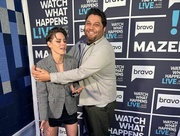
The documentary clarifies just how radical Hammer’s work was, and how it inspired many of the queer artists and filmmakers who came after her. Some of those artists have gone on to work with Vachon, who has produced movies like Go Fish, Hedwig and the Angry Inch, and all of Todd Haynes’s films. Another one of those filmmakers is Stewart, who said she wasn’t aware of Hammer until she was promoting her 2025 feature Chronology of Water and an interviewer mentioned that Stewart’s dreamy, erotic treatment of female bodies and natural landscapes mirrors Hammer’s distinctive style. And another, of course, is O’Connor, who has spent nearly ten years working with Hammer’s archive and has become so close with Burke that she officiated O’Connor’s wedding. The three of us talked about encountering Hammer’s work for the first time; how lesbian filmmakers are still fighting an uphill battle; why Harriet the Spy is a gay root; and Stewart’s upcoming lesbian-exploitation film, which she says is a “hats off” to Hammer and may be too wild for theaters.
What was your first encounter with Barbara’s work?
Christine Vachon: Well, my first encounter was really with Barbara herself. There was a time that predates both of your births, probably, where the New York independent-film world was very segregated. You either made very experimental movies or you made Hollywood narrative films, and then there was a thin sliver of people who made personal narrative movies. The very experimental movies tended to be almost aggressively anti-narrative, and they showed at places like Collective for Living Cinema. The last vestige of that is the Anthology Film Archives. For example, Todd Haynes’s infamous short film Superstar: The Karen Carpenter Story was rejected by the Collective for being “too entertaining.”
That was a direct quote?
Vachon: Yes. “This film is too entertaining for us.” So Barbara came along and she really was making work that was personal, experimental, and entertaining. She was one generation older than me, but we’d heard tell of her — obviously this was pre-internet. She showed up at Sundance with Nitrate Kisses in 1992. She kind of had an air of punk around her that felt wholly original. There was something about her that felt like, Okay, this is different. This isn’t just somebody proving that a movie can just be a bunch of scratched images onscreen, but somebody who has a personal story to tell, and who’s telling it in a very specifically original way.
And then I’d see her at the New York Film Festival. When she was in New York, we’d end up at the same venues, usually celebrating Pride or New Fest or whatever was showing her work, which was usually showing mine.
Kristen Stewart: I was at Cannes in 2025, and somebody I was speaking to about The Chronology of Water was convinced and enthusiastic about my clear and distinct nod to the influence of Barbara’s movies and visuals. Some of the layering and the organic shapes and the flood of the female orgasm relating to the rocks and the beach — how we’ve always been here, and the corrosion that happens when you really fuck properly and come properly. I was like, “I don’t know her!” Multiple Orgasm was the first piece of work I saw after that.
Brydie O’Connor: I did my thesis on queer cinema, and I typed in “lesbian films by lesbian filmmakers,” and of course Barbara Hammer was at the top of the list. I reached out to her because I couldn’t see her films anywhere — it was 2016 and I was living in D.C. So I emailed her from my student email and asked, “Can I buy your DVDs?” And at first she gave me such a hard time. [Laughs] “If you’re really faculty instead of a student like you say you are, my films would be much more expensive for you.” So I said, “Barbara, I promise I’m a student, $30 for a short film is a lot for me!”
Vachon: You have to understand, for a long time, there were so few queer films of any kind available: narrative, nonnarrative, neo-narrative, you name it. We tended to try — me and other gay women — to see whatever we could.
Stewart: She’s made 90-some-odd movies, and they’re all so hard to get your hands on. It should be the most ubiquitous thing that this person spearheaded lesbian avant-garde in a way that was initially deemed contradictory. But it’s like, how can you tell a queer story in a straight line? What the fuck are you talking about? I need 50 layers, something that feels like an internal experience that is completely unaware of how it’s going to land on others. The authorship, the self-revealing, the exhibitionism, being so proud. Who the fuck did that before she did? She didn’t even have an example of that! She’s the source.
O’Connor: Learning about how she approached her practice — she was nearly 30 years old and decided to point her camera at things that were interesting to her. I thought to myself, I could try making my own work. And when I was making my first film in January of 2019, I wrote to her. I didn’t realize how sick she was at the time. I said, “Barbara, it’s me, I’m the girl who wrote her thesis on you, I’m sure one of 200. Just this year.” I asked if I could take her for coffee, get her advice, and she wrote back, “I’m at the very, very end of my life. Best of luck with everything in your career.” And she died two months later.
And when did you meet Florrie, Barbara’s spouse and the executor of her estate?
O’Connor: I reached out to Florrie just to share my condolences. When I moved to New York and was a PA on whatever I could get, I was also going up to Yale to visit Barbara’s formal archive. And I was reading, honestly, her love letters. So when I met Florrie, I said, “I’ve been reading your love letters.” We started spending a lot of time together from there. Florrie didn’t want to be documented. That was my burning question to Florrie. I said to her, “You were the love of her life, you were together for 31 years. And Barbara was the lesbian lover filmmaker.” She documented so many of her relationships — Double Strength, Superdyke Meets Madame X. I was like, “Where are you?".
How did the documentary itself come about after that?
O’Connor: When we first met for coffee, I asked Florrie if she’d be open to collaborating on a short film together. So I made a short film with her about their relationship, narrated by Florrie, and I released it in 2022. In that process I realized just how much material there was outside of Barbara’s more than 85 films — all of her outtakes, so many hard drives in her home and studio, nearly 40 hours of audio recordings. I was digitizing and finding all of this material, and I said to Florrie, “Would you be interested in talking about another iteration of a Barbara Hammer project, one in which she narrates her own feature?” She loved that. Florrie says sometimes she’d tell Barbara, “Okay, enough!” But I think that’s why they worked so well together. When I pitched it to her, she said, “That’s so Hammer.” She still calls her Hammer, even to this day. “You’ve gotta make it. Do whatever you want and show me when it’s done.”
Had she turned down other people who wanted to make a doc about Barbara?
O’Connor: She said she’d had some reach-out prior to me, but I think it was too soon and Barbara was very sick for a very long time. She said the reason she responded to me is because, in her words, I was very well researched and because I’d been going up to the archive. I think Barbara felt very invigorated by the new generation of queer artists and lesbian filmmakers, and Florrie was really excited about this idea of bridging that intergenerational conversation of queer cinema. When I reached out to Florrie, I was 23, and she just wanted to see what I would come up with.
When and why did you come on, Christine?
O’Connor: It was very early on. You were the first notch of support. I can’t credit you enough. This was my first feature, and it’s hard to sell the idea of making a film about a lesbian experimental filmmaker. You saying, “I believe in this film and I believe in you” was so huge.
Vachon: We really believed in the film and the storytelling. Killer Films doesn’t come on to that many documentaries. It makes me think about Todd Haynes’s Velvet Underground. He was faced with an issue: Almost everyone in the Velvet Underground was dead, and there was almost no existing footage of them. When we put out the call for footage, we thought, People will open up their attics and find things. Not really. But he set out to make a movie — and I know this isn’t about Todd, but there’s a correlation — that was, What is the Velvet Underground experience?”And when you see the film, you’re immersed in that.
What I felt Brydie did was say, “How can I tell a story about the creative experience that doesn’t just focus on an artist who made a great body of work, but just by the nature of that work, was not widely seen?” How do you make people understand this is something they should care about? At film festivals, you get the most interesting audience — they want to like the movie, and they’re also kind of like, What’s playing at 8? I never would have decided to see this, but thank God I saw that. So many people stepped out of the Barbara Forever screening at Sundance and said, “I don’t know that I would have decided to see this movie, but it was so moving, and it manages to step out of that narrow box of a specific film about a specific person at a specific time.”
Would you have come on to any doc about her?
Vachon: No! As I like to say, if we’re really lucky, we’ll make tens of dollars on this movie. [Laughs] We have to think about, as my partner, Pam Koffler, always says, our opportunity costs. If we’re working on that, we’re not working on something else. It wouldn’t have been any movie about Barbara. It was Brydie and Claire Edelman, who works with us at Killer, who brought it to our attention. The fact that they were both so young and it meant something to them, that was meaningful to me. This idea that a whole new generation is figuring out who she is and what she means to them, that’s the astonishing part.
I hadn’t actually seen anything by Barbara until Kristen mentioned Multiple Orgasms in the New York Times about a year and a half ago, which is embarrassing to admit because she is so completely in my wheelhouse.
Stewart: Oh, get out! Cool. Fuck yeah.
O’Connor: After Sundance and Berlin, we reached out to Kristen, saying, “We saw this in the New York Times.”
Vachon: We had a relationship with Kristen. We put her in one of her first films, The Safety of Objects, when she was 10 or 11 years old. I think she’s gotten a little tired of us saying we put her in her first film. [Laughs] And she’s in Still Alice as well. So we’ve kept in touch with her over the years. When Kristen said in the Times what she said about Multiple Orgasms, like 10 people texted it to me and 100 people texted Brydie. And then we were off to the races.
Stewart: These guys reached out and said, “Hey, would you want to just give us a hand, smack your fucking name on it and do some interviews and pictures?” It’s really hard to get movies like this visibility, in the same way that Barbara had a hard time getting visibility for her work late into her life.
What do you remember about The Safety of Objects, Kristen?
Stewart: Getting mic’d by a sound guy, and he was rubbing my sternum and saying “Wow, buddy, you got a strong chest!” And I was like, “Fuck!” [Laughs] But I worked with director Rose Troche, man. I’d been auditioning for two years, and I think that very day I said to my mom, “You know what? It’s not gonna happen. It’s all good. I don’t want to make you drive me around anymore, it’s getting embarrassing, fuck it.” But it was the day I got my first job. I was 9. And they were really cool gay women from Brooklyn. I was like, “Who are you people? I want to be you people.” I wouldn’t have kept acting if that movie didn’t happen.
So this is in many ways full circle. What does it feel like to be in the position of lending your name to something and knowing you’re going to create a whole different life for it?
Stewart: I would love it if we created a whole new life for it. But it’s reciprocal. It’s like, thank God I talked to this person at Cannes who let me know there was this whole emotional circuitry happening with my work and her. And the only reason is because she really connected to mine. We’re all in this huge ocean of each other. I get so much from bouncing off the right people. I don’t take it for granted. It’s sick.
You must get requests all the time about attaching your name or promoting something or being part of something. What goes into making that decision for you?
Stewart: To make really authentic work, you have to come from places in yourself that are kind of unsafe. I know what it takes to reach in and pull something so delicate out of the depths of yourself and put it into an environment that is the polar opposite of that. When I connect to something and its speaks to my insides, I go, Oh fuck, your heart’s out there walking around. We have to go help protect it.
I had two back-to-back meetings the other day. One with a really high-profile, good, cool director man. And that movie is a big deal. I bet everyone wants to do it. It’s very good, impeccably well written. I’d love to go see it in a movie theater. Then right after was a meeting with a young woman who’s made one movie and has a script that’s ludicrous. It’s so impossible and audacious because it doesn’t look like anything else. It requires a process that you’d have to be Christopher Nolan to support. It would take a really creative and really solid, large group of people kind of believing in magic and in redesign and repossession to make it happen. After the first meeting, I was like, “We should totally do this, this is a great movie!” And after the second one, I was like, “This is why we’re here, this is the mission!” This person needs help, even if it does seem like the path of much greater resistance. I would love to have anything to do with engendering new tonalities coming out of new mouths and voices and places in the body. Radical cinema is absolutely resurging and waiting in the wings. We’ve really just allowed ourselves to be diluted by sameness. Isn’t everyone fucking bored? I want to do shit I haven’t seen before.
In the Times, you were described as “embracing your status as a millennial queer icon.” How does that sit with you, hearing that?
Stewart: I am queer and I am here. [Laughs] I love my community. Like, a lot. When I step outside myself, it’s weird. Not weird. It’s pretty remarkable. It’s a warm place to be. Because it’s totally reflected back, and I feel that. I’m also fiercely protective. I’m so fucking mad at everyone right now. I know it’s not a productive emotion. But that’s not true. As women, we’re just told not to be angry. It’s a very productive emotion. I have a whole movie coming out of it. It’s bonkers, absolutely ludicrous, people are going to think I’m fucking out of my mind. But right now, we’re experiencing slippage, this full corrosion of any type of assurance or idea that we were kind of on an upward path toward being chill and okay and safe in this country being queer or trans or anything adjacent to the heteronormative sitch. Which I know now is a word that rubs people the wrong way, but I’m old, so I get to use it.
Brydie, how hard was it to get Barbara Forever funded?
O’Connor: It was an uphill battle. As one of my mentors said to me, “Brydie, you’re making a movie about a dead lesbian experimental filmmaker.” One question we were asked in nearly every single meeting was, and it was ultimately a reason we got so many passes: “Why now? What’s the relevance of Barbara Hammer now?” We’re still in that phase, pitching and finding ways to talk about the film, fundraising for awards and release. Just two weeks ago, I cold-emailed like 40 lesbians who work outside of film. And now I’m getting responses like, “Hi! I don’t know how you got my contact. This sounds like a great project. But I’m not going to fund it.” And I’m like, “Well, we’re coming to San Francisco, so you should go check it out in theaters!” Even if they’re not going to give us money, they might go see it.
Just any lesbian with any amount of money.
Vachon: [Laughs] You can’t build a financing plan on a bunch of lesbians who don’t work in the business. But you can, on a project like this, figure out a way to get to them and make them understand that this is something relevant.
Is it harder to make a gay film now than it was 10 or 15 years ago?
Vachon: There’s no question that the film-financing world is a lot more risk averse than it was. Does that mean that a really terrific script centered on gay or queer life won’t get made? I’m not even sure. Club Kid obviously was the sale out of Cannes. Does that say we’re in a good place? I haven’t seen the movie. I think we’re in a world of, as the French would say, “The more it changes, the more it stays the same.” We’re having the same discussion about getting queer films made now as we did in the ’90s.
That’s really surprising to hear, actually. How so?
Vachon: Well, in the ’90s, if you made a movie like Barbara Forever, the community was so starved for anything that they were gonna show up. It was very easy to be like, I’m gonna go find the community, because there are these four bars. They weren’t spread out over the internet. You just went to those bars and were like, Hey, here’s my flyer. And that bar migrated to your screening, they really did. Maybe you had a float at Pride. Now, of course, you have to locate people online in a way that’s a lot more challenging. Especially for someone my age.
A thread Barbara returns to a lot in her work, and in her autobiography, is this idea of lesbian history, and lesbian cultural history, specifically, being erased or suppressed, and her work acting as a corrective to that.
O’Connor: I kept asking myself when I was making this movie: What is it about Barbara and her practice that I really want to convey? I needed the movie to have a perspective rather than just being an overview of someone’s work. This idea of Barbara using experimental, lesbian avant-garde filmmaking as her method of alternative history-making, and as her way of conveying what it feels like and means to navigate the world as a lesbian — that was what was interesting to me. Creating records of experiences at the margins of mainstream culture.
When I started to understand my own sexuality, I was a teenager in Kansas in a very Catholic community, and I’d never met a gay person. I didn’t have a language for my queerness until I watched Orange Is the New Black. Archiving and history-making is an intellectual way to think about her, but it’s also really emotional. As a lesbian, if you don’t see all of these myriad lives, and pick pieces that resonate for you to create your own, you’re kind of winging it.
What were your Orange Is the New Blacks, Christine and Kristen?
Vachon: Harriet the Spy.
Stewart: One hundred percent. I never read it. I watched the movie.
Huge one for me too. Such a gay book. And I know Louise Fitzhugh was also gay.
Vachon: I met this woman years later by chance who’d been one of her best friends, Sandra Scarpettone, and they’d written a few picture books together. I’d read them when I was 13 or 14, and they always had some allusion, very careful — because it was published by big YA imprints — to somebody not being straight.
Stewart: Harriet the Spy, for sure. Titanic. I was just like, “Oh, both. Mega. Big time. Both.” Now and Then. Christina Ricci taping her tits in the beginning? And just being … am I allowed to say she’s hot? She was fucking 14. She is hot now, and at the time I was even younger. But I’m a Cheerleader. And Chloë Sevigny was in If These Walls Could Talk 2, and she wore these Levi’s and looked like James Dean. And it was just like absurdity. Even now I’m like, Wow, that’s crazy.
Kristen, do you find yourself more drawn to making stories about queer people at this point in your career?
Stewart: Naturally, yes. I don’t want to blow my load and talk about stuff that doesn’t exist quite yet, but we’re pitching a show about the queer experience right now. Have you seen Teenage Sex and Death at Camp Miasma yet? It’s my favorite fucking movie. That pitch meeting in the movie in the car. It really fucking hits. I don’t just want to make movies that are changing things or struggling in the face of adversity. I want to wallow in our details. We’re not a minority. We’ve just let men design the story and the structure and the modes and the models, and even the way we form our relationships and family and measure our success and try to provide ourselves security. All of this is based on the fact that we’ve been literal possessions until five fucking seconds ago. And our movies feel like that, too.
The boring answer is: I want to make queer stories that are also full of joy! It’s not that. I want to make queer stories that are behind closed doors. Barbara really did sort of paint an internal kaleidoscopic experience of what it’s like to come alive while connecting to yourself because of being seen by another. Girls do that really well. That’s a magic, cinematic experience. So absolutely I wanna do a bunch of gay shit.
In the film, Barbara talks about the need to create and preserve queer history in real time — saving receipts, saving lists, saving photos. And she did that with her work. Do you feel that there’s still this need to create a sort of constant living record of gay life?
Stewart: I can’t hold onto my own ass. I cannot be laden. I hate people holding onto ticket stubs. I’m like, “Get it the fuck out!” I’m like, “I’ll remember!” But then you don’t. I guess my footage. Anything that I’ve ever shot. I have a freezer full of 150 reels of film. I want to keep playing with the work.
Vachon: I wonder if, in 30 years, somebody is going to make a movie about gay life in the mid 2020s. I really subscribe to this theory about New York, that every wave of young people who come to New York always gets told they just missed the good New York. I came back from college in the early ’80s, to the time everyone reveres the most right now. I lived in the East Village, and people were like, Yeah, you kinda blew it. Now it’s meh. People were living in squats, and the Tompkins Square riots, and all of that. But you never know until later what your era will be remembered for. I’ve been making movies for so long that I’ve seen some of my movies get forgotten about. And then suddenly, for whatever reason, 10 or 15 years later, they bubble up to the Zeitgeist again. Young people are talking about them. So I have an optimism that there’s a way now for things not to disappear.
Barbara talks about how she was losing grants because of the explicit content in her films, specifically the sex scenes. How did you decide how explicit to get with this documentary?
O’Connor: We have two very direct lovemaking scenes in the movie. We made a really specific choice with the first one; it’s a scene from Dyketactics and it’s over 60 seconds of a sex scene. In Dyketactics, it’s over the jingle, which is a little silly and upbeat and fun. We decided in Barbara Forever, especially since Florrie gave us the creative go-ahead, to make our version of that scene silent. So it’s a 60-second silent sex scene. One fear was that women coming to see it might be uncomfortable, like squirming next to a colleague, but I’ve actually had a handful of people being like, “It made me look at my own internal biases in terms of how I feel looking at lesbian sex or a nude woman’s body.”
Vachon: Especially right now, the movies that make people talk, those do well. The movies that are more controversial — all controversy means is discussion. I don’t think the movie says or does anything particularly controversial, except that it’s about an artist who loved putting her life and her sexuality on celluloid in a way that is bound to make people uncomfortable.
Barbara liked to talk about her films “converting” straight women. Do you think this might do it?
O’Connor: Letterboxd is definitely saying that’s happening. Unless you think you’re coming to a Barbra Streisand movie. Some people walked out at Sundance saying, “I didn’t know what Barbara this was about!”
Who do you see as her successors?
Vachon: Look, the first lesbian movie I made was Go Fish. Rose Troche and Guinevere Turner; I believe they were at the same Sundance as Nitrate Kisses, but you’d have to check that. [Editor’s note: It was two years later, in 1994.] I remember the experience of showing Go Fish to a mostly lesbian audience at the London Film Festival, which was not the case at Sundance. But at the London festival, the response was so explosive. It made me think, Wow, there is an audience that is desperate to see itself on screen. So without even saying who she influenced, it’s more, Who are all the filmmakers coming out of that tradition?
Looking back at Go Fish and up until now, how has lesbian cinema changed?
Vachon: I guess I don’t say “lesbian cinema.” I would say, great movies by so-and-so. All through the late ’90s and early aughts, I was called a lesbian producer. And for a long time, I was like, “Just call me producer!” And now I’m like, “I don’t care. Call me a lesbian producer.” [Laughs] But it becomes so difficult to parse out the stories: This one’s lesbian, this one’s queer, this one’s gay, this one’s LGBTQ+. I resist that a bit because I think it gets away from the point, which is that I love to tell stories about underrepresented communities.
O’Connor: I also think you like to make movies about people who live against the grain. Queerness is a way to do that.
How has spending all of this time with Barbara’s work changed you personally and as an artist?
O’Connor: It’s made me want to take creative risks and go for it. To be okay with trial and error, to pair things together in a flow I wasn’t sure was going to work.
Stewart: She’s done things I’ve tried so hard to do. I need to get an optical printerAn optical printer allows filmmakers to re-photograph their film; Hammer often used one to scratch or layer her footage.. You can’t touch your film now the way she touched it. I was even trying to organically incorporate that in our credits, at the end of Chronology, in some kind of physical, tactile way. I talked to five different companies, and they were like, “No one does that.” Everyone is so convinced that they can run it through a filter or program that they can get close and create “false artifacts.” False Artifacts is the name of a movie about people who are full of shit. I don’t know why you want to distance yourself from your medium. I don’t know why you don’t want to touch it. I want to fucking eat it!
And I think living your life every single day so faithfully sure that’s why you’re here. And not being pulled off your path by default expectations that have nothing to do with what you want and desire. And touch other people. That’s it. I’m constantly telling myself, if I’m in a superficial drama or wasting my time doing something not for the cause, it’s like, “What are you doing? Barbara Hammer, dude!”
What are you working on now?
Stewart: I’m getting ready — this is so crazy — to make a show called The Challenger for Amazon about Sally Ride, the first woman in space. It’s this gargantuan job and it’s crushing me and I can’t believe we’re doing it. I’m also writing two things I want to have done yesterday. One is pretty reliant on the seasons, and it’s very much an L.A. film. The other is an exploitation film. And it’s a pretty committed exploitation film. You might not be able to put it in a theater.
What’s that one?
Stewart: Do I tell you? It’s called Get Fucked. Or, in the non-explicit title, which we’ll need if we’re allowed to put it in a movie theater, which, I don’t know, but it’s I for an I. I want them both finished by the time the Amazon show is done in February. By that time I hope to be prepping one. I hope the screenplays will be done. They already exist, the people are real, they talk to me all the time. They want to live really badly. I’m a really impatient, impulsive motherfucker, so it’s kind of nice to have six months and be like, No, you sit and make sure it’s completely ready before you start breaking ground. But I think one might take four weeks to shoot and the other might take two years, because it’s a more meditative experience. I’ve already started shooting one of them myself.
This exploitation film is the one you’re channeling your anger toward?
Stewart: Yeah. It’s more about violence toward women. There’s a queer love story in the center of it, because I need the power to come from somewhere I can really feel and not just anger. It has to also come from feeling good. A good exploitation film has to come from revenge, but these girls are ethical and thoughtful and PC and really woke. So they’re going to do it the “right way.” I try to chill. I used to be way crazier when I was younger. Right now, I just can’t look at these men in charge and I can’t listen to them talk. The poison and vitriol is so contagious. If I could just pitch you the entire movie right now, you would totally understand it, but that’s not what this interview is about!
Well, it is in that we’re tracing Barbara’s influence up until now.
Stewart: It is true. When you see the movie, you’re gonna be like, Oh my God, you are literally full hats off to Barbara the entire time they were fucking. I want to make some serious, Barbara Hammer, self-celebratory cinema, within something quite fucking ugly.