Showing posts with label Variety. Show all posts

Wednesday, December 31, 2025

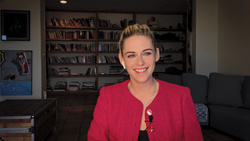
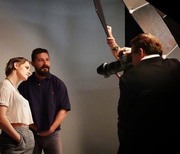
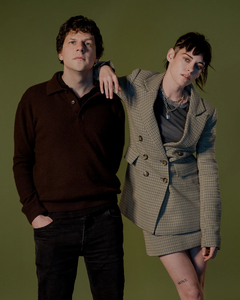
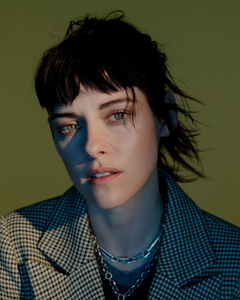
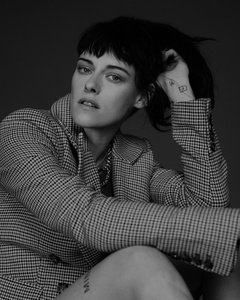
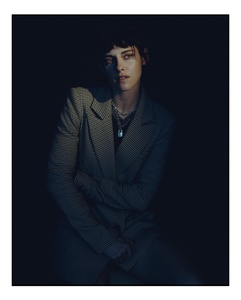
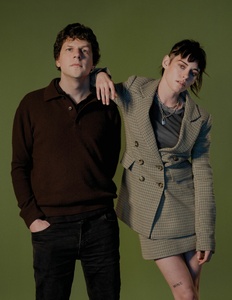
Video: Kristen and Jesse Eisenberg for Variety's Directors on Directors


Jesse-Eisenberg_Kristen-Stewart-Variety-Directors-on-Directors.pngKristen-Stewart-Variety-Directors-on-Directors.png

Outtakes

IMG_3181.JPGIMG_3180.JPG

Scans

G9frh60XgAAkapo.jpgG9fraswWAAACF1t.jpgG9frbTVXQAAhtu-.jpgG9frhJ8WEAAysHv.jpg

Click on images for a full view.

As featured in the print version of Variety December 2025. 

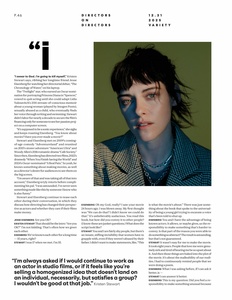
Transcript / Excerpt of the scans above:

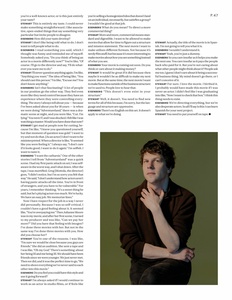
“I swear to God. I’m going to kill myself,” Kristen Stewart says, ribbing her longtime friend Jesse Eisenberg for watching her directorial debut, “The Chronology of Water,” on his laptop.  

The “Twilight” star, who earned an Oscar nomination for portraying Princess Diana in “Spencer,” vowed to quit acting until she could adapt Lidia Yuknavitch’s 2011 stream-of-conscious memoir about a young woman (played by Imogen Poots), sexually abused as a child, who eventually finds her voice through writing and swimming. Stewart didn’t labor for nearly a decade to secure the film’s financing only for someone to see her passion project on a computer screen.  

“It’s supposed to be a sonic experience,” she sighs and keeps roasting Eisenberg. “You know about movies? Have you ever made a movie?” 

Stewart and Eisenberg met on 2009’s coming-of-age comedy “Adventureland” and reunited on 2015’s stoner adventure “American Ultra” and Woody Allen’s 2016 romantic drama “Cafe Society.” Since then, Eisenberg has directed two films, 2022’s dramedy “When You Finish Saving the World” and 2024’s Oscar-nominated “A Real Pain.” So yeah, he knows something about making movies, as well as a director’s desire for audiences to see them on the big screen. 

“I’m aware of that and was taking all of that into account,” Eisenberg wryly retorts before complimenting his pal. “I was astounded. I’ve never seen something made like this by someone I know who is also funny.” 

Stewart and Eisenberg continue to tease each other during their conversation, in which they discuss how directing has changed their perspective as actors and whether they care if their films make money.  

Jesse Eisenberg: Are you OK? 

Kristen Stewart: That should be the intro: “Are you OK?” I’m not kidding. That’s often how we greet each other. 

Eisenberg: We’ve known each other for a long time — 15 years, right? 

Stewart: I was 17 when we met. I’m 35. 

Eisenberg: Oh my God, really? I saw your movie 24 hours ago. I was blown away. My first thought was “We can do that? I didn’t know we could do that.” It’s unbelievably audacious. You read this book, but how did you convey it to other people? (I know these are junket questions.) What does the script look like?  

Stewart: You and I are fairly shy people, but there’s an innate, stifling invisibility that women have to grapple with, even if they weren’t abused by their father. I didn’t want to make statements, like, “This is what the movie’s about.” There was just something about the book that spoke to the universality of being a young girl trying to excavate a voice that’s been told to shut up.  

Eisenberg: You and I have the advantage of being known actors. It allows, or maybe gives, us the responsibility to make something that’s harder to convey. Is that part of the reason you were able to do something so abstract? The result is astounding, but that’s not guaranteed.  

Stewart: It wasn’t easy for me to make the movie. It took eight years. People that love me were genuinely sick and tired of hearing me be so upset about it. And then those things are baked into the plot of the movie. It’s about the malleability of our realities. I had to continuously remind people that we were doing a poem. 

Eisenberg: What I was asking before, if I can ask it better, is — 

Stewart: I can answer it better. 

Eisenberg: This is my question: Did you feel a responsibility to make something unusual because you’re a well-known actor, or is this just entirely your taste? 

Stewart: This is entirely my taste. I could never make something straightforward. I like associative, open-ended things that say something very particular but invite people to disagree.  

Eisenberg: How did your taste develop? 

Stewart: I don’t like being told what to do. I don’t want to tell people what to do. 

Eisenberg: I read something you said, which I thought was funny and reminded me of myself. Somebody asked you, “Do you think of being an actor in a movie differently now?” You’re like, “Of course. I’ll go to the director and say, ‘I’ll do whatever you want me to do.’”  

Stewart: I’ll never question anything again. I’m like, “Anything you want.” The idea of being like, “You should cast this person.” I’m like, “Excuse me? You don’t know anything.” 

Eisenberg: Isn’t that fascinating? A lot of people in our position go the other way. They feel even more like they need control because they have an experience where they were controlling everything. The story I always tell about you — because I’ve been asked about you for 18 years — is when we were doing “Adventureland,” there was a dramatic scene at night, and you were like, “Cut. I’m lying.” You were 17, and I was shocked. I felt like I was watching a master. Would you have done that now? 

Stewart: I get mad at people now for cutting, because I’m like, “I know you questioned yourself, but that moment of question was gold.” I want to try and not do that. [As an actor] I don’t want to be misinterpreted. When a director is like, “It seemed like you were feeling it.” I always say, “I don’t care if it looks good; I want to do it again.” I’m selfish. I want to taste it.  

Eisenberg: “I want the catharsis.” One of the other stories I tell from “Adventureland” was a quick scene. I had my first panic attack on set; I was self-aware in the worst way, and I shut down. After the tape, I was mortified. Greg [Mottola, the director] goes, “I didn’t notice, but I’m so sorry you felt that way.” He said, “I don’t understand how actors aren’t having panic attacks all the time. You’re in front of strangers, and you have to be vulnerable.” For years, I remember thinking, “It’s a sweet thing he said, but he’s pitying actors too much. We’re lucky. We have an easy job. We memorize lines.”  

Now I have respect for the job in a way I never did personally. Because I was so self-critical, I couldn’t have a good feeling about it. It seemed like, “You’re overpaying me.” Then Julianne Moore was in my movie, and after her first scene, I turned to my producer and was like, “Can we pay her more?” Did you have that feeling with Imogen? I’ve done three movies with her. But not in the same way I’ve done three movies with you. How did you choose her?  

Stewart: You’re one of the reasons. I was like, “I’m sure we would be close because you guys are friends.” She did an audition. She sent a tape and I was like, “Oh my God.” There’s something  about her being 35 and me being 35. We should have been friends since we were younger. We just never met. Then we did, and it was the perfect time to go, “We need to shove everything we’ve never said to each other into this movie.” 

Eisenberg: Do you feel you could have this style and use it going forward? 

Stewart: I’m always asked if I would continue to work as an actor in studio films, or if feels like you’re selling a homogenized idea that doesn’t land on an individual, necessarily, but satisfies a group? I wouldn’t be good at that job.  

Eisenberg What do you mean? To direct a more commercial thing? 

Stewart: More and more, commercial means standard and digestible. I want to be allowed to make movies that allow for time to figure out a structure and mission statement. The next movie I want to make utilizes different formats. Not because it’s nerdy film stuff, but because it’s more interesting to make movies about how you see something instead of what you see. 

Eisenberg: Your movie is coming out soon. Do you think or care about it making money?  

Stewart: It would be great if it did because then maybe it wouldn’t be as difficult to make my next movie. But at the same time, the next movie I want to make functions outside of the business structure we’re used to. People love to hear that. 

Eisenberg: “This doesn’t even exist in your structure.”  

Stewart: Well, it doesn’t. You need to find new terms for all of this because, I’m sorry, but the language and structure are oppressive.  

Eisenberg: There’s no English on this set. It doesn’t apply to what we’re doing. 

Stewart: Actually, the title of the movie is in Spanish. I’m not going to tell you what it is. 

Eisenberg: I wouldn’t understand it. 

Stewart: Yeah, you’re just a dummy. 

Eisenberg: So you care insofar as it helps you make the next one. You care insofar as it pays the people back who paid for it. But you’re not caring about what other people might think about it? People ask me too. I guess I don’t care about it being a successful business thing. My mind doesn’t go there, or I can’t conceive of it. 

Stewart: For sure. I love the movie. I birthed it. I probably would have made this movie if I was never an actor. I didn’t feel like I was graduating into like, “Now I want to check that box.” I think this thing needs to exist. 

Eisenberg: We’re directing everything, but we’re also desperate actors. So all I’ll say is this: I can learn Spanish for your next project. 

Stewart: You need to put yourself on tape. 

Source 1 2 3


Tuesday, December 30, 2025

Kristen will be featured on Variety's Directors on Directors series with Jesse Eisenberg - 6 January 2026


Variety’s Directors on Directors, presented by Klimon, returns on Jan. 5 with the visionaries behind some of this year’s biggest awards contenders.

Featured in this year’s Directors on Directors lineup are:  
  • Guillermo del Toro (“Frankenstein”) & Bradley Cooper (“Is This Thing On?”)  
  • Kristen Stewart (“The Chronology of Water”) & Jesse Eisenberg (“A Real Pain”)  
  • Ryan Coogler (“Sinners”) & Spike Lee (“Highest 2 Lowest”)  
  • Chloé Zhao (“Hamnet”) & Josh Safdie (“Marty Supreme”)   
“Coming off our biggest Actors on Actors ever, these Directors on Directors conversations will continue to surprise and engage film fans around the world,” said Variety’s co-president and co-editor-in-chief Ramin Setoodeh. “The best way to kick off awards season in 2026 is through our latest video series.” 

The conversations will be released from Jan. 5-8 across Variety.com and its social media channels. The Directors on Directors print issue comes out on Dec. 31.   


Wednesday, January 26, 2022

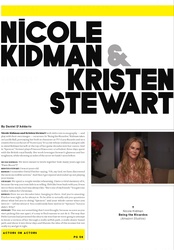
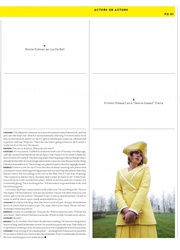
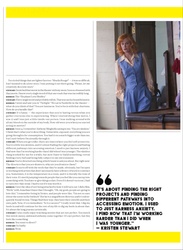
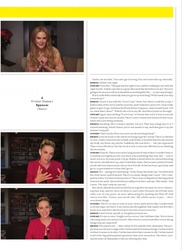
Vdeo: Kristen and Nicole Kidman's Variety 'Actors on Actors' interview


FJ-iUnSVQAEcQ1H.jpgFKBSfAYWYAQUAHr.jpg


FKYBpTnVEAA3-L9.jpgIMG_8324.jpg

Digital Scans

20220126_085011.jpg20220126_084414.jpg20220126_084723.jpgScans

20220126_084829.jpg

Click on all images for full view.

Nicole Kidman (“Being the Ricardos”) and Kristen Stewart (“Spencer”) sat down for a virtual chat for Variety’s Actors on Actors, presented by Amazon Studios. For more, click here.

Nicole Kidman and Kristen Stewart both delve into iconography — and play with their own images — on screen. In “Being the Ricardos,” Kidman takes on Lucille Ball, portraying her both in character as TV’s Lucy Ricardo and as a creative force on the set of “I Love Lucy.” It’s a role whose resilience and grit calls to mind Kidman herself, at the top of her game decades into her career. And in “Spencer,” Stewart plays Princess Diana over a turbulent three days spent with the British royal family. Her work leverages Stewart’s glamour and her toughness, while showing us sides of the actor we hadn’t seen before.

NICOLE KIDMAN: We were meant to work together how many years ago [on “Panic Room”]?

KRISTEN STEWART: I was 10 years old.

KIDMAN: I remember David Fincher saying, “Oh, my God, we have discovered the most incredible actress.” And then I got injured and ended up not playing your mama.

STEWART: We spent a couple weeks rehearsing. I have a vivid memory of it, because the way you treat kids is so telling. I felt like I was buds with you. It was two or three weeks, but I was always like, “She’s one of my friends.” You gave me walkie-talkies for Christmas.

KIDMAN: Here we are decades later, hanging in there. And you’re amazing; Fincher was right, as he always is. To be able to actually ask you questions about what led you to doing “Spencer,” and your whole career since you were 10 — tell me about it. You could easily have said no to “Spencer,” but you didn’t. Why?

STEWART: This was not something that I overthought, because as soon as you start picking this one apart, it’s easy to find reasons to not do it. The way that Pablo Larraín had presented the idea to me was that we were going to attempt to know a version of her through a really selfish path, a really desire-based path, and shove it into three days and liberate the idea of this woman but not really try and get it right.

And so, he was like, “You can’t get it wrong. You can’t mess this up, basically.”

KIDMAN: And he was right.

STEWART: I was like, “This guy has the right voice, and he’s talking to me with the right words. And he says this is a great idea and that he believes in me.” If you’re going to be an actor still, you should do something like this — or just stop doing it.

Was Lucille Ball somebody that you grew up watching? What made you step towards her?

KIDMAN: I knew Lucy and the “I Love Lucy” show, but when I read the script, I had no idea of her story and her journey, and I related to parts of it. I was really game to give it a go. And then the flood of fear, I suppose, came in and I went, “Oh no, what have I done?” Which I do a lot in my life, and then I push on through.

STEWART: I grew up watching “I Love Lucy,” so I know that voice. It was so surreal to hear it pop out of your mouth. There’s a less-rehearsed version of that voice, when she’s just being a human.

KIDMAN: Smoking. She’s a heavy smoker. I’m not. That was a huge key to it. I started smoking, which I know you’re not meant to say, and then gave it up the minute I stopped.

STEWART: That’s lucky. Were you nervous about being funny?

KIDMAN: I was nervous to the extent of trying to get her sound. There’s a rhythm to Lucy. I had to lean into the sounds, and slowly, it would wash into my mouth, my body, my brain, my psyche. Suddenly she was there — she just appeared. Then it was effortless, but the work it took to become effortless was climbing the mountain.

STEWART: Exactly. There was such a long period of time where I couldn’t hear it. I could do an English accent, but there was something that was, like — you’re never not you. At some point, I let go. Maybe a week before we started shooting the movie, she did show up, and I could fully relate. She became a kind of friend; you do the best impressions of your best friends. At the last hour, I got lucky and got it, or got whatever it was that I got to.

KIDMAN: Yes — giving over and saying, “Gosh, I hope she shows up.” I would watch her interviews, and I learned. There’s so many things that I went, “Oh, I completely relate. I’ve been in that position.” There was an alignment that happened between her and I; Aaron [Sorkin] would just sit there and say, “Mm-hmm.” And I went, “Oh, that’s why he cast me.”

But Javier [Bardem] and I would Zoom together because we were rehearsing that way, and we were no help to each other because we’d freak each other out. At one point, we were advocating for pushing the film off. And Aaron was like, “Listen, you can do this.” My whole career is just — don’t overthink things.

STEWART: There’s no way to look at your career path and be like, I understand a certain logic, but there is an emotional throughline that makes me feel like I know you, and that’s the best way to become close to an actor.

KIDMAN: I don’t know myself, so I’m glad you know me.

STEWART: It’s my version. I might not be correct, but I still have that. You’ve been choosing such cool movies forever. Has it been a concerted effort in not doing things that are expected?

KIDMAN: The experience — that’s what we live and die with, ultimately. The people that you choose to align with. I’m fascinated in human beings. I’m fascinated in what it means to be alive. I’m fascinated in what it means to die. I’m fascinated in all of the big philosophical questions that orbit around us. Therefore, I primarily seek out filmmakers that are delving into that.

I’ve circled things that are lighter fare too. “Moulin Rouge!” — it was so difficult, but I wanted to do a love story. I was putting it out there going, “Please, let me creatively do a love story.”

STEWART: I watched that movie in the theater with my mom. I was so obsessed with that movie. I knew every single word of that one track that was incredibly long.

KIDMAN: The “Elephant Love Medley.”

STEWART: Every single word and probably still do. That was such a beautiful movie.

KIDMAN: I went and saw you in “Twilight.” We sat in Nashville in the theater — what do you think of that? You are luminous. You’re born with that charisma. How do you handle that?

STEWART: It’s funny — the experience that you’re having versus what you gather everyone else is experiencing. When I started doing that movie, I was 17 and I was just a little inside-out person. I was walking around with all my blood on the outside of my body. How old were you when you started acting in movies?

KIDMAN: I was 14. I remember Anthony Minghella saying to me, “You are skinless.” I think that’s what you’re describing. Vulnerable, exposed, everything you are going through is for consumption. You had it on a much bigger scale than me, but I can’t believe I’m actually through it.

STEWART: When you get older, there are times where you feel self-protective. You’re a little less skinless, and it’s about finding the right projects and finding different pathways into accessing emotion. I used to just harness anxiety. I find now that I’m working harder than I did when I was younger. The skinless thing worked for me for a while, but now I have to build something, versus fielding every ball and being fully subject to my environment.

KIDMAN: You’ve directed one thing, which I want to ask you about. But right now: The directors that you are drawn to, why are you drawn to them?

STEWART: It starts off with the work that they’ve made, obviously, but I’m open to working with artists that don’t necessarily have a library of work to convince you. Sometimes, it is the temperature in a room, and it is literally the tone of their voice. It’s worth jumping towards people that you feel like you can tap into something with. You have to give things a shot. Even if it doesn’t turn out, I had to turn over that stone. I had to see if it was worth it.

KIDMAN: I love the idea of not being attached to how it will turn out. I did a film, “Birth,” with Jonathan Glazer that I thought, “Oh, my gosh, people are going to love this.” I remember being in Venice, and people were like, “I’m not so sure about the scene in the bathtub.” But he is a magnificent director, and it’s subsequently found its way. Things find their way; they have their own life and their own path. Now, it’s so immediate: “Is it a success?” I really resist that. I dig my heels in and will continue for the rest of my life to dig my heels in about that. It’s about the long journey artistically.

STEWART: I also really enjoy watching movies that are not perfect. You watch this weird, messy, awkward alchemy come together: It’s not perfect, but this feels like something.

KIDMAN: You want to direct?

STEWART: So badly.

KIDMAN: Wow.

STEWART: I’ve adapted a memoir by a novelist named Lidia Yuknavitch, and we just cast the lead role, which is monumentally relieving. I’ve been alone with this, in this vacuum, and it’s so nice to give something to someone, a friend and a partner, and say, “Help me.” She’s the one who’s going to have to do it, and it’s really hard, so I’m over the moon.

KIDMAN: You are so fearless. When do you start?

STEWART: It’s in process. I talked to someone with a lot of money two days ago, and she seemed excited about the prospect, but I want it to be small. I think the best version of it really is. The freezing water that I’m going to throw this girl into, I already feel terrible. It’s such a huge ask to invite someone onto this particular thing. I think you would love it. The writing is so physical and so fiercely, ragingly female.

KIDMAN: Is there a role for me? I love the idea of always moving into places that you haven’t been, and supporting people that are moving into places that they haven’t been. I’m not asking to be cast in the film, but it’s my way of saying, “The support is always there, because that’s what we have to do.” Otherwise, you end up in some rarefied-air place, which is not fun and not creative. It’s constantly going, “I’m a working actor. Tell me where to go and what to do, and I’m following you.”

I recently had that conversation with a director I’m working with. “You’re the leader; I’m the follower. You are my mother. I know I’m older than you, but you’ve got to be the parent.” Because I can’t come in and dominate. I want to come in and be there, open, ready and available for you.

STEWART: It’s the best feeling. I bet that there’s a bit of a jaw-droppy intimidation factor at times, and you have to go, “No, man, this is your show. Please tell me.” And that’s when you thrive.

KIDMAN: I waver in confidence. You just do. When someone says, “Follow me over here,” that’s when I feel most at home. Which is why I would never direct.

STEWART: Really?

KIDMAN: No. It’s terrible. I don’t have the decision-making. I’ve been working since I was so young, and I’m decades in now. I’m wired in a particular way. That’s why it’s so good you’re doing it now, because you won’t be completely wired in one area.

STEWART: Your wiring is very haphazard — nothing feels rehearsed or planned. It’s so easy to follow you, but it is also like whiplash. Don’t try and make decisions. We love watching you not make them.

Source: Variety Transcript Scans: Gossipgyal

Friday, January 21, 2022

Kristen will feature in Variety's 'Actors on Actors' series with Nicole Kidman


"Actors on Actors" is back with another star-studded season.

Lady Gaga, Bradley Cooper, Andrew Garfield, Kristen Stewart, Jamie Dornan and Ariana DeBose are among the awards-season heavyweights featured on the 15th season of “Actors on Actors,” premiering Feb. 18 on PBS SoCal.

Gaga will be paired with a mystery actor, who will be revealed when Variety‘s “Actors on Actors” issue hits newsstands on Wednesday, for the three-time Emmy-winning series. A new conversation will be posted daily on Variety.com beginning on Monday (24 January).

The new season will feature one-on-one conversations between actors who gave some of the most memorable performances in film this year. The four episodes will debut on PBS SoCal on Feb. 18 at 8 p.m., 8:30 p.m., 9 p.m. and 9:30 p.m., as well as on KCET and public television stations across the country and the WORLD Channel (check local listings). All episodes will stream on pbssocal.org and the free PBS App following their premieres.

This season’s featured conversations are:

Javier Bardem (“Being the Ricardos”) with Daniel Craig (“No Time to Die”)

Mahershala Ali (“Swan Song”) with Bradley Cooper (“Nightmare Alley,” “Licorice Pizza”)

Lady Gaga (“House of Gucci”) with mystery guest

Nicole Kidman (“Being the Ricardos”) with Kristen Stewart (“Spencer”)

Andrew Garfield (“Tick, Tick … Boom!”, “The Eyes of Tammy Faye”) with Rachel Zegler (“West Side Story”)

Aunjanue Ellis (“King Richard”) with Regina King (“The Harder They Fall”)

Jessica Chastain (“The Eyes of Tammy Faye”) with Rita Moreno (“West Side Story”)

Penélope Cruz (“Parallel Mothers”) with Benedict Cumberbatch (“The Power of the Dog”)

Jamie Dornan (“Belfast”) with Kirsten Dunst (“The Power of the Dog”)

Oscar Isaac (“The Card Counter”) with Jared Leto (“House of Gucci”)

Marlee Matlin (“CODA”) with Bradley Whitford (“Tick, Tick … Boom!”)

Ariana DeBose (“West Side Story”) with Simu Liu (“Shang-Chi and the Legend of the Ten Rings”)

Source

Video: Kristen, Pablo Larrain, Jacqueline Durran, Steven Knight and Guy Hendrix Dyas for the 'Spencer' Variety Streaming Room


Source: Variety

Friday, November 8, 2019

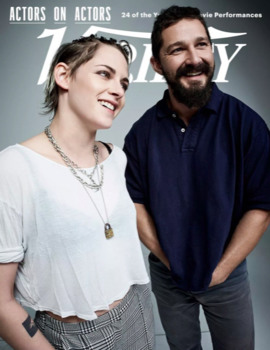
Kristen's interview for the Variety Studio: Actors of Actors series for 'Seberg'


imagebam.com

imagebam.com imagebam.com 
imagebam.com imagebam.com imagebam.com
imagebam.com imagebam.com imagebam.com imagebam.com

Click on images for full view.


Transcript:

Shia LaBeouf wrote and co-stars in “Honey Boy,” his memoir of growing up in Hollywood. His character, based on LaBeouf’s own father, is an alcoholic who steers his son’s acting career and cashes his paychecks. In “Seberg,” Kristen Stewart puts her own memories of movie sets to use, portraying Jean Seberg, the 1960s icon of French New Wave cinema. 

Shia LaBeouf: Walking in to “Seberg,” you’re a fan of New Wave. I feel like you watch a lot of —

Kristen Stewart: No. I had seen “Breathless.” In no way is my cinematic knowledge steeped in New Wave cinema. 

LaBeouf: What were you into? 

Stewart: I watched her movies, and I couldn’t understand how we didn’t know more about her. I genuinely felt really protective of this chick that nobody knew, that everybody thought they knew. There was so much about her that was described in dishonest headlines. I wanted to help her out a little bit. 

LaBeouf: Did you know she was haunted before you walked in?

Stewart: Honestly, she’s possessed. When you watch her in a movie, you never know what she’s going to do, and she’s scary.  

LaBeouf: On set, you’re alone? You’re not leaning on nobody?

Stewart: No, I lean on people.

LaBeouf: What’s that look like? Do you f–k around in the middle of takes? Do you talk? 

Stewart: I’m quieter than you. 

LaBeouf: You’ve got to know the power of your quiet too.

Stewart: When I was a kid, I was extremely shy, and not somebody who you would think would want to be an actor. I don’t know how you were as a little kid, because we both did that, and that’s a weird thing to have in common. I had to dig. I was a masochist. I think I’m really talkative now. I talk to f–king everyone now.

LaBeouf: I used to walk around with a pen and a pad, almost litigious, like: “Hey, what’s your name? Oh, cool.” Then I’d write it in a little notepad. 

Stewart: Is it because you want people to like you?

LaBeouf: I wanted to seem studious, because I didn’t go to school and I didn’t learn how to do this acting thing.

Stewart: I have this chip right here too.

LaBeouf: What does it do to you?

Stewart: I read a lot. I’m always like, “I didn’t go to school, but …” 

LaBeouf: If you get around a guy like [Anthony] Mackie [a co-star of “Seberg”] who’s gone to school, he’s got technique. Those people make me very scared.

Stewart: Why?

LaBeouf: I feel judged, like I’m an outsider. If my knitting needle breaks, I don’t have a f–king knitting needle. Guys like that, their knitting needle breaks, and they’re, like, “Let me go in the kitchen and I’ll whip something together and I’ll come back and I’ll knit this sock for you.” 

Stewart: Right. I just watched “Honey Boy.” I literally cannot believe you did that.

LaBeouf: That’s a co-sign, ladies and gentlemen.

Stewart: How long did it take you to come to terms with every day? Obviously, it’s a very personal story. We all try to put our own stuff in stuff, but this is actually your own stuff.

LaBeouf: I had a squad. I was loved on hard. I was leaning on people hard. It was super intimate. We maybe had six people around the camera. 

Stewart: Who directed it?

LaBeouf: A woman named Alma Har’el, who is just a straight G. 

Stewart: How much do you feel like you were doing an impression versus actually feeling like you could be versions of that person who is your dad?

LaBeouf: My dad blew his nostrils out. I would just keep plugs in all day, which was disgusting.

Stewart: In your nose? That’s gross. 

LaBeouf: The first couple of days, I was taking plugs out, putting them back in, taking them out. That started f–king with me, because every time the sound would start up again, I’d be, like, “You’re a clown.” Later in the shoot, we just kept them in and I started losing myself a little bit. How long was your shoot?

Kristen Stewart Shia LaBeouf Actors on Actors

Stewart: Six weeks. A lot of daytime, so we couldn’t shoot that long. 

LaBeouf: You stay in it?

Stewart: No. I’m hugely relieved every time something is done, and I just run away from set. Time management is such a huge thing with the job. Just the anxiety of not being in control of time is really maddening for me. I can’t sustain stuff, because I just waste it. If I expend something, if something trickles out the wrong time, I am despondently unhappy because I’m, like, “Well, that was just for nothing.”

LaBeouf: Yeah. I know what you’re talking about. 

Stewart: I have dreams about it. That’s my work anxiety dream. That all the timing is wrong, or they’re not rolling.

LaBeouf: You shot on film or digital? Because there is a huge difference in time management.

Stewart: We shot on film.

LaBeouf: Ouch. I can’t stand working on film anymore, because digital they just leave it going. 

Stewart: Do you just go forever?

LaBeouf: I prefer that. I prefer to just let it run, f–k around, play around and then fall in. 

Stewart: I read this script recently that is so precise, and I want to do it really badly, but it scares me because I’m not very precise. 

LaBeouf: You’re definitely going to do it.

Stewart: Yeah. I think when I watch you in movies, it’s scary. The same way I was talking about Jean: I have no idea what’s going to happen. Do you prepare a lot?

LaBeouf: Yes. I have no directorial mind. I can’t zoom out. I’m just starting to be a better team player. I’m super obsessed with this one little thing that I have to focus on. I feel like my body has better ideas than my head. I prep really hard, and then it’s almost like dance. I feel like my instinct is better than my ideas, so I try to just not think so much. What does acting give you that the rest of life doesn’t? 

Stewart: It’s definitely my initial impulse to want to be close to story-telling, and the circus of it. Even when I read a book, I read out loud. I want to indulge in the thing as much as I can, because there’s something in there that I’m needing. The coolest thing about doing it on set is that you get to do it in the most together way I’ve ever been made to feel. My family is great, but I’ve never felt closer to people, bridging those gaps, than through making movies. What about you?

LaBeouf: I think definitely the most intimate moments of my life happened on set. 

Stewart: It sounds really f–ked up, but it’s not at all. It’s beautiful.

LaBeouf: I think I’m deeply dissatisfied with life.

Stewart: But this is your life. 

LaBeouf: Exactly. This is where things get tricky for me. It isn’t my whole life. I have to get OK with that. It’s usually where things go awry for me is when I’m not on a set. Life gets hard.

Stewart: Do you do anything else?

LaBeouf: This is what I’m trying to develop, trying to grow. 

Stewart: Take a pottery class.

LaBeouf: Maybe I will. I won’t like pottery in life. But I will love pottery on set. I don’t like ice cream in life. But if you give me ice cream on a set, I f–king love ice cream. I think that’s what this does for me. It makes me love things. This job feels like the conduit for love for me. I hold it that sacred. 

Stewart: I feel you. 

LaBeouf: Speaking of love, do you lead with love on a set or do you lead with fear? 

Stewart: Love all the way. I don’t want anyone to be scared ever. I definitely don’t like the fear/intimidation thing. 

LaBeouf: Even from a director, though, do you have any scars? 

Stewart: No. I’ve worked with wonderful, lovely, talented people, and then some people that weren’t so talented, that were not very nice. I can only do what I can do. I’m trying to think. One dude made me cry on set one day, on the first day of a movie, but that was the last second that I cared about him anymore. I just was like, “I’m alone and you’re terrible.” He made a bad movie.

LaBeouf: This wasn’t to affect a scene? This was just being a dick?  

Stewart: I think so. Who knows. What about you? Do you like being afraid on set, and have you worked with people that have made you feel that way? 

LaBeouf: Definitely, yeah. But like you, I don’t like it. Do you believe in talent?

Stewart: I don’t know. Do we mean the same thing?

LaBeouf: Do you consider yourself one of the talented?

Stewart: I consider myself extremely impulsive and compulsive. Sometimes it works, and sometimes it doesn’t. When people are really proud of their work, I’m like, “Sure, you made it possible for this to occur, I guess. You kind of stood in the right place.”

LaBeouf: Like having a butter-fly land on your shoulder or something. 


All four episodes of the Emmy Award-winning series will premiere on PBS SoCal on Thursday, Jan. 2, starting at 8 p.m. The episodes will stream on the PBS Video app following their premieres.

“Variety Studio: Actors on Actors” will air on PBS stations across the nation starting in January, and on the World Channel. Variety‘s Actors on Actors issue will hit newsstands Nov. 12 with clips appearing on Variety.com.

Source 1 2 3 4 5 6

Friday, January 19, 2018

Chloe Sevigny talks about 'Lizzie' and mentions Kristen with Variety at the Sundance Film Festival


Photo Credit: Destro Films Instagram
Photo: (L to R) Jeff Perry, Denis O'Hare and Chloe Sevigny. at the Variety Studios.


Sevigny made the trip to Sundance for the premiere of her drama “Lizzie,” about Lizzie Borden, who was accused of murdering her father and stepmother in 1892 Massachusetts. Sevigny co-produced the movie, having long been fascinated with Borden’s life.

Kristen Stewart plays Borden’s maid, Bridget Sullivan, who is believed to have had a romantic relationship with her. “I’m such a fan of Kristen,” Sevigny said. “She’s such a firecracker. I’m so honored. She said, ‘Chloe, I want to do this for you.’ There are so many movies I’ve done supporting other women and their performances are stellar.”

She said their chemistry came naturally. “What are you kidding? I think there’s a mutual admiration. I think we both really identify with an outlaw, misfit character.”

As for their love scenes in the film, Sevigny laughed: “There was a little bit of steam,” she said. “I wish there was more.”

Video from the cast interview


Source 1 2 3

Monday, March 13, 2017