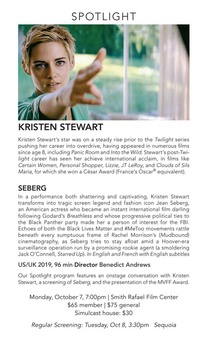
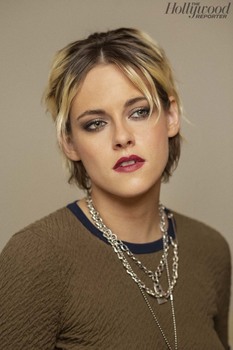
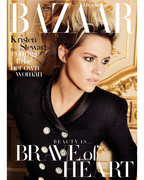
Kristen Stewart will be the recipient of the Zurich Film Festival’s prestigious Golden Eye Award. Stewart will be in Zurich with director Benedict Andrews to celebrate her latest film SEBERG in which she plays the title character, Jean Seberg. The film receives its Swiss premiere on Wednesday October 2nd.
estival Co-directors Nadja Schildknecht and Karl Spoerri comment: "Although she could have been involved in blockbuster movies after the TWILIGHT series, Stewart has consistently opted for artistically engaged indie films by writers such as Walter Salles, Olivier Assayas and Ang Lee. She succeeded the difficult balancing act between Mainstream and Arthouse in an exemplary way. With her fearless portrayal of Jean Seberg she once again proves to be one of the most versatile actresses of our generation."
Kristen Stewart
Kristen Stewart is one of the most accomplished, talented and in-demand young actresses in Hollywood. In 2015, she became the first American actress to be awarded a Cesar Award in the Best Supporting Actress category for her role in Olivier Assayas’ Clouds of Sils Maria, in which she starred alongside Juliette Binoche. She received several other accolades for Clouds of Sils Maria including the Best Supporting Actress prize for: NYFCC, BSFC, BOFCA, and NSFC. In January 2017, Stewart made her directorial debut with COME SWIM which premiered at the 2017 Sundance Film Festival.
This Fall, in addition to Amazon Studios upcoming film SEBERG, Stewart will star in SONY’s CHARLIE'S ANGELS, directed by Elizabeth Banks and in Twentieth Century Fox’s UNDERWATER, which is slated for a January 2020 release.
Stewart was introduced to worldwide audiences in 2002 with her gripping performance alongside Jodie Foster in PANIC ROOM. Her star took a huge rise when she starred as Bella Swan in the hit franchise The TWILIGHT SAGA. She also starred in Universal’s box office winner SNOW WHITE AND THE HUNTSMAN; and in Walter Salles’ screen adaptation of Jack Kerouac’s ON THE ROAD.
Her career has displayed a challenging assortment of characters in additional films including: Adventureland, INTO THE WILD directed by Sean Penn, THE RUNAWAYS, WELCOME TO THE RILEYS, THE CAKE EATERS, THE YELLOW HANDKERCHIEF, WHAT JUST HAPPENED, IN THE LAND OF WOMEN, THE MESSENGERS, ZATHURA, SPEAK, FIERCE PEOPLE, CATCH THAT KID, UNDERTOW, COLD CREEK MANOR, THE SAFETY OF OBJECTS, CAMP X-RAY, STILL ALICE, ANESTHESIA, AMERICAN ULTRA, EQUALS, ANG LEE'S WAR/DRAMA, BILLY LYNN'S LONG HALFTIME WALK, and LIZZIE. Notable more recent credits include Olivier Assayas’ PERSONAL SHOPPER, Woody Allen’s CAFÉ SOCIETY, Kelly Reichardt’s CERTAIN WOMEN, and JT LEROY.
SEBERG
Inspired by true events, the film tells the story of À bout de souffle (Breathless) star and darling of the French New Wave, Jean Seberg, who in the late 1960s was targeted by the illegal FBI surveillance program COINTELPRO.
Seberg’s political and romantic involvement with civil rights activist Hakim Jamal made her a target of the FBI’s ruthless attempts to disrupt, discredit and expose the Black Power movement. An ambitious young FBI agent, Jack Solomon, is assigned to surveil her, only to find his fate dangerously interwoven with her own.
Directed by Benedict Andrews SEBERG is written by Joe Shrapnel and Anna Waterhouse, it stars Kristen Stewart as Jean Seberg, and also stars Jack O’Connell, Margaret Qualley, Zazie Beetz, Yvan Attal, Stephen Root, Colm Meaney, Vince Vaughn, Anthony Mackie, Jade Pettyjohn, Grantham Coleman, James Jordan. The film is produced by AUTOMATIK (Fred Berger, Brian Kavanaugh-Jones) IndiKate (Kate Garwood), Totally Commercial Films (Stephen Hopkins), Bradley Pilz Productions (Bradley Pilz), and Encrypted Productions (Marina Acton, Alan Ritchson).
Official Partner of the Golden Eye Award is Credit Suisse.
The 15th Zurich Film Festival takes place from September 26 to October 6, 2019. The programme will be revealed on September 12th.
Inspired by true events, Seberg tells the story of star and darling of the Nouvelle Vague, Jean Seberg (Kristen Stewart), who in the late 1960s was targeted by the illegal FBI surveillance programme Cointelpro. Seberg's political and romantic involvement with civil rights activist Hakim Jamal (Anthony Mackie) made her a target of the FBI's ruthless attempts to disrupt, discredit and expose the Black Power movement. An ambitious young FBI agent, Jack Solomon (Jack O'Connell), is assigned to surveil her, only to find his fate dangerously interwoven with her own.
'An MVFF Spotlight program celebrates exceptional work by a film artist in their most current work. Honorees may be in early, mid, or late career.' - MVFF
Kristen will be attending the screening which includes a conversation with her and the presentation of the Spotlight Award on 7 October at 7.00pm PT.
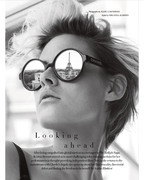
Kristen Stewart is looking ahead
After being catapulted into global stardom as a teenager in The Twilight Saga, Kristen Stewart moved on to more challenging roles, winning acclaim for her performances in thought-provoking independent films. Now, as she returns to the mainstream with Charlie’s Angels, she opens up about her fluid sexuality, directorial debut and finding the freedom to be herself.
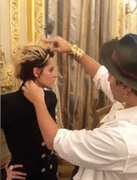
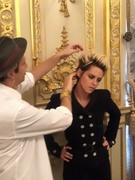
In a vast downstairs ballroom in the Shangri-La Hotel in Paris, I can hear Kristen Stewart before I see her, changing behind a patterned screen in a far corner. Her voice is distinctive – that easy, low-rolling Californian accent, where all the words run together, and she sounds like nothing could surprise her.
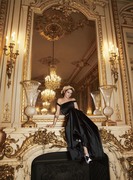
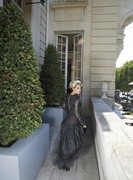
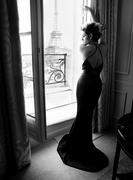
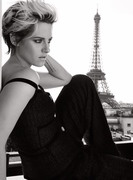
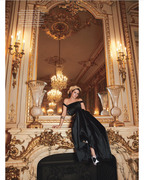
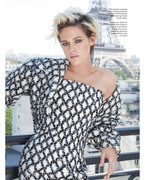
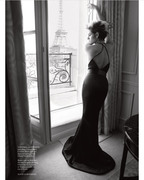
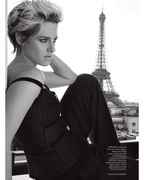
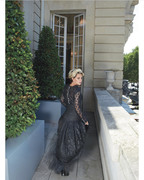
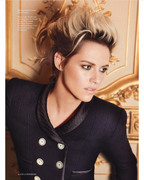
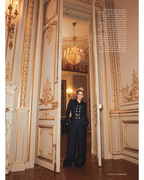
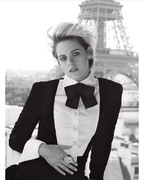
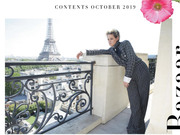
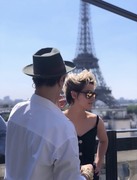
When she finally emerges to go and have her picture taken on a balcony with the Eiffel Tower rising up behind her, she is in perfect contrast to her delicate, gilded surroundings. Her hair is a black-blonde swipe across her forehead, and she’s wearing floor-length black velvet, a black bow at her throat, as befits her status as a Chanel ambassador. She walks past, a bold, swaggering walk, and smiles. "Yeah," she says, seeing my face. "It’s intense. It’s a lot of look."
Soon enough, she’s back, and changed. Ripped jeans, white T-shirt, bare feet: her more natural state. We talk on a warm terrace, cross-legged on sofas. I don’t know why I expected her to be reticent or shy, but probably because that is how she is always assumed to be, or how she comes across in photographs, when her expression sometimes seems deadpan, reluctant to give anything away. Or perhaps it’s just how we all remember her from the Twilight years as the permanently tortured, lovesick Bella Swan. "I try to avoid the word 'awkward'," Stewart says, remembering that time. "I want to reclaim that word, because it’s been used too violently against me."
Today, Stewart is anything but awkward. She is relaxed, open, garrulous and expressive, arms gesticulating as she talks, her voice clear and confident. Take, for example, how she describes meeting Elizabeth Banks for the first time (Banks has directed Charlie’s Angels, which comes out in November, featuring Stewart as one of the leads). The pair happened to be at the same party at the Venice Film Festival a few years ago. Stewart was dancing, but a little self-conscious. "I just didn’t feel as solid as I do now," she says. Banks, by contrast, was having a ball. She came up to Stewart, told her she was a fan and asked if she was having a good time. "And then she said what would be the most annoying thing to hear from anyone else," says Stewart, "which was, 'You’ve got to have fun with it.'" She grins at the memory. "I was like, 'No shit! I’m trying.'"
This is how Stewart talks – frank, candid, plenty of swearing. She seems both sure and totally unafraid of saying what she thinks. It’s as though something has fallen away: caution, certainly, but also a former antipathy towards the whole publicity game that has haunted her on a global scale ever since the extraordinary success of Twilight. "Every day I get older, life gets easier," she says, smiling broadly.
Stewart was only 18 when the first Twilight movie came out. As the child of a script supervisor (her mother) and a stage manager (her father), she’d spent time on sets growing up, and had been acting in films since she was 10 years old (her first was The Safety of Objects, quickly followed by Panic Room with Jodie Foster). But it was the Twilight franchise that made her internationally beloved. She and her co-star and then-boyfriend Robert Pattinson would sit in press conferences with an expression of traumatised horror on their faces. They refused to discuss their relationship, and in interviews there was often a sense of a wall going up, of shutters closing. Most of the time, Stewart looked like she wanted to run away.
"When me and Rob were together, we did not have an example to go by," she recalls. "So much was taken from us that, in trying to control one aspect, we were just like, 'No, we will never talk about it. Never. Because it’s ours.'"
After the final Twilight film was released, Stewart’s departure from the mainstream was pronounced. She acted with Juliette Binoche in Clouds of Sils Maria, a role for which she was the first American actress to win a César award. Her choices were varied and unexpected: she played a psychic in Personal Shopper and made a movie about falling in love in an emotionless society (Equals). Her career became, as she describes it, "the most random game of hopscotch". She chose to work with friends instead of big names and didn’t mind making what she calls "weird, risky mistakes".
But now, in another twist, there’s Charlie’s Angels, her most mainstream movie for years. The internet lost its collective mind when the trailer came out – Kristen Stewart, the ultimate cool girl, doing stunts, doing comedy. "I did Charlie’s [Angels] because I’m a huge fan of Liz Banks and I always felt she vouched for me," she explains. "I always felt, like, she doesn’t think I’m a freak." It was still an act of friendship, but one that allowed Stewart to show off her little-known goof ball side and exceptional fighting skills. When her friends watched the trailer, they told her: 'Dude, that’s you. Finally!'"
If the idea of Stewart as goofball seems unlikely, then be reassured: she can still be intense. Looking back on those early years, and the strange sensation of being an object of fascination in your teens, makes her reflective. There were plenty of aspects of her fame that she found daunting, but what confused her was the sense that her public felt they both knew her and owned her, and then were let down when she wasn’t who they presumed she was.
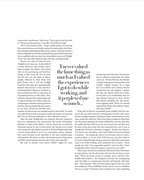
It was as though she’d become a character, I suggest. "Totally," says Stewart."I’ve tried to say this before, and I don’t think I’ve ever articulated it properly... but people get mad at you because you’re in such a grand position, so if you don’t hold that up, you don’t deserve it. I never valued the fame thing as much as I valued the experiences I got to do while working, and it perplexed me so much... Some people were like, 'You ungrateful asshole!' and I was like, ' Yeah, completely, I don’t want to be famous, I want to do my work!'"
An ode to Kristen Stewart
These days, Stewart has mellowed. She knows there will always be expectations, but she also knows that she doesn’t have to meet them. When she looks around at younger actors and how they handle their position – the Instagram activism, the campaigning zeal, the ability to communicate directly and honestly with their fans – she’s amazed. "They have this insane agency," she says. "And the confidence! That is baffling! I’m like, how are you so confident? You’re so young!" Sometimes, she’s sceptical: the virtue-signalling can be a little forced, a little on point. She names no names, obviously, but describes, tantalisingly, "a couple of people who are like real activists, really at the forefront of progress, and I’m like, 'You are a deplorable fraud! And all you really care about is people looking at you.'" As I said, she’s unafraid.
But she’s grateful, too. It is partly thanks to the next generation, their openness and bravery, that she has found her voice, and no longer seems to care about the consequences of using it. "I used to sit in interviews and go, 'God, I wonder what they’re going to ask me,' but now – literally – you can ask me anything!" So I take her at her word, and enquire what it feels like to constantly discuss her sexuality, now that it seemed to have become a subject for open debate.
"Well," she says, "I think I just wanted to enjoy my life. And that took precedence over protecting my life, because in protecting it, I was ruining it." In what way, I ask. "Like
what, you can’t go outside with who you’re with? You can’t talk about it in an interview? I was informed by an old school mentality, which is – you want to preserve your career and your success and your productivity, and there are people in the world who don’t like you,
and they don’t like that you date girls, and they don’t like that you don’t identify as a quote unquote “lesbian”, but you also don’t identify as a quote unquote “heterosexual”. And people like to know stuff, so what the fuck are you?’
Stewart’s realisation, which she credits the younger generation with giving her the confidence to stick to, was that she was not required to answer that question. She has no answer. She doesn’t identify as bisexual, she doesn’t identify as a lesbian, she doesn’t like labels. She’s a different person every day she wakes up and delighted by that. "I just think we’re all kind of getting to a place where – I don’t know, evolution’s a weird thing – we’re all becoming incredibly ambiguous," she explains. "And it’s this really gorgeous thing."
She accepts that she has become a sort of standard-bearer for that ambiguity. But she doesn’t mind. If she can make the conversation about sexuality easier for anyone, she’s happy. She also couldn’t care less about the impact any of this might have on her career. In the past, she says, "I have fully been told, 'If you just like do yourself a favour, and don’t go out holding your girlfriend’s hand in public, you might get a Marvel movie.'" She looks almost amused at the memory. "I don’t want to work with people like that." Now, by contrast, people approach her, drawn to that undefined sexuality, wanting to make movies about it. Stewart shakes her head in mock despair. "Literally, life is a huge popularity contest."
For the next couple of years – whoever she happens to be dating– Stewart will be busier than ever. Back when she was a kid, on set with her parents, she told her mother she was going to be the youngest person ever to direct a feature film, and that she’d do it before she was 18. "Thankfully I did not do that," she says now. But it’s finally happening next year, as she approaches her 30th birthday. Just 40 pages into reading the memoir, The Chronology of Water, about a young swimmer dealing with addiction, she sent an email to its author Lidia Yuknavitch. "I was like, I will read your book until the day I die." recalls Stewart. She bought the rights, and has spent years writing the script, which she recently read aloud to Yuknavitch. "It was a really, really satisfying feast of an intimidating experience" says Stewart. "I like being intimidated, so that’s fine."
The script isn’t finished – she wants to keep it fluid, open to interpretation. She has a sense of how she wants to do it, but also understands what a responsibility it is, being in charge of a cast and crew. "I know how precious it is –I’ve done it," she says. "I can’t wait to make sure that I don’t mess up anyone’s chance to be great."
She can’t believe her luck: that she gets to spend hours, years, thinking and talking about her favourite book to make it into something new. And this is just the beginning, she hopes: there are half a dozen other projects she’s keen to make. In the meantime, she’s not going to stop acting. If anything, directing is just a natural extension of the process – one that she hopes will make her a better actor. But there’s also an attraction, inevitably, for someone who has been the subject of a collective gaze for so long, in switching positions, going behind the camera. In her new state, feeling free and compulsively honest, perhaps it’s a more natural place to be.
As she puts it, just before she pads back to the ballroom on her bare feet: "The thing that’s really igniting me is the idea of starting the ball rolling – and not being the ball."
Interview by Sophie Elmhirst
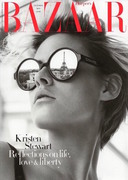
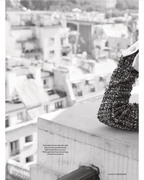
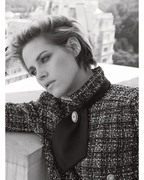
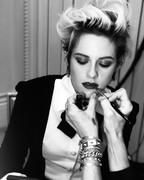
Kristen Stewart wears Chanel Haute Couture top and Chanel sunglasses.
Not everyone is familiar with her affairs, did she have any?
I think it is best known for the famous haircut (the pixie cut that made the history of fashion, ed.) But I wish instead that from now on it was her tragic story to be told.
The blessing and the curse of fame is something she knows well. Did it seem a bit like being mirrored in your life?
The actresses have a public role, it is part of the game of the parts to appear in a certain way, but in my opinion it also makes a pact with those who follow you, that is, to remain as authentic as possible.
What do you like about Jean Seberg?
The passionate spark in her eyes: you see in her both the exuberance and the fear of success, even if she loves contact with people very much. This led her to always get involved, to show courage. And it's not easy to sacrifice yourself for others, so those who have the strength to do so remain admirable.
In your opinion, why did you become a muse of the French movement?
For its ability to take risks. I understand it well ... and over time, as I studied their behavior, I realized that everything revolved around the boundless desire to be accepted but above all looked at. As if continually saying: "I am true".
Should an actress take part in the political debate?
It is a personal choice but I think it must be remembered that politics is not entirely white or black, there are many alternatives and it is not always the only one right for us. In this historical period we are all the spotlights, so we wouldn't even need to rummage in someone's emails for secret hornbeams, now our lives are public. Which also makes any threats less frightening, since everything is already under the sunlight.
In the past you haven't taken your popularity and interference in your private life very well, is it better now?
Yes, yes, I'm ready for everything now! Seriously, I'm proud of the turn my career is taking and the recent collaborations I've had but I'm not here to complain instead of what fame has deprived me of. I decided to make instinctive choices and I'm not regretting it.
Do you not miss a direct dialogue with the public that social media can create?
I realize that it is a way to get in touch and I understand who feels the need, but we live in an era that is too polarized and I hope that my work choices are for me to talk about. However, you cannot make everyone happy.
Have you always had such clear ideas?
Absolutely not, as a girl I was really insecure, today I understand that success offers me a platform that I can use to make a difference and I'm not afraid to put my face to it. Two years ago I lived a strange time, in which I only wanted to protect myself.
How are you today?
I feel serene to express my opinions in public, finally free.
Kristen Stewart stars as American actress Jean Seberg, whose life was tragically destroyed when she became a target of the FBI's COINTELPRO program. The actress, who became a darling of the French new wave best known for Jean-Luc Godard’s Breathless, was a political activist who supported the Black Panther Party and was thus placed on the FBI’s list of persons to be ‘neutralized’. Benedict Andrews’s film shows how the wiretaps and harassment lead to the actress’ downfall and untimely her death at the age of 40 in 1979.
The film starts with a scene from Saint Joan in which Jean Seberg is burned at the stake, like a witch. Is this symbolic of what happened to the actress in real life too?
Yes, but in a much less transparent way, which makes it all the more painful. She is somebody who is so willing to sacrifice herself. There was a selfless and very open nature to her humanitarianism and it was not self-serving in any sense. I don’t assign the martyrdom to her, but she was viciously crucified not only for the way that she thought but the way that she really wanted to reach people. The powerful imagery that the movie starts with gets you on the right foot. This person’s heart was definitely in the right place.
Do you think that the way they went for her because she was a supporter of the Black Panther Party had anything to do with the fact that she was a white woman?
Actually, I do. I think that anything that would threaten the status of these selfish and empowered white men motivated by foundational and systemic racism would have been taken out.
Most people know about Jean Seberg as the icon or the darling of the new wave in French film. Were you surprised by this story?
I knew Breathless. I was surprised that it is not more commonly known. I understand why it was not publicized then but it is really crazy how this story fell by the wayside. It is such a shame. It is hard to celebrate such a tragedy but the opportunity to sort of dignify her and validate her is such a beautiful opportunity and I wish she had left to see it.
How did you relate to her? You are an actress too, you are famous and you are also very politically outspoken. Were there many similarities?
I think we are tonally very different, so it was a bit of a stretch to play somebody who was so light. She has such an air about her. Not in a way that is wishy-washy but literally she inhabits a space in such a breathy way. When you watch interviews or watch her movies, she inhabits a space very differently from me, so the biggest challenge was that buoyancy about her. She was assertive but there was a grace and an ease, which she managed to live her life with that was really contagious. There is an openness and a willingness to engage. She has a really beautiful energy and to see that person have to protect herself and go away and recede is so sad. Watching some of her later movies, you can see that she is no longer with us and knowing the reasons for that now is really interesting.
How do you relate to that as an actress though?
I am fully committed to the idea that if you function from a place of honesty that you can really vouch for yourself. You cannot have full control over how everything goes down or how people perceive you. But as long as you are functioning from a really true place, you can put your foot in your mouth and you can make mistakes, you can feel good about what you are putting out and I think that there is a naiveté to her and an impulsiveness and sometimes simplifies nature but it was always so well-intentional and so true that it is impossible not to find that endearing rather than think it is silly or stupid.
You saw the film with an audience at the premiere here in Venice. What was this experience like? How did you feel the audience reacted to the film?
I don’t know. I could not get a strong gage in the room. I have only seen it one other time. I was sitting next to Benedict Andrews, who directed the film and Anthony Mackie, who plays Hakim Jamal and I was gaging both of them. There is this kind of weird cosmic, mystic thing about her story that she feels present in this way that I could be making up. It was the 40th anniversary of her death and it was a total coincidence that the premiere was on that very day. When I was watching the film I thought that most people don’t know her story and whether or not we did a “good job”, we know that our intentions were very clear.
When you leave the film you are very emotional, because you cannot believe what happened to her.
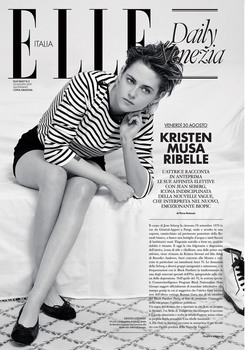
Kristen was on the cover of Elle Italia Daily for Day 2 at the Venice Film Festival.
Click on image for full view.
Google translated.
Did you know about Jean Seberg's story, the persecution by the FBI?
No, I had absolutely no idea, I found out everything when I approached the movie. But I knew the actress, she was very inspiring to me. Beyond the film, however, what always interested me was the extreme form of compassion, the need to help the marginalized. A humanitarian charge that never abandoned her and for which she was demonized. For many it was her madness, in fact she had a simple, almost naive political idea: revolution for her was being on the side of the losers. In the end, they all betrayed her.
Her films are mentioned in Seberg and how she reinterprets them.
It seemed right to start with the scene of the burning of Joan of Arc of the film Saint Joan by Otto Preminger, his debut. The viewer does not know if it is true or a vision, but it represents the witch hunt of which she has been a victim.
Was it more exciting or harder to remake one of the cult scenes of cinema, the finale of Breathless? **
Challenging. We worked on the details, we knew we were dealing with an icon, it took extreme delicacy. And what the film tells is no longer the girl in Godard's T-shirt, but an actress who sees her moment of grace fade. We tried to capture its extreme sensitivity and vital energy, all on a small budget.
Does this story that weaves racism and the role of women still seem relevant to you?
Oh my God, it's more important than ever, but in particular it's important what it reveals about false information, fake news: those who control it can change people's lives, and that's what really terrifies me. In this social age everything becomes even more complicated. It's also a film that's very much about my country, America, today.
After the next Charlie's Angels in a brilliant role, you announced a director's feature film, The Chronology of Water, from the book of Lidia Yuknavitch, a former swimmer who in her writings investigates issues of gender and sexuality. Where are we?
I'm hoping to run with it next year, I've still got to finish a couple of acting projects that interest me. There is already a beautiful script, I have to commit to the visual part, the most difficult, the real challenge.
Will the future be as an actor or as a director?
Certainly at a half-way point between the two. At the moment All I know is that I want to close my suspensions as an actress and study to seriously prepare me to become a director.
** We are assuming this is what it translates to. Source