Showing posts with label twilight. Show all posts

Thursday, December 4, 2025

Kristen in the Hollywood Reporter Magazine

Kristen Stewart loves to cook, but on this Thanksgiving eve, the last thing she wants to serve up is, well, a turkey. Which is why she’s been spending much of the day hovering over a desktop rather than a stovetop, reviewing footage from her long-in-the-making directorial debut, The Chronology of Water, a sexy, occasionally bloody, often elliptical drama adapted from Lidia Yuknavitch’s memoir about a writer navigating trauma, addiction and the long, messy process of becoming an artist.

“People are like, ‘Oh, everything will get done at some point,’ ” she says over a Zoom call from the Los Angeles house she shares with her wife, filmmaker Dylan Meyer. “But I don’t think that’s true.”

It sounds a little strange considering that the film she is so meticulously fussing over premiered at Cannes way back in May — and opens theatrically in just a few days, on Dec. 5. The former Twilight star, now 35, laughs at the chaotic timeline, but it doesn’t slow her down. In her mind, the project is still very much a work in progress. “I want to put an hour back into the movie,” she says with a grin, presumably half-joking.

Stewart says she’s wanted to direct from the moment she first ventured onto a film set — which, in her case, was practically from birth. Her father was a stage manager; her mother was a script supervisor who later directed. They hauled her to sets throughout her childhood, where she absorbed shot lists and camera setups long before she understood what any of it meant.

At age 10, she landed her first screen role as Patricia Clarkson’s tomboy daughter in 2001’s The Safety of Objects, then spent the next two decades pinballing through the full spectrum of Hollywood fame: first as the mopey teenager in love with an even mopier vampire in the blockbuster Twilight franchise, then diving into work with auteurs like Olivier Assayas and Kelly Reichardt — including an Oscar-nominated turn as Princess Diana in Spencer and a César Award for her performance in The Clouds of Sils Maria (becoming the first American ever to win the French honor) — gradually carving out a reputation as one of the most adventurous actors of her generation.

Through it all, though, she says she’s been quietly running a parallel track, studying her directors — everyone from Catherine Hardwicke to Pablo Larraín — in preparation for the moment she’d step behind the camera herself. “There are certain actors that don’t know where the camera is,” she notes, “but I’ve never been unaware of the process.”

She seems to have been particularly aware of it during her Twilight years. Stewart recalls admiring Hardwicke’s ability to inject personality into a massive commercial machine — “That [first] Twilight movie is hers and reflects her; Catherine accomplished that, hands down,” she says — and noticing how quickly that personal stamp was squeezed as the franchise accelerated. “Being able to withstand and organize that many opinions, and still make something that feels like yours, is near impossible to do,” she says. “With so many voices in the room and with so much expectation, nothing feels personal.”

Stewart wonders whether sequel directors including Chris Weitz and Bill Condon “actually felt like they fully directed those movies,” adding that while working with them, she “felt bad for them and proud of them.” Their later Twilight films, she notes, “had personality, in spite of a really stifled process. They feel almost overtly, bizarrely, spastically themselves.

“You need to have an incredibly thirsty, hungry, brazen, deplorably narrow drive,” she goes on, mulling over the profession she’s finally joined. “You look at that and you get jealous of it as an actor. So then you go, ‘I’d like to form my own version of that.’ ”

As for directing Chronology, Stewart didn’t so much land that job as drag it into existence. She’d long been drawn to Yuknavitch’s memoir and pitched the author immediately after reading it in 2017, then spent years piecing together the financing. “People have a lot to say about how you do that,” she says. “It’s fucking hard, especially if you’re a young — when I say young, I mean inexperienced — actress who’s just demanded that she start making movies.”

Once she finally got the money together, actually shooting the film proved just as consuming. Stewart describes the production as a stretch of near total immersion — long days, little separation and the constant sense that she was guarding a very private vision from the usual swirl of outside opinions. She watched scenes back compulsively, trying to align each moment with the movie she’d been carrying around in her head for years. “All my initial impulses are so evident in the final product,” she says.

The actress at the center of the film — Imogen Poots, best known for her roles in 2007’s 28 Weeks Later and 2015’s Green Room — recalls that Stewart was always pressing for something deeper. “She’s on the quest, on the hunt … for more knowledge, more ways to identify something,” she says.

Even after its splashy Cannes launch, backed by critical acclaim, Stewart struggled to find distribution. “Everyone was like, ‘I cannot sell this,’ ” she says. “Everyone was really focusing on the negative.” To her, the material wasn’t “tough” so much as tactile and emotional, a sensorial character study. The small distributor The Forge eventually stepped in and is now mounting a scrappy awards campaign on the film’s behalf. “I look at this whole season as this big cruise ship, and we’re these Finding Nemo turtles, riding the little wave of the ship,” Stewart says. “At some point people are going to turn around and be like, ‘Hey, what are you doing here?’ ”

The film’s visual and thematic intensity, Stewart believes, speaks for itself — its “lush and girly and soft” textures, its vivid emotional logic, its grainy close-ups and to-hell-with-linearity narrative style. But the road to that point was longer in part because she refused to sand down any of its edges. “When you’re a woman working in this business, you make your perspective a little different in order to be heard — you twist yourself into a palatable shape. We are all walking pretzels,” she says. “Then [women] are shoved to the sidelines and completely tokenized in order to make people feel better about their guilt and their shame. And anytime a woman says something — if it lands — there are people coming in to take credit for that.”

In Pablo Larraín’s Spencer, for which she was Oscar nominated, Stewart plumbed the depths of Princess Diana’s psyche. Pablo Larrain/Neon/Courtesy Everett Collection

A version of that frustration resurfaced last month when Stewart delivered a fiery keynote at the Academy Women’s Luncheon — a furious dismantling of the myth of post-#MeToo progress — which went viral for a single word. “I knew as soon as I used the word ‘angry,’ that would be the pull quote,” she says now. Her larger point — that she isn’t “grateful to the boys’ club business model that pretends to want to hang out with us while siphoning our resources and belittling our true perspectives” — was more complicated, and more personal.

Stewart has little illusion that the larger system will shift anytime soon. Even so, her next job drops her squarely inside it: She’s prepping to star in her TV debut, The Challenger, an Amazon limited series about Sally Ride, the tennis champion turned astronaut. Stewart seems genuinely excited about the six-month shoot, if slightly bemused to be stepping back into a large-scale corporate production. “We’ll see how it goes,” she says. “These people and producers are not reptiles. But I am a little scared.”

She’s also eager to get back to directing. Her next project, she says, will be deliberately tiny: “I need 10 people to help make this movie with me in Los Angeles, and all the actors are my friends, and I don’t need to make any money — we can make it for absolutely nothing in four to six weeks. We will make this in the dead of night and nobody will know it. Fucking try to shut us down — absolutely not! That’s the way I want to make my next movie.”

It’s the opposite of a studio undertaking, which is precisely why she wants to do it.

But first she has to let go of The Chronology of Water — which is proving to be a decidedly difficult thing to do.

She’s still got the film’s images pinned up on the wall of her home office. This morning, as she was assembling a zine for her cast and crew, filled with unused images and moments from shooting, her computer crashed, then the power went out — almost as if the universe were hinting that it was time to move on. But she just relocated to another room, which at least on Zoom looks borderline monastic: A large upholstered chair and an art deco vanity appear to be the only furniture. As she talks, she absent-mindedly adjusts her Dodgers-themed Marriage Skateshop cap, a gesture that makes her look both focused and a little restless.

Or maybe just fixated. She may not be able to splice that extra hour into the film — or, this close to release, even an extra minute — but she’s still cooking up last-minute plans for Chronology of Water. She has visions of turning every screening into a kind of gallery, a way to immerse audiences in the film’s emotional logic. “I want to create this installation piece so you feel engulfed by the movie when you enter and when you exit,” she explains.

But she also knows, down deep, that she needs to stop “shredding this movie by the frame, down to its bolts,” as she puts it. “I want to make my next movie so badly. So I need to stop eating this one over and over and over and over.”

Stewart originally shot to fame in 2008’s Twilight as Bella Swan, opposite Robert Pattinson as Edward Cullen. FlixPix/Alamy Stock Photo

This story appeared in the Dec. 3 issue of The Hollywood Reporter magazine. 

Source

Wednesday, March 27, 2024

Audio and Video: Kristen on the 'Not Skinny But Not Fat' Podcast


                      Apple Podcasts (below)                             Spotify (below)


Click on the images to listen to the podcast on your preferred platform.

OR

Listen to the podcast on Apple or Spotify.


Friday, March 15, 2024

Kristen on the cover of Who What Wear - March 2024


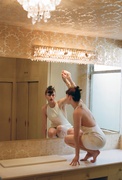
8689-13-19-v2.jpgmatt-kristen-ww-003-v1.jpg8689-03-13-v2.jpg008689040017-v2.jpgmatt-kristen-ww-052-v1.jpgmatt-kristen-ww-034-v2.jpg8689-07-16-v3-copy.jpgmatt-kristen-ww-051-v2-copy.jpg8689-12-24-v1.jpg4x5-cover.jpg8689-11-34-v2.jpgmatt-kristen-ww-012-v1.jpgmatt-kristen-ww-032-v1.jpg

9wofkvKr2a6vJiTQJXSbsh-2560-80.pngy7rXweW9Ludd2uRvhE4b5-2560-80.pngfveBJPmoQiHHPH8vYusAJD-2560-80.pngPN7rRZbHdq6ocr3pxgdpNk-2560-80.pnggR3SzZraHkfjPv3M8xaDue-2560-80.png

Click on photos for full view.


Kristen Stewart Is Calling the Shots

The Love Lies Bleeding star joins fellow actor-turned-director Riley Keough in conversation for our March cover.

For the better part of two decades, Kristen Stewart has moved through Hollywood like a chameleon, slipping into a mélange of characters and subverting expectations at every turn. Traversing seamlessly from a fantasy world of vampires and werewolves to that of a legendary 1970s rock frontwoman and jumping from a queer home-for-the-holidays rom-com to an Oscar-nominated turn as the people's princess is Stewart's speciality. You can't pinpoint any kind of project-picking philosophy (by choice, I imagine) other than maybe a desire to play multifaceted women who defy societal norms. Her ability to keep audiences guessing with every project, much like with her unquestionably cool beauty and fashion transformations, is what makes Stewart one of the most impressive actors of our generation.    

In Rose Glass's sophomore film Love Lies Bleeding, Stewart's performance is as liberated as they come. The heart-pounding romantic noir thriller is a roided-up, sweaty, violent fever dream set against the backdrop of 1989 rural New Mexico. Stewart plays Lou, a reclusive gym manager with a shaggy mullet and a dodgy family led by her gun-toting father (Ed Harris). Lou seems to be going nowhere fast in her seedy small town until Jackie (Katy O'Brian), an aspiring bodybuilder, shows up from Oklahoma and irrevocably shakes things up. The pair quickly become an item with big plans of getting out of town when a terrible decision, spawned by a growing steroid habit, leads to murder. 

Love Lies Bleeding first premiered to rave reviews at the Sundance Film Festival in January, where Stewart was honored with a Visionary Award and declared she wouldn't act in another film until her own directorial debut, an adaptation of Lidia Yuknavitch's memoir The Chronology of Water, got financing. After shopping the project around for nearly three years—"too fucking long," she shouts—Stewart finally found her funding. And not a moment too soon. On the verge of a life-changing career milestone, she jumped on the phone with her good friend and fellow actor-turned-director Riley Keough to talk about going bombastic for Love Lies Bleeding, the divine timing of directing her first film, and coming up in a different era of Hollywood. 

Riley Keough: Hi!

Kristen Stewart: Hey, what's up? 

RK: Oh my gosh. I'm so happy to see you. Where are you?

KS: I'm in my house. 

RK: Very cool. 

KS: To leave the responsibility of conducting something readable in our hands is just funny. I thought twice about that. … I was like, "Cool, I get to hang out with Ri for 50 minutes. That sounds nice." But then I was like, "Wait, do we want other people to be privy to the swill?" There's nothing good that will be had. 

RK: It's okay because I have prompts, so I'm going to stick to the page. Well firstly, … I got to see this incredible movie when I was in bed with COVID, which was really a trippy experience because when I had COVID—I'm in England—I had this crazy dream that a demon took over my body. I went to bed, and I woke up and called my energy healer because I was like, "I literally just had a dream that a demon took my body over and started wanting to kill people." I got your movie sent to me that day. 

KS: Was the desire to kill something you knew as a fact, like in the reality of the dream, or did you actually experience that need to murder?

RK: I can't believe I'm saying this in an interview. I've never told anyone this but my therapist, but it was like a demon took over my body, and it was like, "Rawrrr!" It was threatening people, and I was like, "What is taking over?" It was so crazy. I felt like there was another entity in my body. 

KS: Like you were out of control. 

RK: I was totally out of control. 

KS: Like Being John Malkovich style—going, "Oh shit!"

RK: I woke up with COVID, so maybe that was the COVID aggressively entering my body in my dreams. And then I had to watch Love Lies Bleeding. It was just so intense, but it was actually amazing. I was like, "This is great. At least, I'm not alone." 

KS: I was going to say that's a trippy alone watch. That is a movie that you'd like to get caught up in a bit of a raucous time with others versus sitting still and alone with. 

RK: It's so great, but also, you're so good in it. 

KS: Thanks, dude.

RK: Maybe this doesn't feel right to you, but when I was watching you, you felt so free and so liberated in your performance. I don't know if it felt that way when you were performing it, but it felt very … alive and free.

KS: It's weird because the character is also kind of paralyzed, so at the same time, she's not somebody who is free, or I don't think you would necessarily pin "liberated" on her. 

RK: No, she's not, and that's what is so weird. … If I read that on the page, I would have played her much more restrained. I can't describe it, but it was really special. It was just so interesting, and I would just like you to speak to that. 

KS: It was good timing, in that getting older and choosing the right things for you plays into it because I had so much fucking fun. I didn't want to stop doing it ever. I wanted us to go over schedule. We were lucky because we got the chance to take a step back and return to it and do "reshoots," which really just felt like an extension of the process. The script was precise, but the whole thing felt malleable the whole time. … [Rose Glass] really allowed people to come in and inhabit this space in a way that is rare, and I really did relish the opportunity and was obsessed with Lou. She was someone that I really needed to get behind the whole time. … She's a protagonist that is so satisfying because we all have this demon and this monster in there that is like, "Maybe I could be awful. Maybe I scare the shit out of myself." 

Also tonally, this person is someone who is not used to being looked at, so there's this weird, tongue-in-cheek, rye, smirky thing that happens in this movie for me. I'm so aware of the fact that this is usually not the main character. Every time the camera is all about me—and Lou I guess—I'm always like, "Wait, are you fucking kidding me?" I'm literally having a ball, and that's probably what you sensed. She's definitely locked up and weird and in a million ways unprocessed and needs so much therapy, but it was so fun to play the good, affable guy that … doesn't have to be morally upstanding or go through some journey, process thing that makes everyone feel better about the movies and stories that we choose to tell about women. I was so stoked about how different and fun and also just [how] 'fuck off' sexy it was. I was like, "Rose, who the fuck are you?!" 

KS: Was the desire to kill something you knew as a fact, like in the reality of the dream, or did you actually experience that need to murder?

RK: I can't believe I'm saying this in an interview. I've never told anyone this but my therapist, but it was like a demon took over my body, and it was like, "Rawrrr!" It was threatening people, and I was like, "What is taking over?" It was so crazy. I felt like there was another entity in my body. 

KS: Like you were out of control. 

RK: I was totally out of control. 

KS: Like Being John Malkovich style—going, "Oh shit!"

RK: I woke up with COVID, so maybe that was the COVID aggressively entering my body in my dreams. And then I had to watch Love Lies Bleeding. It was just so intense, but it was actually amazing. I was like, "This is great. At least, I'm not alone." 

KS: I was going to say that's a trippy alone watch. That is a movie that you'd like to get caught up in a bit of a raucous time with others versus sitting still and alone with. 

RK: It's so great, but also, you're so good in it. 

KS: Thanks, dude.

I was so stoked about how different and fun and also just [how] 'fuck off' sexy it was.

RK: Maybe this doesn't feel right to you, but when I was watching you, you felt so free and so liberated in your performance. I don't know if it felt that way when you were performing it, but it felt very … alive and free.

KS: It's weird because the character is also kind of paralyzed, so at the same time, she's not somebody who is free, or I don't think you would necessarily pin "liberated" on her. 

RK: No, she's not, and that's what is so weird. … If I read that on the page, I would have played her much more restrained. I can't describe it, but it was really special. It was just so interesting, and I would just like you to speak to that. 

KS: It was good timing, in that getting older and choosing the right things for you plays into it because I had so much fucking fun. I didn't want to stop doing it ever. I wanted us to go over schedule. We were lucky because we got the chance to take a step back and return to it and do "reshoots," which really just felt like an extension of the process. The script was precise, but the whole thing felt malleable the whole time. … [Rose Glass] really allowed people to come in and inhabit this space in a way that is rare, and I really did relish the opportunity and was obsessed with Lou. She was someone that I really needed to get behind the whole time. … She's a protagonist that is so satisfying because we all have this demon and this monster in there that is like, "Maybe I could be awful. Maybe I scare the shit out of myself." 

Also tonally, this person is someone who is not used to being looked at, so there's this weird, tongue-in-cheek, rye, smirky thing that happens in this movie for me. I'm so aware of the fact that this is usually not the main character. Every time the camera is all about me—and Lou I guess—I'm always like, "Wait, are you fucking kidding me?" I'm literally having a ball, and that's probably what you sensed. She's definitely locked up and weird and in a million ways unprocessed and needs so much therapy, but it was so fun to play the good, affable guy that … doesn't have to be morally upstanding or go through some journey, process thing that makes everyone feel better about the movies and stories that we choose to tell about women. I was so stoked about how different and fun and also just [how] 'fuck off' sexy it was. I was like, "Rose, who the fuck are you?!" 

RK: I was just constantly surprised with this film and also your character. I was like, "Okay, it's this thing. This is the character," and then it was different. You brought so much texture to it. You know when you watch something and you're like, "Oh, I wouldn't have thought of that. I wouldn't have done that"? I love when I watch performances like that. There are moments where you're so funny. 

KS: I feel that way about you constantly. It's not nonsense. It's true reciprocation. I genuinely feel that way every time I watch you in a movie. 

RK: Thanks! It was … not what I would have expected or done or chose, so I really loved watching you. 

KS: Rose had to consistently remind me of tone because I would always go under, and she'd be like, "No, no." She'd push us toward ballistic, like bombastic. How good is Anna Baryshnikov [in the movie]? 

RK: Oh my gosh, I was like, "This girl is so crazy." The acting was so great. Everyone was psychotic. 

KS: I was so impressed with her in person, in real time. I tend to be probably so annoying to directors. I'll take things so literal in the moment for some reason, and then give me a couple days, and I'm like, "I don't know why I was hung up on that. I'm so sorry. That was such an irrelevant detail." 

RK: Sometimes, acting is like you're drunk or something because you're not totally yourself. I'll behave in ways I don't normally behave and get total tunnel vision. It's like, "I'm sorry for my behavior." 

KS: Yeah, you go to bed at night and wake up and go, "Oh" the same way you might if you were being an idiot while drunk. 

RK: What was the prep [for the film] like? 

KS: Ours was really standard. We read the script a couple of times together and probably had different conversations about the script at once. We were all talking at each other about different things and not really coming to any enlightening conclusions. … I actually had to reverse—I had quit smoking [prior to shooting the film], so it really sucked having to [go back].

RK: I was curious. I was like, "Are you smoking fake cigs in this movie?" 

KS: No, they were real. 

RK: I was like, "There's no way she's smoking fake cigs." 

KS: Yucky. You can't do that. 

RK: They are so gross. 

KS: They are fucking awful, and also, they don't smoke. You know what I mean? They smolder, and they get in your eyes, and you look like a loser. But that sucked. That was a part of the prep. 

RK: Why did you quit smoking?

KS: I think it's something [we] should all do at some point in our lives. 

RK: Did you quit quit?

KS: Yeah, I don't like making promises or whatever, but I don't like smoking cigarettes anymore. [Lou] smokes a fucking lot of cigarettes in the beginning of this movie, and Rose does takes. We don't do things three times. It was fun. We always really pushed things. I took a couple years off my life on this one. It was worth it. I love this movie, but it was not good. 


Chanel shirt, shorts, and bag; Hue socks; Piaget bracelet

Kristen Stewart Is Calling the Shots

The Love Lies Bleeding star joins fellow actor-turned-director Riley Keough in conversation for our March cover.

For the better part of two decades, Kristen Stewart has moved through Hollywood like a chameleon, slipping into a mélange of characters and subverting expectations at every turn. Traversing seamlessly from a fantasy world of vampires and werewolves to that of a legendary 1970s rock frontwoman and jumping from a queer home-for-the-holidays rom-com to an Oscar-nominated turn as the people's princess is Stewart's speciality. You can't pinpoint any kind of project-picking philosophy (by choice, I imagine) other than maybe a desire to play multifaceted women who defy societal norms. Her ability to keep audiences guessing with every project, much like with her unquestionably cool beauty and fashion transformations, is what makes Stewart one of the most impressive actors of our generation.    

In Rose Glass's sophomore film Love Lies Bleeding, Stewart's performance is as liberated as they come. The heart-pounding romantic noir thriller is a roided-up, sweaty, violent fever dream set against the backdrop of 1989 rural New Mexico. Stewart plays Lou, a reclusive gym manager with a shaggy mullet and a dodgy family led by her gun-toting father (Ed Harris). Lou seems to be going nowhere fast in her seedy small town until Jackie (Katy O'Brian), an aspiring bodybuilder, shows up from Oklahoma and irrevocably shakes things up. The pair quickly become an item with big plans of getting out of town when a terrible decision, spawned by a growing steroid habit, leads to murder. 

Love Lies Bleeding first premiered to rave reviews at the Sundance Film Festival in January, where Stewart was honored with a Visionary Award and declared she wouldn't act in another film until her own directorial debut, an adaptation of Lidia Yuknavitch's memoir The Chronology of Water, got financing. After shopping the project around for nearly three years—"too fucking long," she shouts—Stewart finally found her funding. And not a moment too soon. On the verge of a life-changing career milestone, she jumped on the phone with her good friend and fellow actor-turned-director Riley Keough to talk about going bombastic for Love Lies Bleeding, the divine timing of directing her first film, and coming up in a different era of Hollywood. 

Riley Keough: Hi!

Kristen Stewart: Hey, what's up? 

RK: Oh my gosh. I'm so happy to see you. Where are you?

KS: I'm in my house. 

RK: Very cool. 

KS: To leave the responsibility of conducting something readable in our hands is just funny. I thought twice about that. … I was like, "Cool, I get to hang out with Ri for 50 minutes. That sounds nice." But then I was like, "Wait, do we want other people to be privy to the swill?" There's nothing good that will be had. 

RK: It's okay because I have prompts, so I'm going to stick to the page. Well firstly, … I got to see this incredible movie when I was in bed with COVID, which was really a trippy experience because when I had COVID—I'm in England—I had this crazy dream that a demon took over my body. I went to bed, and I woke up and called my energy healer because I was like, "I literally just had a dream that a demon took my body over and started wanting to kill people." I got your movie sent to me that day. 

KS: Was the desire to kill something you knew as a fact, like in the reality of the dream, or did you actually experience that need to murder?

RK: I can't believe I'm saying this in an interview. I've never told anyone this but my therapist, but it was like a demon took over my body, and it was like, "Rawrrr!" It was threatening people, and I was like, "What is taking over?" It was so crazy. I felt like there was another entity in my body. 

KS: Like you were out of control. 

RK: I was totally out of control. 

KS: Like Being John Malkovich style—going, "Oh shit!"

RK: I woke up with COVID, so maybe that was the COVID aggressively entering my body in my dreams. And then I had to watch Love Lies Bleeding. It was just so intense, but it was actually amazing. I was like, "This is great. At least, I'm not alone." 

KS: I was going to say that's a trippy alone watch. That is a movie that you'd like to get caught up in a bit of a raucous time with others versus sitting still and alone with. 

RK: It's so great, but also, you're so good in it. 

KS: Thanks, dude.

I was so stoked about how different and fun and also just [how] 'fuck off' sexy it was.

RK: Maybe this doesn't feel right to you, but when I was watching you, you felt so free and so liberated in your performance. I don't know if it felt that way when you were performing it, but it felt very … alive and free.

KS: It's weird because the character is also kind of paralyzed, so at the same time, she's not somebody who is free, or I don't think you would necessarily pin "liberated" on her. 

RK: No, she's not, and that's what is so weird. … If I read that on the page, I would have played her much more restrained. I can't describe it, but it was really special. It was just so interesting, and I would just like you to speak to that. 

KS: It was good timing, in that getting older and choosing the right things for you plays into it because I had so much fucking fun. I didn't want to stop doing it ever. I wanted us to go over schedule. We were lucky because we got the chance to take a step back and return to it and do "reshoots," which really just felt like an extension of the process. The script was precise, but the whole thing felt malleable the whole time. … [Rose Glass] really allowed people to come in and inhabit this space in a way that is rare, and I really did relish the opportunity and was obsessed with Lou. She was someone that I really needed to get behind the whole time. … She's a protagonist that is so satisfying because we all have this demon and this monster in there that is like, "Maybe I could be awful. Maybe I scare the shit out of myself." 

Also tonally, this person is someone who is not used to being looked at, so there's this weird, tongue-in-cheek, rye, smirky thing that happens in this movie for me. I'm so aware of the fact that this is usually not the main character. Every time the camera is all about me—and Lou I guess—I'm always like, "Wait, are you fucking kidding me?" I'm literally having a ball, and that's probably what you sensed. She's definitely locked up and weird and in a million ways unprocessed and needs so much therapy, but it was so fun to play the good, affable guy that … doesn't have to be morally upstanding or go through some journey, process thing that makes everyone feel better about the movies and stories that we choose to tell about women. I was so stoked about how different and fun and also just [how] 'fuck off' sexy it was. I was like, "Rose, who the fuck are you?!" 

RK: I was just constantly surprised with this film and also your character. I was like, "Okay, it's this thing. This is the character," and then it was different. You brought so much texture to it. You know when you watch something and you're like, "Oh, I wouldn't have thought of that. I wouldn't have done that"? I love when I watch performances like that. There are moments where you're so funny. 

KS: I feel that way about you constantly. It's not nonsense. It's true reciprocation. I genuinely feel that way every time I watch you in a movie. 

RK: Thanks! It was … not what I would have expected or done or chose, so I really loved watching you. 

KS: Rose had to consistently remind me of tone because I would always go under, and she'd be like, "No, no." She'd push us toward ballistic, like bombastic. How good is Anna Baryshnikov [in the movie]? 

RK: Oh my gosh, I was like, "This girl is so crazy." The acting was so great. Everyone was psychotic. 

KS: I was so impressed with her in person, in real time. I tend to be probably so annoying to directors. I'll take things so literal in the moment for some reason, and then give me a couple days, and I'm like, "I don't know why I was hung up on that. I'm so sorry. That was such an irrelevant detail." 

RK: Sometimes, acting is like you're drunk or something because you're not totally yourself. I'll behave in ways I don't normally behave and get total tunnel vision. It's like, "I'm sorry for my behavior." 

KS: Yeah, you go to bed at night and wake up and go, "Oh" the same way you might if you were being an idiot while drunk. 

RK: What was the prep [for the film] like? 

KS: Ours was really standard. We read the script a couple of times together and probably had different conversations about the script at once. We were all talking at each other about different things and not really coming to any enlightening conclusions. … I actually had to reverse—I had quit smoking [prior to shooting the film], so it really sucked having to [go back].

RK: I was curious. I was like, "Are you smoking fake cigs in this movie?" 

KS: No, they were real. 

RK: I was like, "There's no way she's smoking fake cigs." 

KS: Yucky. You can't do that. 

RK: They are so gross. 

KS: They are fucking awful, and also, they don't smoke. You know what I mean? They smolder, and they get in your eyes, and you look like a loser. But that sucked. That was a part of the prep. 

RK: Why did you quit smoking?

KS: I think it's something [we] should all do at some point in our lives. 

RK: Did you quit quit?

KS: Yeah, I don't like making promises or whatever, but I don't like smoking cigarettes anymore. [Lou] smokes a fucking lot of cigarettes in the beginning of this movie, and Rose does takes. We don't do things three times. It was fun. We always really pushed things. I took a couple years off my life on this one. It was worth it. I love this movie, but it was not good. 

RK: Okay, I'm going to go to my list so I can do some of the questions… 

KS: What are you working on right now?

RK: I'm working on a movie in London. I'm rehearsing. 

KS: That's nice. That's such a nice, comfy, cozy rehearsal schedule. That's so luxurious. 

RK: Yeah, I only work like eight days in total, so I have some chill time. 

KS: Except it's not chill to only work eight days on a movie because then you're like, "Okay, I better fucking slaughter this." 

RK: I don't know what it is, but taking [a supporting role] is so much more stressful for me. Do you feel that?

KS: Yeah, you are signing up for torture because you just put so much pressure on your limited time to get something across. I recently had to let a part go in a movie that I know is going to be spectacular. It's one of those ones where the script is so prosaic. It's basically like a novella. You could publish the screenplay. The two actors are two of my favorite working actors, young too. [They're] exciting people who are just so fucking amazing. … All details aside, my movie [The Chronology of Water] just got funded. 

RK: I just heard! We should talk about that. That's so exciting. After how long of trying to get financed?

KS: I was trying to get financed for like three years. … But I've been holding this close, and it's been an idea for six years. That's when the adaptation process started. I've been in Latvia. Dude, spatially and environmentally, these areas of the Earth are opening themselves up to us and the story in a way that just feels so alive, and it is so official for me because it's been so long. I'll see the correct doorway and just lose it. Just knowing the people there that are helping us make it, the way that we've crewed up, the current cast, the way it's evolving… All of it, like how committed [the lead] Imogen [Poots] has been for so long, it feels more personal. I feel like I created a living body outside of my body. It's such a cliché, but it does feel like this little animal is very unruly, and I'm proud of it and scared of it—like full Frankenstein. 

I'm scared of where it might take us, but then I'm also encouraging it to take us fully over every edge. I think Imogen can take it. I think she's strong enough physically. She's in the perfect place in her life. I'm so glad it's taken this long because things have opened up in a way that's going to create a better film. I think it's … perfect, exact fucking timing, and I'm so excited. It's going to be done in a flash. Three months and it's fucking done. 

RK: It will be over, so just enjoy every stressful moment. The couple things in life that I really have experienced divine timing in, thus far, have been the birth of my child and then directing a film. It really comes together exactly when it's supposed to, and it's so weird. … It's a really magical thing that I haven't experienced in other parts of this job as much, like acting or whatever. 

KS: Yeah, because you're harvesting something. … It is other people who generated the thing. You can find areas in which to plug in your person and your personal and your interior life, but it's exterior. You are going through something outside. It's such a different self-generative, womb-like push. 

RK: It sounds so simple, but it is so magical to see something come from your creative imagination and then get realized. … Look, there are so many drafts that we did. I'll forget what we took in or left out sometimes. You're doing your job, whatever you're doing as a director, and then somebody walks in with a yellow pen because you wrote, "She's holding a yellow pen," and you're like, "Whoa." 

KS: Whoa, I wrote that like six years ago. Thank you for noticing that detail, person. 

RK: This whole thing takes on a life, and it's like, "Wow, all of these people are bringing my idea into reality, and it's so trippy." It's like magic. 

KS: It's so fun to talk to you about [this] because you don't necessarily get to talk about this stuff while you're doing it, and it's so trippy to just put it in basic terms like that, where you're like, "How did I do that?" And then it was taken and made into something that is living and breathing. I know that that's just a given, but to actually witness… This actually is a quote from the book: "Witness the will of it." … It takes so much fucking will and willing. The whole thing about directing a thing is looking for the right people who want it as much as you do, and maybe you want something different, but to funnel all of that wanting [and] all of the desire is so overwhelming. Are you guys going to make a new movie soon? What's the next movie that you're going to direct?

RK: We're writing like three movies because we're confused. I'll sit down and write 10 pages and be like, "This is the one," and then I'm so uninspired to keep writing for a month, and then I'll go back to the other one. I'm allowing myself to be lyrical and emotional in my writing process because I find that to be the most successful way for me to write. 

KS: Honestly, there are so many ways into story. For me, it's always a detail versus anything overarching, and that's probably also my weakness and a strength, which makes sense because you're an actor. I think that's something not to avoid, especially when you work with writers or you're around people who are a little more practical in their approach. It's easy to be jealous of that, but it's also the coolest thing to be like, "Yeah, but my moments, they fucking shine."

RK: I'm a self-taught writer like you are. I didn't go to school to screenwrite, and it's taken me a minute to learn—well, a minute has been like 10 years. [Laughs] 

KS: You're like, "Sorry, why am I self-effacing?"

RK: [Laughs] "Actually, I'm a professional." It's taken me a long time to find the balance of what works for me and structure. I can't write with structure in mind. I have to write the way I write, and then I'll…

KS: Find a skeleton to support. Those moments that you are attracted to dreaming up, they're all connected. They are not disconnected. Let them be free, and then you can find a way to put them together. 

RK: Totally. I'm a little dyslexic, and often, I'll write the end first, and that's how it works for me. I just follow where it takes me. I don't just sit down and go, "Okay, I'm working from 3 to 4, and I'm going to just write." I can't really do that. 

KS: My brain is better in the morning. I would love to live that romanticized 'writing into the night' life, but I really wake up in the morning and commit and don't say a word until [I'm] done.

RK: I have a funny thing where I'm a beast on the airplane. 

KS: Me too! I just did that. I read the book cover to cover and did a whole revision and wrote like three love letters to actors. 

RK: I need to fly like once a week because I write so much on the airplane. I don't know. Maybe it's that we're just closer to God. 

KS: [Laughs] Wow. Anyway, I can't wait to find the right fucking thing for us to do together. Also, I think our companies being sisters is really cute. We're like, "Let's read all of your shit." And it's like, "Well, can you read mine?" I feel like we're these fledgling—not in a self-effacing way, but in a way that I just think we're both going to go places with these things. I can't wait to grow together. 

RK: Aw.

KS: I imagine two houses, and I'm like, "What are they having for dinner?" I have to run over and be like, "Wait, what's in the kitchen?" I am so curious to know what you're fucking cooking, man. 

RK: It's really inspiring to watch your friends work and do great work. That brings us back to Love Lies Bleeding, where I was like, "I love my friends. They're so talented!"

KS: Isn't it the best feeling? It's so lucky. 

RK: I just love that I feel that way, too, because this industry can be so competitive, especially when I think back to being 20 years old and auditioning against all of these girls and what that felt like—how it felt to be compared to [them]. 

KS: The verbiage surrounding actresses was much gnarlier in that era. 

RK: It was a crazy era. It was also an era where you were actually so radical. Every side I would get, I'm like, "I'm not this person." It was the girl next door for every character. Every role was the blonde girl next door. They were all the same, and I was like, "I can't play that. I can't do it. It's not in my wheelhouse." I would be so defeated because I'm like, "I'm never going to be this type of girl."

KS: Well, that type of girl doesn't exist. That is an archetype that makes people feel comfortable, and some people in real life play that girl. At some point, that is really hard on a body. I don't think it's sustainable. 

RK: I think that's why you were so exciting. … You were playing the leads and the girl, but in your own way. Now, it's so much more common. The roles for us are much more complex, but that's what was so powerful about all of your performances and why they connected so much—girls were seeing a girl that wasn't the thing they see in everything. 

KS: I tried to play that too. I did try to do that when I was supposed to do that. 

RK: Yeah, but there's just not part of that in you. Anyways, I'm glad that we have more opportunities these days. … When are you going to shoot your movie?

KS: The fact that we are even on the phone right now is so… It's going to make me vomit because I am busy, and I need to be doing other things right now. I'm waiting for snow. In my dream world, I can cast four integral parts really quickly, and we're going to do a snow dance and fucking hope for a storm that will occur before we go into full prep so I can get a preshoot. Proof of concept, I only need 15 fuckers standing on my set. We can do everything so tiny. We are shooting on [16-millimeter film]. I want to be able to do a little set piece before we start shooting. I want to set a vibe and be like, "Believe me—this is all we need moving forward unless we have larger days." So pray for fucking snow. … The scope of everything, those two sequences are going to make us look like a big, huge movie, and if we don't get it, we'll start April 1. 

RK: Well, that is so exciting. I'm so happy for you. 

KS: I know! I'm really scared and exhilarated, and I feel like I'm living in a simulation. It's not really real, and nothing matters. Also, it feels really different depending on the hour of the day. In the morning, I wake up, and I'm literally like, "Follow me into hell, motherfuckers. I can do anything." At night, if I'm alone in a hotel room, I'm spiraling about why I told everyone we should be doing this. 

RK: I think that's the spectrum of directing. It's so intense. Well, I don't have any advice for you because I don't know what I'm doing, but I'm so excited for you because it's just a wild ride.

KS: I kind of wish you were going to be there. I don't want to tell you about it. I just want you to be there. It's going to be so fucking fun. We need to make a movie together. 

RK: Okay, let's do it. I literally said this morning to Gina [Gammell], "We need to find something for me and Kristen to do because it would be so much fun." 

KS: Yes! Okay, well, let's get off the phone. I think we're done, right?

RK: Yeah.

Beauty

From diffused, soft-focused makeup to freshly snipped micro bangs, Kristen Stewart’s March cover look is what springtime makeup and hair dreams are made of. Inspired by the actor’s signature effortless approach, Stewart’s longtime hairstylist, Adir Abergel, describes the aesthetic as one part Audrey Hepburn, one part early ’80s. (See her choppy bangs which were re-cut the morning of our shoot.) To accentuate, Chanel makeup artist Kate Lee was influenced by Sarah Moon and early ’90s Paolo Roversi photography, creating an overall finish that’s both “mysterious” and “out of focus.” The result? A melding of retro inspiration that feels timeless yet unique.

“Kristen is a chameleon,” Abergel tells me when I ask about the star’s hair evolution. “It’s not a linear evolution—it’s her, always. She’s really timeless. Right now, we’re letting all of the layers grow, and we’re only focused on trimming the bangs as a focal point.” Lee echoes Abergel’s sentiment, sharing that regardless of Stewart's makeup look—be it “nude and clean” or “strong and defiant,” the finish is always bold and inspiring, which makes for the ultimate collaborative process. 

“We really don't come to a shoot with any pre-concepts,” explains Abergel. “We see the clothes, we understand who the photographer is, and we decide what we want to feel that day in terms of storytelling. I always bring ideas to the table, and so does Kristen. Then, we meet at the exact spot that feels honest to us."

Despite the many hair renditions Stewart and Abergel have conceptualized in the past, here, the focus would be her new, very blunt, choppy micro bangs. (If you’re the type of brave soul who cuts their bangs at home, Abergel recommends always erring on the longer side and cutting at an angle—never straight across—to give them a cool, broken edge.)

“When styling, Kristen and I always use Virtue’s Damage Reverse Hair Serum ($60), which is a leave-in treatment for the hair,” says Abergel. “Then, I mixed the brand’s Hydrating Healing Hair Oil ($45) with the Correct Un-Frizz Hair Styling & Smoothing Cream ($44) to get a grunge vibe. You actually have to apply a lot more product than you think you do in order to get that undone, piecey finish.” After that, Abergel used a diffuser to enhance Stewart’s natural texture, explaining that it’s essential to allow the hair’s natural formations (like, say, a cowlick) to lead the way as you style. As the last step, Abergel focused on the micro bangs, making sure the choppy details were set to his liking.

Poised with her head tilted and Chanel lipstick in hand (Rouge Coco Flash Lip Colour in Moment, $48, in case you’re wondering), Stewart’s ethereal makeup looks as if it came courtesy of hazy, early morning sunlight, and not a host of products. Her blurry, diffused lips, in particular, are a point of fixation. “Use a soft, fluffy brush to build up the color of your lips in a gradual way, taking care to keep things gentle towards the lip line and more intense toward the center of the lip,” directs Lee. To make the lip line “melt away,” she recommends using a transparent loose powder on a clean brush to enhance the blur. To create darker iterations of the lip throughout the shoot, Lee used additional lip shades like Chanel’s beloved Rouge Coco Baumes ($45) in Chilling Pink, Keep Cool, and Cocoon.

Source 1 2 

Tuesday, February 21, 2023

Kristen talks to Archie Wingate at the 73rd Berlinale

Question: I suppose we have to start with talking about how being President of the Berlinale came about, because when you were appointed, I didn’t see it coming?

Answer: No, totally. It was a total mindfuck when I got the text. I don’t want to be a pessimistic fuck, but there is no doubt that it’s… mutually beneficial. Like it’s clear that it’s great for them, they get some publicity off my name, which I’m completely game with because the more attention film festivals, even huge ones like this one get, the chances of more films that, usually wouldn’t get attention, do. 

Q: In the Q&A yesterday, you referenced ‘group-thinking’ as a collective jury, which at first sounds Orwellian as fuck, but when looking at it in a positive perspective, it’s something really quite incredible and highlights, I don’t know, the importance of going to the movies to see films, but particularly with people.

I’ve always *loved* watching films with other people because of this. I mean I love watching films on my own, but with people you can just sit there and two hours later and have such a strong opinion on what you think of the film, and then someone else says something the complete opposite, and you think, fuck they’re right. Even if you don’t think they’re right it’s an incredible experience talking about this with other people in realtime, and this has just been augmented whilst being on this Jury. I mean I don’t feel like I am the “President” because I am surrounded by so many incredibly talented and proflic people, and when we deliberate every day, it’s just incredible to listen to all these different opinions on the same piece of work. We all look for films that push boundaries and take risks, those are the one’s that tend to take home the biggest prizes at film festivals, one that push the envelope, although films that tackle things that have already been tackled but in a different and fresh perspective equally get the chance. It’s just, yeah, a brilliant experience to watch a film and have a deeply personal experience and then compare it and contrast it to other people’s experiences and come out from *that* with a completely different perspective.

Q: I do have to ask… Team Edward or Team Jacob?

A: Team Edward all the way man.

Q: You seem really content with what Twilight has become in your life these days. Like you were taking the mickey of it in the Q&A, and you don’t seem, I don’t know, embarrassed that you were in a franchise like that in a event like the Berlinale.

A: No, completely. After Twilight ended and even during, it wasn’t what I wanted to be remembered for, like I had been acting for close to a decade before that franchise, worked with some amazing directors, and was annoyed that that’s what, I don’t know, all journalists were talking about. But I think the work I’ve done since then has sort of, I don’t know, bought me enough credit to start fresh.

Q: You definitely seem to be having a moment. You’re playing Susan Sontag soon, you’re aiming to shoot your directorial debut at the end of the year with Imogen Poots, you’re President of the Berlinale, and I’m sure there are multiple projects knocking around that we don’t know about, all the back off a nomination for ‘Spencer’ at the Academy Awards. For you is there any that stood out more than the others, or does this just feel the norm now for Kristen Stewart?

A: I don’t know man. You can never know. I mean it’s incredible, the nomination was great, and definitely felt like a culmination of the work post-Twilight, but yeah. I think particularly after the pandemic it’s been great to hit the ground running with all these amazing opportunities, but yeah, you can never really know in the moment.

Q: Still rocking to Pinegrove? 

A: (laughs) Every fucking day. Are you a Pinegrove fan?

Q: Yeah I am, I saw them in London last Spring and haven’t been able to stop listening to them.

A:That’s so cool, I haven’t met many fans of them outside of America.

Q: I’m a sucker for indie pop/rock so they fell right into that sweet spot.

A: Same man, I can’t get enough of it all.

Q: We’re probably really insufferable for all our friends, listening to the moody indie music all day and never stopping to talk about it. 

A: (laughs) yeah there was a period in time when I was self-conscious about it, so I tried to emigrate to other types of music to broaden my horizons, but honestly fuck them, I love it. 

Q:Yeah I’ve been barred, by myself, from ever talking about Radiohead in front of other people.

A: Yeah I was in a *massive* Radiohead phase at your age. In Rainbows man. Can never get it ouf of my system.

Q: I think instead of fangirling about specific minute marks in ‘Weird Fishes’ I’ll end it here and let you get back to your group thinking.

A: (laughs) Thanks man. Really nice chatting to you.

Source

Monday, November 15, 2021

Kristen's interview with The New Yorker + NEW photoshoot


FEO74AeUYAcm5ri.jpgFEOwytpVUAE19Ap.jpg

Outtakes

FEVvQ1CVUAUct1P.jpgFEVvQ1kUcAIE4JK.jpg

Click on photos for full view.

The airport in Telluride, Colorado, is small and private. The town’s film festival, held each year during the Labor Day weekend, has a reputation for intimacy—celebrities are not subjected to red carpets or corsetry, and the looming mountains have a way of making Hollywood seem garish and far away. This year, Kristen Stewart flew to Colorado from Venice, Italy, where “Spencer,” a new movie in which she plays Princess Diana, had just premièred. The first reviews of her performance (“ ‘Spencer’ Stuns Venice, Earning Standing Ovation and Oscar Buzz”—Variety) were published as she slept above the Atlantic. She stopped at a hotel to change and have her dyed blond hair styled in a messy updo, then went directly to the Werner Herzog Theatre, along with Pablo Larraín, the movie’s director, arriving only a few minutes behind schedule.

Her look was nineteen-fifties suburban dad: a black-and-white cabana shirt over a cropped white tank top, blue jeans, red suède creepers, white socks. Stewart, who was born and raised in Los Angeles, describes herself as California to the core—she has “L.A.” tattooed on a wrist—and few people since James Dean have looked better or more at ease in a T-shirt and jeans. She seems to channel a lineage of countercultural American femininity: rockabilly girls and punkettes, Beat poets and skaters, Jordan Baker rather than Daisy Buchanan. She was convincing as Joan Jett, in the 2010 bio-pic “The Runaways,” and as Marylou, the sixteen-year-old bride of Dean Moriarty, in the 2012 adaptation of “On the Road.” Now she was playing a different misfit, the twentieth century’s most famous princess. She told the audience that Telluride was the best festival, and that she’d never had more fun making a movie. Then everyone settled in to watch a film about confinement and despair set to a frequently menacing score of free jazz.

“Spencer” takes place during the Royal Family’s Christmas holidays at Sandringham House in 1991, at a breaking point in Diana’s marriage to the Prince of Wales. Surrounded by quivering Christmas jellies and glistening puddings, the Princess is cut off from the world and oppressed by royal traditions; eventually, she is haunted by the ghost of Anne Boleyn. The score, by Jonny Greenwood, raises the tension to nearly unbearable levels. Early in the movie, Diana sits at dinner in the throes of an anxiety attack, dressed in a green gown the same color as the soup in front of her, and crunches into a string of pearls. (The gems are a source of humiliation: Charles has bought the same present for his wife and for his mistress.) The necklace reappears later, fully intact, making it clear that Diana is mentally unravelling. “The piano wire snaps way quicker than I thought,” Stewart said, when I asked her about the scene. “Spencer” has less in common with “The Crown,” the Netflix series about the Royal Family, than it does with “Rosemary’s Baby” or “Gaslight,” films in which the mental breakdown of the female lead is the rational response to conspiracy, and madness looks something like resistance.

Thirteen years ago, at the age of eighteen, Stewart became internationally famous as the star of “Twilight,” the adaptation of a young-adult novel about vampires and werewolves in the Pacific Northwest. The film and its sequels gave Stewart a legion of fans but, in other quarters, fixed an impression of her as the oddly inexpressive star of mawkish teen movies. Online, a host of memes appeared featuring images of Stewart with captions such as “Five movies, one facial expression,” or “I don’t always smile, but when I do, I don’t.” The jokes captured something about Stewart’s naturalism and restraint, qualities of her acting that some find captivating and others inscrutable.

“There are certain actors and actresses that can become, in my eyes, transparent,” Pablo Larraín told me, sitting on a bench in a park in Telluride between screenings. He meant the adjective pejoratively. He went on, “You can see sometimes a movie that is too transparent, so I don’t understand what I’m doing as an audience,” because the filmmakers are “giving it to me completely digested.” Larraín, who grew up in Santiago, Chile, is thoughtful and bearded. He made his first English-language film, “Jackie”—as in Kennedy Onassis—in 2016. That same year, Stewart starred in “Personal Shopper,” an eerie art-house film about an American in Paris trying to connect with the spirit of her dead brother. In Stewart’s depiction of the isolation of grief, Larraín saw the qualities that he wanted in his Diana. Both of Larraín’s parents have served in the Chilean government; his mother, a descendant of one of the country’s wealthiest families, was always interested in Diana, he has said. “There’s something that needed to be magnetic and, at the same time, very mysterious,” he told me of the role as he envisioned it. The veteran British screenwriter Steven Knight wrote a script for him, and he sent it to Stewart. Then he called her up, and, “with her perfect American accent,” she said, “Dude, I’ll do it.”

“Spencer” makes use of Stewart’s mystery and magnetism but also pushes her into styles of performance that her previous roles have not. She does an accent, of course, and plausibly mimics Diana’s familiar mannerisms; she also imbues the character with a melodramatic hyperbole that takes her beyond historical depiction and, at times, into comedy. Her Diana tries to shape-shift her way out of powerlessness—eyes downcast and voice breathy in moments of pliancy, chin raised with imperiousness when breaking rules, her moods oscillating unpredictably as she strides through the castle halls at a rapid clip, like a woman pursued.

The day after the screening, Stewart went paragliding off a cliff, then attended a press reception for the film at an Italian restaurant on Telluride’s main drag. She was accompanied by a few friends and her fiancée, the screenwriter Dylan Meyer, whom she began dating in 2019, and who proposed to her this past summer. Stewart has publicly dated women for most of her adult life, shrugging off the heteronormativity of traditional Hollywood stardom with a nonchalance that seems partly temperamental and partly generational. She mostly shies away from social media, though she occasionally makes cameos on Meyer’s Instagram. Her friends, practiced in the art of standing on the sidelines, made their way to the bar as she shifted into professional mode, ready to be led around the room by a publicist.

I joined her, and watched as two ecstatic organizers of a film festival in Indianapolis volleyed effusive compliments her way. Stewart cracked jokes and stretched her quadriceps. Her California locution, full of f-bombs and “dudes,” seems to put people at ease. “I wish I was able to go to some of the more micro festivals,” she said, before adding, “Not that your festival is micro!” She grabbed her foot and mimed putting it into her mouth. They shooed her away, charmed. I stayed for another drink with one of the pair from Indiana, who confided to me over a Cosmo that, as much as he liked “Spencer,” he loved “Twilight.”

A few weeks later, I made plans to meet Stewart in Los Angeles. She wanted to golf. Her dad taught her how when she was a child, and she had recently resumed the habit. She suggested that we meet at a city course in Griffith Park. The dry September air hung hazy above brown hills, hummingbirds sipped at flowers, and elderly men shuffled around the green.

If you Google Stewart’s name on any given day, you are likely to find, on several Web sites, detailed descriptions of what she wore while getting an iced coffee or picking up groceries. She arrived at the course, without any apparent paparazzi in pursuit, wearing jeans and a T-shirt, pink-tinted sunglasses, and Adidas. “I haven’t really figured out my golf look,” she admitted. She walked behind the clubhouse to do reconnaissance. “I like to gopher it out first,” she said, squinting up at the driving range, where a crowd of mostly male golfers dressed in khaki pants practiced their drives. Someone was occupying her preferred spot, a shady corner on an upper level with a bench. “Maybe he’ll leave,” she said. We walked back to her black minivan—its name is Beth, she told me—and she retrieved her golf bag. After filling a basket with balls from a vending machine, she unpacked her gear and put on a white leather glove, keeping an eye on her spot. Then she turned to me. “So,” she said, “what do you want to talk about?”

Stewart grew up in Woodland Hills, a suburban L.A. neighborhood in the San Fernando Valley. Her dad was a stage manager, overseeing the rehearsals that precede a shoot, and her mother was a script supervisor, responsible for insuring that there was continuity between the scenes of a film. Both parents often came home late, with candy pilfered from craft services and stories about the long hours on location. Stewart thinks that it was her proximity to the energy of a movie set, with its punishing schedules and coördinated effort, that drew her to acting. She dates her career as a performer to the second grade, when, riddled with anxiety, she sang a dreidel song as part of a holiday pageant. Shortly afterward, a schoolmate’s parent advertised a workshop to teach children how to audition for TV and movies, and Stewart surprised her mother by asking to sign up.

The Stewarts were a crew-oriented family, she told me, and playing stage mom on someone else’s set came with some embarrassment for her mother. “I think when I presented her with this she was, like, ‘Shit, I’ve told her she can do anything she wants, now I have to drive her to these fucking auditions.’ ” Stewart tried out for a number of commercials, but the artifice of advertising didn’t come naturally to her. “I was so bad at auditioning for commercials—like ‘Try the soda pop,’ or whatever,” she told me. But, when she was about ten, she got the part of Patricia Clarkson’s tomboy daughter in the indie drama “The Safety of Objects.” A year later, David Fincher cast her as Jodie Foster’s tomboy daughter in his thriller “Panic Room.”

The movie took several months to shoot, much of which Foster and Stewart spent in a small room together. Foster, who began acting as a toddler and was famous by the time she was fourteen, told me, of her co-star, “I can’t say she’s my doppelgänger, but I do feel like, when she was little, I felt everything that she was feeling, and processed things the same way.” In Fincher’s film, Foster plays a recently divorced mom re-starting her life in an Upper West Side town house that is soon invaded by a dopey rich kid and his partners, who are trying to find a hidden stash of money. Stewart, zooming down hallways on a scooter, wearing a Sid Vicious T-shirt and a thumb ring, is a figure of loyalty in a feminized opposition. Even then, Foster told me, Stewart was an unusual performer: “She shows onscreen how she struggles with demonstrating emotion.”

“He’s made a move,” Stewart said, referring to the golfer in her spot. We walked to the shady corner, which was littered with cigarette butts despite the flammability of drought-stricken Los Angeles. Stewart set down the basket of balls and selected a club. She hadn’t thought about “Panic Room” in a while, she said, teeing up for a drive. What she remembers from her early years of acting is a fear of letting people down, which was often so intense that she came to the set feeling nauseated, with sweaty palms. She also remembers the satisfaction of pleasing grownups. “I hope this doesn’t sound totally arrogant, but adults in the room were moved,” she said. “Compared to what was going on in the third grade, it seemed really cool.”

Apart from the elementary-school audition class, Stewart never studied acting. For a long time, she rarely rehearsed, or even practiced her parts in front of a mirror. She preferred to learn her lines on set, right before filming, so that it would seem, on camera, as if they had just occurred to her. The Method, an approach to acting in which one draws on personal memory, struck her as an alienating prospect. But her focus on real feeling, rather than the outward expression of it, does have some kinship with that technique. “Maybe I’m extremely Method,” she acknowledged, “because it is me, and there’s no separation, and I believe it so fully when it’s good.”

“She has an unrealistically high bar for her own authenticity,” Jesse Eisenberg told me. Eisenberg co-starred with Stewart in “Adventureland,” when she was seventeen and he was twenty-four. Later, they appeared together in the action comedy “American Ultra” and the Woody Allen film “Café Society”; for a moment, they seemed like the millennial answer to Tracy and Hepburn. “She once called ‘Cut’ in the middle of a take and said, ‘I’m sorry, I was lying to you,’ ” Eisenberg recalled. When they filmed “Adventureland,” a dramedy about college kids working at an amusement park during summer vacation, Stewart had not yet been cast in “Twilight,” but Eisenberg felt distinctly that he was working with a movie star. “I don’t understand how to articulate that,” he said. “Which is why we have the words ‘movie star.’ But: an enigmatic quality, mixed with a naturalism, mixed with an emotional depth.”

While they were filming, in Pittsburgh, Catherine Hardwicke, the director who had been hired to adapt “Twilight,” flew there to audition Stewart for the role of Bella Swan, the girl who falls in love with a tortured vampire named Edward Cullen. Hardwicke had seen Stewart in an early cut of “Into the Wild,” about a young man who leaves society behind and ends up dying in the Alaskan wilderness. Stewart plays a girl who falls for him along the way; in one scene, he does sit-ups, oblivious, as she gazes at him with exasperation and desire. Hardwicke saw in her the kind of longing she needed for Bella. She brought a young actor, Jackson Rathbone, with her to Pittsburgh, and had him and Stewart rehearse scenes in a hotel room and improvise in a park. “At the end of it, I was just convinced,” Hardwicke said. “She’s Bella. She’s got to be Bella, because she keeps it so grounded and so real.” She added, “I built the whole film around her.”

Of acting, Stewart said, “It is me, and there’s no separation, and I believe it so fully when it’s good.”

One day, Hardwicke said, Stewart “just kind of mentioned that she was raised with wolves, real wolves—that the family took care of wolves.” (They were actually wolf hybrids, as Stewart’s mom, Jules, told Us Weekly in 2013, after a neighbor accused her of harboring wolves on her property.) Of the director, Stewart said, “I just thought she was—she felt crazy.” Stewart had seen Hardwicke’s teen drama “Thirteen,” which cleared her bar for authenticity. “She was kind of the perfect person to do a young-adult novel that had these dark romantic elements. She had this childlike openness and teen-age triggers, and her whole sensibility was that the movie was going to feel horny and overconfident.”

To cast Edward, Hardwicke had actors come to her house in Los Angeles to read with Stewart and make out. “It was so clear who worked,” Stewart said, grinning. “I was literally just, like . . .” She mimicked a swoon, dropping her golf club at the memory of Robert Pattinson, the British actor who became her co-star and, for several years, her boyfriend. Pattinson, she said, had an “intellectual approach that was combined with ‘I don’t give a fuck about this, but I’m going to make this sing.’ And I was, like, ‘Ugh, same.’ ” She picked up her club and smiled. “And, whatever, we were young and stupid and, not to say that we made it so much better, but that’s what it needed, and that’s what anybody playing those parts needed to feel.”

According to Hardwicke, Summit Entertainment, the studio that produced “Twilight,” thought that the movie was comparable in scale to “The Sisterhood of the Traveling Pants,” a 2005 teen movie that made about forty million dollars at the box office. “Twilight” made nearly that much on its first day, and the franchise went on to earn more than three billion dollars worldwide. Although the books are ostensibly pro-abstinence—their author, Stephenie Meyer, is a devout Mormon—Stewart approached the film’s make-out scenes as though she were the one going in for the kill. Bella drives an old pickup truck and wears leggings to the prom. Edward, who reads minds, cannot penetrate hers. “She confounds us all!” another vampire exclaims.

Stewart had to recite such lines as “There was a part of him, and I didn’t know how dominant that part might be, that thirsted for my blood,” and “Hello, biceps!” She and her castmates had to answer an endless barrage of questions from reporters and Comic-Con attendees about what it was like to kiss one another or to act out some of the franchise’s weirder plot twists, such as when Bella gives birth to a half-human, half-vampire who bonds with Jacob, the blue-collar werewolf played by Taylor Lautner.

“It was very naïve, in the best way,” Stewart told me. She had spent her adolescence being tutored during film shoots; “Twilight” was college for her. It also gave her a public scrim that she found useful. “Like, how fun for people to think they know you,” she said, smiling slyly. “Did you think I was going to do ‘Twilight’ forever? Is that how you saw me? If that’s how you saw me, then you really set me up for success, because I can do way more than that.”

Stewart shot a handful of smaller films between “Twilight” installments. Then, around the time that filming wrapped on the fifth and final part, she was cast as the lead in “Snow White and the Huntsman,” which execs envisioned as the start of a major franchise. A few weeks after its release, Us Weekly published photographs of Stewart making out with the movie’s married, forty-one-year-old director, Rupert Sanders. Although the film made about four hundred million dollars, a planned sequel was reworked as a spinoff, with different actresses. “The work, to me, genuinely was ignored in a really sort of frivolous, silly, petty way for a group of adult people who were supposed to be running studios and making films,” Stewart said later.

For the next several years, Stewart made mainly independent movies—three or four of them nearly every year. She was “pridefully reckless” in choosing roles, she told me. “If there was one scene in a script that I really wanted to do, and I hated the rest of it, I would still do it,” she said. She would think that the movie might not turn out so bad; she would often be wrong. She recently told an interviewer that she had “probably made five really good films” in a career of about fifty so far. “There are movies that I look at, in retrospect, and I think, Valiant effort, sure, but we jumped the gun,” she told me. When a production did not meet her expectations, she would occasionally vent to her makeup artist, whom she has worked with since her teens. “There are times,” Stewart said, “when I will literally go over to her and be, like, ‘What the fuck are we doing with our lives? We need to get out of here. I’m going to call in a bomb threat.’ ” She added, “It really sucks to be on a movie set that’s clearly not nailing it, but I’m really used to it. You get better at crossword puzzles.”

The best movies mostly told stories of ordinary lives. In “Still Alice,” Stewart plays the daughter of a professor with Alzheimer’s (Julianne Moore, who won an Oscar for her performance). Stewart gives the character an unflinching steadiness, refusing to turn away in embarrassment or change her tone of voice as her mother’s cognition declines. In Kelly Reichardt’s anthology film “Certain Women,” Stewart is a mousy Montana lawyer who deflects an unwanted friendship without words. In sweet but slowly devastating two-handed scenes, she wears the kind but frozen expression of someone who doesn’t want to acknowledge another person’s vulnerability. Reichardt was struck by the fact that Stewart wanted to come to Montana to play a supporting role in her quiet ensemble movie. “My take was she was out looking for experiences,” she said. “Maybe once you’ve done your early stuff and you’ve hit it already, you’re kind of free, and you do what you want.”

Stewart told me that she can now talk to a director for a few moments, even one whose films she admires, and know that it won’t work out. She looks for filmmakers with a sensibility that is “spiritual, unarticulated, emotional,” she said, adding, “There are certain directors that feel otherworldly to me.”

Last year, the sixty-six-year-old French director Olivier Assayas gave a speech called “Cinema in the Present Tense,” in which he addressed, among other things, the state of Hollywood. “I have practically nothing positive to say about it,” he declared, “except that this industry’s prosperity and new modalities do not delight me, they frighten or even repulse me.” Assayas lamented, in particular, “the confiscation of screens in the service of (mostly Disney-studio) franchises, whose hegemony now seems absolute.”

The quasi-feminism of a “Wonder Woman” or a “Black Widow” notwithstanding, the tentpole franchises of Hollywood have been especially dismal for female actors. While Stewart was finishing the “Twilight” series, the French actress Juliette Binoche told Assayas that she wanted to work with him. In response, he wrote “Clouds of Sils Maria,” an English-language film set in Switzerland that can be seen, in part, as a critique of the dominant machinery of contemporary movies, in which the greatest actors of our time are subjected to the indignities of the Marvel Cinematic Universe and audiences watch minor variations on the same six or seven characters every three or four years until we die. Binoche plays a French film star, Maria, who has been cast in a play opposite a Hollywood ingénue named Jo-Ann, whose career (which includes a starring role in a Hollywood franchise) and brush with scandal (a fling while in a highly publicized relationship) bear a striking resemblance to those of Kristen Stewart.

Assayas offered Stewart the role of Jo-Ann, but she told him that she would rather play Maria’s assistant, a young woman named Val, who talks Maria through her anxieties and, in one scene, defends the incorrigible Jo-Ann, who was ultimately played by Chloë Grace Moretz. “She’s not completely antiseptic like the rest of Hollywood,” Val says. “She’s brave enough to be herself. At her age, I think that’s pretty fucking cool.”

“I think Kristen had fun just toying with her own fame and her own relationship with that tabloid stuff,” Assayas told me, on a video call from a set in Paris, his hair rumpled by a pair of headphones. He was shooting a TV adaptation of his 1996 film “Irma Vep.” (Stewart has a small part in the series.) Playing Val, he said, gave Stewart “a chance to turn a new leaf and start from somewhere else. Somewhere else being herself.” Binoche told me that she was struck by Stewart’s openness, and also by “her capacity of learning lines in a minute.” She added, “As for me, it takes ages—it’s like I need to go over and over and over so it gets into my body. As for her, she just comes and she has it in her. Also, it was her language, so she felt comfortable changing it and making it hers, like a glove for her soul.”

For her performance, Stewart won a César, the French equivalent of an Oscar. (She is the only American woman to have done so.) The film was partly financed by Chanel, and its release roughly coincided with the beginning of Stewart’s own relationship with the fashion house, which has gone beyond the usual advertorial arrangements, at times resembling the partnership that Audrey Hepburn once had with Givenchy. (Karl Lagerfeld cast Stewart as an actress playing Coco Chanel in a short film he directed in 2015, and the brand also contributed costumes to “Spencer.”) “There’s an elevated ambition to wanting to work with them,” Stewart told me, speaking of Chanel. “You’re, like, ‘Oh, so that’s the best one? Cool, I guess I’ll do that.’ When I was younger, I just wanted to be a winner.”

After “Sils Maria,” Assayas wrote “Personal Shopper,” which centers on another assistant, Maureen, whose visits to the Chanel showroom, on behalf of the model who employs her, become an element of the plot. The movie is part ghost story and part murder mystery; the role of Maureen seems written for Stewart, though Assayas told me that, if he wrote it for her, he did so subconsciously. The exquisite dresses that Maureen tries on in the course of her job—her hair unkempt, her face without makeup—do nothing to hide the grief she holds in her body. Driving in Paris on a motor scooter, weaving through traffic, Maureen mumbles to herself, trapped in recursive thoughts about someone who is no longer there. Recalling an image of a bloodied corpse while on a video call with her boyfriend, she shudders and half rubs her eyes, as if she could physically shed the memory. Some actors, tasked with the portrayal of traumatic encounters amid personal loss, might tend toward sobbing or hyperventilation. Stewart shows a person whose mind is operating on multiple tracks; it’s a mesmerizing struggle, the visual rendering of a divided intelligence.

“I felt that I was directing the film from the outside and she was directing it from the inside,” Assayas told me. The movie is full of long takes in which Stewart dictates the pace of the action, he noted. “She appropriated the character,” he went on, “and put herself in a situation where the invisible, or the magic of cinema, or the world around her, becomes natural.”

When Stewart portrayed the actress Jean Seberg, in the 2019 bio-pic “Seberg,” she tried to get some of the puffiness that Seberg, a heavy drinker, had in her face. To get the young Joan Jett’s cadence, in “The Runaways,” she listened to letters on tape which Jett recorded when she was thirteen. Playing Diana, one of the most documented women of her era, required preparation on another level. Stewart worked with a dialect coach for four months. “It’s such an all-encompassing, physical, head-to-toe experience sounding like that,” she told me. “It changes what you look like completely.” She also studied endless photographs and videos of Diana. She recalled a particular video, of Diana on a boat, in which she turns and lights up at the sight of her children, and another in which she emits a strange and incongruous laugh. Stewart noticed how uncomfortable Diana could look when she was dressed up, “just jutting out in every way possible,” as Stewart put it, trapped in a tyranny of ridiculous hats. (Diana’s “human awkwardness and emotional incontinence showed in her every gesture,” the novelist Hilary Mantel once wrote.)

Most of “Spencer” was shot in castles in Germany, in early 2021, during the bleak pandemic winter. Stewart was expecting a big crew and the elaborate staging of a historical drama, but she often worked in near-solitude, with Larraín and Claire Mathon, the cinematographer. Mathon shot on film, frequently in closeup, and, to Stewart, it felt as though the trio became a “three-headed animal,” whose movements were propelled by Larraín’s “fervent, insane, psychotic confidence.” Upon entering the set, Larraín would tell Stewart to “inhabit the space,” an old mantra from his days in the theatre. As he recalled, Stewart would reply, “What the fuck does that mean?” But she rarely needed him to articulate further, he said. Stewart, for her part, felt that Larraín had got inside Diana’s head. “There were times where he would repeat something, or say something that I was about to say, and he would channel Diana in a way that was just striking,” she told me. “There were days on the movie where I was, like, ‘Do you want to wear the dress? Because I’ll give it to you.’ He doesn’t look right for the part, but he could have played her.”

As a child, in the eighties, I had a set of Princess Diana paper dolls that came with a variety of accessories: wedding dress, suits, a riding outfit, babies. I thought of them while watching the unexpected climax of “Spencer”: a wordless and cathartic dance montage. Diana, caught between the end of her marriage and the life still to come, spins down castle halls and runs through gardens, pivoting and gliding to Greenwood’s surging score, wearing iconic outfits that represent various stages of her life. For this sequence, Stewart did not prepare at all. In pre-production, she said, she sometimes asked Larraín what she would be wearing in the scene, and whether there would be choreography. Every time, he would tell her, “Yeah . . . I don’t know.”

Rather than shoot the sequence all at once, they filmed a piece of it at the end of nearly every day. Stewart would put on a chiffon gown or a suit; Larraín would pick a hallway or a ballroom for her to move in, and play music through a large speaker: LCD Soundsystem, or Bach, or Sinéad O’Connor, or Lionel Richie (a favorite of Diana’s). “I don’t know how to move like Diana,” Stewart told me. “She was a dancer. I’m not a fucking dancer.” And so there was always an element of discovery. “It was so unbridling and so shocking at times, and so emotional,” Stewart said. “It’s like doing yoga and you suddenly stretch your hips in a certain way and start crying, and you’re, like, What is that?” What resulted is a scene that, for a few moments, gives you a glimpse of a person who was not allowed to exist.

The Academy of Motion Picture Arts and Sciences loves a portrayal of a historical figure. In the past decade, it has awarded Best Actress to Meryl Streep for playing Margaret Thatcher, to Olivia Colman for playing Queen Anne, and to Renée Zellweger for playing Judy Garland. “I’ve never been in the running, if you want to put it like that,” Stewart told me. For each golden statuette, there is a get-to-know-you campaign that, at times, has all the glamour of a race for state senate. “I do not want to seem like an ass, but it’s so embarrassing and so tiring,” she said. “It is highly political. You have to go talk to people. You feel like you’re a diplomat.”

So it was that, a few hours after golf, Stewart arrived for a post-screening Q. & A. with members of the Academy. She had been coiffed and styled in a blazer and heels. (Before reaching the stage, she replaced the heels with sneakers.) The screening was held at the headquarters of the Directors Guild of America, where the lobby is decorated with black-and-white photographs of famous directors on set. Afterward, in a wood-panelled reception room outfitted with gilt chairs and fairy lights, the audience gathered for a British-themed reception: cucumber sandwiches, shepherd’s pie, fish and chips. The mood was that of a wedding at which distant relatives await their turn to congratulate the bride.

I was crunching through the confectionery pearls that decorated a frosted vanilla cupcake when a man with white hair struck up a conversation. His name was Andrzej Bartkowiak. (“You’ve seen my work,” Bartkowiak, a cinematographer, said. He was right.) Bartkowiak had a few minor issues with “Spencer,” he told me, but not with Stewart’s performance, which he described as “captivating” and “flawless.” This seemed like a good sign: despite the Academy’s efforts to diversify in recent years, men of Bartkowiak’s approximate generation and credentials remain an important demographic. Before leaving, he went over to share these thoughts in person, and I watched Stewart accept his congratulations.

Stewart has already filmed “Crimes of the Future,” with David Cronenberg, and she’s about to shoot “Love Me,” which will co-star Steven Yeun. She describes the latter as a love story between a satellite and a buoy; it has something to do with getting computers to love one another, she said, and the machines “sort of morphing in and out of every gender and race, and, like, there’s no orientation, there’s just humanity.” Stewart is also working on her début feature as a director, an adaptation of “The Chronology of Water,” a memoir by Lidia Yuknavitch.

The book came to Stewart as an algorithmically generated recommendation on her Amazon Kindle. In it, she saw something that she’d never seen onscreen. “It kind of celebrates a certain taboo,” she told me, “that shame finds itself sexually in women. The ways that she acknowledges being embarrassed, and self-hating, but that it also really turns her on, is one of the really difficult and complicated relationships we have with being women in this body in a fully patriarchal society.” The memoir follows Yuknavitch through a stillbirth, multiple husbands, and the pursuit of sexual experience with lovers male and female; it has cameos from literary mentors including Ken Kesey, Kathy Acker, and Lynne Tillman. The memoir was a word-of-mouth hit, and Yuknavitch told me that there were others who wanted the film rights. Stewart, she said, won her over with a long letter “written in the language of a visionary.” Yuknavitch shared with me a single, out-of-context line: “And to those who dwell similarly in this fuck me, fuck it realm of crippling self doubt and fortified albeit false EGO, be proud because today, ‘fuck it’ won.”

The memoir’s prose is visceral, and its structure is decidedly unchronological; it does not seem, at first glance, easily adaptable, and Stewart has been toiling at the script for years. At one point, she spent three weeks living in a van outside Yuknavitch’s house, in Oregon. Stewart’s fiancée, Meyer, whose screenwriting credits include an adaptation of the young-adult novel “Moxie,” which came out on Netflix earlier this year, has read drafts. “I’ve been with people where work isn’t at the forefront of the thing and therefore you don’t do it as much,” Stewart, who seems to work constantly, told me. “That’s not good for me. I don’t like that. When you find somebody that, every aspect of your life—well, I guess I don’t have many aspects. I want to make movies. That’s primarily what I want to work on, and we share that, luckily.”

On a sunny afternoon in October, I went to see Stewart at an Italian restaurant in Los Feliz. In the weeks since I’d last seen her, she’d travelled to Paris, for Fashion Week, and to London, for the British première of “Spencer.” She was starting to get a little tired of talking about the movie, she confessed. She sounded happy to be back in L.A.

I found her sitting in the corner of a pandemic-era outdoor seating area, where plywood walls shielded her from the street. She had a MacBook open and was chatting with a close friend, who briskly excused himself even as I apologized for being early. Stewart quickly scanned her surroundings—a large man coming rapidly down the sidewalk momentarily startled her—before settling in to talk. Not until we’d left did she mention that a photographer had been lurking nearby the whole time. (The Daily Mail, a few hours later: “Kristen Stewart nails an effortlessly cool look in jeans while carrying a backpack over her shoulder as she leaves lunch in Los Angeles.”)

In addition to “The Chronology of Water,” Stewart is writing a TV series with Meyer and developing a gay ghost-hunting reality show with a friend, which she has described to me as “a paranormal romp in a queer space,” with elevated aesthetics. “Gay people love pretty things,” she added. “So we are aiming for a richness.” She showed me a couple of pitch decks on her laptop. In 2017, Stewart directed a short film, called “Come Swim,” which has the moody atmospherics of a music video: rain on windowpanes, saturated color correction, anxious smoking. The look book for “The Chronology of Water” had images of blood, swimming pools, grim nineteen-seventies living rooms, the grassy bed of the Ichetucknee River, in Florida, a childhood photograph of Yuknavitch and her sister. “I want to fuck with a split screen,” Stewart said, studying my reaction as I scrolled through the images. “Like, genuinely shredded memories. I want seasons. I want the movie to have scope.”

Stewart will pitch the movie to studios with the lead role already cast. She had been watching dozens of audition videos for weeks, and had narrowed her choices down to four women. In the coming days, she would workshop the role with them, as Hardwicke had done with her for “Twilight.” She needed someone with stamina, she said, because the movie would be shot in the course of several months. She hoped to find someone familiar with the writers who appear in the book—an actress in her early thirties, preferably, who doesn’t look too old for the scenes when the character is in her twenties or too young for those set in her forties. Someone who is not yet wildly famous.

“I see this as being one of the greatest roles for a woman,” Stewart said. “Like, someone could be so good at it, you know?” Whenever she talked about directing, something in her manner changed—a hungrier self emerged, a side of her enlivened by the prospect of being undefined, and concerned with making the right impression. She had sent the script to previous collaborators whom she admired, including Julianne Moore. “I want to make something that’s gonna, like, stink and be horribly embarrassing but also make you fucking wet, and just be really honest,” she said. “Do you know what I mean? I want to do a coming-of-age movie that actually considers young women. They’ve never fucking done it.”

The scene that the actresses read for their auditions was a conversation with Ken Kesey, who offers the lead character some of the first encouragement she receives as a writer. Stewart watched intently, her mind not yet made up. “She would be such a fucking friend in this—like, I can trust her,” she said, of one actress. Of another: “She feels it—it’s real for her.” Still, she was waiting for a definitive sign. “Someone is going to do the right thing and is going to get the part in the moment that they get it,” she said. “I’m gonna be, like, ‘And there the fuck you are! O.K., great. Let’s go.’ But somebody needs to take it.”

I asked Stewart if she was looking forward to being in charge, but she said that, for her, directing would be a kind of letting go. “I cannot wait to share the weight of this,” she told me. Usually, she sees it as her responsibility to take on all the feeling of a movie and project it into the world. “I’ll be fully feeling all these things with the person, but I have to give it to someone, and I’ve never done that,” she said. “I’ve always been, like, ‘I got it, I got it, I got it, I can do this.’ It’s going to be interesting to let someone else have their own experience with it, and fall more in love with that than what I could have ever dreamed of.” 

Source | Elle Perez