
Showing posts with label Mackenzie Davis. Show all posts
Showing posts with label Mackenzie Davis. Show all posts
Friday, December 17, 2021


Friday, December 25, 2020
Wednesday, December 23, 2020
Kristen and Mackenzie Davis interview for 'Happiest Season' with Shangay (Spain)
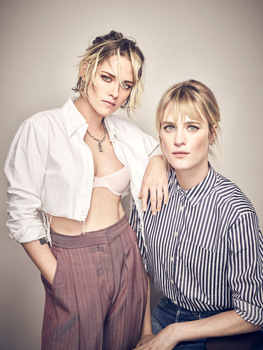
Click on portrait for full view.
Google translated.
SHANGAY ⇒ How important do you think it is that it is a same-sex couple that stars in the film?
KRISTEN STEWART ⇒ I think after a while, we'll look back and wonder how something like this hasn't been done before in commercial cinema. When I read the script, so cute and fun, and I knew it was a project with a large budget, supported by a large studio, I felt very lucky to be part of this project.
MACKENZIE DAVIS ⇒ Certain groups in our society only see their stories told on film through tragic drama. It is very sad that certain voices are not taken into account when making certain experiences visible to the general public. In a way, until not so long ago, it could seem that if you were queer , in the movies they were telling you that your life was going to be a drama. It was about time to have a Christmas movie starring a couple of two women.
SHANGAY ⇒ Was your approach different when preparing the characters knowing that they were LGBTQ?
MACKENZIE DAVIS ⇒ I asked Clea if the fact that I am not part of the community could be a problem, or if there were some keys that she should be aware of when working and doing her best. Clea told me "you play a woman in love, that's all that matters." So my approach was not at all different from that of any other woman in love character I've been able to play.
KRISTEN STEWART ⇒ I understand what Mackenzie is saying because it can be a tricky question; He did not want it to be possible to suggest that he was appropriating a character that perhaps, due to lack of personal experience, should not belong to him. But that's what acting is about. The important thing is to be with your senses open and strive to be the best character possible, forgetting about labels. Was work going to be any different because of playing lesbians? I've always lived being queer in an organic way. And although we have both had different experiences when we fell in love, we found a lot in common to contribute to the joint work. Because, as the movie says, "love is love!" [laughs].
SHANGAY ⇒ Kristen, it's not so common to see you doing comedy… Have you gotten the hang of it?
KRISTEN STEWART ⇒ It has been a special experience. At first, I was intimidated by the level of the actresses I was going to work with, although at the same time I was encouraged by the challenge of measuring myself against them. My character is a bit of a "straight man" as ironic as it sounds, given that I play a lesbian woman. It is a kind of observer, through which the viewer discovers how absurd his girlfriend's family is, and how strange they have to relate to each other. I hadn't worked for a while, and as soon as we started I saw that the more relaxed we were and the more we committed ourselves to the job, the better we had fun. The pressure was gone immediately.
SHANGAY ⇒ Have you had any experience remotely similar to the one in the film?
KRISTEN STEWART ⇒ Not exactly. I have ever felt that perhaps someone around you could feel uncomfortable knowing that the person who accompanied you was your partner. And I have tried not to make this situation a threat to others; but it has never happened to my family. Around 22 I began to really understand myself, and I felt that pressure of having to put a label on what I felt, even though I didn't quite represent myself. But the context of the film is very different.
SHANGAY ⇒ Did the chemistry you give off come about in an easy way?
MACKENZIE DAVIS ⇒ The secret is in the casting, when looking for two actresses, in this case, who must be compatible. The job started out being similar to what dating is like. In this case, I admired Kristen, and from the moment I met her I wanted to be her friend. We started spending a lot of time together to get to know each other and get comfortable before we got to set. To lose respect for touching us, for example [Kristen laughs]. In other shootings it has been difficult for me, because I have had couples who were not especially nice, and even so you have to make it credible, that is why you dedicate yourself to acting. In this case it was not so.
KRISTEN STEWART⇒ Good job, bitch! [laughs]. From the first moment I saw that Mackenzie was going to be amazing in the movie, and for that alone I loved her. She is a great actress, and I tend to love people who are good at what they do. I'm not good at creating chemistry at full speed with someone I don't know at all; in that case, I get to the set, shoot as soon as possible and fake whatever it takes. Mackenzie and I were delighted to spend time together, and because of that, filming just got better, easier and smoother. We were going in the same direction, and it showed.
SHANGAY ⇒ Do you especially value the fact that a comedy like this can be very important for LGBTQ visibility at mainstream levels ?
KRISTEN STEWART ⇒ It's something we've talked about a lot among ourselves. Because there are many young people who do not consume auteur cinema or proposals with a clear protest component, but they do use Christmas movies like this one in which they can be reflected. It is important that art is not marginalized, and that a light and pleasant tone can also be used when making visible according to what issues. In fact, if I hadn't made this film, I would have been envious of those who made it, because it clearly has a message that is important to reach the public.
SHANGAY ⇒ Was it another point in favor of having a director, and that she is also out of the closet?
KRISTEN STEWART ⇒ Since I read the script, I saw clearly that there was an intention and a commitment in it, that it was not the typical opportunistic formula that is created to show that we live in a world with greater acceptance. This story has a lot of truth, and the fact that it is Clea who tells it gives it a plus of authenticity.
SHANGAY ⇒ Kristen, since your character is the one who fights for her girlfriend to come out of the closet and show herself as she is, without lying, do you think it can be positive for viewers who are going through a similar situation?
KRISTEN STEWART ⇒ Hopefully, because I always appreciate any comments from people who thank you for making yourself visible and tell you about their experiences, which also make me feel happy and proud. That exchange of experiences is fucking wonderful.
Wednesday, December 16, 2020
Wednesday, December 9, 2020
Tuesday, December 8, 2020
Friday, December 4, 2020
Thursday, December 3, 2020
Charlize Theron interviews Mackenzie Davis and talks 'Happiest Season' and Kristen with Interview magazine


MACKENZIE DAVIS: Hi!
CHARLIZE THERON: Hello! Where are you, fancy pants?
DAVIS: I’m in London.
THERON: And how is it?
DAVIS: It’s so nice to be here. I always dreamed of moving to a new city in the middle of a pandemic, and then going into lockdown.
THERON: Are you working there or was it a personal move?
DAVIS: Just a personal move.
THERON: That’s awesome! I love when people take big jumps like that.
DAVIS: Well, baby, 2020 has been my year of big fucking jumps.
THERON: You don’t have your house in L.A. anymore?
DAVIS: I’m renting it out and then I’ll probably sell it next year.
THERON: I always loved knowing you were so close to me, but to be honest, you are the worst invite because you’re never in town.
DAVIS: I have missed so many events in my life, and every single holiday party that you’ve had, but one day it will come together.
THERON: We, the people, benefit from you missing my parties because it usually means you’re working on something great, so we’ll take that. I watched your movie on Friday. I was down with a sinus infection, in bed and not feeling great, but I put that movie on and I cannot tell you how it just lifted my sick-ass mood.
DAVIS: It’s really funny, isn’t it?
THERON: Dude, there are so many degrees of separation there. Kristen and I worked together on Snow White and the Huntsman, and I love her to bits. And then Clea DuVall played my little sister in The Astronaut’s Wife.
DAVIS: Wow. I had no idea that you had worked together.
THERON: I think when I worked with her, it was her second or third movie, and now she’s this seasoned director. It’s unbelievable.
DAVIS: She’s a ’90s icon to me, so it was amazing to be around her.
THERON: Did you guys know each other before? How did this come to you?
DAVIS: I didn’t know her. I met her to talk about the part, and then the movie got pushed a year after I decided to do it. And so Clea and Kristen and I just kept meeting up for dinners and lunches, and did some escape rooms together, and kind of spent a year becoming friends, which, if you can do that, I really recommend. It’s such a fun way to make movies. It’s so much more fun when you don’t wander awkwardly wondering where you’ll eat lunch.
THERON: Did you know Kristen before?
DAVIS: I met her shortly after I met Clea. I was intimidated to meet her. She has such a strong energy. She’s so sincere and really means what she says, and it’s quite unsettling at first.
THERON: She’s very direct.
DAVIS: She’s just so fucking direct, but it’s not combative. It’s just curious and open, and it’s weird to meet somebody who’s kind of guileless like that.
THERON: She’s very unapologetic in that behavior, too, which is so refreshing. She really is that person. She can look you straight in the eyes and say something in three words, and it can totally come off as, “I’m about to murder you,” or it can come off as, “I have your back.” And that’s how I always took her. This girl will have your back.
DAVIS: She’s a ride-or-die person, and sincerely cuddly and sweet and so excited about the world.
THERON: I love that she deeply cares about things, whether it’s her friends or her family or her work. I don’t know if she still does this, but it used to break my heart because she would do a take, and if she didn’t like it, she would just start swearing: “Fuck, fuck, fuck, fuck, fuck, fuck.” It’s funny in the beginning, and then I was like, “Stop beating yourself up like that.” But also, we all do that.
DAVIS: I found it so liberating to just talk about how we felt like shit all the time. I love this job, but I feel like garbage doing it most of the time, except for brief windows where I’m like, “I was there.” But most of the time I’m like, “It’s so embarrassing being an actor. I hate this, I hate that everybody’s looking at me.” And she vocalizes it in a way that felt like it wasn’t shameful. It was like, “No, no, no, this is the mental state. This is the choice you’ve made. And this is how you live.”
THERON: Exactly. I heard that you and Clea and Kristen lived in the same apartment complex. Is that true?
DAVIS: We did. It was an old warehouse. There were two buildings connected by a walkway and Kristen lived in one and then Clea and I lived in another. I lived about two doors down from Clea. I always knew when she was home.
THERON: That is so cute.
DAVIS: It was sweet, the whole thing. You know how there are times when you really don’t want to hang out with anybody after work, or you just really need space? This was definitely the opposite of that, where it felt like we were all staying in dorms and there was an event every night.
THERON: And Pittsburgh is great.
DAVIS: It’s the perfect-sized city.
THERON: I’ve always had a great time there. I find the people amazing, and the food is awesome. There are some amazing restaurants in Pittsburgh.
DAVIS: Amazing restaurants, amazing bars. I really like the architecture. It hasn’t completely modernized, like where every city in the world has this bougie gentrification.
THERON: Well, listen, I have to pretend that I’m a really smart interviewer here, and ask you some real questions, because I want people to know about your movie. I love that it’s about something that’s very specific to the queer community, but there’s something about it that feels like it’s taking us on a road to normalizing a queer Christmas movie in the way that we have had to sit through heterosexual holiday movies forever. I’m just so happy that my oldest daughter came into the room while it was on, and she was saying, “Is that her girlfriend?” I said, “Yeah, that’s her girlfriend.” And then she went to school. To her, that was no big deal. It’s just a Christmas movie with two girls. I don’t want to make it sound so compartmentalized, but how did you think about it when you read it?
DAVIS: I loved the story. I’d never done anything like it before. It made me laugh out loud and also really moved me, and I really wanted to work with Kristen and Clea. I also got the script right after I finished Terminator and was like, “What’s the opposite of that? That was great, but how do I do a different thing now?” Something we talked about while we were making the movie was how the genre is such an aid in these sorts of movies, because there’s no suspense. It’s like a horror movie. You know that certain people are going to die, but you know that someone’s going to live at the end. And with romantic comedies, you know that there’s going to be a happy part and then there’s going to be a lot of difficulty and they almost won’t make it, but you always know they’re going to end up fine at the end. I think especially in the limited canon of mainstream queer stories, that certainty that they’re going to be okay at the end is never part of the story. And so, by taking formulaic genre and only changing the people in the primary roles, you get all the safety of it, and it still has a little something different. It’s a familiar way to enter a world that maybe, for whatever reason, people don’t seek out or are uncomfortable with. It’s like, “No, it’s this thing you know. You love this thing! Join us.”
THERON: The thing that really stayed with me was how different your coming out story is, and how different it is for everybody else. It doesn’t diminish one or make one better.
DAVIS: I know. Dan Levy has such a beautiful part in the movie where he talks about his coming out story, and Kristen talks about hers, and there’s this resistance against flattening the queer experience into a monolithic one.
THERON: A lot of the actors and people who came together to make this movie are from the queer community. Did you feel like that was something that people would put pressure on you about?
DAVIS: That’s the first conversation I had with Clea. There are certain parts I wouldn’t take, and that I think are important not to take—there are people who could easily take those parts who are members of that community. The reason behind this push, I think, is not that everybody should be playing their own identity, but that people who have that identity have not had other opportunities in Hollywood. So please just allow the space for them to exist in this world, because trans people aren’t getting cast as the straight, romantic lead in a movie. Give them the space to occupy a corner of the industry that straight people, cis people, don’t need to venture into. I asked Clea about it going in, if it was something that concerned her. As a member of that community, did she feel that a gay actor should play this part? I talked to Kristen about it as well. I try to be deferent to the points of view of the people around me who are more informed than I am, and they both felt that the dynamic between Kristen and I was more important to the story than whether or not I was in the queer community. It’s a complicated conversation, and it’s hard to know when it stops.
THERON: The sheer fact that we’re having the conversation makes me happy, because I feel like we haven’t talked about anything as far as representation, the way we are right now, in the last 20 years of my career. You’re right, there’s such a lack of opportunities given that at least let them have ownership in that space. But I find that that’s almost insulting. I feel like a good actor is a good actor, and I can’t wait for us to look at nonbinary queer actors in the same way that we do hetero-cis actors.
DAVIS: I think that’s the goal, but out gay actors only recently are allowed to be romantic leads in movies, even though they have a husband at home. That’s something that’s happened in the last six years. It feels so recent. I think we’re going through this across so many parts of our society; we have to go through a really uncomfortable transition phase where we overemphasize something in order to normalize it. And then, at a certain point, we no longer need to overemphasize it. And the first step is, like, “I’m not going to colonize your space.” That’s fine. There are plenty of roles for a cis white woman in the industry.
THERON: It’s interesting times that we’re living in. But, yeah, I love this movie. It really stuck with me, and it also made me dread that we’re right on top of Christmas. Are you a big fan of Christmas?
DAVIS: I like the food part of it. I love seeing my family. I don’t always go back to Vancouver or to my parents’ house. We tend to go away together a lot, so I don’t have this singular Christmas memory. We don’t buy presents for each other. It’s sort of like, “Let’s all have a nice time because we don’t see each other all year.” So I like that part of it, but the more traditional aspects don’t get my juices running the way they do for some people. Juices running. Is that a disgusting thing to say?
THERON: No, no, no, juices are exact. That’s what you’re always looking for, no matter what you’re cooking. You’re looking for juices. I’m kind of the same. Growing up in South Africa, it was summer. So if you saw Santa Claus, he was on water skis. I don’t have any real attachment to the holiday, and my parents never put up a tree or anything like that. But now that I have kids, I have to say I do love it, which is weird, because I should just break it to them now. But I can’t, it’s just too much fun.
DAVIS: There’s something about being a parent and being the architect of your child’s memories. That sounds so sinister, but being like, “I’ll give you the perfect memories,” it’s like being a dreamweaver or something. It must be so fucking exciting.
THERON: That’s exactly what it is. I think my oldest is slowly catching on. I’m trying to get maybe one or two more years for the little one. I’m like, “Don’t say anything.” I was told that you learned how to skate for this movie. Was it hard?
DAVIS: I had an amazing skating teacher called Victoria, who I met at the skating rink a couple of times a week for about two months, because I could not even stand up on ice. You would never know it watching the movie, because I still look so deeply at odds with my body. But from where we started to where we ended, it’s the thing I’m most proud of in the movie. And I really recommend it, skating’s wonderful. I love this part of our job, that you get access to all of these different cultures that you’d never be a part of. The lunchtime skating culture midweek in Pasadena? Incredible people, incredible lifestyle, great characters. And it’s not just for kids, it’s for grown adults who want to speed skate around the ring and do tricks.
THERON: There’s joy in trying to imagine your long lean body on ice skates.
DAVIS: So awful. I felt like a skyscraper being knocked over, or like a Jenga cube. Never could I just crumble delicately.
THERON: Listen, you’re one of my favorite humans on the face of the earth, and I’ve weirdly been thinking so much about you in the last couple of months because when we were shooting Tully, we had a night shoot during our last election. And on election night, you reached out to me, and I had a flush of memories of me and you out in Brooklyn, in 2016, riding bikes, shooting Tully, and everybody just going like, “What the hell is happening? It’s the end of the world.”
DAVIS: I will never forget that night. I’m really happy to have shared such a sad moment with you.
THERON: We shared many other fantastic moments, so I’ll take a little bit of bad with all the good.
Wednesday, December 2, 2020
Kristen interviews Mackenzie Davis for Hunger magazine

Kristen Stewart: Dude, didn’t we have the greatest time ever on Happiest Season?
Mackenzie Davis: I’ve never had more fun working with someone in my career. Being friends with someone and loving them and not having them think that you’re too much. It’s so nice to be at home somewhere.
K: I always justify bad experiences because I got through it and I think I was better because of it but really what I love is feeling visible and understood and loved and supported. It’s so nice to do work that feels natural, I felt so at ease with you and that comfort wasn’t boring.
M: I so relate to what you just said. Having hardship doesn’t really promote the best version of myself.
K: Imagine two guys having this conversation, it wouldn’t even cross their mind. It’s such a female reaction to strife to think, ‘I can make something out of this actually, I actually do some of my best work out of adversity.’ But actually, fuck that, that is not true. So, [the director of Happiest Season] Clea [Duvall] is great, don’t you think?
M: Clea is one of the greatest people I’ve met in my life, I think she is so talented. She kept us on course this whole movie when you and I wanted to turn it into an absolute drama-tragedy.
K: In interviews, you often end up talking about the result of the work you’ve put in but not the work that you did. It’s weird because you have to step completely outside of yourself to relate to other people and their perception but what about the experience that you’re having? Even when you get up in the morning for your work, how do you prepare for a big scene? Or are you better in the morning or at night?
M: Talking about [process] stresses me out because I have such anxiety about being a bad student and not doing the right stuff or not knowing the right way of doing things. With everything [I work on] I read a bit, procrastinate a lot, think a bit, write something and then where that goes, I have no idea…this garbage bag of dead-ends. When I talk about my [process] I think, ‘oh no, that’s such a mess and you don’t want to look at it and you’ll be so disappointed to learn what actually goes on.’
K: I don’t think that’s a wrong way of doing anything though. I’ve noticed that whenever anyone that I work with has hard and fast rules, even when they’re really talented and those rules prove to be productive and fruitful for them, I so can’t relate. But then I also feel like I’m a bad actor or that I’m not as diligent because I haven’t defined my process to a T.
M: I guess this is the weird psychosis of this job, that there is always the chance to start over and do the next one better but also the fear that you’ll never get another chance.
K: Also the desire to please never do it again but also the feeling that I want to do it for the rest of my life.
M: Yeah, I want to do it for the rest of my life but also could I please have a farm and I would actually love to be a housewife and chill.
K: You do make really good delicata squash, you’d be a great housewife.
M: I think in terms of process I learn so much of what and what not to do from people I work with. With you, I saw that you’re so good at advocating for yourself and defending your choices. I mean that in the most flattering way because I have this kind of Canadian thing mixed with just my natural personality of saying, ‘I wouldn’t do it that way’ and then ‘oh, you don’t like that? Let me shut up and I will not bother you anymore with my opinion because I’d rather we just moved on and had a nice day.’ I’m not saying you do the opposite of that and create a problem, but I really learned from watching you and will take it in the future.
K: So, do you have any other projects coming up?
M: Yes, Station Eleven. It’s set twenty years in the future after an apocalyptic pandemic wiped out 99.9 per cent of the population. It’s the pandemic show that got pushed by a pandemic. I’ve had ten months to workshop a jokier way of saying that but that’s what I settled on.
K: You’re going to really hone in on that one, you’ll have time.
M: It’s so weird not working for so long [due to Covid-19 halting production on Station Eleven] because you really feel like you lose the knack between each job and I just always feel as if it’s the first day of school and I didn’t learn anything last year.
K: What’s the tone of the series?
M: It’s a lot about the trauma that shapes artists and also the pursuit to create art even in a state of chaos and devastation. That after everything is gone and there’s nothing left, there’s still going to be people who tell stories and create art as a means of surviving. It follows a Shakespearian troupe that brings Shakespeare to all these settlement towns after this end of the world event.
K: I don’t believe in a world where we are not inclined to really imagine and create. All these hypotheticals are what we meditate on and really what drives us. I’m really excited about Station Eleven – if I was going to make a topical movie that’s where my head is at.
M: The fact that they’re performing Shakespeare is so interesting. I’ve read some historical fiction about the writing of Hamlet and [I was struck by] the omnipresence of plague and disaster in that era [the 1500s]. I sometimes feel really hard on the human race because its adaptability is through ignorance, ignoring the reality in order to forge ahead and create a simulacrum of a normal life. You do it with climate change, you do it with the pandemic.
K: We’re just monsters, really.
M: Reading [this historical fiction] has made me feel a bit better. Realising that [reluctance to change for the greater good] is not a twentieth-century problem, it’s not from the industrial revolution. We’re just garbage, it’s kind of the human condition.
Video: Kristen and Mackenzie Davis talk 'Happiest Season' with Glamour (UK)
The Happiest Season would have helped me so much growing up and regardless of your sexuality, it’s a story of self-acceptance and gaining respect from others. How would this have helped younger you?
Kristen: I would have loved to have seen this movie when I was younger. I wasn't as a teenager or as a younger person in my early twenties having to contend with judgmental energy in terms of being around a family who didn't necessarily accept you, or just being an out gay person. At the same time, I was fully like reacting to the ‘strangeness.’ I would have loved to have seen this movie, but I only know that in retrospect, and sometimes you need to be shown things before you know you need them.
I always wanted to work with Clea [DuVall]. I know for a fact that when I was watching But I'm a Cheerleader that I was like, ‘I love this movie for probably pretty solid gay reasons.’ I didn't know that until I was an adult. So, if this helps anyone who's unaware or aware of the fact that sometimes it's hard to say who you are around every group of people, then that makes me tres happy!
Mackenzie: Most importantly, this is why representation matters! I know that phrase has sort of lost a bit of meaning but it really does because it doesn't only help the people who are being represented in the thing, it also normalises a thing that up until that point maybe hasn't been normalised in mainstream entertainment. I went to a pretty progressive high school and grew up in a very liberal environment that was very accepting. But I look back at things that happened in high school and the way -more with boys and the way that gay boys were treated or whispers about gayness - and it wasn't normalised. It wasn't something that was like treated with open arms acceptance. I think if there were movies like this and if that's what we went to see on the weekends, it would not be cool. I'm not including myself in this to be clear, but there just was a culture of homophobia, even in the most liberal communities. I think not having representative stories that normalise it is the culprit for that homophobia.
Someone said to me recently that we won’t have equality until people don’t have to come out. But coming out stories are still so important and it’s imperative to have these ‘coming of age’ and ‘realisation’ stories. What do you think it’s still important to tell coming out stories in 2020?
Kristen: It's a really fringy perspective to think the fear has been sucked out of the idea of, of telling everyone, you know? It would be a really, really naively optimistic or just an ignorant dumb way to approach it. Look at where we're at just in the States. I'm so happy to be in a movie that is inviting and a part of a conversation that can be argumentative and divisive. The movie has open arms and it is not even judgmental of the people that are judgmental in the movie. To think that we're not as divided as we are is actually just not very helpful because it's not real. I'm the most optimistic, glass half-full person, but at the same time, I think this movie could be good for people that don't necessarily always lack judgement. We could be loud and aggressive with a more in-your-face indie movie and I want to make a bunch of those with other perspectives embedded in things that are sort of harder to digest, but I think it's really important to be like. ‘we're really nice too. We're just like you and like come laugh with us!’
Friday, November 27, 2020
Kristen and Mackenzie Davis' interview with Coup de Main Magazine (NZ)

COUP DE MAIN: It must be so surreal for you, but ‘Happiest Season’ is out in actual cinemas here in New Zealand. Do you have a message for New Zealanders, who can experience it in cinemas?
MACKENZIE DAVIS: Enjoy your hard-earned freedom. Your well-led freedom.
KRISTEN STEWART: You deserve it!
MACKENZIE: I'm so proud of you guys. It's so great. Celebrate, and celebrate by going to see the movie. It's so fun and lovely.
CDM: So many LGBTQ+ films follow character's stories which end in tragedy or sadness - and I think this film is so important because of the happiness and joy that it portrays, which is going to be so powerful for queer people to see on-screen. What do you want these communities and people that can relate to the characters, to take away from seeing ‘Happiest Season’?
KRISTEN: Hopefully, to go to the movies and watch a big movie and not have to go and find your story on a smaller screen, or download it, or watch it on YouTube, or somehow get to a festival and hope that maybe they find the legs to get to your town. I happen to live in LA, Mackenzie is in London right now, and we have access to smaller fringy movies, but it's really rad to find yourself visible in something so big, and it is definitely not normal. So I would be like, "Enjoy! Swim around in it. And hope for more!" I do think it's happening.
CDM: Harper’s character has a real struggle with love in her family - she says, “Love wasn’t something we got for free, it was something that we competed for.” Family relationships can be really hard, especially when siblings feel like they need to compete with one another, and have certain expectations placed upon them. Do you think that the concept of love is something that changes throughout our lives? Like how Harper has a different experience of love with Abby - a more pure form?
MACKENZIE: I think that's why her life is so compartmentalised - not because she's grown out of that one type of love into this other healthy love. She's had to restrict her identity from her hometown, with her family, with her high school, and then sort of having a totally different identity that is her true identity, I think, when she's in Pittsburgh with Abby, and with her friends as an out woman. But she never did that thing where she knit together the childhood trauma of learning a sort of perverted form of love, with the adult, grown, healthy version of love. And so she really has these two selves that are never the twain shall meet...
CDM: Tying in with that, another moment I thought was quite important was when Abby is talking with Riley about which Harper is the 'real' one, and Riley says, "Maybe they both are." Why do you think humans often have slightly different versions of themselves that they become, depending on who they are with? Whether it be around family or different groups of friends?
MACKENZIE: It's survival.
KRISTEN: Because we need to keep going. I think in order to keep going, when you observe that something's going to be more successful in a given group, you highlight that thing. And that's not to say you're changing yourself, per se, I think that there are so many potential versions of myself that live in here <motions inwards>, depending on what's going on out here <motions around her>. It can be really interesting how there are some people whom one version of themselves betrays the other, but there are also ways to be things that are unexpected, that go together, and that maybe someone's perspective is not wide enough, or too narrow to see. And so you go, 'Okay, they're not going to get this one part, so I'm just going to show this part,' and so you start to try to control that. And then it's like, when you try to control it so overtly are you losing yourself? Or are you lying? I think it's very complicated.
CDM: There are so many hilarious literal closet jokes - like when Tipper finds Abby literally hiding in a closet. Was it fun to act out those really ‘on the nose’ jokes amongst the rest of the comedic elements in the film?
KRISTEN: I didn't think about that at all. And we shot that like, 100 times. Every single time, I never put it together.
MACKENZIE: Until I saw the trailer, I never put it together.
KRISTEN: Yes, right? Me neither! Because I heard someone laugh. I was watching it with a couple of friends, and like she was like, "Abby, why are you in the closet?" Like it was the most obvious question. And they were like, "Oh, lol," and I was like, "Oh, ohhhhh!" I felt so caught in that moment that I was like, "Nothing!" I didn't think about it at all.
CDM: When Abby is in one of her darkest moments about her relationship with Harper, she says: “I don’t think that she loves me as much as I thought she did.” It’s so strange that love can be perceived as different by different people, and so many people have different ways of expressing love. What do you think are the ultimate ways to show your love for someone?
MACKENZIE: It depends on the person.
KRISTEN: Yeah.
MACKENZIE: Really, and what they need, and love languages. But what means the most to them? Maybe they don't need gifts. But maybe they really want you to build a fence.
KRISTEN: <laughs>
CDM: Love languages are so interesting. I'm always discussing them with my friends about how people just have different things they expect and need from other people.
KRISTEN: The worst is to think... I always try and rationalise things, like, 'Look, if this doesn't work, then maybe we're just not the right person for each other.' It's like, 'No! It requires effort, you have to try!' <laughs> Maybe put in the work.
CDM: Yeah, I have a friend that always tells me that love is an action and not a feeling and that always resonates with me a lot.
KRISTEN: And I also resent it. <laughs>
CDM: Clea Duvall has said: "The LGBTQ community deserves happy endings sometimes.” Considering that for the past four years, the US has dealt with a President who literally wants to take freedoms away from LGBTQ communities (from trying to attack the Affordable Care Act’s LGBTQ nondiscrimination protections, banning trans people from serving in the military, and trying to put trans prisoners according to their assigned sex at birth), why do you think that pop-culture representations of queer people and their communities are more important than ever before?
KRISTEN: Because we're constantly trying to pretend like they don't exist, and therefore take all of their rights and humanity away from them. So if they're more present and shown as normal people who actually have feelings, and that can be hurt just the same way that you can... I don't think that people typically are horrible, hateful, fill in the blank, whatever word you want to fill in there, fucking go for it, but yeah, it's because we need to be present or else we will be forgotten.
CDM: Kristen, you said about the movie: “It's a heartwarming, slightly stressful and manic Christmas movie – which are definitely my favourite ones, because that is what Christmas actually feels like.” What do you guys each have planned for this Christmas season?
MACKENZIE: I'm going home to spend time with my parents. I'm justifying the travel because I'm working in Canada right after Christmas, but it means I'm going to spend about a month at my parent's house and I'm curious about that. I'm open and curious about it.
KRISTEN: I'm open, excited and afraid. <laughs> I have a really boring non-answer for that. Nothing. I'm staying in LA. I was actually going to spend the holidays abroad, but then the world changes daily and shut down, and so the prep for my next movie changed slightly. So I'm going to be able to hang out with my family, which is nice.
Thursday, November 26, 2020
Mackenzie Davis talks ' Happiest Season' and mentions Kristen in Flaunt Magazine

What was the deciding factor for you to join Happiest Season?
I didn’t know Clea [DuVall] before we met about the movie, but she was a friend of a really good friend of mine, and I just heard the most wonderful things about her, and it made me really ambitious to work with her and to force her into being my friend. So that was just a forgone conclusion before we even met. I was like ‘I’m in!’ But Kristen doing it was such a vote of confidence. I think she has such an interesting career and she’s not precious about the work that she does in that everything is going to be nominated for a César Award.
What I really appreciated about the film is not only does it break boundaries because it creates this same-sex romance on screen, but it also does it in a genuine way. You’re not perfect, Kristen’s character is not perfect. Were you aware you were making a film that was going to change things a little bit?
I think we were aware of the headlines—that it’s the first queer-fronted studio romantic comedy Christmas movie ever made. So we knew that was the banner of the movie, but in terms of all the stuff, the imperfections, and the character failings and stuff like that, I felt sort of worried about it and insecure when we were filming it. And there’s also this feeling that I had making the movie, and that I had watching the movie, where I’m like, ‘These girls are going to have a lot of work to do on their relationship after this.’ Like it doesn’t feel like it ends now. There’s a lot of unpacking, this experience is going to go on, so I guess what I’m saying is: I think all those messy bits do make it better because it’s not a riding off into the sunset sort of story.
It’s quite difficult to find a piece about you that doesn’t mention the word ‘feminist’, and I want to know how you feel about having that label thrust upon you. Perhaps it comes from the fact that you have a degree in Gender Studies, but I wonder if that’s ever felt like a very convenient label that journalists thrust upon you?
Well, I don’t think it’s a label, because it’s something that I have no reservations about, nor have I ever had any reservations about identifying as. It feels almost passé to call yourself a ‘feminist’ now, because it’s like, if you’re not, what the fuck are you doing?! [laughs] Where do your beliefs land? So I don’t know the potency it has anymore. There was a weird time where it was extremely potent and scary for people to say and then extremely in vogue and then the in-vogue-ness has now made it feel kind of limp or something. It’s just a belief that women should be treated equally or receive equal rights to men—it’s not a really radical point of view.
But to the other part of your question, I do think the conversation surrounding feminism, strong female characters, women in Hollywood, are lazy and are sort of pigeonholing the actor answering the question even further into another category, instead of being able to have a conversation about the work that they did, the role. I find I’m constantly asked about the optics of the things: what does this mean for the future of women in Hollywood and they always want a think piece on it, which is not my job. My beliefs are evident across my resume. I’ve made very specific choices because of the things I want to see in the world and the things I believe. And to have to constantly answer about my gender in interviews even if it’s talking about—not in this case, sorry—even if it’s talking about positive advancements, just feels like I don’t get to talk about more interesting things, or things that aren’t tied to gender identity. But you know, you have to talk about things to death until they stop being interesting, so hopefully we are getting close to that.
Happiest Season talks about something else which is quite interesting and quite deep, and that’s being truthful to yourself and being truthful about who you are to others. Have you ever gotten in trouble for being quite strongly the person you are and not doubling down from that. Or have you doubled down?
I think I tend to double down, I don’t know, I mean life’s a journey and you’re changing all the time. There are times when I was so unpleasantly staunch in my opinions and the way I communicated them to people. I then had a period of recalibration where I was like, ‘Leave room for other people to argue with you without you needing to own them,’ and like dominate a conversation, but I don’t know. I’m thinking of this time when I was in theater school, which was like the maddest I’ve been in my life. We would do scenes and sometimes there was nudity in scenes—it felt like a safe environment, part of exploring things, but I heard of a list that was in the basement of the theater school in the boys’ locker room rating all of the girls’ bodies. We were in our early twenties, not fourteen—not that it would be okay then—but there was just such a lack of respect and privacy. We were sharing our naked bodies as part of a very, very safe space to do work, and I was furious and told them to get rid of this list.
Then we were working in the basement of the school on another day and I saw the list, like pinned up on the wall, and I have never yelled or been possessed with a demon in the way that I was when I found it. And I just remember ripping it off the wall, walking in the middle of the classroom where a class was going on, and screaming at all of these immature little boys and then storming out of school and not coming back until the next day.
I tell that story because I really relate to this—in terms of doubling down your personality—but I do feel like I get possessed with a feeling of this miscarriage of justice or something, and that can lead me to behave erratically. Also, socially I don’t think a lot of people liked me at that school because I was not fun.
Read Mackenzie's full interview at the source.
Kristen and Mackenzie Davis' interview with Screen Rant for 'Happiest Season'

What can you tell us about Abby and Harper?
Mackenzie Davis: In the beginning, it's a pretty short period of time where we get to establish them not having been corrupted by going home to meet Harper's family. They’re a very stable, loving, transparent, settled couple that has a whole life together and is grown up. And then they go home to Harper's family, and Harper regresses into an absolute monster, and secrets tumble out.
While it is definitely a coming out story, it's also this coming-of-age story of having to unite your identity as a grown up with your identity within your family unit. How you have to regress a little bit before you can unite those two selves because your family might not be ready to accept your grown-up self.
Kristen Stewart: And as a monstrous as she does sort of reveal herself to be, Abby's perspective might not be congruent with the audience's. She knows her so well that there's never a point where you're like, "Well for conflict's sake, sure this works, she would stay." I'm constantly going, "Oh no, wait. No, no, no. You don't know her. I know her, I know her. Trust me. She's incredible in this. She's going to get through this.
While Harper may act a bit monstrous, we’ve heard that her parents are not the villains, per se. How would you describe your dynamic with them, and then Abby’s impression of them?
Mackenzie Davis: Sure, I think there's no villain. I think that they haven't been exposed to many lifestyles that are not their own. They live in a very waspy, rich environment and anything that's out of that paradigm feels scary and too foreign to them to accept immediately. But once they're confronted with it, I think they handle it well.
But it's like anybody, a lot of public figures - I think of politicians who need to have a gay child in order to understand why that's an issue that they should throw their weight behind, in terms of any sort of civil rights and liberties.
Kristen Stewart: And I understand, but I also don't.
Mackenzie Davis: Yeah, I was getting to a criticism of those politicians. Where you're like, "I'm happy you came around to it. It's so weird that you needed to be related to someone to have just the basic shred of empathy that most people are able to muster up.”
They need to be exposed to it, and they haven't been exposed yet.
Could you guys talk a little bit about working with this cast? In particular, we don't know a lot about Dan Levy's character. We heard he's playing Abby’s best friend and we all love him.
Kristen Stewart: I am so in love with Dan. It's insane. It was so important for whoever played Abby's best friend to be a really grounded reflection of who she is – obviously, because we don't have a whole lot of time to develop the characters before we're thrust into this precarious situation.
He's written in a way that is so nuanced and neurotic, but also broadly funny. And I think that he is so perfect, because when he really brings it home and wants to connect, and he comes from a place of true understanding of what the story is and how heavy and hard it is - it can then be funny. But only, first, it needs to be completely understood from the inside. And he's so unbelievably funny.
He's so destabilized by my leaning into convention. I want to ask her dad for his blessing; I want to do it all the right ways, and he's just like, "I thought that we had a pact to be Others forever!" You know what I mean? So, it's really funny because it also acknowledges how weird it is to lean in towards something that is not welcoming to you.
But she's a romantic, so it's really sweet. Dan's amazing. The entire cast is so great. We've said it a million times to each other every single day, all of us go, "We love our jobs. We love the opportunity to tell stories with people that we're drawn to." But this is such an extreme version of that. It's so wild that everyone is so wonderful.
Mackenzie Davis: We’re so in love with each other. And they’re so talented. You've lived with it longer than I have, but I had this script for a year before we started shooting, so I'm very familiar with all the scenes in it. And yet every single scene that we've done, when Mary Steenburgen's doing it and Victor Garber's doing it, you're like, "Oh my God! I didn't know it was like that. It's so much better than it already was, which was great!" It's just so cool to watch them work.
What is it that you look for in a script? What stood out about this one in particular that made you want to jump in and take the role?
Mackenzie Davis: Well, I was just saying that a lot of the time, before anything else you're like, "Can I feel these words in my mouth?" You start mouthing them and being like, "These don't fit in my mouth for some reason, and I don't know why." That's just a very basic nervous system test of if it feels right to you.
And then I think, especially in a genre movie like this, we understand the parameters of a romantic comedy. We know everything's going to be okay in the end. There are very specific beats that take you through this story, and while accepting those and embracing the genre elements of this, what makes it smart and new? Or not even new, but authentic and empathetic and fully felt? Not just relying on the convention to carry us through the story, but that each beat of the convention has been fully fleshed out.
It's like, "Well, this is the part where we have this pratfall thing," but it feels purposeful and important and urgent. And I felt like the script had everything, and also such a distinct voice. Clea and Mary, who wrote the script, just have such distinct comedic sensibilities.
Kristen Stewart: It's so funny. I loved the script. It felt like a huge relief. It didn't feel obliged to be overwrought, but it's so tender.
I think with a Christmas movie, like she said, knowing that everything's going to be okay allows for you to... I don't want to be too specific. It's nice to not highlight something so overtly, because that is in itself self-conscious. But it doesn't shy away from what it is, which is a really beautiful love story and a coming out story about two women, and it doesn't exist yet. I would have been so jealous and also very excited to see it coming together without me, but I belong here.
For a queer person, the scene feels familiar: you go home for the holidays, and that's when the conversations happen. Does it feel like you're telling a very relatable story in that way, or that you're representing that experience?
Kristen Stewart: Yeah. I have so many close friends that I’ve intimately unpacked these stories with and laughed about them and been enraged about them and told them like, "You don't have to..."
But I personally have never had to do it. I've never had anyone hide me. So no, but yes - because all my friends have. But I do have to say my parents are pretty wonderful about it.
I'd like to hear more about how you feel the film is speaking to an aspect that we may not get to see as much in cinema, and how it’s a huge relief.
Kristen Stewart: What I think is really interesting is that in certain moments that we have maybe considered delving into really deeply, or maybe we throw out the words and we improv it - it's always been rooted by Clea being like, "No, it's a genre movie." We have to hit the beats, because it is a situation of being able to hide the vegetables - which is something she says - in something that is commercial and fun. Not everything has to be facing this grave adversity in order to be itself, and still acknowledging that it's not completely easy.
It's something that is earned, but not something that is fought so hard for. It doesn't need to be all about how much it hurts to be unacknowledged, even though that's an element of it. They also really know themselves very well, and there's a comfort in that. I think that a lot of times people on the outside of that project this sympathy. It's like, "I don't need that. I'm actually fine. But this is how I got there.” Do you know what I mean? So, that's cool. That's what felt relieving about it.
Kristen and the 'Happiest Season' cast interview + portraits for the NY Times
Outtakes and better quality (below).
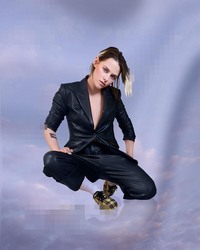

Click images for full view.
No one imagines that a Christmas rom-com can be renegade. And yet “Happiest Season,” about a couple played by Kristen Stewart and Mackenzie Davis, manages to be at once deeply, warmingly conventional and surprisingly radical, simply by focusing on a pair of women.
“I just wanted it to feel very, very relatable — but then also completely new,” said Clea DuVall, the director and co-writer with Mary Holland, who also stars as a loopy sister.
DuVall, who is an actress too (“Veep”), has said her own role in the seminal 2000 comedy “But I’m a Cheerleader,” in which she played a gay teenager sent to conversion camp, helped her out of the closet. She came out to her own mother on Christmas Day and modeled Stewart’s character, Abby, after herself. The production included other L.G.B.T.Q. stars, with Daniel Levy as Abby’s scene-stealing bestie and a soundtrack, courtesy of the producer Justin Tranter, performed by queer artists.
They shot in the cold in Pittsburgh — DuVall adamantly wanted that winter light — wrapping just two weeks before Covid-19 upended life.
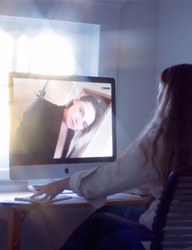
In a recent video interview, DuVall, Stewart, Davis and Holland — beaming in from different locations, with Stewart’s dogs occasionally barking in the background — spoke about missing each other and somehow not yet getting the hang of Zoom interviews. (“Yesterday I had it on Gallery View, but then I just was looking at my own face the whole time,” Davis admitted.)
“Happiest Season,” which premieres on Hulu on Thanksgiving, was the last big project for all of them — a time capsule and a holiday rolled into one. “Christmas movies are so specific and they become a part of our lives in a way that other movies don’t,” DuVall said. “None of us had any idea just how much we would all need that comfort when the movie came out.”
These are edited excerpts from the conversation.
Kristen and Mackenzie, your characters at the beginning have such a sweet relationship and real chemistry. Did you build their back story to create that intimacy?
STEWART Right before we started shooting, you and I maybe had a couple of conversations. Do we meet in college? Are you older?
DAVIS We talked so much about our own current or past relationship experiences, what we like, things that felt really specific to our own lives. That’s for me more relevant than the checklist of, OK, we met then, what were our friend groups like when they merged? That stuff is important to a degree but it doesn’t show up in the same way as, like —
STEWART How do you catch a person’s eye.
DAVIS Exactly.
Stewart said she wanted the romance to feel as if it were about “just two women in love” who happen to do a Christmas movie.
Stewart said she wanted the romance to feel as if it were about “just two women in love” who happen to do a Christmas movie.Credit...Photo illustration by Sam Cannon for The New York Times
STEWART I always felt as long as we felt solid going in, we could be like an aspirational, really self-assured couple in a way that strips any kind of discomfort or internalized homophobia that is undeniably applied to same-sex couples in commercial projects. Like, did we seem like lesbians? Or were we just two women in love, and then we do a Christmas movie?
Tell me more about characterizing queer characters onscreen vs. what has historically been represented.
STEWART I’ve had a lot of experience with confusing people and having it be misconstrued as my confusion. It’s like, I’m sorry, you need to catch up. Sometimes I didn’t wear heels when I was younger [and that was commented on]. Wardrobe choices — it became more and more evident that optics really matter, because they’ve been violently used against me.
You know, the word “lesbian” has a negative connotation to me that I have now tried to strip because I grew up being like oh, I’m not a lesbian. Because I hadn’t dated girls yet. But, like, that was violent. In retrospect — just because I have so much of pretty much every other type of privilege — that doesn’t mean that I have to not acknowledge that sucked and felt physical.
So it was important for me in this movie to acknowledge it and be like hey, I’m going to nicely invite you towards me, rather than feel like I’m feeding into an alienation that I have been sucked into my whole life.
Davis said she and Stewart didn’t work on a back story for their characters so much as discuss their own experiences.
Davis said she and Stewart didn’t work on a back story for their characters so much as discuss their own experiences.Credit...Photo illustration by Sam Cannon for The New York Times
DuVALL I think people don’t even realize how rampant homophobia is and how casual it is. And that it does really have a lasting impact.
I so appreciated making this movie with Kristen, because I felt she could understand it in a way that not a lot of people can. I was very lucky early in my career to be in “But I’m a Cheerleader” and play a character that felt like me for the first time, and also seeing that for the first time [onscreen] — it was so major. Creating Abby was really wanting to bring that kind of specificity back into movies.
Mary, you and Clea were co-stars on “Veep.” How did you go from that to writing a Christmas rom-com together?
HOLLAND Our characters on “Veep” never had scenes together, so we never got to be together on set. But I would go to the cast table reads and right away, we sort of locked in with each other and had this chemistry. She told me about this idea, and I was a thousand percent on board. Clea really took a shot in the dark with me. We were pretty much strangers when she asked me to write with her.
Did you have a list of Christmas movie must-haves, like that image of a door with a giant wreath on it opening, which seems like a staple of all holiday movies?
STEWART I’ve seen the movie like three times now — [jokingly] because I’m obsessed with myself. But when the door opens, I feel like the movie gets up and starts to run. And you’re like oh, my God, wait, I’m supposed to run with you? I love it.
DuVALL In the writing we didn’t really watch stuff — we built the world on our own. But once I got into working with our production designer, Theresa Guleserian, and our [director of photography], John Guleserian, that’s when we started creating those iconic images and [making] them feel like Christmas without just putting up a bunch of tinsel and lights.
The soundtrack is also totally Christmas-y. But why no Mariah?
DuVALL Because Mariah’s Christmas song is very expensive.
DuVall based Stewart’s character on her own experiences.
DuVall based Stewart’s character on her own experiences.Credit...Photo illustration by Sam Cannon for The New York Times
Kristen and Mackenzie, how do you balance being funny with the movie’s big emotional arcs?
DAVIS Clea would tell us this all the time — don’t try and make it something that it’s not. Don’t shy away from the big romance and don’t shy away from the slapstick and the big emotional moments, because all those things together are part of this genre. So even though your instinct as an actor might be to make it a little quieter, all of those things actually thrive if you invest the most into each of those elements.
STEWART Going back and forth from the comedy to being emotional or hurt was, like, traumatic for me. I would be mad at Mackenzie in the morning.
Holland met DuVall through “Veep” but the two hadn’t written anything together until “Happiest Season.”
Holland met DuVall through “Veep” but the two hadn’t written anything together until “Happiest Season.”Credit...Photo illustration by Sam Cannon for The New York Times
Dan Levy has a memorable scene talking about the coming out process. How did that develop?
DuVALL His speech was actually almost an afterthought. I was needing to create sides for auditions to see if this actor can do drama.
And then when I got into it I was like oh, this is maybe the most important part of the movie. And it was something that I hadn’t ever really articulated for myself. Because I came out and I think I just brushed it off. Then when I thought about it and that came out — he delivered that so beautifully, I would watch it in the tent and just cry.
STEWART Also Dan, I was so nervous. He’s so funny. I didn’t know him before. I was like, dude, is he going to think I’m like a dumb loser? Are we going to like each other? Because I’ve had experiences with comedians that at first you go, oh, this is going to be really fun, and then you’re like actually, I kind of just feel dumber around this person. And also there is a sort of one-uppy thing some really funny people have.
Dan is the most warm and welcoming and truly observational and neurotic funny person, without ever taking anyone down or being weird and negative. I was like oh, man, it’s going to be so easy to love this guy.
This movie made me realize that there’s a certain amount of tension and release that can be good, but really you do your best work when you’re supported and feel seen. Rather than fighting to feel that — which I have also loved doing, but I’m growing out of. I don’t have the energy for it.
Also, it feels so good to watch a movie where the jokes are so familiar to me and my friends, with relationships between two girls. It feels amazing to take the piss out of stuff that hurts, because that means you can release it.
Wednesday, November 25, 2020
Kristen and Mackenzie Davis' interview with Pride Source
Kristen Stewart is waving around what appears to be a joint. Even her “Happiest Season” co-star Mackenzie Davis, who’s seen on Zoom with Stewart, doesn’t quite know exactly what Stewart has lit. “Oh my god,” Davis says. “I thought that was a blunt.”
It is actually Palo Santo, a South American tree that translates to “holy wood.” But for a moment, Stewart gets silly and pretends her soothing wood stick is an actual joint, moving it toward her mouth as if she’s going to smoke it. They both crack up at the thought of Stewart maybe getting blazed during our interview. “Just cleansing the energy!” Stewart assures.
After her “Twilight” years, a “Charlie’s Angels” reboot and a range of indies, Stewart’s latest movie, “Happiest Season,” feels a lot like taking a whiff of some Palo Santo – an energy-cleanser. For 102 festive minutes, it restores some of the downer pandemic energy of 2020 with comfort, joy and the promise of a yuletide so gay it makes sense that Clea DuVall, the openly lesbian actress who starred in the 1999 queer camp classic “But I’m a Cheerleader,” directed and co-wrote it.
The film is the first of its kind: a major studio-backed holiday rom-com with a queer love story at its center. In the movie, Stewart stars as Abby, whose girlfriend, Harper (Davis, adored by the LGBTQ community for playing queer in “San Junipero” episode of “Black Mirror”), invites her home for Christmas. At first, she’s not sure about meeting Harper’s family, but then decides she’s all in. Abby even plans to propose to her (with guidance from BFF John, played by Dan Levy). But what Abby doesn’t know until they’re en route: Harper hasn’t come out to her family.
Shot in February just before the film industry was forced to shut down due to the coronavirus pandemic, the movie was originally slated for a wide theatrical release backed by Sony’s TriStar Pictures. But with many theaters still shuttered, “Happiest Season” has found a new (streaming) home for the holidays on Hulu.
During our recent Zoom call, Stewart and Davis talked about moving beyond the fetishizing of lesbian relationships, why they love gay bars and how Stewart plans to continue to use her A-list power to radicalize conventional genres with queerness.
As a kid, could you have imagined a world in which a movie like this existed?
Kristen Stewart: Yeah! That’s kind of why it seems a little bit overdue now. But we have a bunch of really rad stories, like fringy independent films that I grew up with that didn’t lack in joy or sort of splendor, even Clea’s movie that I love so much, “But I’m a Cheerleader.” They’re very much together and happy and run off into the sunset. But that’s a tiny, little movie and not everyone has seen it, and it’s so nice to think that you don’t have to go out and search for this movie. It’s inviting, it’s warm, it’s open. And yeah, helpful!
I was into strange movies when I was little; that’s not the most normal thing, do you know what I mean? “But I’m a Cheerleader” is seminal and it’s iconic, but I wish it was bigger and this is, so that’s rad.
This is a big year. You’re part of a queer Christmas movie movement. Lifetime, Hulu, Hallmark are all doing them. There’s a bunch of them coming out.
Mackenzie Davis: Hallmark’s doing a (queer) Christmas movie?
Stewart: Ohh… really? But we want to be the only one!
Davis: No, no, no. We’re the first. No. I’m just shocked that Hallmark is doing that. They are historically not progressive, to say the least. Ha! That’s so cool.
Stewart: You know what’s cool? Now they have to be, or else they get left behind! Ha!
Kristen, this movie is a big deal to a lot of LGBTQ people. But for you, what is the significance that you are an openly queer A-lister playing a queer character in a major studio queer Christmas movie?
Stewart: It’s really fun. I love playing characters that feel sort of further away from my natural wheelhouse because I like to expand my horizon, and also kind of deeply explore uncharted territory within myself that exists but might not be the most obvious.
But what feels great is leaning fully into what’s easy and obvious and comfortable when it is supported and recognized and loved. I’ve never had that on such a big movie that people were willing to put so much money into. Because that is a huge risk! And, like, the fact that people are taking risks for, well… look, it’s not a huge risk. It’s that the time calls for it. And there’s a huge gaping desire for it. And that is something I feel because I live in this world.
So the fact that I got to play this part after being in so many big movies where I never feel like I’m not being myself or trying to pass or anything like that, but I do feel like I’m ambitious about hitting marks that people don’t think I can hit. So this one was not that, this was the opposite of that. It was, no, no, no; I get to be the star of a big movie, and also get to be this person? It felt great.
With “Runaways,” I remember a lot of talk about your kiss with Dakota Fanning. It seems dated to be talking about a girl-on-girl kiss at this point. Obviously you two kiss in this movie, but with “Happiest Season,” do you get the impression that people and the press are less like, “A gay kiss! What was that like?” and is that a relief?
Stewart: Yeah, nobody’s asked that.
Davis: Oh, god. It hasn’t been brought up. Culture’s moved so fast after not moving (laughs) at all for a very long time. But in the last 10 years it feels like so much has changed.
Stewart: No, nobody has fetishized it in (that) way. I have experience with that being, like, “So tell me about the …,” especially depending on who it’s coming from. You sit down with some news outlet man who’s been a news outlet man for, like, 50 years…
Davis: Ha!
Stewart: … and you’re like, “Don’t ask me that.” Wow, that’s so weird. Makes me feel really weird. Yeah, we haven’t had that.
Davis: I just wanted to change the subject so badly when Matt Lauer (asked) Anne Hathaway about when she was not wearing any underwear. It’s like the absolute worst moment I’ve ever witnessed.
Even though this is based on Clea’s story, it will be relatable to a lot of queer people, like myself. What parts of this Abby-Harper dynamic of coming out and self-acceptance did you identify with the most?
Stewart: Look, doing things that are really normal and natural to you physically and then having to sort of curb those instincts around people because you don’t want to make other people uncomfortable so you are willing to make yourself so uncomfortable for other people’s benefit is something that I have done (and) probably still (do).
I tried to go on a houseboat trip recently and it was in northern California, like around Tahoe. It’s a really Trumpian area up there, and I was like, “We gotta get the fuck outta here.” I was holding my girlfriend’s hand, just walking around. I’m not saying every single person… I don’t even know what I’m saying. But I didn’t feel safe. I don’t mean to imply that I know where that would’ve gone, but even just emotionally, it was a violent experience.
In the movie, it’s really nice to be able to laugh at certain feelings that are more heavy because when you repossess and then sort of release a feeling, it feels cool and triumphant and like I’ve won something back. There were things in the movie – just little moments – where we have to drop each other’s hands or, even though we know we’re lying for just a brief period, the lie hurts and, yeah, I’ve never gone home with someone and had to lie.
I’ve never specifically had to keep myself in a closet with a person, but all of that, as somebody who’s grown up queer – not to put any whatever limits on my own sexuality – I’ve dealt with that forever. And that’s triggering. But, specifically, just the general experience of being gay and thinking that maybe people think you’re gross or weird is something that is nice to laugh at in this environment.
In the film, you’re at a gay bar and “RuPaul’s Drag Race” contestants BenDeLaCreme and Jinkx Monsoon are performing. What’s the best time you’ve had at a gay bar?
Stewart: Even before I knew I was gay – even before I had a girlfriend! – I was like, “Oh my god, this is the most fun I’ve ever had at a bar ever! Why are you all the best people?!”
Davis: Yeah, being a female and experiencing men at bars and being in a space where you can…
Stewart: Dance!
Davis: … be completely unleashed and not fucking worry about anybody touching you or approaching you or coming up behind you is especially – when I was younger it was just such a safe, incredible feeling. It felt very great. And also not worrying about how you looked because nobody wanted to fuck you.
Stewart: Ha! I know! You never want to take up space where you don’t belong, but it’s typically not an alienating group, not to generalize, and it’s such a nice feeling to go into a queer bar and be like, “Doesn’t matter, whatever, no one’s coming for you.”
Kristen, after playing queer in “Charlie’s Angels” and now in “Happiest Season,” do you plan to continue radicalizing conventional genres with queerness? Basically, will you continue trying to actively make Hollywood gayer?
Stewart: Yeah! Yeah, naturally. But, like, it’s funny when you start just applying restrictive rules on who is allowed to have what perspectives. I still want to play straight sometimes, if that’s OK! Ha! But I will say that, primarily, it’s really important for me to really pick and choose those opportunities and not have it be the default-given setting that someone is straight in a movie when maybe it’s not a romantic movie.
If it’s not about the romance, then why am I playing straight? Because it’s normal? Well, that’s a ridiculous idea. Because in “Charlie’s” I didn’t have any romantic (interest). I had no one in the movie. But I just thought it was important to drop an Easter egg and be like, “No, that doesn’t mean you can have me, boys.”
Subscribe to:
Posts (Atom)