Showing posts with label Kelly Reichardt. Show all posts

Monday, November 15, 2021

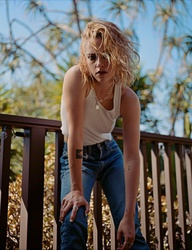
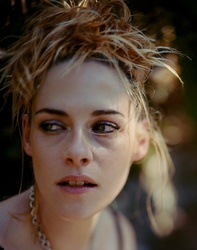
Kristen's interview with The New Yorker + NEW photoshoot


FEO74AeUYAcm5ri.jpgFEOwytpVUAE19Ap.jpg

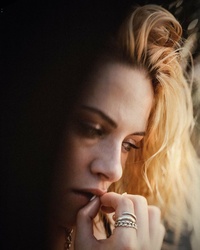
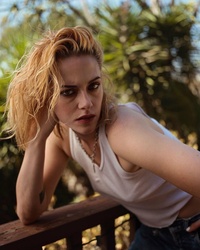
Outtakes

FEVvQ1CVUAUct1P.jpgFEVvQ1kUcAIE4JK.jpg

Click on photos for full view.

The airport in Telluride, Colorado, is small and private. The town’s film festival, held each year during the Labor Day weekend, has a reputation for intimacy—celebrities are not subjected to red carpets or corsetry, and the looming mountains have a way of making Hollywood seem garish and far away. This year, Kristen Stewart flew to Colorado from Venice, Italy, where “Spencer,” a new movie in which she plays Princess Diana, had just premièred. The first reviews of her performance (“ ‘Spencer’ Stuns Venice, Earning Standing Ovation and Oscar Buzz”—Variety) were published as she slept above the Atlantic. She stopped at a hotel to change and have her dyed blond hair styled in a messy updo, then went directly to the Werner Herzog Theatre, along with Pablo Larraín, the movie’s director, arriving only a few minutes behind schedule.

Her look was nineteen-fifties suburban dad: a black-and-white cabana shirt over a cropped white tank top, blue jeans, red suède creepers, white socks. Stewart, who was born and raised in Los Angeles, describes herself as California to the core—she has “L.A.” tattooed on a wrist—and few people since James Dean have looked better or more at ease in a T-shirt and jeans. She seems to channel a lineage of countercultural American femininity: rockabilly girls and punkettes, Beat poets and skaters, Jordan Baker rather than Daisy Buchanan. She was convincing as Joan Jett, in the 2010 bio-pic “The Runaways,” and as Marylou, the sixteen-year-old bride of Dean Moriarty, in the 2012 adaptation of “On the Road.” Now she was playing a different misfit, the twentieth century’s most famous princess. She told the audience that Telluride was the best festival, and that she’d never had more fun making a movie. Then everyone settled in to watch a film about confinement and despair set to a frequently menacing score of free jazz.

“Spencer” takes place during the Royal Family’s Christmas holidays at Sandringham House in 1991, at a breaking point in Diana’s marriage to the Prince of Wales. Surrounded by quivering Christmas jellies and glistening puddings, the Princess is cut off from the world and oppressed by royal traditions; eventually, she is haunted by the ghost of Anne Boleyn. The score, by Jonny Greenwood, raises the tension to nearly unbearable levels. Early in the movie, Diana sits at dinner in the throes of an anxiety attack, dressed in a green gown the same color as the soup in front of her, and crunches into a string of pearls. (The gems are a source of humiliation: Charles has bought the same present for his wife and for his mistress.) The necklace reappears later, fully intact, making it clear that Diana is mentally unravelling. “The piano wire snaps way quicker than I thought,” Stewart said, when I asked her about the scene. “Spencer” has less in common with “The Crown,” the Netflix series about the Royal Family, than it does with “Rosemary’s Baby” or “Gaslight,” films in which the mental breakdown of the female lead is the rational response to conspiracy, and madness looks something like resistance.

Thirteen years ago, at the age of eighteen, Stewart became internationally famous as the star of “Twilight,” the adaptation of a young-adult novel about vampires and werewolves in the Pacific Northwest. The film and its sequels gave Stewart a legion of fans but, in other quarters, fixed an impression of her as the oddly inexpressive star of mawkish teen movies. Online, a host of memes appeared featuring images of Stewart with captions such as “Five movies, one facial expression,” or “I don’t always smile, but when I do, I don’t.” The jokes captured something about Stewart’s naturalism and restraint, qualities of her acting that some find captivating and others inscrutable.

“There are certain actors and actresses that can become, in my eyes, transparent,” Pablo Larraín told me, sitting on a bench in a park in Telluride between screenings. He meant the adjective pejoratively. He went on, “You can see sometimes a movie that is too transparent, so I don’t understand what I’m doing as an audience,” because the filmmakers are “giving it to me completely digested.” Larraín, who grew up in Santiago, Chile, is thoughtful and bearded. He made his first English-language film, “Jackie”—as in Kennedy Onassis—in 2016. That same year, Stewart starred in “Personal Shopper,” an eerie art-house film about an American in Paris trying to connect with the spirit of her dead brother. In Stewart’s depiction of the isolation of grief, Larraín saw the qualities that he wanted in his Diana. Both of Larraín’s parents have served in the Chilean government; his mother, a descendant of one of the country’s wealthiest families, was always interested in Diana, he has said. “There’s something that needed to be magnetic and, at the same time, very mysterious,” he told me of the role as he envisioned it. The veteran British screenwriter Steven Knight wrote a script for him, and he sent it to Stewart. Then he called her up, and, “with her perfect American accent,” she said, “Dude, I’ll do it.”

“Spencer” makes use of Stewart’s mystery and magnetism but also pushes her into styles of performance that her previous roles have not. She does an accent, of course, and plausibly mimics Diana’s familiar mannerisms; she also imbues the character with a melodramatic hyperbole that takes her beyond historical depiction and, at times, into comedy. Her Diana tries to shape-shift her way out of powerlessness—eyes downcast and voice breathy in moments of pliancy, chin raised with imperiousness when breaking rules, her moods oscillating unpredictably as she strides through the castle halls at a rapid clip, like a woman pursued.

The day after the screening, Stewart went paragliding off a cliff, then attended a press reception for the film at an Italian restaurant on Telluride’s main drag. She was accompanied by a few friends and her fiancée, the screenwriter Dylan Meyer, whom she began dating in 2019, and who proposed to her this past summer. Stewart has publicly dated women for most of her adult life, shrugging off the heteronormativity of traditional Hollywood stardom with a nonchalance that seems partly temperamental and partly generational. She mostly shies away from social media, though she occasionally makes cameos on Meyer’s Instagram. Her friends, practiced in the art of standing on the sidelines, made their way to the bar as she shifted into professional mode, ready to be led around the room by a publicist.

I joined her, and watched as two ecstatic organizers of a film festival in Indianapolis volleyed effusive compliments her way. Stewart cracked jokes and stretched her quadriceps. Her California locution, full of f-bombs and “dudes,” seems to put people at ease. “I wish I was able to go to some of the more micro festivals,” she said, before adding, “Not that your festival is micro!” She grabbed her foot and mimed putting it into her mouth. They shooed her away, charmed. I stayed for another drink with one of the pair from Indiana, who confided to me over a Cosmo that, as much as he liked “Spencer,” he loved “Twilight.”

A few weeks later, I made plans to meet Stewart in Los Angeles. She wanted to golf. Her dad taught her how when she was a child, and she had recently resumed the habit. She suggested that we meet at a city course in Griffith Park. The dry September air hung hazy above brown hills, hummingbirds sipped at flowers, and elderly men shuffled around the green.

If you Google Stewart’s name on any given day, you are likely to find, on several Web sites, detailed descriptions of what she wore while getting an iced coffee or picking up groceries. She arrived at the course, without any apparent paparazzi in pursuit, wearing jeans and a T-shirt, pink-tinted sunglasses, and Adidas. “I haven’t really figured out my golf look,” she admitted. She walked behind the clubhouse to do reconnaissance. “I like to gopher it out first,” she said, squinting up at the driving range, where a crowd of mostly male golfers dressed in khaki pants practiced their drives. Someone was occupying her preferred spot, a shady corner on an upper level with a bench. “Maybe he’ll leave,” she said. We walked back to her black minivan—its name is Beth, she told me—and she retrieved her golf bag. After filling a basket with balls from a vending machine, she unpacked her gear and put on a white leather glove, keeping an eye on her spot. Then she turned to me. “So,” she said, “what do you want to talk about?”

Stewart grew up in Woodland Hills, a suburban L.A. neighborhood in the San Fernando Valley. Her dad was a stage manager, overseeing the rehearsals that precede a shoot, and her mother was a script supervisor, responsible for insuring that there was continuity between the scenes of a film. Both parents often came home late, with candy pilfered from craft services and stories about the long hours on location. Stewart thinks that it was her proximity to the energy of a movie set, with its punishing schedules and coördinated effort, that drew her to acting. She dates her career as a performer to the second grade, when, riddled with anxiety, she sang a dreidel song as part of a holiday pageant. Shortly afterward, a schoolmate’s parent advertised a workshop to teach children how to audition for TV and movies, and Stewart surprised her mother by asking to sign up.

The Stewarts were a crew-oriented family, she told me, and playing stage mom on someone else’s set came with some embarrassment for her mother. “I think when I presented her with this she was, like, ‘Shit, I’ve told her she can do anything she wants, now I have to drive her to these fucking auditions.’ ” Stewart tried out for a number of commercials, but the artifice of advertising didn’t come naturally to her. “I was so bad at auditioning for commercials—like ‘Try the soda pop,’ or whatever,” she told me. But, when she was about ten, she got the part of Patricia Clarkson’s tomboy daughter in the indie drama “The Safety of Objects.” A year later, David Fincher cast her as Jodie Foster’s tomboy daughter in his thriller “Panic Room.”

The movie took several months to shoot, much of which Foster and Stewart spent in a small room together. Foster, who began acting as a toddler and was famous by the time she was fourteen, told me, of her co-star, “I can’t say she’s my doppelgänger, but I do feel like, when she was little, I felt everything that she was feeling, and processed things the same way.” In Fincher’s film, Foster plays a recently divorced mom re-starting her life in an Upper West Side town house that is soon invaded by a dopey rich kid and his partners, who are trying to find a hidden stash of money. Stewart, zooming down hallways on a scooter, wearing a Sid Vicious T-shirt and a thumb ring, is a figure of loyalty in a feminized opposition. Even then, Foster told me, Stewart was an unusual performer: “She shows onscreen how she struggles with demonstrating emotion.”

“He’s made a move,” Stewart said, referring to the golfer in her spot. We walked to the shady corner, which was littered with cigarette butts despite the flammability of drought-stricken Los Angeles. Stewart set down the basket of balls and selected a club. She hadn’t thought about “Panic Room” in a while, she said, teeing up for a drive. What she remembers from her early years of acting is a fear of letting people down, which was often so intense that she came to the set feeling nauseated, with sweaty palms. She also remembers the satisfaction of pleasing grownups. “I hope this doesn’t sound totally arrogant, but adults in the room were moved,” she said. “Compared to what was going on in the third grade, it seemed really cool.”

Apart from the elementary-school audition class, Stewart never studied acting. For a long time, she rarely rehearsed, or even practiced her parts in front of a mirror. She preferred to learn her lines on set, right before filming, so that it would seem, on camera, as if they had just occurred to her. The Method, an approach to acting in which one draws on personal memory, struck her as an alienating prospect. But her focus on real feeling, rather than the outward expression of it, does have some kinship with that technique. “Maybe I’m extremely Method,” she acknowledged, “because it is me, and there’s no separation, and I believe it so fully when it’s good.”

“She has an unrealistically high bar for her own authenticity,” Jesse Eisenberg told me. Eisenberg co-starred with Stewart in “Adventureland,” when she was seventeen and he was twenty-four. Later, they appeared together in the action comedy “American Ultra” and the Woody Allen film “Café Society”; for a moment, they seemed like the millennial answer to Tracy and Hepburn. “She once called ‘Cut’ in the middle of a take and said, ‘I’m sorry, I was lying to you,’ ” Eisenberg recalled. When they filmed “Adventureland,” a dramedy about college kids working at an amusement park during summer vacation, Stewart had not yet been cast in “Twilight,” but Eisenberg felt distinctly that he was working with a movie star. “I don’t understand how to articulate that,” he said. “Which is why we have the words ‘movie star.’ But: an enigmatic quality, mixed with a naturalism, mixed with an emotional depth.”

While they were filming, in Pittsburgh, Catherine Hardwicke, the director who had been hired to adapt “Twilight,” flew there to audition Stewart for the role of Bella Swan, the girl who falls in love with a tortured vampire named Edward Cullen. Hardwicke had seen Stewart in an early cut of “Into the Wild,” about a young man who leaves society behind and ends up dying in the Alaskan wilderness. Stewart plays a girl who falls for him along the way; in one scene, he does sit-ups, oblivious, as she gazes at him with exasperation and desire. Hardwicke saw in her the kind of longing she needed for Bella. She brought a young actor, Jackson Rathbone, with her to Pittsburgh, and had him and Stewart rehearse scenes in a hotel room and improvise in a park. “At the end of it, I was just convinced,” Hardwicke said. “She’s Bella. She’s got to be Bella, because she keeps it so grounded and so real.” She added, “I built the whole film around her.”

Of acting, Stewart said, “It is me, and there’s no separation, and I believe it so fully when it’s good.”

One day, Hardwicke said, Stewart “just kind of mentioned that she was raised with wolves, real wolves—that the family took care of wolves.” (They were actually wolf hybrids, as Stewart’s mom, Jules, told Us Weekly in 2013, after a neighbor accused her of harboring wolves on her property.) Of the director, Stewart said, “I just thought she was—she felt crazy.” Stewart had seen Hardwicke’s teen drama “Thirteen,” which cleared her bar for authenticity. “She was kind of the perfect person to do a young-adult novel that had these dark romantic elements. She had this childlike openness and teen-age triggers, and her whole sensibility was that the movie was going to feel horny and overconfident.”

To cast Edward, Hardwicke had actors come to her house in Los Angeles to read with Stewart and make out. “It was so clear who worked,” Stewart said, grinning. “I was literally just, like . . .” She mimicked a swoon, dropping her golf club at the memory of Robert Pattinson, the British actor who became her co-star and, for several years, her boyfriend. Pattinson, she said, had an “intellectual approach that was combined with ‘I don’t give a fuck about this, but I’m going to make this sing.’ And I was, like, ‘Ugh, same.’ ” She picked up her club and smiled. “And, whatever, we were young and stupid and, not to say that we made it so much better, but that’s what it needed, and that’s what anybody playing those parts needed to feel.”

According to Hardwicke, Summit Entertainment, the studio that produced “Twilight,” thought that the movie was comparable in scale to “The Sisterhood of the Traveling Pants,” a 2005 teen movie that made about forty million dollars at the box office. “Twilight” made nearly that much on its first day, and the franchise went on to earn more than three billion dollars worldwide. Although the books are ostensibly pro-abstinence—their author, Stephenie Meyer, is a devout Mormon—Stewart approached the film’s make-out scenes as though she were the one going in for the kill. Bella drives an old pickup truck and wears leggings to the prom. Edward, who reads minds, cannot penetrate hers. “She confounds us all!” another vampire exclaims.

Stewart had to recite such lines as “There was a part of him, and I didn’t know how dominant that part might be, that thirsted for my blood,” and “Hello, biceps!” She and her castmates had to answer an endless barrage of questions from reporters and Comic-Con attendees about what it was like to kiss one another or to act out some of the franchise’s weirder plot twists, such as when Bella gives birth to a half-human, half-vampire who bonds with Jacob, the blue-collar werewolf played by Taylor Lautner.

“It was very naïve, in the best way,” Stewart told me. She had spent her adolescence being tutored during film shoots; “Twilight” was college for her. It also gave her a public scrim that she found useful. “Like, how fun for people to think they know you,” she said, smiling slyly. “Did you think I was going to do ‘Twilight’ forever? Is that how you saw me? If that’s how you saw me, then you really set me up for success, because I can do way more than that.”

Stewart shot a handful of smaller films between “Twilight” installments. Then, around the time that filming wrapped on the fifth and final part, she was cast as the lead in “Snow White and the Huntsman,” which execs envisioned as the start of a major franchise. A few weeks after its release, Us Weekly published photographs of Stewart making out with the movie’s married, forty-one-year-old director, Rupert Sanders. Although the film made about four hundred million dollars, a planned sequel was reworked as a spinoff, with different actresses. “The work, to me, genuinely was ignored in a really sort of frivolous, silly, petty way for a group of adult people who were supposed to be running studios and making films,” Stewart said later.

For the next several years, Stewart made mainly independent movies—three or four of them nearly every year. She was “pridefully reckless” in choosing roles, she told me. “If there was one scene in a script that I really wanted to do, and I hated the rest of it, I would still do it,” she said. She would think that the movie might not turn out so bad; she would often be wrong. She recently told an interviewer that she had “probably made five really good films” in a career of about fifty so far. “There are movies that I look at, in retrospect, and I think, Valiant effort, sure, but we jumped the gun,” she told me. When a production did not meet her expectations, she would occasionally vent to her makeup artist, whom she has worked with since her teens. “There are times,” Stewart said, “when I will literally go over to her and be, like, ‘What the fuck are we doing with our lives? We need to get out of here. I’m going to call in a bomb threat.’ ” She added, “It really sucks to be on a movie set that’s clearly not nailing it, but I’m really used to it. You get better at crossword puzzles.”

The best movies mostly told stories of ordinary lives. In “Still Alice,” Stewart plays the daughter of a professor with Alzheimer’s (Julianne Moore, who won an Oscar for her performance). Stewart gives the character an unflinching steadiness, refusing to turn away in embarrassment or change her tone of voice as her mother’s cognition declines. In Kelly Reichardt’s anthology film “Certain Women,” Stewart is a mousy Montana lawyer who deflects an unwanted friendship without words. In sweet but slowly devastating two-handed scenes, she wears the kind but frozen expression of someone who doesn’t want to acknowledge another person’s vulnerability. Reichardt was struck by the fact that Stewart wanted to come to Montana to play a supporting role in her quiet ensemble movie. “My take was she was out looking for experiences,” she said. “Maybe once you’ve done your early stuff and you’ve hit it already, you’re kind of free, and you do what you want.”

Stewart told me that she can now talk to a director for a few moments, even one whose films she admires, and know that it won’t work out. She looks for filmmakers with a sensibility that is “spiritual, unarticulated, emotional,” she said, adding, “There are certain directors that feel otherworldly to me.”

Last year, the sixty-six-year-old French director Olivier Assayas gave a speech called “Cinema in the Present Tense,” in which he addressed, among other things, the state of Hollywood. “I have practically nothing positive to say about it,” he declared, “except that this industry’s prosperity and new modalities do not delight me, they frighten or even repulse me.” Assayas lamented, in particular, “the confiscation of screens in the service of (mostly Disney-studio) franchises, whose hegemony now seems absolute.”

The quasi-feminism of a “Wonder Woman” or a “Black Widow” notwithstanding, the tentpole franchises of Hollywood have been especially dismal for female actors. While Stewart was finishing the “Twilight” series, the French actress Juliette Binoche told Assayas that she wanted to work with him. In response, he wrote “Clouds of Sils Maria,” an English-language film set in Switzerland that can be seen, in part, as a critique of the dominant machinery of contemporary movies, in which the greatest actors of our time are subjected to the indignities of the Marvel Cinematic Universe and audiences watch minor variations on the same six or seven characters every three or four years until we die. Binoche plays a French film star, Maria, who has been cast in a play opposite a Hollywood ingénue named Jo-Ann, whose career (which includes a starring role in a Hollywood franchise) and brush with scandal (a fling while in a highly publicized relationship) bear a striking resemblance to those of Kristen Stewart.

Assayas offered Stewart the role of Jo-Ann, but she told him that she would rather play Maria’s assistant, a young woman named Val, who talks Maria through her anxieties and, in one scene, defends the incorrigible Jo-Ann, who was ultimately played by Chloë Grace Moretz. “She’s not completely antiseptic like the rest of Hollywood,” Val says. “She’s brave enough to be herself. At her age, I think that’s pretty fucking cool.”

“I think Kristen had fun just toying with her own fame and her own relationship with that tabloid stuff,” Assayas told me, on a video call from a set in Paris, his hair rumpled by a pair of headphones. He was shooting a TV adaptation of his 1996 film “Irma Vep.” (Stewart has a small part in the series.) Playing Val, he said, gave Stewart “a chance to turn a new leaf and start from somewhere else. Somewhere else being herself.” Binoche told me that she was struck by Stewart’s openness, and also by “her capacity of learning lines in a minute.” She added, “As for me, it takes ages—it’s like I need to go over and over and over so it gets into my body. As for her, she just comes and she has it in her. Also, it was her language, so she felt comfortable changing it and making it hers, like a glove for her soul.”

For her performance, Stewart won a César, the French equivalent of an Oscar. (She is the only American woman to have done so.) The film was partly financed by Chanel, and its release roughly coincided with the beginning of Stewart’s own relationship with the fashion house, which has gone beyond the usual advertorial arrangements, at times resembling the partnership that Audrey Hepburn once had with Givenchy. (Karl Lagerfeld cast Stewart as an actress playing Coco Chanel in a short film he directed in 2015, and the brand also contributed costumes to “Spencer.”) “There’s an elevated ambition to wanting to work with them,” Stewart told me, speaking of Chanel. “You’re, like, ‘Oh, so that’s the best one? Cool, I guess I’ll do that.’ When I was younger, I just wanted to be a winner.”

After “Sils Maria,” Assayas wrote “Personal Shopper,” which centers on another assistant, Maureen, whose visits to the Chanel showroom, on behalf of the model who employs her, become an element of the plot. The movie is part ghost story and part murder mystery; the role of Maureen seems written for Stewart, though Assayas told me that, if he wrote it for her, he did so subconsciously. The exquisite dresses that Maureen tries on in the course of her job—her hair unkempt, her face without makeup—do nothing to hide the grief she holds in her body. Driving in Paris on a motor scooter, weaving through traffic, Maureen mumbles to herself, trapped in recursive thoughts about someone who is no longer there. Recalling an image of a bloodied corpse while on a video call with her boyfriend, she shudders and half rubs her eyes, as if she could physically shed the memory. Some actors, tasked with the portrayal of traumatic encounters amid personal loss, might tend toward sobbing or hyperventilation. Stewart shows a person whose mind is operating on multiple tracks; it’s a mesmerizing struggle, the visual rendering of a divided intelligence.

“I felt that I was directing the film from the outside and she was directing it from the inside,” Assayas told me. The movie is full of long takes in which Stewart dictates the pace of the action, he noted. “She appropriated the character,” he went on, “and put herself in a situation where the invisible, or the magic of cinema, or the world around her, becomes natural.”

When Stewart portrayed the actress Jean Seberg, in the 2019 bio-pic “Seberg,” she tried to get some of the puffiness that Seberg, a heavy drinker, had in her face. To get the young Joan Jett’s cadence, in “The Runaways,” she listened to letters on tape which Jett recorded when she was thirteen. Playing Diana, one of the most documented women of her era, required preparation on another level. Stewart worked with a dialect coach for four months. “It’s such an all-encompassing, physical, head-to-toe experience sounding like that,” she told me. “It changes what you look like completely.” She also studied endless photographs and videos of Diana. She recalled a particular video, of Diana on a boat, in which she turns and lights up at the sight of her children, and another in which she emits a strange and incongruous laugh. Stewart noticed how uncomfortable Diana could look when she was dressed up, “just jutting out in every way possible,” as Stewart put it, trapped in a tyranny of ridiculous hats. (Diana’s “human awkwardness and emotional incontinence showed in her every gesture,” the novelist Hilary Mantel once wrote.)

Most of “Spencer” was shot in castles in Germany, in early 2021, during the bleak pandemic winter. Stewart was expecting a big crew and the elaborate staging of a historical drama, but she often worked in near-solitude, with Larraín and Claire Mathon, the cinematographer. Mathon shot on film, frequently in closeup, and, to Stewart, it felt as though the trio became a “three-headed animal,” whose movements were propelled by Larraín’s “fervent, insane, psychotic confidence.” Upon entering the set, Larraín would tell Stewart to “inhabit the space,” an old mantra from his days in the theatre. As he recalled, Stewart would reply, “What the fuck does that mean?” But she rarely needed him to articulate further, he said. Stewart, for her part, felt that Larraín had got inside Diana’s head. “There were times where he would repeat something, or say something that I was about to say, and he would channel Diana in a way that was just striking,” she told me. “There were days on the movie where I was, like, ‘Do you want to wear the dress? Because I’ll give it to you.’ He doesn’t look right for the part, but he could have played her.”

As a child, in the eighties, I had a set of Princess Diana paper dolls that came with a variety of accessories: wedding dress, suits, a riding outfit, babies. I thought of them while watching the unexpected climax of “Spencer”: a wordless and cathartic dance montage. Diana, caught between the end of her marriage and the life still to come, spins down castle halls and runs through gardens, pivoting and gliding to Greenwood’s surging score, wearing iconic outfits that represent various stages of her life. For this sequence, Stewart did not prepare at all. In pre-production, she said, she sometimes asked Larraín what she would be wearing in the scene, and whether there would be choreography. Every time, he would tell her, “Yeah . . . I don’t know.”

Rather than shoot the sequence all at once, they filmed a piece of it at the end of nearly every day. Stewart would put on a chiffon gown or a suit; Larraín would pick a hallway or a ballroom for her to move in, and play music through a large speaker: LCD Soundsystem, or Bach, or Sinéad O’Connor, or Lionel Richie (a favorite of Diana’s). “I don’t know how to move like Diana,” Stewart told me. “She was a dancer. I’m not a fucking dancer.” And so there was always an element of discovery. “It was so unbridling and so shocking at times, and so emotional,” Stewart said. “It’s like doing yoga and you suddenly stretch your hips in a certain way and start crying, and you’re, like, What is that?” What resulted is a scene that, for a few moments, gives you a glimpse of a person who was not allowed to exist.

The Academy of Motion Picture Arts and Sciences loves a portrayal of a historical figure. In the past decade, it has awarded Best Actress to Meryl Streep for playing Margaret Thatcher, to Olivia Colman for playing Queen Anne, and to Renée Zellweger for playing Judy Garland. “I’ve never been in the running, if you want to put it like that,” Stewart told me. For each golden statuette, there is a get-to-know-you campaign that, at times, has all the glamour of a race for state senate. “I do not want to seem like an ass, but it’s so embarrassing and so tiring,” she said. “It is highly political. You have to go talk to people. You feel like you’re a diplomat.”

So it was that, a few hours after golf, Stewart arrived for a post-screening Q. & A. with members of the Academy. She had been coiffed and styled in a blazer and heels. (Before reaching the stage, she replaced the heels with sneakers.) The screening was held at the headquarters of the Directors Guild of America, where the lobby is decorated with black-and-white photographs of famous directors on set. Afterward, in a wood-panelled reception room outfitted with gilt chairs and fairy lights, the audience gathered for a British-themed reception: cucumber sandwiches, shepherd’s pie, fish and chips. The mood was that of a wedding at which distant relatives await their turn to congratulate the bride.

I was crunching through the confectionery pearls that decorated a frosted vanilla cupcake when a man with white hair struck up a conversation. His name was Andrzej Bartkowiak. (“You’ve seen my work,” Bartkowiak, a cinematographer, said. He was right.) Bartkowiak had a few minor issues with “Spencer,” he told me, but not with Stewart’s performance, which he described as “captivating” and “flawless.” This seemed like a good sign: despite the Academy’s efforts to diversify in recent years, men of Bartkowiak’s approximate generation and credentials remain an important demographic. Before leaving, he went over to share these thoughts in person, and I watched Stewart accept his congratulations.

Stewart has already filmed “Crimes of the Future,” with David Cronenberg, and she’s about to shoot “Love Me,” which will co-star Steven Yeun. She describes the latter as a love story between a satellite and a buoy; it has something to do with getting computers to love one another, she said, and the machines “sort of morphing in and out of every gender and race, and, like, there’s no orientation, there’s just humanity.” Stewart is also working on her début feature as a director, an adaptation of “The Chronology of Water,” a memoir by Lidia Yuknavitch.

The book came to Stewart as an algorithmically generated recommendation on her Amazon Kindle. In it, she saw something that she’d never seen onscreen. “It kind of celebrates a certain taboo,” she told me, “that shame finds itself sexually in women. The ways that she acknowledges being embarrassed, and self-hating, but that it also really turns her on, is one of the really difficult and complicated relationships we have with being women in this body in a fully patriarchal society.” The memoir follows Yuknavitch through a stillbirth, multiple husbands, and the pursuit of sexual experience with lovers male and female; it has cameos from literary mentors including Ken Kesey, Kathy Acker, and Lynne Tillman. The memoir was a word-of-mouth hit, and Yuknavitch told me that there were others who wanted the film rights. Stewart, she said, won her over with a long letter “written in the language of a visionary.” Yuknavitch shared with me a single, out-of-context line: “And to those who dwell similarly in this fuck me, fuck it realm of crippling self doubt and fortified albeit false EGO, be proud because today, ‘fuck it’ won.”

The memoir’s prose is visceral, and its structure is decidedly unchronological; it does not seem, at first glance, easily adaptable, and Stewart has been toiling at the script for years. At one point, she spent three weeks living in a van outside Yuknavitch’s house, in Oregon. Stewart’s fiancée, Meyer, whose screenwriting credits include an adaptation of the young-adult novel “Moxie,” which came out on Netflix earlier this year, has read drafts. “I’ve been with people where work isn’t at the forefront of the thing and therefore you don’t do it as much,” Stewart, who seems to work constantly, told me. “That’s not good for me. I don’t like that. When you find somebody that, every aspect of your life—well, I guess I don’t have many aspects. I want to make movies. That’s primarily what I want to work on, and we share that, luckily.”

On a sunny afternoon in October, I went to see Stewart at an Italian restaurant in Los Feliz. In the weeks since I’d last seen her, she’d travelled to Paris, for Fashion Week, and to London, for the British première of “Spencer.” She was starting to get a little tired of talking about the movie, she confessed. She sounded happy to be back in L.A.

I found her sitting in the corner of a pandemic-era outdoor seating area, where plywood walls shielded her from the street. She had a MacBook open and was chatting with a close friend, who briskly excused himself even as I apologized for being early. Stewart quickly scanned her surroundings—a large man coming rapidly down the sidewalk momentarily startled her—before settling in to talk. Not until we’d left did she mention that a photographer had been lurking nearby the whole time. (The Daily Mail, a few hours later: “Kristen Stewart nails an effortlessly cool look in jeans while carrying a backpack over her shoulder as she leaves lunch in Los Angeles.”)

In addition to “The Chronology of Water,” Stewart is writing a TV series with Meyer and developing a gay ghost-hunting reality show with a friend, which she has described to me as “a paranormal romp in a queer space,” with elevated aesthetics. “Gay people love pretty things,” she added. “So we are aiming for a richness.” She showed me a couple of pitch decks on her laptop. In 2017, Stewart directed a short film, called “Come Swim,” which has the moody atmospherics of a music video: rain on windowpanes, saturated color correction, anxious smoking. The look book for “The Chronology of Water” had images of blood, swimming pools, grim nineteen-seventies living rooms, the grassy bed of the Ichetucknee River, in Florida, a childhood photograph of Yuknavitch and her sister. “I want to fuck with a split screen,” Stewart said, studying my reaction as I scrolled through the images. “Like, genuinely shredded memories. I want seasons. I want the movie to have scope.”

Stewart will pitch the movie to studios with the lead role already cast. She had been watching dozens of audition videos for weeks, and had narrowed her choices down to four women. In the coming days, she would workshop the role with them, as Hardwicke had done with her for “Twilight.” She needed someone with stamina, she said, because the movie would be shot in the course of several months. She hoped to find someone familiar with the writers who appear in the book—an actress in her early thirties, preferably, who doesn’t look too old for the scenes when the character is in her twenties or too young for those set in her forties. Someone who is not yet wildly famous.

“I see this as being one of the greatest roles for a woman,” Stewart said. “Like, someone could be so good at it, you know?” Whenever she talked about directing, something in her manner changed—a hungrier self emerged, a side of her enlivened by the prospect of being undefined, and concerned with making the right impression. She had sent the script to previous collaborators whom she admired, including Julianne Moore. “I want to make something that’s gonna, like, stink and be horribly embarrassing but also make you fucking wet, and just be really honest,” she said. “Do you know what I mean? I want to do a coming-of-age movie that actually considers young women. They’ve never fucking done it.”

The scene that the actresses read for their auditions was a conversation with Ken Kesey, who offers the lead character some of the first encouragement she receives as a writer. Stewart watched intently, her mind not yet made up. “She would be such a fucking friend in this—like, I can trust her,” she said, of one actress. Of another: “She feels it—it’s real for her.” Still, she was waiting for a definitive sign. “Someone is going to do the right thing and is going to get the part in the moment that they get it,” she said. “I’m gonna be, like, ‘And there the fuck you are! O.K., great. Let’s go.’ But somebody needs to take it.”

I asked Stewart if she was looking forward to being in charge, but she said that, for her, directing would be a kind of letting go. “I cannot wait to share the weight of this,” she told me. Usually, she sees it as her responsibility to take on all the feeling of a movie and project it into the world. “I’ll be fully feeling all these things with the person, but I have to give it to someone, and I’ve never done that,” she said. “I’ve always been, like, ‘I got it, I got it, I got it, I can do this.’ It’s going to be interesting to let someone else have their own experience with it, and fall more in love with that than what I could have ever dreamed of.” 

Source | Elle Perez

Tuesday, March 7, 2017

Kelly Riechardt talks 'Certain Women' and mentions Kristen with i-D Vice


I am interested in why you choose to work in rural locations and why specifically Montana, for this film.

These stories were written for Montana so that was the natural place to go. In Montana you're really locked in by the mountain ranges, it was the least tuned in to the politics of life that I've been in in a couple of decades. You could really tune out quite easily to what was happening outside of Montana. That's not so easy to do on where I live, for a lot of reasons.

That idea of places outside the political mainstream feels very timely in this particular moment…

Sure, but in a way the film hits upon a certain mood of people who feel they are not being heard.
It does. The Jared Harris character from the first story is very of this moment. He's a man in his mid 50s whose has been injured and has a real complaint but cannot grasp the idea that the system is not going to work in his favour. That's not something he has been accustomed to, and he can't get around it. Whereas the people he encounters, his female lawyer, anyone that wasn't in his lot in life, would know sooner that the system wouldn't work for them. Suddenly, while he does have a legitimate complaint he can't get over it. Like it's so unfair to him in particular, as opposed to this being the adult world for most people.

And that connects to how the women in the film don't have the same expectations…

Right, by the time the Native American rancher takes her knocks - she's far less expecting of the world - she's more self reliant than his character. The man is in this story with his lawyer, played by Laura Dern, and she's trying to give him legal advice. He wants something else from her; he's not hearing her on that level. He's wanting some comfort from her, that she's not interested in giving. There's a lot of miscommunications. And then there's these moments where people have a momentary glimpse into one another. There's a lot of missed moments.

Even Kristen Stewart's law graduate character understands the lack of agency in her life better than he.

Right, crappy car, driving a long time to pay off student loans…

This is your first time working with Kristen, but she feels entirely at home in a Kelly Reichardt film. I think it's to do with how internal she is. What do you think?

It's acting, it's all acting. It's just that she's good at it. It's - as Michelle [Williams] would say - it's reacting. She's a really good listener and she doesn't have to be doing anything. She's comfortable not showing an expression and just letting things be internal, whereas some actors as they might be in life are just more gestural and more expressive. Kristen doesn't feel like she has to be doing stuff.

Source

Saturday, March 4, 2017

Kelly Riechardt talks about 'Certain Women' and mentions Kristen with View of the Arts


“They are really full characters who have everyday kind of problems” American filmmaker Kelly Reichardt says of the characters that lead her new film Certain Women. Played by Laura Dern, Michelle Williams, Kristen Stewart, and Lily Gladstone respectively, these women are our window into an intriguing yet isolated life in the American North West. They’re trying to make sense of their surroundings, and this isn’t always an easy feat. For Reichardt, taking the camera and passing through the everyday lives of a character is something of a speciality, and it is something she continues to explore in her latest production. View of the Arts were on hand to talk to her about the film.

Certain Women tells three distinct stories, and they’re based on a collection of short stories by Maile Meloy, what was it about the characters that made you want make this film?

Well, not that I can really remember because it was three years ago and who knows what that moment really was, but her writing is really great, and you get pretty sucked in. Some of them, like the middle story, you sort of ask yourself ‘what was that about?’ and it gnaws away at you for a couple of days. I felt her stories kind of lingering with me after I read them, and I went and got her second book of shorts and read that, then I went back to her first book and I thought that maybe I could fiddle around with them. They are really full characters who have everyday kind of problems, dealing with the small politics of life and how to navigate their job or their trip to work, all of these sorts of things. All of them were also pretty deeply set in their environment, so that’s why.

What is it about the American North West that’s interesting for you as a filmmaker?

I’ve never lived anywhere inland before. I’m from Florida, I live in New York and sometimes I live in Oregon, I’ve even lived in Los Angeles but I’ve never not lived near a coast so it’s fascinating to me. Montana is big and sprawling, but it’s locked in by these three giant mountain ranges so you feel really isolated which at first feels isolating but then it becomes kind of comforting in a way. It’s an interesting landscape to take on, it’s really beautiful. We were shooting at the foot of Yellowstone, but it’s big and cold and sort of hard to get your arms around, so it was a matter of circling in and finding a spot to hunker down and get to know the area intimately.

Do you feel the characters were stuck in their surroundings then?

Well some of them were stuck and some of them are coming in to get a piece of the area, in the middle story Michelle Williams and James Le Gros’ couple are probably from California and are bringing their California money to Montana to get an authentic house built, whatever that means. Then there’s the Kristen Stewart character who wants to get out of there, so there are people who want to buy in and people that want to find their way out, and people who are a little more isolated and stuck.

You mentioned Michelle Williams, and this is the third film that you two have worked together on. When you were adapting the story to a script did you have her in mind for the character she plays?

Yes, well first I thought that Michelle would be too young to be a mum of a teenager, I mean she is a mum but not of a 16-year-old. So I was a little worried about if she would feel too young, Michelle would kill me if I say she didn’t feel too young. We kind of kept squeezing the maths so that it did work, it just seemed ridiculous to make a film in Montana without Michelle because she’s from Montana and I hadn’t got to work with her in quite a while. I think it worked out quite nicely, it felt right.

What was it like working with the rest of the cast? Kristen Stewart has previously said she’s a big fan of yours.

Oh that’s nice, I’m a big fan of hers. Well Kristen and I met the day before we started shooting, well no she did come and take horseback riding lessons with Lily but I feel like suddenly we were on set together, that’s mostly how it is.  We were communicating when we were getting her clothes together with our costume designer which was fun. Kristen was great, everyone was so game.

Laura Dern and Jared Harris came at the end when we were all exhausted, and when I met Laura she was so smart and on it so I felt I had to get my game together to rise up to meet her level. They both really came so prepared and down to the detail. It was like I was making three different films with three different sets of actors in a way, it was super challenging because as soon as you hit your groove you’re back at the beginning again.

Did you not shoot it chronologically then?

No, we shot the ranch first because I wanted snow for that setting and it was the cusp of Winter. Then we shot the middle story, so we filmed them in reverse order basically.

When it came to adapting these short stories, was it quite challenging to get them to all fit in?

Yes, actually. I wasn’t sure it would work for a while and it was just a nice experiment. When I had found the middle story, which had been a different story for a while, it was then that I felt it started to work. It had the right amount of plot without too much plot, and it made sense to me what these women were doing together and how the stories worked in an emotionally chronological way. So it all made sense to me when I got that story.

You’ve worked with Jon Raymond on your scripts quite a lot, what is it that you look for when it comes to adaptations?

Well with Jon I had read his novel and I really loved his work, so I got in touch with him and asked him if he had any short stories and he sent me Old Joy and that turned out to be a really great experience. So I wanted to do something again with him and he brought up the idea for Wendy and Lucy, I wasn’t sure and was on the fence about it but then he wrote the story and that’s when I got on board with it.

A lot of it had to do with wanting to work with him a lot and we had a good thing going, we would go places and check out different parts of the state and it was good in production to have someone to call and talk to about what was happening. I would call him on this movie too, but he was working on a novel which just came out called Free Bird and I wanted to work on something else. I was drawn to Maile’s stories, but with Jon Raymond he would throw an idea at me when I was finishing one film and we would just go from one film to the other, which was great as I always knew what I was doing next.

In 2016 there was quite a dramatic rise in films which have female leads, and of course you have four in yours. Why do you feel it’s important to keep doing this in cinema?

I was going to say that there are two sexes, but that’s not true as it turns out there’s a lot in between. Women are a huge part of the population and it’s nice to hear their story once in a while! It depends, I’m really drawn to whatever the story is and what the characters are.

What’s the option? All stories about men all the time? You might want to have some diversity here and there. That might lead to more women directing too. I would get on the bandwagon about it but we have bigger fish to fry right now, we have so many problems. It’s not the main one, but representation is pretty important.

Source

Video: Kelly Riechardt talks about Kristen in 'Certain Women' with Red Carpet News TV


Friday, March 3, 2017

Kelly Riechardt talks about casting and working with Kristen in 'Certain Women' with Little White Lies


Kelly Reichardt works resolutely outside of the Hollywood system, making integrity-fuelled art, and so money and industry reach are not her currency. Meanwhile, despite an ongoing foray into fascinating indie projects, Kristen Stewart’s post-Twilight glow is like a lighthouse beckoning all comers. So how did the former sidestep the crowds around the latter in order to cast her as Elizabeth Travis in Certain Women?

“Some friends of mine made a film with Kristen, Still Alice, so they gave the script [for Certain Women] to her. Her response was, ‘If it happens, let me know, and I’ll come do this’, but right up until the day she arrived on set, we were like, ‘Is Kristen Stewart really going to show up?’ And then there she was. It was like, ‘Oh hey, here you are.’”

“I had worked with Dakota Fanning and with Jesse Eisenberg [on 2014’s Night Moves] and they are two of her closest friends, so they put in a good word. I had had really fun experiences with both Dakota and Jesse, so I think because of that Kristen was game for it. But she was completely unperturbed by the size of the part. She’s not the lead. She plays a supporting part in the movie, and she made so much of that character.

“She let Lily Gladstone’s character set the pace and be the focus. She was so generous – a really generous actor, I thought. She helped give it some shape, because Lily’s a really different kind of actor, really intuitive and Kristen, likewise, is an intuitive actor, but she’s also been doing it a long time and she’s a technical actress. I thought that it played well in terms of who the two characters are. She had a barbecue for the crew on the day off and was just totally easy and not at all demanding.

“I loved her in The Runaways, that’s really what I loved Kristen in most. It’s an imperfect movie but all the women in it are really… I loved the real Runaways so I really did not want a movie of The Runaways, but she’s really good in it!”

Read our full interview with director Kelly Reichardt.


Source

Tuesday, October 18, 2016

Kelly Riechardt talks to Nylon Magazine about 'Certain Women' and mentions Kristen


It’s opening day for your movie. How do you feel? 

I feel good. I’m sitting here folding my laundry. I mean, it’s nice because it’s not like a festival where there’s so much hubbub and getting dressed up. It’s just getting on the subway and going to do some Q&As, which will be nice. 

When do you say goodbye to a project? Is there a moment you fully let it go? 

You kind of let it go a couple times. I let Certain Women go after it was done being made, which was in January, and then a month later, you’re going to Sundance with it, so you kind of get back into it. And then, I let it go after Sundance, until now. I’ve been working on something else all this time, and it’s like, “Oh my god, get your head back into Certain Women." I’m thinking by Thanksgiving this will all be totally done and I’ll have it behind me. 

I assume that you learn new things about filmmaking with each movie that you make. What did making Certain Women teach you? 

One thing you learn over and over again is to trust your own instincts. It’s an imperfect situation, but I find it easier to be mad at myself than to be mad at other people because I’ll eventually let myself off the hook. And so, one lesson—we’re always just shooting in such volatile, weird weather—is to not react to everything that’s going on around you. Everyone’s doing their job, and everyone thinks their area is the most important, and that’s what you want them to think. And you should listen, and you should respond to everyone, and I think keeping your eye on the performance and what’s going to work for your actors instead of what’s happening with the weather. And that gets easier as you get older and more experienced. I have as much experience as anyone else on my set, so I might as well listen to myself. 

Is it strange having someone as famous as Kristen Stewart on the set of your tiny independent movie? Is there something anachronistic about it or does it feel totally natural? 

No, our films are a great equalizer because we don’t have money to treat anybody as if there’s this different range or class of people. [During the Night Moves shoot] Dakota Fanning and Jesse Eisenberg lived in the same hotel as the person doing our craft service. Same with Kristen. We don’t really have the finances to have these different levels, so there’s very little division between the cast and the crew. It’s almost one fluid thing, and it’s pretty intimate. I can remember Dakota crying when she left us because we had another week or two of shooting when she left, and I remember she called me from some red carpet she was on and was just like, “I’m so sad I’m not there with you guys.” People get very attached to it, as Michelle has, because they become friends with the crew.
Kristen had all the crew over to her place on a day off. I think actors like that they’re not in some separate trailer having some separate experience, and my crew includes some really great people. 

Was there anything revelatory to you about Stewart’s performance? Did she teach you something about acting? 

Yeah, Kristen likes to kind of learn her lines as she goes, and I found that surprising and scary. So it just meant that that shitty hamburger she’s eating in the movie, she’s eating 13 of them. I was just like, “I don’t know how you’re going to do it.” Also, there’s not one lead in the movie, and she’s not even the lead in her section. It’s the rancher’s story. And I was really aware right away that she was totally comfortable with that. She always wanted Lily to do her scene first, and she wanted the camera to be on Lily first. I was amazed at how she let herself be inconsequential sometimes in a scene.Then, there were other things that I didn’t really realize until I was in the editing room, and they were just more technical things, that she has an easy way about her and you don’t necessarily think of it. 

What do you mean when you say technical skills?

She sort of knows when to throw a glance, and when she doesn’t even have dialogue, it’s almost like she might be anticipating where a cut might go, and she’s giving you a movement to cut on. So you realize, “Oh, she’s been doing this for a really long time,” and she’s just really aware of the space and where she is in the frame, as are actors that have done it for a long time. I did not realize that was happening on set, I was just kind of caught up in the performance, and when I got in the editing room, I realized she was giving me a few little presents. 

You’ve lived on the East Coast for most of your life, and yet you make all your films out West. Have you ever been tempted to make a film in New York, where you live?

I like getting away to make a movie. With this film, I’m making a conscious effort to give myself some interiors. I started out shooting exteriors because I couldn’t afford lights or a crew. And then I just became, over time, more comfortable shooting outside and knowing how to work a landscape more than an interior. And when we were making Night Moves, focusing on the dam and all this huge maneuvering that was going to happen outside, I knew how to do that. And then we got into a kitchen scene one day, which I hadn’t given as much thought to, and there was were four walls, and I was like, “What the fuck do you do with four walls?” I like going off and making films in private, where the hassles of everyday life aren’t there. And also, selfishly, you’re taking your crew away from all the things in their everyday life, so they’re completely focused on your movie.
You talk about shooting with these name actors, but when you’re in Montana, it doesn’t fuckin matter. I watched my friends make a film with Kristen Stewart in cities, and every time she walks out the door, there are teenagers waiting for her. I don’t want that shit around my movie set. 

Are you aware of your position in American cinema? Many people revere you and your work. Is that something you pay attention to? 

I just don’t really encounter that. So it’s not, like, in my life. 

Right, but right now, there’s a big story about you in The New York Times Magazine. Will you bother reading that? 

My friend read it for me and reported on it to me. I actually really like Alice Gregory’s writing, she’s really good. When it doesn’t matter anymore, I’ll go back and read it, but I’m not going to read it right now. You can’t have too much of this stuff in your life. It’s not good for you. Is there a part of the moviemaking process that you detest? The cold. The cold. Totally, the cold. It’s was so cold making [Certain Women], and at some point, I was like, “Oh my god, this is a younger person’s game, I can’t stand out here in negative degree weather for 18 hours anymore.” And I think the hardest thing is that because we work on small budgets in remote places, we just stretch ourselves so thin that you don’t have time to really settle into it the way you want to. Actors are more taken aback by the speed we’re doing things than by the lack of frills. The lack of time to do stuff, that’s the hardest thing. There’s no such thing as making a film without stress. I think if there was a little bit more support—I understand what the nature of these films are, and I understand why the budgets are low and the world I live in. But I do sometimes feel like you’re in a band in your 50s and you’re still touring around in a van, and you’re like, “Ugh, do we ever get the bus?”

Monday, October 17, 2016

Kelly Riechardt talks about 'Certain Women' and mentions Kristen with Zimbio


Zimbio: Thank you so much for speaking with me. I enjoyed Certain Women a lot. You always have such a honed sense of time and place in your movies.

Kelly Reichardt: Thanks.

...And also the performances you were able to get from these talentless, no-name actresses...

Thank you.

And any movie with a corgi... you got me.

(Laughs) There you go. You're all set then. That corgi came with the ranch.

Oh did it? Cool, a package deal.

Yeah.

I wanted to start off by asking you about the script. This was the first non-Jonathan Raymond story you've done in a while...

Awhile, yeah.

Yeah, so I just wondered if it was daunting adapting Maile Meloy's characters?

It was daunting, actually. Yeah, I guess working with Jon just because we're very close there's a constant back and forth to it, and this was just me alone in a room. But Maile was super generous in letting me decide which stories...I swapped out a story at a point and she just kind of rolled with it. It was just sort of that thing of letting things be bad for awhile while you make your way through and land on something that works.

Gotcha. Did you film in Montana?

Yeah in Livingston and areas around Livingston, an area called Clyde Park.

So the story dictated the location?

Yeah it did. It pretty much did. I was scouting around Boise for awhile and it was the stories that kept me going back to Montana. And Montana gave us a grant that made it pretty appealing to work there (laughs). So that helped.

Oh, that's great. So, the title of the movie I read as a generality, but the film is more specific. Did you mean for the title to be ironic?

The title I stole from one of my colleagues, Peggy Ahwesh at Bard. She has a film from the '90s that's the same title. I didn't mean it ironically, but, like you said, more in a general sense.

Like all your films, this one doesn't use a lot of music except for the beginning and the end. You use a lot of natural background sounds. Is your style an answer to the sensory bombardment of, you know, superhero movies and mainstream stuff?

I don't know if it's an answer to any of it. I'm not sure anyone's in question of it. But it's an option to all of that I guess. It's just more what works for me. I like using the sound of a location. Livingston is a super windy place so the wind was making all kinds of different sounds according to where you were. Sometimes musical almost. And then it's surrounded by a train depot so it's nice to work with the trains and have the sounds of the town and all. So that's been the approach I've taken for a couple of films. Trying to use those sounds in place of a score. And then there is some of a score from Jeff Grace. 

Could you talk about that scene when Lily Gladstone drives off the road. Why use music right then?

Allowing myself a little movie moment right then (laughs). We kept putting it in and taking it out. I just felt like, let's give over to a moment of emotion. I just kind went with it. It could've worked without it I think also, it was just different with it.

It is a powerful moment, the image of the car gliding by itself.

I know, it was actually, in the script and in my original design, it's gliding across the ice. In my image of the all white film, I hoped there would be so much snow, but there was, like, their least amount of snowfall in years... It just became this other thing which worked out nicely.

How about working with this ensemble, I guess it's not really an ensemble, but it's probably your most high profile cast, along with Night Moves. Did you find working with three separate stories challenging as far as directing the actors?

Well just that you're working on these individual stories and you want it work as a whole. You're just trying to get a handle on the tone that Laura's story will have and how that'll play on the rancher's story, so in that way it was challenging. And also, we were always at the beginning part of a movie, you know? You're always like, here we are back at wardrobe picking costumes with new actors coming in. You're constantly at the beginning point of something. That was challenging. How many people do you have to have for an ensemble?

(Laughs) Yeah I don't really know...

(Laughs) I guess it was a kind of an ensemble. I had Michelle in the middle and I had worked with her and (James) Le Gros before so that was a bit of a reprieve before going into the next section which had more logistical complexities to it. But yeah, I've been a fan of Rene Auberjonois for forever. He's fantastic. And Jared Harris, so that was great. And of course I've been a fan of Laura Dern's for a long time. With Kristen I did worry a little bit about her being too large for the role but she was able to really let it be her story. I just kept being impressed with her. But yeah, it just kept changing. There was nothing to ever settle into. 

Last time we spoke, we talked about subverting audience expectations and how that led to suspense in that film. And you do the same thing here, you subvert expectations, so I was wondering what you were going for.

Well, I'm trying to think of where you mean.

With the hostage situation and with Lily and Kristen also.

Oh, I see. I don't know, with Night Moves it was easy to see what the expectation would be. In this I never really knew where this fit in so I guess I didn't have it in mind so much. It seemed very much its own. 

It was more about just telling the stories?

Yeah, and I think figuring out the tone of the film was the most difficult thing.

Source

Friday, October 14, 2016

Kelly Riechardt talks 'Certain Women' and mentions Kristen with The Playlist


First of all, congrats on this film, I do believe it is the best work of your career thus far.

Thank you, that’s very nice to hear.

First things first, how did you get this great cast?

I always wanted to work with these actors. Always wanted to work with Laura Dern. I just loved her in the Mike White HBO series “Enlightened,” I’m a big fan of that series and I kind of wish I could have directed an episode. So it was great that it worked out with Laura . Whereas with Kristen, she was attached for a very long time. She was in my friend’s movie “Still Alice” and it just went from there.

Kristen is a pretty big name for a Kelly Reichardt movie.

At first I was worried she’d be too big of a name for the story I was just trying to tell, but she played “small” beautifully and really let that story be Lily’s [Lily Gladstone].

Then there’s Michelle.

Michelle, well it’s Michelle. I didn’t work with her on my last project [“Night Moves“] so I was very much looking forward to working with and seeing her again. We don’t really hang outside the set, but when you make that many movies with someone it becomes organic and beautiful. I called her and said you want to do this and she said yes right away, but she didn’t really know I wanted to shoot the film imminently. She was getting ready to do the Kenneth Longergan film [“Manchester by the Sea“] at the time, but she somehow found a way to hop on board “Certain Women.”

What was it about the source material that made you decide decide this would be your next project?

I fell in love with Maile Meloy’s voice and the stories she told. They were so visual and beautifully descriptive. I’m very much drawn by stories that have a lot of exteriors and that have characters drawn-out by their environments. I didn’t really know which stories to choose from, they were all great. It was a process of finding a couple that gelled and worked together, there was a lot of trial and error with the intention of trying to find recurring themes and details to the stories that were going to be told. I also wanted to escape my comfort zone and move away from Oregon, I needed a new landscape, which is why Montana was such a great choice.

Had you been to Montana before? It plays an integral, almost painterly part in the film.

I go to Montana a few times a year, but I still had to do a lot of scouting and met a lot of people in the process. I became fascinated by how they live, their jobs, all those dynamics came into play. Then we found the ranch that part of the film would be set in, then Livingston came into the picture. Livingston is actually very rich in film history. It’s where Sam Peckinpah lived, Warren Oates called it home as well, Richard Brattigan, Tom McGuane. So there’s a lot of rich history over there.

How was the original cut?

You know I’m not really sure. It’s not really my style to think that way. It might have been three hours (laughs). I have a very small shooting ratio. I’m sure I cut a lot out, but it’s never an enormous difference because I don’t shoot that much film. I mean, If you cut your own film you do need outside eyes and that does influence you in the end, so I screened the film to people I trusted. Also we had (executive producer) Todd Haynes on-set so that really helped me, but really, when all was said and done, I made the movie that I set out to make.

This film is very much a “road” movie. Where does your fascination for the road and nature come from?

Well I’m from Florida and we were a family that very much went on the road. We’d go camping a lot all over the United States. Some nights we would even park our caravan on the road and sleep. It’s illegal now, but at the time it was not (laughs). Some of these trips lasted a few months. I also did a lot of carpooling when I was younger. Every summer, I’d do that for three months. I had a lot of musician friends that would tour so I’d hop on board and hang out with them. I still travel a lot on the road with my dog.

Source

Tuesday, October 11, 2016

Kristen talks about 'Certain Women' with Metro


Kristen Stewart knew she had to work with Kelly Reichardt. The "Wendy and Lucy" filmmaker’s previous movie, “Night Moves,” starred two of her friends, Dakota Fanning and Jesse Eisenberg. “Both of them were like, ‘Do anything with her!’” she recalls. And so we have “Certain Women,” which tells three stories of women: Laura Dern plays a lawyer who gets involved in a hostage situation; Michelle Williams pops up in the second act as a woman lightly struggling with her marriage. Stewart — now an art house queen, as we elaborated upon here — comes in during the third, playing a frazzled night school teacher who draws the mysterious attention of a lonely young women (Lily Gladstone). It’s a sad movie. And Stewart, 26, loves it that way.


We could just spend most of this interview geeking out over Kelly Reichardt together.
I f—king love her. I’m lucky enough to know her, and I can tell you that her movies really reflect her. You watch one and it’s very distinctly her. That’s kind of rare. And she’s not f—ing copying anyone. She’s able to create this whole environment that focuses on moments that happen in between the moments that people often focus on in movies. There’s something biting about her movies, too. I don’t think you laugh, but you think, ‘That’s funny. That’s really funny.’ That describes her s—t to me.


They have this strange quality, where they're both naturalistic and droney. At times they're almost like a piece of spacey ambient music.
Most people don't make films that aren't really trying to make you feel something all the time. In her case, it creates a sense of meditation, which is f—king rare. I watch her movies and I'm not thinking about it until afterwards. And they're slow. They're f—king quiet. There are a lot of gaps that inspire you to spiral off into tangential thoughts. It so absorbs me.


Her new film is a film about women, but it’s not overtly a political statement, or it doesn’t let itself be defined only by that.
They’re each up against something, but not in a way that’s self-aggrandizing. It’s not like, [shakes fist] “I am going to overcome this adversity!” None of them find resolve. They all want something they can’t have. You’ve got Michelle’s character, who’s kind of f—king with the conventional dynamic of what a marriage is. And then you have Laura’s character acknowledging the illogical nature of bureaucracy, and the fact that men don’t listen to women. But she doesn’t really do anything about it. It doesn’t work out for her. It’s agonizing, but in a quiet way. It’s a grind. They’re all f—king exhausted. These women are so tired. I love that.


What about your character?
My chick just wants to feel f—king valid, and she isn’t going to [feel valid] while doing the things she’s doing. And you’ve got Lily’s character, who just wants a friend. She has a crush on someone and doesn’t even know what the hell that even is. She’s looking in all the wrong places. These people are f—king lonely. And it’s f—king painful. There’s a remoteness to all of them that seems learned, it seems protective. And it’s sad.


The interactions between the characters are so complex and speak to this idea that we’ll never really know anyone. But I’d like to argue that acknowledging that we’ll always get people wrong is kind of a relief.
We’re all so unaware of each other. It’s crazy. But [knowing that] does set you free a little bit. It’s weird. I’m constantly, with every friendship, every f—king family relationship, I’m like, “You need to know me!” Then you realize no one can know anyone. And it is relieving. There’s a relief to that. We never really know each other. On the other hand, that’s isolating and scary.


I’ve found that as I’ve gotten older I’ve gotten more chill about not having a deep connection with every person I meet. And as a result I feel more confident and relaxed, strangely.
Seriously. You just need to relax a little bit. I’ve done that as I’ve gotten older, too. When I was younger I got super-freaked out if there wasn’t a clarity to every exchange. Now it’s like, ‘That’s fine, whatever, I don’t care.’


There’s a fun running gag in "Certain Women"'s diner scenes where your character keeps ordering food then only takes a couple bites before ditching it.
She just has no time for f—king anything. And she definitely doesn’t do anything that’s nice for herself. And it was such a bitch getting through those meals, because we shot every scene in the diner in one night. So I’m eating the cheeseburger and the grilled sandwich and a sundae and a soup. I thought I was going to die. By the end of the night I was sweating [laughs], like, ‘Oh my god, I’m going to puke.’ It’s everything I would have gotten, but all at the same time. It was gnarly.


Source

Thursday, October 6, 2016

Lily Gladstone and Kelly Riechardt mention Kristen with The Knockturnal


Congratulations on the film. You deliver such a powerful and nuanced performance. Can you speak a little bit about how you got involved and what attracted you to it?

Lily Gladstone: Yes, nobody says no to Kelly Reichardt when she comes knocking. I was in the rancher situation a little bit when I got asked to audition. I was house sitting for a ranch. I’m shoveling snow and chopping wood and stuff like that and then went into town and checked my email and had this audition notice. It came through a lot of circles that I already had established in casting, specifically, I’m an ethnically specific actor. It doesn’t play as much in the film, but it’s definitely in there and it got my foot in the door, but Native American casting director, Rene Haynes, she’s known for that and she knows me well and Mark Bennett called her, she called me and then Kelly has told me since then that … When I read the script I just didn’t think of it as an audition, I said, “I’m going to start preparing for this role,” because I didn’t know anybody else who could play it. I just loved it so much immediately. Picked my jaw up off the floor that I was even auditioning for this piece and went and got a Carhart jacket, got my flannels, which is in the final scene, my audition clothes are basically what I’m wearing. Especially, that pink flannel. That was what I got cast in and that’s what is in that last scene. Yes. Kelly said I was the first tape that she saw after being really nervous she wasn’t going to find who she needed for the role easily anyways and producers pulled me out of the pile and showed it to her first and that was it.

Most of your scenes are with Kristen Stewart. Can you speak about collaborating with her?

LG: Yes, Kristen’s wonderful. Working with her, she’s one of the most generous, present people so it comes though in the scene work. I do this too and she definitely does, but she loves the work and she loves digesting everything in a scene so much and she will just do it over and over again for the love of it. Even when it’s not her coverage, she’s so invested and so there and working with her was just like every other experience I’ve had working with people who are just so talented and just genuinely good people. It was fun.

The scene where your character drives four hours to talk to Kristen’s character is a heartbreaking scene to watch. Can you speak about playing that out?

LG: I got two takes. There were several times during filming where I was bringing a lot to a scene but Kelly would stop me and say, “You do get that moment but you don’t get it yet.” She’d pull me back from choices I would be making earlier in the time line. Then before we shot it she just said, “All right, this is it, this is where you let it go but don’t do it too much.” That’s the only direction we got. We got it in two takes, she used the first one. It was there. I mean, we’d shot everything right before it in the time line. It was there.

Can you speak about what attracted you to these three women?

Kelly Reichardt: Maile Meloy’s story is really what pulled me in. All the women are complex and they’re really set in their environments. A lot of the scenes took place outside and had small life processes, and those are things that I’m drawn to, and so those things were appealing.

I thought Laura Dern was so fun to watch. Can you speak about directing her?

KR: Yeah. Laura’s really fun to watch. She’s really a good comedic actress and then can take it to another place really quickly. She’s super super precise and you can tell she’s been on film sets all her life because she’s really aware of how the camera’s working and how the frame’s working and even how the cut’s going to work, I think. She’s a filmmaker, really, and so it was super exciting working with her.

I thought it was quite a stunning performance from Lily as well. Can you speak about discovering her a little bit? Obviously she’s been around, done some work before, but bringing her to this project.

KR: Yeah. She has been in other films, but she felt like a gift from the film gods. She sent us a tape and she had done the scene herself. It was just a huge relief. I found her around the same time I found the location, and the actual rancher of the location we used reminded me in some ways of Lily, and so it all kind of really worked together.

Lastly, Kristen, can you tell me how it was collaborating with her and what you admire about her?

KR: She’s so game. When I met her, she’s a leg shaking, fast talking, really wound up person, and then the camera turns on and she gets super mellow and slow, and she lays back and really responds to things. She’s a really good listener when she’s in a scene and she’s completely willing to let a scene be someone else’s. I thought she was an incredibly generous actor and really super nuanced. She blew me away sometimes.

Source

Tuesday, October 4, 2016

Video: Kristen's interview (and cast) with Behind the Velvet Rope at the 'Certain Women' NYFF premiere


Kristen's interview with WWD at NYFF for 'Certain Women'


Monday night at the New York Film Festival, it was all about women. On the heels of a weekend filled with pundits debating and dissecting women’s lives in the public eye — from Kim Kardashian’s robbery at gunpoint in Paris to the possible unveiling of the identity of cult Italian novelist Elena Ferrante — the timing of the premiere of Kelly Reichardt’s “Certain Women,” a story star Kristen Stewart called a “very female story to tell,” marked a poignant coincidence.

The film features Michelle Williams, a frequent collaborator of Reichardt’s, along with Stewart, Laura Dern and newcomer Lily Gladstone, in a narrative that gives three glimpses of female life in the American West.

“Kelly’s movies are really, really quiet, and really, really loud,” Stewart said. “I think she makes movies about things that other people wouldn’t highlight, and to me that’s really f—ing bold. She focuses on the moments that happen between the moments that most people would put in movies. And as an actor, it’s really vulnerable to have little expectation, and it’s really vulnerable to be expected to just be and not deliver something, and not show something but just accidentally reveal something. She’s really good at that. And also, American indie movies are all kind of messy, and I love that, I f—ing love that, but hers aren’t — hers are so composed. I don’t know, I love her movies. I would’ve done anything with her.”

Reichardt herself, a director known for her work in Oregon, headed slightly east to bring to life the stories of writer Maile Meloy, who grew up in Montana.“[I think she] wrote a lot of those stories with Montana in mind,” the director said, “so the stories started out specific to that place. Just finding Maile’s story made me want to go out West. We had sort of shot Oregon to death, so we were looking for a new adventure — Montana was that very new, very cold, cold adventure.”

It was also a new adventure for Stewart, who visited the state for the first time thanks to the film. “I drove from L.A., because my character does a lot of driving in the movie, and it’s so beautiful,” she said, “and the people are kind of really exceptional. Somebody said something in an interview earlier, that these women are hearty, and that’s a really good way of putting it. They’re hearty — it’s not like a strength or gusto, it’s f—ing hearty. There’s a lot of be done, and all three women are fairly remote and there’s this protective nature, and I want to get in there.”

Source