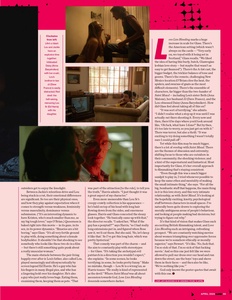
New Still
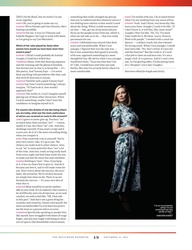
Click on scans for a readable view and still for full view.
Scans thanks to Gossipgyal | Still Empire

Click on scans for a readable view and still for full view.
Scans thanks to Gossipgyal | Still Empire
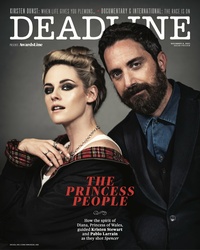
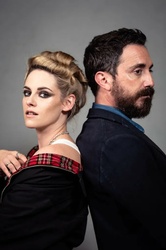


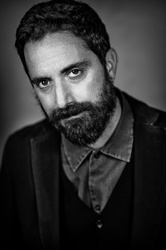
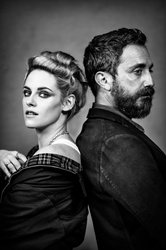

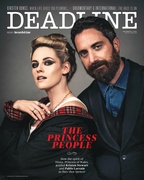
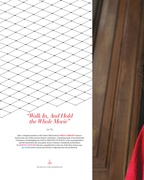
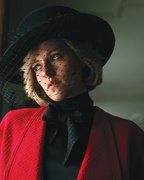
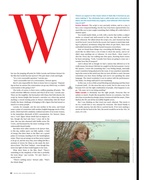
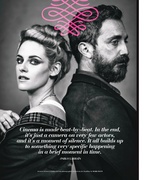
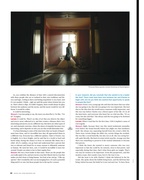
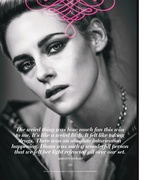
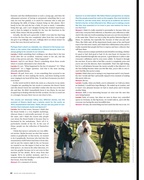
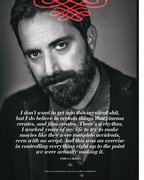
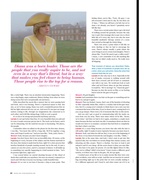
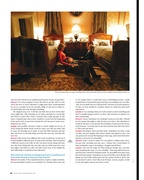
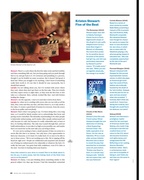
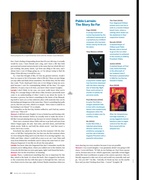

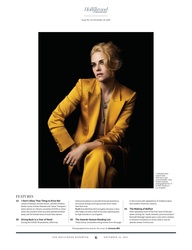
After a charged premiere at the Venice Film Festival, Pablo Larraín’s Spencer has become one of this season’s hottest contenders. A haunting study of one particular Christmas at Sandringham for Diana, Princess of Wales, as her marriage falters and the Royal fairytale turns grim, Spencer features a landmark performance by Kristen Stewart that has catapulted her to the top of the Best Actress race. Joe Utichi meets Larraín and Stewart to dig deep into the production.
What was the jumping-off point for Pablo Larraín and Kristen Stewart for the film that would become Spencer? The pair share a look and laugh.
“It’s a very reasonable question,” Larraín says.
“And a reasonable start of a conversation,” Stewart agrees.
'Spencer' Director Pablo Larraín And Writer Steven Knight Mixed Fact With Fable To Explore An Unknowable Princess Diana - Contenders New York
But it’s also impossible for them to know how to respond. “Depending on how we answer the conversation can go any which way, so which conversation is this going to be?”
The truth, of course, is there were a million jumping-off points. “We could articulate different versions and they’d all be true,” Larraín says. There are the tangibles: the fascination with Diana that both shared, the script by Steven Knight that focused a narrative on a three-day period marking a crucial turning point in Diana’s relationship with the Royal Family, the sheer challenge of bringing to life a figure that had meant so much to so many people.
Larraín, for example, saw his own mother in the story, and found some a point of connection with another English-language movie of his, Jackie, which had told a similarly confined narrative of an iconic woman, in the immediate aftermath of JFK’s assassination. For Stewart, Diana was a “cool” figure whose death had an impact on her, though she had only been 7 years old at the time. She was also obsessed with Netflix series The Crown, and fascinated by the inner workings of the unknowable Royal Family.
But there were other reasons to do Spencer that, to this day, neither party can fully explain. A kind of energy that drew them to the film’s set—a grand palace in Germany standing in for the Sandringham estate. There was an energy on set they never wanted to let go of, and the story they were telling felt like a moment of victory for Diana as she made the decision to leave “The Firm” behind… even though they never lost sight of what would happen to her next.
What drew them to the film, then? “There’s something in the simplicity of this that is probably the most deep,” says Larraín. “It’s just: there’s a movie in her.”
“There’s nothing more,” Stewart adds. “That’s the whole thing.”
DEADLINE: There’s an aspect to this movie where it feels like it formed as you were making it. You obviously had a solid script and a structure in place, but the movie feels very organic, even ethereal. Did it feel that way on set?
KRISTEN STEWART: The script is very precisely written, and in a way, it has a very composed feeling, but the way it has been captured feels very much like you’ve just caught something that’s falling off a table before it shatters apart.
You would maybe think, as well, with a movie that tackles a subject matter as coveted and well-covered as this one, that there would be more rehearsal. We talked about the script a lot, and I learned my lines word-for-word. I never lived in the accent, but I spent so much time making it a physical, involuntary thing that when we got there, there were embedded intentions and little buried treasures everywhere.
How we found these things was: everything felt fleeting. It felt very much like we didn’t have a ton of time to shoot the movie, and so we didn’t map anything out or rehearse. Or even block… there wasn’t a shot list. Every day was walking into that space, knowing those scenes by heart and going, “Gosh, I wonder how these are going to come out. I wonder how they’ll unspool.”
And it always felt as though we had a unison that allowed us to be really messy, but always I felt that we caught it at the last moment. I never felt unseen. I never felt something that I was feeling deeply, internally wasn’t somehow being physical in the room. It was somehow materializing in the room in this weird way that we were all able to catch. Because sometimes you have those feelings and you’re not speaking the same language. The visual vocabulary is not in unison with the performance. You think, I’m doing stuff and it’s not translating.
In this case, to do so little actual blocking and planning and then have it present itself… it’s the most fun way to work, but it’s also scary to do because if it’s not the right combination of people, what happens is you go, “Oh, man, we’re not doing anything.”
PABLO LARRAÍN: It absolutely was the right people. Everyone that we admire so much. People like Jacqueline Durran on costumes, Guy Hendrix Dyas on production design, Jonny Greenwood with the music, Claire Mathon the DP, and all the incredible English actors.
But I was thinking on that word you used: ethereal. This movie is set in a world that is very unusual for everyone. The Royal Family is not reality anyway, but also this is a period movie. If we were making a movie set this far back in the ’80s, the movie would be set in the ’50s. 30 years, it’s a lot.
So, you combine the distance of time with a natural disconnection with these people who are so isolated in their own traditions and history and logic. Getting in there and feeling empathetic is very hard. And it’s not needed, I think… right up until the point where Kristen lets you in. That’s where it flips. If it didn’t happen, there would always be glass between the audience and the movie, and the movie would be very different. It would be colder.
It could be interesting…
STEWART: I was just going to say, the more you describe it, I’m like, “I’m in!” [Laughs].
LARRAÍN: It could be. There’s an idea of art that you observe the object and you’re never reflected in it, and that creates a distance that’s very interesting and moves you in a different way. But there are other types of art, and cinematic exercises, where the dance of empathy becomes very interesting, and it depends on who you are that would determine that.
I’ve been listening to some of the interviews that our heads of department have done, and it’s incredible how they all approached Diana in a different way. Everyone has a different opinion. Claire is French, Guy is English. So is Steve Knight, and he said that in a world so hard and harsh today, having the chance to focus on someone like Diana was a relief. All of a sudden, you go back and understand that a person that was so relevant and famed for so many reasons is ultimately someone so human. We need her here, now. It would be incredible to have her around. People can relate to her in their regular lives.
STEWART: She was a born leader in that sense. Those are the people that you really aspire to be, and not even in a way that’s literal, but in a way that makes you feel closer to being human. You look at her and go, “I like my species.” She’s wonderful, she’s an encouraging force. It’s such a powerful thing and it’s so rare, but those people rise to the top for a reason.
DEADLINE: In your research, did you conclude that she wanted to be a leader like that? There must have been love between her and Charles to begin with, but do you think she wanted that opportunity to speak to people like that?
STEWART: From a very young age she said that she knew that was what she was going to do; that she was going to be very important. She tied that to the idea that she would marry someone really important, and this was way before Charles was a literal aspect of her life. It’s in all the interviews, and everyone who knew her as a kid was like, “It’s so crazy, but she said that.” She always said she was going to be destined for something bigger.
LARRAÍN: When I read that for the first time, I felt it implied a sense of real tragedy.
STEWART: Right, because there was this weird isolationist mentality even before she found herself; before her plight was that loneliness itself. She always was separating herself from the crowd a little bit. There were certain things she didn’t do, certain things she avoided. She was like a social butterfly, but also not at all. She was saving herself, quite literally. She knew in some weird, psychic, strange way that there was something to preserve if she wanted ultimately to become that person.
I think she knew she wanted to marry someone who was very important so that she could be, by osmosis, close to that power. And especially during that time, that’s what those girls are taught. That’s one way for women to be important. From this perspective, and this modern scope, that sounds crazy, but it’s the way it was.
Did she want to be with Charles? I think she believed in the fairytale. She spoke about the bubble being burst, and the fall from that being violent because the belief in it was real and true. To have those fantasies and that disillusionment at such a young age, and then the subsequent pressure of having to perpetuate something that is not only not true but painful, is so much for someone who is only just developing the skills of being a human being on this planet. She’s barely in her 20s and she has a baby. It’s just so much. I remember being that age, and I can’t imagine having that stunted experience, and to then be judged so harshly for the way she functions in the world. What chance did she possibly have?
Actually, she did such a great job. It didn’t even take her that long to revive the love that was completely taken from her, even though she gave it up willingly. But sure, willingly did it on whose terms? On terms that were farcical and not real.
DEADLINE: Perhaps that’s what’s so relatable, too. Inherent in the human condition is the notion that satisfaction is illusive because there are always going to be caveats to our dreams.
LARRAÍN: I think something that’s striking to me about that is her last words after the car accident. Someone comes to her aid, and she looks at that person and asks, “What happened?”
STEWART: And it’s not literal. There’s something about those words where it sounds referential to her whole life.
LARRAÍN: It’s not, “What happened in the last 10 minutes?” It’s “What happened?” It’s a bigger question. And that is the most moving, absurdly painful destiny.
STEWART: Oh god. Even now… it was something that occurred to me so often while we were making the movie, and those fucking words were ringing in my head all the time. To ask that of someone you don’t even know.
In this weird world in which she exists as a character in my mind, I imagine her speaking her last words to someone she doesn’t know and who doesn’t know her and didn’t realize who she was at the time she said that. He didn’t immediately know it was Diana, he was just wrapped up in dealing with this horrific accident. For her to reach out to a stranger, because there was no one close to her…
DEADLINE: The movies are obviously telling very different stories, but the moment of Diana’s death was a seismic event for the world, as JFK’s assassination had been. Pablo, did you see any point of connection there between Jackie and Spencer?
LARRAÍN: Not in that sense, because I think that the Royal Family is a very English mythology, whereas Diana is universally personal. It’s not the same, and I think the reason why people care about the Royal Family is because they’re fascinated by the melodrama. That’s all it is, particularly outside of the UK. In the case of Diana, people see the reflection of themselves on her.
I think that Spencer and Jackie are very different movies. Maybe because we shot that assassination so graphically—in that movie, we wanted to do it graphically. Everyone who had shot the assassination of JFK before had done it from afar, and we put the camera right in the car because we wanted to see the impact it had on her. But with Spencer, we went in the other direction. It’s way less graphic because we’re not even in that moment [of her death]. We’re away from that tragedy. We’re in another moment, and it’s a moment where she’s deciding to walk away from that house, from that family.
STEWART: It’s a moment of victory.
DEADLINE: Spencer is so internalized. We follow Diana’s perspective so closely that the people around her exist on the margins. She must decide to let them in, and she rarely does. And yet as an audience we need to feel let in by her, to feel reflected in her. When you’re making a movie like this, how essential is it to trust in your own instinct for how to toe that line?
STEWART: I think it’s really essential to personalize it, because what you said is key: everyone feels reflected, so therefore your reflection is valid. And it’s the only one worth examining, because you can’t do everybody’s at the same time. There’s no way to play the perfect historical figure of Diana. Or anybody, but especially her, because of what you just said. Then, like Pablo said, all the department heads came at her and found ways to her that were varied, and I think that collaboration is key and it’s totally essential that people feel free to express and have a director that will hear them.
When a movie is unique and feels in and of itself its own thing, whether it’s good or bad—fuck good or bad, it’s its own beast—it’s because it is always funneled through this one person. A good director is able to take everyone’s selfishness and be even more selfish. To funnel it through his own lens. If you’re able to feel like a movie is completely yours and you’re not even the director, that’s remarkable. That’s the right feeling, but it’s a self-delusion because the movie actually is that director’s. It’s the best feeling because when you feel like that, you’re able to own it. And I feel like this movie is mine.
LARRAÍN: I think what you’re saying is very important and it’s very beautiful, but I would add that I personally enjoyed every moment of making this movie with you.
STEWART: Me too.
LARRAÍN: Usually, when you finish, you’re exhausted. As I told you when we finished, I would have kept filming it. We ended up in London, and it wasn’t very pleasant because we had so much press and it became another thing.
STEWART: Well, it was interesting because we were now the ones that were being hunted.
LARRAÍN: Yeah, of course, but when we were in those very controlled spaces in Germany, in this big house, we would walk in, and it felt like everyone was having the most incredible time.
STEWART: Oh man, the weird thing was how much fun this was to me. It’s like a weird high. There was an absolute intoxication happening. There was a slap-happy, super exuberant, fluttery feeling. Even when we were doing scenes that were exceptionally sad and heavy.
Pablo described the movie like a meteor that we were passing back and forth, and it was burning. There’s a hysterical nature to that. But also, as we’ve been saying, Diana was such a wonderful person that we felt her light refracted all over our set. And even if it was just our imaginations coming to life, through our imaginations she connected us to each other, and it felt like taking drugs. It felt so cool, so good.
It’s so fun to be strong and powerful and funny and sexy.
LARRAÍN: It can’t get better than that. It’s very beautiful what you said and it’s true; it made everyone put joy into it. The work can be heavy, and it can be exhausting, but the material was just so fascinating. The places, the people.
I remember when we talked on the phone for the first time, Kristen, I was like, “You know this will be a long ride. We’ll be together a long time, and I hope it works out.” And you were like, “Yeah, yeah, I know…”
STEWART: Yeah, because you don’t know [laughs].
LARRAÍN: You don’t know. But it was an incredible time. Of course, at the beginning it’s scary, because of the subject and the human materials in the story. But cinema is made beat-by-beat, right? It’s a slow process that involves hundreds of people running around, but in the end, it’s just a camera on very few actors, and it’s a moment of silence. It all builds up to something very specific happening in a brief moment in time. “Let’s be present right here, right now.”
I was scared before we started shooting because of this wheel of desire that could take you anywhere, but once we started, I enjoyed it so much and I felt that everyone was having a really beautiful time.
STEWART: It’s so rare to not have it become a slog at some point. That feeling where you’re like, “Fuck, OK guys, I can tell everyone’s tired and it’s day 28, but there are 37 days…” Where we still have a lot left, but we’ve done a lot already, you know? I genuinely never felt like that.
There was a certain point where I got a bit tired of walking around the grounds, because the only way to give that montage shot scope was to shoot little bits of it every day, but it was also the most beautiful meditative therapy session of a scene that carried us through the whole thing.
There was never a point where it felt like we were slacking or that we had to encourage the crew. There’s always usually a point where the actor brings in an ice cream truck [laughs]. There’s always like, “Fuck! We need to get a coffee truck!” I mean, I can’t remember if we did anything like that, but we didn’t really need to. We really were all skipping.
DEADLINE: That moment of silence you described, Pablo, after a team of hundreds of people have set up a shot, when you call action. Describe what that moment feels like for you.
LARRAÍN: It’s the only way to do it. Especially in the era of masks, everyone is walking around with their faces covered, and all I’d have to communicate with is my eyes. We would just look at each other and we’d know when we got that moment. It would be, “We’re moving!” Or, “Check the gate!” Because we shot the movie on film, so we fucking had to wait for the gate to be good.
STEWART: Oh god [laughs].
LARRAÍN: And sometimes there was hair on the gate or something and we had to try and get it again.
STEWART: That was fucked. I mean, that’s one of the beauties of shooting on film—especially 16mm film, which is a trickier hair-in-the-gate situation. But it’s a young actor’s mistake to think there’s not a new way into a moment that most of the time, if you’ve done it once, coming back to it you can go deeper. There were a lot of moments like that on this movie.
And you and I got so good at communicating with the masks on, even from very far away. There were times where I’d be like, “Boom, we’re done,” and then we had to do it again, sometimes a couple more times because the first one back was shit. It sometimes threw me that we would ever have to re-examine a moment that had lived so completely. But that’s what’s cool also.
LARRAÍN: It’s a crazy thing because you know that take with the hair is still usable, right? It makes it more expensive because you must clean it.
STEWART: Yeah, and when he told me that, it was not at the beginning of the shoot. It was kind of towards the end [laughs]. I was like, “Ohhh…”
LARRAÍN: But at the same time—and look, I don’t want to get into this mystical shit, but I do believe in certain things that cinema creates, and [shooting on] film creates. There’s a rhythm. You have to load it and unload it and it’s not cheap. All the actors know it when you start filming. You have to be quiet, be precise. It’s not like digital where it’s like, “Oh, you’re rolling? I didn’t even know.” It just creates a different, good tension, so if there was a hair in the gate, OK, let’s go again.
I worked years of my life to try to make movies like they were complete accidents, even with no script. And this was an exercise in controlling everything right up to the point that we were actually making it. It’s a different approach and I loved it, and what comes out of it is an exercise that is all the more sophisticated because of how you got there.
STEWART: I’ve never prepped a movie like this in my life, and I’ve also never felt freer or more unbound. It might have been counterintuitive for me as a younger actor, but actually, oddly, it’s the way to really act. It’s the fucking way to fly through something.
We chipped away at it. It felt like one little foot in front of the other every single day. I like shooting out of order, especially in a movie like this where it wasn’t like I had to contend with a huge age gap. In this sense, I enjoyed days where there would be a scene from the beginning of the movie and a scene from towards the end, because it made everything feel very close.
LARRAÍN: And possible. Because it takes so much weight out of you. If you’re doing the whole movie scene by scene, you only see what’s still to come. By shooting out of order, it’s just this little moment. Just this idea. Just focus on the little thing, and then the next one, and then the next one.
STEWART: Who knows how different the movie would have wound up if we had shuffled a different deck of cards in the schedule. Had we just had a different reason to do it like we did. You learn certain things and then you take those things into the next day, and you build upon the scene that might come before or after. You don’t know how, if you shuffle the deck differently, it would have been informed.
DEADLINE: Were there ever moments of wanting to go back to something you’d done earlier because of what you’d later learned?
STEWART: Not really. To be completely honest, maybe a couple moments, but my immediate reaction to you asking is no. Perhaps there were one or two things where I would have been overthinking because I really wanted them to land and be good, but there was nothing I was ever like, “Hey, do you think that we could go back?” Because if we had needed to do that, we were usually in a position where we could have gone back and done it.
LARRAÍN: It is so amazing when you work so hard around something and then it actually happens and it’s so short. That moment of capture is so short and fleeting.
STEWART: I know. Sometimes we would get it and you were like, “Should we do it again? We might as well, because we’re here.” But oftentimes it would be the first or second take that probably wound up in the movie, and it became, “Let’s just taste it one more time because after that, that’s it. This is the last meal.”
LARRAÍN: The thing is, this is just like music. Sometimes you hear a song you like, and you imagine that person maybe only played it once. You can spend years of your life listening to that song, and it took them three minutes to record it. It’s incredible.
STEWART: Yeah, it doesn’t matter if it was played a million times since, because that recording was just once. I always have visual flashes of them writing the song or recording it. I imagine myself there.
LARRAÍN: I just saw the trailer for Peter Jackson’s Beatles doc, and they were preparing the song “I’ve Got a Feeling”. That song will last forever, and how they created it is fucking cosmic. It’s incredible how time is just this weird perception. Sometimes on set you feel like you’re flirting with things you don’t fully understand, but the capture of that is short, and it’s nice that it’s short. I don’t like to do 50 takes. At most, maybe, we did 12, but the regular amount was three or four.
STEWART: There’s a cycle where the first few takes work and feel truthful, and then something falls out, but you keep going and you push through that to try and get back to it. It’s torturous and punishing as a process, though it can be fruitful on some occasions. But it doesn’t feel good, it feels bad. When you struggle to do anything, I don’t know if something really feels worth it. It’s not that it should be easy necessarily, but it should feel natural.
LARRAÍN: I’m not talking about you, but I’ve worked with actors where they wait, where they don’t get there on the first take. They do it slowly and they expect seven or eight takes, so they treat the first four or five takes as a rehearsal. Here, nobody worked like that. And with Kristen leading the charge…
STEWART: I do the opposite. I start at 11 and take it down from there.
LARRAÍN: So, when we’re working with actors who are not with us all the time, they come and they see that, and they honor it, so it only needs a few takes. It creates a good kind of tension in everyone, from the actors to the focus puller and everybody.
STEWART: That’s what I was going to say. I’ve been doing this a very long time, so it would be falsely modest not to acknowledge that focus and pacing can be controlled. The absurdity of pretending to be other people is inherently embarrassing, and it makes other people embarrassed not only because it’s odd, but because it’s really vulnerable and, at least at first, it’s fucking ridiculous. The only way to push through that, and not build awkwardness, is you take it as high as you possibly can, and maybe that’s too much but on the next take you can bring it down.
It’s very nerve-racking to have a small amount of time on screen in a movie like this that is so intense. You only have a few opportunities to find your character, so it’s hard. It’s really hard. It’s so nice to be able to say to those actors, “We’re not working up to this. We’re ripping off the Band-Air right now.” People are exhilarated and surprised and shocked out of being too embarrassed to be vulnerable or whatever the fuck. It’s really the best part. You gotta lead with confidence, even if it’s false at the start. You have to fucking stick your head in.
DEADLINE: Does that extend to your drive to create? Not to be bleak about it, but do you, in some sense, feel the ticking clock of the finite time you’re on the planet?
STEWART: It’s funny, I was just thinking about something similar to this general subject two days ago because I had this immediate existential fear. I had a feeling of impending doom that if it ever did stop, it actually would be scary. I have friends and a dog, and I have a life that feels personal and normal and provincial, in the sense that my whole life isn’t just working. But pretty much, I go from one thing to the next, and I always have a ton of things going on, or I’m always trying to find the thing. If that did stop, it would be scary.
So, I had that thought of like, If I lost my greatest interest, would I have no reason to be? It becomes: what is life for? These are just things you sip coffee and think about sometimes. Not all the time, but the other day I said, “Fuck, thank god I have one or two things to keep me occupied because I can’t be contemplating infinity all the time.” It’s super addictive. It’s just a way to be here, you know what I mean? [Laughs].
LARRAÍN: I don’t think, in my case, you never really know what you’re doing. It’s a strange thing to talk about a film, because I personally must come to an understanding of what I want to say about the movie. It becomes a process, but there’s something in the desire of the filmmaking itself to meet you at that unknown place with materials that can be fascinating and dangerous at the same time. There’s something that pulls you in, that lets you exist, which is so simple. “How come it could be so fascinating to see Diana?” It’s so simple.
I remember on the first day, Kristen walked in, and I had my camera and it was: “This is it!”
STEWART: It did feel crazy [laughs]. It was so fucked up and freezing cold, but before that moment—before we actually went to make the movie—I felt like I was just playing dress-up, because we weren’t doing the scenes.
There was a moment where Pablo told me to go back and start from where I began again. He said, “Just relax, and slow down, and hold the whole movie. Walk in, and hold the whole movie.” And that wasn’t a scene, but it was a scene.
Everybody has asked me what was the first moment I felt the character, or felt like I had gotten her, but that was the first moment where we were doing the thing and it was the three of us moving together—me, Pablo and Claire—where I could tell as soon as we cut. I saw Claire pull away from behind the viewfinder and it’s always the same look of: something just happened. It was like we all saw the same ghost.
LARRAÍN: You know what also happened that day? I remember exactly the moment you’re talking about, where you walked over to the window, but it was also the first time we were quiet again, right? And I heard the heels…
STEWART: Yes! On the wood floor. So haunting.
LARRAÍN: There, I understood something that was so important for this film, which is the heels. It’s about the heels. She’s trapped to the heels, so the connection she has with that space is through her feet. And you wore them even in close-ups, right, Kristen? Maybe sometimes when you were dancing you wore sneakers because it was not possible.
STEWART: I was scared [laughs]. I was genuinely afraid I was going to fall down. I even told them, “If I fall, do not fucking cut. Don’t have anyone run in, because men on set—which I appreciate, especially certain bigger dudes like stunt coordinators or grips or the camera operators—they are literally supposed to take care of you and would very naturally rush and go, “Are you OK?” I’m like, “Literally, if I break my face on the marble floor and you don’t fucking shoot that… I swear!” [Laughs].
-----
You can download this Deadline digital issue here.








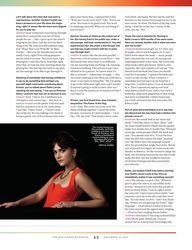
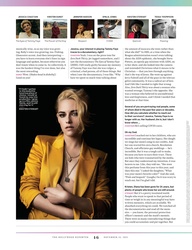
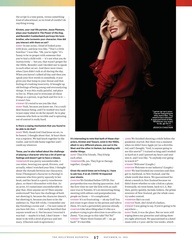
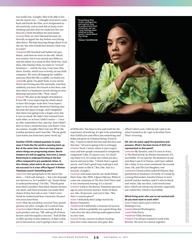
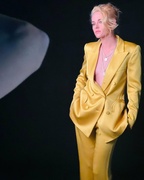
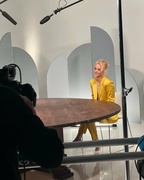
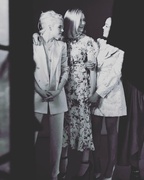
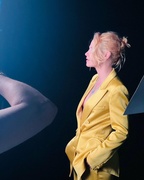
Click on images for full view.
Full Roundtable Video
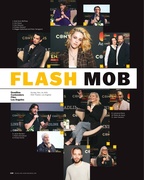
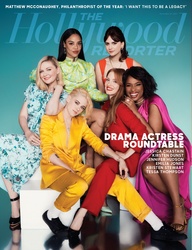
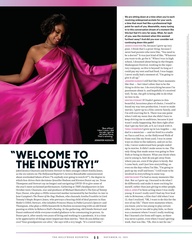
“Welcome to the industry!” joked Jessica Chastain and Kristen Stewart to their younger cohort Emilia Jones as this year’s six participants on The Hollywood Reporter’s Actress Roundtable commiserated about overlooked labors of love (“Is anybody ever going to watch it?”), the degree to which fear drives their decisions (Jennifer Hudson and Kirsten Dunst say no, Tessa Thompson and Stewart say no longer) and navigating COVID-19 to give some of the year’s most acclaimed performances.
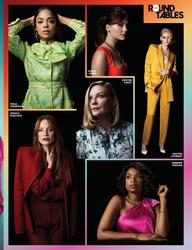
Convening at THR‘s headquarters in late October were: Chastain, star and producer of Michael Showalter’s The Eyes of Tammy Faye, in which she resurrects the infamous televangelist Tammy Faye Bakker; Dunst, who brings to life a 1920s remarried mother tormented by her brother-in-law in Jane Campion’s The Power of the Dog; Hudson, who channels Aretha Franklin in Liesl Tommy’s biopic Respect; Jones, who portrays a hearing child of deaf parents in Sian Heder’s CODA; Stewart, who inhabits Princess Diana in Pablo Larraín’s Spencer; and Thompson, who plays a 1920s Harlem housewife reconnecting with an old friend passing as white in Rebecca Hall’s Passing.
At the gathering, old friends Stewart and Dunst embraced while everyone exuded gladness to be communing in person. As Dunst put it, after nearly two years of living and working in a pandemic, it is a time to be appreciative of things more important than movies. “How do you define success? Your grandparents are alive,” she says with a wry laugh. “It’s a weird time.”
We are sitting down at a time when you’re each receiving widespread acclaim for your work, a time that must feel like a professional high point for each of you. Meanwhile, many tuning in to this conversation dream of a moment like this but feel it’s very far away. What, for each of you, was the moment when this seemed furthest away? And did you ever consider not continuing down this path?
JESSICA CHASTAIN No, because I grew up very poor. I think that’s a great thing, because I never had parents who were like, “You need to be a doctor!” It was just kind of like, “Whatever you want to do, go for it.” When I was in high school, I dreamed about being in the Oregon Shakespeare Festival, working in the repertory company, so this is beyond! As long as I could pay my rent and had food, I was happy. I never really had a moment of, “I’m going to give it all up.”
JENNIFER HUDSON I still feel like I have moments like that — but I don’t allow that to be the thing to drive me. I do everything because I’m passionate about it, and hopefully it’s received well. To me, the gift is being able to do what we love to do.
KRISTEN STEWART If I hadn’t gotten to this beautiful, luxurious place of choice, I would’ve found my way into production. I want to make movies. I grew up in a film-centric family, and I’m still starving for it. There was one point when I told my mom that she didn’t have to keep driving me to auditions, because it just wasn’t really happening. But then right after that I got my first job, at 9, so I stuck with it.
TESSA THOMPSON I grew up in Los Angeles — my dad is a musician — and we lived in a studio on Yucca and Ivar, so the Hollywood Walk of Fame was like my front yard. I was in some ways so close to the industry, and yet so far. Like, I never understood how people ended up in movies. It didn’t make sense to me. The only thing that made sense was going to New York or being in theater. What you think when you’re young is, how do you get away from where you are, even if the place is lovely. But I came back, and I just love storytelling, so even on the days when I’m like, “I’m going to pack up my stuff and leave,” I still want to be involved in storytelling in some way.
KIRSTEN DUNST I’ve had so many moments like that. But as I grew up, I learned to do what I do differently and make it more exciting for myself, rather than just giving to other people.
EMILIA JONES I’ve been acting since I was really young. It wasn’t really until I had my first lead role in Brimstone, a film that I did when I was 13, that I realized, “OK, I want to do this for the rest of my life.” There were moments where, you know, you’re too young to play certain roles, but you’re too old to play kids, so there was a moment where I wasn’t really working. But I learned a lot from self-tapes, so there was never a point, even when I wasn’t getting work, that was like, “Oh, this is not for me.”
Let’s talk about the roles that everyone is representing. Jennifer, Aretha Franklin has been a presence in your life since the beginning, right? It seems like the stars were aligned for you to play her.
HUDSON I seem to discover everything through music first, and Aretha was one of those people for me — like, I grew up in the church singing in the choir, and she was the ideal thing to be. My American Idol audition song was “Share Your Love With Me” by Miss Aretha — that was my introduction to the world. Crazy, right? Everything prepares you for what’s to come. Two years later, I got Dreamgirls. I won the Oscar. And then right after that, we had our first meeting about me playing her. Her having that faith in me gave me the courage to be able to get through it.
Speaking of somebody else having confidence in you to do something that perhaps you yourself might need some convincing about, Kristen, you’ve talked about Pablo Larraín reaching out and saying, “I see you as Princess Diana,” and how that was not as obvious to you.
STEWART Yeah. I mean, his confidence was contagious and reassuring — but then as soon as I wasn’t on the phone with him and had five minutes to sit in my room alone, I was like, “I don’t know …” I hadn’t read the script yet. He was talking a lot about it being a poetic sort of fever dream that takes place over three days. I approached it like, “Who am I to say no to this?” Like, “You’re an actor. You want to do good stuff. You want to challenge yourself. What are you doing if you retreat?”
Spencer focuses on Diana as she comes out of her 20s having lived in the public eye, under a microscope, and been tormented by it. You also experienced your 20s under a microscope. Did you feel you could connect with her in some way through that?
STEWART It seems like the clearest parallel — there were a lot of cameras in our lives — but the reason they were there is so different. I’m not running from anything; I’m running toward everything. This person wasn’t even allowed to be a person. So I know what it’s like to assume — sometimes wrongly — that everyone’s looking at you when you walk into a room. I can relate to being like, “Oh, I’m going to go to the bathroom right now, and I wonder if anyone’s going to walk in there after me.” But it’s only the small sort of weird stuff that I can relate to.
Kirsten, you first heard from Jane Campion long before The Power of the Dog.
DUNST Yeah. She wrote me in my early 20s about working together. I saved the letter because, you know, it’s Jane Campion — I was like, “Oh, my God.” That project never came to fruition, obviously. But her movies and her heroines in her movies have inspired me in my own career. So when The Power of the Dog came along, I read the script, but, I mean, if she calls, you say, “Yes.”
Tessa, the source material for Passing is Nella Larsen’s 1929 novella of the same name. Were you already familiar with it when you were sent the script?
THOMPSON Embarrassingly, no. It’s slim, just 93 pages, and so much happens in it, but I didn’t know about the book — many people don’t, because she was sort of unsung and underappreciated in her time. She wrote one other book called Quicksand, which is also exquisite. But I got a phone call saying, “You should read the book and then you should read the screenplay.” I opened the book and read it in one sitting. When I closed it, I remember just having it in my hand for a long time. I couldn’t move, I was so haunted by it. Then I opened my laptop and read what Rebecca Hall wrote, and it was such a beautiful, dedicated adaptation of this thing that feels unadaptable. I didn’t know how you could communicate that onscreen, but Rebecca did.
Part of what attracted Rebecca to it was that she discovered she may have had a relative who passed, correct?
THOMPSON She would look at her mom and think, “I feel like there’s a there, there,” and her mom would kind of allude that her grandfather was maybe this or maybe that. Thirteen years ago, someone gave [Hall] the book and said, “You should read this.” It was the first time she had this context for what “passing” was. She didn’t have the language around what her grandfather might have done. But he sort of passed this legacy on to her mom and thereby to Rebecca. So she started to adapt the book, not thinking necessarily that she would make the film, but she needed to exorcise all of these feelings and ideas around her own identity.
Emilia, you landed CODA even before starting your Netflix series Locke & Key. Did you immediately realize it was something special?
JONES The minute I read it, I felt, “Whoever gets to play this role is an incredibly lucky actress,” because it’s not every day you get to learn so many skills. I was in a Q&A yesterday and said, “I got to learn three skills,” and someone came up to me after and they were like, “It’s not three, it’s five.” And I was thinking, “Where are you getting five from?” Sign language — I had always wanted to learn it, but I just never had the opportunity. Singing — I’d never had a singing lesson before …
THOMPSON You hadn’t?! You sing so beautifully!
JONES Oh my gosh, thank you. I was so scared, but we kind of shot chronologically, musically-wise, so as my voice was growing, Ruby’s voice was growing, too. Fishing. Gloucester accent. And then interpreting — you have to learn everyone else’s lines in sign language and spoken, because otherwise you don’t know when to come in. So collectively, it was the hardest thing I’ve ever done, but also the most rewarding.
DUNST Wow. (Shakes head in disbelief.) Good on you!
Jessica, your interest in playing Tammy Faye traces to a documentary, right?
CHASTAIN Yeah. I was on the press tour for Zero Dark Thirty, jet-lagged somewhere, and I saw the documentary The Eyes of Tammy Faye [2000]. I felt really guilty because my memory of Tammy Faye was that she was vulgar, a criminal, a bad person, all of these things. But when I saw the documentary, I was like, “Why have we spent so much time talking about the amount of mascara she wore rather than what she did?” In 1985, at a time when the Reagan administration wasn’t even talking about the AIDS epidemic, she brought Steve Pieters, an openly gay minister with AIDS, on to her show, and she looked into the camera and reminded Christians what it means to be Christian — that you love through anything, that’s the way of Jesus. She went up against Jerry Falwell and all of the guys in the televangelist community. It was a radical act of love. And I felt like I needed to right that wrong. Also, Zero Dark Thirty was about a woman who wanted revenge; Tammy’s the opposite. She was a woman who believed in unconditional love and forgiveness, and I think I needed that medicine at that time.
Several of you are portraying real people, some of whom died in the past few years or decades. How did you calculate whether to reach out to their survivors? Jessica, Tammy Faye is no longer with us. Her husband Jim is, but I don’t know where …
CHASTAIN He’s selling COVID cures.
Oh my God.
CHASTAIN I reached out to her children, who are incredible and continue her legacy. Her daughter sings her mom’s song in our credits. And her son started his own church, Revolution Church, and officiates gay weddings — he’s incredible. But it was a tough call to make, because you have to earn their trust. These are kids who were traumatized by the media. But once they understood my intention, it was heaven to me. Like, they told me, “She wore this perfume from this year to this year, and then this one.” I asked the daughter, “What was your mom’s favorite color?” And she said, “Pink and leopard.” (Laughs.) So it was scary to reach out, but I’m glad I did.
Kristen, Diana has been gone for 24 years, but plenty of people who knew her are still around.
STEWART But it’s a pretty insulated world. People who want to speak to that period of time or weigh in in any meaningful way have written memoirs, which are available. We absorbed everything we could. We watched all the documentaries and read all the memoirs — you know, the personal protection officer’s memoir and the maid’s memoir. There were so many contradicting things that you could accumulate and put together. But the script is a tone poem, versus something kind of educational, so we kind of couldn’t do anything wrong.
Kirsten, your real-life partner, Jesse Plemons, plays your husband in The Power of the Dog, and Benedict Cumberbatch portrays his toxic brother, who torments your character. How did you interact with them on set?
DUNST In one scene, I kind of linked arms with Jesse, and Jane was like, “That’s a little familiar.” I was like, “Oh, you’re right.” It’s funny to be so proper with someone that you’ve had a child with — it’s not what you do instinctively — but yes, that wasn’t proper for the 1920s. Benedict and I decided not to speak to each other on set. And there were times when I just didn’t talk at all during the day. When you haven’t talked all day and then you speak your first words to somebody, it just gives you that lump in your throat and that feeling of crushing insecurity. It brought up old feelings of being young and overanalyzing things. It was this really painful, sad place to live in. When you’ve overcome all these things as a person, to go back and live in it — it wasn’t fun.
STEWART It’s weird to see you like that.
DUNST Yeah, because you know me. I’m a confident human being, and I’ve worked very hard to just enjoy what we do for myself. So to play someone who feels so terrible and is spinning out of control is really hard.
Is there a coping mechanism that you found to be able to do that?
DUNST Well, thank God I had Jesse on set, to be honest. I thought about that. At least there was a reprieve. We had lunch together in the trailer, and we’d ride home together and I could say whatever.
Tessa, you’ve also talked about the challenge of playing a character who has a lot of pent-up feelings and doesn’t get to have a release.
THOMPSON It was pretty uncomfortable. I can relate, hearing you speak, Kirsten, and actually, when I watched your film, I thought about the threads between our characters. Irene [Thompson’s character in Passing] is someone who lives pretty squarely in her head, and her head is a pretty treacherous place, so there’s discomfort with that. As an actor, it’s sometimes uncomfortable to play that. Does anyone see it? Does anyone understand? You have the challenge of both not showing it, because the character doesn’t, but showing it, because you have to let the audience in. That felt tricky. I remember one day finishing a scene and — I’m sure some of you have felt this — I felt really horrified that anyone would see it. Not because I worried it was bad — maybe it is bad, I don’t know — but more to do with a level of privacy and intimacy. (Chastain nods in agreement.)
It’s interesting to note that both of these characters, Kirsten and Tessa’s, exist in the 1920s, albeit in very different places, one out in the West and the other in Harlem, but dealing with similar things.
DUNST They’d be friends. They’d help each other.
THOMPSON Oh, yes. They’d go to therapy together. (Laughs.)
Given the weird times we’re living in, I have to ask how, if at all, COVID-19 impacted your shoots.
CHASTAIN We finished before COVID. Our postproduction was during quarantine. And the first time we saw the film with an audience was in Toronto. It’s an interesting thing, meeting with editors and postproduction people on Zoom — it’s complicated.
STEWART It’s so frustrating — oh my God! You just want to get closer to the person and talk to them. It’s such a persnickety process already.
CHASTAIN Like (describing what it’s like as a producer trying to give directions to an editor via Zoom), “Can you go to this take? No! No!”
STEWART “Shave three frames off — no, go back!” It’s horrible.
JONES We finished shooting a while before the pandemic started. But there was a moment when we didn’t have Apple yet [as a distributor] and I thought, “God, is anyone going to see this movie?” I trained so long and I worked so hard on it and I poured my heart and soul into it, and I was like, “Is anybody ever going to watch it?”
STEWART Welcome! (Laughs.)
CHASTAIN Welcome to our industry! (Laughs.)
DUNST We had finished our exteriors and then got to Auckland, in New Zealand, and the whole world shut down. We quarantined for about a month in New Zealand because we didn’t know whether to take a kid on a plane. Eventually, we went home, back to L.A. But then, pretty quickly, Jacinda Ardern, the prime minister of New Zealand, got the whole country under control.
THOMPSON She’s so cool.
CHASTAIN Yeah, she’s kind of a badass.
STEWART I was going to say, if you’re going to be anywhere …
DUNST Yeah, it was the place. But we were still wiping down our groceries and taking showers right afterward. We quarantined in a hotel room with a 2-year-old for two weeks, which was really fun. (Laughs.) But to be able to finish the movie was … I thought we’d never come back and finish the film, so it invigorated us all creatively, and we just felt so lucky to be working and also that we could just live our lives for a little bit before we went home.
HUDSON Well, we were blessed because we literally wrapped the day before everything shut down. We kept hearing things about it on the set, but who would have known what was to come?
THOMPSON We finished well before the pandemic, and then we were in the edit, which was remote, but it was mostly just Rebecca and the editor in a room in New York City. And then, like Emilia’s film, we went to “virtual” Sundance — and by the way, I saw your film there, Emilia, which was so lovely, on my little computer. We were all longing for cuddles, and your film felt like a cuddle, so thank you.
JONES Oh, good, I’m glad! Yeah, it was weird. You’re just living your life normally, and then suddenly you hear this knock at the door, and then there’s a Sundance award sitting on your doorstep and you’re like, “Wait, what?”
STEWART We shot at the height of lockdown. It was OK. I was expecting the whole shoot to have this larger-scale feel; I was expecting it to be a bit more theatrical-feeling, just because the space is huge, and I imagined that there was going to be a larger crew, but it was so small. We didn’t feel isolated from each other, or at least I didn’t notice — I was so, like, somewhere else, anyway. And I didn’t have to wear a mask because, you know, I was on camera. (Laughs.) But I saw our DP at the London premiere and I was like, “Oh my gosh! I just know you from here [nose-level] up.”
Another COVID-related question: In some ways it feels like the world is opening back up. But at the same time, there are many places where things are progressing slower. Movie theaters are still struggling. And even a James Bond movie is underperforming at the box office compared to pre-pandemic times. In this climate, what metric do you use to evaluate success? Is it a box office figure? A Rotten Tomatoes score? Something else?
CHASTAIN I love going back to the movie theaters — I feel safe doing it — but a lot of people are nervous to. So I wouldn’t say, “James Bond is underperforming”; I’m like, “Thank goodness there’s product that these theater owners can show, and then everyone can make their choice if they feel safe or not.” I don’t even think we understand how traumatic the past two years have been.
DUNST How do you define success? Your grandparents are alive. (Laughs.) It’s a weird time.
CHASTAIN I don’t think we can really look at each product and say, “OK, add up all of these factors and this equals a success.” And I’d like to offer up that in this industry, if that’s what you’re focused on, you’re going to have a lot of difficulty. You have to live and work for the experience of working. It’s got to be something that fulfills you and offers you something and helps you grow as a human being. If you’re like, “I need to check this box and this box and this box,” all you’re going to be is unhappy.
STEWART Yeah. I mean, when is your experience and how people consumed it completely congruent? Like, it’s pretty rare. It’s thrilling when it is. It’s really nice when you do a movie and you’re like, “I think that’s a good movie, and I had a good time making it and people seem to like it.” But, like, that is a miracle. (Laughs.)
CHASTAIN And some movies are made before their time, like 2001: A Space Odyssey. When it came out, someone at The New York Times said it was immensely boring. It’s a classic!
STEWART Look at the Rotten Tomatoes percentage on your favorite movies. Some of them are, like, 10 percent, and you’re like, “But that’s a masterpiece!”
DUNST I definitely don’t judge movies by Rotten Tomatoes.
THOMPSON It’s definitely a measure of success for me, which is probably not a good thing. But I also love the idea of being underappreciated in your time.
HUDSON To me, success is about creating your own value and your own goal. Box office? I don’t care. I did my job. I got to do what I wanted to do. I got to do what I love. That’s winning.
OK, let’s do some rapid-fire questions and answers. What’s the best movie of 2021 not represented on this panel?
CHASTAIN My favorite, and I’ve seen it twice, is The Hand of God, by [Paolo] Sorrentino. It’s incredible. It’s so special. He showed it to me and then I saw it in Venice, and I just sobbed like a baby. It was more emotional the second time. Oh, and The Lost Daughter, too!
THOMPSON I loved a film called El Planeta that premiered at Sundance virtually. It’s made by a young filmmaker, Amalia Ulman; it stars herself and her mother; and it’s also in black-and-white, like our film. I also loved some docs, which are always my favorite, especially one called Flee, which is incredible.
Which living actor who you’ve not worked with do you most want to work with?
DUNST I have such a girl crush on Penélope Cruz.
HUDSON Denzel Washington.
JONES Viola Davis.
THOMPSON Tilda Swinton.
STEWART I’ve always wanted to work with Kirsten. We were in a movie together [2012’s On the Road], but we weren’t in one scene together.
DUNST Oh, you’re going to make me cry.
STEWART We’re friends and I love Kirsten. She’s fucking incredible.
CHASTAIN For me, it was Liv Ullmann and Isabelle Huppert, but I got to work with them, so I’m going to say Cate Blanchett.
Which of the roles played by these other women here would you have been most interested to play?
STEWART I think I could probably do Aretha! (Laughs.) Could have killed that.
THOMPSON Diana, with that dancing sequence and the running and the physical freedom that Kristen has in that is so beautiful — it’s like poetry. And Tammy Faye — I’ve never done anything with prosthetics like that, and that level of charisma is insane.
CHASTAIN You’d be such a good Tammy Faye!
HUDSON Any time I watch something, I always imagine, “If I had to do it, how would I approach that?”
CHASTAIN The reality is, I can’t imagine myself playing any of these other characters. When I watch something, maybe I don’t have the confidence to imagine myself in it.
For anyone who dreams of one day being where you are today, what was the most useful piece of advice you received en route to this moment?
JONES I guess to never give up. You hear “no” so much more than you hear “yes” — I mean, maybe it’s me, but I hear “no” a lot. And also, challenge yourself. If you read a script and it scares you, do it; it’s the most rewarding thing when you conquer it.
DUNST Stay creatively true to yourself. You’re your own career. Like, it’s up to you. The choices you make lead to other choices. Also, to say “no” is more powerful than “yes” a lot of the time. And also, study acting really hard from every angle and find what works for you, to make you feel the most free and confident.
HUDSON Nothing is “just.” Also, if you keep at it, it has no choice but to give in. And do it because you love it, and it will make room for you. Don’t worry about the success, the accolades, the attention. We’re all here because we simply love what we do. There is no set formula for success — it’s your own idea of what that is.
CHASTAIN Mine would be to not be comfortable in your work. It’s an industry that creates a lot of difficulty and a lot of rejection, so we seek comfort, we seek to feel like, “OK, I feel safe in this part.” And that’s not a great thing for curiosity and creativity. I know with myself, the most uncomfortable I’ve ever been has grown me the most as a person and as an actor.
THOMPSON Specifically speaking to people that, like myself, have struggled with bouts of stage fright, and also just fright with being in these sort of spaces [the Roundtable conversation], something that really changed my perception was to understand that whatever nerves I was feeling were relative to how much I cared about the thing. When I could recontextualize that — like, get out of my head and just focus on the people across from me, which is what our job asks us to do — that was really paramount for me.
STEWART I definitely lean toward what feels scary and uncomfortable. When I was younger, I figured that was the only way — but it also sometimes feels good to actually, with ease, approach something in a more thoughtful way. My advice when I was younger would have been, “Lean into that fear! Use it!” Like, I would have said what you said, Emilia. But now I’m actually better when I’m more comfortable.
DUNST I’m totally with you. I’m so much better when I’m not working from any sense of fear.
STEWART Yeah. And I think, very basically, like, learn your lines. (Laughs.) I used to be like, “If I don’t know it, it will feel, like, more mine!” (Laughs.) Now I’m like, “No. Try. Try hard. Take credit for it. Be there. Learn. Process. Work with people.” I worked with a coach for Spencer — a dialect coach, but also a beautiful acting coach. When I was younger, I would have been like, “No, that’s weird. It’s just me and the director!” But the truth is, it’s such a fun job to chew on and lean into. It’s not a magic trick. It’s a process. And it’s such a fun one. As I’m getting older, I’m becoming more of a “thespian” every day! (Laughs.)

