
Wednesday, November 3, 2021


Tuesday, November 2, 2021

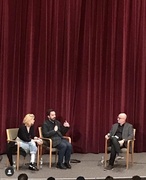
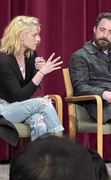
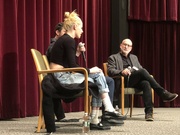
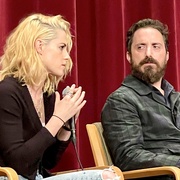
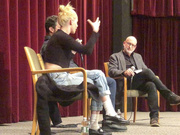
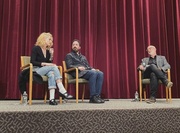
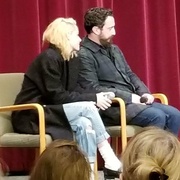


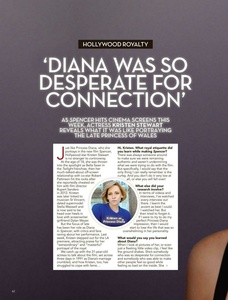
Kristen's interview for 'Spencer' with Refinery 29

Daddy. I’m face to face with Kristen Stewart in a London hotel room, talking about Spencer, the sublime, Pablo Larraín-directed drama in which she plays Princess Diana, when at the most inconvenient moment possible I draw a blank. Except for one word: Daddy. I'm cursing this pinnacle of all intrusive thoughts when suddenly it dawns on me. It’s embroidered in baby pink cursive on the crown of her baseball cap, so small it’s barely perceptible. A quick wink, a sartorial flash of mischief to throw anyone off their train of thought, even if for a millisecond.
The Los Angeles actress has made a career out of throwing people off. Her roles are as varied as they are unpredictable, ranging from her fame-propelling turn as a sullen teenager in love with a vampire in Twilight to a grief-ridden personal shopper, an agent in the big-budget Charlie’s Angels reboot and a student planning on proposing to her girlfriend in queer Christmas rom-com Happiest Season. Each character vibrates on its own frequency but always retains something of the 31-year-old’s guarded mannerisms and awkward aloofness – a physicality pushed to an uncanny degree in Spencer, with a coquettish head tilt and infallible British accent thrown in for good measure, to emulate Lady Diana’s own.
"I think it’s in The Crown and it’s really good." She pauses, laughing, as I recalibrate. "She just sort of falls down the side of Charles and goes, 'Darling, I think I'm going to disappear. I feel like I'm going to disappear.'" Spencer imagines a particularly horrific Christmas weekend in 1991 at the queen's Sandringham Estate, when Diana's relationship with Prince Charles had splintered and she was hounded by the press at every turn. The title card tells us that what we’re about to see is "a fable from a true tragedy", a concoction of surrealism and melodrama weighted by elements of truth. In one scene, we see Diana’s real-life struggle with bulimia play out as she crouches over a toilet; in the next scene, she fantasises about eating the pearl necklace gifted to her by Charles at the dinner table.
"The whole relationship that she had with food and binge-eating and purging, to me was just self-diminishing," Stewart continues. "She just wants to go away and be invisible, but interestingly also in a way that goes completely against that, she just wanted to be with people. She had a talent that she was born with, to connect with others and to get other people to take care of each other and realise that we need each other. That it's okay to be vulnerable."
This isn't the first time that Chilean director Pablo Larraín has won acclaim for the portrayal of a heavily scrutinised female public figure. His 2016 film Jackie garnered Natalie Portman an Oscar nomination for her role as a grieving Jackie Kennedy following the assassination of President John F. Kennedy. Similarly to Jackie, Spencer is often loudest at points where nothing is said yet much is conveyed with the widening of eyes or the tensing of a jaw. The film feels like the personification of a stifled scream into a silk pillow.
"At times, it felt like she was somebody who hated herself – and I love her so much," says Stewart. "These moments where she felt completely and utterly worthless. I don't mean to be hyperbolic, it's true. The idea of her running to her kid's bedroom and locking herself in the bathroom, and that the one person who she could turn to was an 11-year-old kid, it’s just so heartbreaking. There were times I was just like, ‘I can't fucking believe this!’ I just get so angry for her. I literally want to go back in time and be like, 'Dude, you need a best friend.'"
Despite being just 7 when Diana passed away – Stewart tells me she remembers "all the flowers in front of Buckingham Palace" – and her LA upbringing meaning that she didn’t "have a more involved relationship with the saga of it all", it’s obvious why the actress would feel a preternatural affinity with the princess. Catapulted to global stardom as a teenager and growing up in the public eye, she has a personal understanding of the crushing pressure that fame can present. There is a scene in the film where Charles tells Diana: "There has to be two of you: the real one and the one they take pictures of." No doubt this statement would have carried a stinging pertinence for Stewart, who has had to ward off the attentions of a particularly rabid YA fanbase with Twilight.
"People have said that so much to me," she agrees. "When I was younger, it was harder for me to have these conversations. Advice I would get all the time was, 'Just go and play the part, don't let it affect you, just be someone else.' How do you do that? I don’t think it’s possible. And that was exactly how she felt. It was never going to work for her; it was just something she couldn't stomach. I think even people that like to think they're playing parts and feel in control, they also feel disconnected and it's so obvious. That’s not you. You’re not real."
Throughout the film you really get a sense of Diana’s fragile state of mind at this point in her life. She roams the sprawling expanse of Sandringham, suffocated but craving connection. Her paranoia over who she can trust within her small inner circle comes to a head when she hears the rumour that Maggie (Sally Hawkins), her dresser and one true confidante, believes she is "cracking up". Unsurprisingly, Stewart shares this distrust. Spend enough years in the film industry and you’re liable to get burned at one point or another.
"I love having personal conversations with journalists about things that I work on and my own life but, at the same time, I have to acknowledge that you're going to...go and write an article," she shrugs and lowers her eyes. "I’m talking to the whole world right now. Let's be fucking real about this! And so it's crazy to judge somebody like her for trying to break down those very complex communication passages. All of the ways that she tried to break through and be a real person seem really clear to me. If you put someone in a position where they are not allowed to really be honest and then you judge them for being manipulative or trying to show who they are, it makes total sense."
At points in our conversation, it's unclear whether Stewart is referring to herself or Diana, often speaking of the latter in the present tense and then correcting herself. It seems that for Stewart, Diana is a figure who is very much alive. And in a way, Spencer is a ghost story: a study of the light slowly going out inside a vivacious person. It is the story, too, of powerful women laid waste by the structures that surround them. The haunting spectre of Anne Boleyn makes an appearance throughout the film.
"There are some people that are really spiritual and believe in energy and lingering energy, and I very much fall on the [side of] 'I have absolutely no idea'," Stewart offers when I ask her if she felt anything while filming on the sprawling estate. "I don’t mean that her ghost helped me, but who she was definitely lingers. I just can't believe that she died in a car accident. Like how this story played out crashes over me every once in a while and just fucking destroys me. She led with love and a disarming, casual confidence that made everyone feel so good. I felt good. She was tall and I felt tall. And that to me feels spiritual. I felt like when I came to set, I could just make everyone immediately feel comfortable and happy. And like we were doing the right thing. And we all needed each other. And the support system was fucking beautiful. It was such a cool feeling."
The film pulls no punches with poetic licence, especially when it comes to celebrating Diana's acts of rebellion. A triumphant dance sequence at the end of the film is a tribute to beloved pieces of public knowledge left out of the history books, such as the fact that Freddie Mercury once snuck Diana into a gay club. For someone who has admitted they hate dancing, Stewart was nervous about shooting the sequence.
"Yeah, to be honest, it was a real cliff jumper," she admits. "It’s not like we rehearsed anything either. [Larraín] wouldn't tell me how we were going to shoot everything. I was like, should I work with someone? She has such a particular physicality, buoyancy and elegance. She really grew up loving dance, loving ballet. But to be honest, I thought one of the most confident and inspired choices that Pablo made was not allowing me to get ready, because once we went in I took everything we learned about her and everything I felt about this story, and it found its way into those moments in an unarticulated but ephemeral way. We shot it every single day as well, so some days it was really exuberant and happy and fun and there were days where it was filled with a lot of weight and heaviness."
These liberties with poetic licence extend to many satisfying moments in the script, from the inclusion of a queer confession of love from one of the royal staff to imaginings of naughty things that Diana may have said or done, like shutting a door on a member of staff and telling them: "I’m going to masturbate now." Even the casting of a queer actress, in Stewart, to play Diana feels like a middle finger to the monarchy’s antiquated expectations and traditions. (Coincidentally, Emma Corrin, who plays Diana in The Crown, is another prolific out and queer actress. Stewart admits this is an "interesting, weird, cool coincidence – like, look at how the world has changed so rapidly.")
It’s been 24 years now since Diana’s death and arguably we’re at the point where the torch of keeping her legacy alive will soon be passed on to the next generation. With Spencer, Stewart can rest easy that if her portrayal plays a hand in how the People’s Princess lives on, it’s in a blaze of defiant glory.
"So many stories lash her for being manipulative and petulant and somebody who rebelled just for the sake of disruption, or just to be an attention-seeking person," says Stewart. "She's painted that way quite often. And I think that's so violent. So it was satisfying to play her like this. She just made so much sense to me."
Video: Kristen and Pablo Larrain's interview with ET Canada
Interview has also been shared partially by the Associated Press.
Kristen and Pablo Larrain's interview for 'Spencer' with Vanity Fair

Last January, Kristen Stewart was in full Princess Diana hair and makeup when paparazzi stormed the German castle where she and a film crew were shooting Spencer.
Stewart, an actor for 22 years and a movie star for 13, is used to a coterie of photographers tracking her every move—and knew that playing a beloved icon would only intensify their interest.
“You take the element that I’m a famous actor and then mix it with the monumental symbol that Diana is, and it’s like, Oh, man, they’re going to go wild,” Stewart tells me during a recent Zoom. “And they did.”
But there was something eerily meta about the moment—beyond a press-hunted actor playing a press-hunted princess. The photographers were using their long-lens cameras to capture grainy shots of Stewart as Diana through a window of Schloss Friedrichshof. Spencer—a lavish psychodrama set through the eyes of Diana during a Christmas at Sandringham—itself includes a scene where photographers shooting through windows with long lenses become such a problem that Diana’s curtains are sewn shut by the queen’s staff members.
In Spencer, directed by Pablo Larraín (Jackie) and written by Oscar nominee Steven Knight (Dirty Pretty Things), the curtain-sewing is played for horror—another extreme measure the royal family and its staff take to isolate Diana. But on the set of Spencer, sewing curtains shut suddenly didn’t sound like such a terrible idea.
Stewart comes from a filmmaking family—her mother is a script supervisor, her father is a stage manager, and her brother is a grip—and for her, film sets are intimate and sacred. “I’m fine with going out of my house and having people follow me to Starbucks and [watch me] get coffee. That’s fine. Take my picture. I made a movie. I want you to see it,” says Stewart. “But in our art and making a movie and being behind closed doors…it wasn’t even about me.”
In character that day (and presumably ill-equipped to sew anything), the actor metabolized the energy accordingly.
“I depersonalized it completely and did feel utterly protective of [Diana] in that moment. I was like, Fuck off,” says Stewart. “I developed a very genuinely protective relationship with this person that I obviously never met.”
Stewart is used to being the subject of public scrutiny. But during her extensive research of Diana, Stewart was disturbed to learn of the private scrutiny Princess Diana was subjected to by royal staff members in her own home.
“Things like people analyzing the hairs on her pillow—looking at the color of them and being like, ‘Oh, was she alone last night?’ Then talking about those details with other staff members as if it had anything to do with them at all.
“Also it’s a weird thing to talk about because I’m sitting here sort of eating up these details and very thankful that they exist,” says Stewart. Those difficult memories—some presumably sold to the press by staff members—helped her tap into Diana’s emotional state. “Actually, in kind of attacking her character, these stories are only revealing the shitty situation that she was living in. In retrospect, I’m like, Good, everyone tell your [Diana] story. You’re only corroborating her goodness.”
Spencer is more experimental and adventurous than other Princess Diana biopics, and rests squarely on Stewart’s performance. Released this Friday, six years after Stewart earned the César (France’s version of the Oscar) for Clouds of Sils Maria, Spencer marks the actor’s first true shot at awards contention within the U.S. She plays a beloved real-life person—catnip for Academy voters—and attempts the most ambitious transformation of her career, dropping her Californian slang and slouch for Diana’s posh British accent and posture. But it wasn’t the physicality of the role that was difficult.
“Everyone loves to talk about how I prepared for this role and what type of research or magic backflip I did to get the accent right,” says Stewart, who worked closely with William Conacher, the same dialect coach who assisted Emma Corrin in becoming Diana for The Crown. “But honestly, if you have enough time to get an accent right, it’s very technical. What really matters is going through stuff and embedding truly emotional reactions to things that do exist in real life, if you’re doing a story about a person that actually lived.”
Spencer depicts Diana on the brink of breakdown during her final royal Christmas before separating from Charles—a 72-hour pressure cooker of family tensions and antiquated rituals preserved from Queen Victoria’s era. From the moment that the Windsors arrive at Sandringham—in precise order, depending on their rank—they are thrown into a situation that is part Downton Abbey, part Black Mirror. Guests are forever donning new formal dress ensembles for a never-ending procession of rich meals—a nightmare for Diana in the ’90s as she battled bulimia, emotional issues, and self-harm. Spencer’s Diana, manipulated and surveilled by the queen’s staff 24/7, teeters on the edge of mania and rebellion.
To write the script, Knight spoke to former staff members—“people who served and observed”—at the queen’s 20,000-acre Norfolk estate. Though Knight refuses to discuss the specifics of those conversations, he insists even the more bizarre elements of his script are steeped in fact. Upon entry at Sandringham over Christmas, for example, in a detail incorporated into the film, Queen Elizabeth insists that each visitor is weighed on antique scales—his or her weight marked down and compared to his or her weight upon exit. (The rationale, from Victoria’s day, being that a guest only enjoyed himself or herself if he or she gained at least three pounds.)
Knight was appalled to learn that Diana was subjected to such a tradition when her bulimia was known (but never discussed) within palace walls. “Imagine Diana in her circumstance—and the fact that everything [during that weekend] is based around food and what you wear and how you look. Everything is about what’s in the mirror, not what’s really there.”
Diana’s real-life visits to Sandringham were even more emotionally fraught considering that her family was living on the same estate, at the rented Park House, when she was born. By the time Diana married into the royal family, though, Park House had fallen into disrepair—a boarded-up relic of her past still standing on royal grounds. In Spencer, Diana is torn between the royal family and its manipulative minders, who want her to subordinate and silence herself, and the authentic self she lost long ago, eerily lingering like a ghost in the distance.
“I wanted the film to have an element of horror because the original fairy tales are really quite horrific,” says Knight. “And I wanted it to be that she felt she was trapped. That she felt she was being toyed with. That she felt she was being all of these things.”
It was a frightening emotional place for Stewart to parachute into. But the actor felt safe and liberated to do so alongside Larraín.
“I always felt like I could just flail and throw myself at him and be like, You need to handle all of my questions and emotions, and I know that you can,” says Stewart, noting that it’s rare for her to feel that free on a film set. “I oftentimes have relationships with directors [where] I’m kind of protecting them [from my emotions]. In this case, I felt like we were mutually holding each other up and protecting each other, but also felt so free to actually communicate very fresh, new, spontaneous, impulsive ideas…The only way to make something that fucking feels unruly and alive and kind of its own animal is to have the confidence and the comfort in chaos to do that…. I never felt like I needed to not rock his psyche by offering another idea.”
Joining the Zoom from his office, Larraín agrees that his working relationship with Stewart was special.
“It just became such a very unique and singular union. It’s very beautiful. It doesn’t happen very often,” says the filmmaker, who personally shot some of Spencer’s most emotional scenes. “When you see the movie, you can see it was sort of an intimate collaboration.”
Stewart, who is gearing up to make her feature directorial debut with an adaptation of Lidia Yuknavitch’s The Chronology of Water, marvels over the fact that she and Larraín were on such similar wavelengths that, for many scenes, he did not even have to give her verbal direction—just a facial expression that she was able to interpret.
“Pablo could’ve played this part, and did, alongside me every single day,” points out Stewart. “There was never a time where I didn’t look over my shoulder and see this man sharing every emotion…The best directions that Pablo ever gave me were facial expressions that were like full-blown line readings. I was like, That’s it, let’s go. We both played her. It sounds silly—first of all, it’s funny to imagine him in the wig and the dress, like, I can’t stop—but we shared a heart on this movie.”
In one scene in Spencer, Princess Diana joins the royal family for a formal Christmas Eve dinner—a high-stakes affair that stirs up the title character’s emotions. Stewart was so invested in each detail that she was devastated to learn the pink dress she hoped to wear could not be used for rights reasons.
“I was so fucking upset about the pink dress,” says Stewart. “The whole movie is very red. Her favorite color was pink. I wanted to feel this delicacy—she had this fleshy thing going that everyone else was ignoring.”
Ultimately, Oscar-winning costume designer Jacqueline Durran created a pale green silk dress that matched the color of the soup being served.
“And the wallpaper,” points out Larraín.
After seeing the film, Stewart wholeheartedly agrees that green was the right call: “Fuck the pink.”
It’s clear how much Stewart trusted Larraín. Audiences see new levels of vulnerability when her character interacts with Prince William and Prince Harry as children; dances through the halls of Sandringham; and has an emotional breakdown in a long shot that captures the claustrophobic nature of the weekend. Larraín personally shot that tricky take, standing inches away from the actor. “There was no planning that,” says Stewart. “That’s my favorite. I want that take and for it to just exist in and of itself—11 minutes long, on my computer.”
It was crucial to have Larraín beside Stewart when her character was at her loneliest and most vulnerable—a consistent support system the real Diana never had at Sandringham.
“If I could go back in time or have her back for a moment and ask her anything, I wouldn’t,” says Stewart. “I’d just be like, ‘Dude, can I hang out with you? Do you want to just be together for a moment?’ She needed that so badly.”
In September, after spending so much time with Diana on a film that was emotionally brutal but collaboratively a dream, the actor sat down to see Spencer at the Venice Film Festival. She thought she had known the film from making it, but Stewart experienced Spencer anew that night—losing herself in its scenes and being hit by an unexpected wave of emotion.
“It’s very rare to be moved by your own film…but I was shattered at the end of it,” says Stewart.
It’s not that she was moved by her own performance; Stewart is too self-critical for that. Less than two weeks ago, Stewart told The Sunday Times that she’s “probably made five really good films, out of 45 or 50 films. Ones that I go, Wow, that person made a top-to-bottom beautiful piece of work!”
“It’s embarrassing to be crying at your own screenings,” Stewart tells me. “If I was in that theater, I would be judging me…[but] it wasn’t my performance that I was moved by.” It was, she says, the film as a whole.
But when the lights came up in the theater, their intimate Spencer filmmaking bubble burst. They were back in the real world—where Stewart is a movie star in perpetual threat of being mobbed.
“There were a lot of people there. We couldn’t talk,” explains Stewart.
“No,” agrees Larraín.
“I was like, Fuck, man. We can’t talk about it right now, but we’re in Venice watching the movie and I’m, like, sobbing,” recalls Stewart. After a few beats, she adds, “I’ve never had that experience. Never.”
Monday, November 1, 2021

Subscribe to:
Posts (Atom)