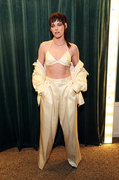

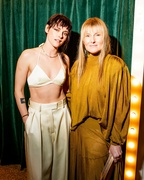


BTS
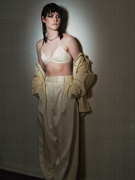
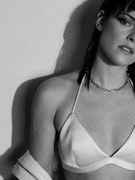
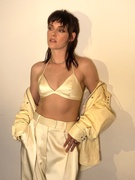
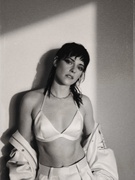
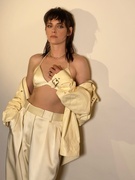
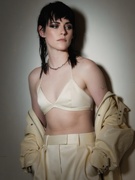
Click on photos for full view.
Videos


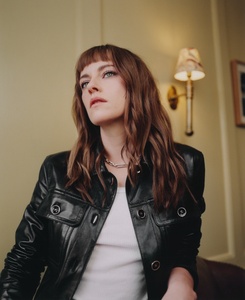
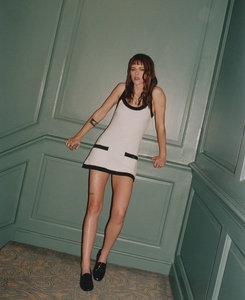
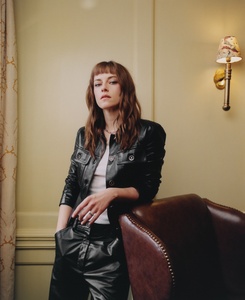
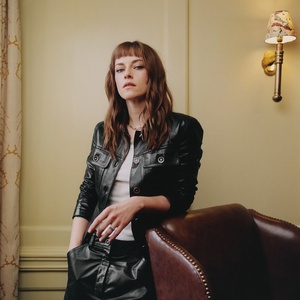
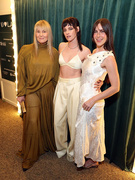
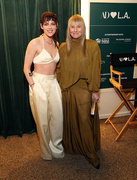
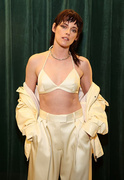
Kodak has captured a roster of honorees for the 8th annual Kodak Film Awards.
Set to be held at the American Society of Cinematographers clubhouse in Hollywood on March 2, the event will honor Kristen Stewart, Sentimental Value filmmaker Joachim Trier, Sinners director of photography Autumn Durald Arkapaw, IMAX’s Patricia Keighley, director Salomon Ligthelm and the TV series Fallout.
Stewart has booked a spin in the spotlight for her work on The Chronology of Water, for which she will be feted with a debut feature award. Past recipients of the prize include Céline Song, Michael Morris and Melina Matsoukas.
Trier will take home the Auteur Award, a trophy designed to recognize “motion picture artists who have created critically acclaimed work and remain steadfast in their artistic process.” His Sentimental Value earned nine Academy Award nominations including best picture, director, original screenplay and best international feature.
Cinematographer Arkapaw will be honored with a Lumière Award for “contributions to the art of cinematography.” It’s a homecoming as Kodak has supported and collaborated with Arkapaw on recent projects like Sinners and The Last Showgirl. She’s currently nominated for an Oscar for her work on the former.
Meanwhile Ligthelm will be honored with a music and commercial film director award, a trophy presented “in recognition of extraordinary talent and trailblazing creativity in the field of music and commercial films.” He’s worked on videos for The Weeknd, Giveon, Skrillex, Ford, Kia, Puma and more.
Fallout, the critically acclaimed Amazon Prime Video series and creators Geneva Robertson-Dworet and Graham Wagner, will be honored as television series of the year for its’ “cinematic scope, visual craftsmanship and contribution to episodic storytelling.” The show’s first two seasons are currently streaming.
Lastly, IMAX’s Keighley will be presented with an award called the Keighley Award in honor of her and late husband David Keighley. Per Kodak, their shared “dedication to the theatrical experience has played a significant role in advancing the art and technology of filmmaking.” And they’ve found a marquee presenter to hand it over that night in Christopher Nolan, who is confirmed to be making a special appearance. In future awards presentations, Keighley and Kodak will work together to select the recipients.
“From first-time directors to large-scale television series, filmmakers continue to intentionally choose film as an unparalleled creative tool,” said Kodak’s head of motion picture and entertainment Vanessa Bendetti. “In 2026, we’re proud to recognize artists and partners whose work demonstrates both creative ambition and a lasting commitment to the cinematic experience.”

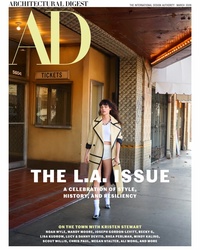
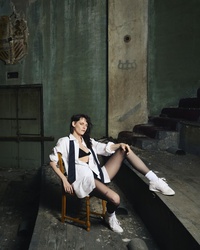
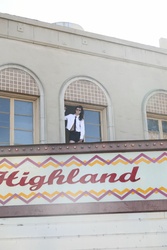
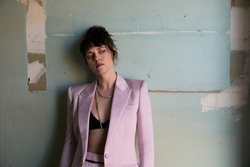
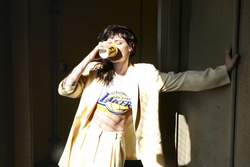
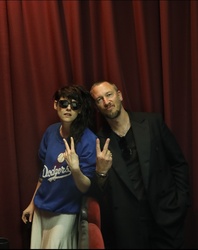
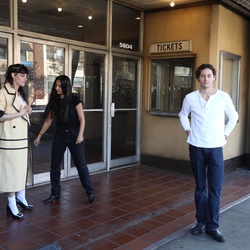
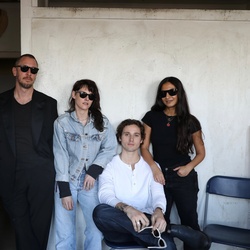
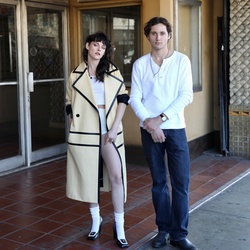
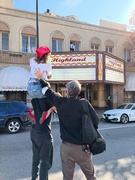
Click on photos for full view.
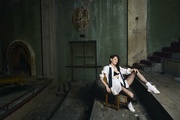
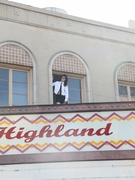
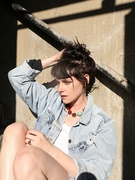
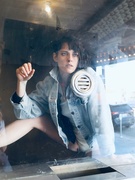
“Making films is a political act,” says actor-director Kristen Stewart. “You have to decide how you want to wield your presence and your voice.” These days she is making hers heard at Highland Theatre—the 1925 Highland Park movie palace and onetime vaudeville performance space, designed by noted architect Lewis Arthur Smith, whose resume also includes the Vista theater in Los Feliz, the El Portal in North Hollywood, and the Rialto in Pasadena, all from the mid-1920s. Stewart recently purchased the noble yet dilapidated building, which closed its doors and dimmed its marquee in 2024.
“I didn’t realize I was looking for a theater until this place came to my attention. Then it was like a gunshot went off and the race was on. I ran toward it with everything I had,” she recalls. “I’m fascinated by broken-down old theaters. I always want to see what mysteries they hold.”
Stewart’s vision for the Highland goes beyond a straightforward restoration. “It’s an opportunity to make a space to gather and scheme and dream together. This project is about creating a new school and restructuring our processes, finding a better way forward. We want to make it a family affair, something for the community. It's not just for pretentious Hollywood cinephiles,” she explains. “I see it as an antidote to all the corporate bullshit, a place that takes movie culture away from just buying and selling. I think there’s a huge desire and craving for what this kind of space can offer.”
The original bones of the theater, including an extraordinary mezzanine and stage, remain partially intact, but the resurrection of the space will require a herculean effort. Nevertheless, Stewart is determined to recapture the glamour of Hollywood’s Golden Age while positing a new kind of social cinema experience: “There are so many beautiful details that need to be restored. I think there’s a way to bring the building back to life in a way that embraces its history but also brings something new to the neighborhood and something new to the whole LA film community. That’s the point—new ideas.”
A native Angeleno, Stewart grew up in the San Fernando Valley and moved to LA’s Eastside when she was 20. “I absolutely f**king love this city,” she insists. “There’s a kind of unified dissonance because it’s not really a city as much as a cluster of neighborhoods, but there’s unity in that. I like the spaciousness. You can decide how you want to fill it.” Asked if she’d ever consider abandoning Tinseltown for the mean streets of New York City, the actor demurs. “LA gets a bad rap for being unserious, but there’s so much art and culture here. I find something a little heavy about the East Coast. When I come back to LA, I can breathe.”
Still, Stewart has no illusions about the problems facing Los Angeles and indeed most major cities in our country. She is indefatigable in her championing of the Downtown Women’s Center, an organization founded in 1978 that was the first in the U.S. to provide permanent supportive housing to homeless women—a mission it continues to pursue to this day, in addition to a health clinic that exclusively serves women in LA’s Skid Row community and a drop-in day center, where women can receive three daily meals and access to showers, restrooms, mail, laundry, and telephones. “LA is drowning in inadequacy in our response to homelessness. The city is at odds with itself,” Stewart laments. “There has to be a way to unearth a tender, empathetic approach to getting people off the streets. I wanted to align myself with an organization and people who’ve been doing this work for decades at a grass roots level. Amy [Turk, Chief Executive Officer of DWC] spends every waking hour helping these women. I’ll do anything for her.”
Reflecting on the future of the Highland Theatre, the film industry, and the city at large, Stewart remains optimistic yet emphatic: “The narrow path that’s been forged has to be broadened, not by tokenized diversity but by doing things really differently. We can’t keep making the same movie over and over again. And we can’t turn our backs on the people who are most in need.”
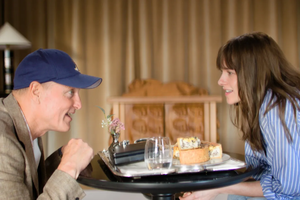
Quentin Dupieux‘s “Full Phil” has been described as a “White Lotus”-esque project based on its high concept pitch, starring Woody Harrelson as a wealthy American industrialist attempting to reconnect with his daughter – played by Kristen Stewart — during an opulent trip to Paris. Yet, the prolific French director tells Variety that his movie is “more like ‘Emily in Paris’ in hell — a fever dream, a nightmare version of it.”
A highly prolific and iconoclastic filmmaker, Dupieux (who describes himself as a “washing machine running non-stop”) says “Full Phil” was sparked by his desire to make a film in English after making 10 movies in French. At the start of his filmmaking career, he had made a few projects in the U.S. such as “Rubber,” which lensed in California with a cast including Stephen Spinella. “When you change languages, your brain enters a slightly different zone. It’s very interesting,” Dupieux says in an exclusive interview with Variety on the eve of the EFM.
The surreal black comedy, which Studiocanal will introduce to buyers at the European Film Market in Berlin, also stars Charlotte Le Bon (“White Lotus”), Emma Mackey (“Barbie”), Nassim Lyes (“Under Paris”), Tim Heidecker and Eric Wareheim.
Now in post-production, “Full Phil” shot on location in Paris and marks the first film co-starring Harrelson and Stewart. They turned out to have the perfect chemistry, Dupieux says, adding that “making the Kristen–Woody relationship believable” was key for the movie. “Even if my films are often absurd, I always want believable worlds. I wouldn’t have liked it if they didn’t feel like family,” the helmer says. “But they’re great professionals. We never questioned it. He really is her dad, she really is his daughter.”
Yet, “Full Phil” isn’t a deep exploration of a father-daughter relationship, says Dupieux, who is known for his absurdist and quirky sense of humor. The synopsis suggests a surprising subplot, mentioning “French cuisine, a 1950s horror film and an invasive hotel employee” disturbing their lavish Paris trip. “Pure emotion as an objective isn’t my thing,” he says. “What I like is fantasy, and above all, making people laugh and be entertained — but not through traditional comedy.”
“The film is funny in other ways. I started with this father-daughter story, and then there’s a second film inside the film,” he says. “I see these conceptual films like amusement parks. It takes us on emotional, comical and fantastical rides.”
“Full Phil” reteams Dupieux with producer Hugo Selignac at Paris-based Chi-Fou-Mi Productions (a Mediawan company). They have made eight films in six years together, including “Mandibules,” “Smoking Causes Coughing,” “Yannick,” “Daaaaalí!,” “The Second Act”, “The Piano Accident” and “Signaux.”
The pair are already working on another project with American actors. “There are many actors I still haven’t worked with. In France, I’m close to exhausting the possibilities. In the U.S., I’m just getting started,” Dupieux says.
What’s the origin of “Full Phil”?
I’m a bit like a washing machine that runs non-stop. Projects are born and feed off each other constantly. I know there are people who work differently, who tackle a project one day and for whom there are reasons and a strong desire. For me, it’s more like a washing machine. Right now, I’m really at the end of “Full Phil,” and I’m already revisiting scripts I had in progress, and we’re already relaunching other projects. So there isn’t this system of a project being born in my mind. It’s not a race — I do it calmly — but this project was born in my laboratory, like all my other projects, in perpetual motion. It’s very hard to find what triggered it.
Was it perhaps a meeting with Woody or Kristen?
More likely a desire to confront the English language again. When I was just starting out, I made a few small films in the U.S., in English, and I had a lot of fun. When you change languages, your brain enters a slightly different zone. It’s very interesting. Then I came back to France and eagerly made 10 French films in quick succession. I met lots of French actors, and there are many films in that group that I’m very proud of. That’s pretty much where it all started — a desire to change register through language. My films rely heavily on dialogue, and changing languages means confronting a different rhythm, a different music. That was the starting point. After that, Woody and I met because he saw “The Second Act” and “Yannick.”
How did that connection happen?
He was very taken with “The Second Act” and “Yannick,” which surprised me because those films are based solely on text. It’s hard to imagine Anglo-Saxons watching something like “Yannick,” which is an hour of subtitles and very little action. You’d think those films wouldn’t travel, but they do.
What people don’t necessarily know about Woody is that he has a very intellectual side. A few years ago, he made a single-shot film broadcast live. I didn’t see it, but he immediately told me about it because there are long shots in “The Second Act.” You wouldn’t think it, but he has that kind of thinking. His film was like live theater, and my films are quite theatrical too — very focused on actors and dialogue. That spoke to him, and we connected. At that point, I was already writing “Full Phil,” and that meeting boosted my desire to do it. Having direct contact with an American actor like Woody makes development much easier. In France, I can call actors directly, text them, get decisions very quickly. In the U.S., everything takes longer. Decision-making is slower. Given that I like immediacy — my films are short, I make several a year — that’s not always easy to combine with the American system. Here, it worked because Woody really wanted it.
What about Kristen Stewart?
We embarked on the film as soon as Woody came on board. He accepted without reading the script, which is extraordinary for an American actor. He was so enthusiastic about the two films he’d seen. I finished writing, and we had to find the character of his daughter. We always start by checking availability, because I like immediacy. We set dates right away — we don’t say, “We’ll see in a year.” That’s the DNA of my projects. They’re very prepared and very written, but we do them quickly. We started looking for a young woman who could play Woody’s daughter and who would be available, and we quickly came across Kristen. It was a great choice. The combination works perfectly. We’d never seen them together, but something was immediately obvious. She took a weekend to consider it and accepted within 48 hours, which is rare. I think there was a challenge in the film that excited her. She joined just like that — very brave of her.
Why brave? Is she doing stunts?
You don’t know it yet, but there’s a delicate aspect to what she does in one part of the film. There was a whole thing about cuisine, but I can’t say more. Sometimes the difficulty is physical transformation or stunts or shaving your head. Here, it’s something completely different. I’ll leave the mystery unresolved.
Is it a film about cooking?
Not at all. I’m dissecting a father-daughter relationship in a complicated situation. It’s about a widowed father trying to reconnect with his daughter, who’s about 30. There’s a very emotional, grounded part with real characters. And then the film slips — inevitably — into something more fantastical.
There are often fantastical elements in your films.
That’s because a straight film about a father and daughter isn’t my thing. Many people do that very well — I’m thinking of “Sentimental Value” recently. That’s not my specialty. I dabbled in it, but inevitably I ended up doing something else. Pure emotion as an objective isn’t my thing. What I like is fantasy, and above all, making people laugh and be entertained — but not through traditional comedy. The film is funny in other ways. I started with this father-daughter story, and then there’s a second film inside the film, which is also a surprise. You can guess it from the synopsis: Kristen and Woody’s film is mixed with a 1950s horror film. It’s done in a very playful way. I see these conceptual films like amusement parks. The film takes us on emotional, comical, and fantastical rides.
What worked in particular? The chemistry between Kristen and Woody?
That was the major challenge — making the Kristen–Woody relationship believable. Even if my films are often absurd, I always want believable worlds. I wouldn’t have liked it if they didn’t feel like family. But they’re great professionals. We never questioned it. He really is her dad, she really is his daughter. That was a great success.
Another gamble was integrating a 1950s horror film into a modern story. On paper, it sounds crazy. The synopsis is mysterious. But that ingredient worked too. It makes the film joyful, special, and quite new.
There’s also the theme of Americans in Paris, which can feel artificial. We shot in real locations. The film could have been partly shot in a studio — it would’ve been easier and cheaper — but we refused. It really takes place in Paris, in real streets and buildings, and that gives it real charm.
Some people compared your film to “White Lotus” based on the pitch. Do you see that?
I recently watched a few episodes of the latest season with Charlotte Le Bon, who’s also in my film. I don’t really see the similarity. “White Lotus” is quite realistic. Yes, there are two people in a hotel, but there’s much more than that. And we don’t stay in the hotel the whole movie.
Did you ever think of setting “Full Phil” in L.A.?
I could have told the story anywhere, but I’d never filmed in Paris before. I usually escape — deserts, sea, mountains. I live in Paris, so I need dreamlike places. Recently, I made “L’accident de piano” in Haute-Savoie. Here, it was interesting to invite Americans into the cliché of Americans in Paris and actually shoot in Paris. It was part of the DNA from the beginning. And the cooking element wouldn’t have worked anywhere else. It’s more like “Emily in Paris” in hell — a fever dream, a nightmare version of it.
Do you let actors improvise?
No, that’s not my system. The script is a score, and it must be followed. But within that, I’m completely open to real life. I love being surprised by performances. I work by ear. I listen to rehearsals or the first take, and I know what to tell them. Sometimes it works immediately; sometimes there are misinterpretations, and I correct them. When a line sounds wrong, it’s like music — I ask for another tune. The rhythm is musical work. We explore. Sometimes we get stuck on three lines for no reason. That’s part of the job. It’s not improvisation, but it’s not robotic either.
Kristen Stewart is also a filmmaker. Did that influence the collaboration?
She was very nice and let herself go. She immediately saw that my method was unique and not conventional. Because I write everything myself, I’m behind the camera, I decide when we stop and start — it’s a little wild. She understood it quickly and trusted it completely. The same with Woody. For the first two or three days, they were spectators of a method they’d never encountered. It was a very serene set. I think it made an impression.
What defines your method?
Speed. We shoot very quickly, but without stress. The team is extremely professional. Actors often tell me that on traditional sets they spend their days waiting. On my films, Woody and Kristen were on set all day.
You also edit during filming?
I pre-edit during filming. As soon as I have a doubt, I lock myself in a dressing room and check if the editing works. That way, I avoid shooting unnecessary footage. Many directors would keep shooting “just in case.” I don’t. I check. It means I don’t exhaust the actors by repeating things endlessly.
What stage is the film in now?
I’m finishing the editing now, and I’m very happy with it. I’ve never done anything like this before. It’s new, even for me. And I’m delighted it’s in English with Woody, Kristen, Charlotte Le Bon, and Tim and Eric. Cinema is often compared to cooking. There are ingredients. Sometimes recipes don’t work. In this case, I found a recipe that really worked.
Did this experience make you want to make more English-language films?
Absolutely. We have other projects in the works. One was written even before “Full Phil.” It’s like changing music. English has a different rhythm. I saw it during editing — it’s new music, very enjoyable. I’m not tired of French at all, but this is a musical respite. And the U.S. is a wonderful playground. There are many actors I still haven’t worked with. In France, I’m close to exhausting the possibilities. In the U.S., I’m just getting started. So I’ll absolutely continue developing projects in English.
Your producer Hugo Selignac says many American actors want to work with you.
Yes, we are in demand, which is very pleasant. It reinforces our conviction. But actually making it happen is complicated — schedules, huge stars, timing. My method is fast-paced, and I can’t project myself two years into the future. I live in the moment. So I’ll end up working with those who accept that speed. Woody and Kristen were the first to try it. They loved it. It went very well. And we hope to convince others to go just as fast.